READY TO GET STARTED?
REQUEST A FREE ESTIMATE
Fill out the form below or call (888) 466-7849 for a free, no-obligation estimate.

At this stage in your life, you probably think you know quite a few facts about nature – the sun rises in the east, dolphins can communicate with each other, and bees gather honey from flowers. So, it may come as a surprise to you that you may have to reconsider what you know. Keep reading for some myth busting – Northwest style.

When bees buzz through your garden, they gather nectar, a complex sugar, which they carry to the hive in a “honey stomach.” Once they deposit it into the hive, other bees break down the sugar and pack it into the cells of the honeycomb. Finally, they fan their wings over the honeycomb to evaporate water out of the nectar and the end result is honey!
Many people think that all spiders spin webs of silk to trap their prey. It is true that all spiders produce silk. On the contrary, hunting spiders, which include wolf spiders, jumping spiders, and trapdoor spiders among others, actually track down their prey instead of making webs.
When most people think of animals, they often mean furry creatures such as dogs, cats and even more menacing lions, tigers and bears. Perhaps because of the unusual appearance of most insects, which have exoskeletons among distinctive features, people tend to assume these arthropods are of a different classification. Though they may not have skin or fur, insects are animals just like dogs, cats – and us!
Growing up, we learned stories of homely worms turning into beautiful butterflies after emerging from their cocoon. Actually, the term chrysalis defines this transformation stage between larva and adult, otherwise known as a pupa. Only butterflies can come from a chrysalis. It is its cousin, the moth, that emerges from a cocoon made of silk.
Daddy longlegs, also known as harvestmen, walk around on eight legs as all spiders do. However, not all eight-legged creatures are spiders. Spiders have two distinct, separated body parts, whereas the harvestmen have one. They also do not have silk or venom glands as spiders do.
Melissa Brown
[email protected]
Sources:
http://insects.about.com/od/teachingaboutinsects/tp/15misconceptions.htm
http://www.flmnh.ufl.edu/exhibits/always-on-display/butterfly-rainforest/butterfly-qa

Do bees give you the creeps or do they down right frighten you into hyperventilation? If it’s the latter, you are possibly suffering from entomophobia. Entomophobia is a fear of insects or bugs. This predicament can bring about emotional and mental states such as panic attacks.
A famous entomophobe was the artist Salvador Dali. When Dalí was five years old, he witnessed an insect that had been eaten by ants where the shell was the only thing that remained. The swarming ants in Dalí’s pieces and models are innuendos to death and decomposition, and are hints of human mortality and uncertainty.
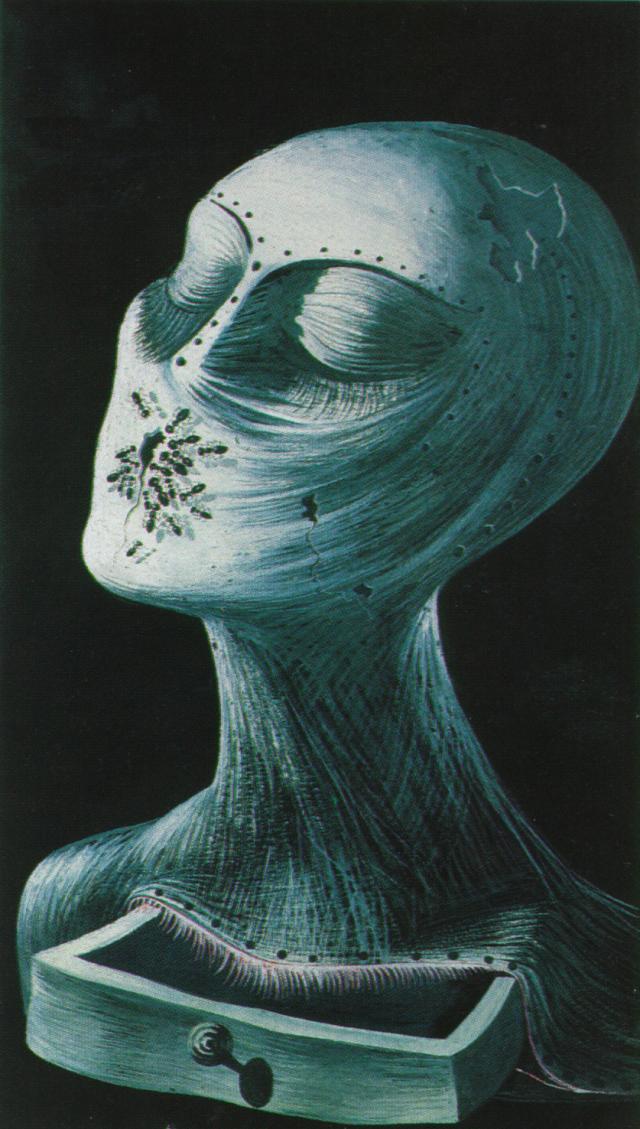
Ant Face by Salvador Dali
Dalí had an extreme phobia of grasshoppers, brought on from his adolescent harassment by other kids, who frequently hurled grasshoppers and other insects at him. When they emerge in Dalí’s art, grasshoppers are utilized as an indication of devastation, decay and despair. Dalí characterizes them with a fearsome nature, as huge and alarming in comparison to the other figures, and they are shown in the act of eating the main subject of the work a number of times.
Although Salvador Dali was an odd guy, we can all agree that some insects are just plain creepy.
What is your phobia?
Cara Carver
[email protected]
People love a good myth. These narratives contribute bright symbolism of interactions between higher powers, people, and nature. They assist in many relevant functions as well as further adding colorful stories. One valuable role of myths is to illustrate some angle of life.
Several myths describe the beginnings, morphology, and conduct of various insects. Here are just a few:
The origin of mosquitoes is revealed by The Tlingit Indians of North America. The narration tells of a blood sucking carnivorous giant who dines on humans. This giant is eventually avenged after his horrific death by coming back to feed on humans in the appearance of blood sucking mosquitoes.
An Algonquin tale of North America justifies why bees, wasps, and hornets have stingers. This myth grants that the god Wakonda bestowed stingers to bees because the bees were industrious, but required a defense. Since wasps and hornets are linked to bees, The Great Spirit willingly endowed them with stinging weapons as well.
Ant actions are revealed in an African myth that reminds us of the everlasting punishments of Atlas, Prometheus, and Sisyphus of classical mythology. An infinite punishment of bearing a burden is handed down to ants by deception in the African myth. Accordingly, we see the outcome today in ants repeatedly transporting things in their everyday routine.
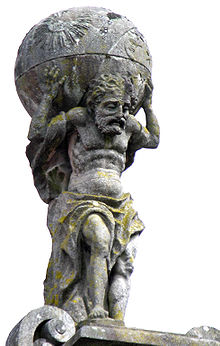
Atlas
And on an absolutely universal spectrum, the composition of our galaxy, The Milky Way, is translated in an insect myth of the Cochiti. This myth tells of an Eleodes Beetle that was in charge of depositing stars in the sky. The stars were dropped due to his ego and recklessness, thus forming the Milky Way. The beetle was so distraught at what he had done, that even today, the beetle hides his face in the dirt when approached – will lower its head, raise its abdomen, and emit a disagreeable odor probably for defense. This simple insect myth explains not only insect behavior, but also the start of our own galaxy.
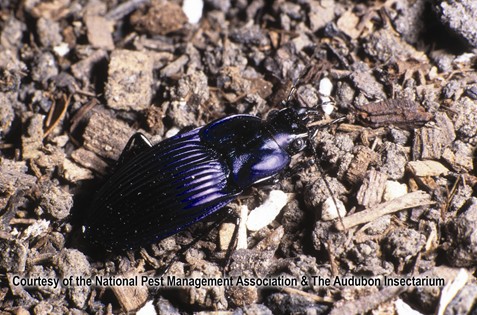
Beetle
Who are your favorite mythological characters?
Throughout history, most humans have disliked and even had a fear of insects and spiders. Entomophobia, or insectophobia, is a common fear or aversion to insects and arthropods. Arachnophobia is the fear of spiders. Hollywood has capitalized on those common fears by exposing them in the horror film genre.
Since the horror genre hit the scene back in the 1940’s, the bug movie has been a pivotal part of the industry. The insect horror film is in an exceptionally extensive category of horror. Since the premiere of 1950’s Highly Dangerous, Hollywood has produced over 75 movies featuring killer insects or spiders. Some contain mammoth, mutant bugs that can devour humans, while others feature deadly swarms of ants, bees, or wasps. They vary from the hilariously campy to the straight -up terrifying. Here are a few:
Them! – A crew of FBI agents and entomologists battle radiation-induced gigantic ants in this black-and-white sci-fi flick from 1954.
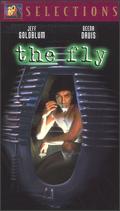
The Fly – Jeff Goldblum’s iconic turn as the scientist-turned-fly in this remake is equal parts poignant and petrifying.
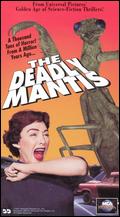
The Deadly Mantis – The star of William Alland’s sci-fi flick is a 200-foot-long praying mantis freed from its prehistoric lair by a sudden seismic shift.
Arachnophobia – South American killer spider hitches a lift to the US in a coffin and starts to breed and kill.
Not all movies about bugs tap into our fears. Here are movies that make you almost wanna like the little guys:
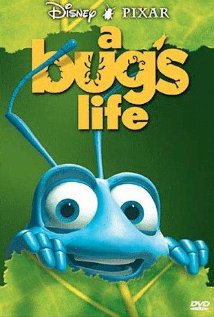
A Bug’s Life – A misfit ant, looking for “warriors” to save his colony from greedy grasshoppers, recruits a group of bugs that turn out to be an inept circus troupe.
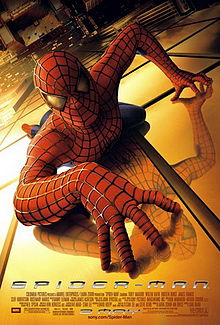
Spiderman – When bitten by a genetically modified spider, a nerdy, shy, and awkward high school student gains spider-like abilities that he eventually must use to fight evil as a superhero after tragedy befalls his family.
Don’t let your home turn into a horror film! Call Northwest Exterminating.
What is the creepiest movie that you have ever seen?
Cara Carver
[email protected]
Although you may be seeing bees buzzing around your home it doesn’t necessarily mean that you have an active bee hive in your area. There is a good possibility that you are seeing scout bees. The survival of a bee hive oftentimes depends on the scouting bee. Bees need a constant supply of nectar and have to find a new place to go once their source is low. This is where the scout bee comes in. Scouting bees are sent out to look for a new home for their hive and if you do not take action, your home could be their new home.
To most people, scout bees look just like other active bees but once you get a closer look, you are able to notice small differences in their behavior. Scout bees usually scout an area for about 3 days before moving in or moving on. If you see bees for 5 days or longer, there is a good chance that it is an active hive and not just a scout bee. Scout bees tend to hover around an area rather than a steady stream of bees that are coming and going from the same area; that is typically an active hive. Scout bees are not as aggressive as other bees since they are not protecting their hive.
It is better to treat for scouting bees rather than taking a chance of getting an active hive. Bees can cause structural damage to your property as well as pose a safety risk. It is always best to call a professional exterminating company for bee removal. If you live in the Atlanta, Columbus, or Nashville area and are seeing bees, call Northwest Exterminating and we will come take a look to see if you are seeing scouting bees or an active hive.
Have you seen scouting bees near your home?