
Termite Control and Treatment
Termites cause significant structural damage to homes across the Southeast, and standard homeowners insurance policies generally do not cover it. Standard policies treat termite damage as a preventable maintenance issue, which means the cost of repair generally sits with the homeowner unless a termite agreement is in place.
Northwest Exterminating provides termite inspections, treatments and ongoing protection across the Southeast.
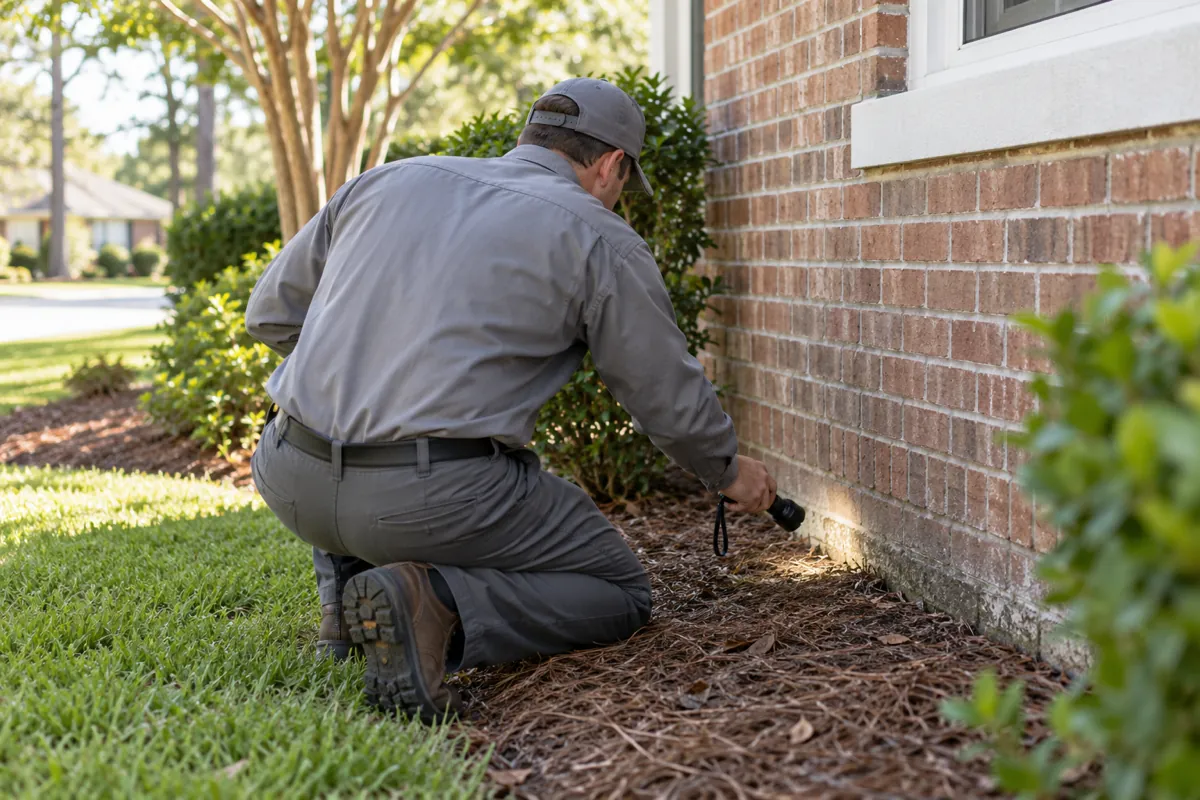
Our process
How Termite Control Works
Termite control is a program, not a single visit. Here's what to expect:
- 01
Inspection
A technician examines the structure for active termites, evidence of previous activity, and damage, which are three separate findings that often get collapsed into "termites found." The inspection covers the crawl space or slab perimeter, foundation, sill plates, and accessible framing. In regions with established Formosan populations it extends to accessible attic and roof areas as well, for reasons covered further down this page. - 02
Treatment
If activity is found, treatment addresses the colony. The method depends on the species, the construction, and where the colony is foraging. Liquid termiticide applied to the soil creates a treated zone around the structure. Baiting systems recruit workers onto a bait matrix that is carried back into the colony. Many properties get both. - 03
Monitoring
After treatment, monitoring is what catches the next problem. This is the part homeowners most often skip and most often regret, because the gap between a colony arriving and a homeowner noticing is where damage accumulates. - 04
Renewal
Agreements run on an annual term with scheduled inspections. Those scheduled inspections are a condition of coverage under most termite agreements, so a missed inspection can affect protection regardless of what the agreement otherwise covers.
What to look for
Signs You Have Termites
Most homeowners find termites one of five ways.
Swarmers and Discarded Wings
Winged reproductives leave an established colony to start new ones. They appear for a few days, shed their wings, and are gone. Wings on a windowsill, in a doorway or around a light fixture mean a swarm happened recently and a colony is nearby. Native Eastern subterranean termites generally swarm during the day in spring. Formosan swarmers emerge at dusk or after dark from late spring into summer and are strongly drawn to light.Mud Tubes
Pencil-width tubes of soil along foundation walls, piers and crawl space supports, built to protect workers travelling between soil and wood. They form in exactly the places nobody looks, behind lattice skirting, shrubs and stored items.Hollow or Blistered Wood
Tap trim, baseboards, sills and framing. Termites eat wood from the inside, so a sound surface can have very little behind it.Carton Material
A firm, grayish substance made from soil, digested wood and saliva, found in wall voids or crawl spaces. This is a Formosan trait specifically; native Eastern subterranean termites do not build it.Sagging Floors, Bubbling Paint, Doors That Stick
Usually moisture, sometimes concealed termite activity, often both, since the conditions overlap.
If you are seeing any of these, stop investigating and get an inspection. Opening up a wall or disturbing a tube tends to scatter the colony and makes the problem harder to find.
Start here
Termite Inspections
What Happens
A technician walks the accessible structure and grounds looking for the three findings above, then documents what was found and where. You get a written report.
How Long It Takes
Most inspections on a single-family home take 30 to 60 minutes. Larger properties, tight or wet crawl space access, and detached structures that need inspecting separately take longer.
How Often
At least once a year for most homes. More often, or with continuous monitoring between annual visits, for properties on crawl spaces in high-pressure coastal markets, and for second homes and rentals where nobody is on site to notice anything between visits.
What an Inspection Does Not Cover
Inaccessible areas are excluded, and on a typical crawl space home that exclusion is substantial: behind finished walls, under insulation, inside sections too tight to reach safely. A report noting "no visible evidence" in an area the inspector genuinely could not reach is not a guarantee that the area is clear. Any honest inspection report says which areas were inaccessible, and that section is worth reading.
Real Estate Transactions
Buying or selling generally means a wood destroying insect report, called different things in different states. South Carolina uses the CL100, regulated by Clemson University's Department of Pesticide Regulation. Georgia and Florida use WDO reports. You will also hear WDI report, WDIR and "termite letter," all referring to the same category of document. A wood destroying insect report is a point-in-time document, not a warranty, and it does not commit anyone to monitoring the property afterward.
Know your termite
Termite Species We Treat
Native
Eastern Subterranean Termites
The native species, found throughout the eastern United States and the species behind most termite work in our markets. Colonies nest in soil and typically hold around 100,000 workers at maturity. Soldiers have a rectangular head.
Introduced
Formosan Subterranean Termites
An introduced species, now established across much of the coastal Southeast, the Gulf Coast, Hawaii and parts of Texas and California. Clemson Cooperative Extension documents established populations in 16 South Carolina counties, concentrated from Charleston south to Beaufort, and populations are established across coastal Georgia and Florida as well.
Colony size is the real difference. A mature Formosan colony can hold a million or more workers against roughly 100,000 in a native colony. Individual termites of both species feed at broadly comparable rates. More workers means more wood consumed between inspections, which is a detection-window problem, not a question of appetite.
They are not resistant to treatment. Clemson Cooperative Extension reports no documented insecticide resistance in Formosan termites. Professional termiticides and baiting systems work against them at the same concentrations used for native subterranean termites.
Most infestations still start in the soil. Formosan termites can build above-ground carton nests where there is a sustained moisture source, and that gets a lot of attention. But a Clemson Cooperative Extension survey of 50 Formosan-infested structures in Charleston found that 94 percent were infested from ground-based colonies, with 6 percent attributed to aerial nests. Soil treatment and baiting remain effective for the large majority of cases. What the carton-nest possibility changes is inspection scope: in Formosan territory a thorough inspection includes accessible attic and roof areas, not just the foundation perimeter.
Northwest termite agreements cover Formosan subterranean termites.
Ongoing protection
Termite Agreements and What They Cover
A termite agreement, commonly called a termite bond, is a contract with a pest control company for ongoing termite protection. It is not insurance, and homeowners insurance almost never covers termite damage.
Retreatment Versus Repair
A retreatment-only agreement obligates the company to treat again if termites return. It does not pay to repair the damage they caused. A repair agreement covers both, usually up to a stated dollar cap. That cap is the number to look at, because it defines the maximum financial protection the agreement provides regardless of what repairs actually cost.
Species Language
Many agreements were written with native subterranean termites in mind, before Formosan colonies became established across the coastal Southeast. Some cover Formosan termites identically. Some exclude them by name. Some cover retreatment but cap or exclude repair for Formosan damage. The species and exclusion language in your own document is what determines your protection, not the price or the provider's name.
Conditions That Affect Coverage
Most agreements require inspections on a schedule and require conducive conditions to be corrected: moisture accumulation, wood-to-ground contact, untreated additions. Missing an inspection or leaving a flagged condition uncorrected can affect coverage.
Transfer
Whether an agreement transfers to a buyer when the home sells depends on the agreement. It is not automatic, and a transferable agreement is a genuine selling point because it shows consistent protection rather than a single treatment years ago.
How we treat
Our Treatment Approach
Northwest recommends Sentricon Always Active® for reliable, ongoing termite protection. Stations are installed around the structure and remain continuously active, so the system is working between service visits rather than only during them. Workers that find a station carry bait back into the colony.
Continuous monitoring addresses the detection-window problem directly, which is why we favor it in markets with Formosan pressure. The challenge there is not treatment strength, it is how much wood a very large colony consumes before anyone notices it arrived.
Full details on the system: Sentricon Always Active.
Where we serve
Termite Control by Location
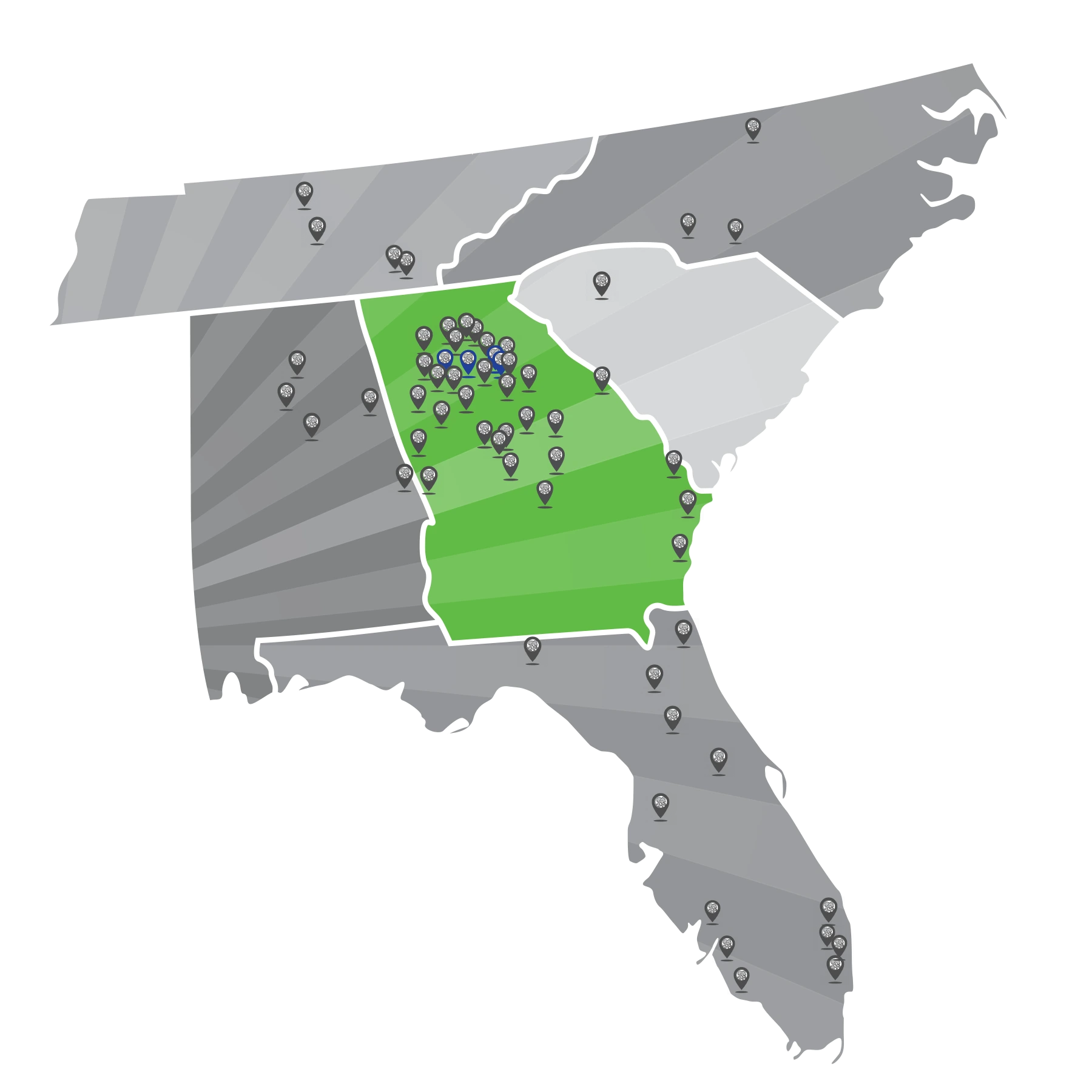
Termite pressure, species mix and state reporting requirements vary across our service area. Our location pages cover what applies locally.
- Georgia
- Alabama
- Florida
- Tennessee
- North Carolina
- South Carolina
Service centers
Hours vary by location and by season. Each service center posts its own current schedule.
Customer Care
Monday to Friday 6:30am–6:00pm and Saturday 9:00am–1:00pm through daylight saving time; Monday to Friday 6:30am–5:30pm the rest of the year.
Find your local service center and its hours
Customer Care can be reached at (888) 466-7849.
Common questions
FAQs
How Long Does a Termite Inspection Take?
Most termite inspections on a single-family home take 30 to 60 minutes. Larger homes, properties with limited or wet crawl space access, and homes with detached structures that need to be inspected separately take longer.
How Often Should You Get a Termite Inspection?
At least once a year for most homes. Properties on crawl spaces in high-pressure coastal markets, and second homes or rentals that sit unoccupied for stretches, benefit from continuous monitoring between annual inspections rather than relying on a single annual visit to catch a full year of potential activity.
What Does a Termite Bond Cover?
It depends on the agreement. A retreatment-only agreement covers treating again if termites return but does not pay for structural repairs. A repair agreement covers both, typically up to a stated dollar cap. Check the species language too, since some agreements exclude Formosan subterranean termites by name or cap repair differently for Formosan damage.
How Much Does a Termite Bond Cost?
Pricing depends on the property: square footage, construction type, whether the home is on a crawl space or a slab, access conditions, and whether the agreement includes damage repair or retreatment only. Repair-inclusive agreements generally cost more because they carry more liability for the provider.
What Kills Formosan Termites?
The same professional termiticides and baiting systems used against native subterranean termites. Clemson Cooperative Extension reports no documented insecticide resistance in Formosan termites, so products work at the same concentrations. The difficulty with this species is colony size and the rate damage accumulates before activity is found, which is why continuous monitoring and a full-structure inspection scope matter more than product selection.
Next step
Get a Termite Inspection
A Northwest team member walks your property, does a thorough inspection, documents the findings, and explains what an agreement would cover and treatment options.
LOCATIONS
We have service centers throughout Georgia, Tennessee, Alabama, and South Carolina.
HOURS
M-F 7:30AM – 5:30PM
Saturday 9AM – 1PM