
Termite Control in Hilton Head Island, SC
Northwest Exterminating provides termite inspections, treatments and ongoing protection for homes on Hilton Head Island, in Bluffton and across Beaufort County, served by our Savannah Service Center. Our termite agreements cover Formosan subterranean termites, the larger-colony species established in Beaufort County.
If your termite coverage was recently discontinued, or you have never had an agreement on the property, the first step is a free inspection. We document what is there, show you what we found, and tell you what the agreement covers before you sign anything.
What we do
Termite protection for Hilton Head homes
Protection on a Hilton Head property has three parts.
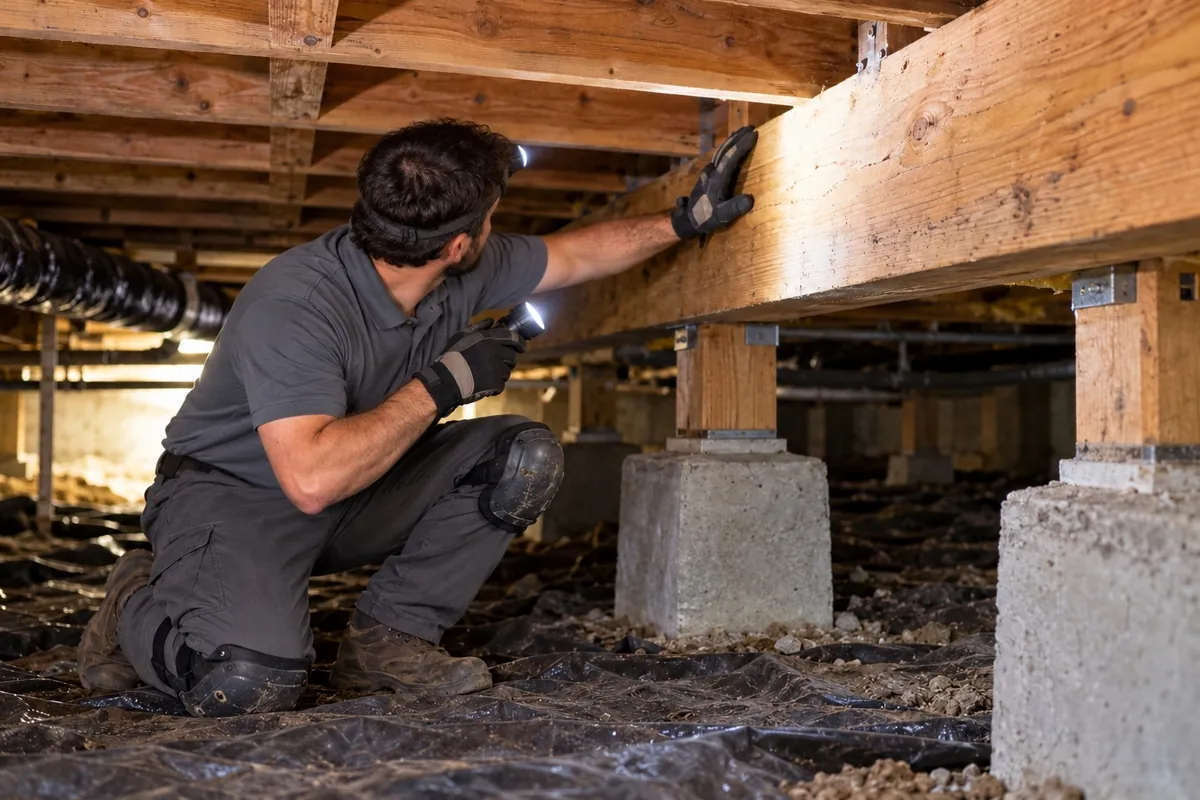
The inspection. A technician walks the property from the foundation to the roofline, not only the crawl space. In a market with established Formosan populations that distinction matters: while most Formosan infestations start in the soil, this species can build above-ground carton nests where there is a steady moisture source, so an inspection that stops at foundation level can miss activity higher in the structure.
Continuous monitoring with Sentricon Always Active. Stations are installed around the structure and checked on a service schedule. The reason we favor continuous monitoring here rather than a once-a-year look is a detection-window problem. A mature Formosan colony can hold a million or more workers against roughly 100,000 in a typical native subterranean colony, so more wood is consumed between visits. Shortening the gap between "activity starts" and "activity is found" is what limits damage.
Annual renewal. The agreement runs on an annual term with scheduled inspections. Keeping those inspections on schedule matters, because a missed inspection can affect coverage under most termite agreements, ours included.
You get a written service report after every visit, which matters on a second home or a rental where you are not there to see the work.
Why it matters
Why Hilton Head homes are at higher risk
Three things stack up on this island.
Formosan termites are established here. Clemson Cooperative Extension lists Beaufort County among 16 South Carolina counties with confirmed, established Formosan subterranean termite populations, concentrated in the coastal band running from Charleston south to Beaufort. Hilton Head Island and Bluffton are both inside that band. This is a documented local condition, not a regional generality.
Lowcountry construction and climate. Crawl space foundations, high humidity, irrigation running against the foundation, wood-to-ground contact at porches and steps, and termite activity that continues close to year-round in this climate. None of these cause an infestation on their own. Together they make a property more hospitable to a colony that is already nearby.
A lot of these homes are empty most of the year. Swarmers appear for a few days and are gone. Mud tubes form behind lattice and shrubs. A soft spot in a floor develops over months. On an owner-occupied home somebody notices. On a second home or a rental in Sea Pines, Hilton Head Plantation, Palmetto Dunes or Sun City, nobody is there to.
For the full species detail, including how to tell a Formosan soldier from a native one and what the research actually says about aerial nests, see our guide to Formosan termite treatment and protection in Hilton Head.
Formosan coverage
Our agreements cover Formosan subterranean termites
Northwest termite agreements cover Formosan subterranean termites. Not every termite agreement on this island covers this species the same way. Some name Formosan termites and cover them identically to native species. Some exclude them by name. Some cover retreatment but cap or exclude repair for Formosan damage.
Whichever provider you choose, read the species language, the exclusions, the retreatment-versus-repair terms and the transfer terms in the agreement itself before you sign.
If you are reading your current agreement and cannot tell which of those you have, our guide to whether your termite bond covers Formosan termites walks through where that language hides.
Changing providers
Switching to Northwest
Several providers have discontinued termite coverage in this market while keeping their mosquito and general pest routes running. If you got that letter, your termite coverage ends on the date in the notice, and a termite bond cannot be reassigned from one company to another. A new provider inspects the property and issues its own agreement.
Here is how the transition works.
- Get your paperwork from the outgoing provider. The cancellation date in writing, a record of termite treatments performed with products and dates, and any prior damage or retreatment findings.
- We inspect the property. Standard practice on every new agreement, not a sign anything is wrong with your home. Your prior treatment history informs what we find and what we recommend.
- We show you the agreement before you sign. What is covered, what is not, the term, and the renewal.
- Coverage starts. Ideally before your old coverage lapses, so there is no window with nothing in place.
What a lapse actually exposes you to, and what to ask a new provider before signing, is covered in what to do when your termite provider cancels your coverage.
Where we serve
Areas we serve from Savannah
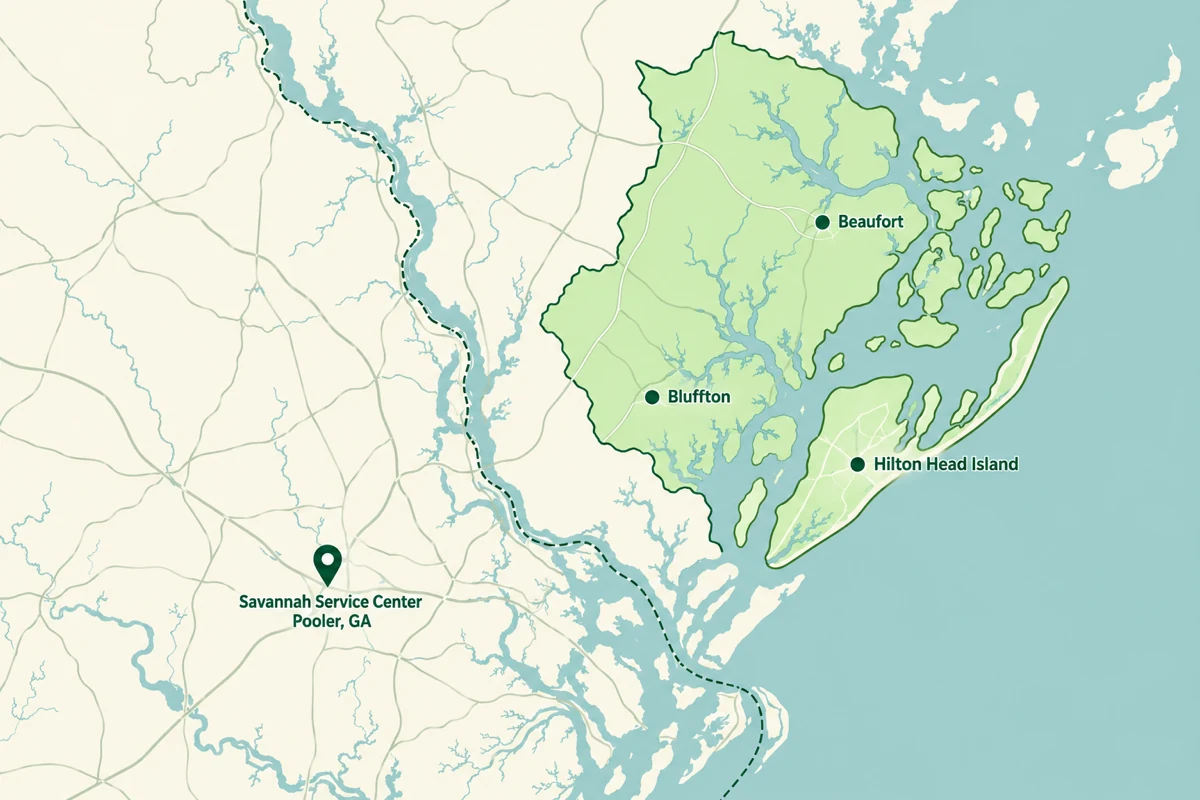
Our Savannah Service Center serves Hilton Head Island, Bluffton and Beaufort. See our Savannah location page for more service areas.
Buying or selling
Termite inspections and the CL100
If you are buying or selling a home in South Carolina, you will encounter the CL100, the state's standardized wood infestation report. Lenders generally require one before closing, and the form and inspection standards behind it are regulated by Clemson University's Department of Pesticide Regulation. You may see the same document called a WDO report, a WDI report or a termite letter.
A CL100 is a point-in-time report on the day the inspector walked the property. It is not a warranty and it does not commit anyone to treating or monitoring the home afterward. That is what a termite agreement is for, and the two are separate products.
Northwest's Savannah Service Center is licensed in South Carolina and authorized to issue CL100 reports.
Full detail in the South Carolina homebuyer's guide to termite inspections and the CL100.
Common questions
FAQs
Are there Formosan termites in Hilton Head?
Yes. Clemson Cooperative Extension lists Beaufort County, which includes Hilton Head Island and Bluffton, among 16 South Carolina counties with established Formosan subterranean termite populations. The heaviest concentration runs along the coast from Charleston south to Beaufort. They are not resistant to professional treatment; the difference from native species is colony size, which is why inspection scope and monitoring frequency matter more here.
How often should a Hilton Head home be inspected for termites?
At least once a year, and a property on a crawl space that sits empty for stretches benefits from continuous monitoring between those annual inspections rather than relying on a single annual visit. An annual inspection tells you what was happening on one day out of 365. On an island with established Formosan populations and a lot of second homes, that is a wide gap.
How long does a termite inspection take?
Most inspections on a single-family home take 30 to 60 minutes. Larger properties, difficult crawl space access, or detached structures that need to be inspected separately take longer.
Does a termite bond transfer if I sell my home?
It depends on the agreement, and it is not automatic. Transfer terms vary by provider and by agreement. In South Carolina a home sale commonly involves a CL100 wood infestation report, and buyers often ask whether an active agreement is in place and transferable, so a transferable agreement can be a selling point.
What does termite treatment cost in Hilton Head?
Pricing depends on the property: square footage, whether the home is on a crawl space or a slab, access conditions, and whether the agreement covers retreatment only or includes damage repair. Repair-inclusive agreements generally cost more because they carry more liability for the provider. A free inspection gives you a figure for your specific property.
Free inspection
Get a straight answer on your termite coverage
A free inspection on your Hilton Head, Bluffton or Beaufort property, and a written copy of what the agreement covers before you commit to anything.