
The SC Homebuyer’s Guide to Termite Inspections and the CL100
Quick answer: A CL100 is South Carolina’s official wood infestation report, issued by a licensed pest control professional on a form regulated by Clemson University’s Department of Pesticide Regulation. It records visible termite and other wood destroying insect activity, signs of past activity, and damage on the day of inspection. Lenders and purchase contracts commonly require one before closing.
If you are buying a home in Hilton Head, Bluffton, or Beaufort, you have probably seen “CL100” in your closing paperwork. It looks like a formality, but the report behind it tells you what termites or decay may be hiding in the house you are about to own. The Lowcountry has humid crawl spaces, older housing stock, and established Formosan termites. Clemson Extension lists Beaufort County among 16 South Carolina counties with established Formosan populations.
This guide explains what a CL100 covers, who pays for it, how VA and FHA loans affect the process, and what to do if the report finds something.
What Is a CL100 Report?
A CL100 is the form for the Official South Carolina Wood Infestation Report. For a sale or mortgage, state regulation says it must come from an individual licensed in Category 7A and covered by a pest control business license, signed, dated, and on the current form (S.C. Code Regs. 27-1085). Clemson University’s Department of Pesticide Regulation regulates both.
You may see the same document called a WDO report, WDI report, WDIR, wood destroying insect report, termite letter, or CL-100. In South Carolina they all point to the CL100. Georgia and Florida have their own report forms, so a request for a “WDO inspection” on a South Carolina home means a CL100.
What Does a CL100 Inspection Cover?
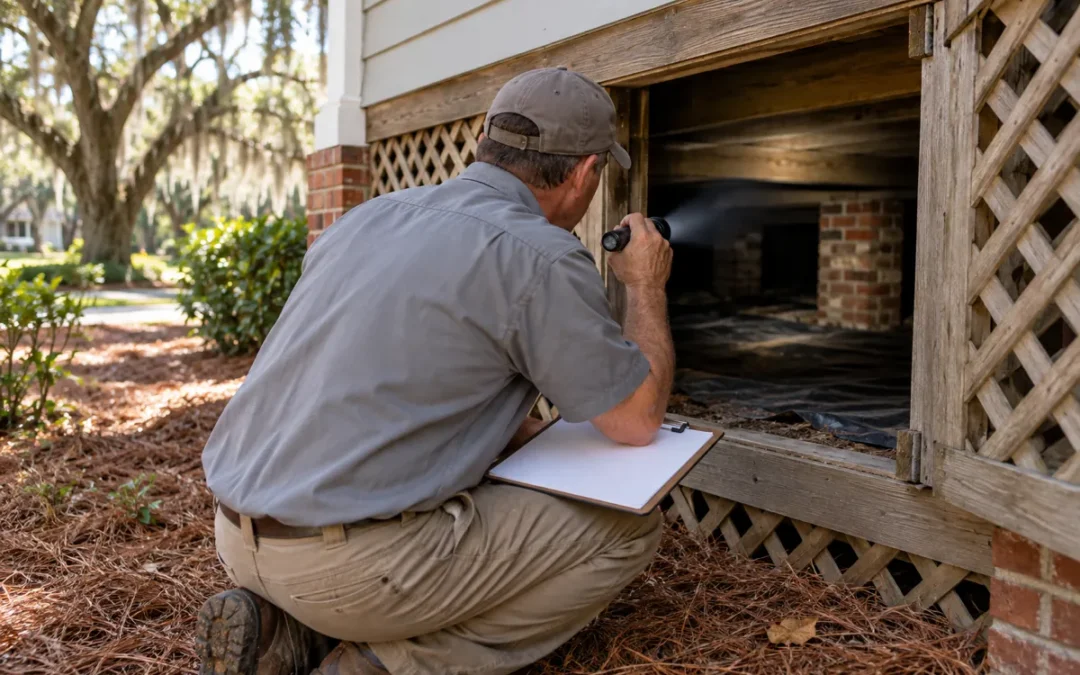
It covers the accessible parts of the home, and it reports three separate findings: active infestation, evidence of previous infestation, and damage. State regulation calls for a visual inspection of all accessible parts of the interior and exterior, including crawl spaces, utility areas, and attics, plus careful sounding and probing wherever damage is visible and moisture readings in the crawl space.
- Active infestation: live termites or other wood destroying insects were found.
- Previous infestation: there is evidence of past activity, such as old mud tubes or exit holes, but nothing active.
- Damage: wood damage was found, which can exist with or without active insects. The report must note damage whether or not it needs repair.
- Decay and moisture: the inspector also reports wood-decay fungi, decay damage, and excessive moisture below the first main living-area floor. Decay in upper siding, fascia, and trim is outside the report’s scope, and the report does not address mold or other health-related fungi.
Read which of those boxes are checked, not just the headline. Areas the inspector could not reach, such as behind finished walls or under insulation, are noted as inaccessible. A line saying no visible evidence in an area nobody could see is not the same as that area being clear.
Who Pays for the Termite Letter, Buyer or Seller?
It depends on the purchase contract. Who orders and pays for the report is a term the buyer and seller agree on, and a lender may add its own requirements, so it can differ from deal to deal.
If you are the buyer, do not assume the seller will cover it. Confirm in writing in the purchase agreement who orders the report, who pays, and when it must be completed.
How Do VA and FHA Loans Affect the Termite Inspection in Beaufort County?
VA requires a wood destroying insect inspection for South Carolina, and a veteran may be charged for it. According to VA’s local requirements page, wood-destroying insect information is required for the entire state of South Carolina. VA Circular 26-22-11 says veterans may be charged the inspection fee where the VA Notice of Value requires it.
Beaufort County is home to Marine Corps Air Station Beaufort and Marine Corps Recruit Depot Parris Island, so VA loan rules are worth understanding here. The same VA circular encourages veterans to negotiate the cost of the inspection and any required repairs with the seller. Confirm with your lender how the cost will be handled on your loan.
FHA does not require a termite inspection on every purchase. HUD Handbook 4000.1 says that if the appraisal is made subject to inspection by a qualified pest control specialist, the lender must obtain that inspection and evidence of any required treatment. Your lender will tell you whether that applies to your appraisal.
What Happens If the CL100 Comes Back Positive?
It becomes a negotiation point, not an automatic deal-breaker. What happens next depends on what the report found and what your contract and lender require. Active activity is usually addressed through treatment, and damage may call for a separate evaluation of the structure.
- Active infestation: the contract usually decides who arranges and pays for treatment, and a lender may want proof of treatment before closing.
- Previous infestation, nothing active: lenders treat this differently. Some accept the report as is, and some ask for treatment history or a statement from a licensed company. Ask your lender.
- Damage: a pest control company can report damage it sees, but it does not assess structural soundness. If the report notes damage to framing, sills, or other structural parts, a licensed contractor or engineer is often the next call.
Buyers and sellers then work out treatment, repairs, and any change to price or closing costs. None of that is automatic, and terms vary by contract.
How Much Does a Wood Destroying Insect Inspection Cost?
The price depends on the size of the home, how easy it is to reach the crawl space or foundation, and whether detached structures need to be inspected. Older homes with tight crawl spaces can take more time. Ask for the price when you schedule.
If you want to know what ongoing protection would look like once you have your CL100, request a free termite inspection and a Northwest professional will walk through the options for your property.
What Does a CL100 Not Do?
It does not protect the house after closing. A CL100 is a point-in-time report on the day the inspector walked the property. It is not a warranty, it does not guarantee the home stays free of termites, and it does not obligate anyone to treat or monitor the property afterward.
State regulation says the same: the wood infestation report is not a warranty against future infestation. That is why a termite agreement, often called a termite bond, exists as a separate product. It is a contract for ongoing monitoring, treatment, and sometimes damage repair. If the house you are buying has an agreement, read it and ask what carries over. If you are replacing canceled coverage, read our guide on what to do when your termite provider cancels your coverage, and see what a termite bond covers and the agreements section of our termite control and treatment page. Sentricon Always Active is the monitoring system we use.
Can Northwest Inspect for Your CL100 in Hilton Head, Bluffton, or Beaufort?
Yes. Northwest’s Savannah Service Center is licensed in South Carolina and authorized to issue CL100 reports, and we inspect homes in Hilton Head Island, Bluffton, and Beaufort County. Our page on termite control in Hilton Head explains how we work with homebuyers and homeowners in the area, and our Formosan guide, Formosan termite treatment in Hilton Head, covers the species most likely to matter here.
Frequently Asked Questions
What is a CL100 report in South Carolina?
A CL100 is the form for the Official South Carolina Wood Infestation Report. It is issued by a licensed pest control professional and regulated by Clemson University’s Department of Pesticide Regulation. It records active infestation, previous infestation, and damage from termites and other wood destroying organisms, plus decay and moisture below the first main floor, in accessible areas on the day of inspection.
Who pays for the termite inspection, the buyer or the seller?
It is set by the purchase contract and any lender requirements, so it can differ from deal to deal. Confirm in writing who orders and pays for the report. On a VA loan, the veteran may be charged the inspection fee where the Notice of Value requires it, and VA encourages negotiating the cost with the seller.
What happens if the CL100 comes back positive?
It becomes a negotiation point. Active infestation is usually treated, previous infestation is handled differently by different lenders, and damage may need a separate evaluation by a licensed contractor or engineer. Your contract and lender decide the details.
Does a VA loan require a termite inspection in South Carolina?
Yes. VA’s local requirements list South Carolina as a state where wood-destroying insect information is required statewide. VA says veterans may be charged the inspection fee where the Notice of Value requires it. Confirm the details with your lender.
Is a CL100 a termite warranty?
No. A CL100 is a report on the condition of the property on one day. State regulation says it is not a warranty against future infestation. A termite agreement, or bond, is the separate contract for ongoing monitoring and treatment.
Plan for Protection After Closing
A CL100 tells you where a home stands on inspection day. To talk through inspections and ongoing protection for a Hilton Head, Bluffton, or Beaufort property you are buying or already own, request a free termite inspection.