Tips for Preventing Cockroaches

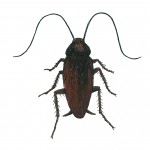
Smokey Brown CockroachBelow are 5 key tips to preventing cockroaches from moving into your home:

  1. Reduce the clutter in your home – By eliminating clutter you eliminate feeding and hiding spots for roaches and other pests.  It also allows you to see pests easier with clutter out of the way.
  2. Seal Cracks and Crevices in the Kitchen and Bathroom – Roaches hide out in cracks and crevices so by sealing them off, it prevents them from having a place to stay.
  3. Eliminate Moisture – Eliminating moisture takes away roaches and other pests water sources.  Fix leaky faucets and standing areas of water.
  4. Clean Messes – Wipe up spills and messes immediately.
  5. Empty Trash – Remove trash from house on a regular basis and place in a tightly sealed garbage can outside of the home.

If you have a cockroach infestation in your home, call a professional exterminating company to get rid of the cockroaches as soon as possible.

Northwest Exterminating
830 Kennesaw Ave MariettaGA30060 USA 
 • 888-466-7849
 

Top Ten Ways to Keep Insects Out of Your Home

One of the questions that our representatives get asked the most is “How To Keep Pests Out of The Home“.  We regularly offer tips to readers on how they can keep pests out but here is a list of the Top 10 Ways to keep pests out of your home.

Top Ten Ways to Keep Insects Out of Your Home

  1. Go around the exterior of your home and seal up any areas where insects could enter your home.  Check around windows, doors, plumbing entrances, fan vents, and electrical entrances.  If your home has window screens make sure they are intact and if areas are torn or damaged replace them.
  2. Make sure to trim all hedges, trees, and other landscaping back away from the home.  Creating at least a one foot barrier will keep insects from using easy methods to enter or get close to your home.
  3. Always remember that insects are living creatures just like humans and they need food, water, and shelter.  Inspect the perimeter of your home, as well as the interior, and pay close attention to areas that could potentially provide all three of these needed resources.
  4. All food and beverages should always remain covered or sealed in air tight containers.  Following this simple step will eliminate the risk of insects being attracted to your home.  If you have fruit out in your kitchen make sure you eat it before it over ripens or store it in your refrigerator.  If food or drinks are dropped or spilled make sure that they are cleaned up immediately.
  5. Routinely empty all the trash and place it outside in garbage cans with tight fitting lids.  All trash cans inside the home should also have lids.
  6. Make sure to keep all pet food sealed in air tight containers.
  7. Remove extra clutter from your home.  Get rid of items that are old and damaged and find a great charity to donate the rest.
  8. Keep all doors and windows closed while not in use.
  9. Make sure to change all your exterior lighting to low sodium vapor light bulbs.  Most insects are attracted to light but they are less attracted to low sodium vapor lighting.  Also make sure to point your security lighting away from your home and not directly on it.
  10. Don’t Bring Them In!  Be careful whenever you travel, move, or bring home the groceries that you check everything before bringing it into your home.  Especially as it gets colder make sure to check and clean all your firewood before you bring it in your home.

So there you have it.  Northwest Exterminating‘s Top 10 Tips for Keeping Pests Out of Your Home.  For more information, visit our website at callnorthwest.com.  If pests still find there way into your home, call one of our professional exterminators to help you identify the source of your issue and get rid of the problem.


The Return of the Stink Bug

The stink bug made it’s presence well-known this past Spring when we saw a large invasion of the pest.  Well it seems that they are back.

Stink bugs feed on leaves, flowers, fruit, crops, and even other pests, such as caterpillars.  They can damage plants and crops but luckily besides the foul odor they emit when they are crushed or threatened, they do not cause harm to humans.


Prevent stink bugs from making a comeback in your home:

  • Seal cracks around the structure of your home.
  • Replace damaged screens on door and windows.
  • Vacuum up stink bugs found in your house (DO NOT step on them.  They will emit a horrible odor.)  Tightly seal and throw away the vacuum bag outside of your structure, immediately.  It is important to dispose of the bag immediately.  Stink bugs tend to die or bust in the bags causing a horrendous smell that could be difficult to get out of your vacuum.
  • Call your pest control companyProfessionals can help you identify where these pests are coming from and what is attracting them.  They will also be able to help develop a customized plan that would get rid of any stink bugs and prevent them from coming back.
 

Cicada Killer Wasps

You are probably seeing cicada killer wasps working overtime these last few weeks of summer.  They are preparing to overwinter by digging their underground burrows and stuffing them with paralyzed cicadas that they will use as food for their larvae.

Cicada tunnels can range from 30-70 inches long and run 12-15 inches below the surface.  Each tunnel has an average of 15 side chambers.  Each tunnel contains 1-3 paralyzed cicadas and a cicada egg that is due to hatch in 2-3 days.  The larvae will feed for about 10 days before leaving the tunnel.  Cicadas only produce one generation each year.

Where are cicadas found?

Cicadas do not have a pack mentality; they are typically a solitary species.  They prefer dry, light textured soils in full sunlight that are near trees that harbor other cicadas.  Common places to find cicada killers are along sidewalks, patios, in flowers beds, gardens, sand boxes and in lawns.

Do cicadas sting?

Female cicadas have stingers that are used to inject venom into other cicadas that causes them to be paralyzed.  Female cicada stings are very painful.  Luckily, females are not territorial like honey bees or hornets.  Male cicadas do not have stingers but are very territorial.

Can cicada killers cause damage?

Female cicada killers burrow and dig tunnels which cause the soil to be misplaced and smother grass.  Cicadas dig loose soil in garden and flower beds that can ruin garden plants and/or vegetables.  A burrow at the base of a plant can disrupt the root system.

How to get rid of cicadas?

Cicadas do not like wet soil so keeping soil watered will deter them from making their borrows  and cause current cicadas to abandon the site.  Watering the soil can also help to settle the soil back into the ground if it has been disrupted by a burrowing cicada.  Another tip is to regularly stir soil or sand to discourage wasps from creating tunnels.

When treating for cicadas, the application should be made directly into the burrow or at entrance.  If you have cicadas messing up your lawn, call Northwest!


Bed Bugs and Back to School

So long are the days of only having to worry that your kids may get head lice in school…you can now add bed bugs to that list.  You’ve heard about the risk of bed bugs when returning back to college but now bed bugs are popping up in elementary, middle, and high schools.

Bed bugs are making their way into schools through back packs.  And while they can’t be transferred from person to person, they can be transferred from back pack to back pack.

The good news is that bed bugs are NOT a sanitation issue and they do not carry diseases.  Bed bugs are not a sign of a dirty home but they are very difficult to get rid of.

If you are notified that there may be a chance that your child’s back pack has been infested do not panic…there are things you can do to ensure that they are not brought into your home.

  • Do not bring the back pack, or other items brought from school,  inside your home.
  • Immediately wash and dry your child’s clothing.
  • Empty out the back pack and run it in the dryer on high heat for 45 minutes to kill any bugs.
  • Check your child’s skin for bites.  If you notice bites, call a professional exterminator.  A professional can inspect your home for bed bugs.  If you do have bed bugs in your home they will be able to treat in an effective and efficient manner.

For more information on bed bugs visit the Georgia Department of Public Heath: http://www.health.state.ga.us/epi/zvbd/infest/index.asp


How to Remove a Wasp Nest

A wasp sting can potentially be very dangerous to those in your home, including yourself, your children, and even your pets.  If allergic, a sting can cause severe complications, and even death.  Even for those that aren’t allergic, a wasp sting is painful and can cause itchiness and infection at the site of the sting.

Needless to say, if there is a wasp nest around your home it is very important that you get rid of it.  Since nests are usually home to a colony of wasps they can be dangerous to try to remove by yourself.  We suggest calling a professional exterminating company, like Northwest Exterminating, to remove the wasp for you, especially if you have an allergy to stings.

You can purchase a can of wasp remover at your local hardware store.  For best results and safety, read and follow all directions on the label.  Most labels will tell you that nighttime is the best time to treat because the wasps will either be inside the nest or on the nest.  Make sure that you have an “exit” plan for when the wasps come out of their nest.  You don’t want to have to run through their swarm to get back inside your home.  Wearing protective clothing (long sleeves and pants, gloves, hat, safety goggles, and mask) spray directly into the nest.  Once you have sprayed for the amount of time suggested on the can, leave the area immediately.  Most products will advise you to wait a specified amount of time before visiting the area of the nest.  Once activity around the nest has seized, knock down the nest and dispose of the nest in a covered trash can outside of the home.

We strongly recommend that you contact Northwest Exterminating, or your professional exterminating company, to remove a wasp nest if you:

  • Feel uncomfortable to do it yourself
  • If the nest is large or there is a large amount of wasps around the nest
  • If you or anyone in your home is allergic to stings

Where is the strangest place you’ve seen a wasp nest around your home?


Getting Rid of Fruit Flies


Fruit flies are a nuisance in homes!  That’s the bottom line!  They seem to come out of nowhere and are extremely hard to get rid of.  But the truth is, they don’t come out of nowhere…they come from up to miles away when they have smelled the scent of ripening fruit and vegetables.  Because they are so small they are able to fit through even the tiniest of openings to get inside your home and to the fermenting fruit.

“Well that’s easy enough”, you say, “just throw away the fruit once you’ve seen fruit flies”…it’s not that easy.  Fruit flies are fast reproducers!  Fruit flies can lay up to 500 eggs at a time and their entire life cycle only takes 8-10 days.  This makes them difficult to control once they have infested your home.  It’s not just the fruit they are after, they can also lay their eggs in sink drains, garbage disposals, empty bottles and cans, garbage bags, and even damp mops and sponges.

Getting rid of fruit flies is difficult but it’s not impossible.  By following some simple steps you can rid your home of fruit flies and ensure that they don’t return.

How to get rid of fruit flies:

  • The first step is to remove the sources of attraction like fruits and vegetables.
  • Remove breeding sources by throwing away old sponges and mops, and cleaning out dish drains.
  • Store fruits and vegetables in the refrigerator rather than on the counter tops.
  • Wipe down sides and bottom of trash cans for any debris that may have spilled over.
  • For smaller infestations you can choose to try a DIY approach to eliminating fruit flies.  Using a glass of some sort (jar or wine bottle) put a slice of banana or apple cider vinegar at the bottom of the glass and stick a paper funnel out of the top of the glass.  The flies will enter the glass in search of the food source but will be unable to get out.  After a few hours, seal the glass and throw away…the fruit flies should be gone.
  • When DIY tricks don’t work…call the experts at Northwest Exterminating.  A professional pest control company will be able to target the living fruit flies as well as the eggs.  They will help you find the source of your problem and help you to control the issue.


How Much Is Monthly Pest Control?

How much do you charge for monthly pest control? Acrobat Ant

This is a question that comes in frequently so we wanted to address it.  The cost of NorPest Green pest control is varied depending on the specific needs and issues of you and your home. If you aren’t having specific pest issues and want to keep it that way, the cost of preventative treatments can be given over the phone by one of our customer service representatives.  Whether you are having a specific bug issue or looking for preventative measures, a highly trained Northwest Exterminating professional will conduct a FREE inspection of your home.  By completing an inspection we are able to conduct a customized program that will meet the pest needs for you and your home.

NorPest Green is a program that was developed by Northwest Exterminating to get rid of bugs and insects while maintaining the lowest environmental impact as possible.  The active ingredients are derived from flowers, plants, and natural elements that are friendly to the Earth and your family…pets included.  We use a 5 step Integrated Pest Management (IPM) process.

Complete our FREE Inspection Form or call us at 888.466.7849 for a free, no obligation inspection of your home.


“Holy Mole-y!” There’s a mole in the pool!

moleThere’s nothing like jumping in the pool on a hot summer day (well, a day that feels like summer anyways)!  So that is exactly what my family and I did on Saturday.  We went to my in-laws’ house and jumped right in the pool.  We had just begun to cool off and enjoy the water when we noticed we weren’t alone.  There was a mole in the pool!!!

The mole was quickly removed without incident and the fun continued but of course my mother-in-law had lots of questions about what it was doing in her yard, how did it get there, what is was looking for, and how does she get rid of them.  So mother in law…this is for you!

Moles are mammals that live underground and occasionally come to the surface.  Above ground, they breathe in oxygen and are able to re-use it to survive in low-oxygen environments such as underground burrows.  When they surface, they cause damage.  Mole damage is divided into two types: burrows and mounds.  Burrows occur when moles search for food near the surface, causing soil to be raised in ridges. Mounds are created when moles burrow deep or tunnel under solid objects such as tree roots or sidewalks and push the soil to the surface.

Mole's runway system

Moles’ bodies and front claws are ideal for digging.  Their hands are quite large for their bodies and include an extra thumb and multiple joints in other fingers.  There are situations where mole damage is mostly visual, but in other situations they can destroy root systems in your yard, eventually killing the grass.

Damage caused by moles:

  • Interference of mowing and planting
  • Create weed invasion
  • Damage plants
  • Damage drainage systems and watercourses

The best way to get rid of a mole is by trapping or baiting the runs.  The trick to mole extermination is to find the feeding tunnels vs. the travel tunnels.  A professional animal removal service provider can distinguish between the two and can humanely remove the moles from your yard.  Call Northwest Exterminating for mole removal.

What is the craziest thing you ever jumped in next to?


Bug Themed Party

Every good party has a theme!  And what better time to have a party than the summer?  Summer is a great time for cookouts, family get-togethers, birthdays, or just because!  And what goes together better than summer and bugs?  So why not have a bug-themed party?

Bug theme decorations:

  • Use green streamers that look like vines and shrubs
  • Place jars with plastic bugs as table decorations
  • Antennae headbands
  • Magnifying glasses

It’s never a good idea to pair real bugs with food.  But we can make our food look like insects, right!  Try these bug themed treats that are sure to be pleasing on the eyes and the stomach.

Ants on a Log

Bug theme foods:

  • Dirt Cake
  • Gummy worms
  • Fruit caterpillar kabobs – skewer green grapes, place 2 white dots on front of first grape using cream cheese, place mini chocolate chip in center of white dots for eyes
  • Bug juice – mix any flavor of red juice and a blue juice…to make GREEN juice
  • Ants on a log – You will need: Celery, cream cheese or peanut butter, raisins
  • Slice celery horizontally and spread with either cream cheese or peanut butter.
  • Place raisins on top
  • Burrowing Worms – Cut 6-7 slits along one half of each hotdog (1/4″ apart and 1/2″ deep).  Do the same on the opposite side.  Cook hotdogs and serve on bun with hotdog condiments.
  • Create your own critter mix – It’s trail mix with a spin.  Give guests a bag and let them make their own mix with selections of nuts, seeds, cereals, crackers, pretzels, raisins, dried fruit, marshmallows, chocolate chips, etc.
  • Watermelon Bug: Cut a rectangle out of the top of a watermelon. Scoop out the flesh and refill with fruit salad. Create a face on the melon using fruit (an orange wedge for the mouth, grape eyes). Use banana halves to make six legs and curl some pipe cleaners for antennae. Attach everything with toothpicks
  • Pretzel butterflies: Attach two small pretzels, tip to tip.  Place piece of caramel at tips and microwave for 10 second or until caramel is melted and pretzels are stuck together.
  • Mosquito Bloody Marys – for the adults, of course.

Don’t let uninvited guests ruin your party.  Call Northwest Exterminating to get rid of any mosquitoes or pests.