
Backyard Mosquito Control — How to Take Your Yard Back

Quick answer: The most effective backyard mosquito control combines source elimination (removing standing water where mosquitoes breed), habitat modification to reduce resting sites, and targeted yard treatments such as barrier sprays or biological stations. In the Southeast, where heat and humidity extend the mosquito season, professional treatment every 21 to 30 days delivers the most consistent protection.
Mosquitoes aren’t just annoying. They’re a genuine public health concern. According to the CDC, mosquitoes transmit diseases including West Nile virus, Eastern equine encephalitis, and dengue fever. For homeowners across Georgia, Tennessee, Alabama, and the Carolinas, the combination of warm temperatures, high humidity, and frequent rainfall creates near-ideal breeding conditions from spring through fall.
The good news: mosquito pressure is manageable. A layered approach, starting with breeding site elimination and finishing with targeted treatment, can dramatically reduce the mosquito population in and around your yard. This guide walks through each step, explains what professionals do differently, and helps you decide when a DIY approach is enough and when it isn’t.
The Short Answer: Start With Standing Water
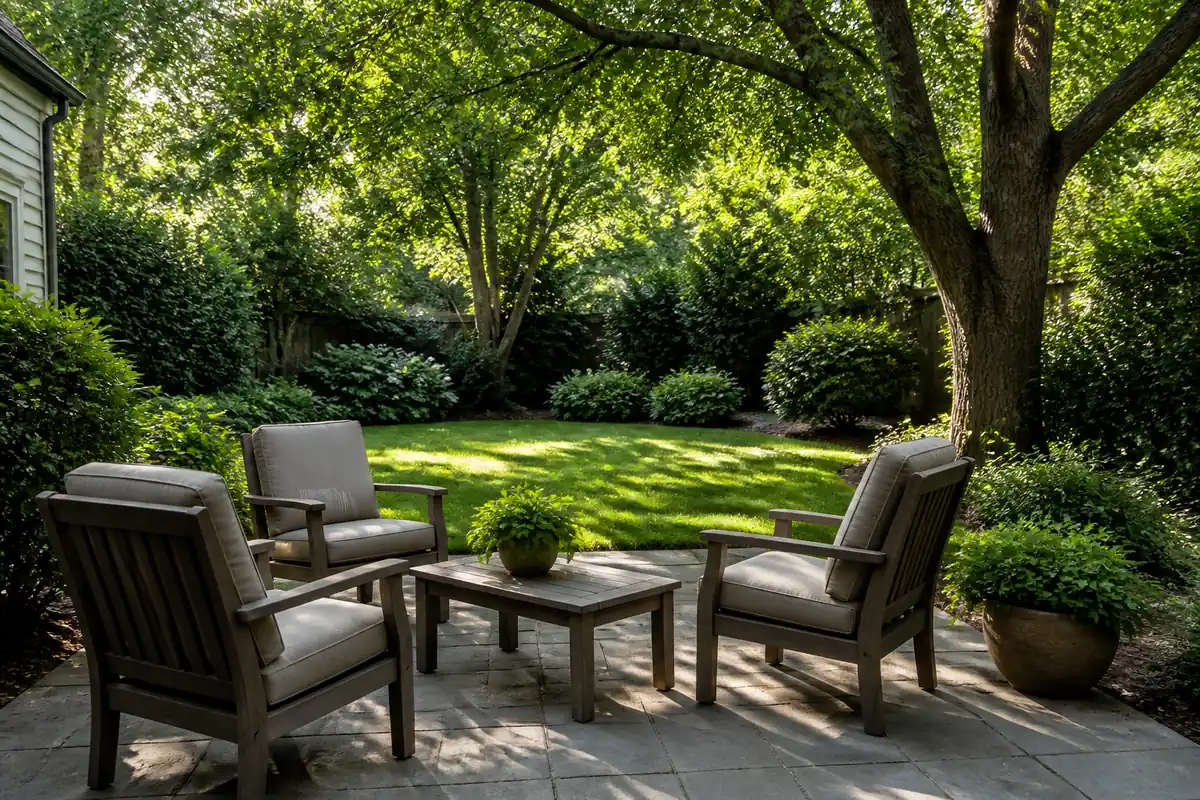
If you only do one thing, eliminate standing water. Mosquitoes need as little as a half-inch of water to lay eggs, and larvae can develop into biting adults in as few as seven days. Every container, clogged gutter, or low-lying area that holds water after rain is a potential breeding site.
Source reduction alone won’t eliminate mosquitoes (adult females fly in from neighboring properties and wooded areas), but it cuts off the reproduction cycle happening on your property. Combined with habitat modification and treatment, it forms the foundation of effective mosquito control.
Step 1 — Eliminate Mosquito Breeding Sites
Start with a thorough walk of your property. You’re looking for anything that holds water, including items you may not immediately associate with mosquitoes.
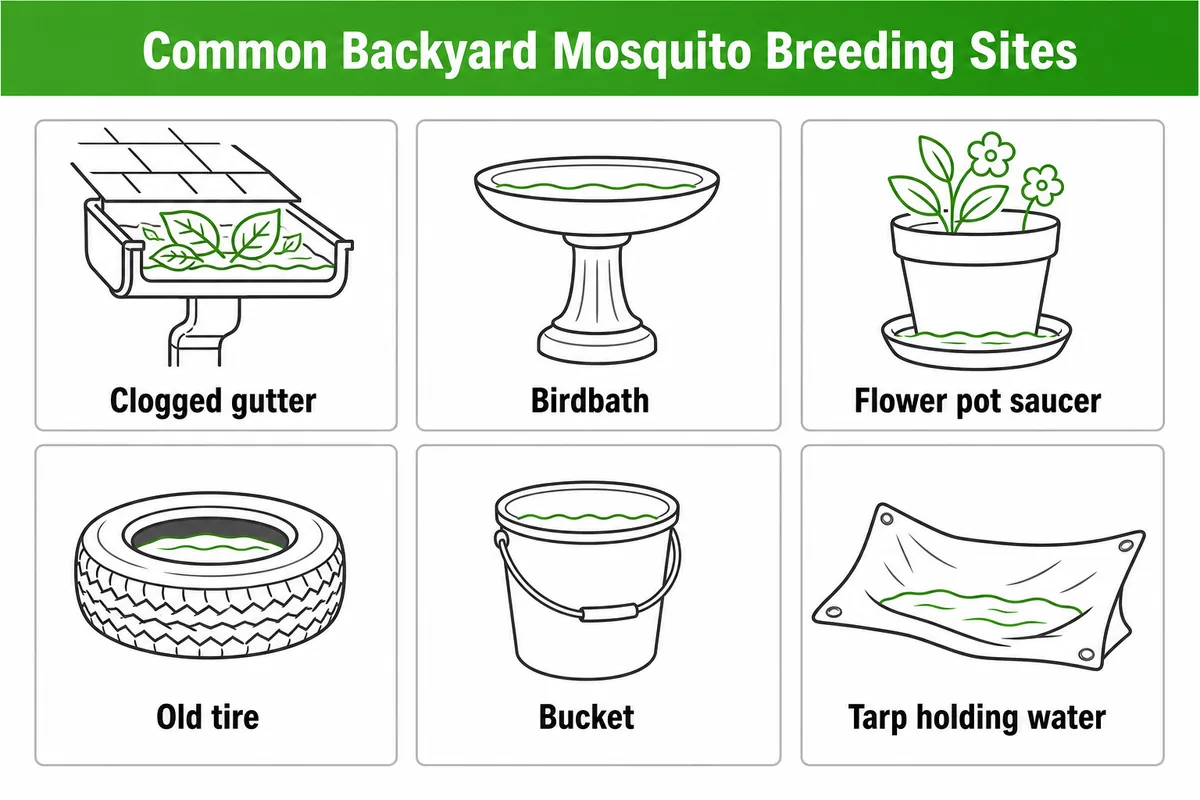
Common breeding sites to address:
- Clogged gutters (one of the most frequently overlooked sources)
- Birdbaths (refresh water every three to four days)
- Flower pot saucers and trays
- Tarps, pool covers, and children’s toys left outdoors
- Low spots in the lawn that stay wet after rain
- Old tires, buckets, or unused containers
- Tree holes and hollow stumps
- AC condensate drain lines that drip onto mulch or soil
“The number one breeding source homeowners overlook in Southeast yards is the gutter system,” says Matthew “Logan” Walker, Area Technical Leader for the Northwest Service Centers in Georgia. “Gutters clogged with debris hold water for days after rain. A homeowner can walk the entire yard and still miss what’s happening six feet above their head.”
For water features you want to keep (birdbaths, decorative ponds, rain barrels), use Bti (Bacillus thuringiensis israelensis) dunks or granules. Bti is a naturally occurring bacterium that kills mosquito larvae without harming birds, fish, or beneficial insects.
Step 2 — Make the Yard Less Inviting
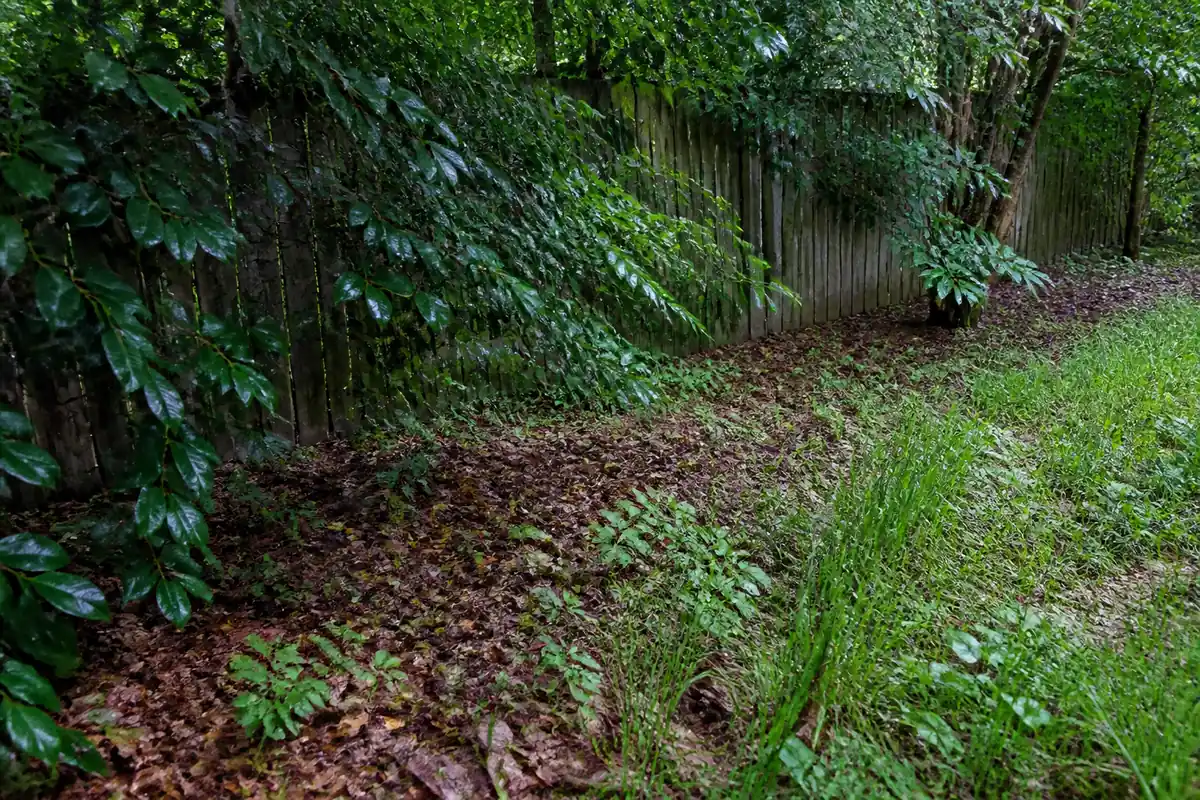
Adult mosquitoes don’t spend their time flying. During the heat of the day, they rest in shaded, humid areas: thick shrubs, tall grass, dense groundcover, and leaf litter. Reducing these harborage areas lowers the population of resting adults that will emerge to bite at dawn and dusk.
Habitat modifications that make a measurable difference:
- Mow the lawn regularly and keep grass trimmed
- Prune shrubs to improve air circulation and reduce humidity at ground level
- Clear leaf litter from garden beds and around the base of trees
- Trim overhanging vegetation along fence lines and property edges
- Avoid overwatering landscaping, which creates moist soil conditions mosquitoes prefer
If you’re interested in adding plants with natural repellent properties, citronella grass, lemongrass, basil, and marigolds all produce compounds mosquitoes find deterring. Positioned near patios and seating areas, they add a useful layer, particularly when leaves are bruised or brushed to release their oils. That said, plants reduce nearby mosquito activity; they don’t eliminate a yard-wide population.
Step 3 — Treat the Yard
Once breeding sites are addressed and harborage is reduced, targeted treatment handles the adult mosquitoes already present and prevents new ones from establishing.
What Are the Most Effective Mosquito Yard Treatments?
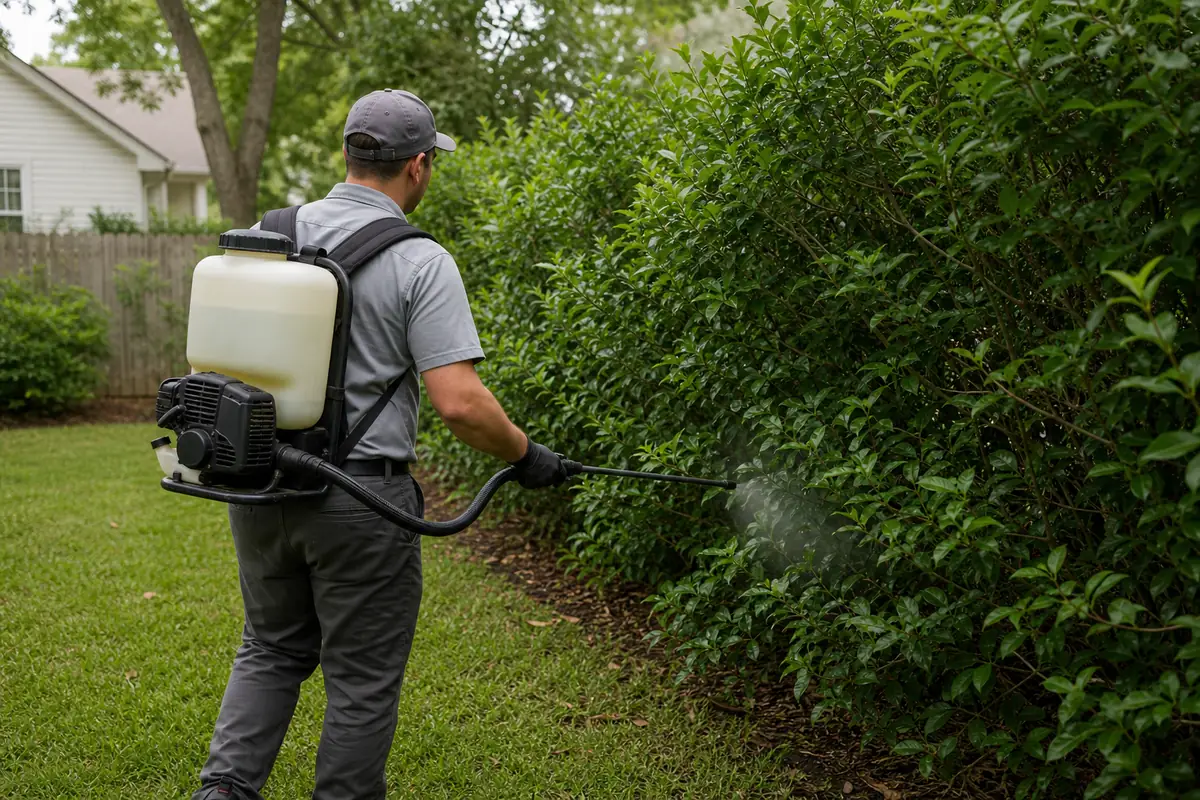
Barrier spray treatments are the most widely used professional option. A technician applies a residual insecticide to the foliage, shrubs, and shaded areas where adult mosquitoes rest. A well-applied barrier spray remains effective for 21 to 30 days in Southeast conditions, though heat, rain, and heavy foliage can shorten that window.
Biological control with In2Care stations offers an alternative for homeowners who prefer to minimize broad insecticide applications. In2Care mosquito stations attract egg-laying female mosquitoes using a biological lure. The station contains a larvicide-laced medium that mosquitoes carry back to additional breeding sites, treating water sources a technician may not be able to directly access. The active ingredient, Beauveria bassiana, is a naturally occurring fungus. In2Care stations work continuously between service visits and are particularly effective when used as part of a broader program.
Larvicides target the larval stage in standing water that can’t be fully eliminated: decorative ponds, retention areas, and drainage features. Bti-based products and surface films that prevent larvae from reaching the surface to breathe are both effective options.
Comparison: DIY vs. Professional Mosquito Treatment
| Factor | DIY Store Sprayer | Professional Treatment |
|---|---|---|
| Coverage | Limited by reach and volume | Full yard, including canopy and harborage zones |
| Product strength | Consumer-grade formulations | Professional-grade residual products |
| Breeding site ID | What’s visible at ground level | Trained inspection, including gutters, structure, and drainage |
| Treatment frequency | Variable | Scheduled every 21 to 30 days |
| Biological options | Limited | In2Care and larvicide integration |
| Consistency | Dependent on homeowner follow-through | Maintained on a program schedule |
“A homeowner with a store-bought sprayer can treat what they can see,” says Jason Womack. “A trained technician knows where mosquitoes actually rest and breed, which is often in the upper canopy of shrubs, in gutters, or in water sources the homeowner doesn’t realize are a problem. That changes what gets treated and how effective the outcome is.”
Step 4 — Personal and Patio Protection
Yard treatment reduces the population. Personal and patio protection handles the ones that get through.
- Personal repellents: EPA-registered repellents containing DEET, picaridin, or oil of lemon eucalyptus (OLE) provide reliable bite protection. Apply to exposed skin before going outdoors, especially at dawn and dusk when mosquito activity peaks.
- Patio fans: Mosquitoes are weak fliers. A fan set on outdoor seating areas disrupts their flight and reduces landings significantly. It’s one of the simplest, most underused tools in backyard mosquito management.
- Clothing choices: Wear light-colored, loose-fitting clothing when spending time outdoors during peak hours. Permethrin-treated clothing provides additional protection for extended outdoor activity.
- Screens and entry points: If mosquitoes are getting indoors, check window and door screens for tears or gaps. Review our guide on dealing with mosquitoes in the house for additional steps.
- Mosquito traps: Traps that use CO2 or octenol lures can supplement control in a managed yard. They work best as part of a broader program, not as a standalone solution.
For more on what mosquito bites mean for your health and how to identify concerning species, see our mosquito bite guide.
When to Call a Pro
DIY approaches work well for light to moderate mosquito pressure in well-maintained yards with limited standing water. In many Southeast properties, though, the conditions that drive mosquito activity (wooded lots, proximity to water, dense landscaping, drainage challenges) require a level of inspection and treatment that consumer tools can’t match.
Call a professional when:
- DIY treatments aren’t holding between applications
- Your yard backs up to woods, water, or poorly maintained neighboring properties
- You’re dealing with disease-carrying species such as the Asian tiger mosquito (Aedes albopictus), which is common throughout the Southeast
- You have children, elderly family members, or pets who spend significant time outdoors
- You want a consistent, season-long program rather than reactive spot treatments
Professional programs are most effective when they run on a scheduled basis. A one-time treatment reduces pressure temporarily; a recurring program keeps it managed across the full season.
Local Relevance — Southeast Yards
Georgia, Tennessee, Alabama, and the Carolinas share a climate that extends mosquito activity well beyond the summer months. In much of the region, mosquitoes are active from March through October, and in warmer years or in the southern portions of the service area, that window stretches further.
Several factors make Southeast yards particularly challenging:
- Tree canopy and shade. The region’s oak, pine, and hardwood canopy creates the cool, shaded resting zones mosquitoes prefer. More canopy means more harborage and more humid microenvironments at ground level.
- Rainfall patterns. Frequent afternoon and evening thunderstorms throughout the summer constantly replenish standing water. Breeding sites that are emptied one week are refilled the next.
- Asian tiger mosquito pressure. Aedes albopictus is well established throughout the Southeast. Unlike the common house mosquito, Asian tiger mosquitoes bite aggressively during daylight hours, breed in very small containers, and are harder to avoid through timing alone.
Treatment frequency in Southeast conditions: “In Georgia and the Carolinas, we typically recommend treatments on a 21-day cycle during peak season,” says Matthew “Logan” Walker, Area Technical Leader for the Northwest Service Centers in Georgia. “Heat and humidity break down residual products faster than in cooler climates, and rainfall resets breeding conditions constantly. Spacing treatments further apart means you’re spending part of the season unprotected.”
Northwest Exterminating serves homeowners across the Southeast with mosquito control programs designed around regional conditions, including barrier spray and In2Care station options tailored to the level of pressure on your property.
Take Back Your Yard This Season
Effective backyard mosquito control isn’t a single action. It’s a system. Remove the breeding sites. Reduce the harborage. Treat the yard on a consistent schedule. Protect yourself and your patio during peak hours. Each layer reinforces the others, and the result is a yard that’s genuinely usable from spring through fall.
If you’re ready to stop managing mosquitoes one treatment at a time, Northwest can help. Our technicians inspect your property, identify what’s driving pressure, and recommend a program that fits your yard and your goals.
- See our barrier spray and In2Care mosquito programs
- Get a free mosquito control quote
- Call (888) 466-7849 to schedule an inspection with your local Northwest branch.
Frequently Asked Questions About Backyard Mosquito Control
What is the best backyard mosquito control method?
The most effective backyard mosquito control combines three layers: eliminating standing water where mosquitoes breed, reducing shaded harborage areas where adults rest, and applying targeted yard treatments such as barrier sprays or biological In2Care stations. No single method eliminates mosquitoes alone. Used together on a consistent schedule, these steps dramatically reduce populations and keep yards protected throughout the season.
How do I get rid of mosquitoes in my yard naturally?
Natural mosquito control starts with removing standing water, which cuts off reproduction at the source. Bti (Bacillus thuringiensis israelensis) dunks treat water features without chemical insecticides. Repellent plants such as citronella grass, lemongrass, and basil near seating areas reduce nearby activity. Patio fans disrupt mosquito flight. These approaches reduce exposure, but in areas with high mosquito pressure, particularly in the Southeast, they work best alongside professional treatment rather than as a complete replacement.
How often should I treat my yard for mosquitoes?
In Southeast states including Georgia, Tennessee, Alabama, and the Carolinas, professional barrier spray treatments should be applied every 21 to 30 days during active mosquito season. Heat, humidity, and frequent rainfall break down residual products faster than in cooler climates, which shortens the effective window. Biological programs using In2Care stations provide continuous action between visits and can extend the effectiveness of a scheduled program.
Do mosquito yard sprays actually work?
Yes, when applied correctly and on a consistent schedule. Professional barrier sprays target the shrubs, foliage, and shaded areas where adult mosquitoes rest, using residual formulations that remain effective for three to four weeks under typical conditions. Consumer-grade sprays from hardware stores contain diluted formulations, provide shorter residual protection, and are limited by application reach and technique. For consistent season-long results, professional application on a scheduled program outperforms intermittent DIY treatment.