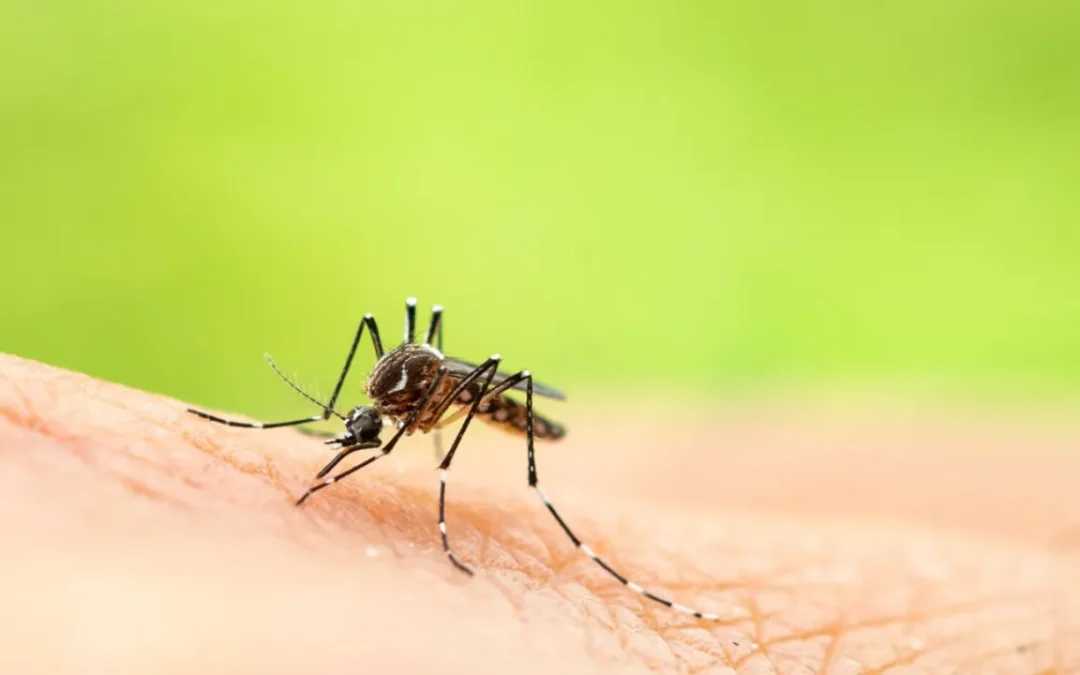
Miami’s tropical climate is perfect for year-round outdoor living, but it also provides ideal conditions for mosquitoes. Warm temperatures, high humidity, and frequent rain create a nearly constant breeding environment for these pests. Sustainable mosquito management offers a way to reduce mosquito activity while protecting the local environment and preserving the beauty of South Florida’s natural spaces.
Why Sustainable Mosquito Control Matters in Miami
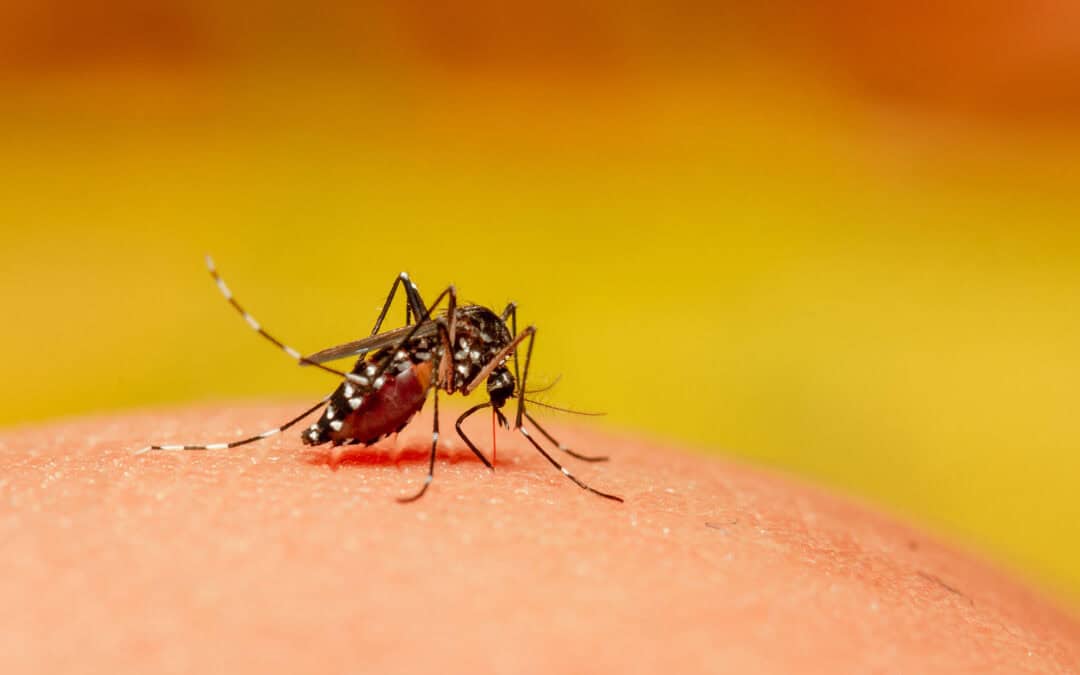
In Miami, mosquitoes are more than a seasonal annoyance. Species such as the Aedes aegypti thrive in small amounts of standing water and can be active much of the year. Conventional chemical treatments may offer quick relief but can also affect pollinators, beneficial insects, and waterways.
Sustainable mosquito control addresses the root causes of infestations through prevention, environmental awareness, and targeted treatments. By making small, consistent changes to outdoor spaces, it is possible to enjoy a yard with fewer interruptions from mosquitoes.
Integrated Pest Management for Mosquitoes
Integrated Pest Management (IPM) combines prevention, monitoring, and precise treatments to manage pests effectively with minimal environmental impact.
Reducing Breeding Sites
Since mosquitoes need standing water to reproduce, removing or treating these sources is one of the most effective control measures. Emptying containers, cleaning gutters, and changing water in birdbaths or pet bowls regularly all help break the breeding cycle.
Encouraging Natural Predators
South Florida’s environment supports beneficial wildlife such as dragonflies, bats, and certain fish species that naturally help manage mosquito populations. Supporting these species through balanced landscaping can provide ongoing mosquito control.
Targeted Treatment Options
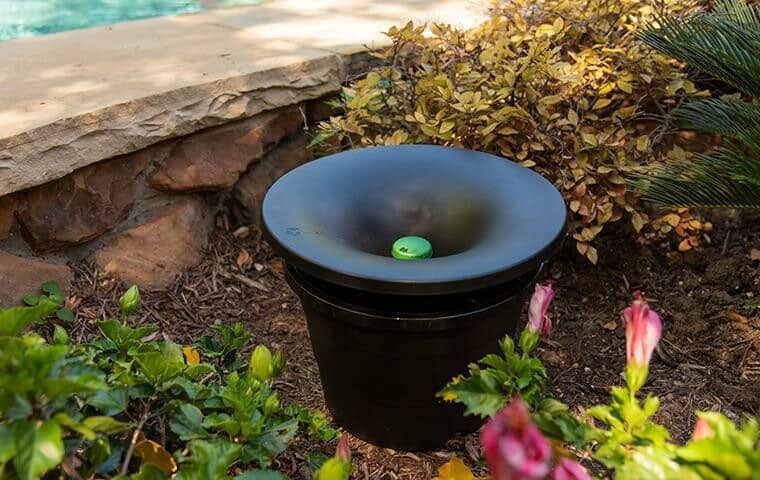
When additional measures are needed, targeted tools such as In2Care systems can help. These stations attract mosquitoes and expose them to a treatment that affects both adults and larvae, providing ongoing control while minimizing impact on non-target species.
Eco-Friendly Solutions for Miami’s Mosquito Challenges
Natural Repellents
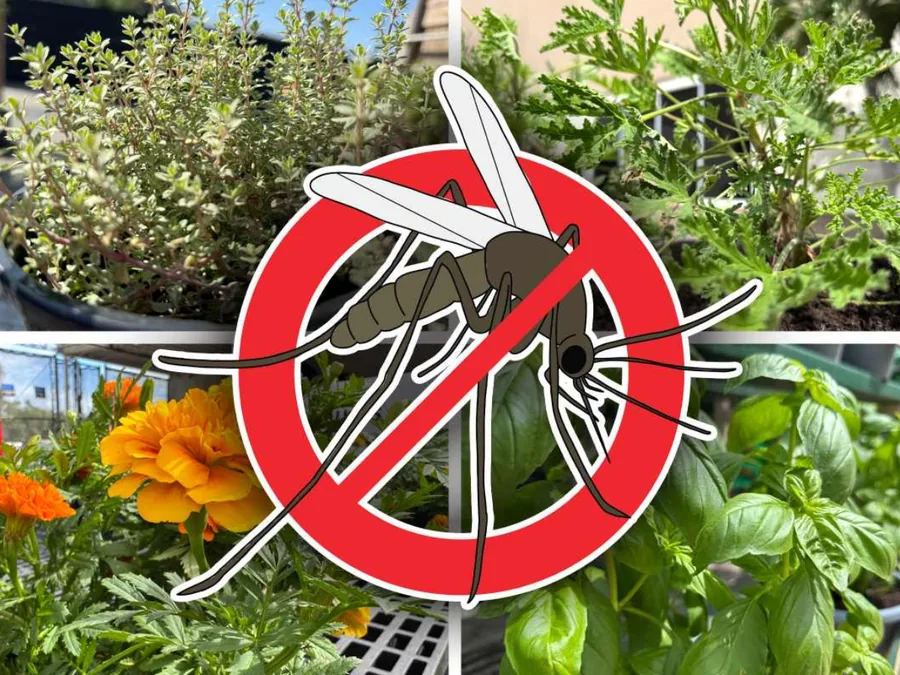
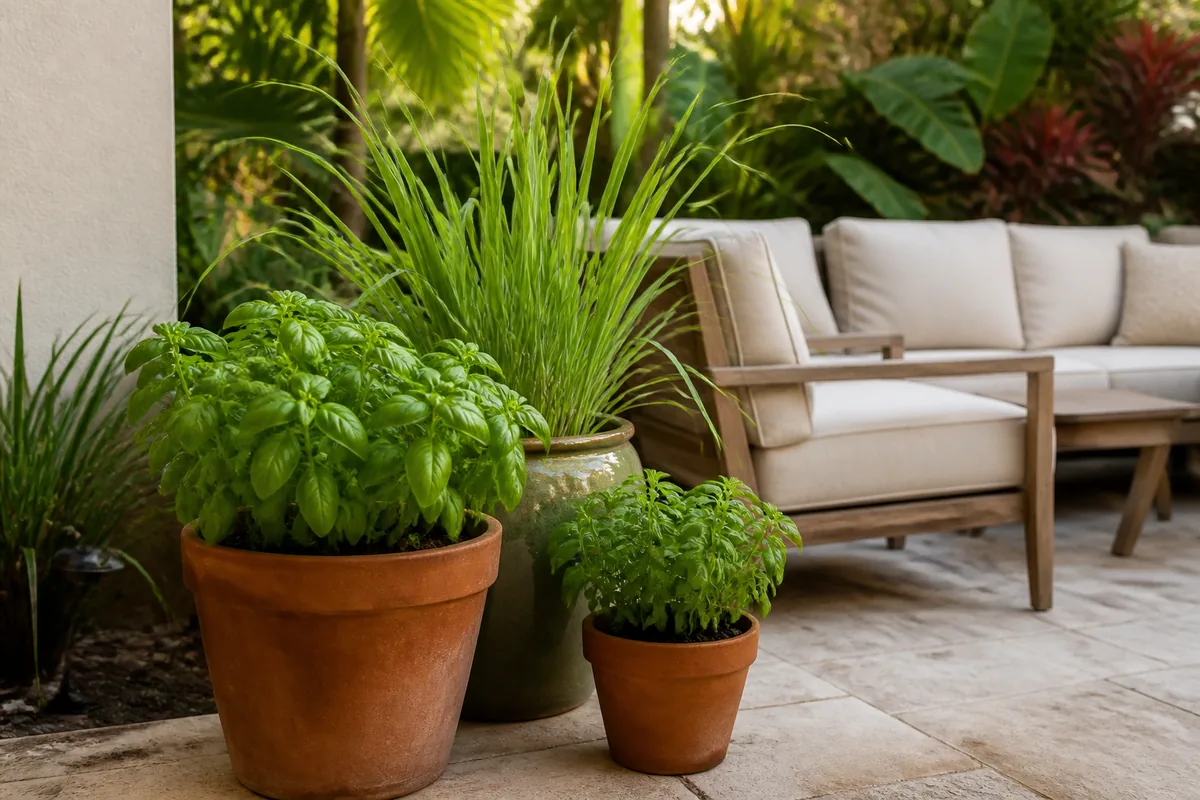
Plants like citronella, marigolds, and basil can deter mosquitoes while adding greenery to outdoor areas. Essential oils such as eucalyptus, peppermint, and lemongrass can be used in sprays for added protection.
Low-Impact Treatments
In2Care stations and targeted larvicides offer effective mosquito reduction without disrupting beneficial insect activity. These methods focus on specific problem areas, limiting environmental impact.
Benefits of a Sustainable Approach to Mosquito Control
Family and Pet-Friendly Living
Reducing chemical use creates a healthier outdoor space for children, pets, and wildlife while also protecting South Florida’s waterways and coastal ecosystems.
Long-Term Results
Addressing mosquito activity at the source reduces the need for frequent treatments, leading to more consistent comfort outdoors.
Preserving South Florida’s Natural Beauty
Eco-friendly mosquito control supports biodiversity, protects pollinators, and maintains the vibrant, tropical environment that makes Miami unique.
A Healthier Way to Manage Mosquitoes
Sustainable mosquito management is about prevention, balance, and smart intervention. By removing breeding sites, encouraging natural predators, and using targeted solutions like In2Care, Miami residents can enjoy their outdoor spaces while supporting a healthier environment for the community.
By Mike Vilchez, Quality Assurance Technical Field Trainer — South Florida · Last updated: July 2026
Quick answer: Several plants, including citronella grass, lemongrass, basil, and marigolds, produce compounds and oils that mosquitoes find offensive. Planted near patios, entryways, and seating areas, these species can reduce mosquito activity. They work best as one layer of a broader strategy, not as a standalone solution, particularly in South Florida’s heat and humidity.
If you spend any time outdoors in Naples, Fort Myers, or Miami, you already know what’s waiting for you the moment you step outside. Mosquito season in Florida runs nearly year-round, and the combination of heat, humidity, and standing water makes South Florida one of the most active mosquito environments in the country.
It’s no surprise that many homeowners are looking for natural solutions. Mosquito-repelling plants have gained real traction, not just as landscaping choices, but as a first line of defense. And several of them genuinely do help. The key is knowing which varieties actually hold up in South Florida’s conditions, how to use them effectively, and where their limits are.
This guide covers the plants worth planting, how to get the most out of them, and how to combine natural landscaping with professional mosquito control for results you can actually rely on.
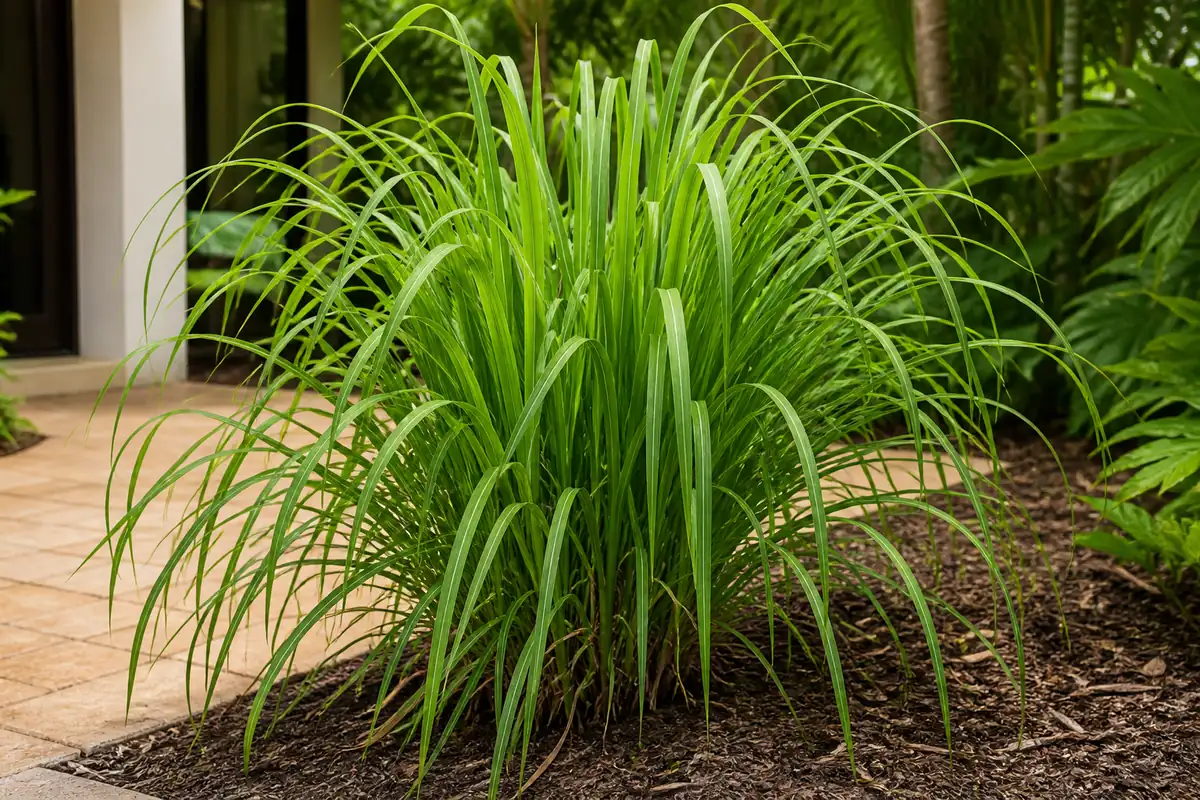
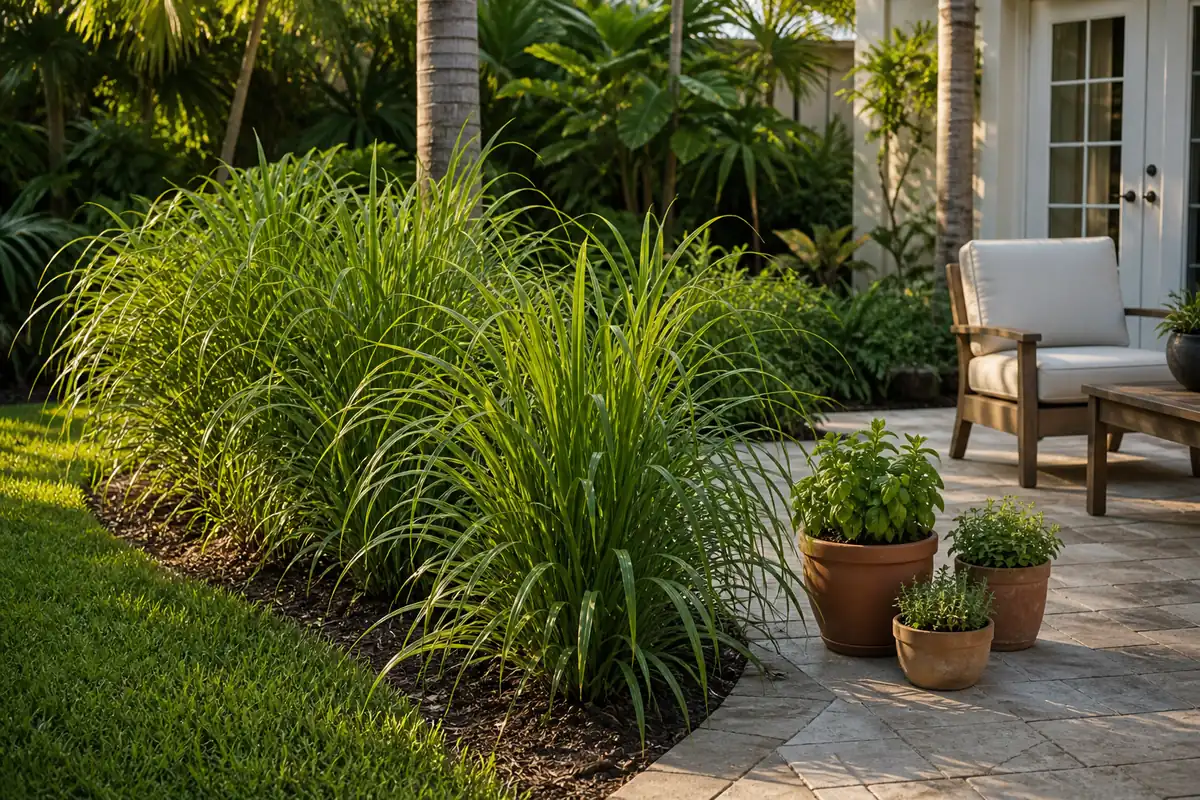
Citronella grass grows tall enough to form a natural border along a patio or walkway in full sun.
Do Mosquito-Repelling Plants Actually Work?
The short answer: yes, but with important caveats.
Many plants produce natural oils and compounds that mosquitoes find irritating or disorienting. Citronella, lemongrass, and basil are among the most studied. Research from the University of Florida Institute of Food and Agricultural Sciences (UF/IFAS) confirms that certain plant-derived compounds do have repellent properties, but the key variable is exposure. A plant sitting in a pot releases very little of its active compounds into the surrounding air. You typically need to crush or bruise the leaves to activate the scent at a level that actually deters mosquitoes.
That distinction matters for setting realistic expectations. Repellent plants are a genuine tool. They are not a force field.
“Plants like citronella and lemongrass do have real repellent properties, but they need the right conditions to thrive here,” says Mike Vilchez, Quality Assurance Technical Field Trainer for the Northwest Family of Brands in South Florida. “South Florida’s heat and humidity are intense. Some of the plants that do well up north struggle here. Choosing the right varieties and placing them strategically makes a big difference in how effective they actually are.”
Best Mosquito-Repelling Plants for Florida Yards
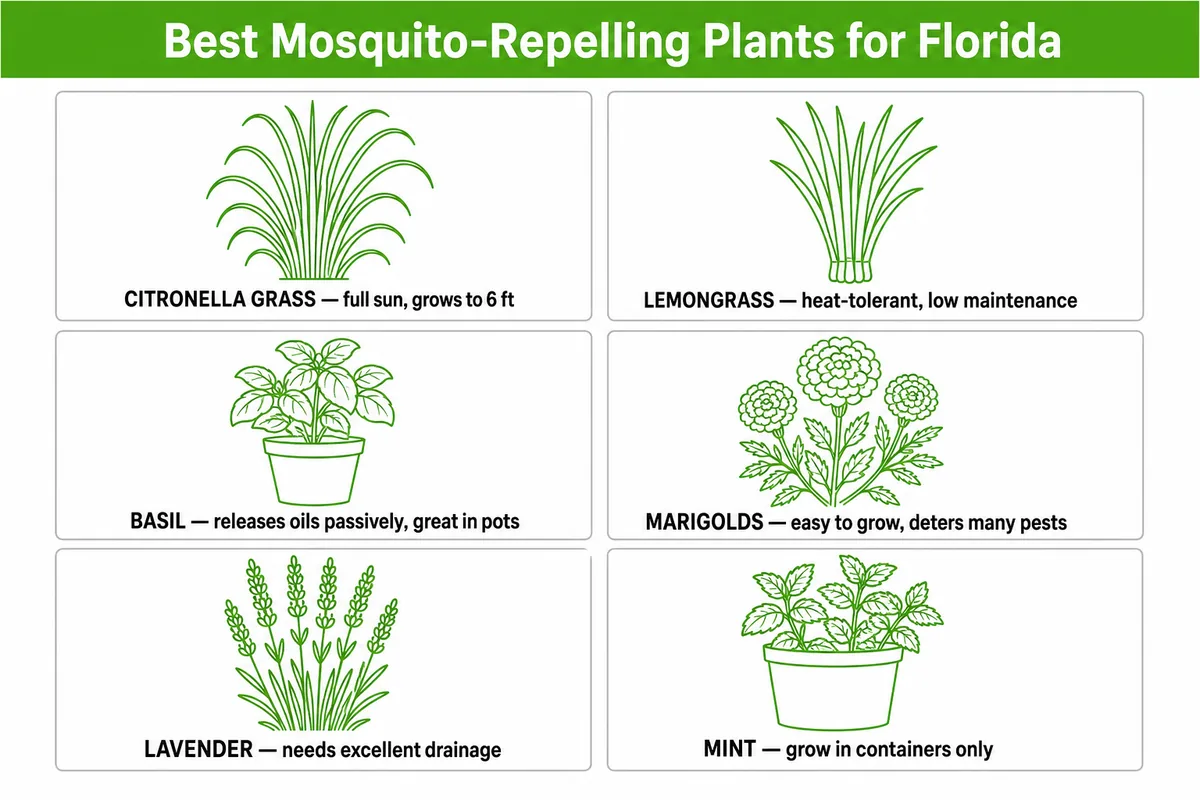
The plants below hold up in South Florida heat and humidity and have documented repellent properties.
Not every plant marketed as a “mosquito repeller” is worth growing in South Florida. The ones below hold up in the heat, are relatively easy to maintain, and have documented repellent properties.
Citronella Grass (Cymbopogon nardus)
Citronella grass is the most widely recognized plant that repels mosquitoes, and for good reason. The natural citronella oil found in its leaves is a common active ingredient in commercial repellents. Planted in full sun with well-drained soil, citronella grass can grow up to six feet tall, making it useful as a natural border along patios or walkways.
In South Florida, citronella grass performs well as a perennial. It tolerates heat and tolerates humidity better than many of its alternatives. Crushing a few leaves before sitting outside releases a stronger concentration of the oil.
Lemongrass (Cymbopogon citratus)
Lemongrass is a close relative of citronella and shares many of the same repellent characteristics. It thrives in Florida’s full sun, tolerates sandy soil, and grows in dense, tall clumps that add structure to a landscape. As a bonus, it doubles as a culinary herb used widely in Southeast Asian cooking.
For South Florida homeowners, lemongrass is one of the most reliable choices. It establishes quickly, handles heat well, and requires minimal maintenance once it’s settled.
Basil (Ocimum basilicum)
Unlike most plants on this list, basil doesn’t require any crushing or bruising to release its repellent compounds. It emits its oils passively, which makes it one of the more practical options for container planting near seating areas, outdoor dining tables, and entryways.
Lemon basil and cinnamon basil tend to have a stronger scent profile and may offer more noticeable deterrence. Basil prefers moist, well-drained soil and regular watering, manageable in Florida with consistent irrigation.
Marigolds (Tagetes spp.)
Marigolds contain pyrethrum, a natural compound used in many commercial insect repellents. They’re also among the easiest plants to grow in Florida: tolerant of heat, widely available, and effective in borders and container gardens near outdoor living spaces.
Beyond mosquitoes, marigolds deter a range of other garden pests, which makes them a practical addition to any Florida yard. They prefer full sun and do best with well-drained soil.
Lavender (Lavandula spp.)
Lavender’s aromatic oils, particularly linalool, are well-documented as mosquito deterrents. The challenge in South Florida is that lavender prefers drier conditions and cooler nights. It can struggle with the region’s humidity and prolonged wet season.
If you’re in a well-drained area with good air circulation, lavender is worth trying. French lavender (Lavandula dentata) tends to handle humidity better than English varieties and is more likely to thrive in South Florida conditions.
Mint (Mentha spp.)
Mint’s strong volatile oils make it a reliable aromatic deterrent. The challenge is containment: mint spreads aggressively and can overtake garden beds quickly. Container planting is almost always the better approach.
Placed near doors, windows, and patio edges, potted mint releases a meaningful amount of its active scent, especially when brushed against. Peppermint and spearmint are both effective choices.
How to Use Repellent Plants the Right Way
Repellent plants do the most good when they sit close to where people gather, not at the far edge of the yard.
Planting mosquito-repelling varieties is only half the equation. Placement and maintenance determine how much difference they actually make.
Position plants near where people gather. The closer repellent plants are to patios, entryways, and outdoor seating, the more exposure the scent creates. Plants at the far edge of a yard provide minimal benefit to people sitting on a porch.
Activate the scent before heading outside. Rubbing or lightly crushing the leaves of citronella, lemongrass, basil, or mint releases far more of the repellent oils than an undisturbed plant. Make it a habit before you sit down outdoors.
Mix varieties for layered coverage. Different plants release different compounds. Combining citronella or lemongrass as larger border plants with basil or mint in containers at ground level creates a more complete aromatic barrier.
Keep plants healthy. Stressed, struggling plants produce fewer oils. Regular watering, appropriate fertilization, and pruning keep repellent plants operating at their best. In Florida’s summer heat, container plants may need daily watering.
Eliminate standing water nearby. No plant eliminates the breeding conditions that cause mosquito populations to grow. Empty saucers under pots, address low-lying areas, and refresh birdbaths frequently.
What Plants Can’t Do
This is the part most gardening guides skip. Mosquito-repelling plants reduce exposure at close range. They do not eliminate mosquitoes from a yard, stop breeding in standing water, or protect against species that are highly aggressive or disease-carrying.
According to the CDC, mosquitoes are among the most dangerous disease-transmitting insects in the world, capable of spreading West Nile virus, dengue fever, and other pathogens. That risk context matters when evaluating how much protection a planted border actually provides.
Plants also can’t treat the larval stage. Mosquito populations grow from standing water, not from open air. Even a yard full of citronella grass will continue to produce mosquitoes if water-holding areas aren’t addressed.
“Plants are a valuable part of a natural yard strategy, but they work best alongside treatment, not instead of it,” says Mike Vilchez, Quality Assurance Technical Field Trainer for the Northwest Family of Brands in South Florida. “When customers tell me they want to keep things as natural as possible, I support that. We talk about how to use plants and landscaping together with targeted control so they get real results without compromising their goals for their yard.”
How to Combine Plants With Real Mosquito Control
For homeowners in South Florida who want a natural-leaning yard without sacrificing effectiveness, the best approach combines smart landscaping with targeted professional treatment.
Layer natural and professional tools strategically. Use repellent plants near high-traffic outdoor areas where they make the most immediate impact. Use professional mosquito control to address the broader yard, including resting areas and breeding sites that plants can’t reach.
Consider no-spray options. Northwest’s In2Care mosquito stations use a biological approach that appeals to homeowners looking to minimize chemical applications. Stations attract egg-laying mosquitoes and use a larvicide-laced medium that mosquitoes carry back to additional breeding sites, working continuously between service visits.
Address source reduction. A technician can identify standing water and breeding areas that aren’t obvious to the untrained eye. Larval control at the source prevents the next generation of mosquitoes before they emerge.
Commit to a seasonal schedule.Professional mosquito control in Florida is most effective as a recurring program, not a one-time treatment. Barrier sprays remain effective for 21 to 30 days. A seasonal plan covering peak mosquito activity gives consistent protection that a single application cannot provide.
Growing Mosquito-Repelling Plants in South Florida
South Florida’s climate, defined by intense heat, high humidity, a long wet season, and mild winters, creates specific challenges for some of the most popular repellent plants.
Lemongrass and citronella grass are the most reliable performers in Naples, Fort Myers, and Miami. Both are heat-tolerant, established as perennials in South Florida, and widely available at local nurseries. Marigolds and basil also perform consistently well and are easy to replace if a seasonal planting doesn’t survive a particularly wet stretch.
Lavender is the most challenging. It prefers dry conditions and struggles in prolonged humidity. If you want to try it, choose French lavender, plant it in a raised bed or container with excellent drainage, and position it where it gets strong airflow.
Mint is straightforward but requires container management. Without containment, it becomes invasive quickly in Florida’s growing conditions.
For guidance specific to your region, UF/IFAS extension resources offer plant-by-plant detail on Florida suitability, including soil types and seasonal timing for South Florida zones.
Used strategically near patios and entryways, repellent plants add a genuine layer of protection to an outdoor space.
Take Back Your Yard This Season
Mosquito-repelling plants are worth planting. Citronella grass, lemongrass, basil, and marigolds all belong in a South Florida yard: they contribute real deterrence, they’re low-maintenance once established, and they make outdoor spaces more pleasant. Used strategically near patios and entryways, they add a genuine layer of protection.
But if mosquitoes are keeping you indoors, plants alone won’t solve the problem. Northwest serves homeowners across Naples, Fort Myers, Miami, and the broader South Florida service area with professional mosquito control programs designed around how mosquitoes actually behave in this climate.
Ready to get serious about mosquito control? Request a free estimate and find out what a seasonal plan looks like for your property.
Call (855) 789-9807 to speak with your local Northwest branch today.
Frequently Asked Questions About Mosquito-Repelling Plants
Do mosquito-repelling plants actually work?
Yes, with limitations. Many plants produce natural oils, such as citronella, linalool, and pyrethrum, that mosquitoes find deterring. Research from UF/IFAS confirms these compounds have real repellent properties. However, most plants release these oils in small amounts when undisturbed. Crushing or brushing leaves increases effectiveness significantly. Plants reduce nearby mosquito activity; they do not eliminate populations or protect a full yard.
What plants repel mosquitoes in Florida?
The most effective and climate-appropriate options for Florida yards include citronella grass, lemongrass, basil, marigolds, mint, and lavender (with caveats for South Florida humidity). Citronella grass and lemongrass are the strongest performers in the heat and humidity of Naples, Fort Myers, and Miami. Basil and marigolds are easy to grow and maintain throughout the season.
What is the best plant to keep mosquitoes away?
Citronella grass and lemongrass are consistently cited as the most effective options, both in research and in real-world application. Both contain high concentrations of natural repellent oils, grow well as perennials in South Florida, and can be positioned as border plants near patios and seating areas. For smaller-scale use in containers, basil is a strong choice because it releases repellent oils passively without requiring leaf-crushing.
Do citronella plants repel mosquitoes?
Yes. Citronella grass (Cymbopogon nardus) contains natural citronella oil, the same compound used in commercial candles and spray repellents. The plant itself does emit some repellent scent when undisturbed, but the effect is more pronounced when leaves are bruised or crushed. Planted as a border near outdoor living areas in full sun with well-drained soil, citronella grass is one of the most practical repellent plants for Florida yards.
About the Author
Mike Vilchez serves as a Quality Assurance Technical Field Trainer for the Northwest Family of Brands in South Florida. He provides hands-on coaching, technical training, and field support to teammates while promoting industry best practices and service excellence. Mike’s commitment to education and continuous improvement helps teams deliver effective pest management solutions and extraordinary customer experiences.
Naples is known for its beautiful weather, lush surroundings, and outdoor lifestyle. Unfortunately, it’s also a perfect environment for mosquitoes. The city’s warm, humid climate, paired with frequent summer rains, creates ideal breeding conditions for these pests. Mosquitoes are more than just a nuisance; their bites can transmit diseases like West Nile virus, Zika, and dengue fever. To truly enjoy life in Naples without constant mosquito problems, you need a reliable and eco-friendly solution. That’s where the innovative In2Care Mosquito Control System comes in.
Naples Mosquito Control: In2Care Mosquito System
Mosquito Challenges in Naples
The natural beauty and climate in Naples come with a downside. Mosquitoes thrive in warm, wet environments, and the rainy season creates plenty of standing water for them to lay eggs. This can make outdoor activities uncomfortable and even harmful. Traditional chemical-heavy treatments often provide short-term relief but may harm beneficial insects, pets, or the environment. To combat mosquitoes effectively and sustainably, a smarter approach is offered.
The Eco-Friendly Solution: How In2Care Works
In2Care Mosquito Control is a revolutionary way to protect your home from mosquitoes without relying on harmful pesticides. This system focuses on prevention by targeting mosquitoes at their source with a unique, environmentally conscious design.
Targeted Delivery: The In2Care trap specifically attracts female mosquitoes looking for a place to lay eggs. Once inside, they pick up a bio-agent that kills both the mosquito and her larvae.
Prevention and Spread Control: The female mosquito carries the bio-agent to other breeding sites, essentially stopping mosquito populations before they grow.
Healthy & Sustainable: The system uses minimal pesticides, only targeting mosquitoes and leaving beneficial species unharmed. It’s a healthy option for households with children, pets, and gardens.
Why Choose In2Care for Your Family?
Families in Naples face a unique challenge when it comes to mosquitoes. Traditional mosquito control sprays may provide temporary relief but often require frequent reapplication, involve harsh chemicals, or fail to target mosquitoes at all life stages. These approaches don’t always prevent mosquitoes from returning.
With In2Care, you get long-lasting results and peace of mind. Here’s why it’s an ideal choice for your family:
Environmentally Friendly: By using biological agents and avoiding widespread pesticide application, the system ensures the well-being of the ecosystem and your home environment.
Convenient and Low Maintenance: Once installed, the system requires little effort on your part. Professional checks ensure optimal functioning, allowing you to enjoy a mosquito-free home without extra work.
Efficient and Proactive: Unlike sprays that kill mosquitoes on contact, this system works at the source, stopping breeding and reducing the population over time.
Family-Focused: Because it’s healthier for humans and pets, it’s perfect for households with children, animals, and outdoor spaces like gardens or patios.
Enjoy Mosquito-Free Living
The In2Care Mosquito Control System offers Naples families an eco-friendly way to combat mosquito problems effectively. With its innovative design and ability to target mosquitoes at their source, it not only reduces mosquito populations but also makes your home healthier and more comfortable for your loved ones.
Say goodbye to itchy bites and constant sprays. With In2Care, you can enjoy Naples’ outdoor beauty without the worry of mosquitoes. Protect your family, prioritize the environment, and make the most of your time outside. Contact your local pest control provider to learn more about installing an In2Care system today!
Living in Fort Myers, Florida, means enjoying year-round sunshine and lush, tropical surroundings. Unfortunately, the warm, humid climate also makes it a magnet for mosquitoes. These relentless pests can turn a pleasant evening outdoors into an unpleasant experience. Worse yet, mosquitoes are more than just a nuisance; they can carry diseases like West Nile virus and dengue fever. Thankfully, eco-friendly and effective mosquito control methods are available to help reduce mosquito problems. By understanding mosquito challenges unique to Fort Myers and exploring environmentally responsible solutions, you can reclaim your outdoor spaces.
Effective Mosquito Control Methods For Your Fort Myers Home
Understanding Fort Myers’ Mosquito Problem
Fort Myers’ climate provides an ideal environment for mosquitoes to thrive, especially during the rainy season when standing water accumulates. These pests breed in stagnant water and can populate quickly. From backyard ponds to clogged gutters, even the smallest source of water can lead to an infestation. This is why staying proactive is essential to managing mosquito activity around your home or yard.
Simple Ways to Reduce Mosquito Breeding Grounds
While it’s impossible to eliminate mosquitoes entirely, small actions can make a significant impact in minimizing their presence. Here are a few practical ways to deter mosquitoes from taking over your property:
Eliminate Standing Water: Empty anything that collects rainwater, such as flowerpots, buckets, or outdoor toys. Regularly check less obvious areas like clogged gutters or drains.
Maintain Your Yard: Keep grass trimmed and remove piles of leaves or debris, as these can provide hiding spots for mosquitoes.
Use Fans and Screens: Mosquitoes are weak fliers, so adding fans to outdoor seating areas can help disrupt their activity. Repair door and window screens to ensure mosquitoes stay outside.
Try Natural Repellents: Including mosquito-repellent plants like citronella, basil, or lavender in your landscaping can help keep them at bay naturally.
These steps provide a foundation for managing mosquito populations, but sometimes they aren’t enough to fully address larger infestations. That’s when advanced mosquito control approaches can be most effective.
Innovative Mosquito Control with the In2Care System
One highly effective and eco-friendly mosquito control method is the In2Care Mosquito Trap System. This innovative system offers a green, alternative approach to managing mosquitoes without relying on traditional sprays. Here’s how it works:
The trap lures mosquitoes into a specially designed system containing a solution that attaches to their legs. When the mosquitoes leave the trap, the solution is carried to other breeding sites, interrupting the mosquito life cycle by eliminating both larvae and adult mosquitoes.
Benefits of In2Care:
A discreet, no-spray solution placed in shaded areas where mosquitoes are most likely to breed
Targets mosquitoes at all life stages, from larvae to adults
Environmentally friendly for pets and beneficial insects
The system can be strategically set around your property to provide consistent reduction of mosquito populations. It’s a great option for anyone seeking an eco-conscious, long-term mosquito management strategy — especially when paired with green mosquito treatments for ultimate protection.
Take the First Step Today
Don’t allow mosquitoes to disrupt your enjoyment of the outdoors. A combination of proactive steps, like reducing breeding grounds, and advanced tools such as the In2Care system, can help you regain control of your yard. Whether you’re looking to implement small changes or a comprehensive mosquito control plan, using environmentally responsible solutions can make a noticeable difference in reducing mosquito activity.
By taking action now, you can enjoy the beautiful outdoor lifestyle Fort Myers has to offer without the constant annoyance of mosquitoes! Reach out to your local Florida pest control company for a free mosquito inspection to get started! Give us a call or click the button below to get started.
Fort Myers’ warm, humid climate makes it a hotspot for mosquitoes, especially during spring and summer. These pests are more than an annoyance; they carry diseases like Zika and West Nile, putting your family at risk. Fortunately, mosquito control near me offers the In2Care system, an innovative, eco-friendly solution to tackle this persistent problem.
Mosquito Control Near Me: The In2Care System
The Mosquito Challenge
Mosquitoes thrive in Fort Myers’ subtropical environment, using standing water to breed. Traditional mosquito control methods often involve harsh chemicals or constant maintenance. In2Care changes the game with its sustainable, continuous approach.
What is In2Care?
In2Care is an advanced mosquito control system that targets mosquitoes at every life stage. Using traps with a combination of larvicide and fungal agents, it disrupts mosquito breeding cycles while being non-toxic for humans, pets, and the environment.
How Does it Work?
Attraction: Female mosquitoes are lured to water-filled traps.
Contamination: They pick up slow-acting larvicide and fungus, spreading it to other breeding sites.
Elimination: Mosquitoes are eliminated, stopping the spread of disease.
This targeted system ensures long-lasting reduction of mosquito populations without harsh chemicals or frequent reapplication.
Why Choose In2Care?
1. Eco-Friendly
The system uses non-intrusive, targeted methods that are harmless to beneficial insects and non-toxic for your family and pets.
2. No-Spray Convenience
Continuous protection without the need for frequent sprays or fogging.
3. Holistic Coverage
Addresses larvae and adult mosquitoes, ensuring complete control over breeding and population growth.
4. Strategic Placement
Traps are placed in high-activity areas for maximum efficiency.
5. Proven Results
Homeowners see significant reduction in mosquito populations within weeks.
Reclaim Your Yard With Mosquito Control Near Me
For Fort Myers homeowners looking to protect their family and enjoy the outdoors, In2Care is the ideal solution. Say goodbye to sprays and hello to effective, eco-friendly mosquito control. Contact mosquito control near me today to start your mosquito-free future!
Miami is a city known for its sunshine, vibrant culture, and beautiful outdoor spaces. But with a tropical climate comes an all-too-common nuisance—mosquitoes. For Miami residents, enjoying an evening barbecue or relaxing by the pool often comes with the unwelcome buzz of a mosquito problem. Not only are they annoying, but mosquitoes can also pose significant health risks as carriers of diseases like Zika, Dengue, and West Nile Virus.
If you’ve been battling mosquitoes without success, don’t worry—we’re here to help. This guide will provide practical, effective tips to reclaim your backyard and keep it pest-free, so both you and your family can enjoy the outdoors worry-free.
Why Does Miami Have Such a Mosquito Problem?
The mosquito problem in Miami stems largely from its tropical climate. The city’s warm temperatures, high humidity, and frequent rainfall create the perfect breeding grounds for mosquitoes. Here’s why mosquitoes thrive in Miami:
Standing Water: After rain showers, water often collects in pools, birdbaths, and even small items like flowerpots. These stagnant water sources are ideal for mosquito eggs to develop into larvae.
Warm Weather: Mosquitoes are cold-blooded insects that thrive in warm environments, meaning Miami’s consistent heat provides the perfect conditions for year-round activity.
High Humidity: Mosquitoes need moisture to survive, and Miami’s humidity levels provide the hydration mosquitoes depend on to stay active and reproduce.
Understanding these conditions helps to frame the necessary steps in dealing with them effectively.
Recognizing Mosquito Breeding Spots in Your Yard
Having a mosquito-free backyard begins with identifying potential breeding spots. Mosquitoes only need a small amount of water to lay their eggs, so seemingly minor oversights can become major mosquito problems. Check the following areas in your yard for standing water:
Buckets, Planters, and Toys
Birdbaths and Fountains
Clogged Gutters or Drains
Pool Covers
Tire Swings or Old Tires Sitting Unused
By regularly inspecting and maintaining your outdoor space, you can eliminate mosquito breeding habitats before these pests have the chance to multiply.
Simple Mosquito Prevention Tips for Miami Residents
To reduce the mosquito population around your home (and protect your family), adopt these tried-and-true prevention strategies.
1. Eliminate Standing Water
The single most effective way to combat mosquitoes is to remove standing water. Make it a weekly habit to drain and scrub water collection areas. For long-term solutions, invest in larvicides or mosquito dunks that prevent larvae from developing into adults.
2. Install Fans on Your Patio
Mosquitoes are weak fliers, so the consistent breeze from a fan can help keep them at bay. Ceiling fans or oscillating fans placed around your outdoor seating area can significantly reduce mosquito activity.
3. Maintain Your Landscape
Overgrown bushes, tall grass, and leafy plants provide shade and shelter for mosquitoes during hot days. Keep your yard mowed and your shrubbery trimmed to disrupt mosquito hiding spots.
4. Use Mosquito-Repelling Plants
Certain plants, such as citronella, lavender, and lemongrass, naturally repel mosquitoes. Strategically planting these in your garden can act as a secondary line of defense.
5. Use Outdoor-Appropriate Mosquito Repellent
There are a variety of sprays and treatments specifically designed for outdoor use. Options include natural essential oil sprays or professional-grade treatments that remain effective for weeks.
6. Consider Mosquito Nets or Screens
For covered patios or gazebos, using fine mosquito netting or screens can create a barrier between you and these pests. This is especially useful if you enjoy outdoor dining.
Protect Your Family’s Health and Comfort
Beyond avoiding itchy bites, maintaining a mosquito-free backyard is essential for protecting your family’s health. Mosquito-borne diseases are a concern, especially for children, pregnant women, and older adults. By taking proactive measures and addressing mosquito problems early or seeking help from local pest control experts, you can make sure your outdoor spaces remain enjoyable, and pest-free.
Naples, Florida’s warm, humid climate is a perfect breeding ground for mosquitoes, making outdoor relaxation a challenge. Beyond the annoyance, mosquitoes carry health risks like West Nile virus, Zika, and dengue fever. With more people spending time outdoors, effective mosquito control—especially green pest control—is essential. In this blog, we highlight why it’s crucial to address mosquito issues, along with innovative and eco-friendly solutions for creating a mosquito-free yard.
Eco-Friendly Options For A Mosquito-Free Yard
The Health Risks of Mosquitoes
Mosquitoes aren’t just irritating—they’re a health threat. Diseases like West Nile virus, Zika, and dengue fever are all transmitted by mosquitoes. These illnesses can be especially dangerous to pregnant women, the elderly, and those with weakened immune systems. Green pest control solutions help reduce these risks while protecting the environment. Below, we review green mosquito control solutions to avoid their health risk!
Innovative Mosquito Control Solutions
Today’s mosquito control methods go beyond citronella candles and chemical sprays. Homeowners now have access to advanced, eco-friendly solutions designed to deter mosquitoes without harming the environment.
Automated Misting Systems: Eco-friendly misting systems release mosquito repellents at regular intervals, offering continuous, chemical-free protection for your yard.
Biological Control: Introducing mosquito-eating fish to ponds or water features targets larvae, naturally reducing the mosquito population.
Eco-Friendly DIY Solutions: Natural repellents like citronella, lemongrass, and lavender, along with mosquito-repellent plants like marigolds and basil, offer sustainable, chemical-free mosquito control.
Simple Mosquito Prevention Tips
While the above methods can be very effective, there are also simple, green mosquito preventative measures you can take to reduce mosquito populations around your property:
Eliminate Standing Water: Remove stagnant water from bird baths, planters, and gutters to prevent mosquito larvae and reduce the need for chemicals.
Trim Vegetation: Maintain your yard by trimming tall grasses and shrubs, which eliminates hiding spots for mosquitoes and helps create a mosquito-free yard.
Install Screens and Mosquito Nets: Ensure windows and doors are screened and use mosquito nets over outdoor areas for a pesticide-free, bite-free zone.
With mosquitoes becoming more active in Naples as the weather warms up, it’s crucial to take proactive measures to stop their bite. Whatever preventative method you choose, a comprehensive green pest control strategy will ensure your yard remains an enjoyable and bite-free retreat. If you’re ready to stop the buzz, call your local pest control company near you! These experts will inspect your property and provide the best treatment for your mosquito situation, ensuring you have a mosquito-free yard to enjoy!
Living in Pompano Beach means enjoying sunny days and warm evenings, but it also means dealing with mosquitoes. If you’re still seeing these pesky pests buzzing around your property, you’re not alone! Even with efforts to control them, mosquitoes can be a consistent problem in South Florida. Let’s break down why you might still see them take over your yard and, more importantly, what you can do for mosquito reduction!
Why Mosquitoes Stick Around
Mosquitoes thrive in warm, humid environments like Pompano. If you have even the smallest amounts of standing water or lush greenery, you may be giving them the perfect breeding ground. It’s easy to miss places where water collects, like in plant saucers, clogged gutters, or even toys left outside!
Another reason they stick around? Mosquitoes are excellent at hiding during the day and coming out in the evening when it cools down, making it seem like they’re never really gone.
What You Can Do Today For Mosquito Reduction
The good news is you can take action now to help reduce the number of mosquitoes on your property.
Check for Standing Water: Walk around your yard and look for anything that could hold water. Birdbaths, flowerpots, kiddie pools, and even bottle caps can attract mosquitoes. Dump the water, rinse it out, and look to keep these areas dry.
Maintain Your Yard: Trim back shrubs, bushes, and tall grass where mosquitoes like to rest. A well-maintained yard not only looks great but also cuts down on mosquito hiding spots.
Consider Mosquito Repellents: Sprays and citronella candles can help, especially when you’re spending time outdoors. For a more long-term solution, consider professional mosquito treatment options.
Schedule Professional Mosquito Control: If you’ve done everything you can and mosquitoes are still around, it might be time for professional service. Recurring mosquito treatments create a barrier around your home, keeping mosquitoes from breeding and biting your family and pets.
Mosquito season in Pompano can feel never-ending, but with a few simple steps, you can regain control of your yard. By addressing the root causes and keeping up with treatments, you can reduce the number of mosquitoes buzzing around. If you’re still battling these pests, don’t hesitate to reach out to a local pest control company for help! These professionals will provide you with a free inspection and recommendations on the best treatment and prevention plan based on your mosquito situation.
By Mike Vilchez, Quality Assurance Technical Field Trainer — South Florida · Last updated: July 2026 Reviewed for accuracy by the Northwest Exterminating South Florida Service Team.
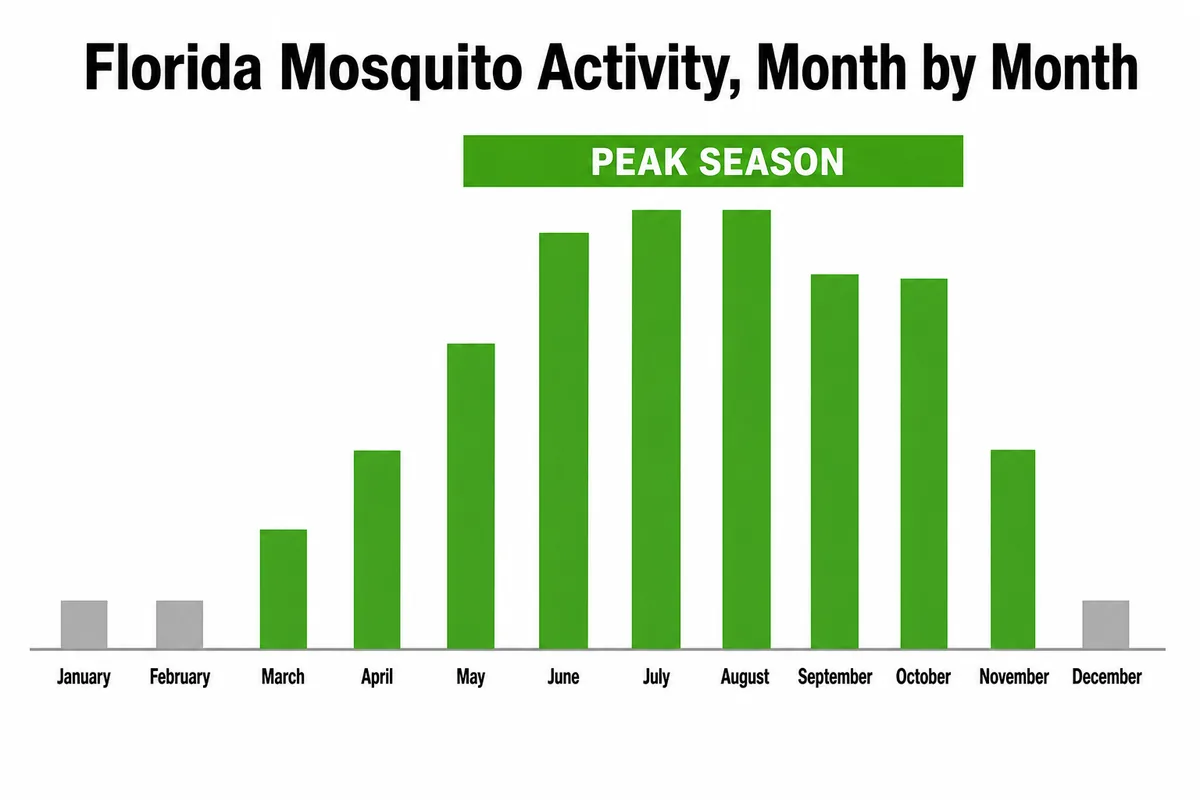
Quick answer: Mosquito season in Florida runs essentially year-round, with activity ramping up in March, peaking from June through October during the rainy season, and tapering (but never fully stopping) in winter. South Florida, including Naples, Fort Myers, and Miami, sees the longest and most intense pressure of any region in the state.
Florida mosquitoes don’t follow the same seasonal calendar as the rest of the country. While homeowners in the Midwest pack away their repellent in October, Florida residents are still swatting in December. Understanding exactly when mosquito season in Florida starts, peaks, and eases up is the first step toward protecting your yard and family all year long.
This guide gives you a clear, month-by-month breakdown of Florida’s mosquito season, explains why South Florida faces a uniquely long season, and outlines what a year-round protection plan actually looks like. Whether you’re in Naples, Fort Myers, Miami, or Pompano Beach, this is the local detail that most generic guides skip entirely.
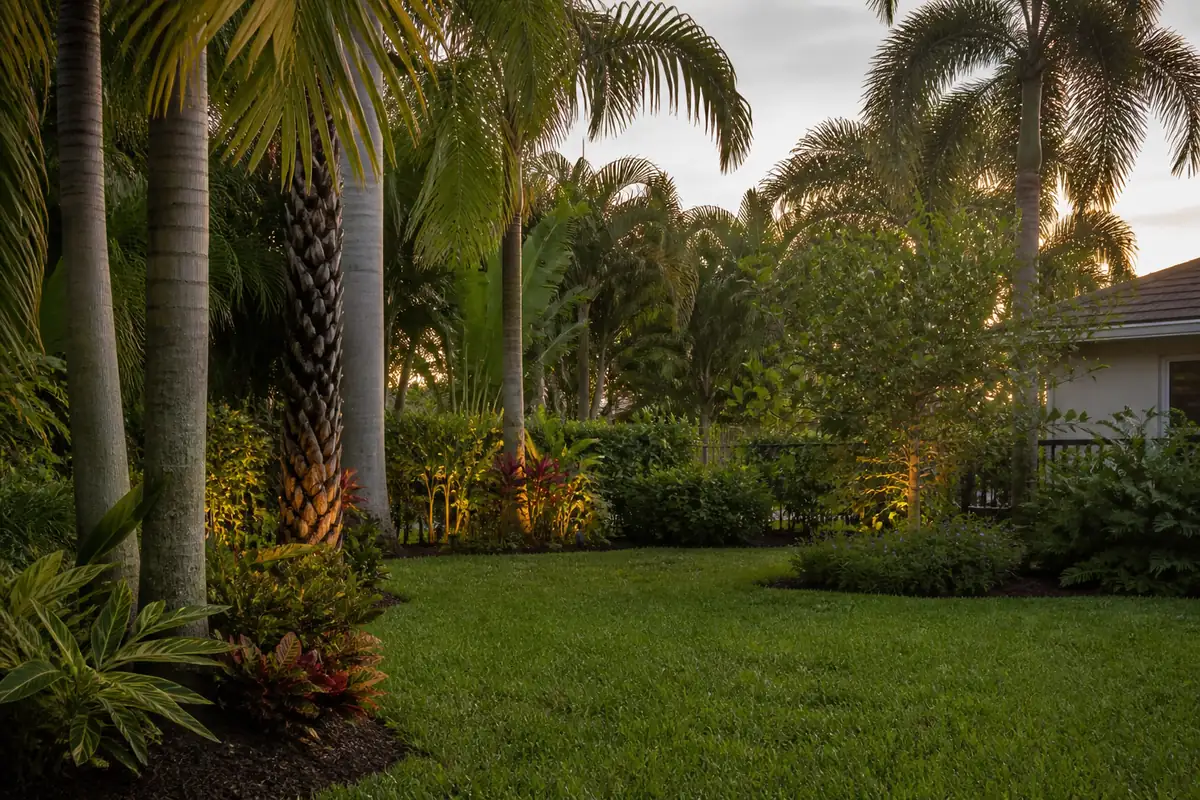
Florida’s warm, humid climate keeps mosquitoes active far longer than in the rest of the country.
The Short Answer: Florida’s Mosquito Season Is Basically Year-Round
Most states get a true mosquito-free winter. Florida does not. Mosquito season in Florida officially spans from roughly March through November, but in South Florida, activity never fully stops. It only slows.
The peak window runs from June through October, driven by the state’s rainy season and sustained heat. Outside of that peak, mosquitoes in South Florida remain present and capable of biting on warm winter days. Temperatures need to drop consistently below 50°F before mosquito activity meaningfully decreases, and in Miami-Dade, Broward, Collier, and Lee counties, that threshold is rarely met for more than a few days at a time.
For practical purposes, Florida mosquito control is a 12-month commitment.
Florida mosquito pressure ramps up in spring, peaks from June through October, and only slows in winter.
Florida Mosquito Season, Month by Month
Spring (March through May): The Season Ramps Up Fast
By March, daytime temperatures across Florida are climbing back into the 70s and 80s. Mosquitoes that survived winter as eggs or larvae in standing water begin hatching. Activity builds steadily through April and accelerates sharply in May as humidity rises ahead of the rainy season.
South Florida residents often notice meaningful mosquito pressure as early as mid-February during warm winters. This early ramp-up is one of the key differences between South Florida and the northern part of the state, where the season typically doesn’t gain momentum until late March or April.
Summer and Early Fall (June through October): Peak Season
This is the worst period. Florida’s rainy season runs from June through September, dropping an average of 50 to 60 inches of rain annually across the southern half of the state, according to the University of Florida IFAS Extension. Every rain event creates fresh standing water, and standing water is where mosquitoes breed.
Warm temperatures accelerate the mosquito life cycle dramatically. At 80°F, a mosquito can complete its development from egg to biting adult in as little as 7 to 10 days. With near-daily afternoon storms refilling breeding sites faster than they dry out, the population compounds quickly throughout June, July, and August.
September and October remain heavily active. The rains taper, but residual warmth and humidity keep populations elevated well into fall.
“In South Florida, we don’t really see a summer spike. We see a summer ceiling,” says Mike Vilchez, Quality Assurance Technical Field Trainer and South Florida expert at Northwest Exterminating. “From June through October, pressure is just consistently high. Service calls spike right after the first big June rains, and they don’t drop off until we get a real cold front, which might not happen until December.”
Winter (November through February): A Lull, Not a Stop
North Florida typically sees a meaningful drop in mosquito activity between November and February. Temperatures fall far enough to suppress most species. In South Florida, the picture is different.
Miami, Fort Lauderdale, Pompano Beach, and coastal Collier County rarely see extended cold snaps. Average January temperatures in Miami sit around 68°F, well above the 50°F threshold at which mosquito activity begins to slow. That means mosquitoes remain capable of biting on most winter days in South Florida, even if the population is smaller than it was in August.
The practical implication: dropping your mosquito protection in November is a mistake if you live south of Lake Okeechobee.
Why Is Florida’s Mosquito Season So Much Longer Than Other States?
Three factors combine to make Florida, and South Florida in particular, one of the most mosquito-intense environments in the continental United States.
Heat: Mosquitoes are cold-blooded insects. Warmer temperatures shorten their breeding cycle and extend their active season. Florida’s subtropical and tropical climate provides warmth year-round, which other Southeastern states cannot match.
Humidity: Florida’s average relative humidity exceeds 70% across most of the year. High humidity slows mosquito dehydration, keeping adult populations active longer after each breeding cycle.
Rainy season and standing water: Florida’s June-through-September rainy season creates the breeding conditions mosquitoes need. Low-lying yards, drainage ditches, landscape features, and poorly maintained gutters all become active breeding sites within days of a rain event. The University of Florida IFAS Extension has documented more than 80 mosquito species in the state, more than any other state in the continental US.
Coastal geography: South Florida’s flat terrain and coastal proximity means rainwater drains slowly. Water sits in yards, swales, and natural areas for days after a storm, and each of those sites is a potential breeding zone.
What Are the Worst Months for Mosquitoes in Florida?
The worst months for mosquitoes in Florida are June, July, August, and September. These four months combine peak rainfall with peak heat, creating conditions that drive rapid population growth.
July is consistently the most complained-about month across Northwest Exterminating’s South Florida service area. Afternoon storms roll through almost daily, and temperatures rarely dip below 75°F even at night, meaning mosquitoes breed around the clock.
Regional differences matter here. In Tallahassee and Jacksonville, the season is bad in summer but clearly seasonal. In Naples, Fort Myers, and Miami, the summer peak is more extreme and the shoulder months are longer. Coastal areas face additional pressure because salt marsh mosquitoes (species that breed in tidal flats and coastal wetlands) add to the existing inland population.
“The difference between South Florida and the rest of the state is that we don’t get the natural reset that a cold winter provides,” says Mike Vilchez, Quality Assurance Technical Field Trainer and South Florida expert at Northwest Exterminating. “Our customers who try to stop treatments in October almost always call back in January frustrated. The pressure never fully stops down here.”
How to Stay Protected During Florida’s Year-Round Mosquito Season
Source Reduction: Your First Line of Defense
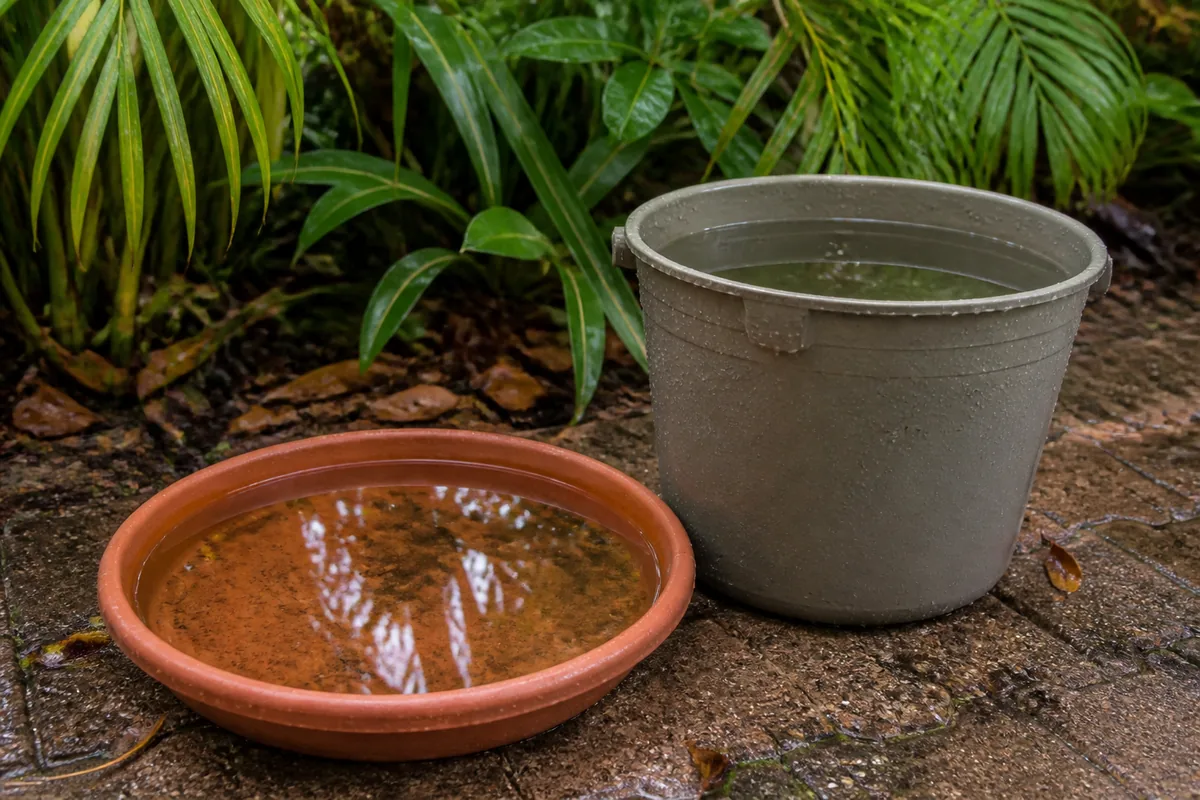
No treatment program works well if active breeding sites remain in your yard. Before anything else, eliminate standing water:
Empty and scrub birdbaths weekly
Clear gutters of debris and standing water after every rain
Store or cover containers that collect rainwater (pots, buckets, kiddie pools)
Check for low spots in your lawn where water pools after storms
Keep ornamental ponds stocked with mosquito-eating fish or treated with BTI (a naturally occurring larvicide)
For Florida homeowners, this kind of mosquito source reduction is a weekly habit, not a one-time task. The rainy season refills breeding sites constantly.
Every container that holds rainwater becomes a mosquito breeding site within days during Florida’s rainy season.
Why a Year-Round Plan Beats Seasonal Treatment in Florida
In northern markets, a seasonal mosquito treatment that runs from May through October makes sense. Florida’s biology doesn’t support that model, especially in South Florida.
A continuous mosquito control program maintains a barrier around your yard through regular treatments, targeting adult mosquitoes where they rest and larvae before they hatch. The In2Care mosquito system, which Northwest Exterminating offers in Florida, uses a slow-release biological approach that spreads through the mosquito population and reduces breeding in hard-to-reach water sources without broad pesticide spraying.
The combination of barrier treatments and a system like In2Care is particularly well-suited to South Florida’s year-round pressure because it doesn’t rely on timing a season. It maintains control continuously. You can also support your protection with plants that naturally repel mosquitoes, which pair well with a professional program.
Why South Florida Mosquito Pressure Is Different From the Rest of the State
Naples, Fort Myers, Miami, and Pompano Beach sit in a climate zone that most mosquito guides overlook entirely. These markets face pressure that is longer, more intense, and driven by different mosquito species than what residents in Orlando or Gainesville deal with.
South Florida’s combination of coastal salt marsh mosquitoes, subtropical heat, a rainy season that delivers heavy rainfall with few dry intervals, and winters too mild to suppress populations means that the standard “seasonal” framing simply doesn’t apply. Residents in Collier and Lee counties often describe summer as “bad” and winter as “manageable,” not “mosquito-free.”
For homeowners in these markets, the goal of mosquito control isn’t to get through a season. It’s to maintain livable pressure year-round.
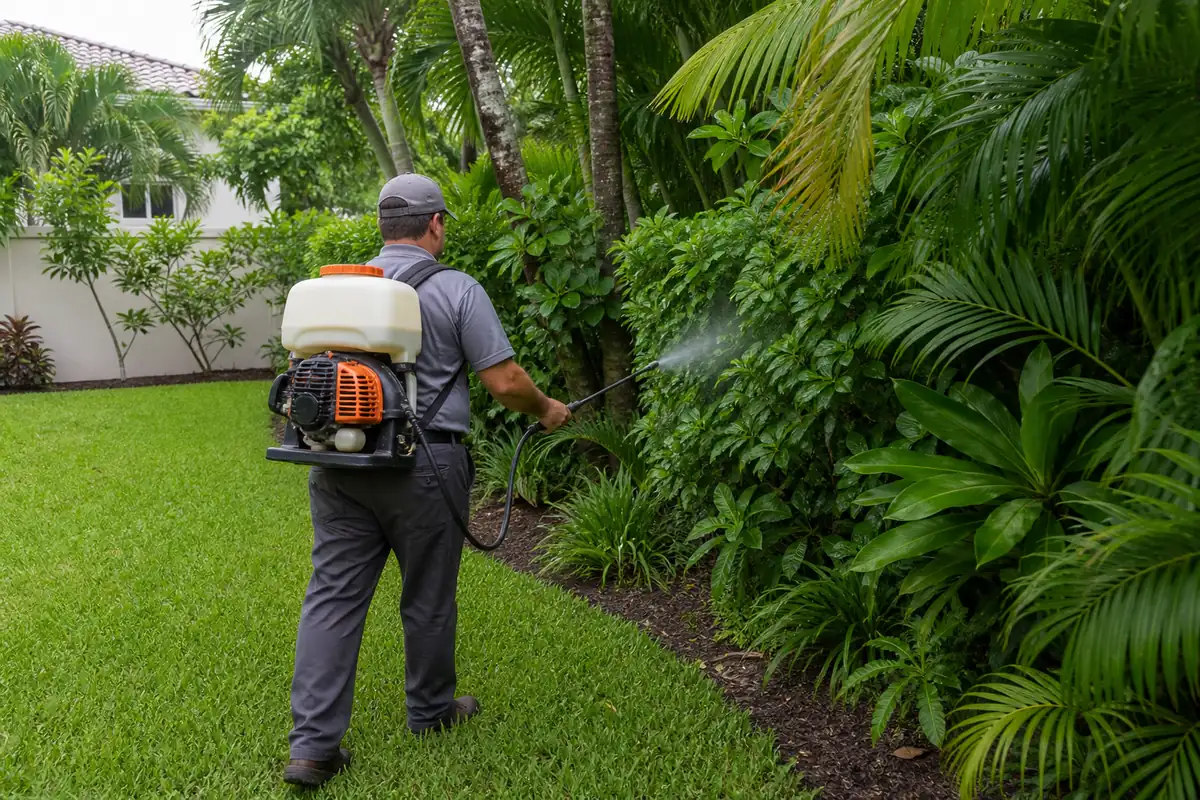
Professional barrier treatments target the shaded areas where adult mosquitoes rest between meals.
Take Back Your Yard — Get a Free South Florida Mosquito Quote
Year-round mosquitoes need a year-round plan. Northwest Exterminating’s Florida mosquito control programs are built specifically for the extended season South Florida demands, not copied from a northern playbook.
Get a free estimate and find out which program fits your yard, your neighborhood, and your schedule. Same-day and next-day service available across South Florida.
Call (855) 789-9807 to speak with your local Northwest branch today.
Frequently Asked Questions About Mosquito Season in Florida
When does mosquito season start in Florida?
Mosquito season in Florida typically begins in March, when temperatures rise above 50°F consistently enough to trigger hatching and breeding. In South Florida, including Miami, Naples, and Fort Myers, activity can begin as early as mid-February during warm winters.
When does mosquito season end in Florida?
Mosquito season ends in late November or December in northern Florida, where temperatures eventually drop below the 50°F activity threshold. In South Florida, the season never fully ends. It only slows. Mosquitoes remain active on warm winter days throughout Miami-Dade, Broward, Collier, and Lee counties.
Are mosquitoes year-round in Florida?
Yes. While the population is smaller in winter, mosquitoes are present and active year-round in Florida, particularly in South Florida. Temperatures in the southern part of the state rarely stay below 50°F long enough to fully suppress mosquito activity. Residents in Naples, Fort Myers, Miami, and Pompano Beach should maintain protection throughout all 12 months.
What is the worst month for mosquitoes in Florida?
July is typically the worst month for mosquitoes in Florida. It combines the peak of rainy season with consistently high temperatures, conditions that shorten the mosquito breeding cycle to as little as 7 to 10 days and allow populations to compound rapidly. June, August, and September are close behind.
Why are mosquitoes so bad in Florida compared to other states?
Florida has more mosquito species than any other continental US state, over 80, according to the University of Florida IFAS Extension. The combination of subtropical heat, humidity above 70% for most of the year, and a rainy season that creates abundant standing water gives mosquitoes nearly ideal conditions for most of the calendar year. South Florida’s flat terrain and coastal wetlands make it particularly intense.
How is South Florida mosquito pressure different from the rest of the state?
South Florida sees a longer active season, a more intense summer peak, and a milder winter that never provides the natural population reset that northern Florida gets. Coastal areas in Collier and Lee counties also face salt marsh mosquito species that aren’t factors further inland. For South Florida residents, treating mosquito control as seasonal is a plan that reliably fails.
About the Author
Mike Vilchez serves as a Quality Assurance Technical Field Trainer for the Northwest Family of Brands in South Florida. He provides hands-on coaching, technical training, and field support to teammates while promoting industry best practices and service excellence. Mike’s commitment to education and continuous improvement helps teams deliver effective pest management solutions and extraordinary customer experiences.
Reviewed for accuracy by the Northwest Exterminating South Florida Service Team.
*Inspection fee for Bird Control or Snake Removal begins at $125. These service inspection fees will be applied to total service cost if bird control and/or snake removal services are completed.
By submitting, you agree to be contacted about your quote. See our Privacy Policy.
READY TO GET STARTED?
REQUEST A FREE ESTIMATE
Fill out the form below or call (866) 800-2197 for a free, no-obligation estimate.
READY TO GET STARTED?
REQUEST A FREE ESTIMATE
Fill out the form below or call (866) 800-2197 for a free, no-obligation estimate.
READY TO GET STARTED?
REQUEST A FREE ESTIMATE
Fill out the form below or call (855) 374-3795 for a free, no-obligation estimate.