
Roaches in House — What Attracts Them & Why They Don’t Always Mean Dirty
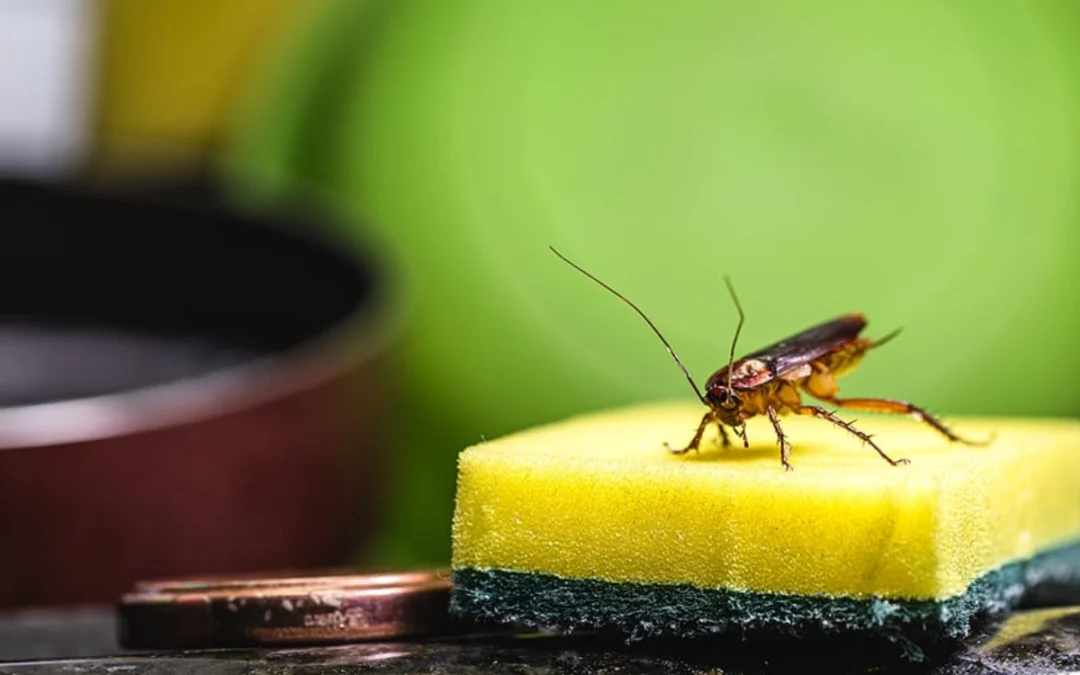
If you’ve spotted roaches in your house and your first thought was but my house is clean, you’re not alone. At Northwest, we hear this exact reaction every week from Georgia homeowners. The conversation almost always starts with embarrassment and a long list of recent cleaning. Then we explain the part most homeowners haven’t heard: cockroaches don’t actually care that much about clean. They care about food, water, shelter, and warmth, in that order. A spotless kitchen counter doesn’t help if there’s grease behind the stove, a slow drip under the sink, or a single cardboard box left in the pantry corner.
Here’s what’s really pulling roaches into Georgia and Alabama homes, why immaculate houses still get them, and the changes that actually keep cockroaches out for good.
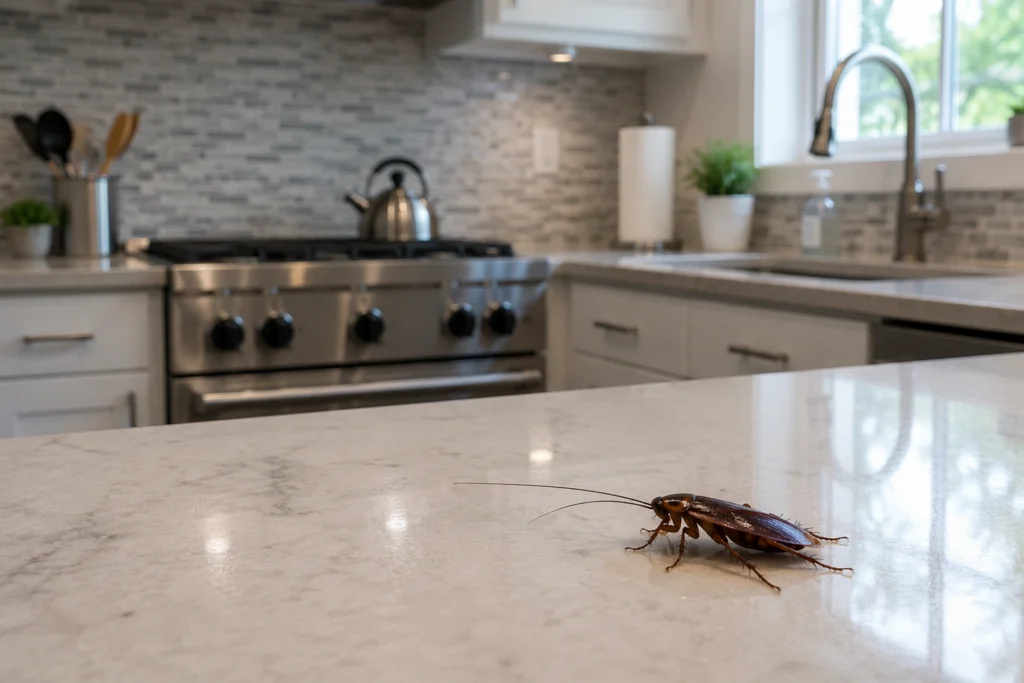
A spotless kitchen counter doesn’t matter to a roach if there’s grease behind the stove or a slow drip under the sink.
Why You’re Seeing Roaches in Your House
Cockroaches are nocturnal. They spend the day tucked into wall voids, behind appliances, inside cabinets, and under flooring transitions. They come out at night to scavenge for food, water, and pheromone trails left by other roaches. If you’re seeing one, it almost always means a small population is already established somewhere you can’t easily look.
The reason “clean” isn’t a roach repellent comes down to biology. A single roach can survive on a few crumbs a day. They eat the residue inside a sink drain. They eat the glue on cardboard boxes. They eat soap, hair, and pet food bowls that look spotless to you. Spotless to a homeowner and spotless to a cockroach are two very different standards.
5 Things That Actually Attract Roaches Indoors
The five attractants below are what we look for first when we walk a Georgia or Alabama home for a cockroach inspection. Cleanliness affects only the first one.
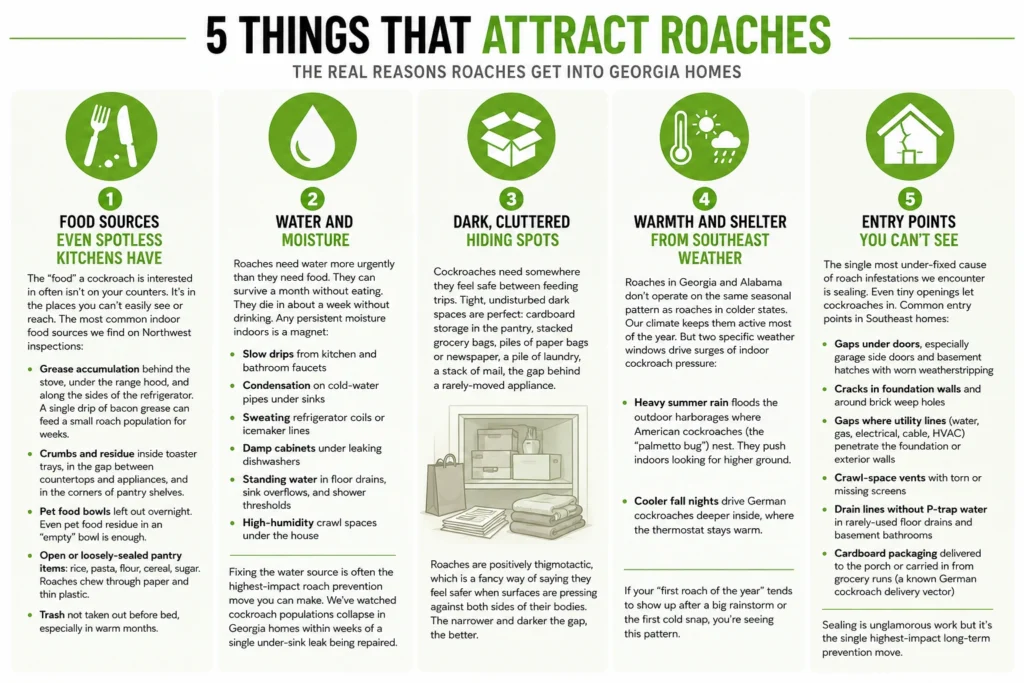
Cleanliness is one factor among five, and it’s not even the most important.
1. Food Sources Even Spotless Kitchens Have
The “food” a cockroach is interested in often isn’t on your counters. It’s in the places you can’t easily see or reach. The most common indoor food sources we find on Northwest inspections:
- Grease accumulation behind the stove, under the range hood, and along the sides of the refrigerator. A single drip of bacon grease can feed a small roach population for weeks.
- Crumbs and residue inside toaster trays, in the gap between countertops and appliances, and in the corners of pantry shelves.
- Pet food bowls left out overnight. Even pet food residue in an “empty” bowl is enough.
- Open or loosely-sealed pantry items: rice, pasta, flour, cereal, sugar. Roaches chew through paper and thin plastic.
- Trash not taken out before bed, especially in warm months.
2. Water and Moisture
Roaches need water more urgently than they need food. They can survive a month without eating. They die in about a week without drinking. Any persistent moisture indoors is a magnet:
- Slow drips from kitchen and bathroom faucets
- Condensation on cold-water pipes under sinks
- Sweating refrigerator coils or icemaker lines
- Damp cabinets under leaking dishwashers
- Standing water in floor drains, sink overflows, and shower thresholds
- High-humidity crawl spaces under the house
Fixing the water source is often the highest-impact roach prevention move you can make. We’ve watched cockroach populations collapse in Georgia homes within weeks of a single under-sink leak being repaired.
3. Dark, Cluttered Hiding Spots
Cockroaches need somewhere they feel safe between feeding trips. Tight, undisturbed dark spaces are perfect: cardboard storage in the pantry, stacked grocery bags, piles of paper bags or newspaper, a pile of laundry, a stack of mail, the gap behind a rarely-moved appliance. Roaches are positively thigmotactic, which is a fancy way of saying they feel safer when surfaces are pressing against both sides of their bodies. The narrower and darker the gap, the better.
4. Warmth and Shelter from Southeast Weather
Roaches in Georgia and Alabama don’t operate on the same seasonal pattern as roaches in colder states. Our climate keeps them active most of the year. But two specific weather windows drive surges of indoor cockroach pressure:
- Heavy summer rain floods the outdoor harborages where American cockroaches (the “palmetto bug”) nest. They push indoors looking for higher ground.
- Cooler fall nights drive German cockroaches deeper inside, where the thermostat stays warm.
If your “first roach of the year” tends to show up after a big rainstorm or the first cold snap, you’re seeing this pattern.
5. Entry Points You Can’t See
The single most under-fixed cause of roach infestations we encounter is sealing. Even tiny openings let cockroaches in. Common entry points in Southeast homes:
- Gaps under doors, especially garage side doors and basement hatches with worn weatherstripping
- Cracks in foundation walls and around brick weep holes
- Gaps where utility lines (water, gas, electrical, cable, HVAC) penetrate the foundation or exterior walls
- Crawl-space vents with torn or missing screens
- Drain lines without P-trap water in rarely-used floor drains and basement bathrooms
- Cardboard packaging delivered to the porch or carried in from grocery runs (a known German cockroach delivery vector)
Sealing is unglamorous work but it’s the single highest-impact long-term prevention move.
Why Cockroaches Thrive Even in Clean Houses
Three biological facts explain why a sparkling kitchen still gets roaches:
They reproduce fast. A single female German cockroach can produce up to 400 offspring in her lifetime. Her egg cases each hold 30 to 40 eggs and hatch in three to four weeks. A handful of accidental hitchhikers can become a real infestation in 60 to 90 days. Our guide on whether one roach means an infestation goes deeper on the math.
They eat almost anything. Beyond food, roaches will eat paper, glue, soap residue, hair, dead skin cells, and other roaches. The “no food source” defense doesn’t really exist for them.
They hitchhike in. The most common way German cockroaches arrive in a clean Georgia home is inside a cardboard delivery box, a used appliance, or grocery bags from an infested store. They don’t crawl across the lawn looking for your kitchen. They get carried.
Signs You Already Have a Roach Problem
If you’ve seen one cockroach, the next move is to look for the rest of the evidence. The signs to watch for:
- Droppings that look like coffee grounds or cracked black pepper, usually in pantry corners, drawer backs, or along baseboards
- Egg cases (oothecae): pill-shaped, brown to reddish, found in tight cracks. Each species holds different numbers of eggs (German: ~40; American: ~16; Brown Banded: ~14)
- A musty, oily smell in kitchens or bathrooms that doesn’t go away after cleaning
- Smear marks along the paths roaches travel most often, especially in damp spots
- Live sightings during the day, which usually means the hidden population has outgrown its shelter
For a deeper look at the species you might be dealing with, see our guide to the brown banded cockroach, one of the trickier species to spot because it nests away from food sources.
How to Make Your House Less Attractive to Roaches
Effective roach prevention is a habit, not a product. The five-part move that consistently keeps Northwest customers roach-free:
- Seal entry points. Caulk foundation cracks. Add weatherstripping to door gaps. Replace torn crawl space screens with galvanized ¼-inch hardware cloth. Stuff steel wool into utility-line gaps before sealing with caulk or expanding foam.
- Fix every water leak. Slow drips, condensation, leaky AC condensate lines. Run a dehumidifier in damp basements or crawl spaces.
- Store food in airtight containers. Rice, pasta, flour, cereal, sugar, pet food. Glass or hard plastic, not bags or thin clamshells.
- Take out trash daily in warm months. Wipe down trash can lids and inside the cabinet under the sink.
- Cut clutter in pantries, basements, attics, and garages. Cardboard storage especially. Move to plastic bins where possible. Roaches lose their favorite hiding spots overnight.
(Already seeing roaches in the house? Schedule a free Northwest inspection and we’ll walk the space with you, find the entry points, and lay out a treatment plan.)
When DIY Roach Control Isn’t Enough
Most homeowners who call us have already tried something: traps, sprays, gel baits from the hardware store. DIY can work for very small populations caught early. It generally doesn’t work for an established infestation, for three reasons:
- Over-the-counter sprays often scatter roaches deeper into wall voids rather than kill the colony, which spreads the problem
- Most homeowners can’t access the actual nesting locations (inside electronics, behind cabinets, in wall voids)
- Roach populations rebound from any survivors faster than household products can keep up
Professional treatment uses targeted baits combined with insect growth regulators (IGRs), which interrupt the breeding cycle. Even the egg cases that hatch after the first treatment fail to mature. The EPA’s Integrated Pest Management guidance for cockroaches backs the same approach: target nesting sites, eliminate moisture and food sources, and use targeted bait rather than broad-spectrum spray.
Roaches in House: What’s Different About Georgia and Alabama Homes
Three regional factors stack the deck against Southeast homeowners:
- Climate. Long warm seasons + high humidity = year-round cockroach activity. There’s no real “off-season.”
- Construction patterns. Crawl spaces, slab additions, and unsealed soffits are common in older Atlanta, Birmingham, Macon, and Savannah neighborhoods. Each is a roach access route.
- Shared-wall housing. Apartments, townhomes, and condos let German cockroaches travel between units through plumbing chases. A neighbor’s problem becomes yours without you ever doing anything wrong.
Frequently Asked Questions About Roaches in House
Can roaches live in clean houses?
Yes. Cleanliness reduces some roach attractants but doesn’t eliminate them. Roaches need food, water, shelter, and warmth, and even spotless homes provide all four through hidden sources like grease residue, leaky pipes, cardboard storage, and warm wall voids.
How do roaches get into a clean house?
Most often by hitchhiking inside cardboard delivery boxes, grocery bags, used appliances, or secondhand furniture. They also enter through foundation cracks, gaps under doors, utility line penetrations, and unscreened crawl space vents.
What’s the best way to keep roaches out of my house?
Seal entry points, fix every water leak, store food in airtight containers, take out trash daily during warm months, and cut clutter (especially cardboard) in pantries and storage spaces. For sustained prevention, a quarterly pest control plan keeps populations from establishing in the first place.
How long does it take to get rid of roaches once they’re in?
A small early-stage infestation can be cleared in two to four weeks with targeted bait. A heavy or long-standing infestation typically takes two to three months of monthly treatments to break the egg-laying cycle completely. The faster you catch it, the shorter the timeline.
When should I call a professional roach control service?
If you’re seeing cockroaches during the day, finding egg cases, smelling a musty odor in kitchens or bathrooms, or seeing more than one or two roaches a week. Any of those signs means the population has grown past what DIY can handle.
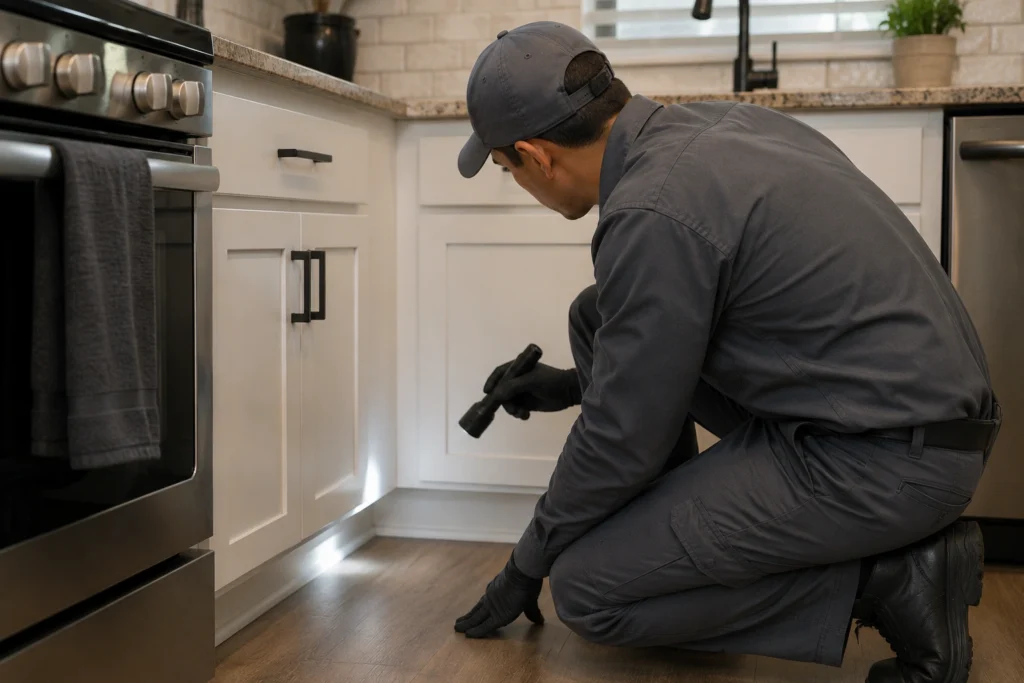
Northwest’s roach inspections find the entry points and water sources DIY treatments can’t reach.
Stop Roaches Before They Take Over
If you’ve seen roaches in your house and the DIY route hasn’t held, the issue is almost always a hidden water source, an entry point you haven’t found yet, or a population that’s already past what hardware-store products can manage. Northwest’s team handles all three: inspection, targeted treatment, and the prevention plan that keeps cockroaches gone.
- Schedule a Free Roach Inspection
- Learn About Our Pest Control Services
- Call (888) 466-7849. Same or next day cockroach treatment available across our Southeast service area.