
Black Bug With Red — Identification, Behavior, and Control
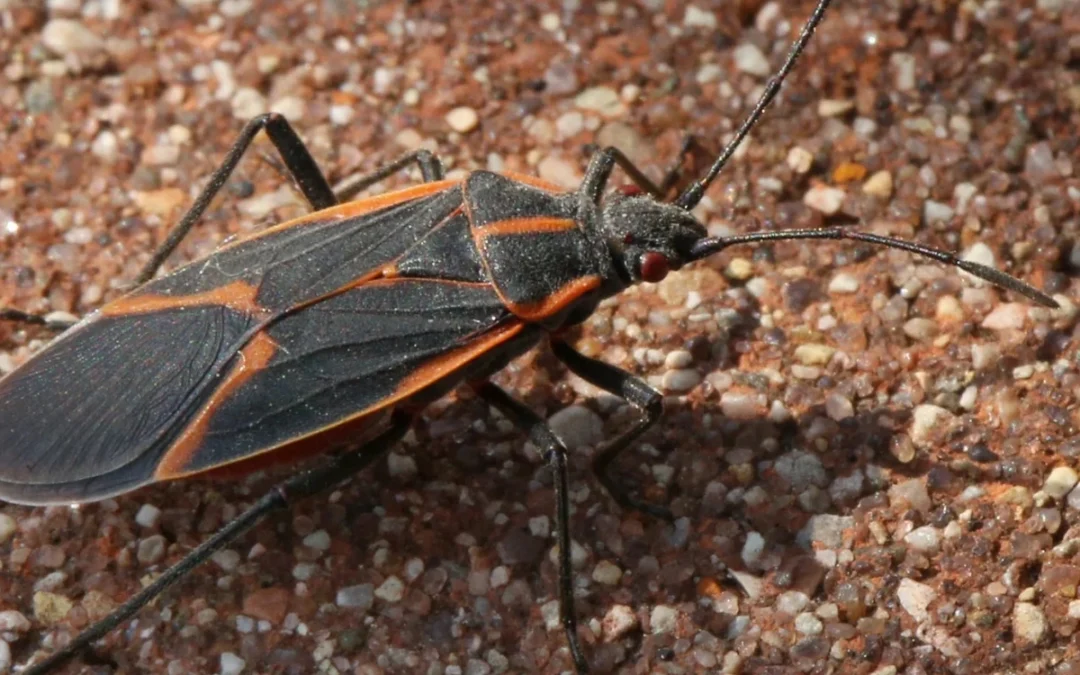
If you’ve spotted clusters of small, glossy black bugs with bright red or orange markings on a sunny exterior wall, around windows, or in the mulch by your foundation, you’ve probably met one of the Southeast’s most common nuisance pests. At Northwest, we get this exact question every spring and fall: what are these black bugs with red on them, and should I worry?
The short answer for most Georgia and Alabama homes: these are almost certainly boxelder bugs, red-shouldered bugs, or milkweed bugs. All three are harmless to humans, pets, and structures. They don’t bite, they don’t sting, they don’t spread disease, and they don’t damage wood. They do, however, show up in large numbers, congregate on warm surfaces, and try to overwinter inside your walls. Here’s how to identify the species, why they appear when they do, and what works for keeping them out.
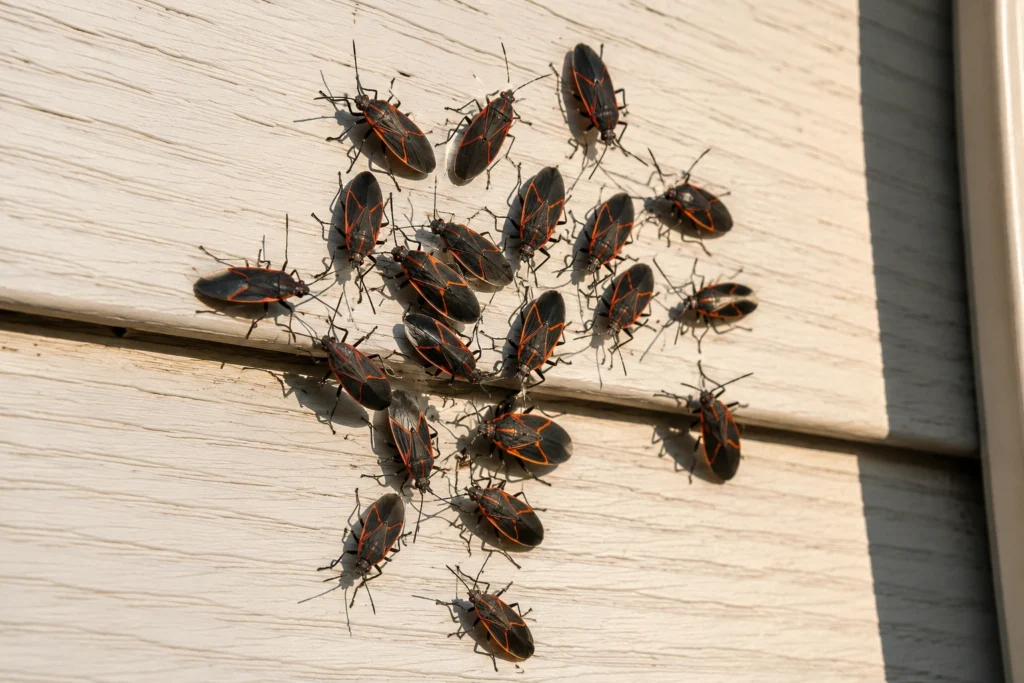
Boxelder bugs cluster on sunny exterior walls in spring and fall, looking for warm overwintering spots.
Common Black-and-Red Bugs Around Southeast Homes
Three species cover almost every “black bug with red” call we get in Georgia, Alabama, Tennessee, and South Carolina. Identification matters because the prevention strategy is slightly different for each.
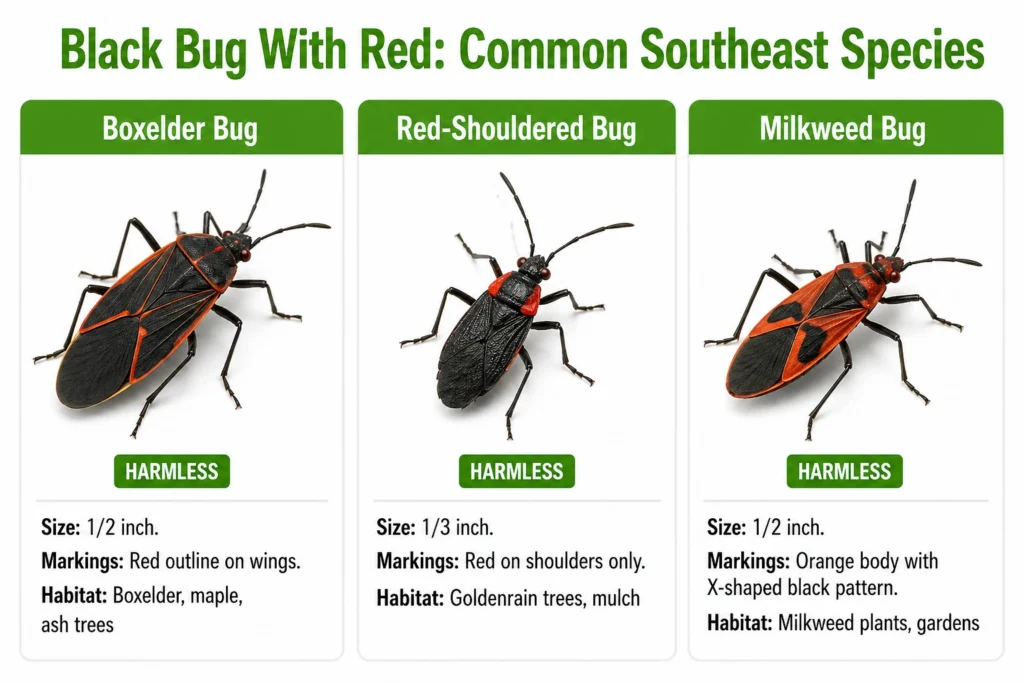
Three species cover almost every “black bug with red” sighting in Southeast homes. All three are harmless.
1. Boxelder Bug (Boisea trivittata)
- Size: About 1/2 inch long as adults.
- Markings: Black body with distinctive bright red-orange lines outlining the wings and three red stripes behind the head. Nymphs are bright red with developing black markings.
- Habitat: Feeds primarily on boxelder, maple, and ash tree seeds. Gathers on sunny south- and west-facing walls in fall, looking for overwintering shelter in wall voids, attics, and basements.
- Damage potential: None to humans, pets, or structures. They don’t bite or chew. Their droppings can stain light-colored fabric and siding if populations are heavy.
2. Red-Shouldered Bug (Jadera haematoloma)
- Size: Smaller than boxelder bugs, about 1/3 inch.
- Markings: All-black body with bright red shoulders/thorax. Sometimes called the “scentless plant bug” or “soapberry bug.”
- Habitat: Common in the Southeast around goldenrain trees, chinaberry trees, and mulched landscapes. Often mistaken for boxelder bugs but the red is concentrated at the shoulders rather than outlining the wings.
- Damage potential: None. Same harmless profile as boxelder bugs.
3. Large Milkweed Bug (Oncopeltus fasciatus)
- Size: About 1/2 inch long.
- Markings: Bright orange-red body with a distinctive black X- or hourglass-shaped pattern across the wings.
- Habitat: Tied closely to milkweed plants where they feed on seeds. Most homeowners see them on or near milkweed in butterfly gardens, less often on exterior walls.
- Damage potential: None to humans or structures. Beneficial to native plant ecosystems.
Behavior and Risks
The reason these bugs show up in alarming numbers comes down to two behaviors:
- Aggregation. Boxelder bugs in particular gather in large groups on sunny vertical surfaces. This is normal behavior, not an infestation in the traditional sense. They’re using the wall as a warm rest stop.
- Overwintering. In fall, they actively search for protected spaces to spend the winter. Wall voids, attic insulation, window frames, and gaps in siding all work. Come spring, they re-emerge looking for a way out, which is when they often end up inside the living space.
Three things to know about safety:
- They don’t bite. All three species have mouthparts designed for piercing plant tissue, not skin. There are isolated reports of accidental defensive nips, but no venom and no medical concern.
- They don’t damage homes. They don’t chew wood, eat fabric, or build nests in structures. They’re transient occupants, not destructive ones.
- They stain. Crushed bugs release a defensive fluid that can stain light-colored siding, curtains, and upholstery. Vacuum rather than crush.
Signs You Have a Black-and-Red Bug Problem
You don’t really have an infestation in the structural sense. What you have are activity peaks that warrant attention:
- Clusters of 20+ bugs on a sunny exterior wall (typically south- or west-facing).
- Bugs gathered around window frames and door thresholds.
- Live bugs appearing inside the home in early spring (overwintered population emerging).
- Dead bugs accumulating in window tracks, attic corners, or behind drapery.
- Small dark fecal spots on light-colored siding, especially around bug clusters.
If you’re seeing one or two bugs occasionally, no action is needed. If clusters are forming on the house or bugs are getting inside, prevention work is worth doing before the next seasonal peak.
Natural and Preventive Measures
For these species specifically, prevention is more effective than treatment because most of the population lives outdoors and only briefly contacts the structure. Three layers of work cover almost every situation.
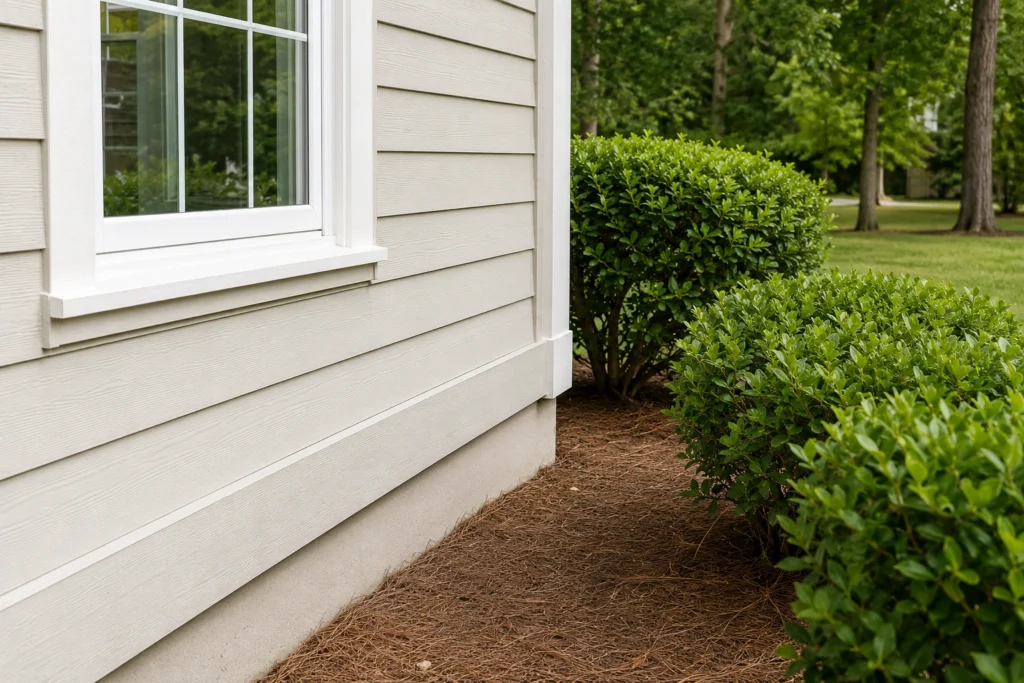
Sealing entry points and trimming vegetation near the foundation handles most black-and-red bug pressure.
Seal Entry Points
- Caulk gaps around window frames, door frames, utility line penetrations, and where siding meets the foundation.
- Replace damaged door sweeps and weatherstripping (boxelder bugs squeeze through gaps as small as 1/8 inch).
- Install or repair screens on attic vents, soffit vents, and crawl space vents.
- Pay extra attention to south- and west-facing walls, which are the primary aggregation surfaces.
Reduce Outdoor Attractants
- Remove boxelder trees within 50 feet of the house if practical (boxelder bug populations are tied directly to host trees).
- Trim shrubs and tree branches back from exterior walls to reduce shaded landing zones.
- Rake fallen leaves and remove yard debris in fall before bugs migrate to the house.
- Move firewood and mulch piles at least 20 feet from the foundation.
Safe Removal When They’re Already There
- Vacuum, don’t crush. Use a shop vac or a regular vacuum with a disposable bag. Empty outside immediately to prevent staining odor.
- Soapy water spray. Mix 1 to 2 tablespoons of liquid dish soap per gallon of water. Spray directly on clusters outdoors. Kills on contact and is safe for pets and plants once dry.
- Avoid broad-spectrum pesticides. Indoor spraying for these species is rarely effective because the population is outdoors. It also kills beneficial insects (spiders, ladybugs) that would otherwise help control other pests. For broader spider control context, see our spiders in Georgia guide.
Seasonal Activity Patterns
Black-and-red bug pressure follows a predictable calendar in the Southeast:
- Spring (March through May): Overwintered adults emerge from wall voids and attics, often appearing inside the home. Peak indoor sightings.
- Summer (June through August): Active outdoors feeding on host trees. Low contact with homes.
- Fall (September through November): Aggregation on sunny walls, looking for overwintering shelter. Peak outdoor visibility and entry attempts.
- Winter (December through February): Dormant inside wall voids and attic spaces. Quiet period.
Time prevention work to early fall before the aggregation/overwintering peak. Sealing entry points in October saves a lot of indoor sightings in March.
When to Call a Professional
Most black-and-red bug situations don’t require professional treatment. Call Northwest if:
- Indoor populations are large or recurring season after season.
- You’re seeing hundreds of bugs aggregating on multiple exterior walls.
- Sealing entry points hasn’t reduced indoor sightings.
- You want a structural inspection to identify hidden entry points you can’t see from outside.
- You’re dealing with multiple pest issues at the same time (boxelder bugs plus other insects often indicates broader exclusion gaps).
Professional treatment typically combines an exterior perimeter application timed to fall aggregation, structural exclusion work to seal entry points, and addressing host trees or landscaping factors driving the population. For an authoritative species identification reference, UGA Extension’s home insect identification guide covers boxelder bugs and similar species in detail.
(Recurring indoor sightings or large outdoor clusters? Schedule a free Northwest inspection and we’ll identify what’s around your home and lay out a treatment plan.)
Frequently Asked Questions About Black Bugs With Red Markings
What is a black bug with red on it?
In the Southeast, almost always a boxelder bug, red-shouldered bug, or milkweed bug. All three are harmless plant-feeding insects that become visible in spring and fall. Boxelder bugs (black with red wing outlines) are by far the most common in Georgia and Alabama. Identification depends on size, where the red is located on the body, and what plants are nearby.
Are black bugs with red markings dangerous?
No. Boxelder bugs, red-shouldered bugs, and milkweed bugs don’t bite humans or pets, don’t sting, don’t spread disease, and don’t damage structures. They can stain light-colored fabric or siding if crushed, which is why vacuuming is better than swatting.
How can I prevent them from entering my home?
Seal entry points (caulk around windows, doors, and utility lines; replace damaged weatherstripping; screen attic vents), reduce outdoor attractants (trim vegetation back from walls, remove boxelder trees within 50 feet if practical, clear yard debris in fall), and time prevention work to early fall before the overwintering migration peak.
Do natural repellents work on these insects?
Soapy water sprays (1 to 2 tablespoons of dish soap per gallon of water) kill these bugs on contact when applied directly outdoors. Essential oil sprays have limited effect. The most effective natural method is structural prevention rather than repellents: sealing the building so bugs can’t get in matters more than what you spray on them.
Why do they suddenly appear in large numbers?
Boxelder bugs in particular aggregate on warm sunny surfaces and migrate toward overwintering shelter in fall. Populations build over the summer on host trees (boxelder, maple, ash) and become visible all at once when they start moving toward structures. A large cluster on your wall in October is normal seasonal behavior, not a sudden infestation.
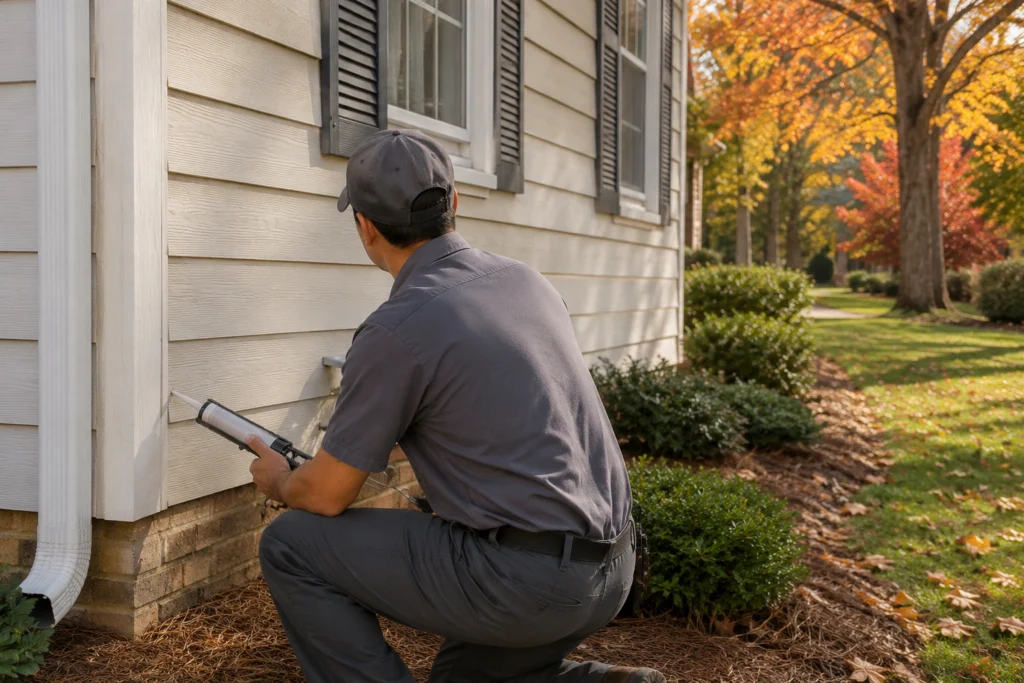
Fall is the right time to seal entry points before bugs migrate inside for the winter.
Schedule a Pest Inspection Today
If black bugs with red markings are becoming a recurring spring or fall problem, Northwest’s team can identify the species, find the entry points keeping them coming back, and treat the exterior perimeter at the right time of year to break the cycle. Most cases clear up after one fall exclusion treatment.
- Schedule a Free Pest Inspection
- Learn About Our Pest Control Services
- Call (888) 466-7849. Same-week service available across our Southeast service area.