
Home Remedies to Keep Snakes Away
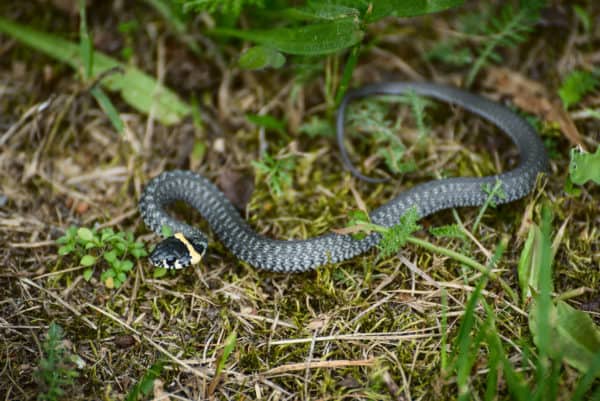
When a snake shows up in your yard or near the foundation, the instinct is almost always the same: go to Google and search for something to make it go away. Mothballs. Garlic. Essential oils. Ultrasonic stakes. At Northwest, we get asked about home remedies to keep snakes away almost every warm-weather day, and here’s the honest version most homeowners don’t hear: the vast majority of DIY snake remedies don’t work, and a few are actually illegal or dangerous. What does work is nearly always free, already in your toolshed, and takes a Saturday morning.
This guide walks through the most common home remedies for keeping snakes away, which ones have any real science behind them, which ones are outright myths, and what’s actually effective in a Georgia or Alabama yard. We’ll also cover where snakes go in cold weather (the question we get every fall) and how to quickly tell a harmless snake from one that needs a pro.
Why Snakes Come Into Residential Properties
Before you can keep snakes away, it helps to know why they showed up. Snakes don’t pick yards at random. They follow food, shelter, and water, in that order.
- Food: Rodents, frogs, lizards, and large insects. If you have a mouse problem in the crawl space or under the deck, you’ll eventually have a snake problem.
- Shelter: Wood piles, rock piles, thick mulch beds, tall grass, debris along the fence line, untrimmed shrubs touching the foundation.
- Water: Standing puddles, dripping outdoor faucets, leaky AC condensate lines, overwatered flower beds, low spots in the lawn.
- Easy access: Gaps around dryer vents, foundation cracks, torn crawl-space screens, missing weatherstripping on garage doors.
Remove those four things and snake activity drops fast, with or without a single bottle of repellent.
Common Home Remedies to Keep Snakes Away: What the Evidence Actually Says
Here’s how the most-searched home remedies stack up in the research and in the field.
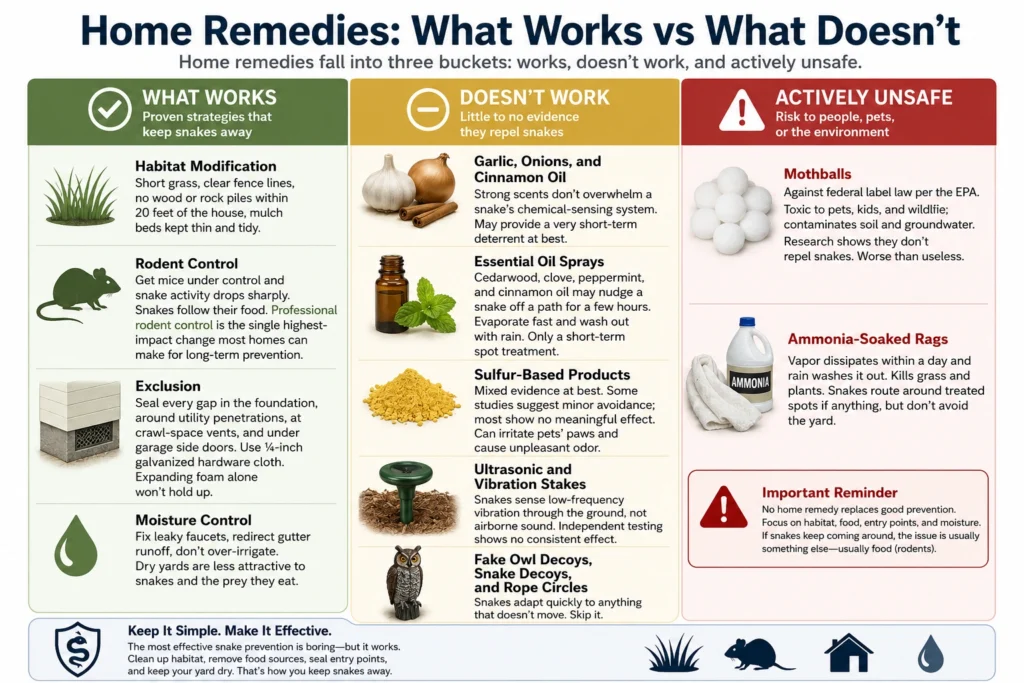
Home remedies fall into three buckets: works, doesn’t work, and actively unsafe.
Mothballs
Mothballs are the single most common home remedy we hear about, and the single worst one. Their active ingredients (naphthalene or paradichlorobenzene) are registered pesticides with very specific label instructions that limit use to closed containers indoors for clothing moths. Scattering mothballs outdoors to keep snakes away is against federal label law per the EPA. They’re also toxic to pets, kids, and wildlife, and contaminate soil and groundwater. On top of all that, the research shows they don’t actually repel snakes. This is a “worse than useless” remedy: it creates real health risk while producing no benefit.
Ammonia-Soaked Rags
Ammonia is another scent-based remedy that circulates online. In practice, the vapor dissipates within a day, the first rain washes it out completely, and ammonia kills surrounding grass and plants. Snakes route around treated spots if anything, but don’t avoid the yard. Skip it.
Garlic, Onions, and Cinnamon Oil
These show up in almost every online list of home remedies for snakes. The idea is that strong botanical scents overwhelm a snake’s chemical-sensing system. The science is thin. Snakes navigate primarily via the Jacobson’s organ on the roof of their mouth, which processes airborne chemicals very differently than a mammal’s nose. A snake hunting a mouse isn’t going to be turned back by a border of onions. These remedies can provide a very short-term deterrent effect at best, and only at high concentrations close to the application point.
Essential Oil Sprays
Cedarwood, clove, peppermint, and cinnamon oil sprays are the “natural” version of a commercial snake repellent. At close range and high concentration, they may nudge a snake off a specific path for a few hours. They evaporate fast in summer heat, wash out with the first rain, and do nothing to address the reason the snake came. Use them as a short-term spot treatment if you’re so inclined, but never as a standalone plan.
Sulfur-Based Products
Granular sulfur products marketed as snake repellents have mixed evidence at best. Some studies suggest minor avoidance behavior; most show no meaningful effect. Sulfur can also irritate pets’ paws and contribute to an unpleasant smell around the yard. Not unsafe, but not reliable either.
Ultrasonic and Vibration Stakes
The marketing on these is aggressive, the research is not. Snakes don’t hear airborne sound the way mammals do. They sense low-frequency vibration through the ground. Solar-powered ultrasonic stakes emit sound waves that snakes mostly ignore. Independent testing has not shown a consistent repellent effect.
Fake Owl Decoys, Snake Decoys, and Rope Circles
Plastic owls might fool a few snakes for a week. Decoy king snakes might deter a copperhead momentarily. A rope laid in a circle around your tent (a long-running outdoor myth) does nothing. Snakes adapt fast to anything that doesn’t move. Skip.
What Actually Works to Keep Snakes Away
Almost without exception, the effective ways to keep snakes away are free. They’re not remedies, they’re habits.
- Habitat modification. Short grass, clear fence lines, no wood or rock piles within 20 feet of the house, mulch beds kept thin and tidy.
- Rodent control. Get mice under control and snake activity drops sharply. Snakes follow their food. Professional rodent control is the single highest-impact change most homes can make for long-term snake prevention.
- Exclusion. Seal every gap in the foundation, around utility penetrations, at crawl-space vents, and under garage side doors. Use ¼-inch galvanized hardware cloth. Expanding foam alone won’t hold up.
- Moisture control. Fix leaky faucets, redirect gutter runoff, don’t over-irrigate. Dry yards are less attractive to snakes and the prey they eat.
We covered the detailed seven-method playbook in our Snake Repellent: Natural & Effective Ways to Keep Snakes Away article. This post stays focused on the myth-busting side.
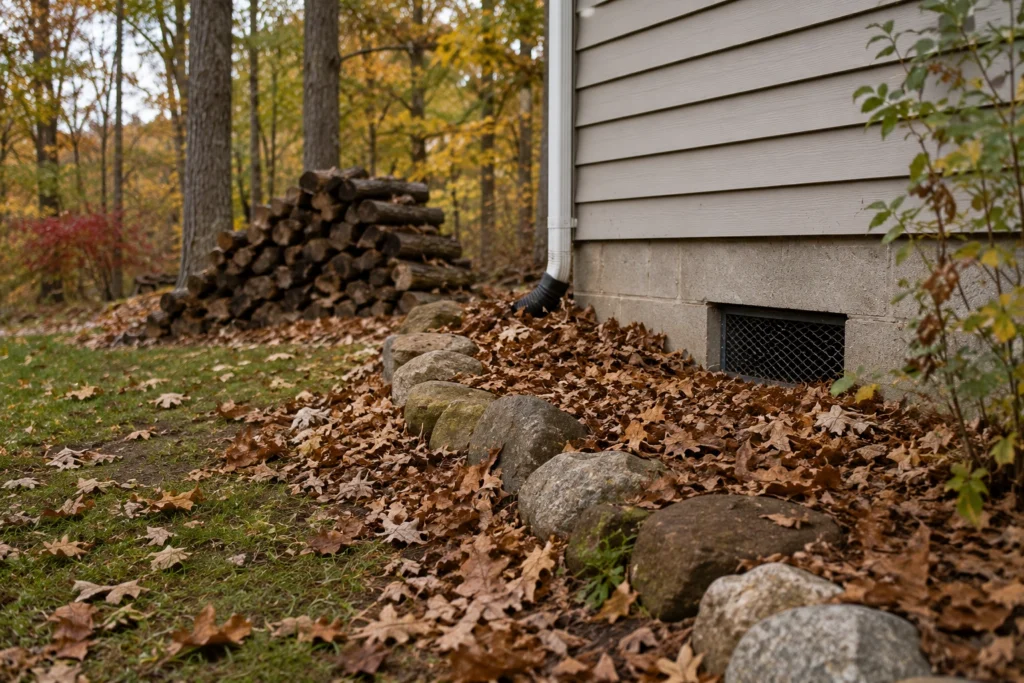
Snakes don’t leave for winter. They shelter in piles, burrows, and crawl spaces and emerge on warm days.
Where Do Snakes Go in Cold Weather?
One of the most common questions we get in October and November is whether snakes “leave for the winter” in Georgia and Alabama. They don’t, not exactly. Snakes are cold-blooded, so when temperatures drop they enter a state called brumation, which is similar to hibernation but not identical. They don’t sleep through winter; they slow way down and shelter in protected, insulated spots.
In the Southeast, those spots are often:
- Rock piles, wood piles, and dense leaf litter
- Abandoned rodent burrows (which is why a mouse problem in October becomes a snake problem in March)
- Crawl spaces and basement crevices, especially homes without sealed vents or where screen is torn
- Gaps under concrete porches, sheds, and slab additions
- Root balls, tree hollows, and stump cavities
Warm winter afternoons in the South will often bring snakes out briefly to bask, even in January. If you see a snake on a 65-degree February day, it hasn’t “woken up early.” It’s just thermoregulating. The bigger story is where it’s spending the rest of the season, because that shelter spot is almost certainly on or under your property.
What Kind of Snake Is That? A Quick Southeast Field Guide
Most snake sightings in Georgia and Alabama yards turn out to be non-venomous species. Knowing what you’re looking at dramatically changes how much action is needed.
- Eastern Rat Snake (Black Rat Snake), non-venomous. Long, black, strong climber. Often found in attics and shrubs hunting rodents. One of the best natural rodent controls you can have on a property.
- Black Racer, non-venomous. Slender, fast, solid jet-black. Harmless. Feeds on insects, lizards, and small rodents.
- Garter Snake, non-venomous. Small, striped, common near gardens, water features, and rock edges.
- Kingsnake, non-venomous. Black with pale bands. Notable because it actually eats venomous snakes. Leave it alone if you can.
- Copperhead, venomous. Tan body, dark hourglass banding. Hides in pine straw and leaf litter, which makes it the cause of most venomous bites in the Southeast. If you see one, back up and call.
- Cottonmouth / Water Moccasin, venomous. Thick-bodied, found in or near water. Will stand its ground rather than retreat. Call a pro.
- Timber Rattlesnake, venomous. Less common in suburban yards, more common in wooded lots, rural properties, and at elevation. Distinctive rattle, heavy body.
When in doubt, the UGA Extension guide to Snakes of Georgia is the best free identification resource for the region.
When Home Remedies Aren’t Enough
DIY approaches top out fast. Here’s when to stop experimenting and call a professional:
- You’ve confirmed or suspect a venomous species on the property.
- A snake has been inside the house, garage, crawl space, or attic. Inside means an entry point that needs finding and sealing, not a remedy.
- You’re seeing snakes repeatedly in the same spot. More than two sightings in the same part of the yard within a season means there’s harborage or a food source you haven’t found.
- There are kids, pets, or people with limited mobility on the property. The cost-benefit of a professional inspection shifts the moment safety tolerance drops.
(Not sure if it’s time to call? Request a free Northwest inspection and we’ll walk the yard with you, identify what you saw, and lay out what’s worth doing.)
Professional Snake Control & Prevention
Northwest’s wildlife team handles the full snake-control workflow: identification, safe and humane removal, sealing the entry points that let snakes in, and treating the underlying rodent or moisture issue that drew them in the first place. Most of what we do isn’t catching snakes. It’s removing the reason snakes keep showing up. That’s the difference between a one-time removal that repeats next season and a long-term solution.
Frequently Asked Questions About Keeping Snakes Away
Do snake repellents really work?
Most commercial and home-remedy snake repellents offer limited, short-term effects at best. The most reliable way to keep snakes away is removing what attracts them in the first place: rodents, hiding places, standing water, and gaps in the home’s perimeter.
What smells keep snakes away?
Snakes show some sensitivity to strong scents like cinnamon, clove, and cedarwood, but these smells don’t stop a snake tracking prey. Treat scent-based remedies as supplemental at best and never as a standalone plan.
Are snakes dangerous to pets?
Most snakes you’ll encounter in a Southeast yard are non-venomous and not a threat to pets. Copperheads, cottonmouths, and rattlesnakes are the three venomous species most likely to injure a dog or cat. If your pet is bitten, assume venomous until proven otherwise and go straight to a vet.
Should I try to remove a snake myself?
No, not if you can’t confidently identify it as non-venomous, and not if it’s inside the home. Non-venomous snakes in the yard can usually be left alone or gently encouraged to move on by turning on a sprinkler. Anything else is a job for a pro.
Do mothballs really keep snakes away?
No. Mothballs are not an effective snake repellent and are illegal to use outdoors for that purpose under federal pesticide law. They’re also toxic to pets, kids, and the environment. Skip them entirely.
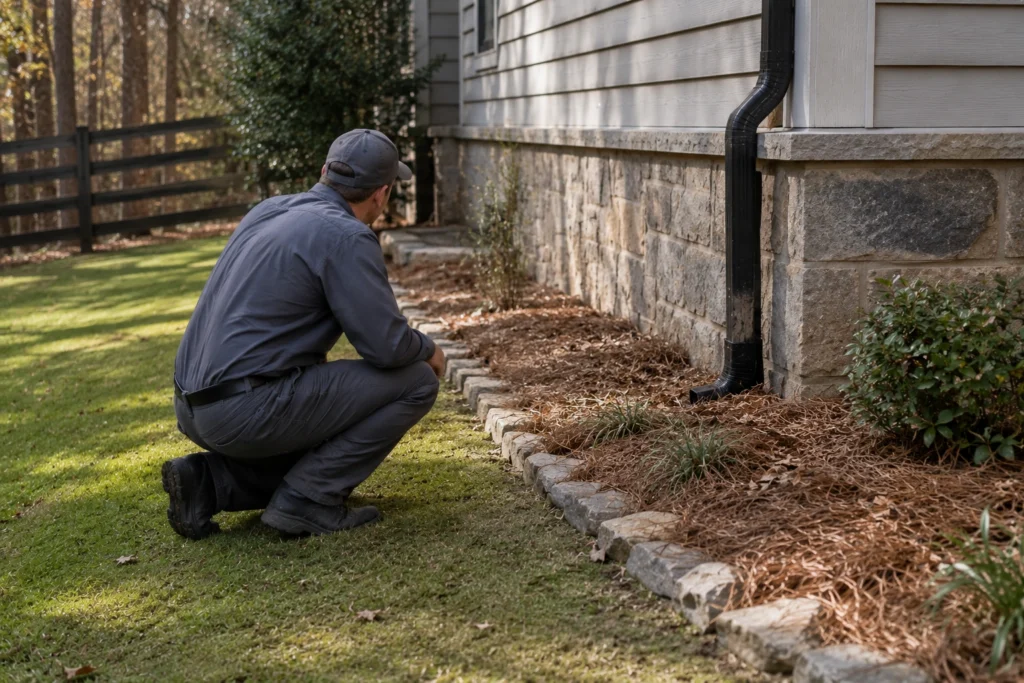
When home remedies stop working, it’s time to address the rodent or moisture issue feeding the problem.
Ready to Actually Keep Snakes Away?
If you’ve tried a home remedy or two and the snakes keep coming back, the problem isn’t the remedy. It’s the yard. Northwest has been solving snake problems in Georgia, Alabama, Tennessee, and South Carolina homes for over 70 years, and we solve them by addressing the cause, not just the sighting.
- Schedule a Free Snake Inspection
- Learn About Our Snake Removal Services
- Call (888) 466-7849. Same-week service available across our Southeast service area.