
Cellar Spider vs Daddy Long Legs — How to Identify & Compare
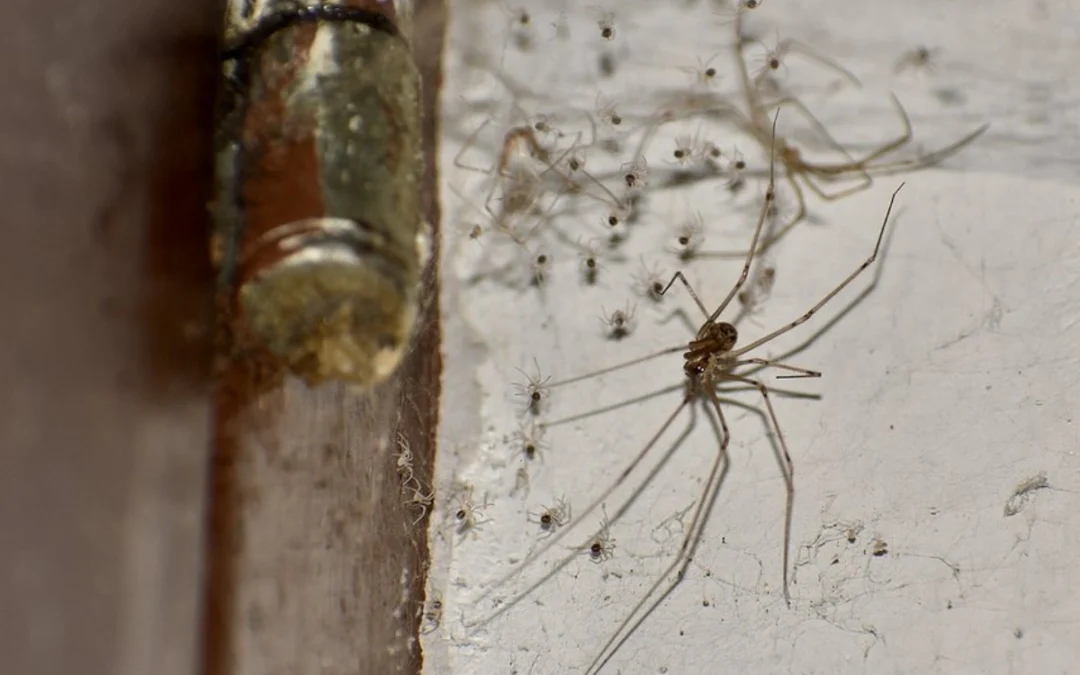
“Is that a cellar spider or a daddy long legs?” is one of the most common questions we get on Northwest spider inspections, and the honest answer is: it’s almost always both at the same time. The term “daddy long legs” is a regional nickname that gets applied to three different creatures depending on where you grew up. The cellar spider (family Pholcidae) is the one most Georgia and Alabama homeowners actually see indoors, and in the Southeast, “cellar spider” and “daddy long legs” usually refer to the exact same spider.
Here’s what a cellar spider actually is, how to tell it apart from the other two creatures sometimes called “daddy long legs,” whether you need to worry about them, and what to do when they keep showing up in your basement, garage, or ceiling corners.
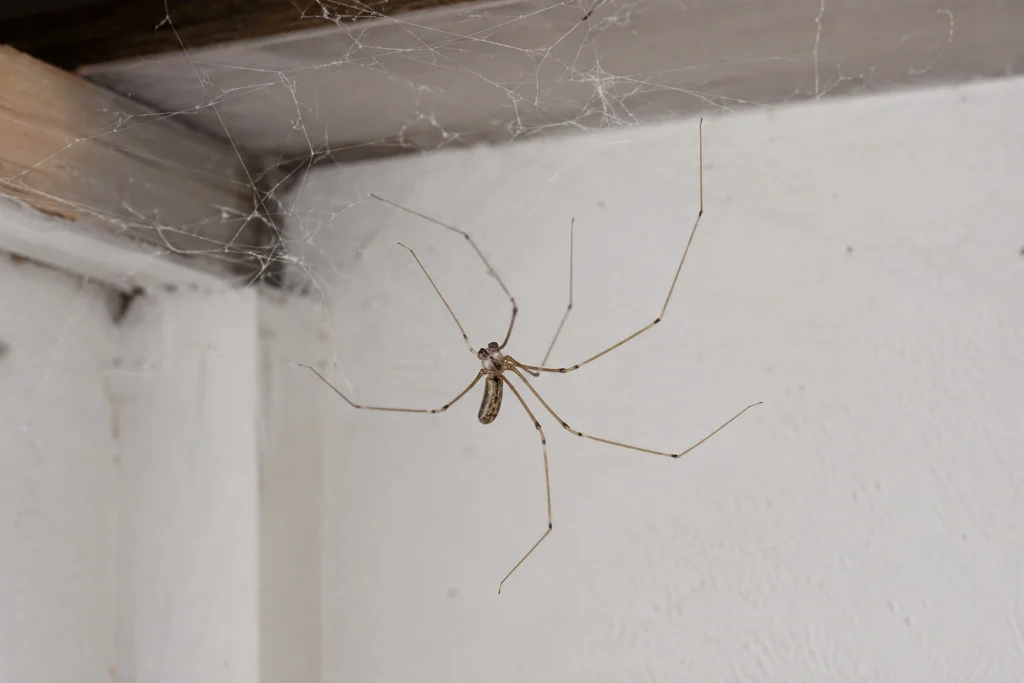
The cellar spider is what most Southeast homeowners actually mean when they say “daddy long legs.”
What Is a Cellar Spider?
Cellar spiders belong to the family Pholcidae. They have small, cylindrical bodies (typically under half an inch long), but their legs are remarkably long, sometimes spanning two to three inches when fully extended. They’re light tan to gray in color, mostly translucent in some areas, and they hang upside down in loose, tangled webs that look more like a tangle of fishing line than a typical spider web.
Despite their slightly creepy appearance, cellar spiders are skilled predators that help control other household pests. They feed on mosquitoes, fruit flies, gnats, moths, and even other spiders, including larger species like wolf spiders. In a Georgia or Alabama home, a small population in the basement or garage often does more good than harm.
Cellar Spider Identification
Three features make cellar spiders easy to identify once you know what to look for.
Appearance
Small, cylindrical body (about a quarter to half an inch long) with eight extremely long, thin legs. Body color ranges from pale tan to light gray. Adult females are usually slightly larger than males. Both sexes have a distinctive habit of vibrating their entire body in a fast circular motion when their web is disturbed — a defense behavior that makes them harder for predators to grab.
Webs
Cellar spider webs are unmistakable once you’ve seen one. They’re loose, tangled, and irregular — not the neat geometric shapes orb weavers create. Webs are almost always strung across ceiling corners, the angles between walls and shelves, or in undisturbed spots behind furniture and stored boxes. The webs aren’t sticky in the traditional sense, but the tangled structure traps prey by entanglement.
Size
Body length: about 5 to 13 millimeters (under half an inch). Leg span: typically 2 to 3 inches when the spider is fully extended. The dramatic difference between tiny body and very long legs is the visual feature most homeowners remember.
Cellar Spider vs Daddy Long Legs: The Differences That Actually Matter
“Daddy long legs” gets applied to three different creatures. Only one is a cellar spider. Here’s the comparison.
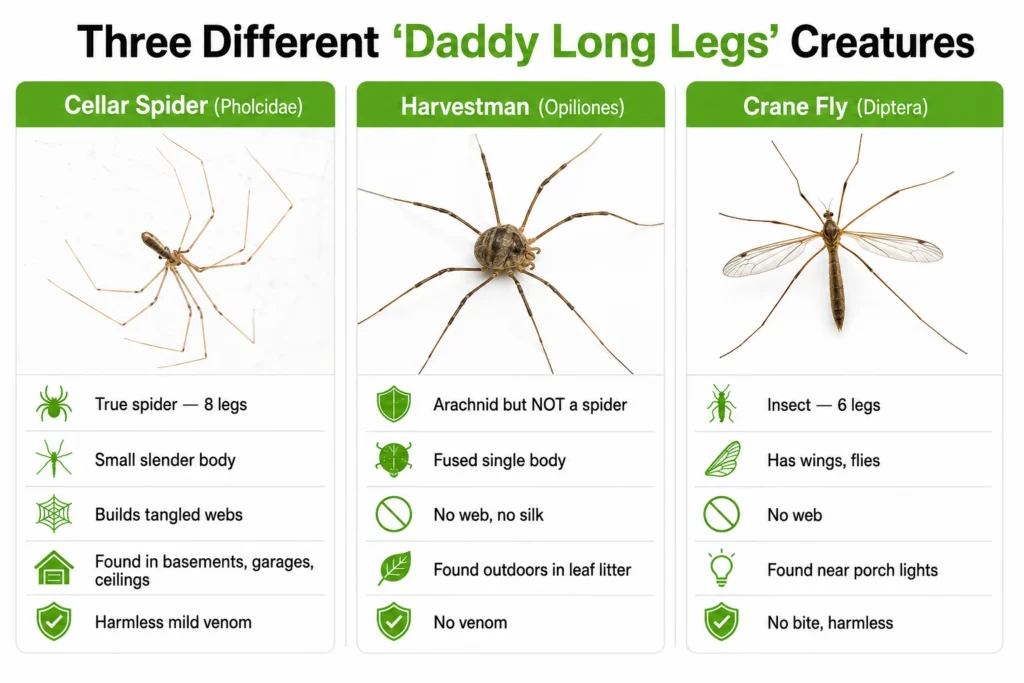
Three different creatures, one nickname. Only one is a true cellar spider.
| Feature | Cellar Spider | Harvestman | Crane Fly |
|---|---|---|---|
| Classification | True spider (Pholcidae) | Arachnid, not a spider (Opiliones) | Insect (Diptera) |
| Body shape | Small, slender, two body segments | Single fused body segment | Elongated insect body with wings |
| Legs | 8, very long and thin | 8, long | 6, fragile |
| Web? | Yes, tangled corner webs | No, no silk | No, no silk |
| Venom | Mild, harmless to humans | None | None |
| Where you find it | Indoor corners, basements, garages | Outdoor leaf litter, stone walls | Around porch lights at night |
For the full myth-busting overview of how the name “daddy long legs” got attached to three different creatures, see our granddaddy long legs guide. For more on the daddy long legs spider specifically and why it’s so often confused with a crane fly, see our daddy long legs spider guide.
Are Cellar Spiders Dangerous?
The short answer: no. The longer answer addresses the persistent internet rumor that cellar spiders are the world’s most venomous spider but physically can’t bite humans.
That story is almost entirely false. Cellar spiders do produce a small amount of venom to subdue prey, but the venom is not particularly potent, especially not to humans. The few documented Pholcidae bites on humans show only mild, brief irritation — less than a typical mosquito bite. There is no medical record of a serious human reaction. The University of Georgia Extension’s guide to common household spiders classifies Pholcidae as harmless.
For families in Atlanta, Athens, Savannah, Macon, or any of our other Georgia service areas: cellar spiders are a nuisance at worst. The webs look bad, and a heavy population suggests there’s another pest issue indoors, but the spiders themselves are not a threat to people or pets.
Why Cellar Spiders Appear in Homes
If you’re suddenly seeing more cellar spiders in your basement, garage, or ceiling corners, three things tend to be happening:
- Indoor insect populations have grown. Cellar spiders follow their food. Fruit flies in the kitchen, fungus gnats around houseplants, drain flies in bathrooms, mosquitoes inside through open doors — any of these attract Pholcidae.
- Moisture or humidity has increased. Cellar spiders prefer slightly damp environments. Basements after heavy rain, crawl spaces with ventilation issues, and bathrooms with poor airflow are common hotspots.
- Seasonal shift indoors. Late summer through early fall in Georgia and Alabama drives both insects and spiders into homes looking for stable shelter. Activity peaks in September and October.
Cellar Spider Webs: What They Look Like
Cellar spider webs are the easiest way to confirm a sighting. Unlike orb weavers (which build the classic symmetrical “spider web” most people picture), cellar spiders create messy, irregular tangles of silk strung loosely across corners.
Characteristics of cellar spider webs:
- Tangled and irregular, not geometric
- Located in ceiling corners, the angles between walls and shelves, and upper corners of garages and basements
- Often coated in dust over time, making them appear gray or fuzzy
- Can accumulate small dead insects (the spider’s prey) entangled within
- Reappear within 24 to 48 hours of being removed if the spider population is still active
How to Prevent & Control Cellar Spiders
Cellar spiders respond well to environmental changes. Most homeowner control efforts work, given a little patience.
DIY Prevention
- Reduce humidity in basements and crawl spaces. Run a dehumidifier. Fix any plumbing leaks. Address ventilation issues. Drier spaces are less attractive to cellar spiders.
- Seal cracks and entry points. Caulk around windows, foundation cracks, gaps in trim, openings around utility lines. Cellar spiders walk in through the same gaps as other small pests.
- Cut indoor insect populations. Address fruit flies, gnats, mosquitoes, and drain flies. Less food means fewer spiders.
- Reduce clutter. Stable, undisturbed surfaces let spiders build webs unimpeded. Cardboard storage in basements is especially attractive. Plastic bins are less so.
- Clear visible webs regularly. A vacuum hose attachment or long-handled duster handles webs in seconds. Persistent web removal often discourages spiders from rebuilding in the same spots.
When to Call a Professional
For most Georgia and Alabama homeowners, a few cellar spiders in the basement don’t warrant a service call. Consider professional pest control if:
- You’re seeing more than 10 to 15 cellar spiders in a single area consistently.
- Webs reappear faster than you can clear them.
- You’re also noticing other indoor pest activity (small flies, mosquitoes, gnats, moths) — addressing those usually solves the spider issue too.
- You want a full exclusion plan that prevents return activity.
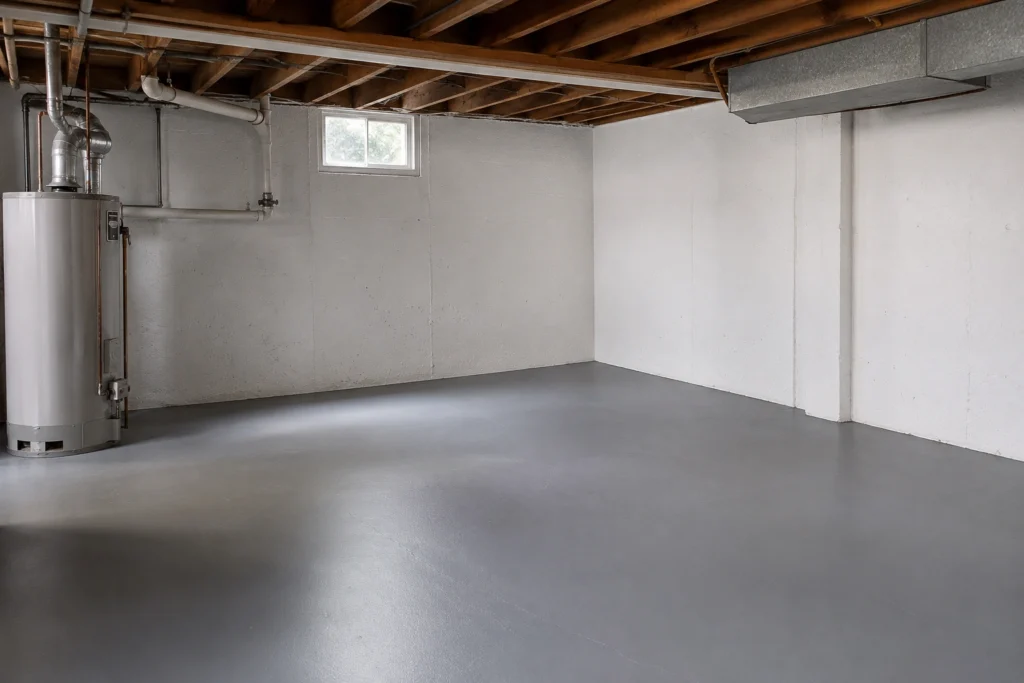
Cellar spiders prefer slightly damp, undisturbed corners, common in older Southeast basements and crawl spaces.
Cellar Spiders in Georgia and the Southeast
Cellar spider activity in Georgia, Alabama, Tennessee, and South Carolina follows a predictable seasonal pattern. Activity is highest in late summer and early fall (August through October), when indoor insect populations peak and outdoor temperatures push pests indoors.
Regional factors that increase cellar spider sightings in Southeast homes:
- Humid summers. Cellar spiders favor slightly damp environments, and Southeast humidity creates ideal conditions in basements and crawl spaces.
- Older home construction. Atlanta, Athens, Savannah, and Birmingham all have significant inventories of older homes with foundation cracks, unfinished basements, and crawl spaces that provide easy entry and ideal shelter.
- Heavy spring and summer rain. Flooded outdoor harborages push both spiders and the insects they feed on indoors.
- Year-round insect activity. Mild Southeast winters mean indoor insect populations don’t fully die back in cold months the way they do further north. Spiders that follow them stay active too.
Frequently Asked Questions About Cellar Spiders
Do cellar spiders bite humans?
Bites are extremely rare and typically only happen if the spider is physically trapped against skin. Symptoms, when they occur, are mild — usually less than a mosquito bite. There is no medical record of a serious human reaction to a cellar spider bite.
Are cellar spiders venomous?
They produce a small amount of venom to subdue prey, but the venom is not dangerous to humans. The persistent rumor that cellar spiders are the most venomous spider in the world is internet folklore with no scientific basis.
How do I know if I have a cellar spider infestation?
Look for tangled, irregular webs in ceiling corners, basements, garages, and around stored items. Regular sightings of small, long-legged spiders hanging upside down in webs are a clear indicator. Webs that reappear within a day or two of being cleared suggest an active population worth addressing.
Do cellar spiders eat other pests?
Yes. Cellar spiders feed on mosquitoes, fruit flies, fungus gnats, moths, and other spiders, including larger species. A small population in a garage or basement is effectively free natural pest control for the insects you don’t want.
How do I get rid of cellar spiders for good?
Reduce indoor humidity, seal entry points around windows and foundation, address the indoor insect populations they feed on, cut clutter in storage areas, and clear visible webs regularly. If they keep returning quickly, there’s almost always an underlying moisture or food-source issue worth a professional inspection.
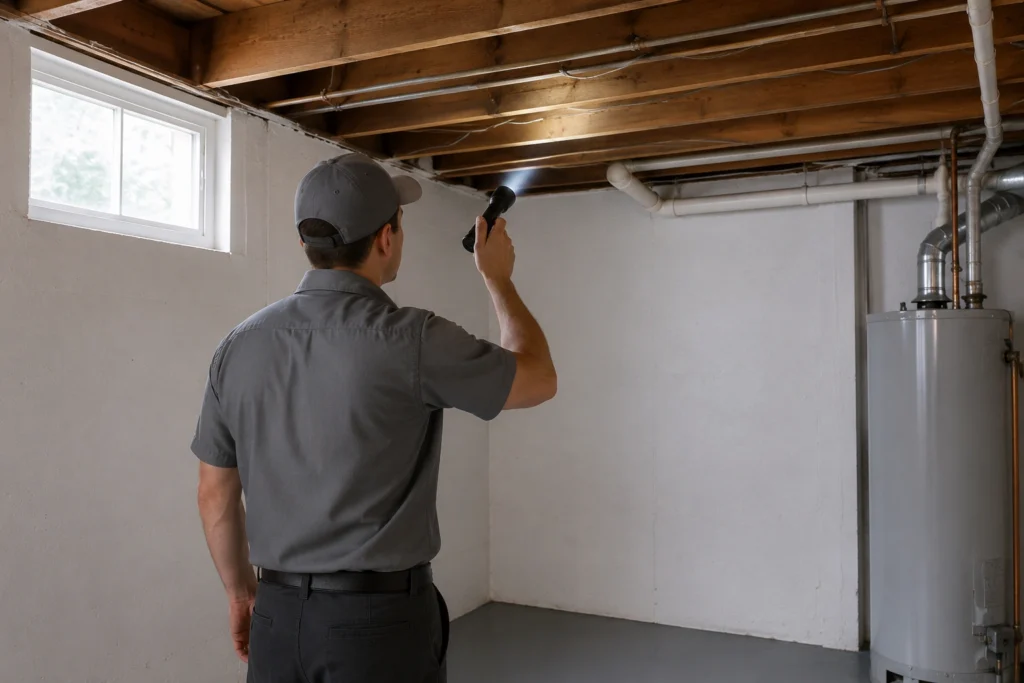
When cellar spiders keep returning, the underlying issue is usually moisture or another pest they’re feeding on.
Stop Worrying About Cellar Spiders
If you’re seeing cellar spiders in your basement, garage, or ceiling corners and you’d rather not, the good news is they respond well to environmental changes. They’re harmless, they signal another (more fixable) pest or moisture issue 90% of the time, and most cellar spider problems clear up when the underlying conditions change. Northwest’s team has been clearing spider problems out of Georgia and Alabama homes for decades, and the most effective fix is usually addressing whatever the spiders are eating.
- Schedule a Free Spider Inspection
- Learn About Our Pest Control Services
- Call (888) 466-7849. Same or next day service available across our Southeast service area.