The leaves are changing colors and there’s a chill in the air. Finally! A break from the heat. And while most of us are looking forward to the cooler weather, the change in temperature also means changes in your home. As the weather cools off, it becomes more difficult to regulate your household temperature. And as your heating and cooling system works harder to control the temperature, the increased usage translates into increased utility bills. The is also prime time for wildlife and pests to seek shelter and food inside your home!
Thermal Accoustical Pest Control insulation (TAP) is energy star-rated attic insulation made of 87% recycled newsprint. TAP insulation helps regulate the temperature in your home by keeping them consistent throughout all four seasons of the year. For example, TAP keeps warm air inside and cold air outside during the winter months. By reducing the energy needed to heat and cool your home, utility bills costs can be lowered by up to 30%!
As an added bonus, TAP is treated with borates – a natural pest control product, providing permanent pest protection against roaches, ants and other unwelcome pests in your home. TAP insulation is also treated with a flame retardant that helps limit the spread of fire.
Install TAP insulation in your attic to get these benefits, not only this winter but throughout the rest of the year:
Immediate Return On Investment with lower energy bills
Going Green by conserving energy
Temperature Regulation for year-round comfort
HVAC Efficiency by decreasing the effort of your system
Fire Safety with flame retardant material
Permanent Pest Control Protection against ants, roaches, and more
Your electric bills are probably at an all-time high right now. It’s hot, the A/C is running all day, and energy costs are on the rise. Here are a few tips on how to save some money this summer and in the upcoming winter months, by lowering utility bills and improving energy efficiency, making your home more comfortable:
1. Check to See if Your Home is Properly Insulated
Most homes don’t have enough insulation. Adding insulation to your home provides an immediate return on your investment by reducing the amount of energy needed to heat and cool your home. Some products, like TAP Insulation, can even lower utility bills by up to 30% and has the added benefit of pest protection!
2. Install Weatherstripping Around Doors & Windows
Keeping cool air in during the summer and warm air during the winter increases the efficiency of your HVAC system and makes your home more comfortable (and keeps pests out!). Check around doors and windows for gaps and install weatherstripping to correct any issues.
3. Upgrade Light Switches to Dimmer Switches
Using less light powered by electricity is an easy way to cut utility costs. Consider installing dimmer switches in the areas of your home you spend the most time, and turn the lights on a low setting to conserve energy.
4. Install Ceiling Fans
While ceiling fans use electricity, the benefits of air circulation outweigh the electric usage. Run ceiling fans consistently to keep air distributed evenly throughout your home, making your HVAC system run more efficiently.
5. Enclose Your Crawlspace
One of the best ways to increase energy efficiency is by completely closing off your crawlspace with a service like Complete CrawlSpace. This could save you up to 18% on utility bills and offers other home-healthy benefits like mold growth prevention and pest control.
6. Keep Sunlight Out
While most of us love a lot of natural light coming into our homes, that sunlight heats up the house and makes HVAC systems work extra hard to keep it cool. During sunniest hours (12-4 ) keep curtains closed to cover windows or consider installing shutters, blinds or shades to help cut down on sunlight exposure.
7. Change HVAC Filter Once a Month
A lot of people forget to change their filter regularly which increases utility costs. Change your filter out about every 30 days to keep your HVAC system running efficiently.
8. Upgrade Your Appliances
While this will cost more out of pocket initially, the long term savings on energy bills will be worth the investment. Energy Star-rated appliances perform more efficiently, using less energy to perform the same functions as your old appliances. And you can always upgrade one at a time to spread the cost out over time!
9. Wash & Dry Better
When washing clothes or other laundry, use cold water cycles when possible and only wash full loads. If you’re using the dryer, make sure you clean the lint trap after every load; this maximizes your dryer’s efficiency so it doesn’t have to work as hard or long to dry laundry. It’s also a good idea to scrub the lint trap with soap water once every month or so to remove lint build-up. For even more energy savings, take advantage of the warm air outside and line dry your laundry instead of running the dryer.
10. Update Old Power Strips
Electronics in your home are using power (and increasing your utility bills!) even when they’re not being used. To avoid this, replace power strips with surge protectors that automatically turn off power to electronics or devices not in use.
Winter can be harsh on our homes and our wallets. It can be a struggle to keep warm air inside, making us cold and driving heating costs up. But you don’t have to be cold OR empty your pockets this winter with these home winterization tips.
Tune-up HVAC Systems
Keeping your heating and air system maintained with regular HVAC tune-ups will ensure your unit is running at maximum efficiency, making your home warmer and your bills lower. Regular maintenance will also extend the life of your HVAC system! This includes cleaning and/or replacing filters, checking thermostats, and checking/cleaning heating system components, all of which are usually included in an HVAC tune-up done by a heating and air company.
Add Insulation
Most homes don’t have enough insulation which is needed to help your HVAC system run more efficiently, keep cold air out, warm air in, resulting in lower utility bills. Call an insulation company – most offer free inspections – to check your home’s insulation levels. Then you can decide what and where you need additional insulation and what kind will work best for your home. Consider a blown-in option, like TAP Insulation, which has the added benefit of permanent pest control.
Adjust Water Heater
Set your water heater’s temperature to 120 degrees or lower. This will save up to 10% on monthly water heating costs without you having to give up hot showers.
Turn Down the Heat
Don’t pay for unused heat by forgetting to lower the thermostat before you leave the house. To make this easy, consider installing a programmable thermostat.
Weatherstripping
Sealing gaps around your home is one of the easiest ways to keep warm air in, cold air out, prevent pests, and save money. Check around windows, doors, chimneys, and pipes for openings, gaps, and cracks, and repair as needed. For added protection, consider installing storm windows and doors.
Insulate Pipes
Lower water heating costs and prevent pipes from freezing by insulating them. Check your local home improvement store for insulation options; most are easy to install yourself.
Winter can be harsh on our homes and our wallets. It can be a struggle to keep warm air inside, making us cold and driving heating costs up. But you don’t have to be cold OR empty your pockets this winter with these home winterization tips.
Tune-up HVAC Systems
Keeping your heating and air system maintained with regular HVAC tune-ups will ensure your unit is running at maximum efficiency, making your home warmer and your bills lower. Regular maintenance will also extend the life of your HVAC system! This includes cleaning and/or replacing filters, checking thermostats, and checking/cleaning heating system components, all of which are usually included in an HVAC tune-up done by a heating and air company.
Add Insulation
Most homes don’t have enough insulation which is needed to help your HVAC system run more efficiently, keep cold air out, warm air in, resulting in lower utility bills. Call an insulation company – most offer free inspections – to check your home’s insulation levels. Then you can decide what and where you need additional insulation and what kind will work best for your home. Consider a blown-in option, like TAP Insulation, which has the added benefit of permanent pest control.
Adjust Water Heater
Set your water heater’s temperature to 120 degrees or lower. This will save up to 10% on monthly water heating costs without you having to give up hot showers.
Turn Down the Heat
Don’t pay for unused heat by forgetting to lower the thermostat before you leave the house. To make this easy, consider installing a programmable thermostat.
Weatherstripping
Sealing gaps around your home is one of the easiest ways to keep warm air in, cold air out, prevent pests, and save money. Check around windows, doors, chimneys, and pipes for openings, gaps, and cracks, and repair as needed. For added protection, consider installing storm windows and doors.
Insulate Pipes
Lower water heating costs and prevent pipes from freezing by insulating them. Check your local home improvement store for insulation options; most are easy to install yourself.
The majority of homes we inspect do not have adequate insulation in the attic. Most often, when homes are constructed, contractors will install the minimum amount of insulation required. While minimal insulation is better than no insulation, having the proper amount will make your HVAC system run more efficiently which keeps your home warmer in the winter, cooler in the summer, and saves you money on energy bills ALL YEAR LONG. The investment of insulation begins paying for itself immediately!
For attic insulation, there are a lot of options you can choose from, making it a somewhat stressful decision for homeowners. Here are some things to consider:
Does your attic currently have some type of insulation? If so, you may want to with a loose-fill product since it fills in gaps well OR have the insulation removed and replaced (common when insulation is contaminated by pest infestations or water-damaged).
Are you planning to insulate the attic yourself or call an insulation contractor? Installing loose-fill or blown-in insulation is more labor-intensive compared to batt insulation since it requires special equipment to install.
How much accessible space is in your attic? Batt insulation is relatively easy to install in accessible spaces with higher ceilings, but not recommended for areas with a lot of obstructions. Loose-fill insulation is blown into your attic, making it a better choice for spaces with limited accessibility.
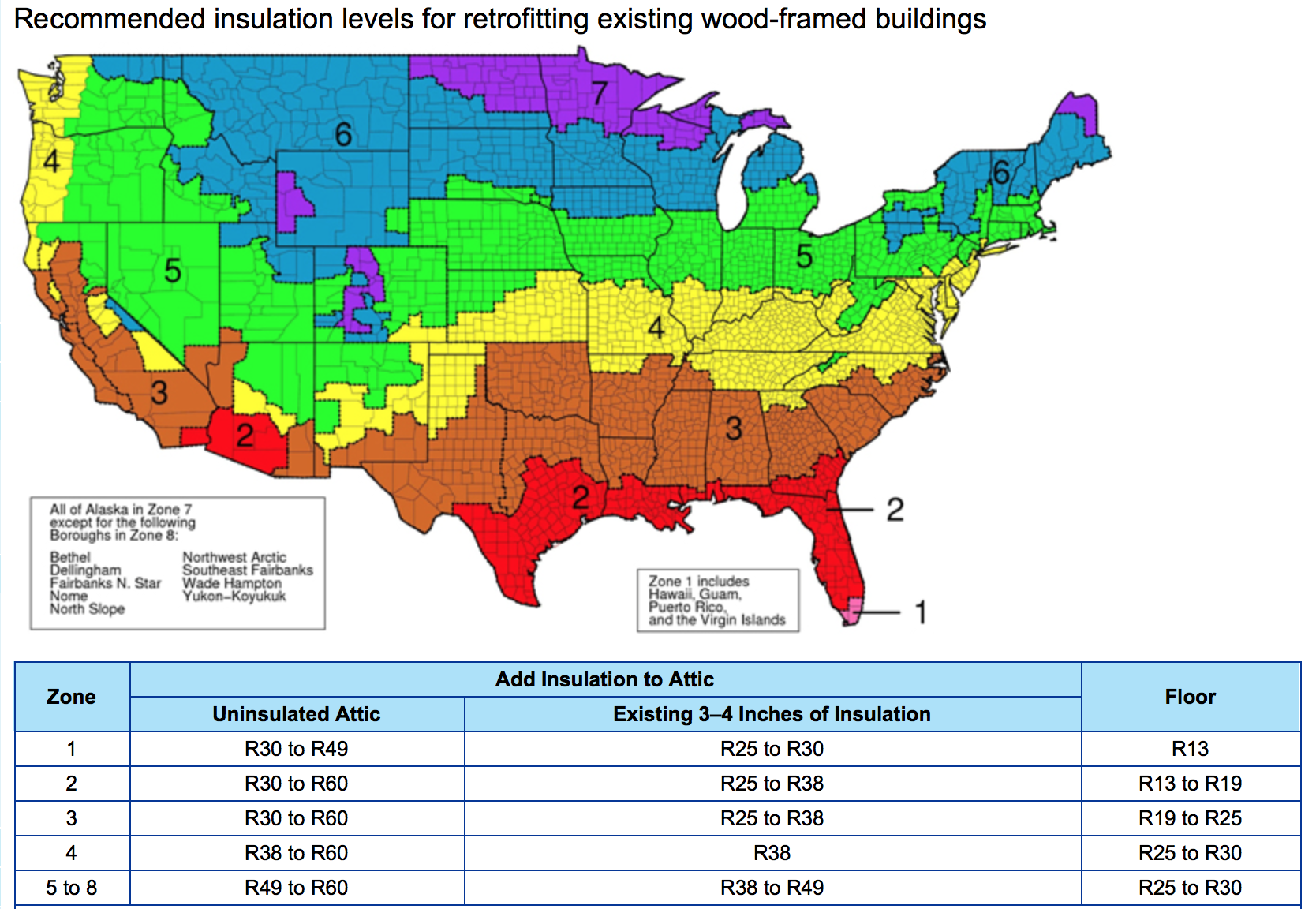
In what type of climate is your home located? This will determine how much insulation you need, using R-Value minimums established by the Department of Energy (see map below).
For most insulation projects, we recommend using TAP Insulation. TAP is a loose-fill, cellulose insulation product that guarantees energy cost savings of 20-38% when installed at recommended R-Values. TAP, short for Thermal Acoustical Pest Control, Insulation is made of 87% recycled newsprint, is energy star rated, and treated with borates, a natural pest control product that provides permanent pest protection in your attic. TAP is also unique in that it has the added benefit of fire protection. And, in addition to saving you tons of money throughout the year on utility bills, TAP Insulation keeps warm air inside in colder temperatures, cool air in warmer temperatures, making your home comfortable year-round.
Insulation can have a major impact on your home’s temperature. The benefits don’t stop there, though. Proper attic insulation translates into lower utility bills (savings up to 30% or more!), energy conservation, and a break for your HVAC system…which also cuts down heating and air repair costs. So you’re probably wondering how much insulation is enough insulation and what type is best. We’ve got answers.
1. How much insulation do you need to keep the house warm and get all the above perks?
Let’s talk R-values. According to Energy Star, homes in southeast states like Georgia, Tennessee, Alabama, and the Carolinas require an R-value of R30-R60. So what is R-value exactly? It’s a measurement of insulation’s ability to resist heat. The higher the R-Value, the more comfortable your home’s temperature will be – throughout the year. Essentially, the more insulation you have, the more warm air you’ll keep in your home when running the heat and the more cold air you’ll keep out. Same applies in the summer. Energy Star also says that the majority of homes in the US do NOT have enough insulation to be effective…so it may be worth having a professional get up in the attic and take a look around. Most companies give free evaluations and quotes. Then you can decide if the investment makes sense.
2. Now that we’ve established the importance of insulation – what type of insulation is right for your home?
Just like most products in today’s market, you’ve got options.
Batt Insulation – A popular choice, and with reason. Fiberglass insulation batts (most common) are easy to install compared to the alternative (more on that later) and often cost a little less. Depending on the size and shape of your attic, batts usually have to be cut and sized for a perfect fit – which can be time-consuming and tedious. A good fit is essential for the insulation to be effective, though; gaps will cause warm or cool air to leak out.
Blown (or loose) Insulation – There’s a large variety of blown-in insulation, some with more benefits than others. Equipment is required for installation which could be rented from your local home improvement store. Or you can use a professional insulation company that has materials, equipment, and will know exactly how much insulation you need to see maximum results. Our choice is TAP Insulation…here’s why.
Start making money back immediately.
TAP Insulation is an investment for your home and will provide a hefty return. It’s typical to save 30% or more on energy costs!
A cozy, warm house this winter.
Problem solved! Keep temperatures warm and heating costs low.
Goodbye household pests.
TAP is a unique insulation product that’s treated with Borates, a naturally occurring mineral that is an effective fungicide/insecticide against a broad spectrum of pests, according to the EPA.
Fire Protection.
TAP is also treated with a fire retardant that helps to limit the spread of fire.
Your HVAC system will thank you.
By keeping your home warm in the winter and cool in the summer, your heating and cooling system won’t have to work as hard…saving you money on utility bills and keeping HVAC repair costs low.
It’s never been easier to be green.
TAP is a eco-friendly solution – it’s made from recycled newsprint, saves landfill space, conserves energy, and utilizes a natural pest control solution.
TAP Insulation can also be added on top of existing insulation to increase the R-value. Still not convinced? Find out more here or schedule a free home evaluation.
We’re all looking for ways to save money. We’re cutting back on unnecessary items, thinking twice before we spend our money, and looking for ways to save on necessities. One way to save is to install TAP Insulation in your attic.
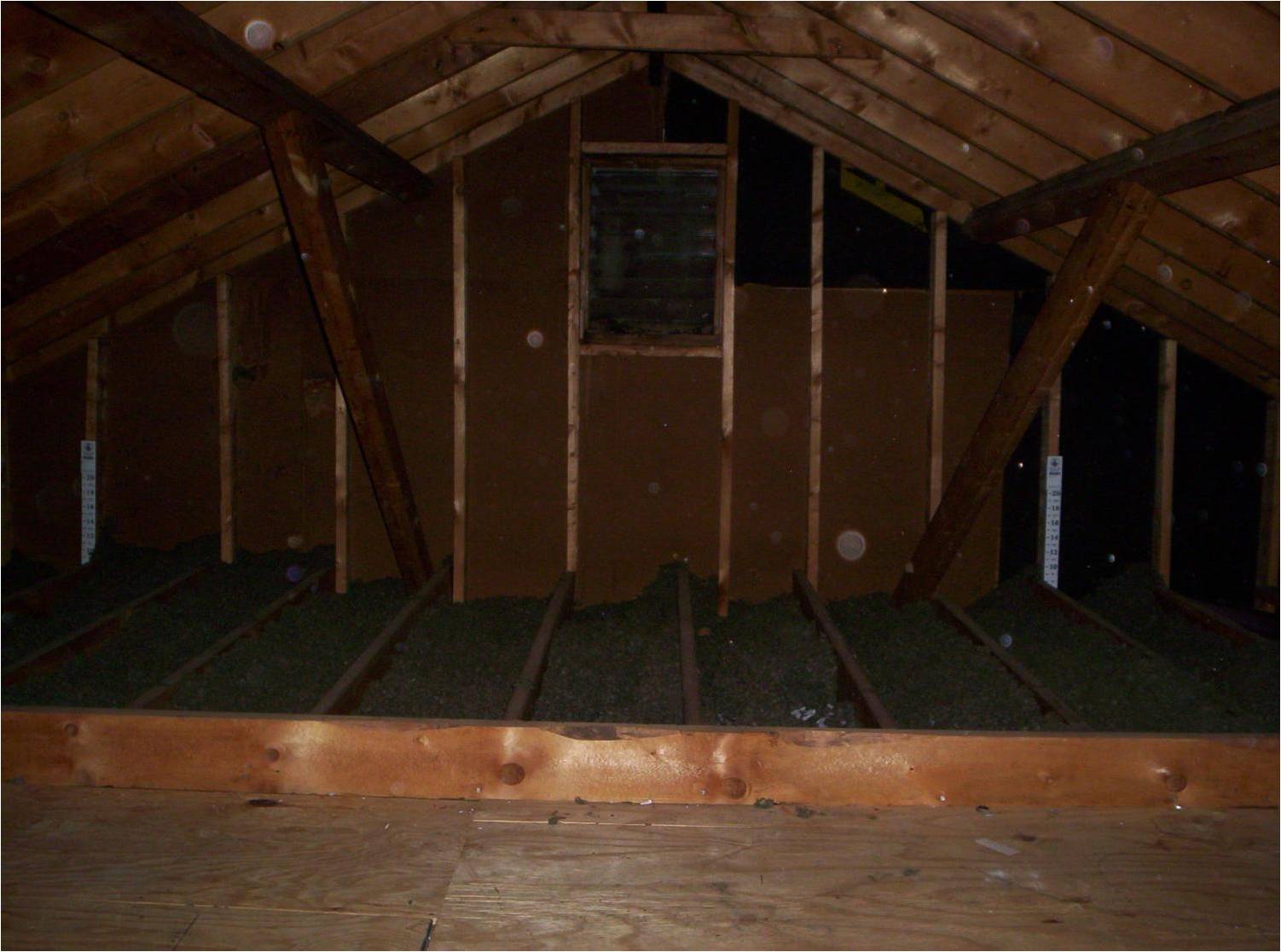
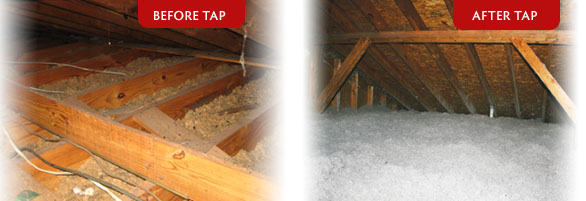
Attic Before TAP
Tap Insulation saves in two ways: saving on your energy bills and energy savings (along with many other benefits). When your attic has the right r-value, resistance to heat, then your HVAC system runs more efficiently. Less work for your HVAC means less money each month on the bill. Our highly trained professional will evaluate your current r-value and bring your insulation to the Department of Energy recommended r-value of 49, with a minimum of 30.
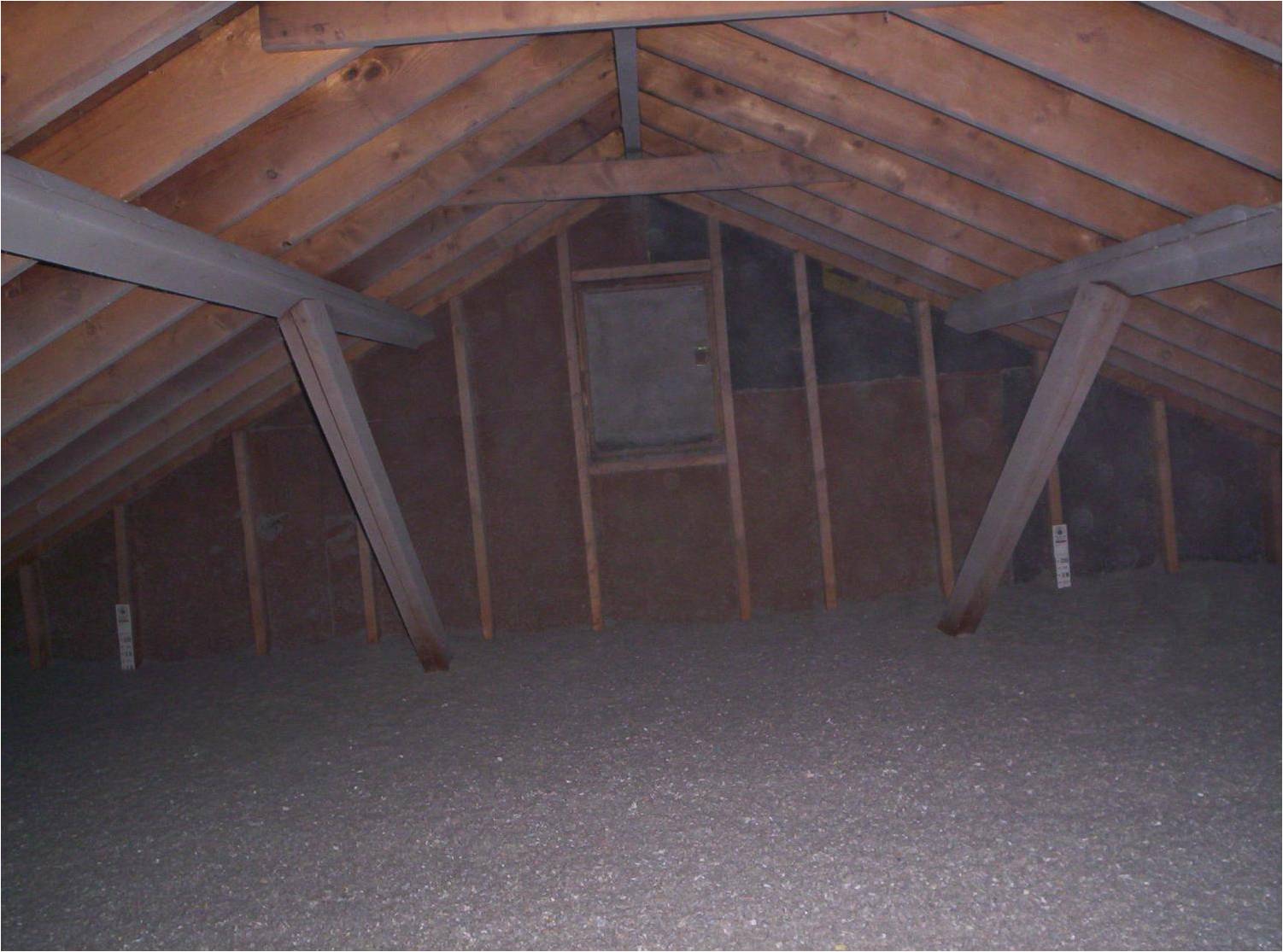
Attic After TAP
It’s typical to see a 20-38% savings on your energy bills after you’ve had TAP Insulation installed. This will benefit your home in both the cold winter months and the warm summer months because it keeps your home at a consistent temperature throughout the season which gives your HVAC system a break. Lastly, TAP Insulation is a GREEN solution for your home. It’s another great way to save green while going green!
If your home is anything like mine you have a high electric bill in the summer and a high gas bill in the winter. When one goes down, the other one goes up. Luckily, Northwest Exterminating offers services that can relieve some of those painful energy bills from the bottom of your house up.
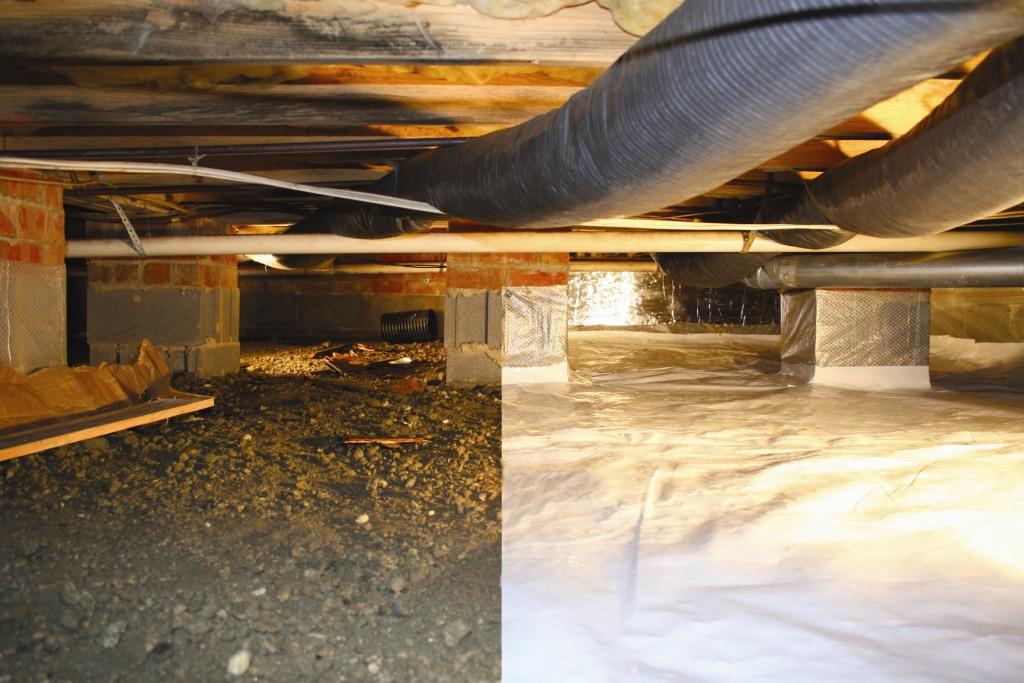
Northwest’s Complete CrawlSpace system will not only soften those energy bills but it will improve the overall health of your home. Crawl spaces are often filled with moisture. Moisture leads to high levels of humidity which cause mold growth, pests, and energy loss. Energy loss may sound like a good thing but it actually causes your system to work harder leading to higher energy bills. Closing in your crawl space can control the amount of moisture, correcting the issues listed above and preventing them from happening in the future. This would give you a healthier, more energy efficient living environment that could save you up to 18% on utility bills.
Another way to save on energy bills is to properly insulate your attic. TAP attic insulation can reduce both your heating and cooling bills. When you have the recommended r-value (insulation’s resistance to heat flow) your insulation works more efficiently, meaning your heating and air isn’t working overtime to compensate. TAP attic insulation can save you up to 30% or more on your utility bills. Other benefits include:
The temperature is dropping in Georgia and your energy bills are raising. Do you know the r-value of the insulation in your attic? Probably not. The Department of Energy recommends an r-value of 49 with a minimum of 30 in your home insulation. By adding the recommended r-value to your home, you can ensure that your home is working efficiently while lowering your energy bills.
By adequately insulating your attic you will keep your home cooler in the summer and warmer in the winter. This will make your HVAC system use less energy and save you money on your bills.
Northwest Exterminating offers attic insulation that offers many benefits besides just saving energy and putting more money in your pocket.
Immediate Return on Your Investment – Typical to see anywhere from 20-38% savings on your energy bills!
10% Tax Credit in 2011 – Homeowners can claim a 10% tax credit (or up to $500) on the installation investment if installed in 2011.