
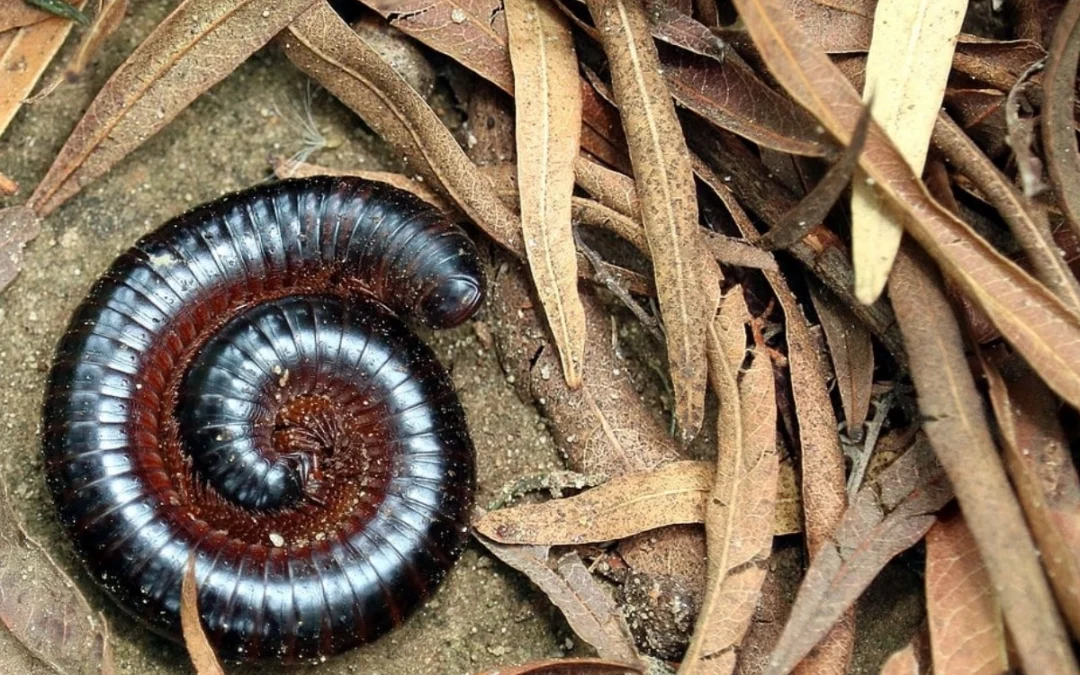
Millipedes in House — Natural Ways to Remove and Prevent Them
If you’ve found millipedes in your house and want to get rid of them without spraying chemicals, you’re in the right place. At Northwest, we run millipede calls across Georgia, Alabama, Tennessee, and South Carolina nearly every week during the spring and fall rainy seasons. The good news: millipedes are harmless (no bites, no stings, no property damage) and they respond well to natural removal methods. Most homeowners can solve a millipede problem in their house with a few changes around the foundation, a dehumidifier, and some basic sealing. No pesticides required.
Here’s the realistic version of natural millipede control: what actually works, what doesn’t, and what to do when DIY methods aren’t enough.
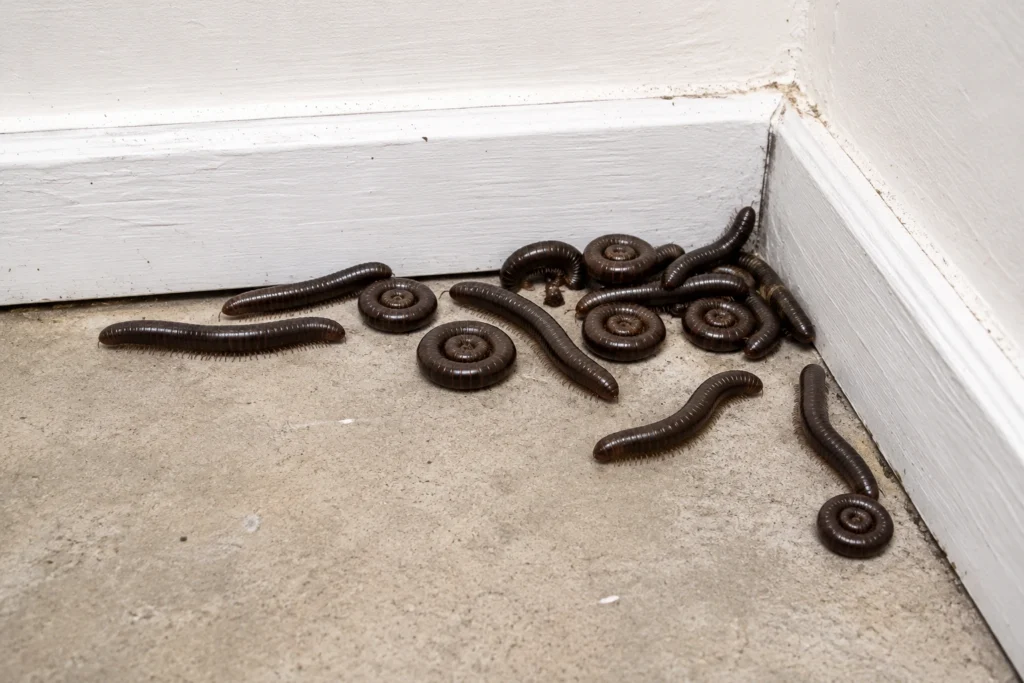
A cluster of millipedes along a basement baseboard usually shows up within 48 hours of heavy rain.
What Are Millipedes and Why They Enter Homes
Millipedes are segmented arthropods that thrive in moist, dark environments. They eat decaying plant matter, not your home, your food, or any living thing inside. They’re slow movers, they don’t bite, and they don’t carry disease. They’re a nuisance pest, not a hazard.
Three things drive millipedes into Southeast homes:
- Wet weather and saturated soil. Heavy spring or fall rain pushes millipedes from their outdoor habitat (mulch, leaf litter, soil) toward drier ground. Sometimes that drier ground is your basement.
- Drought and dehydration. Extended dry weather has the opposite effect — millipedes seek any source of moisture, which can include indoor humidity from bathrooms, basements, and crawl spaces.
- Foundation conditions. Mulch beds against the house, leaf litter near the foundation, downspouts emptying close to the wall, and ground-level cracks all combine to make your home the easiest moisture refuge in the neighborhood.
For more on why millipedes appear and how to identify them (including the millipede vs centipede confusion most homeowners run into), see our companion guide on why there are so many household millipedes in your home.
Signs of a Millipede Infestation
Most millipede problems are obvious. You see them moving on the floor or curled up dead in corners. Other signs:
- Live sightings in basements, bathrooms, garages, crawl spaces, or laundry rooms.
- Trails of curled, dehydrated millipedes in damp corners. They enter looking for moisture and die when they don’t find enough.
- Clusters near entry points: gaps under doors, foundation cracks, basement window wells.
- Movement within 24 to 48 hours after a major rain event.
- Shed exoskeletons in undisturbed corners (suggests an established indoor population).
Natural Methods to Get Rid of Millipedes in Your House
The most effective natural millipede control isn’t a product. It’s removing the conditions that attract them in the first place. Five categories of natural methods, ranked by effectiveness.
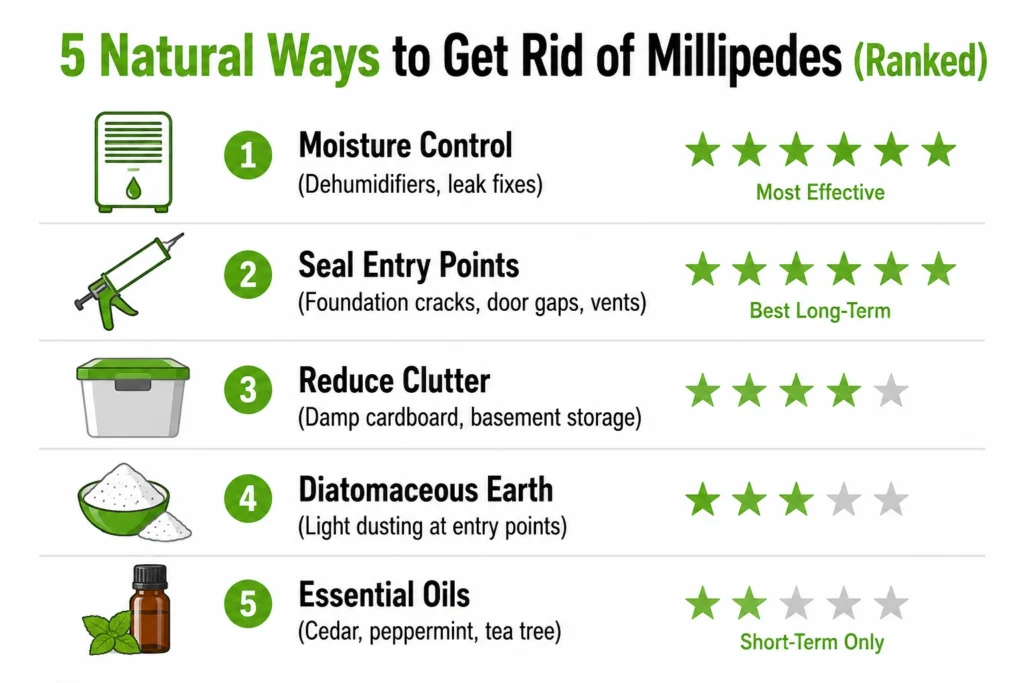
Moisture control does most of the work. Essential oils are short-term help at best.
1. Remove Moisture Sources (The Most Effective Method)
Millipedes can’t survive indoors without moisture. Remove the moisture, and the indoor population resolves itself within days. Steps:
- Fix all leaky pipes and faucets. Even slow drips support indoor millipede populations.
- Run a dehumidifier in basements and crawl spaces. Target relative humidity below 50%. Most home improvement stores carry units in the 30 to 70 pint range; a 50-pint dehumidifier handles most Southeast basements.
- Improve ventilation in bathrooms (exhaust fan that vents outside, not into the attic), laundry rooms (proper dryer vent), and crawl spaces (functional vents or encapsulation).
- Address standing water in floor drains, sink overflows, sump pump pits, and condensation around HVAC units.
This is the single highest-impact natural method. Most homes with persistent millipede problems are also homes with chronic moisture issues. Solve one, you usually solve the other.
2. Seal Entry Points
Millipedes can only enter through gaps. Sealing them is the only way to keep new arrivals out for good.
- Caulk foundation cracks at ground level.
- Install or replace door sweeps and weatherstripping (especially garage side doors and basement hatches).
- Screen crawl space vents with galvanized 1/4-inch hardware cloth.
- Cover window wells with rigid plastic or metal covers.
- Seal gaps around utility line penetrations with steel wool packed into the gap, then caulk over the top.
- Check brick weep holes; screen them with a fine mesh if they’re large enough for millipedes to enter.
3. Reduce Clutter and Hiding Spots
Damp clutter holds moisture and creates millipede shelter. Decluttering reduces both:
- Clear stacks of cardboard, magazines, and stored papers from damp basement floors.
- Move stored items off the floor onto shelves or pallets.
- Transfer storage from cardboard to plastic bins. Cardboard absorbs moisture and is itself a food source for millipedes.
- Keep basement and crawl space corners clean and dry.
4. Diatomaceous Earth
Diatomaceous earth (DE) is a fine powder made from fossilized aquatic organisms. The microscopic edges damage the exoskeleton of insects and arthropods that crawl through it, causing dehydration. Food-grade DE is safe for use around children and pets when applied lightly.
Where to apply:
- Light dusting along baseboards in basements and crawl spaces
- Around foundation cracks and door thresholds
- Inside crawl space access doors
- Reapply after vacuuming or any moisture exposure (DE loses effectiveness when wet)
Caution: don’t over-apply. A visible white layer on baseboards isn’t more effective than a thin barely-visible dusting. It just creates a cleanup project. DE works on millipedes that crawl through it, not on millipedes that don’t.
5. Essential Oils and Natural Repellents
Cedar oil, peppermint oil, and tea tree oil all show modest, short-term repellent effects against millipedes. Mix 10 to 15 drops of essential oil per cup of water in a spray bottle and apply around entry points, baseboards, and any spots where you’ve seen millipede activity.
Honest expectations: scent-based repellents fade within 24 to 72 hours and need frequent reapplication. They’re a supplement to moisture control and sealing, not a substitute. Use them as a short-term measure while you address the underlying conditions.
What about vinegar? Equal parts vinegar and water sprayed around entry points has anecdotal support but limited research backing. It’s safe and cheap so there’s no harm in trying, but don’t expect it to solve a persistent problem on its own.
Step-by-Step DIY Removal Guide
If you have an active millipede problem and want to handle it naturally, follow this sequence:
- Identify entry points. Walk the perimeter of the basement, crawl space, or affected room. Look for cracks, gaps under doors, unsealed pipe penetrations, and dampness on walls.
- Reduce indoor humidity. Plug in a dehumidifier in the affected area. Set it to 45 to 50% relative humidity. Run continuously for at least 2 weeks.
- Address the outdoor conditions. Pull mulch back 3 feet from the foundation. Remove leaf litter against the house. Make sure downspouts extend at least 4 feet from the foundation.
- Vacuum visible millipedes. Empty the canister outside immediately to avoid odor buildup.
- Apply diatomaceous earth in a thin dusting at known entry points and along baseboards in affected areas.
- Seal entry points as a final step, after the indoor population has cleared. Caulking, door sweeps, hardware cloth on vents.
- Maintain. Re-check entry points seasonally. Run the dehumidifier through humid months. Keep mulch beds away from the foundation.
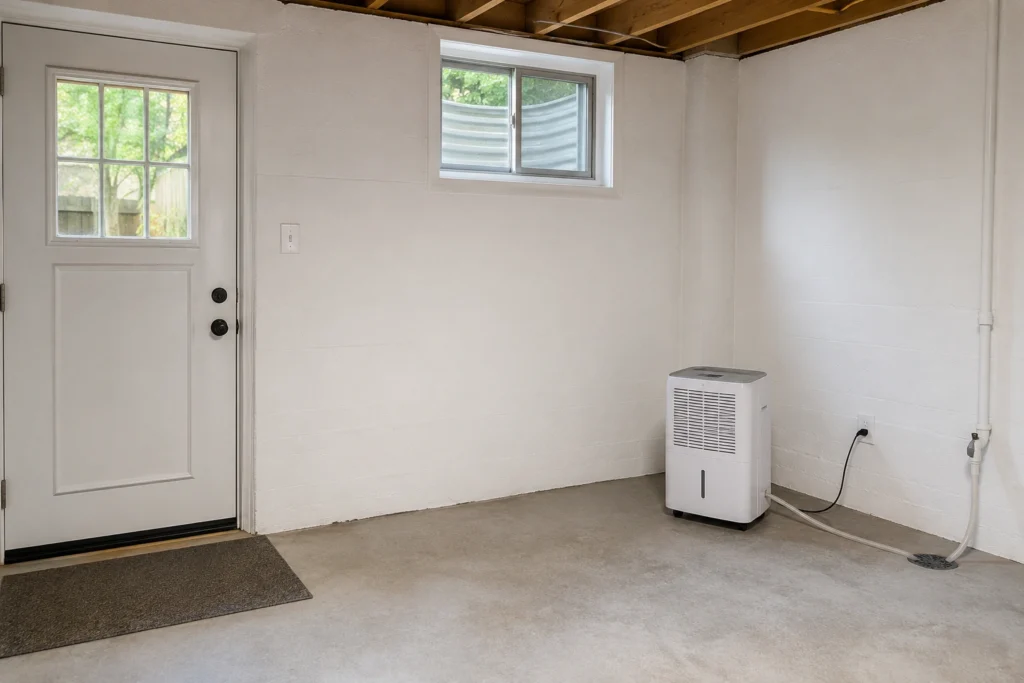
A dehumidifier set to 45-50% humidity is the single highest-impact change for keeping millipedes out long-term.
Preventing Millipedes from Entering Your House Long-Term
Once you’ve cleared an active problem, prevention focuses on the conditions that allowed millipedes in the first place.
- Seal cracks and gaps in doors, windows, and foundations seasonally. The Southeast freeze-thaw cycle and soil expansion can open new gaps each year.
- Maintain a 3-foot mulch-free zone around the foundation. Use gravel, river rock, or bare soil within 3 feet of the house. Move mulch beds farther out.
- Remove leaves, mulch, and organic debris from the foundation perimeter regularly. Fall raking is especially important.
- Direct downspouts away from the foundation. Add extensions if needed. Standing water within 2 feet of the house is the single biggest contributor to millipede entry.
- Control indoor humidity with dehumidifiers, proper ventilation, and prompt leak repair.
- Trim back vegetation so air circulates against the foundation. Damp shaded foundation walls hold millipedes longer.
When Natural Methods Aren’t Enough
Most millipede problems clear up with the natural methods above. Some don’t. Call Northwest for professional millipede control if:
- You’ve followed the DIY steps for 3 to 4 weeks and millipede sightings haven’t dropped significantly.
- You’re finding more than 10 to 15 millipedes per day in any single room.
- You can’t identify the entry points or moisture source on your own.
- You’re dealing with millipedes plus other moisture pests (sowbugs, springtails, centipedes, ground beetles). All share the same root cause and can be solved together.
- The home has chronic crawl space moisture, drainage problems, or other structural issues contributing to the millipede problem. Professional pest control + targeted moisture remediation handles both layers.
The UGA Extension Bulletin B 1412 on Southeastern household pests recommends professional pest control when DIY moisture management hasn’t reduced indoor millipede activity within a few weeks.
(Tried the natural methods and millipedes keep coming back? Request a free Northwest inspection and we’ll find the entry points and moisture sources driving them in.)
Millipedes In House: Southeast Seasonal Patterns
Millipede pressure in Georgia, Alabama, Tennessee, and South Carolina follows a predictable rhythm. Plan prevention around it.
- March through May: Spring rains drive the first major peak. Foundation perimeter prep (mulch pullback, downspout checks) is best done in late February or early March before the rainy season.
- June through August: Summer thunderstorms produce intermittent peaks. Dehumidifier should be running continuously in basements during this period.
- September through November: Fall rains and cooler nights drive the second annual peak. This is the period when most homeowners notice clusters of curled, dead millipedes in basement corners.
- December through February: Activity drops significantly. Use this window for entry-point sealing and structural prevention work, since indoor millipede pressure is at its lowest.
Frequently Asked Questions About Millipedes in the House
Are millipedes harmful to humans or pets?
No, millipedes are harmless. They don’t bite, sting, transmit disease, or damage homes. Some species release a mild defensive secretion when handled, which can briefly irritate skin and shouldn’t be eaten by pets in large numbers, but otherwise they’re entirely safe to have around.
Why do millipedes come inside my home?
They’re seeking moisture, warmth, and shelter. Heavy rain saturates their outdoor environment and pushes them indoors looking for drier ground. Drought has the opposite effect; they seek any source of moisture, which can include indoor humidity. Foundation mulch, leaf litter, and entry-point gaps make some homes much easier targets than others.
How do I prevent millipedes indoors permanently?
Three layers: (1) reduce indoor humidity with a dehumidifier and leak repair, (2) seal all entry points (foundation cracks, door gaps, crawl space vents), and (3) maintain a 3-foot mulch-free zone around the foundation. The first two address current entries; the third reduces outdoor pressure year-round.
Can essential oils keep millipedes away?
Cedar, peppermint, and tea tree oils show modest short-term repellent effects against millipedes. Mix 10 to 15 drops per cup of water and spray around entry points. Expectations: they fade within 24 to 72 hours and need frequent reapplication. Use them as a supplement to moisture control and sealing, not a substitute.
Does diatomaceous earth kill millipedes?
Yes, food-grade diatomaceous earth (DE) damages the exoskeleton of millipedes that crawl through it, causing dehydration. Apply a thin dusting at baseboards and entry points in affected areas. Reapply after vacuuming or any moisture exposure, since DE loses effectiveness when wet.
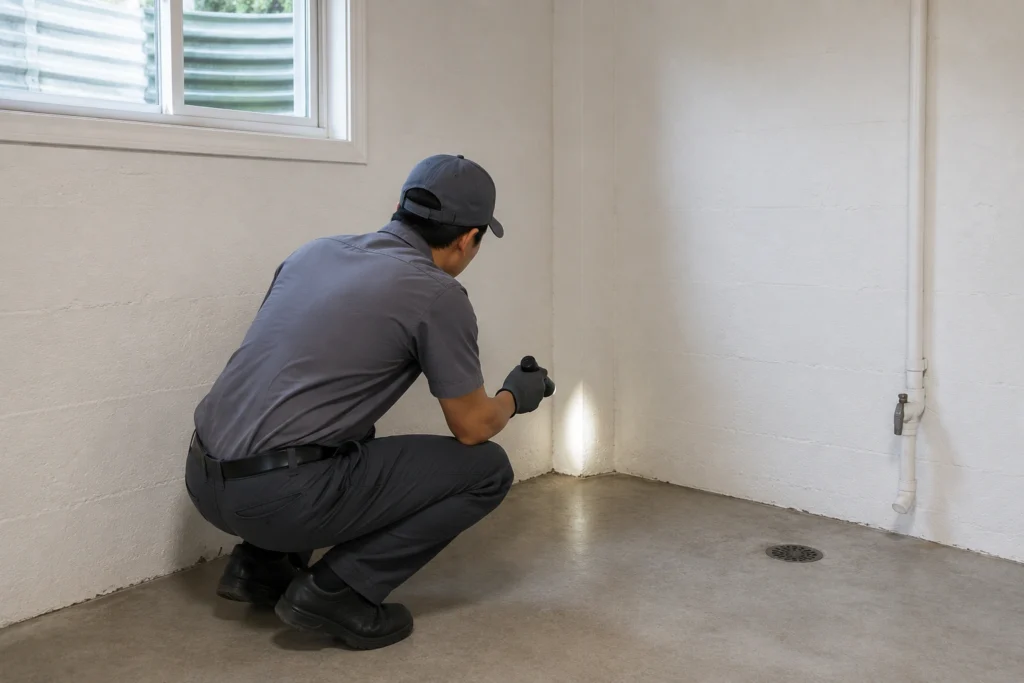
Most natural millipede solutions work. When they don’t, the underlying issue is usually structural moisture that needs more attention.
Solve the Millipede Problem at the Source
Natural millipede control works well for most homeowners. When it doesn’t, the underlying issue is usually structural moisture or hard-to-find entry points that need professional eyes. Northwest’s team handles the full workflow: moisture assessment, entry-point sealing, targeted eco-friendly treatment, and prevention plans tied to Southeast seasonal patterns.
- Schedule a Free Pest Inspection
- Learn About Our Pest Control Services
- Call (888) 466-7849. Same-week service available across our Southeast service area.