Feb 4, 2013 | Uncategorized
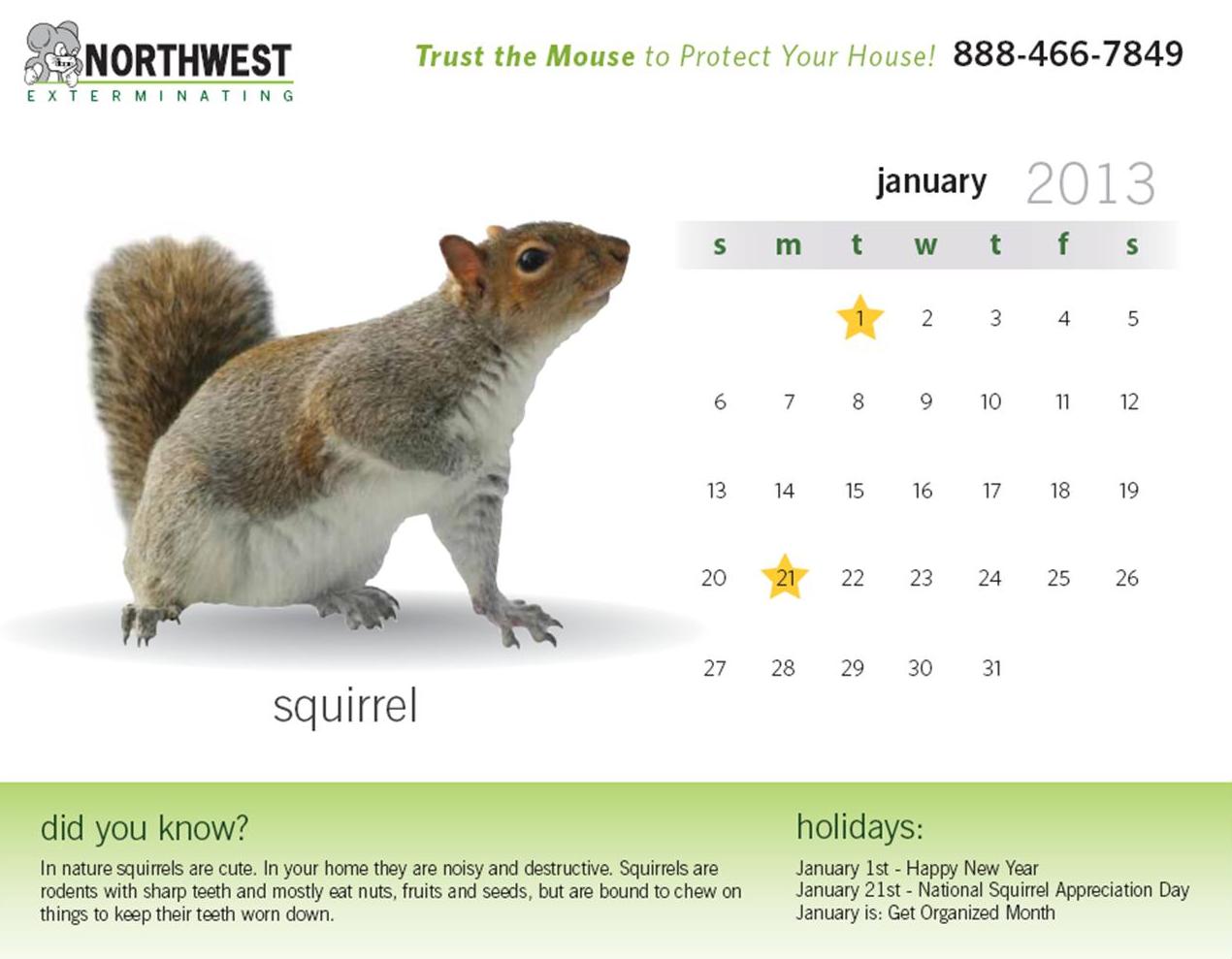
Northwest Exterminating recently added another tool to our website that will benefit business and homeowners. The 2013 Pest Calendar is available for printing and download on our site. Each month we highlight a particular pest that is often seen at that time of the year. Along with a visual reference, we offer some little known facts about the pest.
We cover squirrels, cockroaches, termites, carpenter bees, mosquitoes, bed bugs, fire ants, fleas/ticks, stink bugs/kudzu bugs, spiders, rats, and raccoons.
We hope this will serve as a useful tool to our customers and those that visit our site at www.callnorthwest.com
Go to our website and check out our 2013 Pest Calendar!

Jan 21, 2013 | Uncategorized
Ever wonder how gardens stayed plush and green without modern pest control techniques? Before exterminating companies existed, many planters relied on a method of organic pest control known as companion planting. Companion planting involves placing plants in your garden that have qualities that deter pests that surround and protect your other plants. For instance, planting certain herbs in your vegetable garden can attract beneficial insects while simultaneously repelling harmful ones.
One pest that likes to frequent gardens is the aphid, otherwise known as plant lice. These tiny insects suck the sap from the plant, taking all the nutrients to keep the plant healthy and living. Sometimes as they are feeding, aphids transmit plant viruses to plants such as potatoes and citrus plants, which can kill the plants. Planting chives, coriander or nasturtium around your plants will discourage infestations by these plants.
Nasturtium
Certain plants can keep larger pests out of your garden. For instance, planting lavender not only deter ticks, but also moths and mice. Mice also do not like the smell of daffodils, which can be used as a colorful boarder for an herb garden. Additionally, rabbits do not like the smell of onions, which can be planted alongside peas, beans, lettuce and cabbage. Lastly, sprinkling cayenne pepper on your plants can act as a deterrent for raccoons.
If companion planting still does not do the job of minimizing pest invasions, Northwest Exterminating offers pest control services that not only takes care of pest, but also does it in a green, environmentally friendly way! Northwest offers many services that will protect your plants, home and office environment. We offer more than pest elimination, but also healthier living and working environments. Check out our website for more info at www.callnorthwest.com
Melissa Brown
[email protected]
Sources:
http://gardening.about.com/od/naturalorganiccontrol/a/Companion_2.htm
http://en.wikipedia.org/wiki/Aphid
http://www.naturalnews.com/035853_companion_planting_garden_vegetables.html
Dec 7, 2012 | Uncategorized
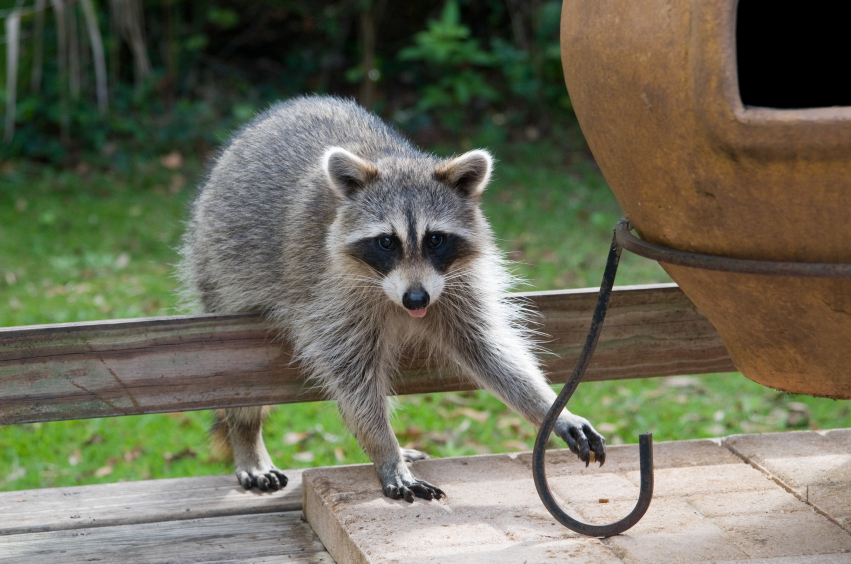
Raccoons may look cute and cuddly but make no mistake about it…raccoons are one houseguest that you do not want. Raccoons are a common nuisance in the southeast. They can make a home in the attic of a structure and cause several thousands of dollars in damage. Many times raccoons will make a home in an attic to have their babies, called kits. They typically have 3-8 young in the late fall. They can be a nuisance by getting into trashcans found outside of homes or business looking for food.
Along with the damage they can do to your home, they can also be a health concern:
- Carry rabies in their saliva which can be transported by their bites.
- Carry parasites on their fur that can impact both humans and animals.
- Can transfer roundworms and fleas that they carry on their fur.
Common traits of raccoons:
- Female raccoons do not tend to be pack animals, however, males often form social groups to maintain their position against other males or predators.
- Raccoons become aggressive when protecting their young.
- Nocturnal.
- Adaptable creatures. Raccoons can easily adapt to their environments.
The feeding of raccoons by people has helped grow their population in urban areas. Some wildlife experts and public authorities warn against feeding wild animals such as raccoons to discourage them from becoming dependent on humans as a food source.
If you think you have a raccoon in your house call a professional animal control or professional animal removal company immediately to reduce health risks and damage to property.
Tip: Loud noises, flashing lights, and foul odors are said to drive away raccoons before they would typically leave the nest on their own.
Nov 23, 2012 | Uncategorized
Changing temperatures means changes in the types of pest you may see around your area. One of the reasons you may soon see certain pests less is because of hibernation. Hibernation is a period of inactivity in animals during which they experience lower body temperatures, slower breathing and lower metabolic rates. Most people think that hibernation is just an animal sleeping but it’s more about the animal conserving energy during winter when food supplies are limited.
To prep for hibernation, animals spend the autumn foraging for food, which means they might be around or even inside your home searching for a treat! Animals that spend the autumn prepping for hibernation include bats, chipmunks, squirrels, raccoons, skunks, and bears. In addition, cold-blooded critters hibernate too because the cold weather causes their body temperatures to drop. These animals include bees, earthworms, frogs, toads, lizards, turtles, snails and snakes. You won’t have to worry worry about these animals foraging for food as they tend to hide away around the time autumn hits.
Make sure not to tempt these animals on to your property by maintaining a clean home and making sure the trash is not easily accessible. Northwest Exterminating can help guard your home by providing services such as Complete CrawlSpace and TAP Attic Insulation. If you are interested in this service or more, please visit us at www.callnorthwest.com!
Sources:
Nov 9, 2012 | Wildlife
Some people think that when the temperatures drop, they will have less pest issues. For some critters this may be true, as they use the autumn to store up for a cold winter, during which they hide away. However, some of the larger animals such as squirrels, raccoons, possums, etc., might want to use your home for a warm space to hide away from the weather. Northwest Exterminating’s Wildlife Team knows just what to do in order to keep your home a pest-free zone!
Depending on what type of animals may be in your area, they can leave you susceptible to various issues. For instance, some squirrels like to make nests in attics, using your insulation as material! The costs of repair plus the hazards of a potential electrical fire due to damaged wires makes it really necessary to block this area off from potential unwanted guests. Aside from squirrels, other creatures have the potential to do damage in the form of bites or fleas that might affect your children or pets.
To reduce these risks against you, Northwest’s Wildlife Team specializes in wildlife exclusion. One of form of wildlife exclusion involves sealing up any potential openings to secure your home. The Wildlife Team will inspect your home, evaluating potential problem areas and implementing measures to eliminate these issues. However, if by chance your home has already gotten unsolicited attention from these pests, the Wildlife Team knows just what to do to take care of your home and prevent the issue from happening in the future. If you need a Wildlife representative, please contact us at 888-466-7849 or visit our website www.callnorthwest.com
Source: http://ezinearticles.com/?The-Importance-of-Wildlife-Exclusion&id=7352650
Melissa Brown
[email protected]