Nov 13, 2013 | Uncategorized
Tips to Keep Wildlife out of Your Home
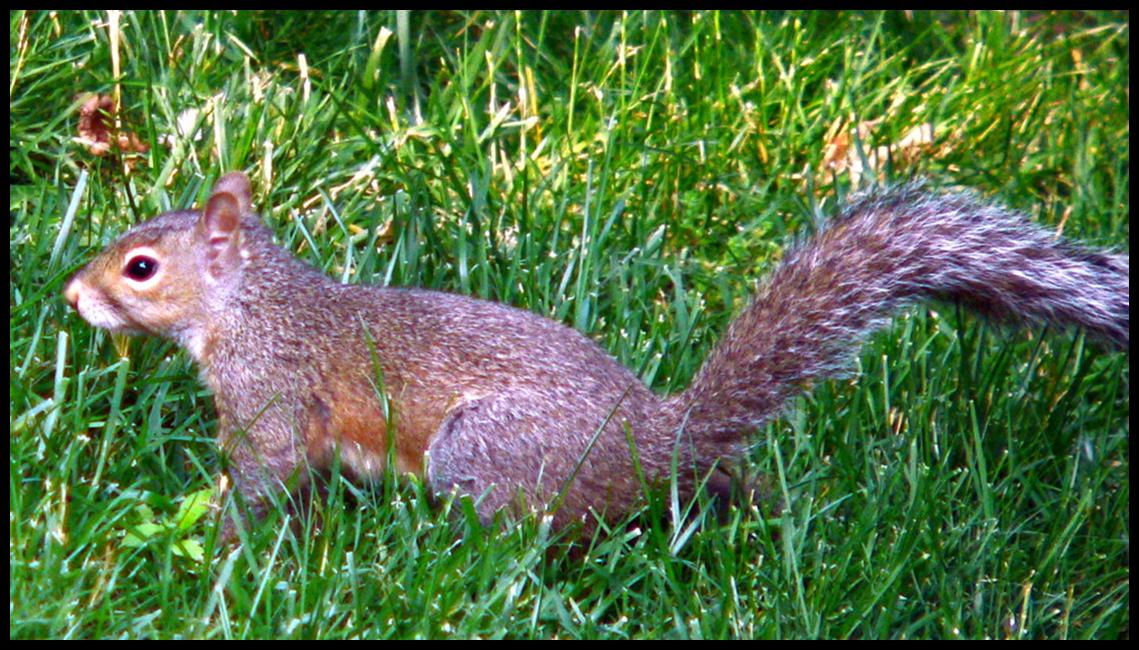
In our last blog we discussed the potential health threats and property damage that animals can cause when they enter your home. We’re not talking about dogs and cats here, we’re talking about the animals that belong in the wild: bats, raccoons, squirrels , mice, opossums, and other wildlife. With the cold temperatures we are starting to experience, it’s a prime time for wild animals to seek warmth and shelter in homes.
Here are some helpful tips on how to keep wildlife out of your home:
- Take out the trash regularly and ensure that the container is tightly sealed.
- Cut back tree limbs from your house. Animals can use these to gain entry to your home.
- Properly seal any vents or openings around the home that animals could use as entry points.
- Remove standing water from your yard. This includes bird baths, pooled water areas, and pet water bowls.
- Never leave pet food and water bowls outside. These can attract wildlife.
- Remove debris from your lawn.
- Install chimney caps so wildlife can’t enter your chimney.
If you hear wildlife in your home, it is best to call a professional animal removal company. Some animals can get aggressive when they feel they are being threatened. Northwest’s wildlife control specialist can help to remove the animal, seal off entry points, and help you to ensure that other wildlife do not return.
Nov 8, 2013 | Uncategorized
Cold Weather Has Wildlife Seeking Shelter in Homes
Those furry little creatures are cute outdoors but they somehow turn into scary monsters when they’re scurrying through your attic, basement, or even your walls. During the fall and winter months different wildlife can make their way into houses seeking warmth from the outside cold.
 Common invaders like squirrels, bats, raccoons, and possums can be a threat to your health, property, and even your safety. These animals can carry diseases and can even get aggressive when they feel threatened. They can damage your property by gnawing on sheet rock, wood, insulation, storage containers, and wiring (a potential fire hazard).
There are easy steps to take that will help keep animals out of your home for the colder seasons: take trash out regularly and seal tightly and cut back tree limbs from your roof line. Animals, especially squirrels, use tree limbs as an entry to your home. Look for gnaw marks and feces and listen for scurrying sounds as indicators that you may have unwanted guests in your home.
Because these animals have a potential to be dangerous, it is best to call a wildlife removal company to properly remove these animals. Call Northwest Exterminating for animal removal.
Nov 8, 2013 | Uncategorized
Cold Weather Has Wildlife Seeking Shelter in Homes
Those furry little creatures are cute outdoors but they somehow turn into scary monsters when they’re scurrying through your attic, basement, or even your walls. During the fall and winter months different wildlife can make their way into houses seeking warmth from the outside cold.
Common invaders like squirrels, bats, raccoons, and possums can be a threat to your health, property, and even your safety. These animals can carry diseases and can even get aggressive when they feel threatened. They can damage your property by gnawing on sheet rock, wood, insulation, storage containers, and wiring (a potential fire hazard).
There are easy steps to take that will help keep animals out of your home for the colder seasons: take trash out regularly and seal tightly and cut back tree limbs from your roof line. Animals, especially squirrels, use tree limbs as an entry to your home. Look for gnaw marks and feces and listen for scurrying sounds as indicators that you may have unwanted guests in your home.
Because these animals have a potential to be dangerous, it is best to call a wildlife removal company to properly remove these animals. Call Northwest Exterminating for animal removal.
Aug 14, 2013 | Uncategorized
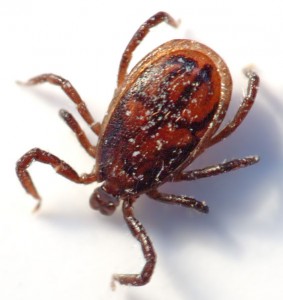
It’s important to protect yourself and your pets from ticks this season! Keep reading for more information on the little suckers!
BRIEF DESCRIPTION
- Size varies depending on the species and type.
- More closely related to spiders than insects.
- Can have either a soft or a hard body.
- Usually brought into homes by animals.
- Feed on animals and humans for their blood meal.
HABITS
- Live in low lying areas such as grass, shrubs, and bushes while waiting for a passing host to attach themselves on to.
- Female ticks have about 3,000 eggs in the spring time.
- Ticks feed on humans, mice, squirrels, raccoons, skunks, dogs, and birds.
SPECIES
- American dog tick
- Blacklegged/deer/bear tick
- Brown dog tick
- Lone Star Tick
- Rocky Mountain Wood Tick
THREATS
- Ticks attach themselves to animals or humans to obtain their blood meal by biting the victim.
- Can cause irritation around the site of the bite, allergic reaction, or cause the mouth parts to get stuck in the skin when the tick is removed.
- Known to transfer Lyme disease, anaplasmosis, and babesiosis.
PREVENTION
- When in wooded areas or tall grass, wear long pants, long sleeves, and closed toed shoes.
- Use a bug repellant that contains DEET.
- Keep grass and other vegetation on your property properly cut and maintained.
- Inspect yourself for ticks after being outdoors.
- Inspect your pets for ticks after being outdoors.
- If you find a tick, use tweezers to remove the tick with a slow, gentle, upward pressure.
OTHER PESTS TO LOOK OUT FOR
Call Northwest Exterminating for information on how to protect your home and loved ones from ticks.
Mar 18, 2013 | Uncategorized
Northwest’s Wildlife Services Team specializes in the exclusion, removal, and control of animal nuisances. Among our specialties are squirrels, rodents, raccoons, opossums, bees, armadillos, and chipmunks. An important wildlife service in the coming warm months is our snake removal! Our Wildlife team uses a Green product that is used to deter snakes. We also spend a great deal of time educating the customer on snakes.
Georgia is among the states with the highest biodiversity of snakes in the U.S. with 43 different species. They are located anywhere in Georgia from the mountains in the north to the barrier islands along our eastern coast. Below we have pictures and descriptions of the most common venomous snakes. If you spot one of these, call our Wildlife Services Team at 770.436.3362 to get them off your hands, or better yet, remove them very far away from your hands!
Copperhead
Copperhead
Copperheads are fairly large – anywhere from 2 to over 3 feet long! They have brown, triangular heads and elliptical pupils. You likely won’t want to get close enough to be sure, but they have two tiny dots at the center of the top of the head. More distinguishing features include yellow tails for juvenile snakes, and the brown bands that run along their body are in a distinct hourglass shape. They are found mostly in the forested areas of Georgia and South Carolina.
Cottonmouth/Water Moccasin
Cottonmouth
Water Moccasin
Just like copperheads, cottonmouths have large, triangular heads with elliptical pupils. They get the name water moccasin from their semi-aquatic nature and are likely to be found by mostly all types of freshwater habitats. These are more difficult to identify by appearance because they have a wide range of colors but tend to feature colors that will camouflage them into their habitats.
Eastern Diamondback Rattlesnake
Eastern Diamondback Rattlesnake
Eastern diamondbacks are among the largest of 32 species of rattlesnakes, ranging anywhere from 2.75 feet to 6 feet long. They have large, broad heads with two light lines on their faces. These are easily recognized by their brown diamonds, surrounded by lighter colored brown, tan or yellowish scales. They can be located anywhere from the southern part of North Carolina, but especially in South Georgia and Florida. They like to be in drier, sandy or low cut grass areas and tend to avoid wetter areas, though they are great swimmers and even travel through saltwater!
Canebrake/Timber Rattlesnake
Canebrake-timber rattlesnake
These snakes tend to range from about 3-5 feet in length and are usually gray with a pink, yellow, orange or brown stripe running along their back. They have solid black tails and black chevrons along the back and sides of their body with the point of the (V) pointing forward. They are found in most of the eastern United States, but are somewhat absent from Florida. They can be found in a wide range of areas, but are least likely to be found in highly urbanized or residential areas.
Pigmy Rattlesnake
Pigmy rattlesnake
This rattlesnake is on the smaller side, usually coming in at under 2 feet in length. This snake has 9 large scales on the top of it’s head and a tiny rattle that can rarely be heard. They have a row of mid-dorsal spots and a bar from the eye to their mouth that ranges from black to brownish. The name is deceptive as they can be gray, tan, lavender, orange, red, or even black. These are mostly located from central Georgia up throughout South Carolina. They also like to be near water sources like creeks, marshes, and swamps.
Eastern Coral Snake
Coral Snake
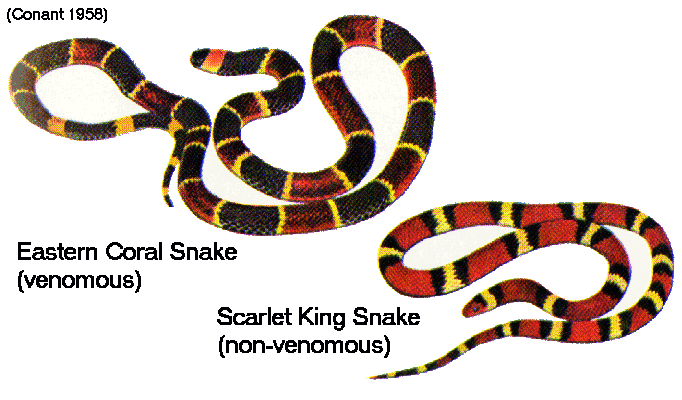
“Red on yellow, kills a fellow. Red on black, friend of Jack.” These snakes are sometimes up to 4 feet in length with smooth heads with a bright body pattern of black rings in which the red and yellow rings touch each other. These are sometimes confused with king snakes, but these snakes only have the red touching the black rings and are not venomous. These snakes are found all the way from Louisiana to Florida, where they are most prevalent. They are rarely spotted because they hide under ground and spend only a limited time crawling above ground. Unfortunately, because of these secretive habits, coral snakes tend to persist in suburban areas.
Melissa Brown
[email protected]
Sources:
http://georgiawildlife.com/node/497
https://uga.edu/srelherp/snakes/index.htm
http://srelherp.uga.edu/snakes/pics/agkcon210.jpg
http://srelherp.uga.edu/snakes/pics/agkpis210.jpg
http://srelherp.uga.edu/snakes/pics/agkpis4.jpg
http://srelherp.uga.edu/snakes/pics/croada210.jpg
http://srelherp.uga.edu/snakes/pics/crohor3.jpg
http://srelherp.uga.edu/snakes/pics/sismil210.jpg
http://www.petmd.com/sites/default/files/coral_snake.gif