Apr 4, 2012 | Pest Control
Watch out pests, it’s National Pest Control Awareness Month and the Georgia Department of Agriculture (GDA) Commissioner Gary W. Black is reminding Georgia residents to protect your homes and businesses from pests. Read the GDA’s recent press release for more tips and information on how to keep your home free from pests.
State Ag Commissioner reminds residents to protect homes, businesses
Spring has sprung in Georgia. This season is always a busy time for insects and pests in Georgia, but it is especially the case after such a mild winter. In honor of National Pest Control Awareness Month in April, Georgia Department of Agriculture (GDA) Commissioner Gary W. Black reminds residents about the risks posed by household pests.
“We are already seeing more insects and pests earlier this year due to the warm winter Georgia has had,” said Commissioner Black. “Every year, pests cause millions of dollars in damage for our residents and it is important for Georgians to prepare a plan of action to help prevent damage from occurring.”
In addition to fees paid for control and preventative services done by pest control professionals, Georgia residents spend untold dollars to repair damage caused by pests such as termites, rodents and carpenter ants who chew through walls, flooring and even electrical wiring. Residents also pay for expenses related to the treatment of medical conditions; mosquitoes can carry West Nile virus while house dust mites and cockroach allergens trigger asthma attacks, and stinging insects send more than half a million people to the emergency room every year.
“I encourage all Georgians to take proactive steps to prevent infestations in their homes and businesses,” said Commissioner Black. “All it takes is a few simple, preventative measures to help protect year-round.”
In April, consider these tips and suggestions:
– Trim back trees and shrubs so they are not physically touching any building structures;
– Walk the perimeter of a structure’s foundation and seal up any cracks or small openings;
– Install window and/or door screens and check once a year for holes or tears;
– Keep wood debris and piles of wood (including firewood) at a distance;
– Check plumbing and pipes to eliminate sources of moisture or standing water;
– Tightly secure all food and garbage to prevent pests from finding their way to the source (this includes pet food dishes and storage containers); and
– If there are any visible signs of pests or an infestation, contact a licensed pest professional immediately.
“April is a great time to have your home or business checked to determine if it’s necessary to re-establish any pest control measures, such as termite protection” said Commissioner Black. “And if control or treatment is necessary, that is one homeowner project best left to the professionals.”
Consumers are urged to only seek advice and use licensed professional pest control companies. If a company is not licensed by the GDA, it is illegal for them to practice pest control protection as a business. Residents can find a list of all licensed professional pest management companies at www.kellysolutions.com/GA/Structural/searchPCOCo.asp, or contact the GDA Structural Pest Section at 404-656-3641.
Note: Consumers can learn more about Pest Control Awareness Month, the GDA’s Structural Pest Section and hear from industry partners in a short video clip available on the Department’s website homepage starting April 1: www.agr.georgia.gov.
The Georgia Department of Agriculture is responsible for licensing the professional pest management companies who perform termite control. There are approximately 1,200 of these companies operating in Georgia. Learn more online at www.agr.georgia.gov.
Apr 2, 2012 | Mosquito, Pest Control
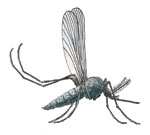
Spring is here and so are the pests. We’ve talked a lot about the unusually warm weather leading to higher numbers of pest sightings and our Ask the Mouse section on our website has been a great place for readers to ask questions about pests they are seeing. Mosquitoes, bed bugs, and carpenter bees are among some of the common household pests that are being seen this spring. Take a look below at some of our most common recent questions.
Why do mosquitoes bite some people more than others?
 Mosquitoes are attracted to carbon dioxide and can sense it from up to 30 yards away. Researchers are still trying to find out exactly what it is that makes some people more attractive than others. Research has indicated that the amount of carbon dioxide in the breath, pregnancy, body temperature, alcohol and odorant markers based on blood type are the top attractants. Pregnant women are preferable because they exhale more carbon dioxide and tend to run a little warmer than the average person. It is also thought that alcohol increases body heat making a person more appealing. So be careful who you hang around at the next cook out.
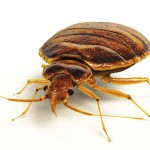
My son’s coming home from college. What do I need to do to make sure he doesn’t bring home bed bugs?
Bed bugs are evasive and hard to detect. When your son brings home his clothes, make sure to leave them outside, in a detached building or in the garage. Immediately place the dirty clothes in the washing machine and dry them on high for at least 10 minutes. It is best to keep the luggage out of the house if possible. If you don’t have that option you can place the luggage in black plastic bags and leave them outside in the sun on a hot day. You can also do this with furniture. Bed bugs won’t tolerate temperatures greater than 120 degrees. Since bed bugs are tiny and can get into the smallest cracks, it is best to have a professional to inspect furniture and other items before you bring them into your house.
I found sawdust on my back porch. Does that mean I have termites?
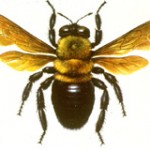
Termites eat the cellulose part of the wood and don’t leave behind sawdust. Chances are you have a different pest, one of the most common is the carpenter bees. Carpenter bees get their name because they excavate clean round entrance holes, close to ½ inch wide, into soft wood such as pine, cedar, cypress and fir. The prefer to attack structural timbers and other wood products such as fascia boards, porch ceilings, decks, railings, siding, shutters, firewood, and other weathered wood. They tend to avoid wood that is well painted or covered in bark. They do not eat the wood therefore they leave behind the sawdust. They bore into wood to make galleries for nesting. If left untreated, they can cause extensive damage.
What other questions do you have for Northwest Exterminating’s Ask The Mouse section?
Have you seen mosquitoes, bed bugs, carpenter bees, or other pests in or around your home?
Mar 7, 2012 | Termite Control
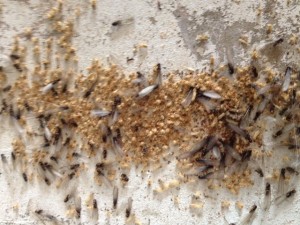
Although, pests and animals are usually creatures of habit they are still full of surprises and will often go against the norm of what they are expected to do. Recently, we were out on a termite call and found what seemed to be a mass burial of termites.
This picture above was taken inside of a garage. The reason this picture is so unique is because termite workers do not like to be exposed to elements such as light, etc, which is why they build tunnels. The termites in the photo had actually swarmed out of a pin sized hole in the garage slab out into the open. Normally, after realizing that their new path had led to exposure they would have sealed off their path so others couldn’t travel out to be exposed and die. Instead, the workers continued to emerge from the hole in the garage slab and gathered all of the dead workers into a pile…like a mass burial.
This is extremely uncommon and left our representatives baffled. It just goes to show you that Nature has a mind of its own.
Mar 2, 2012 | Company News, Going Green, Pest Control, Termite Control
Did you know that Northwest Exterminating offers Continuing Education classes for Georgia Realtors? We offer 7 classes that earn agents 3 credit hours. Not only do we offer the CE classes but we come to you!! Our Realtor Team can come to your office or a location of your choice.
Construction and Termites – This course is a visually detailed view of the construction process, as it relates to termites, and the various termite treatment methods used in new construction. A discussion of clearance letters and Form II’s is also included.
Builder One – If you are selling new construction homes, this class is a must! This is an in-depth course for builders and agents discussing the real termite problem, comparing construction foundations and explaining the termite treatments for each. An explanation of termite warranties is also provided.
Wildlife – What is in your attic? – Critters causing commotion? This course encompasses an extensive study of the problems and the preventative solutions available to homeowners concerning a wide variety of pests including rodents, snakes and bats.
Pest Damage Identification and Control Methods – GAR Approved. Bugs, bugs, bugs! This class is specifically designed to help agents identify different types of termite damage and nonstructural threats. The differences between termites and ants and various other bugs are also discussed.
Going Green – Construction, Conservation and Pest Prevention – Is your environment important to you? This course is primarily to help Real Estate Agents and Appraisers understand the importance of our ever changing environment and how the Real Estate community can impact our conservation efforts.
Staying Ahead of the Competition – Don’t be caught off guard by the FHA/VA stumbling blocks! This class instructs the agent on Form II restrictions, GAR revisions, and the Official Georgia Wood Infestation Report. Conducive conditions for termites are also covered in this class.
What’s Bugging You? – Don’t be scared…be prepared! Topics covered in this class include ants, flies, household bugs, insects that bite or sting, spiders, bed bugs, and prevention and control methods.
For more information, go to our website for the dates of our currently scheduled classes. Check in often for class schedule updates.
To schedule a Continuing Education class for Realtors in your office, contact Northwest’s Real Estate Team.
Feb 28, 2012 | Termite Control
If you are anything like me, you are loving this unseasonably warm weather that we are experiencing in Georgia. It’s been a nice preview of what is in store for us come Spring time. That being said, I’m not looking forward to the cold snap that we will inevitably experience before Spring comes around. I’m also not looking forward to an earlier termite season due to the warm temperatures.
Termites aren’t usually moving this time of year because the temperature is typically below 60 degrees. When temperatures are above 60, that is when termites start to swarm. And when they start to swarm, they start inside your home before moving outside. Unfortunately, once you find out that you have termites in your home, damage has most likely already occurred. And termites can do some serious damage, causing up to $5 billion of damage each year in the US.
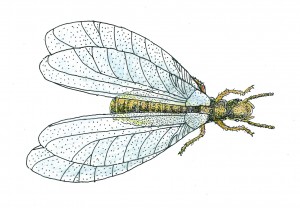
Oftentimes, termites are mistaken for flying ants. If you think you see what appears to be flying ants, call your termite control company, such as Northwest Exterminating, to come inspect your home. Termites look for moisture in and around homes, so be sure that any standing water or leaking pipes are adequately taken care of. Look for mud tunnels, usually the size of a pencil, that are created on the inside or outside of the home’s foundation. Clean gutters and pull back soil and mulch from the home’s foundation where termites can find their way into the wood of a structure.
If you have questions about termites or suspect that termites may be in your home, call Northwest Exterminating today and we will be happy to come out and conduct a FREE termite inspection.


 Termites