
Mosquito Season in Florida — When It Starts, Peaks, and Ends
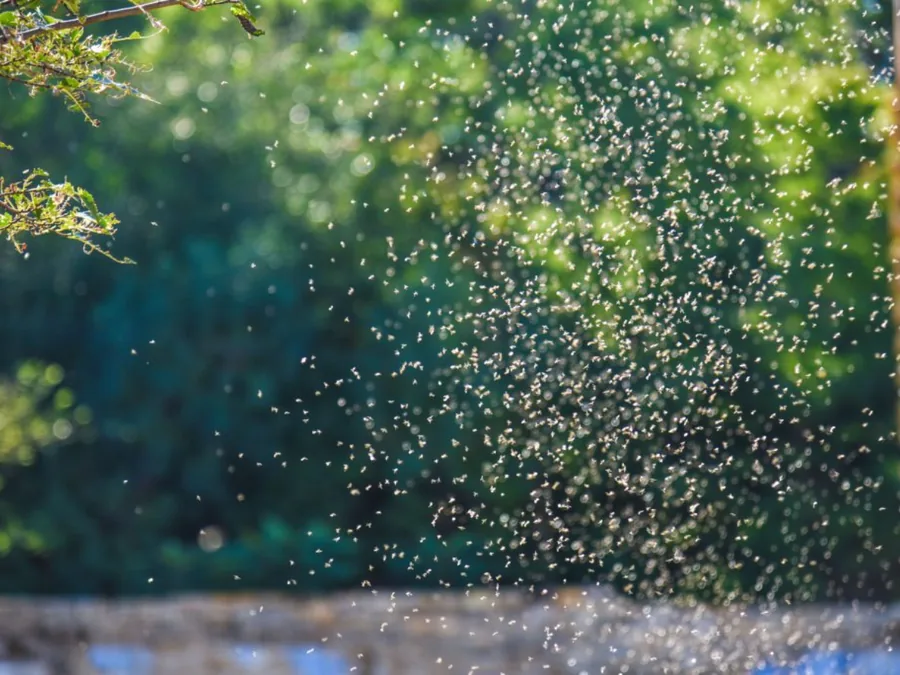
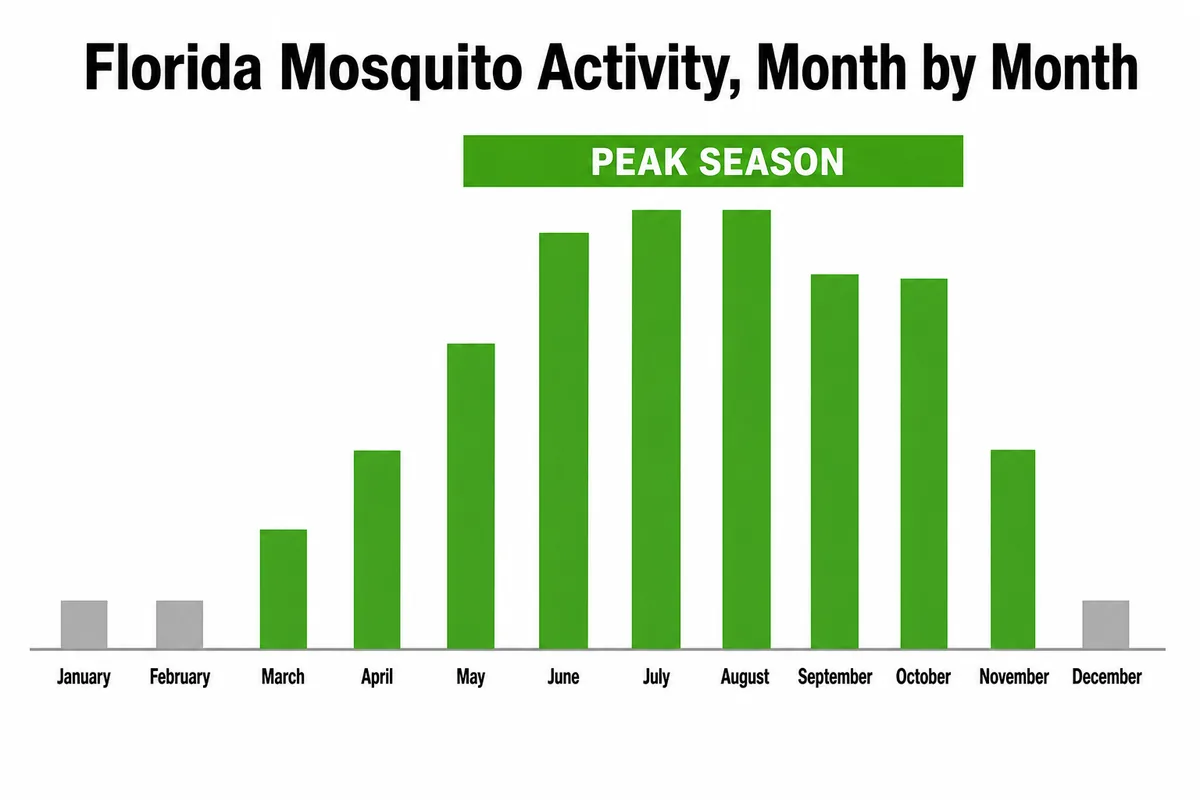
Quick answer: Mosquito season in Florida runs essentially year-round, with activity ramping up in March, peaking from June through October during the rainy season, and tapering (but never fully stopping) in winter. South Florida, including Naples, Fort Myers, and Miami, sees the longest and most intense pressure of any region in the state.
Florida mosquitoes don’t follow the same seasonal calendar as the rest of the country. While homeowners in the Midwest pack away their repellent in October, Florida residents are still swatting in December. Understanding exactly when mosquito season in Florida starts, peaks, and eases up is the first step toward protecting your yard and family all year long.
This guide gives you a clear, month-by-month breakdown of Florida’s mosquito season, explains why South Florida faces a uniquely long season, and outlines what a year-round protection plan actually looks like. Whether you’re in Naples, Fort Myers, Miami, or Pompano Beach, this is the local detail that most generic guides skip entirely.
The Short Answer: Florida’s Mosquito Season Is Basically Year-Round
Most states get a true mosquito-free winter. Florida does not. Mosquito season in Florida officially spans from roughly March through November, but in South Florida, activity never fully stops. It only slows.
The peak window runs from June through October, driven by the state’s rainy season and sustained heat. Outside of that peak, mosquitoes in South Florida remain present and capable of biting on warm winter days. Temperatures need to drop consistently below 50°F before mosquito activity meaningfully decreases, and in Miami-Dade, Broward, Collier, and Lee counties, that threshold is rarely met for more than a few days at a time.
For practical purposes, Florida mosquito control is a 12-month commitment.
Florida Mosquito Season, Month by Month
Spring (March through May): The Season Ramps Up Fast
By March, daytime temperatures across Florida are climbing back into the 70s and 80s. Mosquitoes that survived winter as eggs or larvae in standing water begin hatching. Activity builds steadily through April and accelerates sharply in May as humidity rises ahead of the rainy season.
South Florida residents often notice meaningful mosquito pressure as early as mid-February during warm winters. This early ramp-up is one of the key differences between South Florida and the northern part of the state, where the season typically doesn’t gain momentum until late March or April.
Summer and Early Fall (June through October): Peak Season
This is the worst period. Florida’s rainy season runs from June through September, dropping an average of 50 to 60 inches of rain annually across the southern half of the state, according to the University of Florida IFAS Extension. Every rain event creates fresh standing water, and standing water is where mosquitoes breed.
Warm temperatures accelerate the mosquito life cycle dramatically. At 80°F, a mosquito can complete its development from egg to biting adult in as little as 7 to 10 days. With near-daily afternoon storms refilling breeding sites faster than they dry out, the population compounds quickly throughout June, July, and August.
September and October remain heavily active. The rains taper, but residual warmth and humidity keep populations elevated well into fall.
“In South Florida, we don’t really see a summer spike. We see a summer ceiling,” says Mike Vilchez, Quality Assurance Technical Field Trainer and South Florida expert at Northwest Exterminating. “From June through October, pressure is just consistently high. Service calls spike right after the first big June rains, and they don’t drop off until we get a real cold front, which might not happen until December.”
Winter (November through February): A Lull, Not a Stop
North Florida typically sees a meaningful drop in mosquito activity between November and February. Temperatures fall far enough to suppress most species. In South Florida, the picture is different.
Miami, Fort Lauderdale, Pompano Beach, and coastal Collier County rarely see extended cold snaps. Average January temperatures in Miami sit around 68°F, well above the 50°F threshold at which mosquito activity begins to slow. That means mosquitoes remain capable of biting on most winter days in South Florida, even if the population is smaller than it was in August.
The practical implication: dropping your mosquito protection in November is a mistake if you live south of Lake Okeechobee.
Why Is Florida’s Mosquito Season So Much Longer Than Other States?
Three factors combine to make Florida, and South Florida in particular, one of the most mosquito-intense environments in the continental United States.
- Heat: Mosquitoes are cold-blooded insects. Warmer temperatures shorten their breeding cycle and extend their active season. Florida’s subtropical and tropical climate provides warmth year-round, which other Southeastern states cannot match.
- Humidity: Florida’s average relative humidity exceeds 70% across most of the year. High humidity slows mosquito dehydration, keeping adult populations active longer after each breeding cycle.
- Rainy season and standing water: Florida’s June-through-September rainy season creates the breeding conditions mosquitoes need. Low-lying yards, drainage ditches, landscape features, and poorly maintained gutters all become active breeding sites within days of a rain event. The University of Florida IFAS Extension has documented more than 80 mosquito species in the state, more than any other state in the continental US.
- Coastal geography: South Florida’s flat terrain and coastal proximity means rainwater drains slowly. Water sits in yards, swales, and natural areas for days after a storm, and each of those sites is a potential breeding zone.
What Are the Worst Months for Mosquitoes in Florida?
The worst months for mosquitoes in Florida are June, July, August, and September. These four months combine peak rainfall with peak heat, creating conditions that drive rapid population growth.
July is consistently the most complained-about month across Northwest Exterminating’s South Florida service area. Afternoon storms roll through almost daily, and temperatures rarely dip below 75°F even at night, meaning mosquitoes breed around the clock.
Regional differences matter here. In Tallahassee and Jacksonville, the season is bad in summer but clearly seasonal. In Naples, Fort Myers, and Miami, the summer peak is more extreme and the shoulder months are longer. Coastal areas face additional pressure because salt marsh mosquitoes (species that breed in tidal flats and coastal wetlands) add to the existing inland population.
“The difference between South Florida and the rest of the state is that we don’t get the natural reset that a cold winter provides,” says Mike Vilchez, Quality Assurance Technical Field Trainer and South Florida expert at Northwest Exterminating. “Our customers who try to stop treatments in October almost always call back in January frustrated. The pressure never fully stops down here.”
How to Stay Protected During Florida’s Year-Round Mosquito Season
Source Reduction: Your First Line of Defense
No treatment program works well if active breeding sites remain in your yard. Before anything else, eliminate standing water:
- Empty and scrub birdbaths weekly
- Clear gutters of debris and standing water after every rain
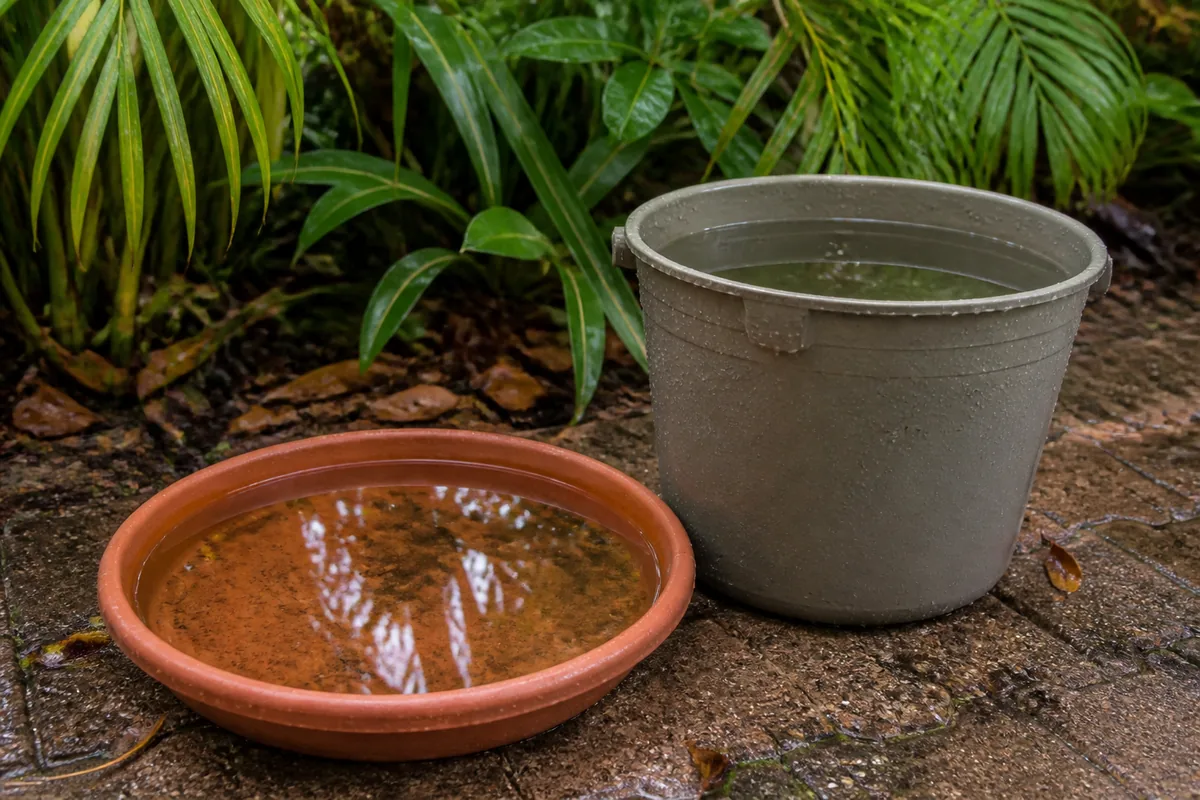
- Store or cover containers that collect rainwater (pots, buckets, kiddie pools)
- Check for low spots in your lawn where water pools after storms
- Keep ornamental ponds stocked with mosquito-eating fish or treated with BTI (a naturally occurring larvicide)
For Florida homeowners, this kind of mosquito source reduction is a weekly habit, not a one-time task. The rainy season refills breeding sites constantly.
Why a Year-Round Plan Beats Seasonal Treatment in Florida
In northern markets, a seasonal mosquito treatment that runs from May through October makes sense. Florida’s biology doesn’t support that model, especially in South Florida.
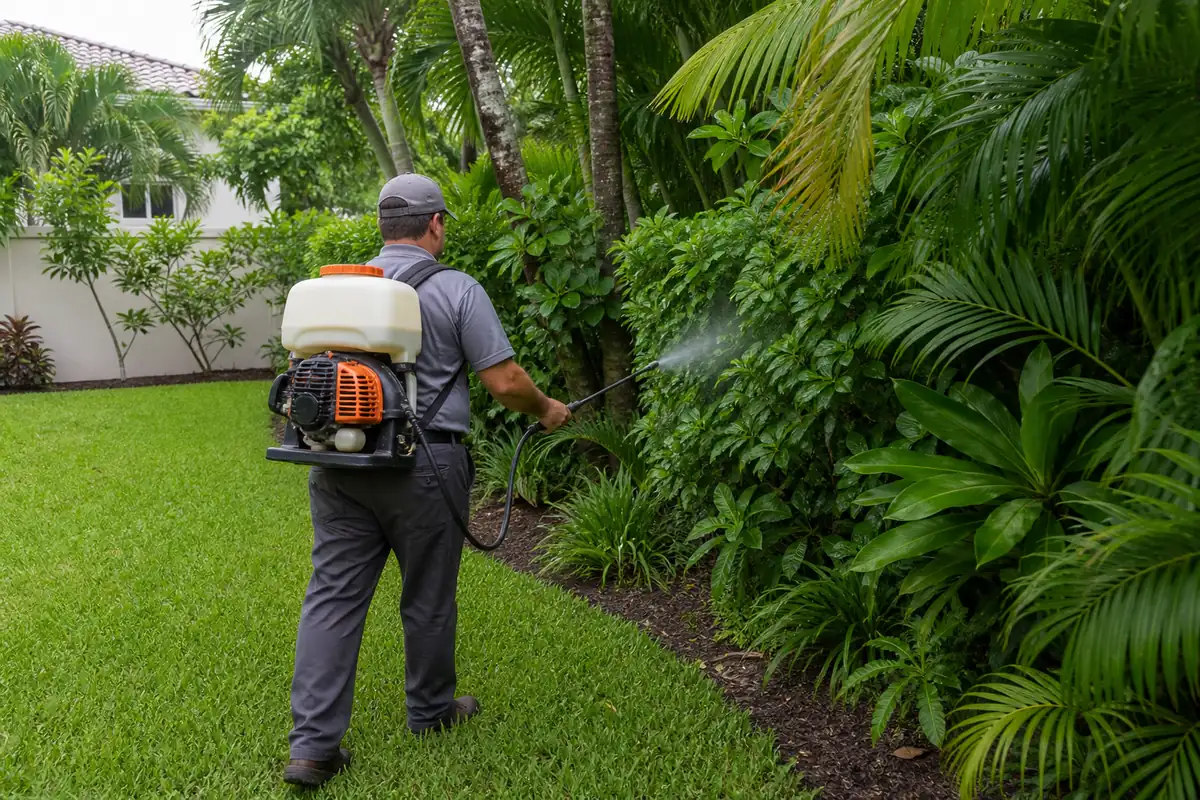
A continuous mosquito control program maintains a barrier around your yard through regular treatments, targeting adult mosquitoes where they rest and larvae before they hatch. The In2Care mosquito system, which Northwest Exterminating offers in Florida, uses a slow-release biological approach that spreads through the mosquito population and reduces breeding in hard-to-reach water sources without broad pesticide spraying.
The combination of barrier treatments and a system like In2Care is particularly well-suited to South Florida’s year-round pressure because it doesn’t rely on timing a season. It maintains control continuously. You can also support your protection with plants that naturally repel mosquitoes, which pair well with a professional program.
Why South Florida Mosquito Pressure Is Different From the Rest of the State
Naples, Fort Myers, Miami, and Pompano Beach sit in a climate zone that most mosquito guides overlook entirely. These markets face pressure that is longer, more intense, and driven by different mosquito species than what residents in Orlando or Gainesville deal with.
South Florida’s combination of coastal salt marsh mosquitoes, subtropical heat, a rainy season that delivers heavy rainfall with few dry intervals, and winters too mild to suppress populations means that the standard “seasonal” framing simply doesn’t apply. Residents in Collier and Lee counties often describe summer as “bad” and winter as “manageable,” not “mosquito-free.”
For homeowners in these markets, the goal of mosquito control isn’t to get through a season. It’s to maintain livable pressure year-round.
Take Back Your Yard — Get a Free South Florida Mosquito Quote
Year-round mosquitoes need a year-round plan. Northwest Exterminating’s Florida mosquito control programs are built specifically for the extended season South Florida demands, not copied from a northern playbook.
Get a free estimate and find out which program fits your yard, your neighborhood, and your schedule. Same-day and next-day service available across South Florida.
- See how our mosquito control programs work
- Get a free mosquito control quote
- Call (855) 789-9807 to speak with your local Northwest branch today.
Frequently Asked Questions About Mosquito Season in Florida
When does mosquito season start in Florida?
Mosquito season in Florida typically begins in March, when temperatures rise above 50°F consistently enough to trigger hatching and breeding. In South Florida, including Miami, Naples, and Fort Myers, activity can begin as early as mid-February during warm winters.
When does mosquito season end in Florida?
Mosquito season ends in late November or December in northern Florida, where temperatures eventually drop below the 50°F activity threshold. In South Florida, the season never fully ends. It only slows. Mosquitoes remain active on warm winter days throughout Miami-Dade, Broward, Collier, and Lee counties.
Are mosquitoes year-round in Florida?
Yes. While the population is smaller in winter, mosquitoes are present and active year-round in Florida, particularly in South Florida. Temperatures in the southern part of the state rarely stay below 50°F long enough to fully suppress mosquito activity. Residents in Naples, Fort Myers, Miami, and Pompano Beach should maintain protection throughout all 12 months.
What is the worst month for mosquitoes in Florida?
July is typically the worst month for mosquitoes in Florida. It combines the peak of rainy season with consistently high temperatures, conditions that shorten the mosquito breeding cycle to as little as 7 to 10 days and allow populations to compound rapidly. June, August, and September are close behind.
Why are mosquitoes so bad in Florida compared to other states?
Florida has more mosquito species than any other continental US state, over 80, according to the University of Florida IFAS Extension. The combination of subtropical heat, humidity above 70% for most of the year, and a rainy season that creates abundant standing water gives mosquitoes nearly ideal conditions for most of the calendar year. South Florida’s flat terrain and coastal wetlands make it particularly intense.
How is South Florida mosquito pressure different from the rest of the state?
South Florida sees a longer active season, a more intense summer peak, and a milder winter that never provides the natural population reset that northern Florida gets. Coastal areas in Collier and Lee counties also face salt marsh mosquito species that aren’t factors further inland. For South Florida residents, treating mosquito control as seasonal is a plan that reliably fails.