
Do Cockroaches Bite? What South Florida Homeowners Should Know
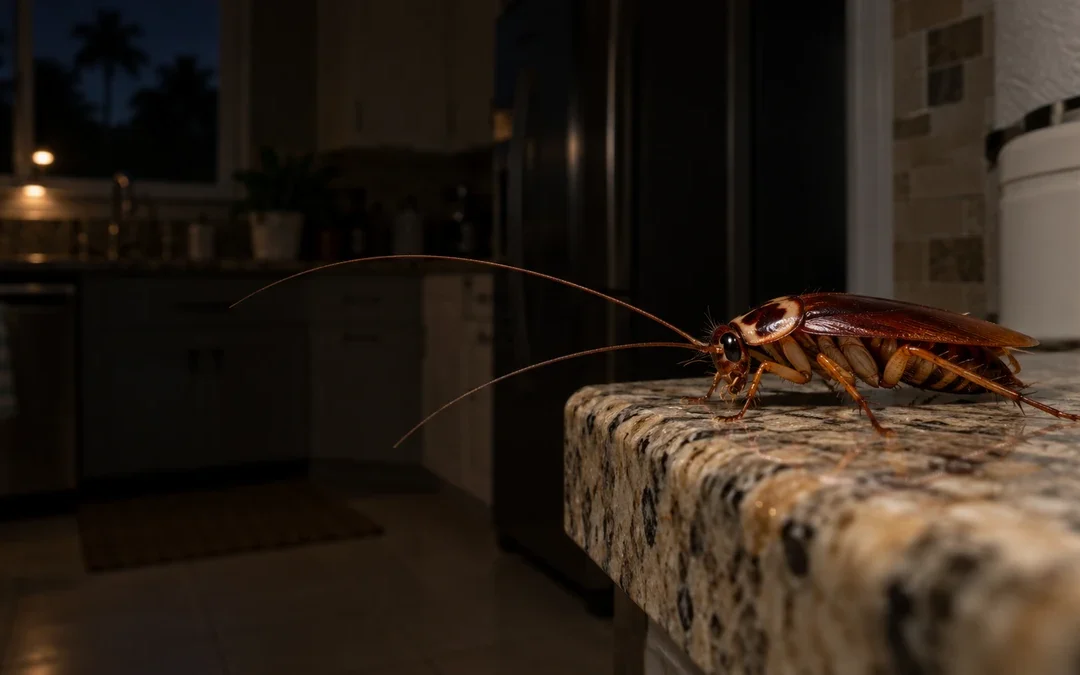
Quick answer: Yes, cockroaches can bite humans, but it happens rarely. Bites only occur during severe infestations where food is scarce, and they typically target fingernails, eyelashes, or calloused skin while a person sleeps. If you are seeing bite marks, it usually means the roach population in your home has grown large enough to require professional attention.
Roaches scattering when the kitchen light flips on is unsettling enough. The question that follows for a lot of South Florida homeowners is whether these insects can actually bite. It is a fair question in a region where warm, humid weather keeps cockroach populations active nearly year-round, from Naples and Fort Myers to Miami, Miami Gardens, and Pompano Beach.
This guide covers when cockroach bites happen, what they look like, how to tell them apart from bed bug, flea, mosquito, and ant bites, which South Florida species are actually capable of biting, and what to do if you find evidence that they have.
Why Cockroaches Bite (and Why It Is So Rare)
Cockroaches are scavengers, not predators. Their natural diet is food scraps, grease, cardboard, and organic debris, so they have little reason to seek out human skin under normal circumstances. Biting becomes a possibility only when an infestation reaches a scale where competition for food is intense and the usual food sources have been depleted.
In those conditions, roaches may feed on:
- Dead skin cells or calloused patches, such as on the feet or hands
- Fingernails
- Eyelashes
- Minor wounds or dried saliva around the mouth
Because these situations require both a large population and limited food, a cockroach bite is far more likely to signal a serious infestation than an isolated pest encounter.
What a Cockroach Bite Looks Like
A cockroach bite typically appears as a small, red, slightly raised bump, similar in appearance to a mosquito bite. It may itch or become mildly inflamed, and in some cases, minor swelling can develop around the site. Because the reaction is so generic, a cockroach bite is difficult to confirm by appearance alone. Without other evidence of an infestation, such as droppings, shed skins, or an unpleasant odor, most bite marks blamed on cockroaches turn out to have a different cause.
Cockroach Bite vs Bed Bug, Flea, Mosquito, and Ant Bites
Because cockroach bites are rare and non-distinct, a different pest is far more likely. The table below shows how these bites compare.
| Feature | Cockroach | Bed Bug | Flea | Mosquito | Ant |
|---|---|---|---|---|---|
| Appearance | Raised red bump, sometimes with mild swelling | Small red welt, often with a darker center | Tiny red dot with a red halo | Puffy, round, pale-to-pink welt | Red bump, may blister or form a white pustule |
| Pattern | Isolated or a few scattered bites | Lines or clusters, often in a row | Clusters of several bites | Random, scattered | Single or grouped where ants contacted skin |
| Body location | Hands, face, near the mouth | Areas exposed while sleeping, like arms and shoulders | Lower legs, ankles, feet | Any exposed skin | Feet, ankles, or wherever contact happened |
| Timing | Overnight, while still | Overnight, while sleeping | Daytime or night, often after floor contact | Dawn, dusk, and evening | Immediately, on contact |
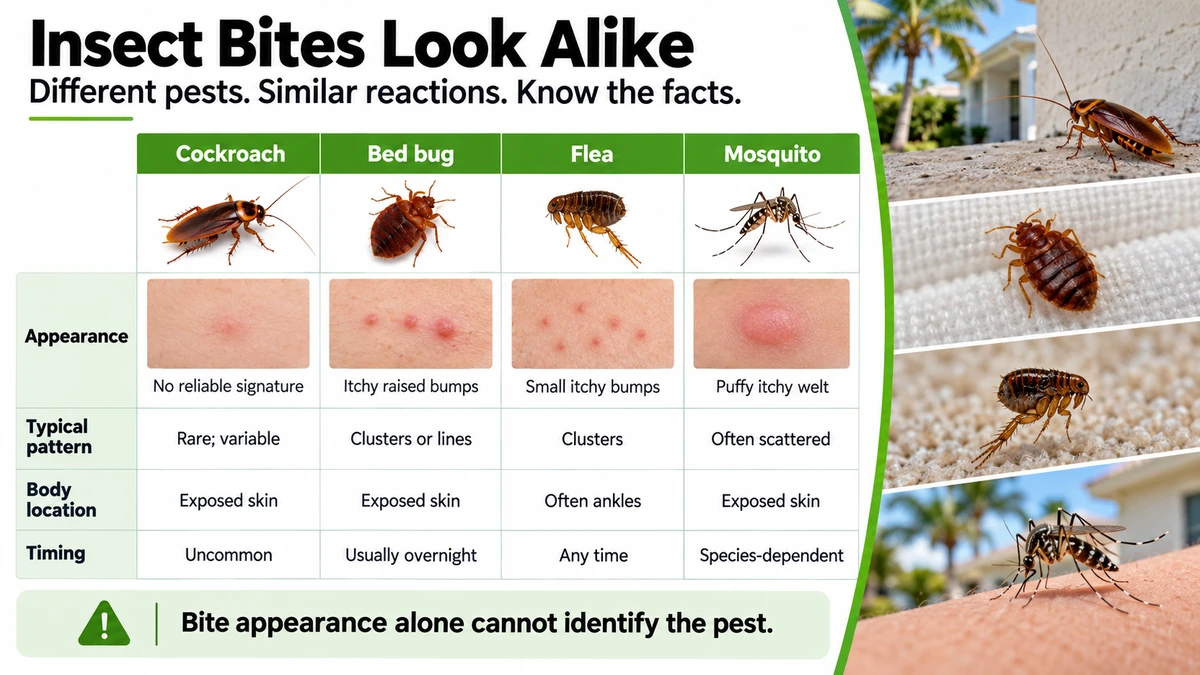
If your bites appear in tidy rows or clusters along your arms or neck, a South Florida bed bug issue is a far more common explanation than cockroaches. If they sit low on the ankles and feet, fleas are worth ruling out. A pest control professional can inspect the pattern and location of the bites to help identify the source.
Which Cockroaches in South Florida Actually Bite
Not every species carries the same biting risk, and infestation size matters more than species alone. Three types turn up most often in South Florida homes:
- American cockroach. The largest common household species in the region, reddish-brown and often two inches long. It turns up in drains, sewers, and moist areas like garages and bathrooms, and its size and strong mouthparts put it among the species realistically capable of biting a person.
- German cockroach. Smaller and faster-reproducing, this species is the most likely to reach the high population densities associated with biting incidents, since it thrives indoors near kitchens and food sources.
- Australian cockroach. Similar in appearance to the American cockroach but slightly smaller, this species is common in South Florida’s warm, humid climate and tends to move between outdoor vegetation and homes.
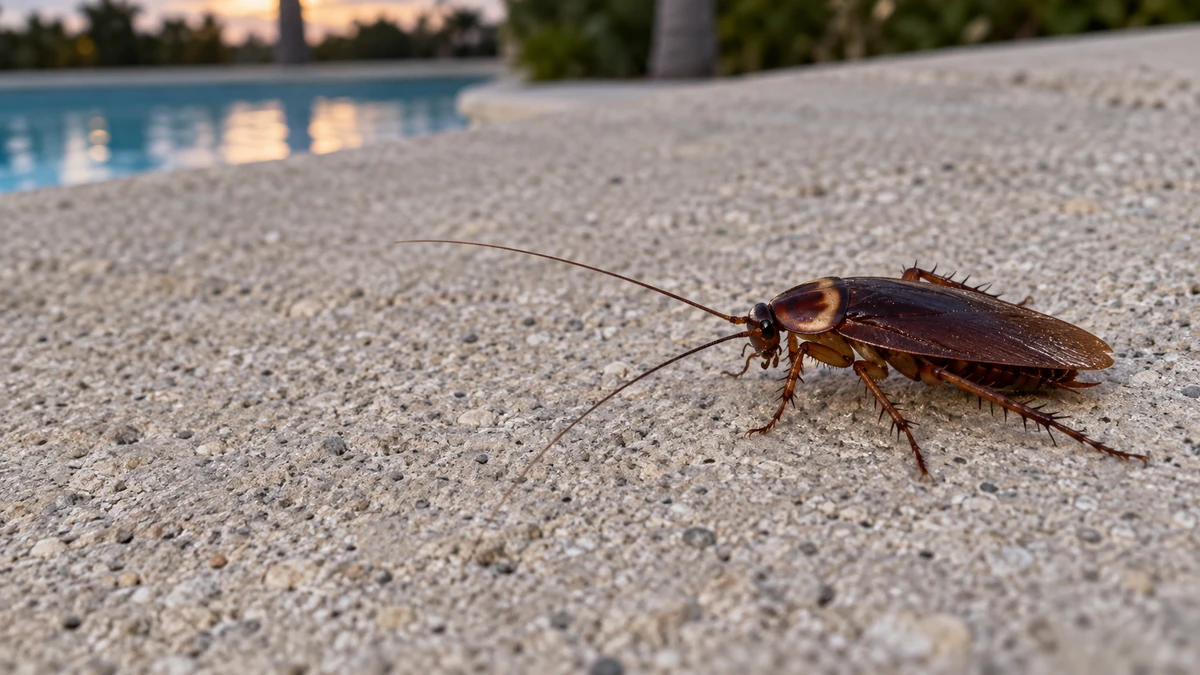
About the palmetto bug: in Florida, “palmetto bug” is a common nickname rather than a separate species. It usually refers to the American cockroach, and sometimes the Florida woods cockroach or Australian cockroach. So when a neighbor mentions a palmetto bug, they are almost always describing a large cockroach. Yes, a palmetto bug can bite, but like other roaches, it only does so when a population has grown large and food is scarce.
Whatever the species, biting is tied to infestation severity rather than being a trait of any one type of roach.
Are Cockroach Bites Dangerous?
Cockroach bites are not venomous, so the main concern is not the bite itself but what the insect leaves behind and the infestation surrounding it. Because roaches travel through drains, garbage, and decaying matter, a bite can introduce bacteria to broken skin and lead to irritation or infection if it is not kept clean.
The risks actually worth watching for are:
- Contamination and infection at the bite site if it is scratched or left unclean
- Allergic reactions, such as redness, swelling, or itching beyond the bite
- Asthma and respiratory irritation from ongoing exposure to roach droppings and shed skins
Cockroach droppings, saliva, and shed skins contain proteins that act as allergens and can trigger asthma attacks, particularly in children and older adults. According to UF IFAS Extension, cockroaches in Florida homes are both a contamination concern and a documented source of household allergens. The bite is rarely the real risk. The infestation that made it possible is.
How to Treat a Cockroach Bite
Most cockroach bites heal on their own with simple care:
- Clean the area with soap and warm water to remove any bacteria left behind.
- Apply an antiseptic to help prevent infection at the broken skin.
- Use a cold compress for several minutes to ease swelling and discomfort.
- Take an antihistamine or apply anti-itch cream if the area itches, which also helps you avoid scratching.
- Monitor for infection over the next few days, watching for spreading redness, warmth, pus, or increasing pain.
- Seek medical care if the bite worsens, does not improve, or if you notice signs of a stronger allergic reaction.
As a general threshold, contact a healthcare provider if the site looks infected, the reaction spreads well beyond the bite, or you feel unwell.
A Bite Means You Have a Bigger Problem
If a bite mark on your skin is genuinely from a cockroach, it is a signal that the population inside your home has grown large enough to outpace available food sources. By the time a home reaches that point, there is usually heavy activity across multiple rooms, not just the kitchen.
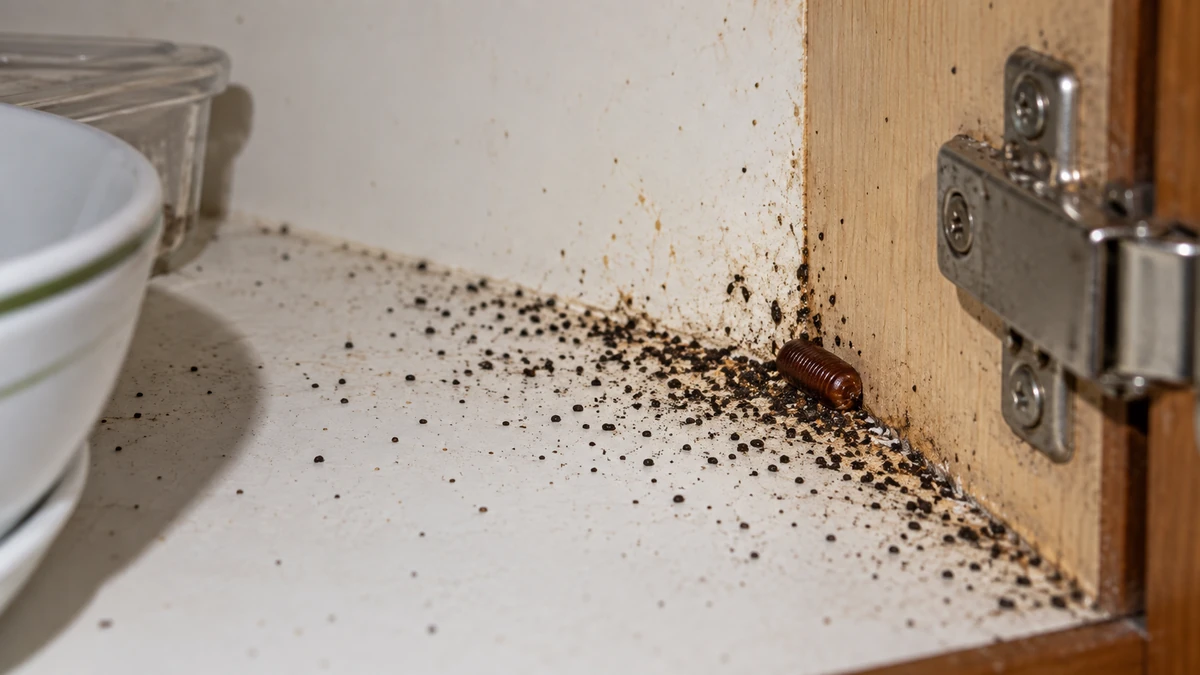
A home at that level has more going on than a single roach. You may find droppings that resemble ground coffee or black pepper, a musty odor, egg cases tucked into cracks, and roaches active during the day, which points to crowding. Those are the signs of an established colony working through walls, cabinets, and plumbing chases.
That is why a bite calls for an inspection rather than a quick spray. Treating what you can see rarely reaches the harborage points where roaches breed, and a proper assessment finds those hidden areas and addresses the source.
Distinguishing a cockroach bite from other pests also matters for treatment.
“When a customer tells me something is biting them at night, the first thing I look for is activity around the sleeping areas. Signs of an infestation usually give us a good indication of what may be biting them. Fleas, bed bugs, and mosquitoes are the most common culprits, while cockroach bites are extremely rare,”
says Mike Vilchez, Quality Assurance Technical Field Trainer for South Florida.
Cockroach Pressure Across South Florida
Cockroach activity varies by region, but South Florida’s warm, humid climate keeps populations active throughout the year in a way that colder markets do not experience.
“The difference in South Florida is that roaches never really get a break. In markets with a true winter, colder temperatures knock populations back each year. Here, they can breed year-round, so control is about staying ahead of them season after season, not just treating once,”
explains Mike Vilchez, Quality Assurance Technical Field Trainer for South Florida.
That year-round pressure shows up across the region, in Naples, Fort Myers, Miami, Miami Gardens, and Pompano Beach. Multi-family buildings and condos share walls and plumbing chases that let German cockroaches travel between units, while irrigation, mulch beds and mature landscaping keep American cockroaches harboring right outside the walls. Homeowners in Naples dealing with recurring infestations may find more detail on cockroach pressure in Naples specifically, including local prevention steps tailored to that market.
How to Get Rid of Cockroaches for Good
Sanitation and exclusion are what keep populations from reaching the levels associated with bites and health risks:
- Sanitation first. Clean up crumbs and spills promptly, wipe grease from counters and stovetops, avoid leaving dishes out overnight, and store food, including pet food, in sealed containers.
- Correct moisture. Repair leaking pipes and fixtures, address condensation, and reduce standing water around the home. Moisture is often the single biggest draw in South Florida.
- Reduce harborage. Seal cracks around baseboards, pipes, and window frames, pull mulch beds back from the foundation, and cut back dense landscaping that touches the structure.
- Reduce clutter, particularly cardboard and paper, which cockroaches use for shelter.
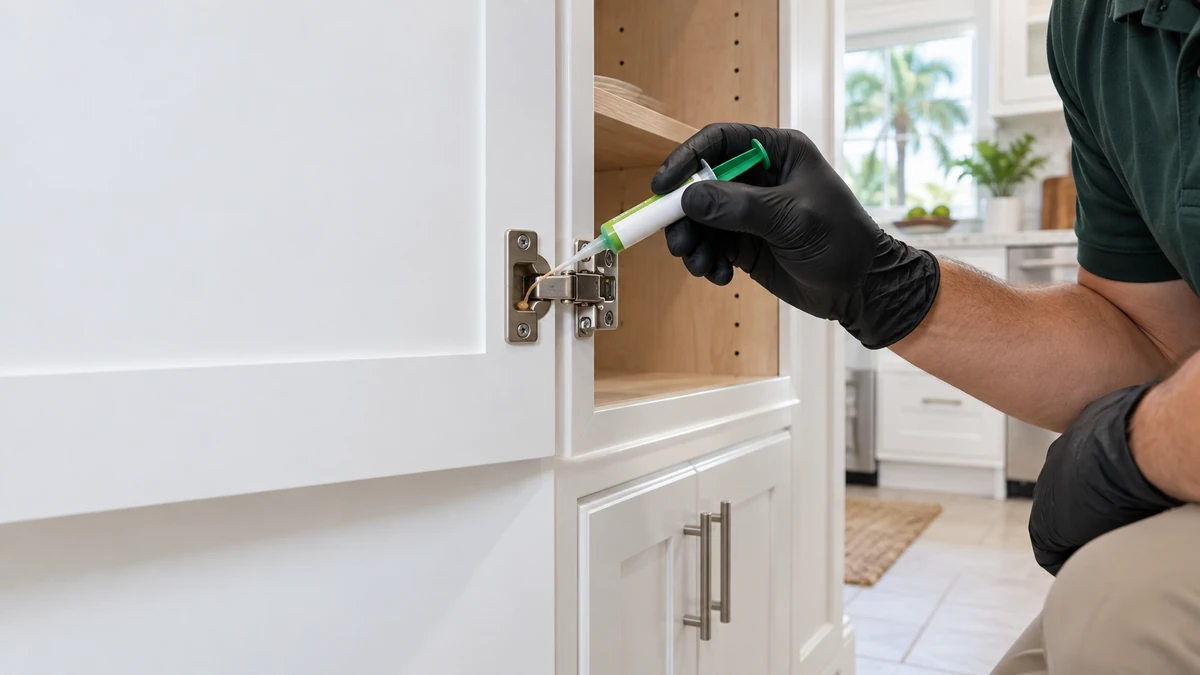
Method matters as much as effort. Gel baits placed in cracks and near harborage points are usually more effective indoors than surface sprays, because roaches carry the bait back to where they nest. Broad spraying can scatter a population and miss the source, which is why placement and technique separate a temporary drop in activity from real control.
For infestations that have progressed beyond basic prevention, cockroach control in South Florida from a licensed provider is a more reliable path than store-bought treatments alone. A professional program combines a full inspection, targeted baiting, moisture and harborage guidance, and follow-up monitoring, built for a climate where roaches stay active every month of the year.
Frequently Asked Questions
Do cockroaches bite humans?
Yes, cockroaches can bite humans, but it is uncommon. A bite usually happens only when a population has grown large and run short of its usual food, prompting roaches to feed on skin cells and food residue on people. A bite signals an established infestation worth inspecting.
Do cockroaches bite you in your sleep?
They can, though it is rare. Bites tend to happen overnight because hands and faces are still and easy to reach, and because roaches are most active in the dark. If you are waking up with unexplained bites, it is worth ruling out both cockroaches and bed bugs with a professional inspection.
What does a cockroach bite look like?
A cockroach bite usually appears as a small, raised red bump, sometimes with mild swelling, and it may itch. Bites often show up on the hands or face, alone or in small scattered groups rather than in the tidy rows common with bed bugs.
Are cockroach bites dangerous?
Cockroach bites are not venomous, so the main risks are contamination at the bite site and the allergens roaches spread. Keep the area clean, watch for signs of infection, and see a doctor if it worsens or spreads.
Do palmetto bugs bite?
Yes, a palmetto bug can bite, since “palmetto bug” is simply a Florida nickname for large cockroaches like the American cockroach. Like other roaches, it only bites on rare occasions, typically when a population has grown large and food is scarce.
How do I know if it was a cockroach or a bed bug?
Pattern and location are the best clues. Cockroach bites are usually scattered near the hands and face, while bed bug bites tend to line up in rows or clusters on skin exposed during sleep. When the signs are unclear, an inspection can confirm the source.
Concerned About Cockroach Activity in Your South Florida Home?
If you have noticed signs of a growing cockroach population, or you are not sure what is behind a bite mark on your skin, a professional inspection can identify the cause and the right next step. Request a free cockroach inspection across South Florida, including Naples, Fort Myers, Miami, Miami Gardens, and Pompano Beach.
Reviewed for Accuracy
Cory Goeltzenleuchter, B.C.E., P.H.E., Director of Technical Services for Northwest Exterminating, is one of the organization’s leading technical experts in pest management. As a Board-Certified Entomologist and Public Health Entomologist, he oversees technical training, service standards, and industry best practices while helping ensure customers receive extraordinary service through science-based solutions, ongoing education, and innovative approaches across the Northwest Family of Brands.