
Roof Rats in South Florida: Why They Get In and How to Stop Them
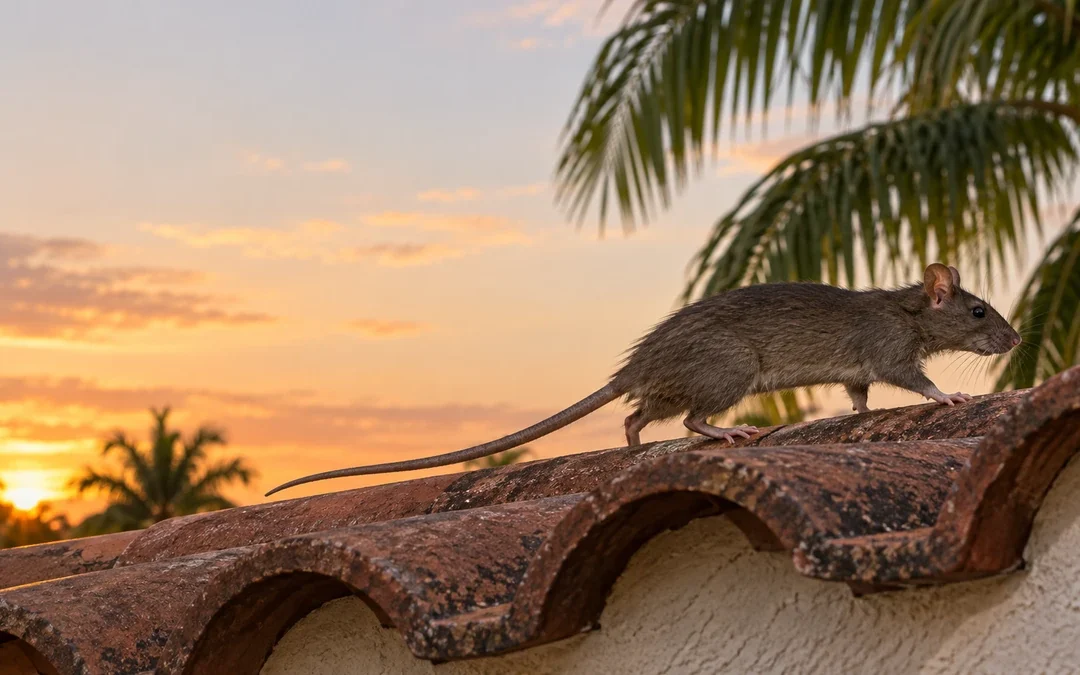
Quick answer: Roof rats are the dominant rodent problem in South Florida. With no cold season to slow them down, they breed year-round and enter homes above ground, through tile roofs, soffits, and tree branches touching the roofline, rather than through foundation gaps like most other rodents.
If you live in Naples, Fort Myers, Miami, Miami Gardens, or Pompano Beach, you have probably heard scratching in the attic long before spotting an actual rat. That is typical. Roof rats are agile climbers that prefer to stay above ground, which means most South Florida homeowners never see one in the yard before finding evidence of one overhead.
This guide covers why South Florida’s climate and landscaping make it such a welcoming environment for roof rats, how to tell a roof rat from other common pests, the specific entry points that show up most often on tile roofs and screen enclosures, what to do once rats are inside, and how ongoing yard maintenance reduces pressure on your home.
Why South Florida Is Ideal Roof Rat Habitat
Most parts of the country see rodent activity slow down in winter. South Florida does not get that break. Without a hard freeze, roof rats continue breeding year-round, allowing populations to grow steadily rather than resetting each season.
A few conditions make the region especially hospitable:
- Constant food supply. Fruit trees, citrus, palms, and ornamental landscaping provide a steady diet, supplemented by fallen fruit and unsecured trash or pet food.
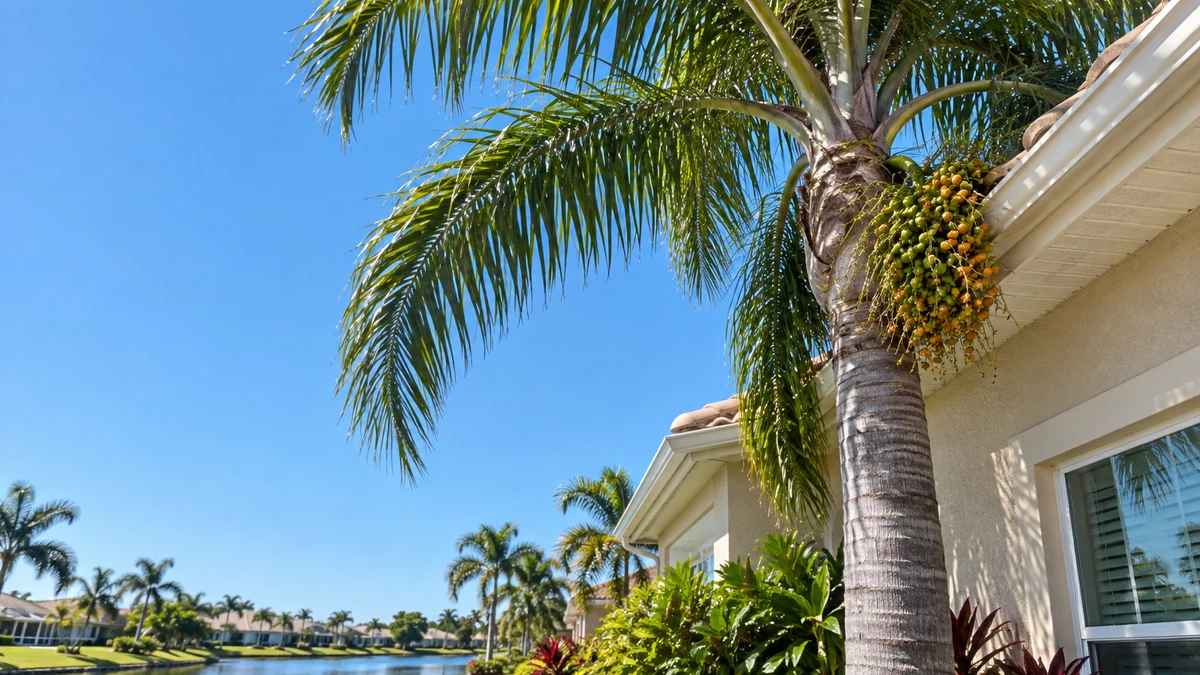
- Dense vegetation cover. Mature ficus hedges, palm canopies, and thick landscaping give roof rats safe travel routes between yards and structures.
- Reliable water sources. Irrigation systems and canal edges eliminate one of the natural checks on rodent survival.
- Canal and multi-family corridors. Canal banks and shared landscaping between multi-family properties act as highways for rodent movement across neighborhoods.
Because of these conditions, rodent control in South Florida is better understood as year-round maintenance rather than a seasonal task. A property that has been rat-free for years can see new activity the moment a palm frond grows close enough to touch the roof.
How to Identify a Roof Rat
Roof rats have slender bodies, large ears, and tails longer than their head and body combined. Adults typically measure 12 to 16 inches including the tail, with smooth, dark brown to black fur. Their droppings are spindle-shaped, roughly half an inch long, and are usually found scattered rather than in a single pile.
Homeowners most often notice roof rats through sound rather than sight. Scratching, scampering, or rolling noises in the attic or ceiling, particularly at night, are common early signs. Because roof rats travel and nest above ground, these sounds tend to come from directly overhead rather than from walls or baseboards.
The table below compares roof rats to other pests commonly mistaken for them in South Florida homes.
| Pest | Typical Location Found | Body Size | Tail | Common Sound or Sign |
|---|---|---|---|---|
| Roof rat | Attics, roofline, trees | 6 to 8 in. body | Longer than body, hairless | Scratching overhead at night |
| Norway rat | Ground level, burrows, crawl spaces | 7 to 9.5 in. body | Shorter than body, hairless | Scratching near foundation |
| House mouse | Walls, cabinets, insulation | 2.5 to 3.75 in. body | About equal to body length | Light scurrying, gnaw marks |
| Squirrel | Attics, eaves, tree-to-roof paths | 9 to 12 in. body | Long, bushy | Daytime activity, running sounds |
If activity is concentrated in the attic and heard mostly at night, a roof rat is the most likely culprit in South Florida homes.
How Roof Rats Get Into South Florida Homes
Roof rats climb, and that single fact explains most of how they get inside. Sealing gaps at ground level does little if the real access point is several feet up. The most common entry routes across the region include:
- Barrel and tile roof gaps. Unmortared ridge lines and irregular tile edges create natural openings roof rats can squeeze through.
- Soffit and eave returns. Warped or gapped soffit panels are a frequent access point, especially on older homes.
- Roof-to-wall junctions. Flat and low-slope roofs, common in South Florida construction, often have small gaps where the roofline meets the wall.
- Gable and turbine vents. Vents without secure screening give roof rats a direct route into the attic.
- Screen enclosure and pool cage seams. Gaps where screen panels meet framing, and worn door sweeps, allow rats to enter lanais and pool cages before working toward the home.
- AC line sets and plumbing penetrations. Wherever a pipe or line passes through an exterior wall, there is a potential gap.
- Garage door corners. Rounded or worn corners on garage doors often leave just enough clearance.
- Palm fronds, ficus, and mature landscaping. Any branch or frond touching the roof functions as a bridge.
- Utility lines. Power and cable lines running to the structure double as elevated travel paths.
Because roof rats climb so readily, exclusion work in South Florida has to account for the entire roofline and surrounding vegetation, not just ground-level gaps.
The Tile Roof Problem
Barrel tile roofs, a hallmark of South Florida architecture, create natural voids at the ridge and eave by design. The curved shape of each tile leaves small gaps where it meets the next, and those gaps widen over time as mortar cracks or shifts.
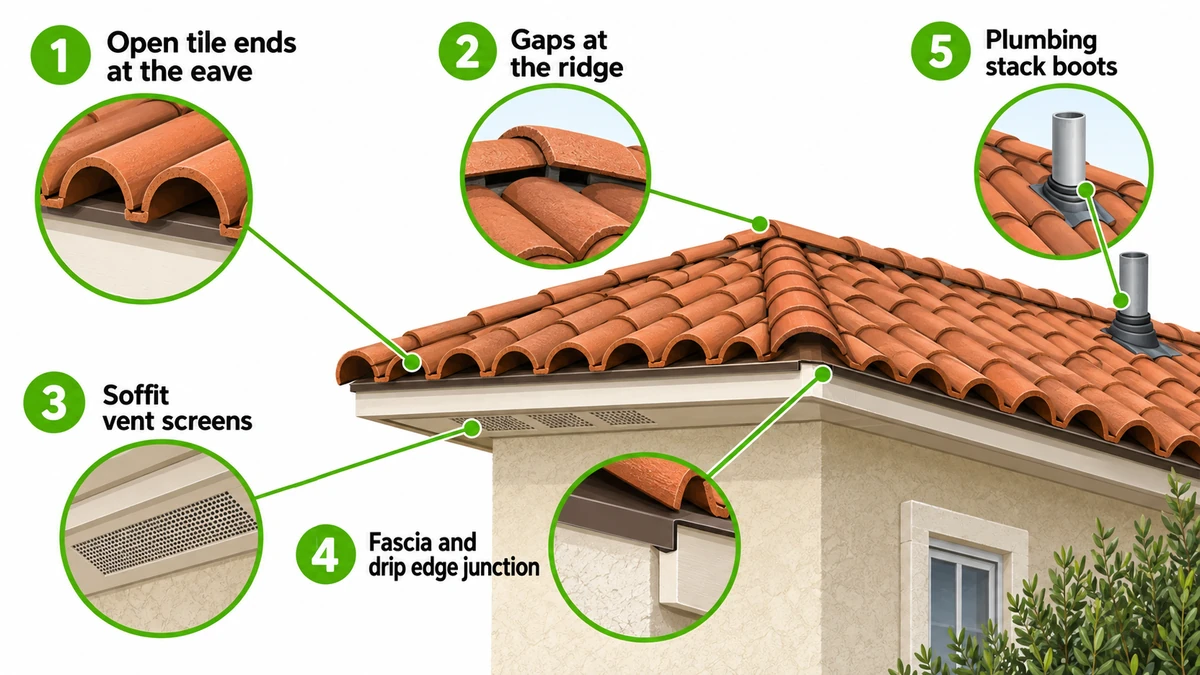
Proper sealing means closing these gaps without trapping rats inside the roof structure or damaging the tile itself.
“What’s different about sealing a tile roof compared with shingle is that you’re working around a material that can crack or dislodge if you’re not careful. A lot of contractors either seal it too aggressively and damage the tile, or they miss the ridge line gaps entirely because they’re focused on the eaves,”
says Mike Vilchez, Quality Assurance Technical Field Trainer, Northwest Family of Brands.
Rushed or incomplete tile roof sealing is one of the most common reasons roof rat problems return after a homeowner believes the issue has been resolved.
What Roof Rats Do Once They Are In
Once inside an attic, roof rats can cause damage that goes well beyond the noise overhead:
- Chewed wiring, which creates a fire risk in attics and walls.
- Damaged AC ductwork and insulation, reducing energy efficiency and pushing up cooling costs.
- Contaminated attic space, from droppings, urine, and nesting material.
- Screen and pool cage damage, as rats chew through mesh to create repeat access points.
- Fruit and garden loss, as rats feed on citrus, mangoes, and other backyard produce.
- Health risks, since rodent droppings and urine can trigger allergic responses and carry pathogens. According to the Centers for Disease Control and Prevention, rodents are known carriers of pathogens that can pose risks to household members, particularly when nesting materials and waste accumulate in confined attic spaces.
The longer roof rats remain in a structure, the more these issues compound, particularly with electrical and insulation damage that is not always visible from inside the home.
How to Get Rid of Roof Rats in South Florida
Effective roof rat control follows a specific sequence rather than jumping straight to sealing entry points:
- Inspect the attic and roofline to confirm activity and identify how rats are accessing the structure.
- Identify active runways, the paths rats travel repeatedly, usually visible as smudge marks or worn insulation.
- Trap in the attic to reduce the existing population before any exclusion work begins.
- Seal entry points only after the population is down, to avoid trapping rats inside the structure.
- Clean up and remediate insulation, removing contaminated material and sanitizing affected areas.
- Monitor the exterior on an ongoing basis, since new entry points can develop as roofing materials age or vegetation grows back.
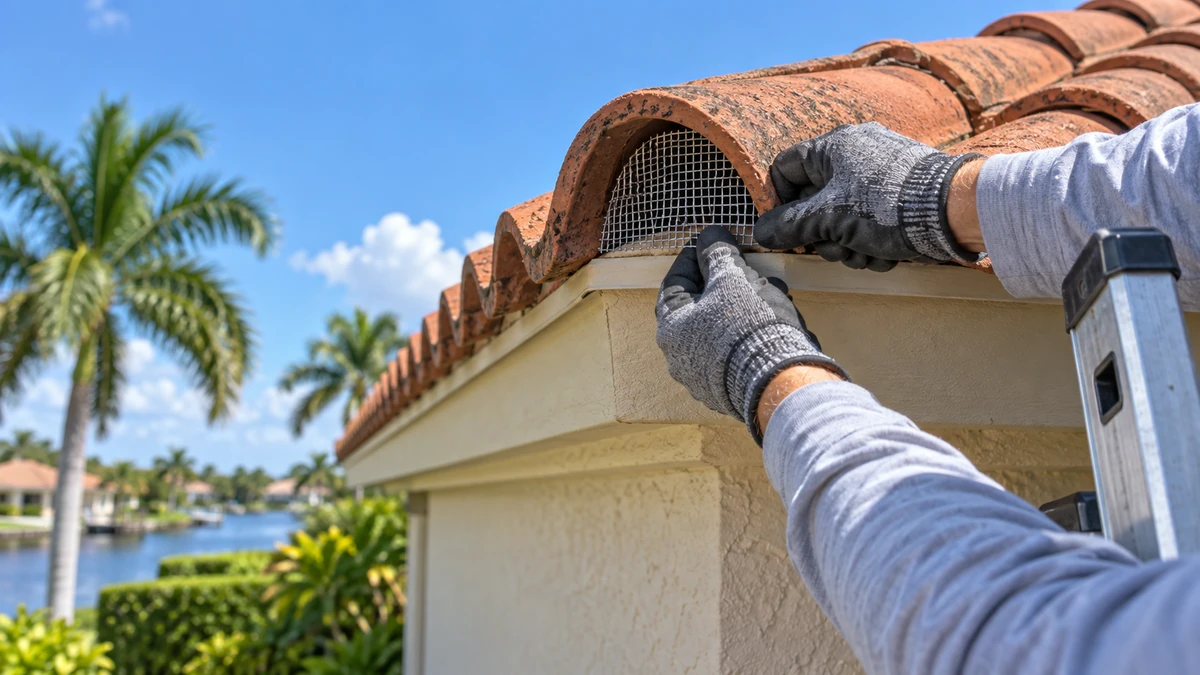
“In South Florida, there’s no off-season for roof rats. We treat this as year-round work, and the biggest mistake homeowners make is sealing before the population is down. You end up trapping them inside, and then you have a different problem,”
says Mike Vilchez.
Skipping the trapping step and sealing too early is a common mistake. It can trap rats inside the attic, leading to odor and secondary pest issues as the remaining population searches for a new exit.
Landscaping and Yard Changes That Reduce Pressure
Because roof rats travel through trees and dense vegetation, yard maintenance directly reduces your home’s risk:
- Trim palms and ficus so branches and fronds no longer touch the roofline.
- Remove fallen fruit promptly rather than letting it accumulate under trees.
- Manage dense ground cover and ivy growing against exterior walls.
- Secure trash cans and pet food, especially if stored outdoors or in a garage.
- Address overwatering from irrigation systems, which creates the standing moisture roof rats rely on.

These changes will not eliminate risk entirely, but they remove several of the conditions that make a property attractive to roof rats in the first place.
Roof Rats Across South Florida
Roof rat pressure varies slightly by community, though the underlying causes are consistent throughout the region.
In Naples, dense landscaping around upscale properties and canal-adjacent lots gives roof rats ample cover and reliable travel routes between homes. Golf course communities with mature canopy are a consistent source of elevated attic activity.
In Fort Myers, older tile roofs paired with mature tree canopies create some of the most persistent roof rat pressure in the region, particularly in established residential neighborhoods where vegetation has grown into the roofline over decades.
In Miami, dense multi-family construction means an infestation in one unit or building often signals activity in neighboring properties, especially where shared landscaping borders multiple structures and utility chases run between floors.
In Miami Gardens, a mix of established single-family homes and mature trees creates steady attic access, particularly where ficus hedges have grown into rooflines over time.
In Pompano Beach, proximity to canals and coastal landscaping supports year-round roof rat movement between yards, especially in neighborhoods with dense palm plantings along waterway corridors.
Homeowners across these communities can find local guidance and request an inspection through the South Florida pest control service page. For a broader look at roof rat behavior outside this region, see our general roof rat identification and removal guide.
What Roof Rat Control Costs and Includes
Roof rat control typically starts around $450, with final pricing depending on the size of the home, level of activity, entry points, and the amount of work needed.
Services may include:
- Removal. Inspection, trapping, and removal of active rodents.
- Exclusion. Identifying and sealing entry points to help prevent re-entry.
- Attic remediation. Contaminated insulation removal, sanitation, cleanup, and replacement when needed.
Because every situation is different, Northwest provides a free inspection and customized estimate based on the work required.
Frequently Asked Questions
Are roof rats common in South Florida?
Yes. Roof rats are the dominant rodent species in the region. The year-round warm climate allows continuous breeding with no seasonal die-off to slow population growth, which is why South Florida sees higher and more persistent roof rat pressure than most other markets in the country.
How do roof rats get into a tile roof?
Roof rats exploit the natural gaps that barrel tile creates at the ridge line and eaves, particularly where mortar has cracked or shifted over time. Proper exclusion has to address these gaps without damaging the tile or trapping rats inside the structure. That is why this work is best handled by a technician familiar with South Florida roofing.
Do roof rats live in palm trees?
Yes. Palm trees provide both food and shelter, and fronds that touch a roofline give roof rats a direct bridge into the attic. Keeping palms trimmed back from the roofline is one of the most effective prevention steps a South Florida homeowner can take.
How do I keep rats out of my pool cage or screen enclosure?
Inspect seams where screen panels meet the framing, and check door sweeps for wear or gaps. These access points are frequently overlooked because homeowners focus on the house itself rather than the enclosure. Once a rat gets into a pool cage, it typically finds a path from there into the attic. A technician can walk the perimeter and identify exactly where entry is happening.
How long does it take to get rid of roof rats?
Timelines vary depending on the size of the infestation and how many entry points need to be addressed. Most South Florida cases involve an initial trapping phase of one to several weeks, followed by exclusion work once activity has dropped to a manageable level, and then an ongoing monitoring program to prevent reinfestation.
How much does roof rat control cost in South Florida?
Roof rat control typically starts around $450. Final pricing depends on home size, the number of entry points, the level of activity, and the extent of attic contamination. A free inspection from Northwest Exterminating will give you an accurate estimate specific to your property.
Ready to Deal With Roof Rats in Your South Florida Home?
Roof rats rarely resolve on their own, and the longer they stay, the more damage they cause to wiring, insulation, and screen enclosures. Northwest Exterminating serves Naples, Fort Myers, Miami, Miami Gardens, Pompano Beach, and surrounding communities with attic inspections and treatment plans built for South Florida’s year-round rodent pressure. Request a free roof rat and attic inspection to find out where rats are getting in and what it takes to keep them out.
Reviewed for Accuracy
Cory Goeltzenleuchter, B.C.E., P.H.E., Director of Technical Services for Northwest Exterminating, is one of the organization’s leading technical experts in pest management. As a Board Certified Entomologist and Public Health Entomologist, he oversees technical training, service standards, and industry best practices while helping ensure customers receive extraordinary service through science-based solutions, ongoing education, and innovative approaches across the Northwest Family of Brands.