Jun 20, 2019 | Alabama Blogs, Georgia Blogs, Pest Control
By Anna V., Editorial Lead — Pest Education · Last updated: May 2026
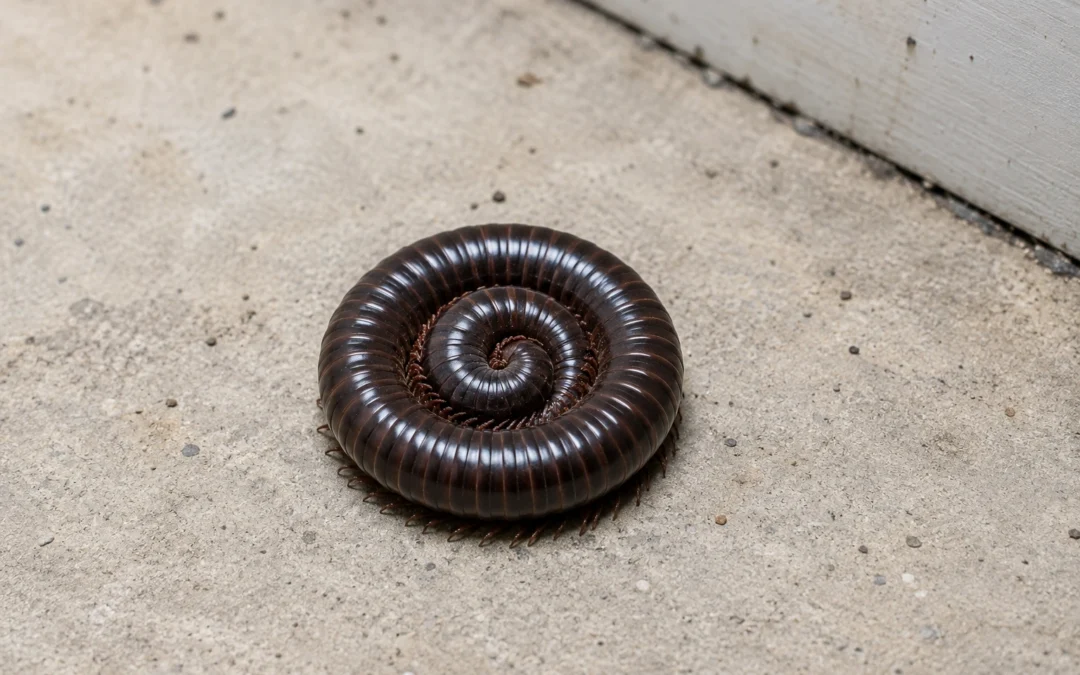
If you’ve walked into your basement or laundry room and found dozens of small, dark, segmented creatures curled up in tight spirals on the floor, you’ve met household millipedes. At Northwest, we get a sharp spike in millipede calls every spring and fall across Georgia and Alabama. The cycle is predictable: heavy rain saturates the outdoor environment where millipedes normally live, they move toward drier ground, and suddenly your basement or crawl space becomes the most appealing real estate in the county.
The good news: household millipedes are completely harmless. They don’t bite, they don’t sting, and they don’t carry disease. The less-good news: when they show up indoors, they usually show up in numbers. Here’s why they end up in Southeast homes, how to tell a millipede from a centipede (a common confusion), and what to do about an active indoor invasion.
What Are Household Millipedes?
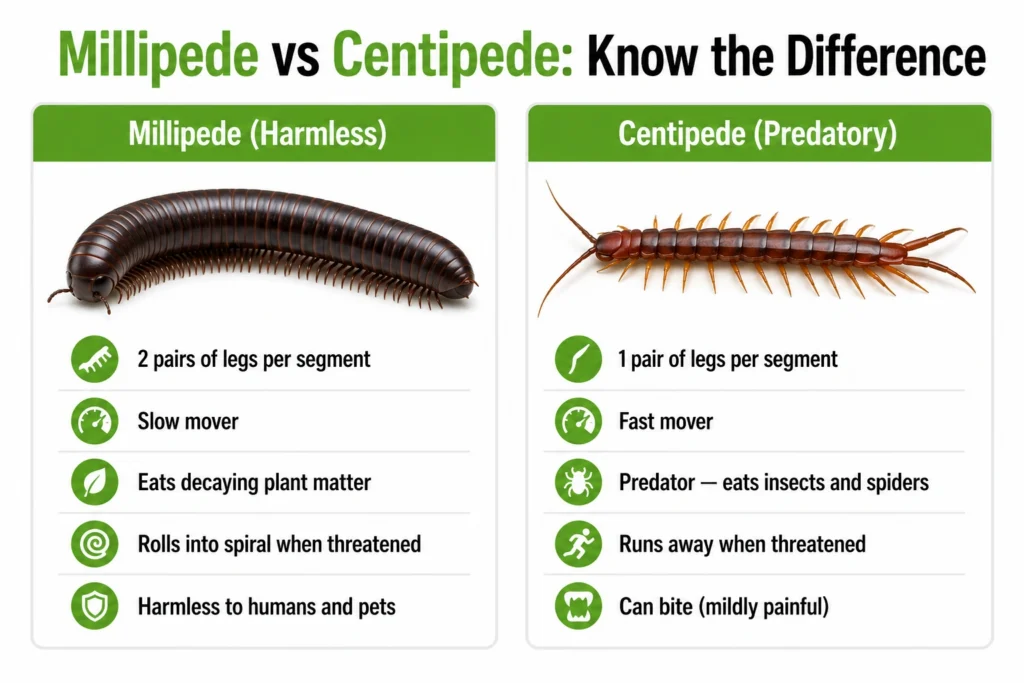
Household millipedes are elongated, segmented arthropods with two pairs of legs per body segment. Despite the name (which translates to “thousand feet”), most species have between 80 and 400 legs. They’re typically dark brown to black, about 1 to 1.5 inches long when fully grown, and roll into a tight spiral when threatened.
Three things to know about millipede biology:
- Diet: Millipedes are detritivores. They eat decaying plant matter, leaf litter, rotting wood, and damp organic material. They don’t eat live plants, fabric, food in your pantry, or anything else inside a house.
- Habitat: They need moisture to survive. Outdoors, that means mulch beds, leaf litter, decaying logs, under stones, and the top layer of soil. Indoors, they’re drawn to basements, crawl spaces, bathrooms, and laundry rooms.
- Lifespan: Most species live 1 to 2 years. They’re slow movers, slow reproducers, and not aggressive in any way.
Millipedes vs Centipedes (Don’t Confuse Them)
This is the single most common identification mistake we see homeowners make on millipede calls. The two creatures look superficially similar but behave very differently.

Millipedes are slow, harmless plant-matter eaters. Centipedes are fast, predatory, and can deliver a painful bite.
Quick reference for distinguishing millipedes from centipedes:
| Feature |
Millipede |
Centipede |
| Legs per body segment |
2 pairs (4 legs) |
1 pair (2 legs) |
| Body shape |
Round, tube-like, segmented |
Flat, more ribbon-like |
| Speed |
Slow, deliberate movement |
Fast, darting movement |
| Diet |
Decaying plant matter |
Other insects and small invertebrates |
| Defense |
Curls into a tight spiral |
Runs away, can deliver a mild bite |
| Danger to humans |
None |
Bite can sting, similar to a bee |
If you found something moving slowly, curled up when you got close, and looks tube-shaped, it’s almost certainly a millipede. If something darted away fast on flat legs, it was a centipede. Both can show up in the same conditions (damp basements, leaf litter), but treatment and concern levels differ. For the broader category of misunderstood “creepy” household pests, see our granddaddy long legs guide, which covers another commonly feared but harmless household visitor.
Why Are There So Many Household Millipedes in Your House?
Millipedes don’t choose to be indoors. They end up in homes because the conditions outside become inhospitable and your basement, crawl space, or laundry room offers what they need: moisture and shelter. Four conditions reliably push millipedes indoors in the Southeast:
Heavy Rain or Saturated Soil
The most common trigger for a sudden millipede invasion is a heavy spring or fall rainstorm. When soil becomes waterlogged, millipedes move to higher ground. If “higher ground” is the dry concrete of your basement floor, that’s where they go. We see millipede calls spike within 48 hours of major rain events across Georgia, Alabama, and Tennessee.
Drought or Extreme Dryness
The opposite condition triggers a similar response. During extended dry periods, outdoor environments become too dry for millipedes to survive. They migrate toward any source of moisture, which often means crawling under doors, through foundation cracks, or up basement window wells to find indoor humidity.
Yard Conditions Around the Foundation
Yards that hold moisture against the house make millipede invasions more likely. The biggest contributing factors:
- Heavy mulch beds within 3 feet of the foundation (especially wood chip mulch)
- Leaf litter that accumulates against the house
- Decorative stones or wood timbers laid directly on soil
- Irrigation systems that spray foundation walls
- Downspouts that empty within 2 feet of the foundation
- Stacked firewood, lumber, or yard debris near the house
Indoor Moisture and Cracks
Millipedes can’t enter a house without an opening, and they can’t survive indoors long without humidity. Both have to be present. Common entry points:
- Foundation cracks at grade level
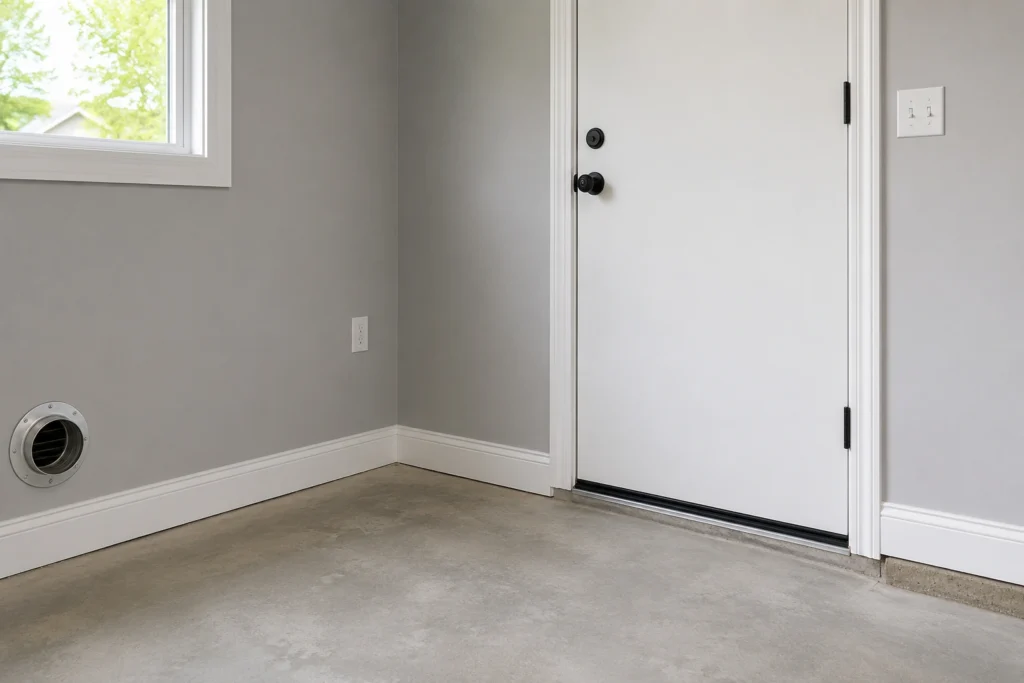
- Gaps under exterior doors (especially garage side doors and basement hatches)
- Unsealed crawl space vents
- Window wells with cracked or missing covers
- Gaps around utility line penetrations
- Weep holes in brick veneer that aren’t screened
Indoor conditions that let them stick around once inside: damp basements, leaking pipes, condensation on cold water lines, poor ventilation in crawl spaces, and standing water in floor drains.
Signs of a Millipede Presence
Most homeowners notice millipedes because they see them directly. Other signs to watch for:
- Live sightings on basement or crawl space floors, especially after rain or in early morning hours.
- Curled-up “dead” millipedes in dry indoor environments — the spiral defense posture also happens when they die from dehydration indoors. Finding several curled millipedes in a basement corner is a sign that more are entering and dying.
- Movement after rain. If you see a single millipede the day after a thunderstorm, you’ll probably see more over the next 48 hours.
- Clusters near damp areas like basements, laundry rooms, bathrooms, and crawl space access points.
- Shed exoskeletons in undisturbed corners, which suggests an established indoor population rather than just visitors.
Are Household Millipedes Harmful?
No. Household millipedes do not bite, sting, transmit disease, damage structures, contaminate food, or harm pets. They are completely harmless to humans and pets.
Three small caveats:
- Defensive secretions. Some millipede species release a mild liquid when handled or threatened. The secretion can stain skin briefly and irritate eyes if rubbed in. Wash hands after handling any millipede. Don’t let pets eat them in large numbers — the secretion can cause mild mouth irritation in dogs and cats.
- Allergic reactions. A small percentage of people have allergic skin reactions to millipede secretions. Reactions are mild (redness, itching) and resolve quickly.
- Dead millipede smell. Large numbers of dead millipedes in basement corners can develop a faint, unpleasant odor as they dry out. Vacuum them up promptly.
The UGA Extension Bulletin B 1412 on Southeastern household pests classifies millipedes as a “nuisance pest” — uncomfortable to encounter but not harmful.
How to Prevent Household Millipedes
The most effective millipede prevention works on three fronts: outdoor conditions, entry points, and indoor moisture.
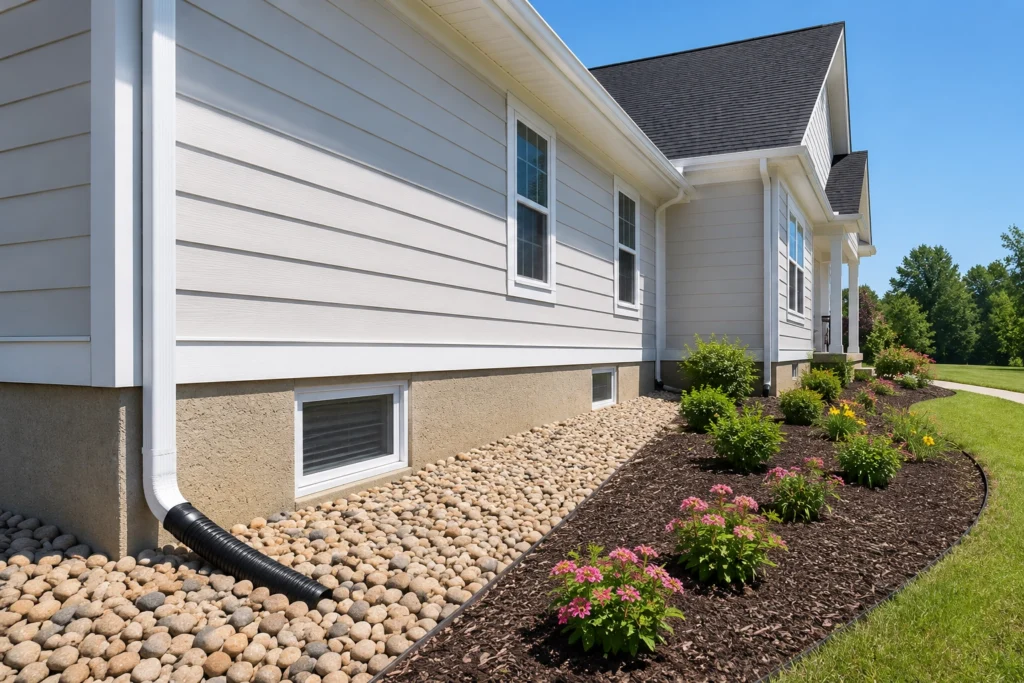
A 3-foot mulch-free zone around the foundation is the single highest-impact millipede prevention move for most Southeast homes.
Outdoor Conditions
- Keep mulch beds at least 3 feet from the foundation. If you have mulch right against the house, that’s the single biggest contributor to millipede invasions. Replace the foundation perimeter with gravel, river rock, or bare soil.
- Remove leaf litter from the foundation line. Rake regularly during fall and after storms.
- Move firewood, lumber, and debris piles at least 20 feet from the house.
- Direct downspouts and irrigation away from the foundation. Pooling water within 2 feet of the house is millipede paradise.
- Trim shrubs back so air can circulate against the foundation. Damp, shaded foundation walls hold millipedes longer.
Seal Entry Points
- Caulk foundation cracks at ground level.
- Install or replace door sweeps and weatherstripping, especially on garage doors and basement hatches.
- Screen crawl space vents with galvanized 1/4-inch hardware cloth.
- Cover window wells with rigid plastic or metal covers.
- Seal gaps around utility line penetrations with steel wool and caulk.
Indoor Moisture Control
- Fix leaky pipes promptly. Even small leaks support indoor millipede populations.
- Run a dehumidifier in basements and crawl spaces.
- Improve ventilation in bathrooms and laundry rooms.
- Don’t store cardboard boxes directly on damp basement floors.
How to Get Rid of Household Millipedes
Once millipedes are already inside, the treatment approach is straightforward.
DIY Methods
- Vacuum them up. A regular vacuum with a hose attachment handles individual millipedes quickly. Empty the canister or bag outside afterward.
- Sweep into a dustpan. Slower but works for small numbers.
- Reduce indoor humidity. A dehumidifier in active areas often resolves an indoor population within a few weeks. Without moisture, millipedes can’t survive indoors.
- Skip insecticide sprays. Indoor sprays don’t work well on millipedes because they don’t stay in one place long enough to absorb the active ingredients. Sprays also leave residue that’s unnecessary for a harmless pest.
For ongoing prevention while you address the conditions, see our companion guide on natural ways to remove and prevent millipedes in your house.
When to Call Northwest
Most millipede problems clear up once you fix the outdoor conditions and seal the entry points. Call us if:
- Indoor sightings continue for more than 2 weeks despite your prevention efforts.
- You’re finding more than 10 to 15 millipedes per day in any single room.
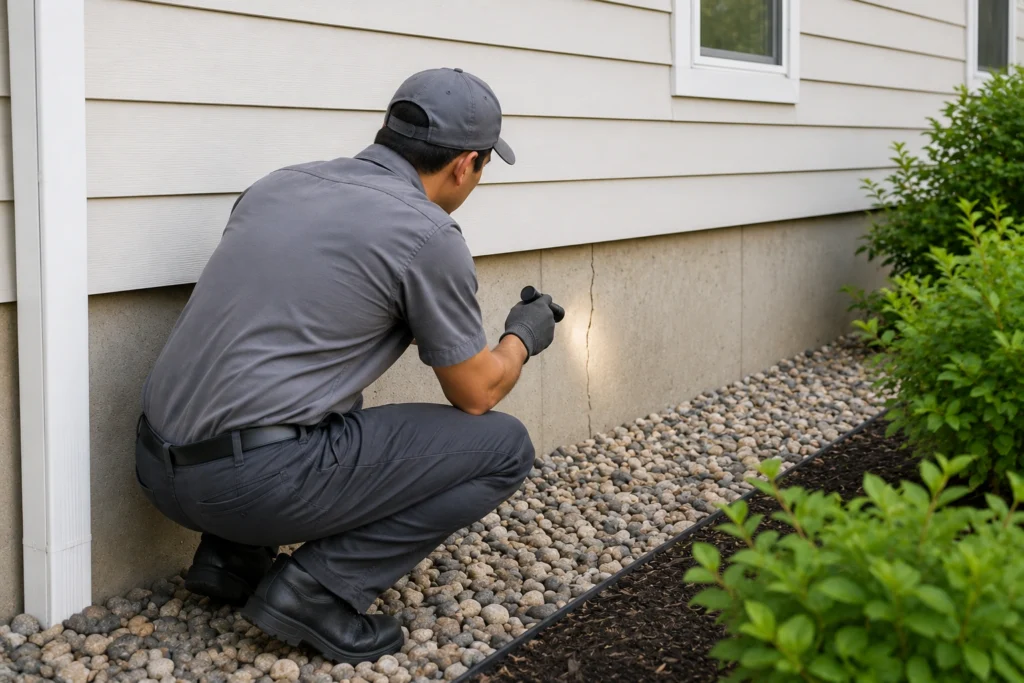
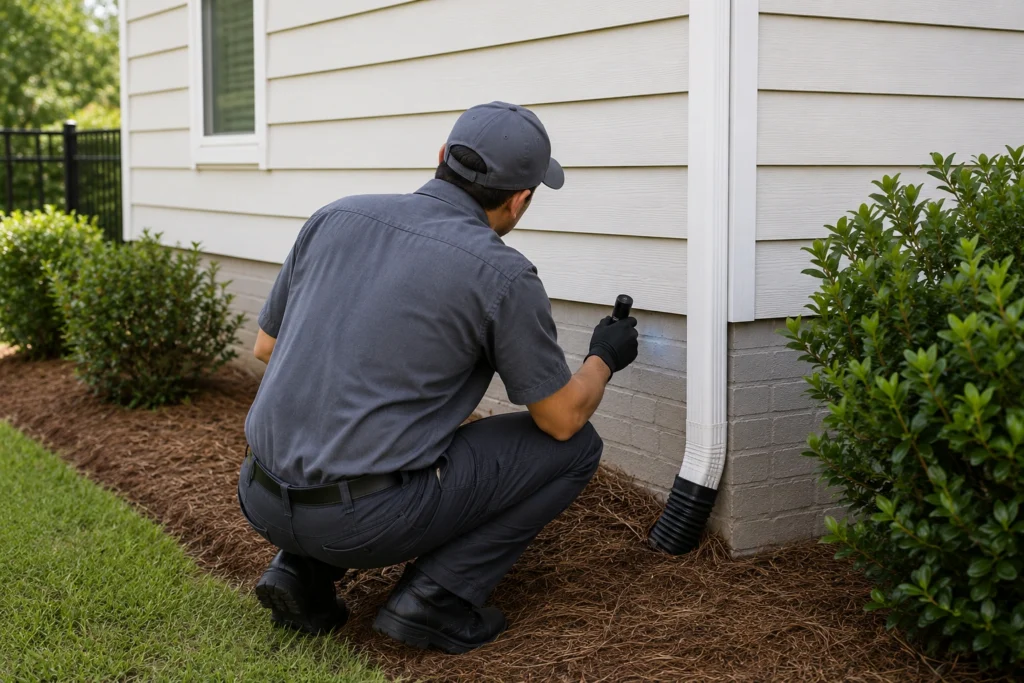
- You can’t identify the entry points and want a professional inspection.
- You’re dealing with millipedes plus another pest (centipedes, sowbugs, springtails). All share the same moisture-driven entry pattern and can be solved together.
(Persistent millipede problem? Schedule a free Northwest inspection and we’ll find the entry points and address the moisture issues driving them indoors.)
Household Millipedes & Local Environmental Factors
Millipede pressure in Georgia, Alabama, Tennessee, and South Carolina is consistently higher than in drier or colder regions. Three Southeast-specific factors:
- Humidity. Long humid summers create constant indoor and outdoor moisture, which sustains millipede populations year-round.
- Heavy spring and fall rains. The Southeast’s two rainy seasons drive the two annual peaks in indoor millipede sightings.
- Construction patterns. Many Southeast homes have crawl spaces and slab additions with foundation features (cracks, vents, soffit gaps) that are reliable millipede entry points.
The good news: the conditions that attract millipedes also attract other “moisture pests” (sowbugs, springtails, centipedes, sometimes ground beetles). Fixing the conditions for millipedes generally fixes the conditions for all of them at once.
Frequently Asked Questions About Household Millipedes
Do millipedes bite?
No, household millipedes do not bite humans or pets. They have no biting mouthparts capable of penetrating skin. Some species release a mild defensive secretion when handled, which can briefly irritate sensitive skin. Wash hands after handling.
Are millipedes attracted to lights?
Not typically. Unlike many flying insects, millipedes don’t navigate by light. They’re drawn to moisture, organic matter, and dark sheltered spaces. If you’re seeing them near lights, it’s usually because the lighted area happens to have moisture or shelter nearby, not because of the light itself.
Will household millipedes go away on their own?
They can. If the outdoor conditions that drove them indoors change (rain stops, drought ends, mulch dries out), most millipedes will leave or die from dehydration within a few days. However, large indoor populations or homes with persistent moisture issues usually need active intervention to fully clear.
How long do household millipedes live?
Most household millipede species live 1 to 2 years in the wild. Indoors, they typically don’t survive long without consistent moisture access. The “dead millipede” curls you find in dry basement corners are often individuals that entered seeking moisture and dehydrated before finding any.
What’s the difference between a household millipede and a centipede?
Millipedes have 2 pairs of legs per body segment, move slowly, eat decaying plant matter, and curl into a spiral when threatened. Centipedes have 1 pair of legs per body segment, move fast, are predatory (they eat other insects), and can deliver a mildly painful bite. Both can show up indoors in similar conditions, but only centipedes warrant any caution.
Most millipede problems get solved by fixing the outdoor conditions and sealing the entry points — not by spraying inside.
Stop the Millipede Problem at the Source
If household millipedes keep showing up in your basement, laundry room, or crawl space, the answer almost always lies outside the house. Northwest’s team handles the full millipede workflow: identifying the moisture and entry-point conditions driving them in, sealing the access points, and addressing any underlying drainage or humidity issues. Most homeowners are surprised how much of the work happens around the foundation rather than inside.
About the Author
Anna V., Editorial Lead — Pest Education leads pest education content for Northwest Exterminating, working with senior technicians and service center managers across our Georgia, Alabama, Tennessee, and South Carolina service areas to translate field expertise into homeowner-friendly guides. The focus: accurate, regionally-specific answers to the pest questions Southeast homeowners are actually searching for.
Mar 8, 2019 | Georgia Blogs, Pest Control
By Anna V., Editorial Lead — Pest Education · Last updated: May 2026
Georgia’s hot, humid climate is excellent for almost everything, including the dozens of spider species that live here. At Northwest, we run spider control calls year-round across our Georgia and Alabama service area, but they spike sharply from April through October as outdoor temperatures rise and spider populations boom. The good news for homeowners: the vast majority of the spiders in Georgia are harmless. Only a handful are medically significant, and even those are uncommon to encounter indoors.
Here are the 10 spiders you’re most likely to see around a Southeast home, how to identify each, which ones warrant caution, and what to do when you find one.
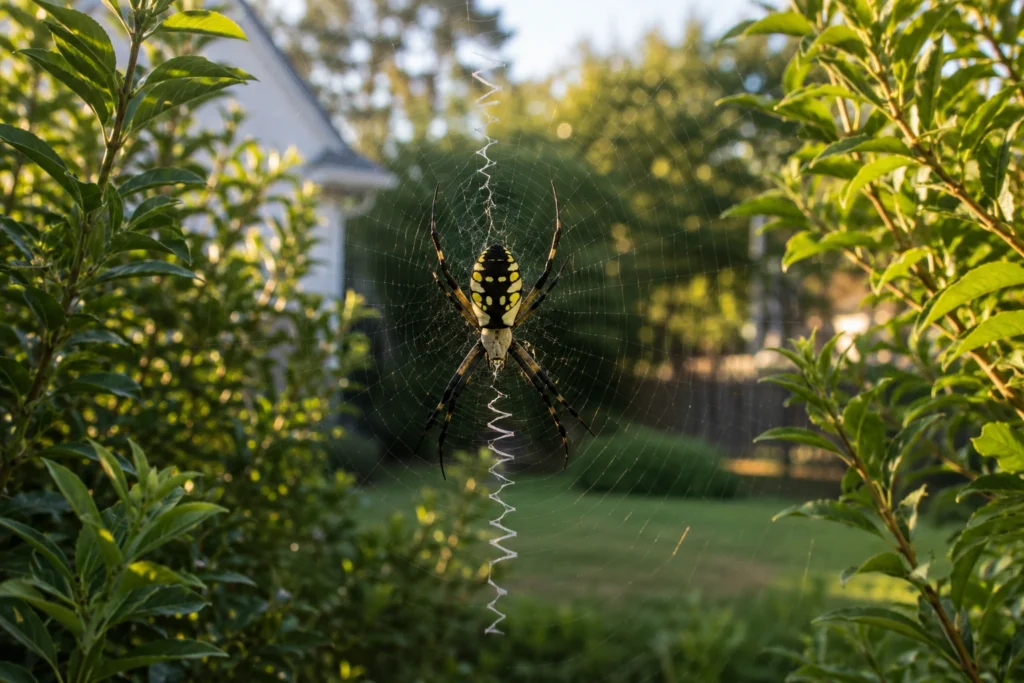
Most spiders in Georgia are outdoor garden spiders that quietly handle the local insect population.
Why Understanding Spiders in Georgia Matters
Spiders play an important role in controlling insect populations. The yellow garden spider you find in your shrubs eats hundreds of mosquitoes, gnats, and flies over a summer. The cellar spider in your basement is quietly catching the small flies you don’t want around. Most spiders in Georgia are doing free pest control on your behalf.
That said, two facts make spider identification matter for homeowners:
- A small number of species are medically significant. Three to four species in the Southeast can deliver bites that require medical attention. Identifying them quickly matters.
- Most “scary-looking” spiders are completely harmless. Wolf spiders, orb weavers, jumping spiders, and the famous Joro spider all look intimidating but pose no real threat. Knowing which is which prevents unnecessary panic and unnecessary pesticide use.
Georgia’s climate produces spider activity peaks in spring (April through May), late summer (August), and early fall (September through October). Most encounters are outdoors.
10 Common Spiders in Georgia
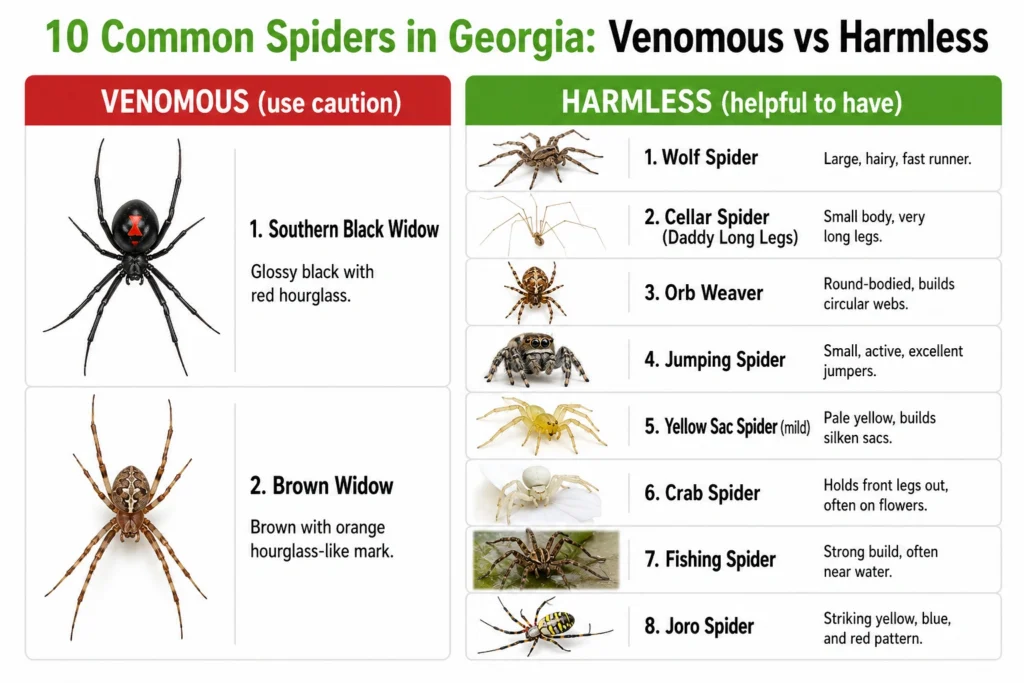
Two species require caution. The other eight are quiet helpers around Southeast homes.
1. Southern Black Widow (Latrodectus mactans)
- Status: Venomous. Bite requires medical attention.
- Appearance: Glossy black body with the distinctive red hourglass marking on the underside of the abdomen. Adult females are about 1/2 inch (legs spread to 1.5 inches). Males are much smaller and not medically significant.
- Habitat: Dark, undisturbed areas. Sheds, garages, crawl spaces, woodpiles, basement corners, under outdoor furniture. Common in rural and suburban Georgia.
- Action: If you find one in or around your home, call professional pest control. Do not attempt to capture or kill without protection. Bites cause severe muscle pain, abdominal cramping, and sometimes systemic reactions.
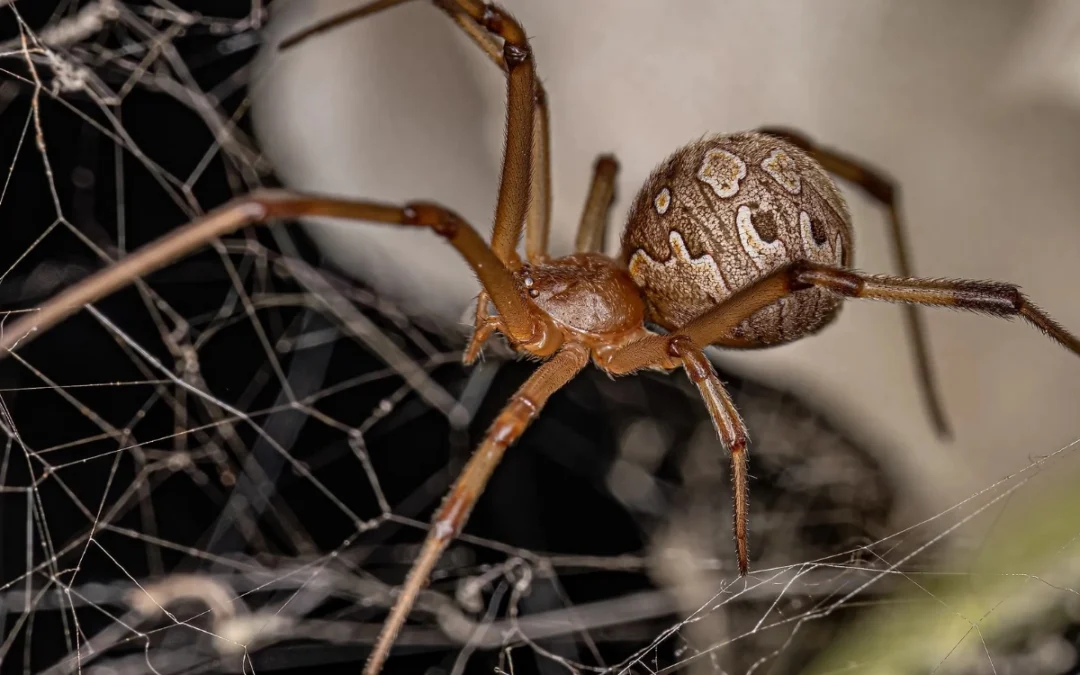
2. Brown Widow (Latrodectus geometricus)
- Status: Venomous, but less potent than the black widow
- Appearance: Tan to brown body with darker mottled markings. Distinctive orange hourglass marking on the underside (similar shape to black widow’s, but orange instead of red). Egg sacs have a spiky, golf-ball-like appearance.
- Habitat: Outdoor structures, under patio furniture, in eaves, around mailboxes, under flower pots. More common in suburban and urban Georgia than rural areas.
- Action: Bites are usually less severe than black widow bites but still warrant medical attention. Treat with the same caution and call professional control.
3. Wolf Spider
- Status: Non-venomous to humans (bite is mild, comparable to a bee sting at worst)
- Appearance: Large, hairy, brown to gray with darker markings. Body can be 1 to 2 inches with a 3-inch leg span. Eight eyes arranged in three rows.
- Habitat: Ground dwellers. They don’t build webs. They hunt. Often enter homes accidentally chasing prey. Common in basements, garages, and ground-floor rooms.
- Action: Harmless but startling. Trap with a cup and release outside.
4. Cellar Spider / Daddy Long Legs (Pholcidae)
- Status: Harmless
- Appearance: Small slender body (under 1/2 inch) with extremely long thin legs. Light tan to gray.
- Habitat: Indoor ceiling corners, basements, garages, crawl spaces. Builds messy tangled webs.
- Action: Leave them alone if you can. They eat mosquitoes, fruit flies, and other indoor pests. For a deeper dive, see our cellar spider vs daddy long legs guide.
5. Orb Weaver Spiders
- Status: Venomous to prey, harmless to humans
- Appearance: Vary widely in color and size. Many species have rounded abdomens with bright patterns (yellow, black, brown, orange). Common Georgia species include the yellow garden spider, garden orb weaver, and the spinybacked orb weaver.
- Habitat: Outdoor gardens, shrubs, between fence posts, under eaves. Builds the classic large circular web.
- Action: Leave them alone. They’re significant outdoor pest controllers. For more on whether their venom matters, see our orb weaver spider guide.
6. Jumping Spiders
- Status: Harmless
- Appearance: Small (1/4 to 3/4 inch), compact, fuzzy body. Often striking patterns and large forward-facing eyes that give them an almost cute appearance. Move in distinct jumps rather than walking smoothly.
- Habitat: Active hunters that don’t build webs. Common indoors and outdoors. Often spotted on walls, window frames, and porches during the day.
- Action: Among the most charming spiders you’ll meet. Harmless and useful.
7. Yellow Sac Spider
- Status: Mildly venomous. Bites possible but rarely serious.
- Appearance: Pale yellow to cream-colored, small (1/4 inch body). Slim legs.
- Habitat: Corners of ceilings, window sills, under loose bark, in folded leaves outdoors. Builds small silken retreats rather than full webs.
- Action: One of the few spiders that may bite without obvious provocation. Bites cause localized pain, redness, and itching that resolves in a few days. Vacuum sightings; call professionals for recurring activity.
8. Crab Spiders
- Status: Non-venomous to humans
- Appearance: Crab-like stance (front legs held out to the sides). Often brightly colored to match flowers (white, yellow, pink). Small body, usually under 1/2 inch.
- Habitat: Gardens, flowers, and shrubs. Ambush predators that wait on blooms to catch pollinators.
- Action: Beneficial outdoors. Leave them alone.
9. Hobo Spider
- Status: Low-risk venom (medical significance has been re-evaluated and downgraded in recent CDC guidance)
- Appearance: Medium-sized brown body with chevron patterns on the abdomen. Long legs. Often confused with wolf spiders.
- Habitat: Basements, dark corners, ground-level spaces. Builds funnel-shaped webs.
- Action: Less common in Georgia than in the Pacific Northwest. Treat as you would a wolf spider: trap and release, or call professionals for recurring activity.
10. Joro Spider (Trichonephila clavata) — The New Arrival
- Status: Harmless to humans and pets
- Appearance: Large, striking. Females have bright yellow and gray-blue striped legs with a yellow abdomen marked with grayish-blue lines and red markings underneath. Leg span up to 4 inches.
- Habitat: Introduced from East Asia, first confirmed in Georgia in 2014. Now established statewide. Builds huge multi-layered golden webs in trees, between buildings, on power lines, across porches.
- Action: Despite their alarming size, Joros are docile and rarely bite. Their fangs are too small to penetrate most human skin. They’re effective predators of other pest insects. Most Georgia residents have started simply leaving them alone.
Venomous vs Harmless Spiders in Georgia
Of the 10 species above, only two are considered medically significant in the Southeast:
- Southern Black Widow: severe neurotoxic venom. Bites require medical attention.
- Brown Widow: less potent than black widow but still warrants medical attention.
Two more deliver bites that can cause discomfort but rarely require medical care:
- Yellow Sac Spider: mild localized reaction.
- Hobo Spider: low-risk; previously thought to be more medically significant.
The other six species are functionally harmless to humans.
What to Do If You’re Bitten
For any suspected spider bite:
- Wash the bite area with soap and warm water.
- Apply a cold compress to reduce swelling.
- Take an over-the-counter pain reliever if needed.
- Watch for severe symptoms: rapidly spreading redness, severe pain, fever, muscle cramping, abdominal pain, difficulty breathing, or any systemic reaction.
- Seek medical attention immediately for any severe symptoms or for any bite from a confirmed widow species.
If possible (and only if safe), capture or photograph the spider for identification. Medical providers handle treatment differently depending on the species.
Spider Identification Tips
Three quick markers help with on-the-spot identification:
- Size and color: Note the body size (excluding legs), overall color, and any distinctive markings (hourglasses, stripes, bright patches).
- Web type: A circular symmetrical web means orb weaver. A messy tangled corner web means cellar spider. A funnel-shaped web means hobo spider or grass spider. No web at all (spider on the floor or wall) often means wolf spider, jumping spider, or one of the widow species (which build messy three-dimensional cobwebs in hidden spots).
- Behavior: Fast movement on the ground suggests wolf spider. Quick jumps suggest jumping spider. Sitting motionless on a flower suggests crab spider. Hanging upside down in a corner web suggests cellar spider.
For authoritative species identification, UGA Extension’s guide to insect and arthropod pests of southeastern neighborhoods covers the common spider species in our region in detail.
How to Prevent Spiders in Your Georgia Home
Spider prevention is straightforward and overlaps with prevention for the insects spiders eat (which is the underlying reason spiders show up in the first place).
Spider prevention is mostly about sealing entry points and reducing the indoor insect population that draws them.
- Sanitation. Remove indoor clutter, especially in basements, attics, garages, and storage spaces. Spiders need stable hiding places.
- Seal entry points. Caulk foundation cracks, install or replace door sweeps and weatherstripping, screen crawl space vents with 1/4-inch hardware cloth, seal gaps around utility line penetrations.
- Yard maintenance. Trim shrubs and tree branches back from the foundation. Remove leaf litter, woodpiles, and debris within 20 feet of the house. Outdoor harborages give spider populations a launching pad.
- Control outdoor lighting. Bright porch lights attract flying insects, which attract spiders. Switch to yellow-tone or warm-LED bulbs to reduce insect attraction.
- Humidity control. Many indoor spiders prefer slightly damp environments. Run dehumidifiers in basements; fix leaks promptly.
For active spider prevention strategies including DIY natural methods, see our natural spider repellent guide.
When to Call Professional Spider Control
Most spider sightings in a Georgia home don’t warrant professional intervention. Call Northwest if:
- You’ve found a confirmed black widow or brown widow on the property.
- You’re seeing recurring spider sightings in living spaces (bedrooms, kitchens, kids’ rooms).
- Population appears large (visible webs in multiple rooms, multiple sightings per week).
- You’re noticing other pest activity at the same time. Spiders are usually a downstream effect of an indoor insect problem.
- Anxiety or safety concerns make a professional inspection worth the peace of mind.
Professional spider control typically combines targeted treatment at active harborage spots, exclusion work to seal entry points, and addressing the underlying insect issue that drew the spiders indoors.
(Spider activity beyond what you want to handle yourself? Schedule a free Northwest spider inspection and we’ll identify what’s around, find the entry points, and lay out a treatment plan.)
Frequently Asked Questions About Spiders in Georgia
Are spiders in Georgia dangerous?
Most are harmless. Only two species in the Southeast pose real medical risk: the Southern black widow and the brown widow. The yellow sac spider and hobo spider can deliver uncomfortable bites but rarely require medical attention. The other common spiders in Georgia (wolf, cellar, orb weaver, jumping, crab, fishing, Joro) are functionally harmless to humans.
What do spider bites look like?
Symptoms vary by species. Most bites cause mild localized redness, swelling, and itching that resolves in a few days. Black widow bites cause severe muscle pain, abdominal cramping, sweating, and sometimes systemic reactions. Brown recluse bites (uncommon in Georgia) can cause a slow-healing necrotic wound. Any bite with severe pain, rapidly spreading redness, or systemic symptoms warrants medical attention.
How common are venomous spiders in Georgia?
Black widows are present statewide but uncommon to encounter indoors. Brown widows are more common around buildings, especially in coastal and urban areas. Brown recluse spiders are rare in Georgia but not impossible (they’re more common further west). Most homeowners go years between spotting a medically significant spider.
Do spiders help control other pests?
Yes, significantly. Spiders are predators of flies, mosquitoes, gnats, moths, and other household insects. A small spider presence indoors is functionally free pest control. This is one reason most pest professionals (including ours) encourage homeowners to leave individual spiders alone when possible.
What’s the Joro spider and should I worry about it?
The Joro spider (Trichonephila clavata) is an invasive species first confirmed in Georgia in 2014. It’s now established statewide and continues to spread. Despite their alarming size (leg span up to 4 inches) and bright coloring, Joros are docile and rarely bite. Their fangs are typically too small to penetrate human skin. They’re effective predators of pest insects and aren’t considered dangerous.
Most spider problems get solved by sealing entry points and treating the insects they’re feeding on.
Ready for a Professional Spider Inspection?
If you’ve spotted a widow species, you’re seeing recurring indoor sightings, or you just want a professional to identify what’s around your home, Northwest’s team handles the full spider control workflow: species identification, exclusion, targeted treatment, and addressing the underlying insect issues that draw spiders indoors. Most spider problems clear up faster than homeowners expect.
About the Author
Anna V., Editorial Lead — Pest Education leads pest education content for Northwest Exterminating, working with senior technicians and service center managers across our Georgia, Alabama, Tennessee, and South Carolina service areas to translate field expertise into homeowner-friendly guides. The focus: accurate, regionally-specific answers to the pest questions Southeast homeowners are actually searching for.