Jun 24, 2013 | Uncategorized
 There are more than 5,000 different ladybug species in the world, known by many different names. Ladybird beetles, lady beetles, ladybirds, God’s cow, lady clock, lady cow, lady fly..these are just to name a few. The easiest way to tell a ladybug from another insect is their appearance: their bodies are always a round or oval dome-shape, they have a hard shell wing that covers their inner wings, and they are able to retract their head like a turtle.
Ladybugs leave their summer feeding grounds in fields, forests, and yards and begin to appear indoors in the fall looking for a place to spend the winter. Children love ladybugs because they are easy to catch and they are bright in color. Gardner’s also enjoy them and consider them useful as they eat aphids or insects. Many cultures consider ladybugs lucky and in many countries the sight of a ladybug is either a call to make a wish or a sign that a wish will soon be granted. Ladybugs are the state insect of Delaware, Massachusetts, New Hampshire, New York, Ohio, and Tennessee. They are the official national mascot for the Alpha Sigma Alpha sorority in the United States and the mascot of a ski resort in Spain.
Barry Teubert
Northwest Exterminating
Savannah Service Center Manager
[email protected]
Jun 21, 2013 | Uncategorized
All creatures are capable of fantastic feats, some of which we are accustomed to. Birds fly, fish swim and bees buzz along as they collect nectar. We’re so used to certain animals doing certain things that we marvel when they do something unexpected. After all, wouldn’t it shock you if animals could talk like humans? That is, until you have a conversation with a parrot. Below we feature some creatures you know well and finally get an explanation for how the neat tricks they do!
Squirrels Flying
Northern flying squirrel
Southern flying squirrel
Flying squirrels aren’t as a familiar as their red or gray sisters because when you’re likely to be sleep when they tend to be out. In North America there are two species of flying squirrel – the northern flying squirrel and the southern flying squirrel. Contrary to what their name suggests, flying squirrels don’t fly because they don’t have wings. They do however, have web-like folds of skin known as patagium which when get taught when they stretch their bodies out and help them glide from high altitudes.
Snakes Swimming
Snake swimming
Though some snakes are known specifically for being in the water, all snakes can swim. This may boggle the mind because these creatures have no arms or fins! However, they glide gracefully through the water by moving their body laterally, as if twisting into an ‘S’ shape. These movements start at the head and continue through its body, allowing them to exert a force backwards against the water, effectively moving their bodies forward. Those we typically refer to as water snakes have flatter bodies which make it more efficient for them to swim.
Bugs Walking on Water
Scientists used to believe that bugs secreted a wax on their legs that helped them take advantage of the surface tension of water. Now they believe that insect’s legs have microscopic hairs that trap air bubbles to allow them to float.
Bug walking on water
Jun 19, 2013 | Uncategorized
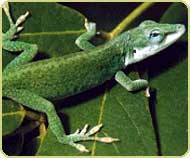
No, it’s not the Geico Gecko…it’s a green anole. This lizard is native to the U.S. and is nicknamed the “chameleon” due to it’s ability to change colors from bright green, to brown, to gray…all depending on their mood. Their heads have pointed snouts, their tails and bodies are long and slender, they have special padding on their feet for crawling along walls, and they make no sound. Of their total length, their tails are the major portion of their bodies. The males have a pink flap of skin that hangs below their neck that turns a fiery red color during territorial displays or courting and mating. The males also have two sets of bigger scales at the point where their tail starts and both males and females shed off their tails and can grow a new one in its place. In the southeastern United States, these lizards can be found in trees, shrubs, on walls or fences. They require greenery, some shade, and a moist environment and they eat small insects and spiders by stalking them in shrubs, vines, walls, and even window screens. So don’t be afraid of these little guys, think of them as nature’s green exterminators.
Barry Teubert
Northwest Exterminating
Savannah Service Center
[email protected]
Jun 17, 2013 | Uncategorized
No-see-um’s, hop-alongs, beach fleas, biting midge, punky…these are just a few of the “cute” names that sand fleas go by! But cute they’re not! And they are very present in the low country area of Savannah, GA!
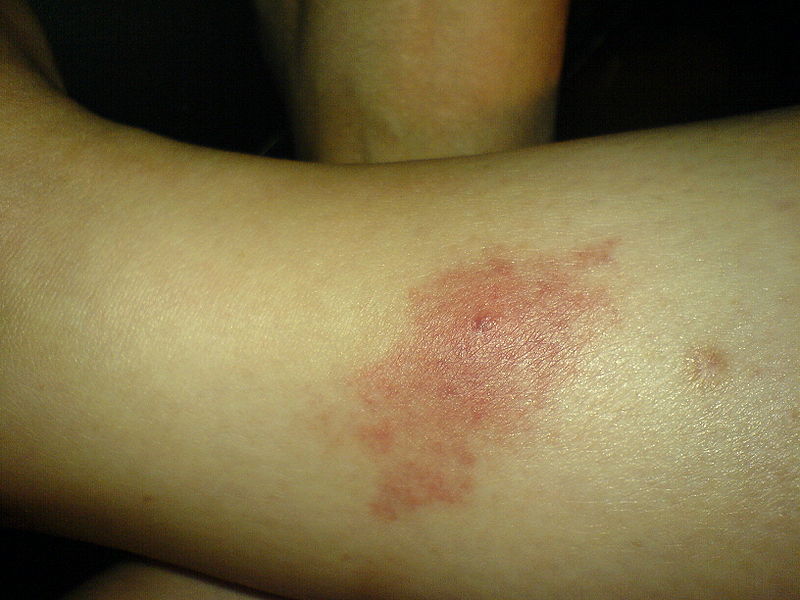
Sand Fleas reside on the beach and in other sandy areas during warm weather, double in numbers during the spring, produce a loud whine when in groups, and feed early in the morning and late at night. Sand flea bites may feel like a sting because they are very deep causing welts and lesions with severe pain and itching. The female bites for the blood protein needed for her egg laying, however this saliva can trigger your body to react and the bites can cause infections and fever viruses. Sand Fleas tend to “feed” on people with paler skin, as the skin is thinner making it easier to pierce.
To help keep these fleas at bay, try using an insect repellant similar to those used against mosquitoes. If you are bitten, do not scratch the welts, as scratching can cause swelling, itchiness, skin redness, and can lead to sand fleas burying themselves underneath the skin allowing them to continue feeding on blood. For bite relief, you can take a pain killer such as ibuprofen gels. Seek medical advice should the pain or itchiness worsen.
Barry Teubert
Northwest Exterminating
Savannah Service Center Manager
[email protected]
Jun 14, 2013 | Uncategorized
Recent news stories have brought attention to a new pest that has all threat of pests such as rats, including its size! Snails may not seem like the most imposing of pests, but the giant African land snail is definitely a force to be reckoned with. It is starting to invade parts of southern Florida, but has also been seen in parts of Texas and the Great Lake states.
Giant African Land Snail
These snails live up to nine years and can produce 1200 eggs a year, after reaching adulthood in just one year. If you’re not a fan of math, just be certain that these snails can soon become an astronomical problem. Florida knows this especially after having to spend $1 million on its initial infestation – which evidently did not offer them a permanent solution.
So what’s the bigger issue here? Firstly, these snails eat at least 500 different types of plants, thus serving as a huge threat to agriculture. Not only that, but according to Agriculture Department spokeswoman Denise Feiber, giant African land snails carry a human parasite called rat lungworm, a potentially deadly form of meningitis. Homeowners should beware not only for these issues, but also because their shells are so sharp they might shred a tire!
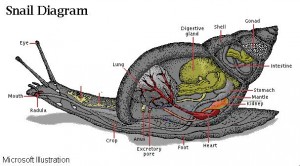
These pests are thought to be carried in through traveler’s luggage, although other, not so wise citizens, carry them as pets and later release them. This was the cause of the original infestation on the American mainland in 1966. Agriculture officials are working to eliminate the pest problem before it becomes a major issue, but urge homeowners that they are the first line of defense against this pest. If you spot a pest similar to these below, call Northwest Exterminating immediately! There might be a larger problem than the one that already meets the eye.
Snail Diagram
If you’re interested in learning more about this pest and pest prevention, view the video here.
Sources:
http://www.aphis.usda.gov/plant_health/plant_pest_info/gas/index.shtml
http://www.invasivespeciesinfo.gov/animals/africansnail.shtml
http://www.cnn.com/2013/04/15/us/florida-giant-snails/index.html?iref=allsearch
http://news92fm.com/350719/giant-african-land-snails-spotted-in-houston/
Jun 12, 2013 | Uncategorized
If you’ve spent any time in Savannah, Ga in the spring or fall, you know all about sand gnats, or as locals call them….the state bird. The sand gnat is not just the mascot for the Savannah Sand Gnats minor-league baseball team, but just like the baseball team, they’ll sting you, draw your blood and defeat you on the field.
In the low country, the sand gnat is more of an issue than mosquitoes or fleas. Sand gnats live along waterways, such as the ocean, lakes, rivers, ponds, and marshes. They fly, bite, and suck your blood just like a mosquito, leaving behind
red, itchy bumps on the skin. Although blood has no nutritional value to the sand gnats, they need it so their eggs can mature prior to laying. Carbon dioxide draws sand gnats from up to 30 yards, they stay in a 300 foot zone where they breed around your home, fly less than 25 feet high and most adult females live for 2-3 weeks.
It is not unusual for the effects of a sand gnat bite to be more intense for a longer period of time than a mosquito bite. Unless you want to cover yourself from head to toe in the sweltering Savannah heat, be proactive. Commercial repellents with Deet can be useful to prevent biting, or you can try a local remedy such as taking garlic pills – that is, if you don’t mind smelling like garlic. However, a more “user friendly” remedy such as rubbing your arms with baby oil will prevent the sand gnats from biting as it provides a protective layer to your skin that the gnats can not penetrate.
For sand gnat treatment at your home or business, Call the Mouse! 888.466.7849 or visit online at www.callnorthwest.com
Barry Teubert
[email protected]
Jun 10, 2013 | Uncategorized
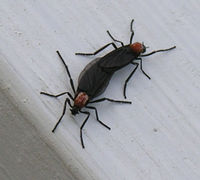
Contrary to urban myth, lovebugs, also known as the honeymoon fly, kissing bug, or double-headed bug, are not a result of a University of Florida genetics experiment gone wrong, but a result of their migration into the southeastern states.
During and after mating, adult pairs remain coupled, even in flight, for up to several days. Lovebug flights usually occur first in late spring, then again in late summer, and extend over periods of four to five weeks. They are usually restricted to daylight hours, reaching peak activity at 10 am, and can number in the hundreds of thousands.
Lovebugs do not bite or sting, but they can be a nuisance to drivers. When left spattered on a car, lovebugs can leave damage to the finish of the car. Soaking the lovebugs in water for several minutes will help with the removal, and to make future removal easier, apply a light film of baby oil over the front of the hood, above the windshield and on the grill of the bumper.
Barry Teubert
[email protected]
Jun 7, 2013 | Uncategorized
Spring is a time when everything comes to life, blooming into an array of lovely colors. You’ll see flowers that are pink and purple, baby bunnies that are tan or gray and insects that are red and black. Just like every other little life form emerging this time of year, insects can also be a variety of colors and it’s important not to get them confused. Some bugs you might spot frequently are of the Georgia Bulldog variety – red and black spots, stripes and even a combination of both.
If any of these insects or other pests become too much of nuisance, Northwest Exterminating has the expertise and knowledge to take care of your bug problems. Our Director of Pest Services Adam Vannest has provided some information about these bugs that will help you know the difference and what measures to take against them.
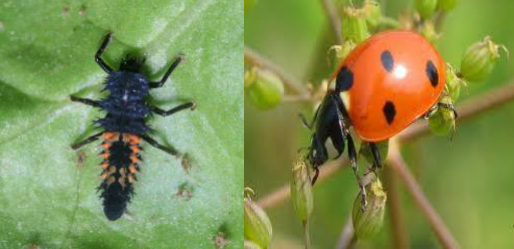
Lady Bug
– Beneficial insect
– Overwinters
– Feeds on aphids
– Control Measures: exclusion and vacuuming for long-term prevention. When necessary, chemical contact treatments can knock down a population
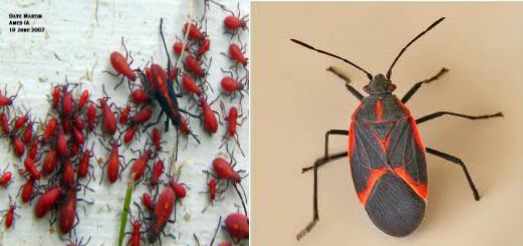
Box Elder Bug
– Overwinters
– Female: Box Elder trees and Silver Maple trees serve as the primary host plant
– Control Measures: Exclusion and a contact/residual application around the foundation and base of host plant
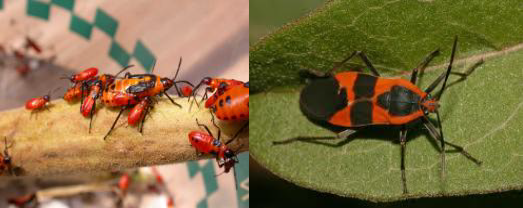
Milkweed Bug
– Found in gardens on Milkweed plants or around shelled sunflower seeds
– Control Measures: Over-the-counter garden insecticides
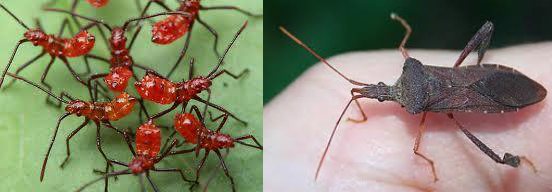
Leaf-Footed Stink Bug
– Feeds on a wide variety of host plants
– Besides birds, they do not have too many natural predators due to their taste and smell
– Control Measures: Over-the-counter insecticides for garden areas. Outside of the garden, any contact or residual product labeled for stink bugs
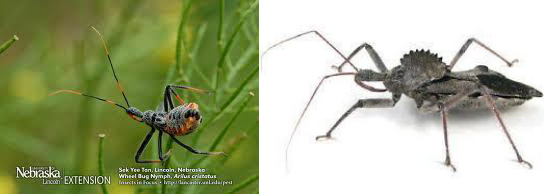
Wheel Bug
– Semicircular cogwheel-like crest on its thorax
– Feeds on a wide variety of insects including caterpillars, beetles, aphids
Control Measures: Prevention is the key! All plants should be inspected before they enter the home. Exclusion should be performed for long-term prevention. All vegetation should be trimmed away from the home, at least one foot. Pesticides are rarely needed
Jun 7, 2013 | Uncategorized
Spring is a time when everything comes to life, blooming into an array of lovely colors. You’ll see flowers that are pink and purple, baby bunnies that are tan or gray and insects that are red and black. Just like every other little life form emerging this time of year, insects can also be a variety of colors and it’s important not to get them confused. Some bugs you might spot frequently are of the Georgia Bulldog variety – red and black spots, stripes and even a combination of both.
If any of these insects or other pests become too much of nuisance, Northwest Exterminating has the expertise and knowledge to take care of your bug problems. Our Director of Pest Services Adam Vannest has provided some information about these bugs that will help you know the difference and what measures to take against them.
Lady Bug
– Beneficial insect
– Overwinters
– Feeds on aphids
– Control Measures: exclusion and vacuuming for long-term prevention. When necessary, chemical contact treatments can knock down a population
Box Elder Bug
– Overwinters
– Female: Box Elder trees and Silver Maple trees serve as the primary host plant
– Control Measures: Exclusion and a contact/residual application around the foundation and base of host plant
Milkweed Bug
– Found in gardens on Milkweed plants or around shelled sunflower seeds
– Control Measures: Over-the-counter garden insecticides
Leaf-Footed Stink Bug
– Feeds on a wide variety of host plants
– Besides birds, they do not have too many natural predators due to their taste and smell
– Control Measures: Over-the-counter insecticides for garden areas. Outside of the garden, any contact or residual product labeled for stink bugs
Wheel Bug
– Semicircular cogwheel-like crest on its thorax
– Feeds on a wide variety of insects including caterpillars, beetles, aphids
Control Measures: Prevention is the key! All plants should be inspected before they enter the home. Exclusion should be performed for long-term prevention. All vegetation should be trimmed away from the home, at least one foot. Pesticides are rarely needed

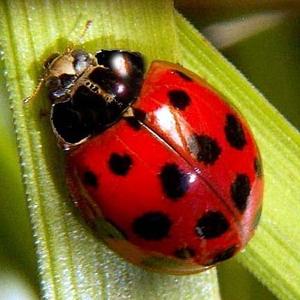 There are more than 5,000 different ladybug species in the world, known by many different names. Ladybird beetles, lady beetles, ladybirds, God’s cow, lady clock, lady cow, lady fly..these are just to name a few. The easiest way to tell a ladybug from another insect is their appearance: their bodies are always a round or oval dome-shape, they have a hard shell wing that covers their inner wings, and they are able to retract their head like a turtle.