Jul 29, 2013 | Uncategorized
UGA recently released an article that gave helpful tips on how you can help your home to be less of a target to termites. We all know that termites cause millions of dollars worth of damage each year. Once you have a termite infestation, not only do you have to repair the damage but you must call on the help of a professional to get rid of them. These simple steps are a great way to stay proactive so that termites don’t become an issue.
Tips such as keeping wood products away from the perimeter of your home, keeping water away from the foundation, sealing cracks and crevices in the structure, and working with your termite professional to prevent termites feeding on your home.
To read the full article with helpful tips from UGA entomologist, Brian Forschler, CLICK HERE.
For termite protection on your property, call Northwest!
Jul 26, 2013 | Uncategorized
Recently the news has been booming about the new healthy alternative:
Eating Insects
Eating insects may be a new form of pest control but it appears to serve a larger and healthier purpose. The United Nations recently released an extensive document on the health impact of consuming edible insects. Okay don’t stop reading this is serious.
Did you know that over two billion people, largely in Asia, Africa, and Latin America already include edible insects into their daily diets? The idea has been around forever and some candy makers have even made money off of imitation insect candies or even a real version. Have you seen chocolate covered crickets or ants? Although I have spent my whole life in the pest control industry I can honestly say I have never eaten an insect…on purpose. The United Nations believes that proper education and communication could not only help us with our health but also help the world fight hunger. Studies have shown that there are approximately 1,900 edible insects in the world. The edible insects show amazing study results when it comes to their nutritional makeup. Certain insects like grasshoppers and can go toe to toe and ounce to ounce with other high protein foods like lean ground beef. These 1,900 edible insects are high in protein and fiber, and contain helpful minerals like iron, zinc, and magnesium.
Are you convinced to switch your whole diet over yet? Probably not and neither am I and most of the population. This is a hard concept for many of us to swallow (literally) because insects should be exterminated and they scare us. Well, I hate to be the bearer of bad news but we all have already consumed some insects or their parts in what we eat already. Some insects have been used for their colors for dyes in food, while others just have accidentally made it into the food. If you ever want to learn more and don’t have a weak stomach I urge you to look into some of the acceptable thresholds for insect parts in common food we consume.
So where do I stand with this? Lets just say I am excited we might have found a solution to help the world’s hunger problem but at this point I think I will stick to my current diet while making a conservative effort to try new things as our food choices evolve. Will the United States ever evolve and jump on this new alternative food? Maybe eventually, we already have with other things like lobsters (who were once viewed as rats of the sea) and/or any other bottom feeding fish or crustaceans. One thing is for sure, Northwest Exterminating will always be around for those who still wish for the Mouse to Protect their house!
Adam Vannest
Director of Pest Services
Northwest Exterminating
[email protected]
Jul 24, 2013 | Uncategorized
Pests can show up in the most unexpected of places – in your bed, in your luggage and unfortunately in your food. What might have appeared to be a perfectly fresh and untouched package might actually be home to insects that infect food products. These insects are aptly named stored product pests and are usually small beetles or moths. For the most part, you will notice the adult form of these insects as they immediately begin their search for more food, typically in the area where the infestation first began.
These insects have a rather rapid life cycle lasting just four to five weeks. During this time, adult females can lay anywhere from 1000 to 1,000 eggs! If the adults themselves do not eat your food, then they serve as breeders who locate food sources for their larva. The name suggests that these pests only consume food products, but actually have a very large appetite including, but not limited, dried flower arrangements, bird seed, dog bones and even jewelry or holiday decorations!
In the Southeast, one particular stored product pest you may spot is an Indianmeal moth. Despite what their name suggests, these moths can be found in bird seed, breakfast cereals and other consumables, typically located in kitchen cupboards. However, because of their great ability of flight, adult Indianmeal moths can be found pretty much anywhere within an infested home. Indianmeal moths are also easy to spot during the larva stage, as they are almost an inch long and create webs of silk in the items they infest.
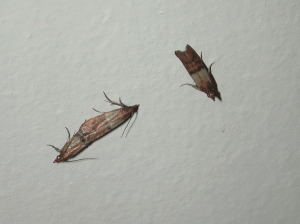
Indianmeal moth

Another well-known insect is the which commonly infests dried herbs and spices as well as other dried plant and animal material. These pests can chew through paper packaging and even aluminum foil. You’ll spot these pests as they are active, great flyers that are attracted to light. However, don’t assume that one not moving is one not to worry about. These pests, like another stored product pest known as the weevil, may pretend to be disturbed when threatened.
Drugstore beetle
Preventing these infestations is difficult as many of these pests do not appear until the packaging has been opened. It’s important though to keep food in tightly sealed containers and also use older products first. If the infestation is relatively bad, pest control companies such as Northwest Exterminating can provide traps to bait these pests using pheromones that attract these insects.
Sources:
http://www.caes.uga.edu/publications/pubDetail.cfm?pk_id=7914
Jul 22, 2013 | Uncategorized
During this time of year, you may notice that your lawn isn’t as green as the grass on the other side. Have no fear, Northwest services can provide diagnostics to let you know what’s going on beneath the surface of your lawn. For the most part, the summer months can mean very green lush grass, but the same warm temperatures might permit infections in your lawn. Way may seem like an unfortunate eye sore to you, may be one or more lawn diseases interrupting your summer plans.
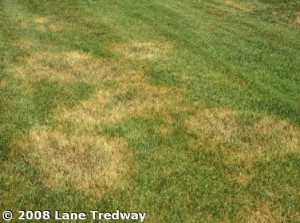
Brown patch
This is a very prevalent disease that may make you think your lawn isn’t getting enough water and treatment. In actuality, this results due to moist, hot weather or over-fertilized lawns. This is active when grass remains wet at temperatures between 80 to 90 degrees Fahrenheit. It’s important to improve aeration and drainage on such lawns by watering deeply and infrequently, mowing high and removing excess thatch.
Brown Patch
Fairy Rings
Despite what their name suggests, fairy rings are not due to Tinkerbell and her friends dancing across your yard. Rather, patterns of circles of mushrooms or unusually lush grass are due to soil exhaust forcing nutrients to the outer edge of dying mycelium. Your only choice in this instance is to dig up the affected area and use lawn treatments in order to make this area less visible.
Fairy rings
Summer patch
This disease grows as a result of a fungus that infects and destroys grass roots. It mostly affects gross growing in a sunny, hot lawn. The grass will begin as wilted, dark green and eventually turn straw brown. The most effective means eliminating this is using preventive measures that Northwest provides.
Summer patch
If you are interested in learning about more lawn diseases, please visit the link below. If there are any that you feel affect your lawn, please contact Northwest and schedule an appointment today!
Sources:
http://www.yardcare.com/restore/fighting-lawn-diseases/summer-lawn-diseases/
Jul 3, 2013 | Uncategorized
Several years ago, I was scheduled to perform a Sentricon check at a home in Alpharetta. It was a nice home in a “well to do” community with a huge fenced-in backyard and custom built swimming pool. I remember it being a nice, sunny, and warm afternoon. The kind of day that you feel blessed you get to work outside. Back then each Sentricon station was checked with a hand held device that would scan the bar code located on the bottom of the station cap and would make a “beep” sound when it registered. I always made it a point to make some noise before entering a backyard. If you didn’t know any better you would think every time I open a gate is the first time I’ve ever done it. What I’m doing is making noise and waiting to hear for any response. I would do this especially in the summer because you can easily walk up on a house wife sun bathing by the pool who dozed off and the last thing you want them to do is wake up as you’re standing next to them. Fortunately, that scenario has never been a problem but it terrifies me still today that it could happen so I’m very careful. I also want to alert any dogs that someone is about to encroach on their territory because a mad dog is bad enough but, as any good sports fan knows, we always fight harder on our own turf.
Well this day I had already gone through my normal routine and had assumed no one (or dog) was in this particular backyard and I could proceed with my inspection without hesitation. I got as far away from the gate as this check would take me when my “beep” was followed immediately by a very deep growl. I looked up and the biggest German shepherd I’ve ever seen to date slowly came out of a door I hadn’t noticed, until now, between the house and the garage. He had his head down and was creeping toward me like a lion you see on National Geographic prowling a wildebeest in the tall grass of the African plains. It may sound dramatic but you weren’t there were you? It was the most frightened I have ever been on the job to this day and that would include my previous construction job where I had to be revived by chest compressions after losing consciousness 30 feet deep in a manhole.
The thoughts that went through my head, other than “I’m screwed”, included the fact that I was a good 100 feet from the gate to safety and I was on a deck. To get away unharmed I would have to go down the stairs before running to the gate or jump off. Not to mention I would have to turn my back at some point to run and I was not looking forward to that either.
Just then, he let out one loud bark and leaped at me going right for my face. I leaned back and did the only thing that felt natural at that moment. I punched him in the face. It definitely hurt me more than him and seemed to have no affect whatsoever. I turned and ran as fast as I could knowing there’s no way I could out run him because I’ve seen way too many episodes of “Cops.” I knew initial speed was very key so I had no choice but to run straight passed the stairs that would take me down the deck. Unfortunately, it also meant I would have to jump off the deck but there was no turning back now.
Thinking back, it’s probably what saved me from being ripped to shreds because either he didn’t feel like jumping off too or simply had a great deal of respect for me for jumping. I remember being about 12 feet in the air looking down at the ground and thinking, “as soon as you hit the ground, GET UP AND RUN!” I don’t know how but I actually landed on my feet and jumped immediately again over the six foot fence landing safely on the other side. I can only assume its the same adrenaline pumping force that allows a woman to lift a car off her child in a moment of despair.
Since that day, I approach every yard with an even greater precaution for dogs. Now almost everyone in this area has an invisible fence and their dogs run all over the yard. Because of my experience with the massive German shepherd that looked like it was bred for pulling a coach full of Budweiser I am easily freaked out by dogs. I got away but we all get lucky once in our lives.
The feeling from that day has never left me. About a year ago, I pulled up to a home to check their stations. All the signs were there that they had outside dogs. Dog house, food, and water dishes, toys, piles, etc… Nothing came running up when I pulled in the driveway but I knew to proceed with caution. I got around to the front door, bent over to check the station and saw a large shadow on the sidewalk moving toward me. I immediately panicked and ran like crazy to my truck. For whatever reason I turned to look over my shoulder to see how close the dog was. I guess its because I knew I’m not as fast as I used to be. Funny enough, the only thing I saw was a beautiful orange and black Monarch butterfly fluttering in the breeze casting its shadow on the walkway below. It was then that I realized that I had the moxie equivalent to an elementary school girl and was running away from a freaking butterfly.
So this story goes out to those who have ever been chased by dogs, reacted drastically to something that wasn’t what it seemed or anyone who saw an idiot running from nothing down a side walk one afternoon in Milton and thought, “what’s that guy’s problem?” Now you know the answer. He is haunted by a memory he hopes he never has to relive.
Austin Milligan
Northwest Exterminating
Alpharetta Service Center Manager
[email protected]
Jul 1, 2013 | Uncategorized
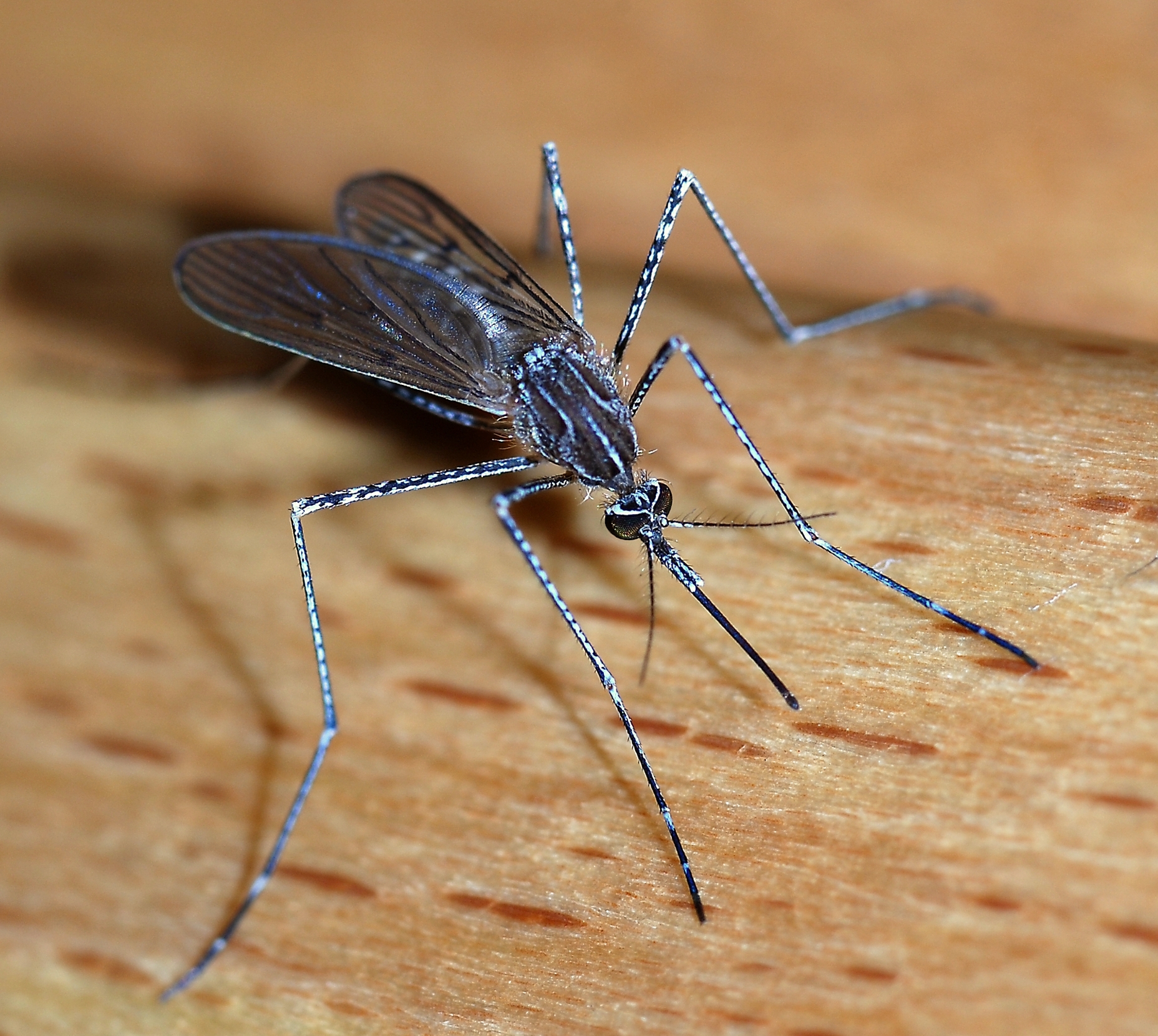
It’s a bird! It’s a plane! It’s a…MOSQUITO?!?!
Source
Yes, that is right mosquito season is here! And although we all enjoyed the mild winter, we may not be able to say the same this summer. Mild winters usually mean an influx in pest pressure for Pest Management Professionals and their customers…including mosquitoes.
There are currently 63 different species of mosquitoes found in GA. Approximately$125,000,000 is spent annually in Georgia in an effort to reduce and treat the effects of disease and nuisance caused by mosquitoes. That’s a lot of money to control one insect. But is there a cost to protect the public’s health? Because the mosquito has become a big threat!
Worldwide malaria remains the most important human disease transmitted by mosquitoes. Malaria counts for almost 2 million deaths each year and is estimated that there are over 400 million cases in the world. In Georgia, we see about 50 to 60 cases of Malaria a year. Although Malaria affects the most humans worldwide there are two other diseases that we see more frequently in Georgia.
The West Nile virus was first found in the states in 1999. In 2002, the virus spread over most of the United States and caused over 4,000 cases and 277 deaths. The virus is transmitted from the mosquito to a host bird, where the virus grows and then is transmitted to an incidental host (humans) by another mosquito. To date, there is no antivirus for those affected with the disease.
Another common disease doesn’t affect humans directly but it does affect the family dog. Dog heartworms are a serious problem and are spread by mosquitoes. Infection rates in some states have been reported to be as high as 80% in dogs over 2.5 years old, and almost 100% in dogs over 5 years old that are left un-vaccinated. There is approximately $60,000,000 being spent on heartworm prevention in Georgia each year and it cost nearly $1,000 to treat a case of heartworms. Bottom-line…make sure you treat your dog for heartworms BEFORE it’s an issue.
So what can we do? Mosquito prevention at Northwest Exterminating is a five step program following the basic principles of an Integrated Mosquito Management program:
- Education
- Surveillance
- Source Reduction
- Larviciding
- Adulticiding
It is important as homeowner’s that we do our part. Here are some simple steps to help reduce mosquitoes around your home:
- Reduce water collection sites
- Clean gutters regularly
- Remove yard clutter
For more tips like these and to help reduce the amount of mosquitoes around your home call Northwest Exterminating. Our goal is to create a healthier environment around your home so you can enjoy your yard!
Adam Vannest
Director of Pest Services
Northwest Exterminating
[email protected]
Jul 1, 2013 | Uncategorized
It’s a bird! It’s a plane! It’s a…MOSQUITO?!?!
Source
Yes, that is right mosquito season is here! And although we all enjoyed the mild winter, we may not be able to say the same this summer. Mild winters usually mean an influx in pest pressure for Pest Management Professionals and their customers…including mosquitoes.
There are currently 63 different species of mosquitoes found in GA. Approximately$125,000,000 is spent annually in Georgia in an effort to reduce and treat the effects of disease and nuisance caused by mosquitoes. That’s a lot of money to control one insect. But is there a cost to protect the public’s health? Because the mosquito has become a big threat!
Worldwide malaria remains the most important human disease transmitted by mosquitoes. Malaria counts for almost 2 million deaths each year and is estimated that there are over 400 million cases in the world. In Georgia, we see about 50 to 60 cases of Malaria a year. Although Malaria affects the most humans worldwide there are two other diseases that we see more frequently in Georgia.
The West Nile virus was first found in the states in 1999. In 2002, the virus spread over most of the United States and caused over 4,000 cases and 277 deaths. The virus is transmitted from the mosquito to a host bird, where the virus grows and then is transmitted to an incidental host (humans) by another mosquito. To date, there is no antivirus for those affected with the disease.
Another common disease doesn’t affect humans directly but it does affect the family dog. Dog heartworms are a serious problem and are spread by mosquitoes. Infection rates in some states have been reported to be as high as 80% in dogs over 2.5 years old, and almost 100% in dogs over 5 years old that are left un-vaccinated. There is approximately $60,000,000 being spent on heartworm prevention in Georgia each year and it cost nearly $1,000 to treat a case of heartworms. Bottom-line…make sure you treat your dog for heartworms BEFORE it’s an issue.
So what can we do? Mosquito prevention at Northwest Exterminating is a five step program following the basic principles of an Integrated Mosquito Management program:
- Education
- Surveillance
- Source Reduction
- Larviciding
- Adulticiding
It is important as homeowner’s that we do our part. Here are some simple steps to help reduce mosquitoes around your home:
- Reduce water collection sites
- Clean gutters regularly
- Remove yard clutter
For more tips like these and to help reduce the amount of mosquitoes around your home call Northwest Exterminating. Our goal is to create a healthier environment around your home so you can enjoy your yard!
Adam Vannest
Director of Pest Services
Northwest Exterminating
[email protected]
Jun 26, 2013 | Uncategorized
This past weekend I was outside working in the garden when I came across a few unwanted guests. There were a few spiders, a couple ground beetles, and a large amount of ants. The ants and beetles were present because my garden provides them with a large amount of food and water. The spiders were there because my garden provides them food (the other insects).
As most of you know the most common insecticides should not be used in gardens. Leaving the everyday gardener to reach out to “over the counter” products from their local nursery or hardware store to help rid them of pests. Although many of these products are effective for short periods of time, they require a minimum time lapse before you can harvest your yield. As many of you know, at Northwest Exterminating we care about protecting your family from pests in the most natural ways possible. And when it comes to the family garden our service technicians are trained to stop the pest before they enter the garden area. That being said, a lot of the garden insects start in the garden area and never leave it – making it hard to control them. So what can you do? Below I have listed some natural ways to help assist you in keeping the pest populations down in your family’s garden this growing season. Following these steps and methods will ensure a healthy garden with minimal pesticide use.
Environmental Tips:
- Be careful not to over water. Excess water will provide a water source that is attractive to most pests.
- Don’t plant too much. Dense garden foliage will provide hidden shelter for pests including rodents.
- Weed your garden regularly. Eliminating the weeds will allow open spaces that leave pests exposed to other predators.
Natural Plantings You Can Add To Help Keep The Pests Down:
- Plant some of your herbs in amongst your garden staples. The strong aroma from these plants can deter harmful pests, and attract predators to some of the damaging pests. Examples: Basil, Citronella, Dill, Fennel, and Lemongrass
- Spread coffee grounds around the garden to help reduce snails and provide an extra source of fertilizer.
- Use a few peppermint essential oil drops in some water and lightly spray your plants to keep the ants off.
- Plant onions, marigolds, and radishes around the garden to help as well!
We hope some of these tips help you keep your family garden healthier this season! For more information on Northwest’s Pest Control and Services visit us at callnorthwest.com
Adam Vannest
Director of Pest ServicesNorthwest Exterminating
[email protected]
Jun 26, 2013 | Uncategorized
This past weekend I was outside working in the garden when I came across a few unwanted guests. There were a few spiders, a couple ground beetles, and a large amount of ants. The ants and beetles were present because my garden provides them with a large amount of food and water. The spiders were there because my garden provides them food (the other insects).
As most of you know the most common insecticides should not be used in gardens. Leaving the everyday gardener to reach out to “over the counter” products from their local nursery or hardware store to help rid them of pests. Although many of these products are effective for short periods of time, they require a minimum time lapse before you can harvest your yield. As many of you know, at Northwest Exterminating we care about protecting your family from pests in the most natural ways possible. And when it comes to the family garden our service technicians are trained to stop the pest before they enter the garden area. That being said, a lot of the garden insects start in the garden area and never leave it – making it hard to control them. So what can you do? Below I have listed some natural ways to help assist you in keeping the pest populations down in your family’s garden this growing season. Following these steps and methods will ensure a healthy garden with minimal pesticide use.
Environmental Tips:
- Be careful not to over water. Excess water will provide a water source that is attractive to most pests.
- Don’t plant too much. Dense garden foliage will provide hidden shelter for pests including rodents.
- Weed your garden regularly. Eliminating the weeds will allow open spaces that leave pests exposed to other predators.
Natural Plantings You Can Add To Help Keep The Pests Down:
- Plant some of your herbs in amongst your garden staples. The strong aroma from these plants can deter harmful pests, and attract predators to some of the damaging pests. Examples: Basil, Citronella, Dill, Fennel, and Lemongrass
- Spread coffee grounds around the garden to help reduce snails and provide an extra source of fertilizer.
- Use a few peppermint essential oil drops in some water and lightly spray your plants to keep the ants off.
- Plant onions, marigolds, and radishes around the garden to help as well!
We hope some of these tips help you keep your family garden healthier this season! For more information on Northwest’s Pest Control and Services visit us at callnorthwest.com
Adam Vannest
Director of Pest ServicesNorthwest Exterminating
[email protected]