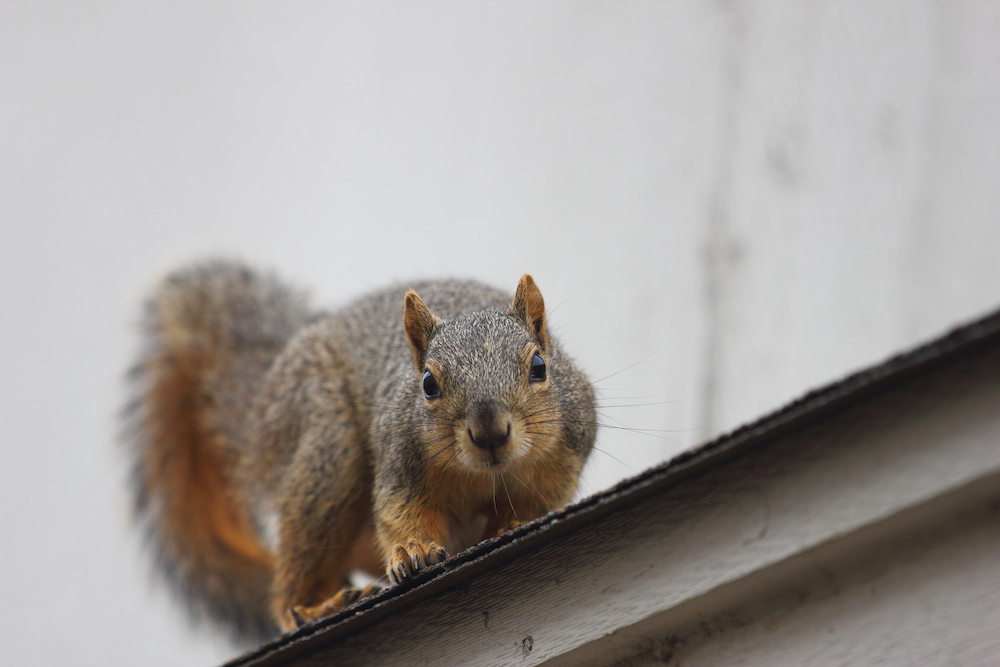
Hearing noises at night? You may have squirrels nesting in the attic, looking for shelter from the cold. To get rid of squirrels, first you have to determine how they’re getting in. This can be tricky if you don’t have easy access to your roof and since squirrels can sneak into small spaces. Contact a wildlife removal company to fully inspect your home for squirrel access points, set up traps, and correct any damage caused by squirrels. It’s also a good idea to keep trees trimmed and away from your roofline to cut off direct access.
Raccoons
Raccoons are common home invaders in the winter months, looking for refuge in crawl spaces, attics, and chimneys. Similar to squirrels, effective raccoon control requires professional expertise – to identify and seal entry points, trap and remove the raccoons, and prevent them from coming back with exclusion techniques. To prevent a raccoon invasion, eliminate food sources that attract them by using outdoor trash bins with lids and removing pet food when it’s not being eaten.
Mice
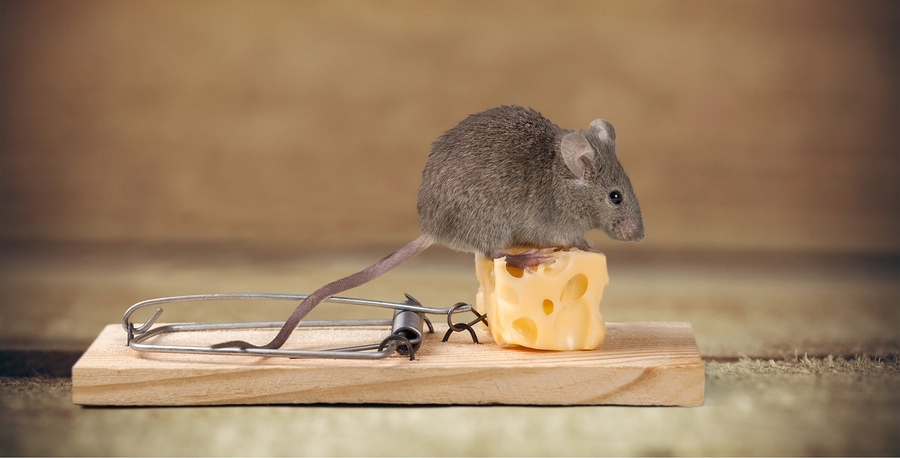
Mice are year-round pest nuisances that typically nest in attics, basements, cabinets, and closets. And because mice can fit through gaps as small as 1/4 inch, keeping them out can be difficult. As with other rodent control methods, the first step is to inspect your home for cracks, gaps, holes, or any other openings and correct them. Secondly, eliminate food sources and hiding places by keeping a clean house, removing clutter, and storing food in sealed containers. If you see small, dark-colored droppings anywhere, call an exterminator – quarterly pest control treatments are recommended to get rid of mice and prevent a future infestation.
Rats
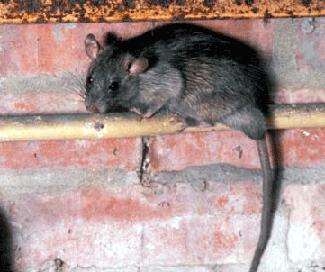
Similar to mice, rats are common winter invaders, searching for food and warmth inside your home, needing holes as small as a quarter to get in. To prevent this, and other rodent invasions, seal any gaps or holes in your home’s foundation, around your roof, in the crawl space or basement, or around doors and windows, keep garbage away from your home’s exterior in sealed bins, and check for evidence of rats – usually indicated by droppings (larger than those left by mice), gnawing, or footprints and tail tracks.
Roaches
Cockroaches, too, are looking for food and warmth during colder months. The best way to prevent roaches is with preventative pest control and by eliminating what attracts roaches – food left out, crumbs, pet food and water, clutter, and water leaks.
Spiders
Common house spiders will start making their ways indoors starting in the cooler, Fall months. Prevent spiders with ongoing pest control treatments, by eliminating clutter (spiders like to hide in dark, undisturbed places), and by knocking down cobwebs regularly.
It’s the most wonderful time of the year! Unfortunately, it’s also when winter pests are searching for food and shelter inside our homes. Tis the season for mouse invasions!
So how can you prevent mice from eating Santa’s cookies this Christmas? Mouse-proof your home with these easy mice prevention tips:
Keep a Clean House
Mice need very little food to survive so eliminating their food sources can be difficult. So while keeping a tidy house won’t solely prevent a mice infestation, it will definitely make your home less attractive shelter. Clean up spills immediately, don’t leave dog food out, keep food in sealed containers, and de-clutter. You want to get rid of as many hiding places as possible, which will help to prevent reproduction.
Seal Openings
The best way to keep mice out is by not letting them in. This can be tricky since mice can fit through openings as small as 1/4 inch. You’ll want to inspect your home for any openings and seal them with steel wool, caulking, metal or concrete, depending on where the crack is. You’ll also want to check doors, window, and screens, and repair as needed.
Set Traps
If you suspect mice activity in your home, setting traps can be an effective way to get rid of them, without them dying inside your home leaving behind unpleasant odors. Placement of the traps is key so it’s best to contact an exterminator to do this. After inspecting your home, a pest control professional can determine where mice are getting in, where they’re nesting, and where traps should be placed to get rid of them quickly.
Think you may have a mouse in your house? Here’s how to tell and how you can get rid of him (or them!).
How to Identify Mice
You may be wondering if you have mice or rats. While similar, mice are smaller than rats and less cautious. This makes them easier to identify and remove than rats. Their small size makes them more of a nuisance, though, since they can get through spaces as small as 1/4 inch. Mice are not picky eaters so it’s likely your home is providing them with a steady food source, which they usually search for at night. And because they breed often and can reproduce in less than 6 weeks, catching them early is key unless you want family of mice moving in. Another way to identify mice is by their droppings which are usually very small, black, and rod-shaped with pointed ends.
How to Get Rid of Mice
Because mice can fit through tiny spaces, eat almost anything, and are nocturnal creatures, they can be quite elusive and hard to get rid of. The quickest and most effective way to get rid of mice is with professional pest control. An experienced exterminator will know where to look for entry points around your home, identify nesting areas, current and potential food sources, provide the best plan of attack (which can include baits, traps, or a combination of both), and will give you recommendations for future mice prevention. If you’re noticing any of the following, call a pest control company today.
An unusual odor
Noises at night
Droppings
Gnawed areas
Tracks or tail marks in dusty areas
How to Prevent Mice from Returning
Excluding mice can be difficult with their ability to fit through small spaces and with a diet consisting of almost anything. Any gaps or holes around your home should be properly sealed. Common areas of entry are around vents, pipes, utility lines, doors, and windows. Next, you’ll want to eliminate food sources – take out trash daily, keep a clean home, clean up spills immediately, and store food & pet food in sealed containers.
If you’ve read this blog before then you know that prevention is key. Whether talking about ants, termites, mice, or other pests and rodents, prevention is always the first step. Taking the proper steps to prevent these creatures from entering your home is the key to eliminating pest and rodent problems.
According to the Center for Disease Control and Prevention, rodents, such as rats and mice, spread over 35 diseases. Their diseases are spread through contamination by urine, feces, saliva, or bites.
So what are the proper steps to getting rid of rodents in your home?
First, is a thorough inspection of your home by a licensed professional who is knowledgeable about wildlife removal. Northwest Exterminating’s wildlife team specializes in the exclusion, removal, and control of rodents and wildlife. The wildlife team will inspect your property for any current infestations and points of entry. After that, they will work with you to customize a plan to get rid of any current rodents and the necessary steps to prevent future rodent infestations.
Second, is trapping the rodent. After your rodent control specialist has inspected your property and identified the infestation they will place traps or bait in the areas where the rodents will most likely travel.
Third, after rodents have been trapped and controlled, the wildlife team will work with you to take the necessary steps to prevent future rats and mice from returning. Proper prevention can include but is not limited to sealing cracks, blocking off entry points, eliminating food sources, and cutting back tree limbs from the roofline.
Lastly, it is very important that after the rodents have been properly trapped and out of your home that the area is carefully cleaned to avoid the spread of disease. Droppings and urine should be cleaned immediately, any nests should be removed, damaged wires repaired, and contaminated insulation should be replaced.
For more questions on rodent or wildlife control please call 888-466-7849 or visit us at www.callnorthwest.com
In our last blog we discussed the potential health threats and property damage that animals can cause when they enter your home. We’re not talking about dogs and cats here, we’re talking about the animals that belong in the wild: bats, raccoons, squirrels , mice, opossums, and other wildlife. With the cold temperatures we are starting to experience, it’s a prime time for wild animals to seek warmth and shelter in homes.
Here are some helpful tips on how to keep wildlife out of your home:
Take out the trash regularly and ensure that the container is tightly sealed.
Cut back tree limbs from your house. Animals can use these to gain entry to your home.
Properly seal any vents or openings around the home that animals could use as entry points.
Remove standing water from your yard. This includes bird baths, pooled water areas, and pet water bowls.
Never leave pet food and water bowls outside. These can attract wildlife.
Remove debris from your lawn.
Install chimney caps so wildlife can’t enter your chimney.
If you hear wildlife in your home, it is best to call a professional animal removal company. Some animals can get aggressive when they feel they are being threatened. Northwest’s wildlife control specialist can help to remove the animal, seal off entry points, and help you to ensure that other wildlife do not return.