May 4, 2012 | Pest Control
 There is a good chance that you live in some sort of community that is represented or managed by a community management company or a homeowners association. Apartments, condos, townhomes, and many neighborhoods have a company or association in place that helps maintain the safety, upkeep, and the general property value of a community intact. For these companies and associations, their needs are different than an individual homeowner that is looking for pest or termite control.
The needs of community management companies and HOA’s are different than the individual homeowner. That is why we have a team that specializes in meeting their unique needs. Our Community Management Services team specializes in termite and pest control needs for community/property managers, homeowners associations, and property owners associations. We provide services for single-family detached homes, multi-unit homes, clubhouses, amenity buildings, and condominiums.
Northwest Exterminating is the right choice for community managers when it comes to termite, pest, mosquito, wildlife, fire ant, and carpenter bee control. Not only do we have an experienced team in place for community managers, we have a board-certified entomologist on staff, convenient billing, repair warranties, and multiple locations throughout Georgia and Tennessee.
Ask your HOA or community management company if they use Northwest Exterminating. The healthier your community is, the healthier your home is. If you need to contact someone in our Community Management Services team click HERE.
Do you have an HOA or CMA company?
May 4, 2012 | Pest Control
 There is a good chance that you live in some sort of community that is represented or managed by a community management company or a homeowners association. Apartments, condos, townhomes, and many neighborhoods have a company or association in place that helps maintain the safety, upkeep, and the general property value of a community intact. For these companies and associations, their needs are different than an individual homeowner that is looking for pest or termite control.
The needs of community management companies and HOA’s are different than the individual homeowner. That is why we have a team that specializes in meeting their unique needs. Our Community Management Services team specializes in termite and pest control needs for community/property managers, homeowners associations, and property owners associations. We provide services for single-family detached homes, multi-unit homes, clubhouses, amenity buildings, and condominiums.
Northwest Exterminating is the right choice for community managers when it comes to termite, pest, mosquito, wildlife, fire ant, and carpenter bee control. Not only do we have an experienced team in place for community managers, we have a board-certified entomologist on staff, convenient billing, repair warranties, and multiple locations throughout Georgia and Tennessee.
Ask your HOA or community management company if they use Northwest Exterminating. The healthier your community is, the healthier your home is. If you need to contact someone in our Community Management Services team click HERE.
Do you have an HOA or CMA company?
Apr 30, 2012 | Dr. Goo's Corner
Disclaimer: These tips are general medical information and do not constitute medical advice. Please contact your physician for information about yourself or your family member.
How do I know if I, or my child, has an allergy to mosquitoes?
Usually people who ask this question already suspect they have an allergy to mosquito bites. When they get bitten they get large swollen bumps that are red, itchy and painful. These bumps tend to last longer than mosquito bites for other people and they cause more discomfort. The reaction may not be classified as a true “allergy” but the problem is a larger release of histamine and other immunoglobulins that cause inflammation.
These people have a more severe reaction to the proteins that mosquitoes inject into the bite to keep the blood from clotting. The reaction is usually a large red whelp that itches, swells and is very uncomfortable. Although these bites are very irritating, it is rare to have a serious allergic reaction to a mosquito bite. Life threatening reactions would include difficulty breathing, low blood pressure, fainting or swelling all over.
If you or your child has a more severe reaction to mosquito bites than others, you may have what is known as the “Skeeter Syndrome.” People that have the “Skeeter Syndrome” have more severe reactions and will have larger, itchier and more painful bumps associated with the bites. The bites can also cause blisters and be associated with infections if the bites are scratched until they are open and bleeding. True mosquito allergies can be diagnosed with allergy testing.
What to do if you are allergic?
The first thing to do is to avoid the mosquito bites in the first place. Have Northwest Exterminating, or your local exterminator, provide your home with a mosquito treatment. Also, cover your body when you go out and use an insect repellent, such as DEET.
If you do get bitten, you can use an anti-histamine like Diphenhydramine (Benadryl) for the itching. You can take the anti-histamine by mouth or use preparations that can be placed topically on the bite. Anti-inflammatory creams like hydrocortisone may also be used. If the bite is scratched open, you will want to wash it daily and apply an antibiotic ointment to keep them from being infected.
If you have severe allergic symptoms like respiratory distress, swelling of the body, face, mouth or throat you will need to go directly to the emergency department.
Thanks,
Dr. Goo
Do you have a question for Dr. Goo? Click HERE to submit your question.
Apr 30, 2012 | Dr. Goo's Corner
Disclaimer: These tips are general medical information and do not constitute medical advice. Please contact your physician for information about yourself or your family member.
How do I know if I, or my child, has an allergy to mosquitoes?
Usually people who ask this question already suspect they have an allergy to mosquito bites. When they get bitten they get large swollen bumps that are red, itchy and painful. These bumps tend to last longer than mosquito bites for other people and they cause more discomfort. The reaction may not be classified as a true “allergy” but the problem is a larger release of histamine and other immunoglobulins that cause inflammation.
These people have a more severe reaction to the proteins that mosquitoes inject into the bite to keep the blood from clotting. The reaction is usually a large red whelp that itches, swells and is very uncomfortable. Although these bites are very irritating, it is rare to have a serious allergic reaction to a mosquito bite. Life threatening reactions would include difficulty breathing, low blood pressure, fainting or swelling all over.
If you or your child has a more severe reaction to mosquito bites than others, you may have what is known as the “Skeeter Syndrome.” People that have the “Skeeter Syndrome” have more severe reactions and will have larger, itchier and more painful bumps associated with the bites. The bites can also cause blisters and be associated with infections if the bites are scratched until they are open and bleeding. True mosquito allergies can be diagnosed with allergy testing.
What to do if you are allergic?
The first thing to do is to avoid the mosquito bites in the first place. Have Northwest Exterminating, or your local exterminator, provide your home with a mosquito treatment. Also, cover your body when you go out and use an insect repellent, such as DEET.
If you do get bitten, you can use an anti-histamine like Diphenhydramine (Benadryl) for the itching. You can take the anti-histamine by mouth or use preparations that can be placed topically on the bite. Anti-inflammatory creams like hydrocortisone may also be used. If the bite is scratched open, you will want to wash it daily and apply an antibiotic ointment to keep them from being infected.
If you have severe allergic symptoms like respiratory distress, swelling of the body, face, mouth or throat you will need to go directly to the emergency department.
Thanks,
Dr. Goo
Do you have a question for Dr. Goo? Click HERE to submit your question.
Apr 27, 2012 | Mosquito
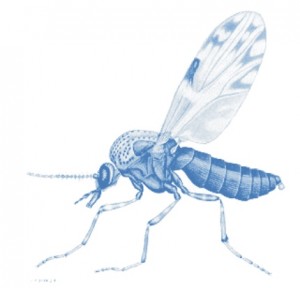
We’re all aware of the annoyance and health concerns that come along with mosquitoes. But there is a similar bug that can be just as annoying to those residents living in areas where sand is found, the sand gnat. The sand gnat (also known as sand fly or no see um) flies, bites, and sucks blood just like the mosquito. Sand gnats leave behind red, itchy bumps on the skin after they have fed off of your blood. It is not unusual for the effects of a sand gnat bite to be more intense and last for a longer period of time than a mosquito bite. Like mosquito bites, these bumps can become infected or cause a rash.
Sand Gnat
Sand gnats are a major concern to our customers living in Savannah and the surrounding areas. By being proactive, you can ensure that mosquitoes and sand gnats don’t invade your yard. Our Savannah service center offers a Green Mosquito & Sand Gnat Program to reduce the annoyance of these pests while still using the lowest environmental impact possible. To ensure that our mosquito control program is effective and environmentally friendly, we use products that are derived from flowers and bacteria.
For pest, mosquitoes, and sand gnat control in Savannah, call Northwest Exterminating. Visit us online for more information at www.callnorthwest.com.
Did you know: Sand gnats are so notorious in Savannah that the city has a minor league baseball team named after them, the Savannah Sand Gnats.