Jan 20, 2017 | Pest Control, Wildlife
Squirrels
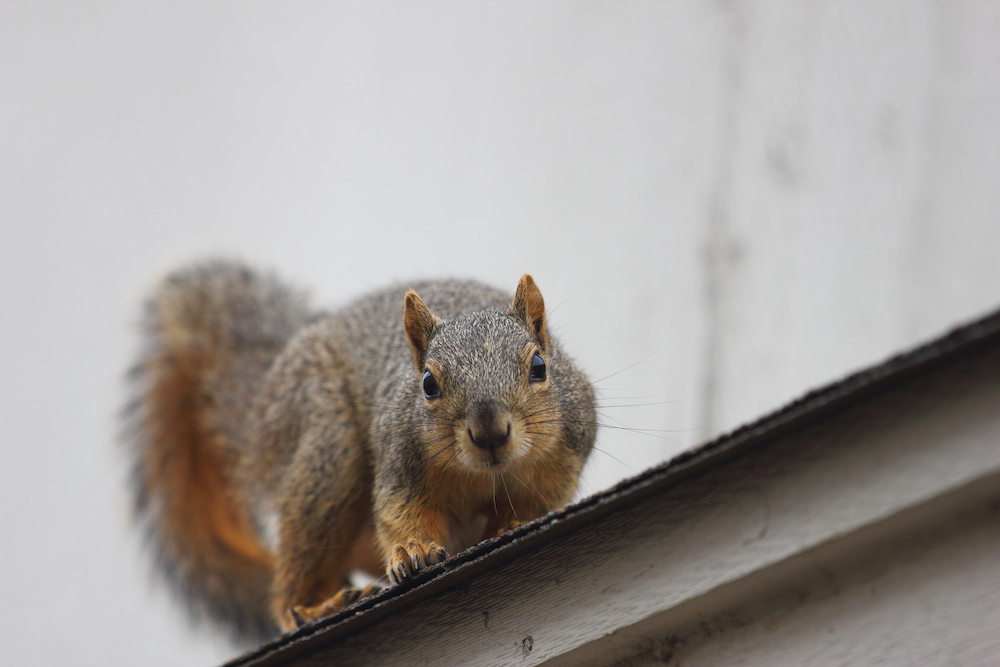
Hearing noises at night? You may have squirrels nesting in the attic, looking for shelter from the cold. To get rid of squirrels, first you have to determine how they’re getting in. This can be tricky if you don’t have easy access to your roof and since squirrels can sneak into small spaces. Contact a wildlife removal company to fully inspect your home for squirrel access points, set up traps, and correct any damage caused by squirrels. It’s also a good idea to keep trees trimmed and away from your roofline to cut off direct access.
Raccoons
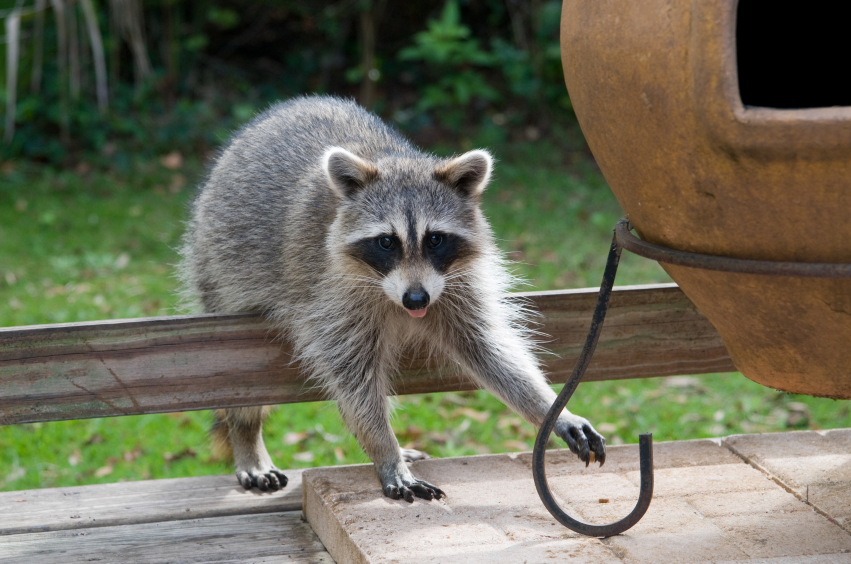
Raccoons are common home invaders in the winter months, looking for refuge in crawl spaces, attics, and chimneys. Similar to squirrels, effective raccoon control requires professional expertise – to identify and seal entry points, trap and remove the raccoons, and prevent them from coming back with exclusion techniques. To prevent a raccoon invasion, eliminate food sources that attract them by using outdoor trash bins with lids and removing pet food when it’s not being eaten.
Mice
Mice are year-round pest nuisances that typically nest in attics, basements, cabinets, and closets. And because mice can fit through gaps as small as 1/4 inch, keeping them out can be difficult. As with other rodent control methods, the first step is to inspect your home for cracks, gaps, holes, or any other openings and correct them. Secondly, eliminate food sources and hiding places by keeping a clean house, removing clutter, and storing food in sealed containers. If you see small, dark-colored droppings anywhere, call an exterminator – quarterly pest control treatments are recommended to get rid of mice and prevent a future infestation.
Rats
Similar to mice, rats are common winter invaders, searching for food and warmth inside your home, needing holes as small as a quarter to get in. To prevent this, and other rodent invasions, seal any gaps or holes in your home’s foundation, around your roof, in the crawl space or basement, or around doors and windows, keep garbage away from your home’s exterior in sealed bins, and check for evidence of rats – usually indicated by droppings (larger than those left by mice), gnawing, or footprints and tail tracks.
Roaches
Cockroaches, too, are looking for food and warmth during colder months. The best way to prevent roaches is with preventative pest control and by eliminating what attracts roaches – food left out, crumbs, pet food and water, clutter, and water leaks.
Spiders
Common house spiders will start making their ways indoors starting in the cooler, Fall months. Prevent spiders with ongoing pest control treatments, by eliminating clutter (spiders like to hide in dark, undisturbed places), and by knocking down cobwebs regularly.
Jan 20, 2017 | Pest Control, Wildlife
Squirrels
Hearing noises at night? You may have squirrels nesting in the attic, looking for shelter from the cold. To get rid of squirrels, first you have to determine how they’re getting in. This can be tricky if you don’t have easy access to your roof and since squirrels can sneak into small spaces. Contact a wildlife removal company to fully inspect your home for squirrel access points, set up traps, and correct any damage caused by squirrels. It’s also a good idea to keep trees trimmed and away from your roofline to cut off direct access.
Raccoons
Raccoons are common home invaders in the winter months, looking for refuge in crawl spaces, attics, and chimneys. Similar to squirrels, effective raccoon control requires professional expertise – to identify and seal entry points, trap and remove the raccoons, and prevent them from coming back with exclusion techniques. To prevent a raccoon invasion, eliminate food sources that attract them by using outdoor trash bins with lids and removing pet food when it’s not being eaten.
Mice
Mice are year-round pest nuisances that typically nest in attics, basements, cabinets, and closets. And because mice can fit through gaps as small as 1/4 inch, keeping them out can be difficult. As with other rodent control methods, the first step is to inspect your home for cracks, gaps, holes, or any other openings and correct them. Secondly, eliminate food sources and hiding places by keeping a clean house, removing clutter, and storing food in sealed containers. If you see small, dark-colored droppings anywhere, call an exterminator – quarterly pest control treatments are recommended to get rid of mice and prevent a future infestation.
Rats
Similar to mice, rats are common winter invaders, searching for food and warmth inside your home, needing holes as small as a quarter to get in. To prevent this, and other rodent invasions, seal any gaps or holes in your home’s foundation, around your roof, in the crawl space or basement, or around doors and windows, keep garbage away from your home’s exterior in sealed bins, and check for evidence of rats – usually indicated by droppings (larger than those left by mice), gnawing, or footprints and tail tracks.
Roaches
Cockroaches, too, are looking for food and warmth during colder months. The best way to prevent roaches is with preventative pest control and by eliminating what attracts roaches – food left out, crumbs, pet food and water, clutter, and water leaks.
Spiders
Common house spiders will start making their ways indoors starting in the cooler, Fall months. Prevent spiders with ongoing pest control treatments, by eliminating clutter (spiders like to hide in dark, undisturbed places), and by knocking down cobwebs regularly.
Feb 24, 2016 | Pest Control, Wildlife
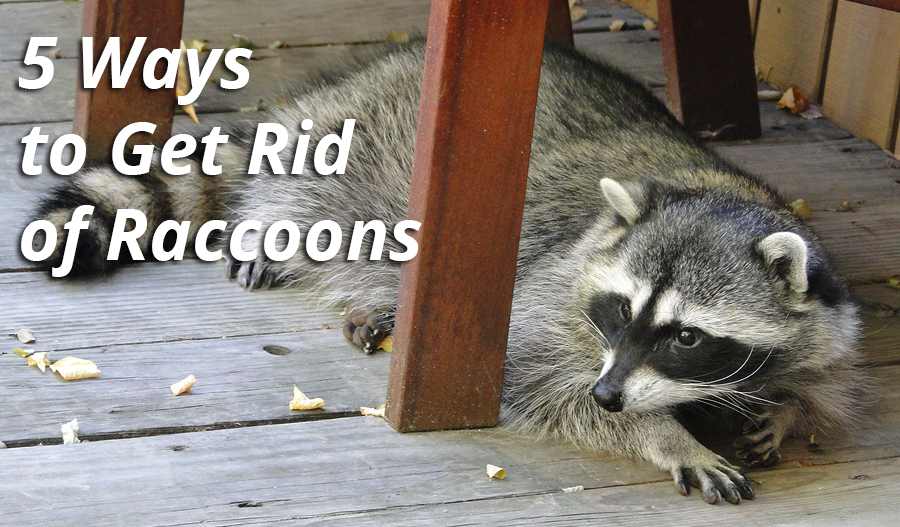
Raccoons, a common animal nuisance throughout the U.S., are nocturnal therefore rarely seen during the day. At night, they’ll leave their dens (often your chimney or attic), in search of food and water. Because they’re omnivorous and will eat mostly anything – other animals, fruit, plants, nuts, fish, insects, mice, etc. – there’s likely a food source in or around your home. So what’s the risk? Raccoons are known to carry rabies, cause significant structural damage to homes, destroy gardens, and leave behind a messy trail of trash after raiding garbage cans left outside.
Prevent disease and destruction by following the 5 tips below.
1. Store Garbage Cans Inside
If left outdoors around your home, trash cans will surely attract raccoons looking for food. Instead, keep garbage stored in your garage, basement, or storage building and take out regularly. If you don’t have storage space indoors, use garbage bins with animal-proof lids.
2. Seal Raccoon Entry Points
Inspect your home regularly for access points – holes, gaps, broken vents, loose siding, broken shingles, etc. – and seal or repair these to prevent raccoons from getting inside.
3. Cover Chimney Openings
Chimneys are common entry points into your home for raccoons. Install a mesh cover or cap over chimney openings to keep them out, or call a wildlife control company to do this for you. They will also inspect your home for other issues and provide you with raccoon exclusion solutions to prevent an invasion.
4. Remove Bird Feeders and Pet Food
Having bird feeders and pet food containers around your home will likely attract raccoons as it provides them with a steady food source. Consider removing bird feeders and only leave pet food out when your pets are eating.
5. Lock Pet Doors at Night
Have a doggie door? This is an obvious and easy opening for raccoons to get in. Once your pet is indoors for the night, lock the pet door. You could also consider installing a door that only opens for your pet via an electronic signal, usually in the form of a collar your pet can wear.
These methods are great for raccoon prevention. If you think you have raccoons living in your attic, chimney, or crawl space, you don’t want to block them inside. Call a professional wildlife trapper that can safely remove the raccoons, clean up contamination, and offer exclusion methods that will keep them from coming back.
Jan 24, 2014 | Uncategorized
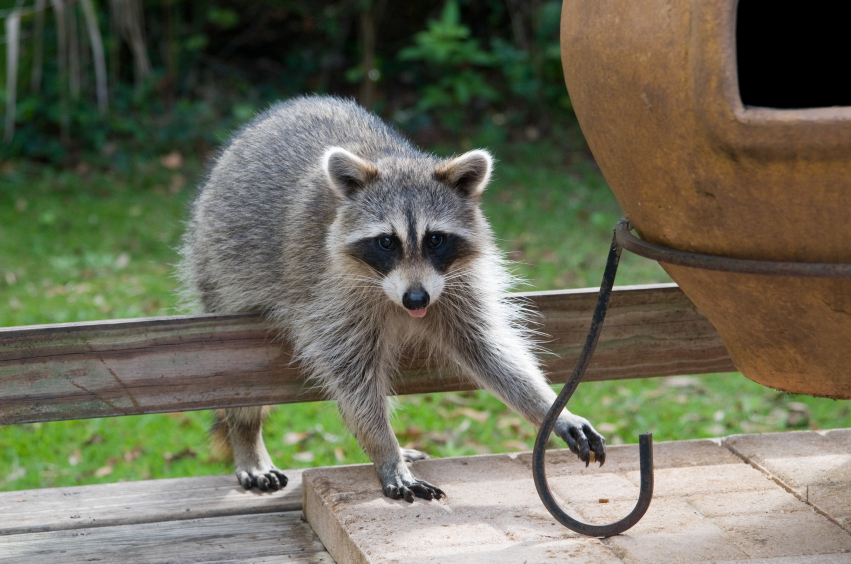
If you are hearing scratching in your attic at night there is a good chance that you could have a raccoon. If you search your attic in the daytime you will probably not find the raccoon. Raccoons are nocturnal creatures found throughout the US but are more common in wooded areas.
Raccoons do not hibernate but they do become inactive in the winter months by seeking shelter…hence why they are in your attic. Raccoons can cause damage to structures as they enter your attic or chimney. They can cause a huge mess by raiding garbage cans in search of food and will even destroy gardens by running through and/or eating crops. In addition to the property damage that they cause, they also carry rabies.
Raccoon Prevention:
To prevent raccoons from entering your home make sure that all possible entrances around the attic and roofline are sealed. Repair broken vent covers, loose siding or shingles, and install mesh covers or caps over chimneys to prevent raccoons from entering. Make sure that all outside trash is in an animal proof, tightly sealed garbage can.
If you believe that you may have raccoons in your attic, call Northwest Exterminating for raccoon removal.
Dec 13, 2013 | Uncategorized
Noises in Your Attic? Could be a raccoon.
BRIEF DESCRIPTION
Raccoons are one of the most charismatic species of animals found in North America. They are said to be very intelligent; they can remember the solution to tasks up to three years later.
- 16 to 28 inches in length
- Weighs 8 to 20 lbs
- Grayish in color with white and black facial markings
HABITS
- Superb ability to adapt to changing environmental conditions.
- Common residents in cities, towns, and suburbs.
- Will live in hollowed out trees, caves, or even an attic or garage if they find one available.
- Consume both animal and plant matter.
- Diet varies with locality, season, and availability.
THREATS
- Commonly raid gardens, garbage cans, bird feeders, fish-ponds, and even kitchen cabinets.
- Have been known to use door knobs which makes cabinet doors fair game.
- A pet door is an open invitation into a home.
PREVENTION
- Provide an exclusion barrier where needed.
- Live cages around garbage cans.
For more information on raccoons and other wildlife removal, call Northwest Exterminating.