May 6, 2013 | Uncategorized
 Director of Pest Services at Northwest Exterminating, Adam Vannest, was recently featured in Pest Management Professional magazine. Adam answered some Q and A’s regarding fleas and ticks and also gave some Do’s and Don’ts for when dealing with these pesky pests.
Read below to get the full story:
Adam Vannest, director of pest services for the Atlanta area’s Northwest Exterminating, has faced plenty of hard-to-solve flea and tick problems. He recently shared tales of some memorable infestations — and his team’s solutions — with Pest Management Professional.
Q: What’s the largest flea and tick infestation you’ve faced, and how did you conquer the pests?
Vannest: One of the largest was in a rural subdivision that backed up into a large wooded area. The customer reported dealing with an intense flea problem and said she’d also noticed multiple ticks on the family dog. Seeing ticks on her children was this customer’s threshold point.
While inspecting the outside we noticed a lot of the areas around the home were overgrown. There were tall weeds and grass up against the house and woodpiles around the exterior. We started looking at the ticks’ harborage sites to figure out why they would be attracted to the location. It was a three-story house on a crawlspace, and once inside we noticed the crawlspace door was already open. There were also other entry points because it wasn’t sealed up very well. We definitely found fleas in the crawlspace. The main floor and upstairs also had fleas.
We explained to the customer that we wanted to eliminate harborage areas around the outside by cutting down weeds and trimming the grass around the foundation. We also educated the homeowner about the crawlspace and how many entry points were visible to stray animals and rodents. We had an exclusion team come out and seal up those areas so that we could treat it with a residual product and an insect growth regulator (IGR).
Next, we explained to the customer that to get our product were it needs to be we’d have to remove everything from the floor for cleaning and vacuuming. We also instructed them to take the dog to the vet for treatment. After that, we applied a broadcast treatment to the floor surfaces and throughout the house.
We had to treat the lawn for ticks as well.
Q:What’s your hardest-to-find flea and tick story. How did you solve the problem?
Vannest: It took place at a ranch house on a crawlspace. When we inspected we noticed that the family pets were pest free. This told us we were dealing with a population in the home that had been carried inside by other means.
Sometimes people forget all of the other things that can be responsible for bringing fleas into a home. Some of the hardest flea problems to solve are ones where a rodent population carries them inside.
We inspected the rest of the house and found pockets of flea activity but no defined area. However, when we got to the attic level we found a roof rat population bringing in fleas from outside, so we applied residual products and treatments there to eliminate the rodent problem. When we placed monitors to determine where flea hot spots existed we found a few more harborage sites that had been egg-laying areas. We targeted those areas and eliminated the problem.
Adam Vannest’s Dos & Don’ts
Do
■ Train technicians to always think outside the box. Every flea situation and every tick situation can be different.
■ Know your products and which ones are best for a particular infestation. Read labels and test the products.
■ Use monitoring to help find hot spots.
Don’t
■ Don’t assume the customer is doing the prep work.
■ Don’t assume every situation is going to be the same.
■ Don’t stop educating your technicians. Give them ongoing training.
You can visit Pest Management Professional magazine by going to www.mypmp.net
Note: We will link directly to the article as soon as it is available online!
May 3, 2013 | Uncategorized
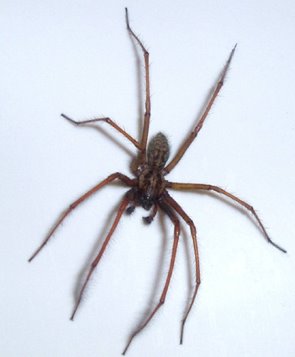
 Spiders often get a bad reputation. They are creepy, crawly creatures and we fear their bite. They are often blamed for skin irritations but the fact is that 80% of presumed spider bites are actually due to some other insect bite or skin infection. Most spider bites are harmless and done by accident. However, there are spiders that can cause real harm (black widow, brown recluse). Not only can the bite be painful but the spider’s venom can cause pain as well. Non-venomous spider bite pain will typically last 5 minutes to an hour but a venomous spider bite can be painful for longer than 24 hours.
So when should you be concerned about a spider bite?
Seek medical attention if:
- pain at the site of the spider bite lasts for longer than 24 hours
- spreading redness around the site
- puss draining from the bite site
- increase in pain
- numbness
- tingling
- discoloration around the site
In rare situations, spider bites can cause allergic reaction. In this case, you should seek immediate medical attention.
If you are concerned about spiders in or around your home, call a professional exterminator to identify the problem and develop a customized plan to rid your home of spiders.
SOURCE
May 1, 2013 | Uncategorized
In last week’s blog, “Why Should I Aerate My Lawn?“, we discussed why it was important to aerate your lawn. Warm season grasses like bermuda and zoysia should be aerated in the spring/summer months. After the cold months of fall and winter, lawns tend to become damaged from the cool temperatures, debris, and general wear and tear that comes with the little time we spend on our lawns during those months.
Aerating your lawn gives the soil a chance to breathe by removing debris and thatch and allowing it to better absorb oxygen, fertilizer, water, and other nutrients that it needs to thrive into a healthy, green lawn!
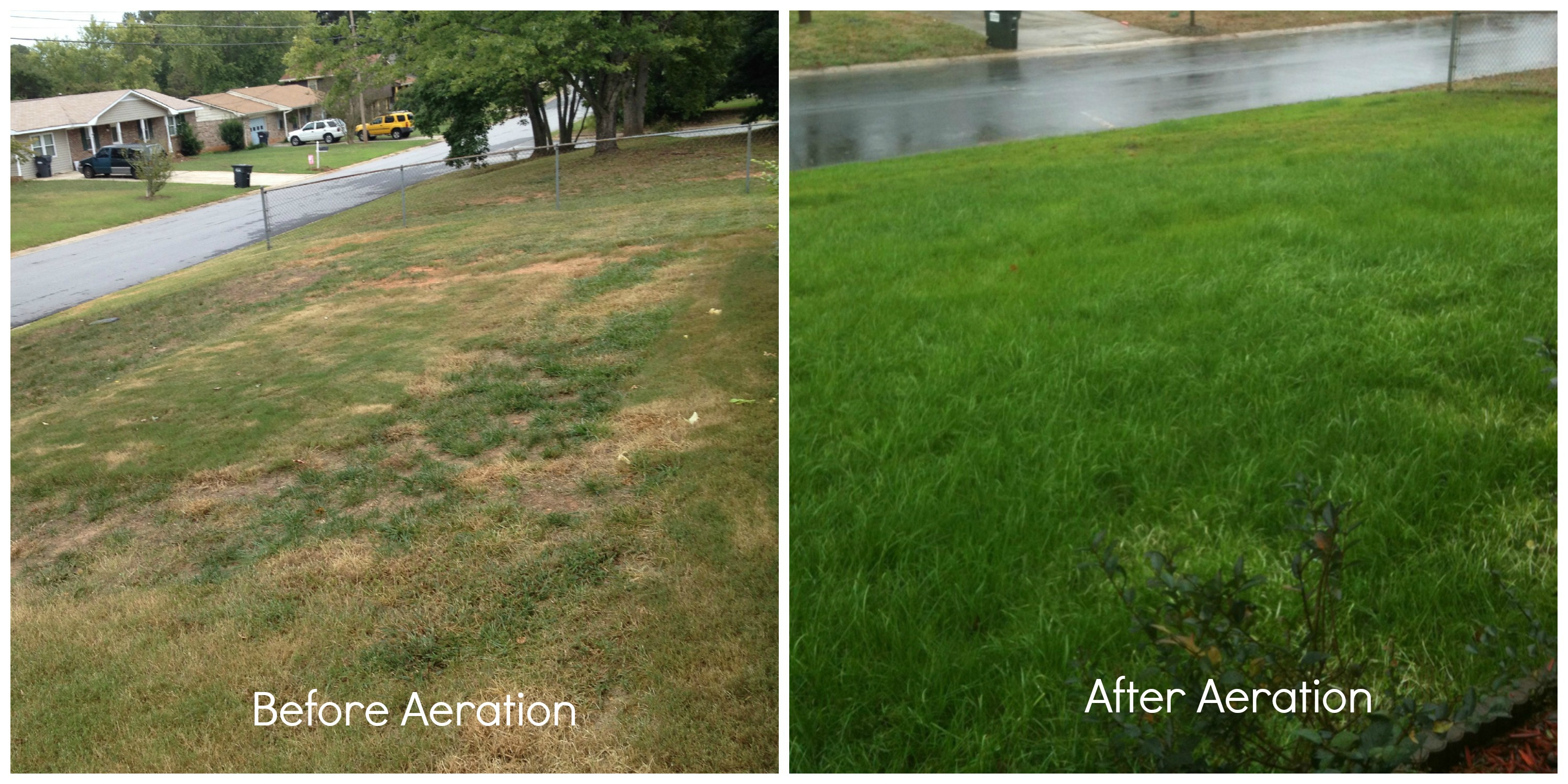
Below are pictures taken by our lawn care professionals of a lawn before and after being aerated by Northwest professionals.
Call or go online to schedule a FREE lawn analysis on your lawn. You’ll be enjoying a green, healthy lawn in no time!
Apr 29, 2013 | Pest Control
Now that it’s pollen season, many people are suffering sneezing, coughing and discomfort due to an allergy to different pollen types. Though many people know that this triggers allergies within them, they may not know that various household pests can also contribute to allergies. Additionally, those who have asthma may suffer to pests such as cockroaches or mice being in home because these pests can spread strong asthma triggers.
PestWorld.org provides facts about pests and asthma, as well as a ‘First Responder PSA’ that highlights the risk that household pests can put us at when we are indoors. For instance, 63% of American homes contain allergens from cockroaches, but if the home is located in an urban area, it can even reach 98%! Additionally, mice can spread asthma triggers found in 82% of homes. According to the Asthma and Allergy Foundation of America, patients with cockroach allergies develop acute asthma attacks after inhaling cockroach allergens. Allergens can come from not only the actual body of the pest, but also its saliva and feces.
If you are experiencing minor symptoms such as, the AAFA recommends the use of antihistamines, decongestants and anti-inflammatory medications. An effective means to reduce the chance of exposure to pest allergens is using regular treatment through a pest control company. Northwest Exterminating offers services that eliminates and reduces the occurrence of a wide array of household pests including mice and cockroaches.
Sources:
http://www.pestworld.org/multimedia-center/first-responder-psa/
http://www.aafa.org/display.cfm?id=9&sub=22&cont=312
Apr 26, 2013 | Uncategorized
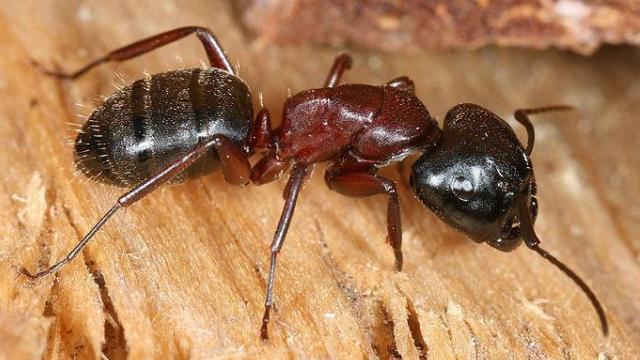
Ants have been making their presence known in homes as of late. Ants are one of the most common pests that homeowner’s and pest professionals find in and around homes. Common ant species are fire ants, carpenter ants, Argentine ants, acrobat ants, and odorous house ants.
Ants have a wide range of habits. Some ants build mounds in the ground, others are found in homes near cracks and crevices, on counters, in kitchen sinks, pantries, and even bathrooms. Knowing the different species of ants and their habits and preferences is key in controlling an ant problem.
Most ants are simply a nuisance pest. They cause little damage but will invade and ruin food and some ants bite. Generally speaking, there are no diseases associated with ants.
A licensed pest professional can identify the type of ant that you are experiencing and develop a customized plan to get rid of ants. With this process, you are using the least amount of chemical possible (if any) while also coming up with a plan that will deter ants from returning. If you are one of the many homeowner’s experiencing ants right now, call Northwest Exterminating at 888.466.7849 or visit www.callnorthwest.com