Apr 24, 2013 | Uncategorized
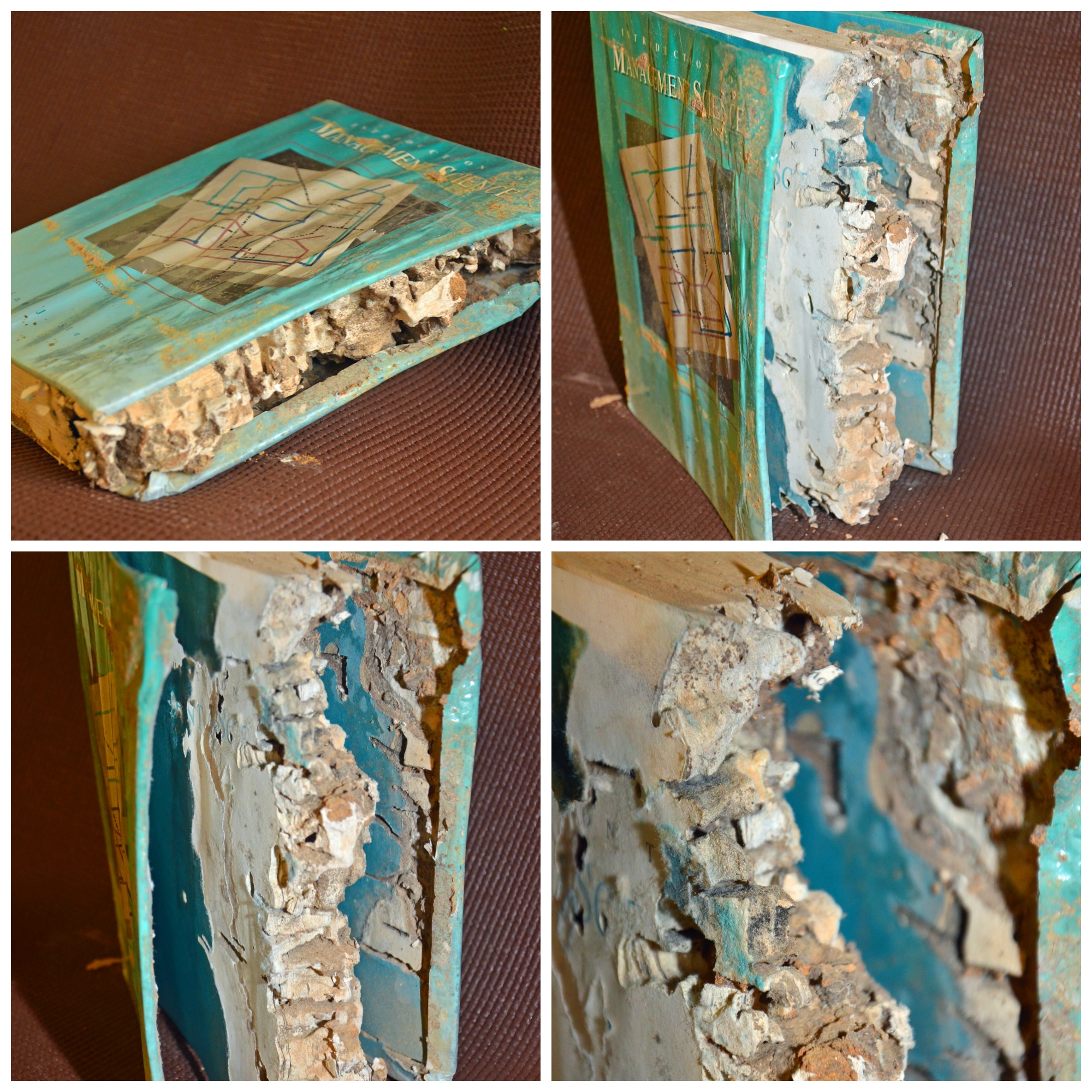
We recently acquired this book that had been destroyed by termites. These things really had a hunger for knowledge! hehe! Ok, ok, we’ll stop. This is a great example of how termites can cause significant damage. Make sure that you have termite protection for your home. You wouldn’t want any piece of your home looking like this textbook. Call Northwest Exterminating 888.466.7849.
Apr 22, 2013 | Uncategorized

Carpenter Bee Damage Source: NPMA
There’s been a lot of buzz (pun intended) on our blog about carpenter bees and termites. It’s termite season so we always want to keep our readers aware of the potential risks and damage that termites can cause. And carpenter bees are our Pest of the Month for the month of April. Both of these wood-boring pests should be taken seriously due to the great amount of damage that they can cause.
Carpenter bees eat through soft woods where they make their nests and lay their eggs inside the tunnels. This can cause damage to decks, eaves, porches, or even support beams in your home. Luckily, they are rarely a threat to humans. Males don’t have stingers but do tend to be aggressive toward other bees, animals, or humans that are near their nests. The female carpenter bee has a stinger but rarely uses it.
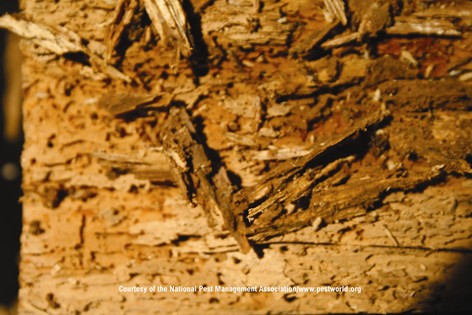
Termite Damage Source: NPMA
Termites (March’s Pest of the Month) are working 24/7 to find food…and unfortunately for us, their food is typically the wood that was used to build our homes. Without termite protection, your home could be at risk for severe damage. Termites are responsible for more than $2 of damage to homes in the US each year. Like carpenter bees, termites often leave a trail of wood that can serve as a tell-tale sign that they are there.
Whether you have carpenter bees or termites, you should contact a licensed pest professional. Not only will they be able to correctly identify the insect but they will be able to develop a customized plan that is specific to your home and your situation. By doing this, you are ensuring that the problem is diagnosed correctly, that the correct product, if any, is being used correctly and safely, and that proper steps are taken to ensure that the issue does not reoccur. Northwest Exterminating and our highly trained pest professionals will be glad to come to your home and do a free inspection of your home. Just give us a call at 888.466.7849 or visit us at www.callnorthwest.com
Apr 19, 2013 | Uncategorized
After a season filled with clouds and rain, I believe most of us are excited for the warmer temperatures that the spring is bringing us. However, not everyone is enjoying the fresh air of spring, especially not those suffering from allergies. Sneezing, itching, and watery eyes shouldn’t be synonymous with spring.
Reports have been made that this could be one of the toughest allergy seasons that we’ve seen in years. A recent pollen count in Atlanta just last week (4/11) was 8,024 (anything over 1,500 is considered extremely high). Pollen is everywhere so it can be difficult to avoid. Below are some steps you can take to reduce your exposure to pollen:
- Stay indoors as much as possible between 10 am and 4 pm.
- Use a HEPA filter on your furnace and air conditioner.
- Wipe pets down before they come indoors from being outside. Pollen can collect on their fur.
- Remove shoes before coming inside so you’re not trekking pollen off the bottom of your shoes.
- Do NOT line dry your clothes outside. Dry all clothes in the dryer.
- Wash bedding on a regular basis to remove pollen left on sheets.
- Shower before going to bed to remove the day’s pollen from your hair and skin.
- Vacuum, sweep, mop, and dust. Keeping floors and surfaces clear of allergens can help reduce the amount of pollen floating around your home. It is highly recommended that you wear a mask and gloves while cleaning.
- Treat allergy symptoms with over the counter allergy relief.
- Consult your Doctor. Your Doctor will be able to help you determine what exactly it is that you’re allergic to.
Sources:
http://www.webmd.com/allergies/spring-allergy-tips
http://www.atlantaallergy.com/
Northwest Exterminating
Apr 17, 2013 | Uncategorized
According to a new study out by Orkin, Atlanta ranks #3 among the U.S.’s most pest infested cities and ranks #1 for mosquitoes. There is little explanation as to why bugs are found in certain cities more than others. Two common factors are climate and building infrastructure of the area.
Knowing that Atlanta ranks so high on both of these lists it is important that you keep your property protected from pests and mosquitoes. A regularly scheduled pest control program and mosquito control program will not only get rid of bugs but it will assist in keeping the bugs away. Our NorPest Green pest control program and our Green Mosquito Control program are customized plans that are developed specifically for the needs of you and your property by one of our highly trained technicians. For more information on NorPest Green visit HERE, for more information on Green Mosquito Control visit HERE.
Source
Apr 15, 2013 | Uncategorized
Before that “giant” bug showed up as an unexpected guest at your first barbeque of the spring, it started off life as a tiny egg. The process of growth and development that most insects experience is known as metamorphosis. During this process, insects will change shape, form and size until they reach the adult stage. There are several different types of metamorphosis including gradual metamorphosis, incomplete metamorphosis, and complete metamorphosis.
Some insects, however, grow and develop without metamorphosis. These insects, such as silverfish, grow and develop through a series of molts. When an insect’s exoskeleton no longer stretches to accommodate its size, it must shed this exoskeleton and grown a new one, while going through an intermediate phase known as instar. Until the insect reaches adulthood, or sexual maturity, it goes through several nymph stages that have the same appearance as the adult. At adulthood, molting ceases.
The insects that experience gradual metamorphosis include cockroaches, termites, bedbugs, and earwigs. They have three distinct stages in development – egg, multiple nymph stages, and adulthood. The nymphs begin to gradually resemble the adult as they grow, but do not have wings.
During incomplete metamorphosis, which occurs for dragonflies, damselflies, and mayflies, insects experience a transition from egg to naiad to adulthood. Naiads possess a different body structure and way of life from the adults. These nymphs live in water whereas the adults live on dry land and have wings.
The last form of complete metamorphosis occurs in beetles, moths, butterflies, flies, fleas, ants, bees and wasps. They go through four stages: egg, larva, pupa, and adult. Each stage has a different appearance. The larva hatches from the egg and then goes into a resting stage known as the pupa. During this stage, the insect changes from larvae to adult and fully develops its wings, legs, and antennae before emerging.
Sources:
Georgia Pest Control Employee Registration Manual