
How to Get Rid of Rats in Your House: 12 Tips
Quick answer: To get rid of rats in your house, confirm the signs, seal the openings they use to enter, remove food and water, and place traps along the paths they travel. Bait alone does not close those gaps, so new rats may keep coming in until the house is sealed. The 12 tips below walk through that process, including how to tell rats from mice and when to call a professional.
Scratching in a wall after the house goes quiet, or droppings behind a kitchen appliance, is often the first sign that rats have moved in. In Georgia homes, rats and mice look for food, water, and shelter. Once they are inside, they can contaminate food, chew wiring, and spread disease. Getting rid of rats in your house is less about a single product and more about cutting off how they get in, what they eat, and where they hide.
How to tell if you have rats in the house
Rats and mice are mostly active at night, so you will usually find evidence before you see the animal itself. Catching these signs early makes it faster to get rid of rats in your house.
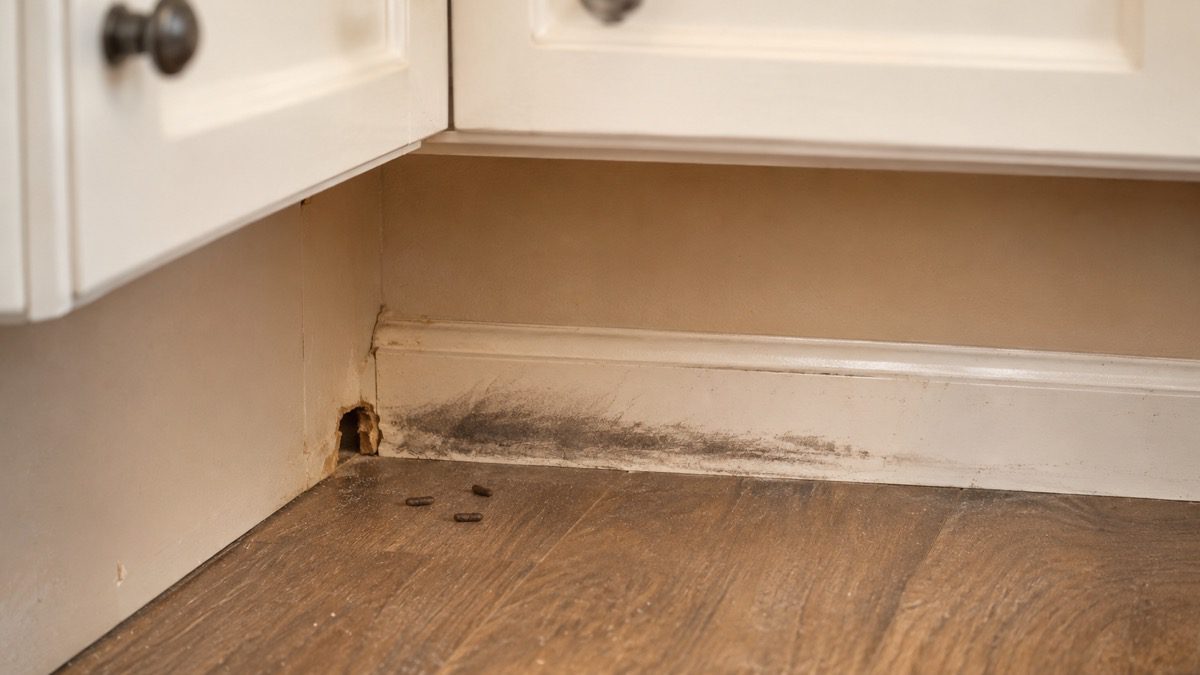
Watch for:
- Droppings along baseboards, inside cabinets, under sinks, or near pet food
- Gnaw marks on food packaging, wood trim, wiring, or plastic storage bins
- Scratching or scurrying sounds in walls, ceilings, or attics, especially at night
- Nesting material such as shredded paper, fabric, or insulation tucked into hidden corners
- Greasy rub marks along walls and edges where rats travel the same path repeatedly
- A musty, ammonia-like odor in closed spaces like pantries or attics
- Pets acting curious about a particular wall, appliance, or cabinet
If you notice even one of these, it is worth a closer look. Where there is one rat or mouse, there may be more nearby.
Mice or rats? How to tell the difference
Knowing which rodent you are dealing with shapes the plan, since mice and rats behave differently and use different parts of a home.
A few quick clues:
Droppings. Mouse droppings are small, about 1/8 to 1/4 inch, and pointed at the ends. Rat droppings are larger, about 1/2 inch or longer, and more capsule-shaped.
Behavior. Mice are curious and will investigate new objects. Rats are wary and often avoid anything unfamiliar for days.
Location. Mice often stay close to food in kitchens and pantries. Rats may travel farther and favor attics, crawlspaces, and wall voids.
For a fuller side-by-side comparison, see our guide to mouse vs. rat differences. If you suspect rats, it also helps to learn where rats hide during the day.
Types of rats and mice common in Georgia
Three rodents show up most often in Georgia homes:
Norway rats. These are large rats that burrow in the ground or around the foundation of buildings. They are known for gnawing through wood, wires, and other building materials to gain entry.
Roof rats. Roof rats are smaller than Norway rats and are strong climbers, often found in attics, trees, or along rooftops. If you are hearing activity overhead, our guide to identifying and getting rid of roof rats explains what to look for.
House mice. House mice are small but resourceful, and they can squeeze through very small openings. They breed rapidly and thrive in areas with abundant food and shelter.
How and why rats get into a house
Rats and mice enter homes searching for three basic needs: food, water, and shelter. Most homes have small openings that are easy to overlook. Rodents find them by following airflow, warmth, and the scent of food.
Food sources. Rats and mice are opportunistic eaters. They are drawn to unsealed food, crumbs, and improperly stored pet food.
Water. Leaky faucets, standing water, and pet water bowls can attract thirsty rodents.
Shelter. Gaps around pipes, doors, windows, and the foundation are prime entry points for rats and mice seeking warmth and safety. Rats can also chew to widen an opening.
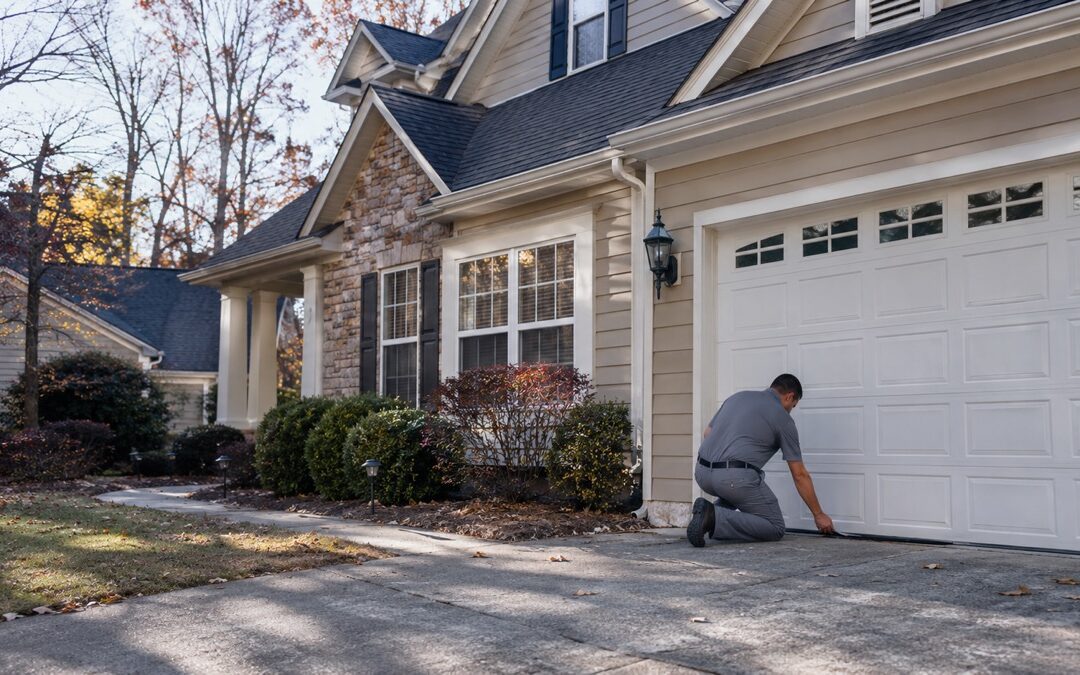
Common entry points include utility penetrations where plumbing, gas, cable, and HVAC lines enter the house; garage doors with worn or missing bottom seals; gaps under exterior doors; crawlspace vents; dryer vents; and roof returns, soffits, and gable vents where roof rats can climb in. The takeaway is that rats rarely break in. They walk in through openings that already exist.
“The smallest gap I’ve personally seen a mouse use was right around the width of a pencil, where a gas line came through the siding. Homeowners are always surprised by that. If you can fit a pencil into a gap, you should assume a mouse can fit through it too.”
Jody Allred, Branch Manager, Acworth
12 tips to get rid of rats in your house
These 12 tips work together. Sealing and sanitation keep new rats out. Traps help remove the ones already inside. Skipping the entry points is the most common reason a problem comes back.
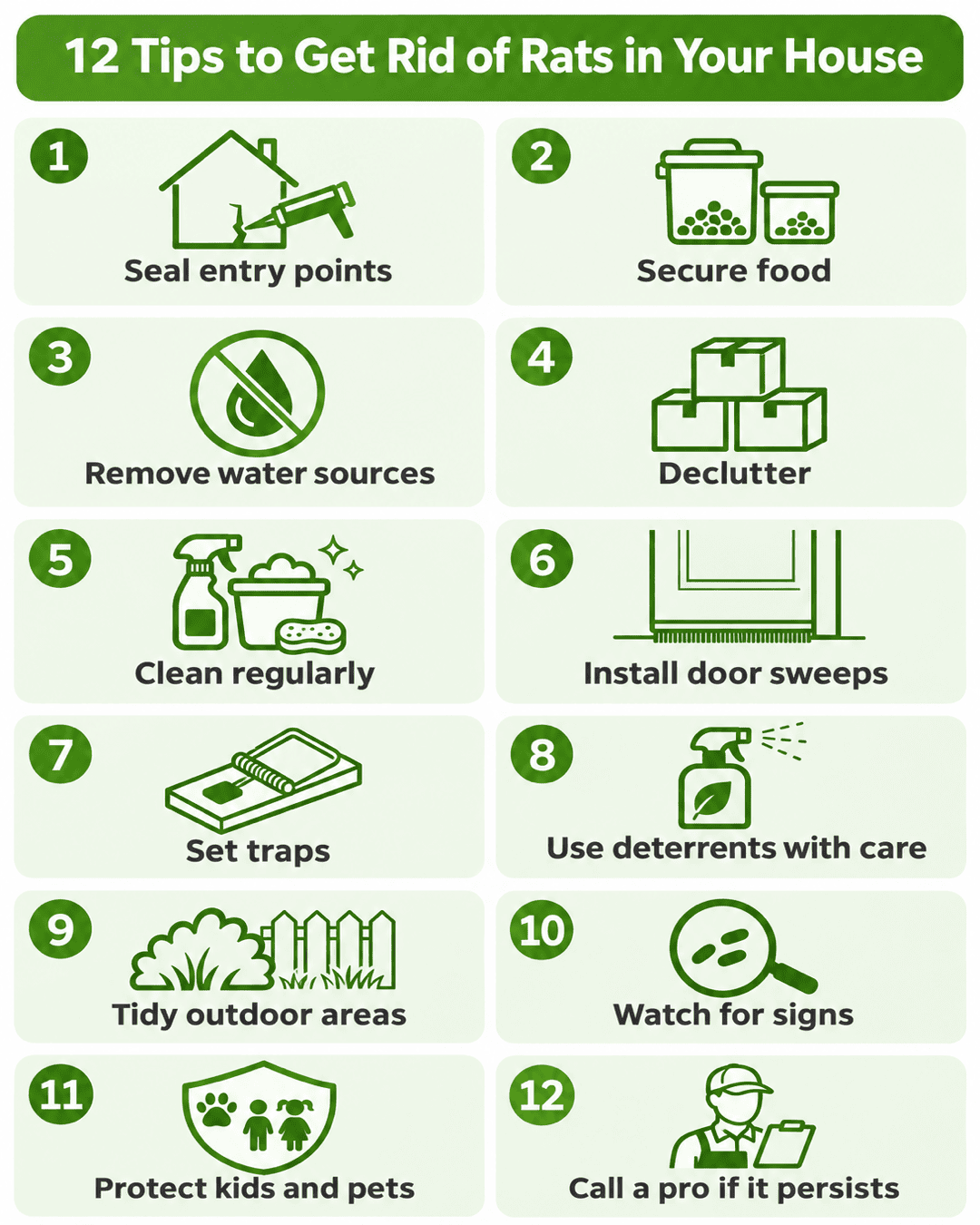
1. Seal entry points
Inspect your home for cracks, holes, and gaps, especially around doors, windows, utility lines, and the foundation. Use steel wool, caulk, or hardware cloth to seal these openings, as rats can gnaw through weaker materials. Foam or caulk alone is not enough in spots rats can chew.
2. Keep food sources secure
Store all food, including pet food, in airtight containers. Clean up crumbs and spills promptly, and avoid leaving dirty dishes overnight.
3. Eliminate water sources
Repair leaky faucets and pipes, and make sure your home’s drainage system works efficiently. Remove standing water both inside and outside your home.
4. Declutter your home
Rats and mice use cluttered spaces to hide and nest. Keep storage areas tidy, dispose of unused items, and organize your garage or attic.
5. Clean regularly
Vacuum floors, wipe down counters, and take out the trash daily. Rats are less likely to settle in a home that is free of food residue.
6. Install door sweeps
Gaps under doors are a common entry point. Installing door sweeps can help keep rats and mice from slipping inside.
7. Set traps
Traps are an effective do-it-yourself method for a small problem. Snap traps and live traps are widely available at hardware stores. Place traps near walls and in areas with visible signs of rats, such as gnaw marks or droppings, along the paths they already travel.
8. Be cautious with deterrents
Natural deterrents like peppermint oil, cayenne pepper, and ultrasonic devices are often marketed as quick fixes. They may have a limited effect, but they work best, if at all, alongside sealing, sanitation, and trapping, not as a standalone way to get rid of rats in your house.
9. Address outdoor areas
Trim tree branches that touch your roof, as they can serve as pathways for roof rats. Remove piles of debris, and store firewood off the ground and away from the house to reduce nesting sites.
10. Monitor for signs of rats
Stay alert for droppings, chewed wires, nests made of shredded materials, and unusual noises in walls or ceilings. Early detection makes it easier to get rid of rats before a small problem becomes a larger infestation.
11. Protect children and pets
If you are using traps or rodenticides, place them where children and pets cannot reach them. Many rodent control products can be hazardous if they are accidentally ingested. Tamper-resistant stations and careful placement matter.
12. Call a professional when the problem persists
If rats keep appearing, you hear activity in walls or the attic, or you find chewed wiring, a professional inspection is the safest and most effective next step. A trained technician can find entry points you might miss, remove the rats already inside, and help prevent the problem from coming back. Look for a company that uses methods that are appropriate around children, pets, and the rest of the household.
Why baiting alone does not work
Bait stations and hardware store traps are often the first things families try. They can address rats already inside, but they do not close entry points. New rats may continue entering until the gaps are sealed.
“I explain it like a leaky roof. You can keep putting buckets under the drip, but until you fix the hole, the water keeps coming. Bait and traps are the buckets. If the entry point is still open, new mice will keep finding their way in, especially once it gets cold. Sealing the home is what actually fixes the leak.”
Jody Allred, Branch Manager, Acworth
There are other reasons baiting alone falls short:
Rats can die in hard-to-reach places. When bait is used indoors, a rat may die inside a wall or ceiling, which can cause odor and attract other pests.
Rats are cautious. They often avoid new food or objects, so bait may go untouched for days.
Safety matters. Rodenticides must be handled carefully around children, pets, and wildlife, which is one reason professionals use tamper-resistant stations and follow label directions closely.
Baiting and trapping can be part of a complete plan, alongside inspection, exclusion, and follow-up. If you want help with that full approach, learn more about professional rat and mouse control.
What diseases do rats carry?
Rats and mice are not just a nuisance. They can spread diseases to people and pets, including:
Hantavirus. Transmitted through rodent droppings, urine, or saliva.
Salmonella. Caused by consuming food or water contaminated by rodents.
Leptospirosis. Spread through contact with water or soil contaminated with infected rodent urine.
These risks are one reason to act promptly, and to clean carefully. Avoid sweeping or vacuuming droppings, which can stir particles into the air. The CDC recommends soaking contaminated material with disinfectant, letting it sit according to the product label, then wiping it up with paper towels while wearing gloves. See the CDC guide to safe rodent cleanup.
What to do if you already have rats in the house
If you suspect rats are already inside, take these steps:
Identify the type of rodent. Determining whether you have a rat or mouse problem can help you choose the best control methods. Rats are larger and more cautious, while mice are smaller and more curious.
Remove food and water sources. Without easy access to food and water, rats are less likely to stay.
Set traps in high-activity areas. Place traps near nests or along walls. For a larger problem, consult a professional to ensure safe and effective treatment.
Keep inspecting and resealing. Continue monitoring for signs of rats and seal any new entry points to prevent a return.
If you are hoping to get rid of rats in your house quickly, start with the steps you can take the same day: clean up food, set traps on active paths, and seal obvious gaps. Lasting results still depend on finding every entry point, not on a single overnight fix.
When professional help is worth it
Some situations are well suited to a professional visit. Consider reaching out if:
- You are seeing droppings or hearing activity in more than one area of the home
- Traps catch rats or mice, but new activity keeps appearing
- You hear sounds in the attic, ceiling, or walls
- You find chewed wiring or damaged insulation
- You suspect rats, which are more cautious and harder to control
- Someone in the home has health concerns or allergies
Professionals know where to look for nests, entry points, and hidden signs of activity. They also use targeted methods and follow-up visits to confirm that activity has stopped. If you need help getting rats out of your house in Georgia, a local team can inspect the property, explain what they find, and discuss options.
“When I walk a house for rodents in November, the first three places I check are the garage door seals, the spots where utility lines come into the house, and the attic or crawlspace. Those three areas tell me most of what I need to know about how rodents are getting in and where they’re living.”
Jody Allred, Branch Manager, Acworth
Prefer to talk? Call Northwest Exterminating at (888) 466-7849.
Frequently asked questions
How do you get rid of rats in your house?
Start by confirming the signs, then seal entry points, remove food and water, and place traps along the paths rats travel. Bait alone will not close the gaps they use to get in, so new rats may keep coming until the house is sealed. A professional inspection can help if activity continues or you cannot find the entry points.
How do you get rid of rats in the house fast?
The fastest progress comes from doing several things at once: clean up food, set traps on active runways, and seal obvious openings the same day. There is no reliable instant fix, because rats already inside still need to be removed and any open gap can let new ones in.
How do you get rid of rats?
The same three-part approach applies whether rats are in the house, garage, or attic: inspect for signs and entry points, seal those openings with durable materials, and use traps or professional removal for the rats already inside. Follow-up matters, because one missed gap can restart the problem.
What are the first signs of rats in a house?
The most common first signs are droppings, gnaw marks, and scratching sounds in walls or ceilings at night. You may also notice shredded nesting material, greasy rub marks along walls, or a musty odor. Pets showing interest in a specific wall or cabinet can be another early clue.
Does rat bait work on its own?
Bait alone rarely solves a rat problem because it does not close the entry points rats use to get inside. New rats can keep coming in through the same gaps. Lasting results combine inspection, sealing, and trapping with follow-up monitoring.
What is the difference between a mouse and a rat problem?
Mice leave small, pointed droppings about 1/8 to 1/4 inch long and tend to stay near food in kitchens and pantries. Rats leave larger droppings about 1/2 inch or longer and often use attics, crawlspaces, and wall voids. Rats are also more cautious, which can make them slower to control.
Getting rid of rats in your house is a common need in Georgia, especially when the weather cools and rats look for warmth indoors. Start with a careful inspection, seal the gaps that let them in, and use trapping and monitoring to finish the job. Simple prevention habits will help keep your home protected.
If you have questions about signs of rat activity or want help finding where they are getting in, our team is here to help.
About the contributors
Author: Curt Lockhart, QA Technical Field Trainer & Inspector, Northwest Family of Brands
Curt Lockhart serves as a QA Technical Field Trainer and Inspector for the Northwest Family of Brands, specializing in wildlife and commercial pest services. He supports teammate development through hands-on training, technical guidance, safety education, and quality assurance best practices. Curt’s experience helps ensure consistent service excellence and effective pest management solutions for customers.
Reviewed by: Cory Goeltzenleuchter, B.C.E., P.H.E., CP-FS
Cory Goeltzenleuchter is a Board Certified Entomologist, Public Health Entomologist, and one of the Southeast’s leading technical experts in pest management. He oversees technical training, service standards, and industry best practices across the Northwest Family of Brands, helping ensure customers receive science-based pest management solutions and extraordinary service experiences.