
Roof Rats: How to Identify and Get Rid of Them
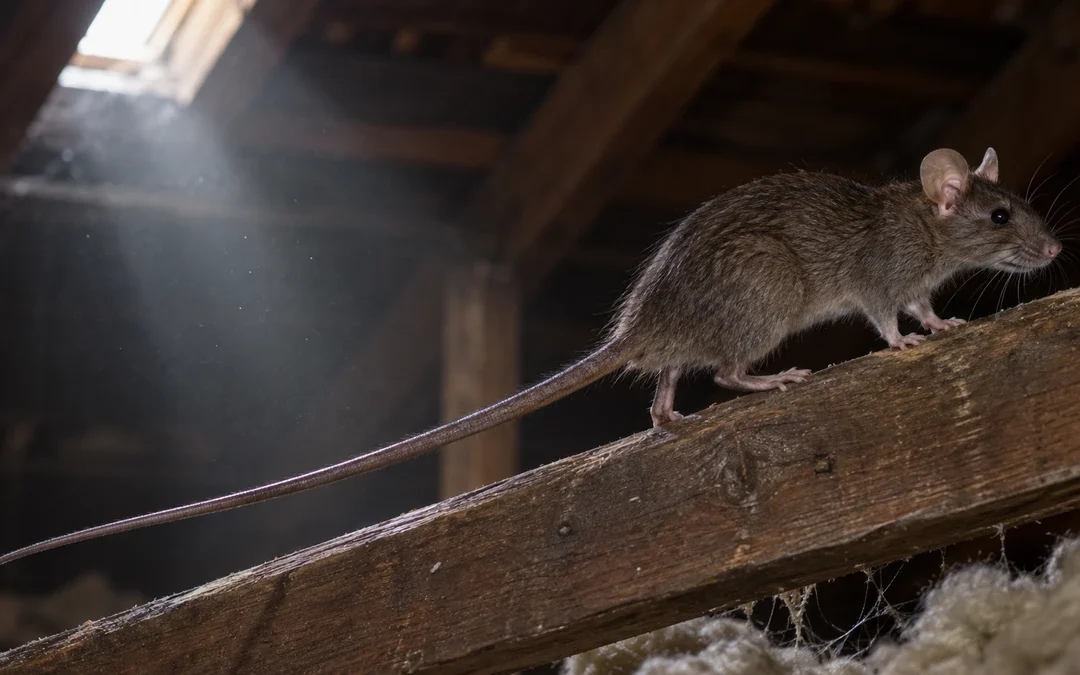
Quick answer: Roof rats are climbing rodents that nest above ground, often in attics, eaves, and dense vegetation, rather than in burrows. They are most active in the Southeast during fall and winter, when cooler weather drives them indoors to nest. Identifying them correctly, removing existing rats, and then sealing entry points in the right order are the keys to lasting control.
If you are hearing scratching in the ceiling at night, roof rats are one of the most likely culprits in Georgia, Alabama, Tennessee, and the surrounding Southeast. This guide covers how to identify them, how they get in, and the removal sequence that separates a lasting fix from a repeat problem.
How to Identify a Roof Rat
Roof rats (Rattus rattus), also known as black rats or ship rats, are among the most common rodents found in attics across the Southeast. Before any treatment plan makes sense, it helps to know exactly what you are dealing with.
Key physical traits of roof rats:
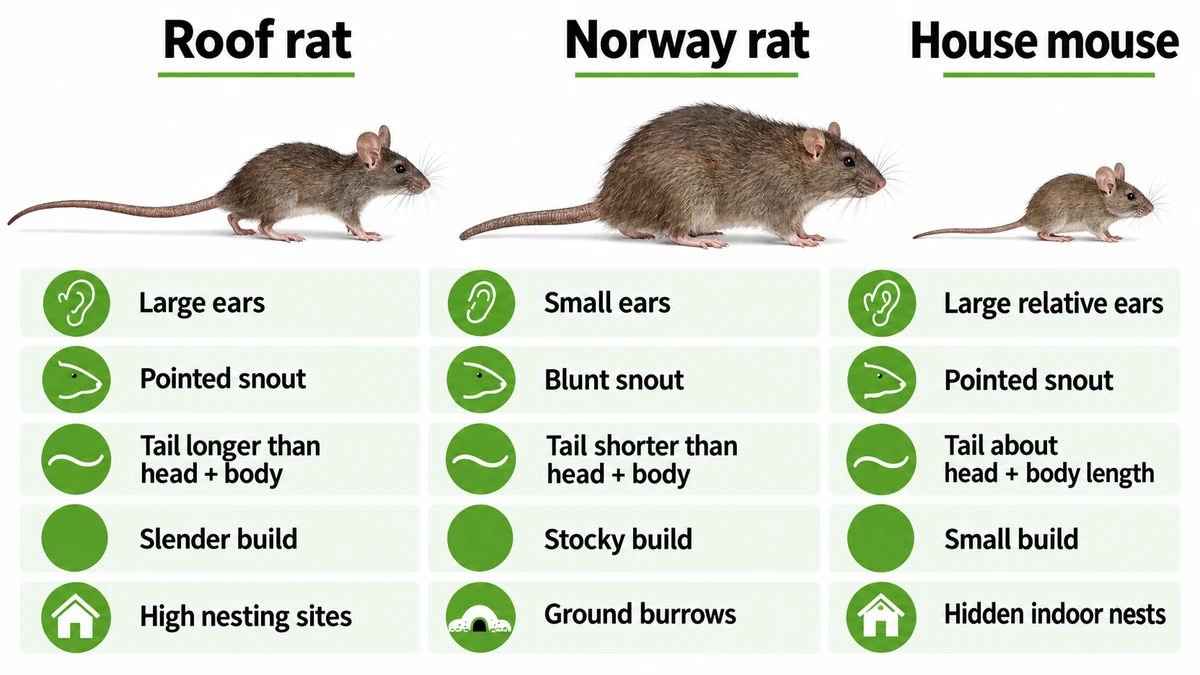
- Size. Roof rats typically measure 12 to 16 inches including the tail, with a body noticeably more slender than a Norway rat’s.
- Tail. Their tail is longer than their head and body combined, which is one of the clearest identifying features.
- Color. Most roof rats have dark brown to black fur with a lighter gray or cream underside.
- Ears and face. Large, hairless ears and a pointed snout give roof rats a more delicate appearance than Norway rats.
- Behavior. Roof rats are agile climbers. They travel along power lines, fence tops, and tree limbs, and they are far more likely to enter a home from the roofline than through a ground-level gap.
Signs of a roof rat infestation often appear before the rats themselves do:
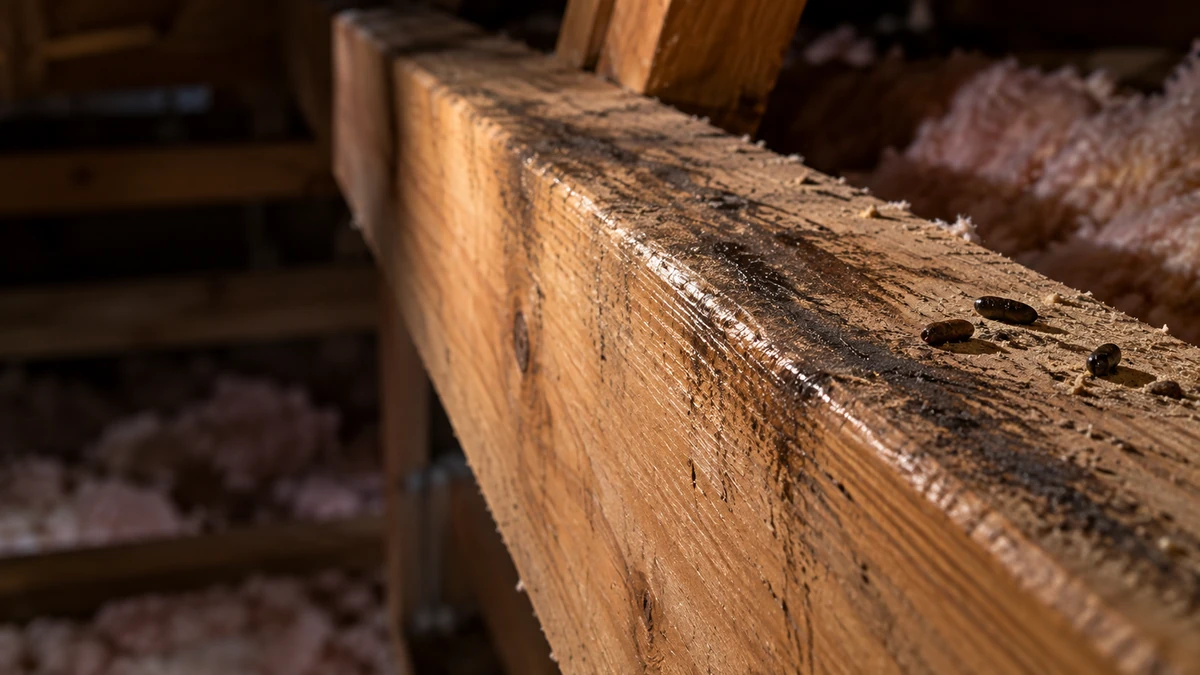
- Droppings about half an inch long with pointed ends, typically found along attic joists or near stored items
- Gnaw marks on eaves, soffits, or roof vents, usually just over an eighth of an inch wide
- Scratching or rattling sounds from the ceiling or upper walls, especially at night
- Grease marks or dark smudges along regular travel paths, left by the oil and dirt on a rat’s fur
- Fruit on the ground with only the pit or seeds remaining, since roof rats favor fruit and nuts
- Chewed electrical wiring in the attic, which is a documented fire risk if left unaddressed
Roof Rats vs. Squirrels vs. Norway Rats: What Is Actually in Your Attic
Attic noise does not always mean roof rats. Squirrels and Norway rats produce similar sounds and damage, but the details of how they look, move, and nest are distinct enough to tell them apart.
| Feature | Roof Rats | Squirrels | Norway Rats |
|---|---|---|---|
| Body size | 6 to 8 inches, slender | 9 to 12 inches, bushier body | 7 to 9 inches, stocky |
| Tail | Long, hairless, longer than body | Long, bushy, furry | Shorter than body, thick and scaly |
| Color | Black to dark brown | Gray or reddish brown | Brown or gray |
| Typical activity time | Nocturnal | Daytime (diurnal) | Nocturnal |
| Sound type | Light scratching, running along joists | Quick scurrying, gnawing | Heavier scratching, gnawing |
| Preferred entry point | Roofline, eaves, gable vents | Roofline, fascia gaps, chewed openings | Ground-level gaps, foundation, pipes |
| Nesting location | Above ground, attics or dense vegetation | Above ground, attics or tree cavities | Below ground burrows or crawl spaces |
| Droppings | Small, pointed, about 1/2 inch | Larger, oval, near entry points | Larger, blunt ends, about 3/4 inch |
Timing is the fastest tiebreaker. If something is moving through the attic during the day, squirrels are the more likely source. Roof rats and Norway rats are both nocturnal, which is why droppings, tail shape, and entry height matter more than sound alone when telling them apart.
How Roof Rats Get Into an Attic
Roof rats earn their name. Rather than digging under a foundation, they climb, which means the entry points that matter are almost entirely above ground.
Vertical entry points to inspect:
- Gaps where the roofline meets the fascia or soffit
- Gable vents and ridge vents with deteriorated or missing screening
- Overhanging tree limbs that touch or hang within a few feet of the roof
- Power lines and utility cables that run near the house
- Chimney chases without a secure cap
- Gaps around roof penetrations, such as vent pipes, plumbing stacks, or HVAC lines
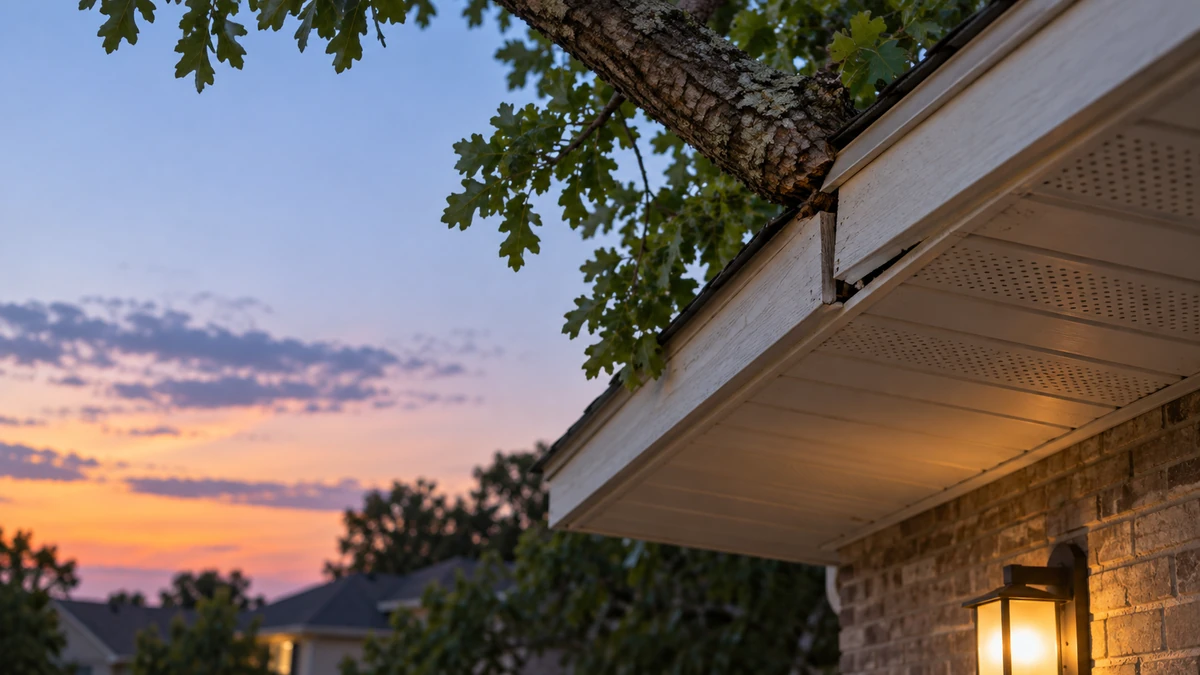
A roof rat needs only an opening about the size of a quarter to squeeze through. Its skull, not its body, is what limits it. This is why sealing at ground level alone rarely solves an attic infestation. The real work happens along the roofline.
Why Fall Is Roof Rat Season in the Southeast
Roof rat activity rises every fall across Georgia, Alabama, and Tennessee. As outdoor temperatures drop, roof rats look for a warm, dry place to overwinter, and an attic checks every box: shelter from weather, distance from predators, and access to insulation they can use for nesting.
This overwintering pattern drives the spike in attic noise calls and chewed insulation reports that Northwest sees across the Southeast each October and November. Roof rats that move in during fall can remain active through the colder months and reproduce during that time. A single female roof rat can produce several litters per year, which means a small fall infestation can grow quickly if it goes unaddressed through winter.
Do roof rats go away on their own come spring? Not reliably. Once a colony establishes a warm nesting site with access to food, they have little reason to leave. Waiting out a fall infestation typically results in a larger, more entrenched problem by spring.
How to Get Rid of Roof Rats
Getting rid of roof rats takes more than a single trap or a sealed gap. The order of operations matters as much as the tools used.
The right sequence:
- Inspect first. Identify every entry point along the roofline, attic vents, and any tree limbs or utility lines that give roof rats a path onto the roof.
- Trap and remove active rats. Place traps inside the attic and along known travel paths before sealing anything.
- Seal entry points last. Once rats have been removed, seal gaps, vents, and openings around roof penetrations with rodent-proof materials.
- Clean and monitor. Remove contaminated insulation, sanitize affected areas, and monitor to confirm the infestation is fully resolved.
A sequencing warning every homeowner should hear: sealing entry points before rats are fully removed is one of the most common and most costly mistakes Northwest service professionals encounter. Trapping live rats inside wall voids or attic spaces leads to odor problems, secondary pest activity, and rats gnawing new openings to escape. Removal must come before exclusion.
“The order really does matter here. When a homeowner seals up the attic before the rats are out, we usually get a call about a smell problem within a week or two, and now there are two issues to solve instead of one,”
says Matthew Walker, Area Technical Leader for the Northwest Service Centers in Georgia.
Additional long-term prevention steps include trimming tree limbs away from the roofline, storing pet food in sealed containers, keeping garbage cans tightly lidded, and clearing clutter that gives rats places to hide and nest.
For homes with an active or suspected infestation, Northwest’s rodent control services follow this same inspect-trap-seal sequence, paired with follow-up monitoring.
The Damage Roof Rats Do
Roof rats cause real, compounding damage to a home. Their gnawing is not incidental. It is how they keep their continuously growing teeth at a functional length. Left unchecked, roof rats can work through:
- Electrical wiring in the attic, raising the risk of shorts and house fires
- Water lines and HVAC lines, which can lead to leaks and system failure
- Roof rafters and eaves, weakening structural integrity over time
- Attic insulation, which loses R-value once trampled, shredded for nesting material, or soiled with droppings and urine
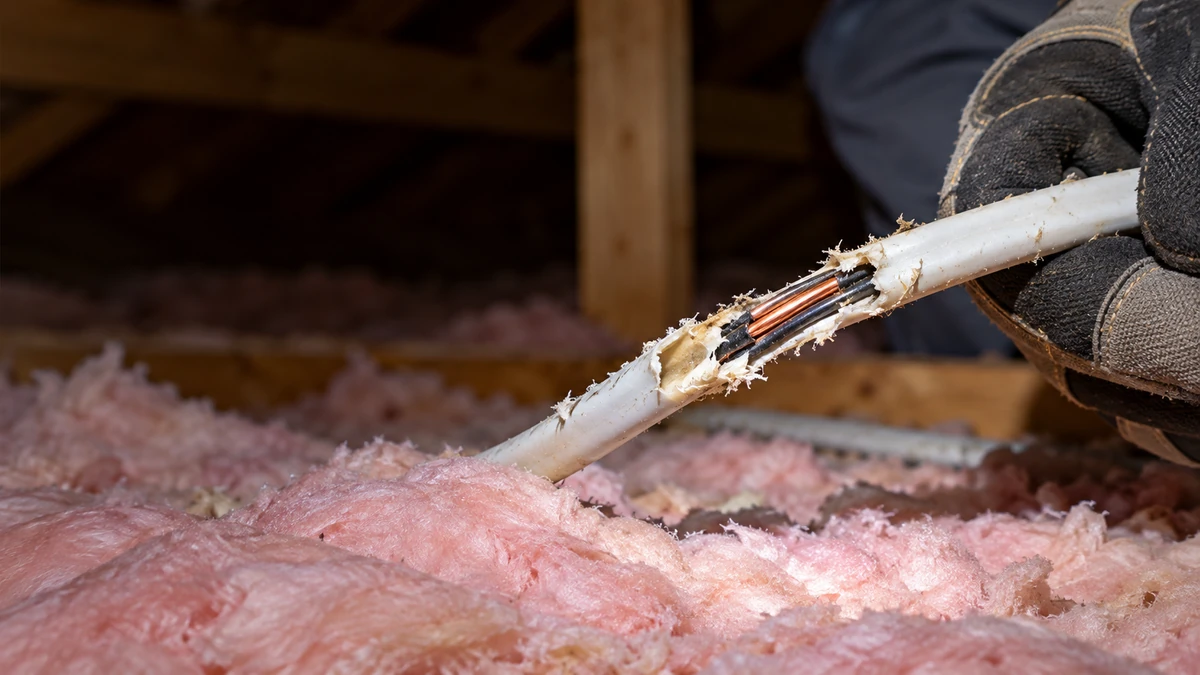
Roof rat droppings and urine can also introduce health concerns. Pathogens and allergens can move through contaminated insulation and into the home’s air pathways, particularly through ductwork. According to the University of Georgia Cooperative Extension, rodents like roof rats can contaminate stored food and building materials, which is one more reason to treat an infestation promptly rather than waiting to see whether it resolves on its own.
If you are hearing similar activity but are unsure whether you are dealing with rats, squirrels, or something larger, Northwest’s guide to wildlife removal and what to do when animals get into your attic covers the full range of common attic intruders.
Roof Rat Activity Across the Northwest Service Area
Roof rat pressure across the Southeast follows predictable patterns tied to tree canopy density, housing age, and proximity to green space. Northwest service professionals see these conditions play out differently by market.
Savannah, GA. Savannah’s mature live oak canopy and coastal humidity make it one of the most consistent roof rat markets in the Northwest footprint. Dense tree coverage in historic and coastal neighborhoods gives rats a nearly continuous bridge from yard to roofline. Getting rid of roof rats in a Savannah home means working the attic first, in this order:
- Inspect the attic and the full roofline for droppings, rub marks, and daylight gaps.
- Trap in the attic along the joists and runways the rats already use, before anything is sealed.
- Cut back live oak limbs and any vegetation touching or overhanging the roof, since canopy contact is the dominant Savannah entry route.
- Seal soffit seams, gable vents, and roof penetrations once trapping confirms activity has stopped.
- Remove and replace soiled insulation, then monitor through the fall and winter peak.
Atlanta, GA. As one of the most heavily wooded metro areas in the country, Atlanta sees consistent roof rat pressure from overhanging limbs and aging rooflines, particularly heading into fall. Roof returns and ridge vents are among the most common entry points Northwest identifies in intown neighborhoods.
Marietta, GA. Marietta’s tree-lined subdivisions and mature hardwood canopy contribute to roof rat activity patterns similar to Atlanta’s, with limb contact at the roofline driving most of the calls Northwest receives in the area each fall.
Chattanooga, TN. Chattanooga’s hillside neighborhoods and ridgeline tree cover give roof rats natural elevation advantages. Properties situated near wooded lots or with vegetation growing close to the roofline see the most consistent activity.
Birmingham, AL. Birmingham’s older housing stock and dense urban canopy create frequent opportunities for roof rats to find both entry points and nesting material. Attic-related rodent calls remain a recurring pattern for Northwest’s Alabama teams as fall approaches.
“Across our Georgia service centers, the neighborhoods with the most mature tree canopy are almost always where we see the highest roof rat call volume. It tracks closely with tree cover more than anything else,”
says Matthew Walker, Area Technical Leader for the Northwest Service Centers in Georgia.
Roof rats behave differently in Northwest’s Florida markets, where they stay active year-round rather than peaking in fall. If you are in Miami, Fort Myers, Naples, Pompano Beach, or Broward County, see our guide to roof rats in South Florida for the tile roof and screen enclosure entry routes specific to that region.
What It Costs and What Is Included
Roof rat control typically starts around $450, with final pricing based on the size of the home, level of activity, number of entry points, and the amount of exclusion or remediation needed.
Depending on the situation, service may include:
- Removal. Inspection, trapping, and removal of active rodents.
- Exclusion and sealing. Identifying and closing entry points to help prevent rodents from returning.
- Remediation. Sanitation, contaminated insulation removal or replacement, and repairs when needed.
Because every home and infestation is different, Northwest provides a free inspection and customized estimate based on the work needed. Every project begins with a free inspection, which allows a technician to assess the scope of the problem and provide an accurate quote before any work begins.
For a complete look at treatment options for rats and mice, see Northwest’s rodent control services for rats and mice.
Frequently Asked Questions
What does a roof rat look like?
Roof rats are slender, dark-furred rodents with a tail longer than their body, large hairless ears, and a pointed snout. Adults typically measure 12 to 16 inches from nose to tail tip. Their slender build and long tail distinguish them from the stockier Norway rat at a glance.
How do I know if it is roof rats and not squirrels in my attic?
Timing is the fastest indicator. Squirrels are active during the day; roof rats are nocturnal. If the noise in your attic is happening after dark, roof rats or Norway rats are the more likely source. Droppings and tail shape can confirm which rodent is present.
How do roof rats get into an attic?
Roof rats climb rather than burrow, so their entry points are almost always above ground. Common routes include overhanging tree limbs, utility lines, gable and ridge vents, soffit and fascia gaps, uncapped chimneys, and gaps around roof penetrations. A roof rat can fit through an opening the size of a quarter.
What happens if I seal my attic before the rats are removed?
Sealing entry points before roof rats are fully removed can trap live animals inside wall voids or attic spaces, leading to odor problems and additional damage as they attempt to chew their way back out. Removal must always come before exclusion.
How long does it take to get rid of roof rats?
Most cases involve an inspection, a trapping period of one to two weeks, and a follow-up visit to confirm all activity has stopped before entry points are sealed. Timelines vary based on infestation size and the number of entry points involved.
Do I need to replace attic insulation after roof rats?
In most cases, yes. Roof rat droppings, urine, and nesting activity compress and contaminate insulation, reducing its effectiveness and creating indoor air quality concerns. A technician can assess the extent of the damage during the initial inspection.
How much does roof rat removal cost?
Rodent control services typically start around $450, as treatment often involves more than simply removing the animal. Pricing can reflect the inspection, trapping or removal, identifying and sealing entry points, the size of the home, level of activity, and any additional exclusion or remediation needed. Schedule a free inspection for an estimate specific to your home.
Hearing Movement in Your Attic After Dark?
Roof rats are persistent, but they are also predictable once you know where to look. If noise overhead has started, or picked up as the weather cools, a professional inspection is the fastest way to confirm what is up there and build the right plan in the right order.
Roof rats do not leave on their own. The longer an attic infestation goes without intervention, the more damage accumulates and the harder the cleanup becomes.
Northwest serves Atlanta, Marietta, Chattanooga, Savannah, Birmingham, and surrounding communities across Georgia, Tennessee, and Alabama.
Reviewed for Accuracy
Cory Goeltzenleuchter, B.C.E., P.H.E., Director of Technical Services for Northwest Exterminating, is one of the organization’s leading technical experts in pest management. As a Board Certified Entomologist and Public Health Entomologist, he oversees technical training, service standards, and industry best practices while helping ensure customers receive extraordinary service through science-based solutions, ongoing education, and innovative approaches across the Northwest Family of Brands.
Quality Assurance Review
Jason Womack serves as a Quality Assurance Inspector for the Northwest Family of Brands. He helps uphold service quality standards through inspections, technical expertise, and a commitment to continuous improvement. Jason works closely with teams to support effective pest management solutions and extraordinary customer experiences.