Photo – Dr. Danny McDonald – Sam Houston State University
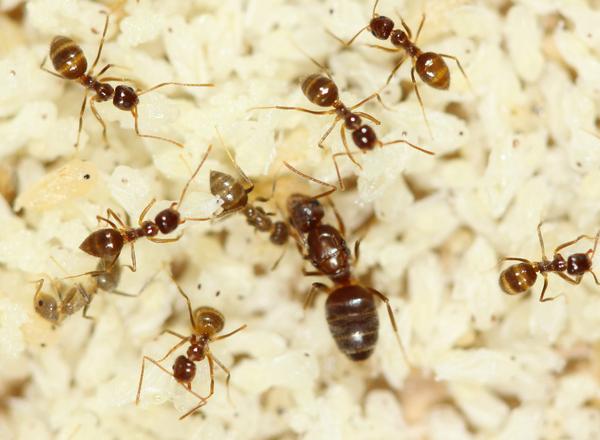
Earlier this week we posted about ghost ants that had invaded a man’s recently purchased truck. This was the first documented case of ghost ants in Georgia. Today, we have news of the tawny crazy ant that has now been identified in Georgia.
University of Georgia Extension agent, James Morgan, found tawny crazy ants in an assisted living facility in Dougherty County. Thousands of ants were found dead in a corner and more located on the outside of the building.
Morgan knew these ants were a different species than the ones he’s used to identifying in Georgia. “They’re reddish in color, very tiny, and they run around and scurry really fast. And they don’t march in a straight row like Argentine ants,” said Morgan. So he sent them off to be examined by a UGA entomologist and were later confirmed as tawny crazy ants by Joe MacGown at the Mississippi Entomological Museum.
Tawny crazy ants are classified as a nuisance pest. They invade in masses and are attracted to electrical sources such as computers, electrical boxes, etc.
To read the entire article in the Atlanta Business Chronicle click HERE.
It’s a great feeling when you get a new car. The new smell, the way it drives, the features, the ants….wait, THE ANTS?!?! Luckily, ants don’t usually come standard with a car purchase. But for Josh Wise, that MAY have just been the case.
Josh’s truck, that he uses for his landscaping business, has been taken over by ghost ants. Ghost ants are extremely small ants (1.3-1.5mm long) that reproduce in high numbers. This species of ant is found in Florida and is the first documented case in Georgia. Although Josh purchased his truck here in Georgia, the Georgia dealership had originally purchased the truck from a dealership in Florida…hmmm.
Were the ants already in the truck when it came from Florida? Did the ants invade in Georgia? Did they come from plants that were put in his truck?
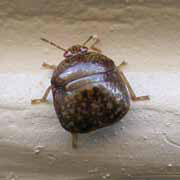
The stink bug gets its name from its ability to release an odor when they are disturbed or crushed. Stink bugs have a triangular or shield shape.
Habits:
Enter homes and other structures in the winter for shelter and emerge from their hiding spaces in early spring.
Mostly feed on plants and crops.
Some species feed off of other pests such as caterpillars and other crop damaging pests. This species of stink bug is used as a natural pest control for crops.
When disturbed, they release a foul smelling fluid from their pores to protect themselves from predators.
Seal cracks and crevices around the structure of your home so they cannot enter.
Do not shine outside lights directly onto your home…this will attract stink bugs to your home.
Use a vacuum to get rid of stink bugs. Empty contents of vacuum into a tightly sealed trash bag and dispose of immediately. Do NOT crush! Crushing will cause them to emit their infamous odor.
Because of their ability to invade en masse, contact Northwest Exterminating if a stink bug infestation happens in your home or business.
This past weekend I was outside working in the garden when I came across a few unwanted guests. There were a few spiders, a couple ground beetles, and a large amount of ants. The ants and beetles were present because my garden provides them with a large amount of food and water. The spiders were there because my garden provides them food (the other insects).
As most of you know the most common insecticides should not be used in gardens. Leaving the everyday gardener to reach out to “over the counter” products from their local nursery or hardware store to help rid them of pests. Although many of these products are effective for short periods of time, they require a minimum time lapse before you can harvest your yield. As many of you know, at Northwest Exterminating we care about protecting your family from pests in the most natural ways possible. And when it comes to the family garden our service technicians are trained to stop the pest before they enter the garden area. That being said, a lot of the garden insects start in the garden area and never leave it – making it hard to control them. So what can you do? Below I have listed some natural ways to help assist you in keeping the pest populations down in your family’s garden this growing season. Following these steps and methods will ensure a healthy garden with minimal pesticide use.
Environmental Tips:
Be careful not to over water. Excess water will provide a water source that is attractive to most pests.
Don’t plant too much. Dense garden foliage will provide hidden shelter for pests including rodents.
Weed your garden regularly. Eliminating the weeds will allow open spaces that leave pests exposed to other predators.
Natural Plantings You Can Add To Help Keep The Pests Down:
Plant some of your herbs in amongst your garden staples. The strong aroma from these plants can deter harmful pests, and attract predators to some of the damaging pests. Examples: Basil, Citronella, Dill, Fennel, and Lemongrass
Spread coffee grounds around the garden to help reduce snails and provide an extra source of fertilizer.
Use a few peppermint essential oil drops in some water and lightly spray your plants to keep the ants off.
Plant onions, marigolds, and radishes around the garden to help as well!
*Inspection fee for Bird Control or Snake Removal begins at $125. These service inspection fees will be applied to total service cost if bird control and/or snake removal services are completed.
By submitting, you agree to be contacted about your quote. See our Privacy Policy.
READY TO GET STARTED?
REQUEST A FREE ESTIMATE
Fill out the form below or call (866) 800-2197 for a free, no-obligation estimate.
READY TO GET STARTED?
REQUEST A FREE ESTIMATE
Fill out the form below or call (866) 800-2197 for a free, no-obligation estimate.
READY TO GET STARTED?
REQUEST A FREE ESTIMATE
Fill out the form below or call (855) 374-3795 for a free, no-obligation estimate.