May 26, 2022 | Pest Control
The kitchen is one of the most common rooms in your home to have ants, closely followed by the bathroom. The most common ants found indoors are odorous house ants, also known as nuisance ants. While these ants don’t cause structural damage and aren’t considered dangerous to humans or pets, they can contaminate your food and become quite a nuisance to deal with. Carpenter ants are larger black ants that can also get into your home. These ants do cause structural damage by boring through the wood components of your house.
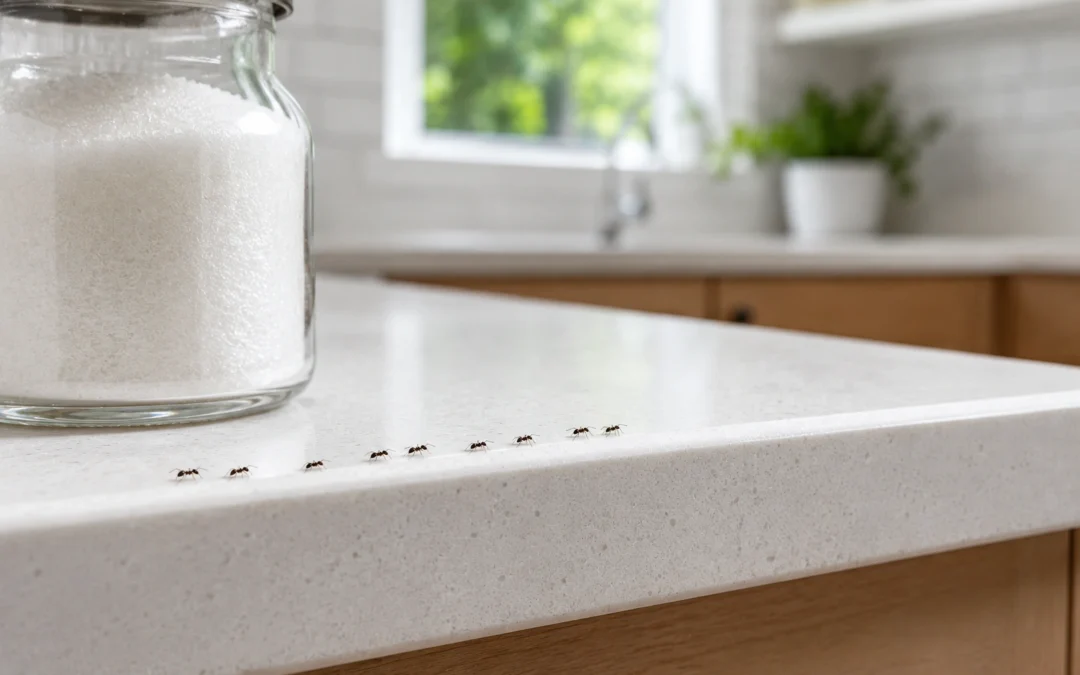
The ants you find in your home don’t actually live there; they build colonies outdoors and come in looking for food and water to take back. These elements are necessary for the colony to live and grow. Scout ants who find these sources leave a pheromone trail for the rest of the colony to follow which is why you will often see ants traveling in a single line. Because they can scale walls and travel between stories in your home, they can spread quickly and be extremely difficult to get rid of.
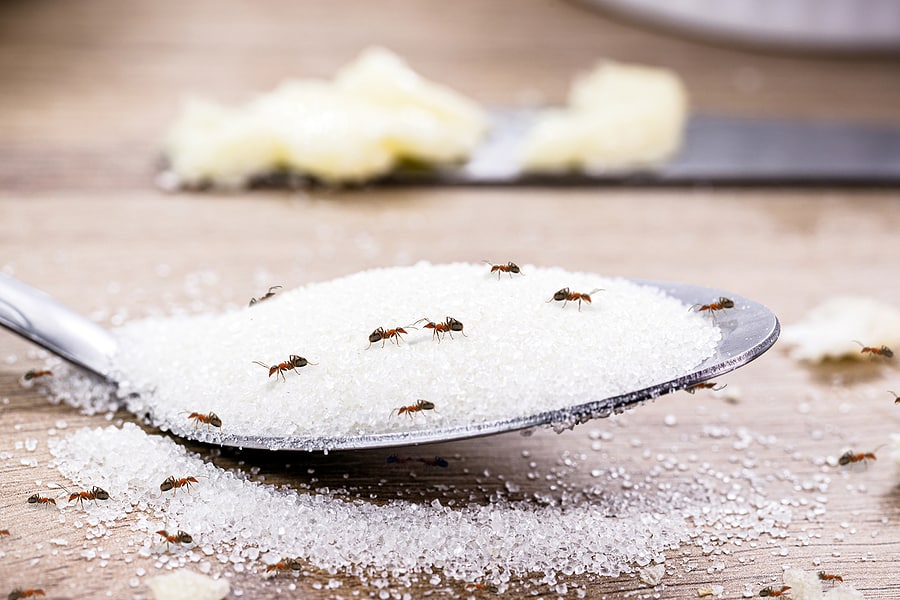
Ants are attracted by a number of things found in your home. They use crumbs, spills, loosely sealed food packages, dirty dishes, and even pet food bowls to find food. They use leaky pipes, pet water bowls, and standing water for hydration.
What can you do to keep ants from taking over your kitchen? Prevent ants by:
- Sweeping and mopping floors regularly.
- Cleaning up crumbs and spills immediately.
- Wiping down counters and stovetops daily.
- Not leaving dirty dishes out overnight.
- Emptying trash regularly.
- Using trashcans with lids.
- Throwing away uneaten pet food or putting it in a sealed container overnight.
- Storing pet food in sealed containers versus non-sealing bags.
- Cleaning around your pet’s food and water bowls often.
- Dumping and replacing pet water frequently from their bowls.
- Storing pantry food in sealed containers versus boxes and bags when possible (e.g. cereal, grains, sweets). This also helps prevent other common pantry pests.
- Getting rid of overripe food stored on counters.
- Repairing leaky pipes.
- Eliminating standing water.
- Repairing cracks and gaps in foundations.
- Not storing firewood next to your home.
Killing just the ants you find in your home won’t eliminate the entire infestation. You must eradicate them at the source – at their colonies. These ants can be difficult to eliminate because individual colonies can number in the thousands and they can be spread out all over your property. For assistance in dealing with ants or any other pests you may find in your home, contact your local pest control company for an evaluation.
You May Also Be Interested In:
Mosquito Bites 101
9 Easy Ways to Keep Birds Away
Keeping Summer Pests Away
Wildlife: Leaving a Mess Behind
What’s the Difference Between Centipedes and Millipedes?

Dec 24, 2019 | Georgia Blogs, Pest Control
By Anna V., Editorial Lead — Pest Education · Last updated: May 2026
If you’ve come downstairs to find a column of ants trailing across your counter at 6 AM, you’re in the most common pest situation in the Southeast. At Northwest, ants are the #1 pest call we run year-round across Georgia, Alabama, Tennessee, and South Carolina. The good news: kitchen ant problems are usually solvable, often without professional help if you catch them early. The catch: the wrong DIY approach makes them worse.
Here’s the full playbook on how to get rid of ants in your kitchen, including which species you’re probably dealing with, the DIY methods that actually work (and the ones that just spread the problem), and when it’s time to call in backup.
Common Ant Species Found in Southeast Kitchens
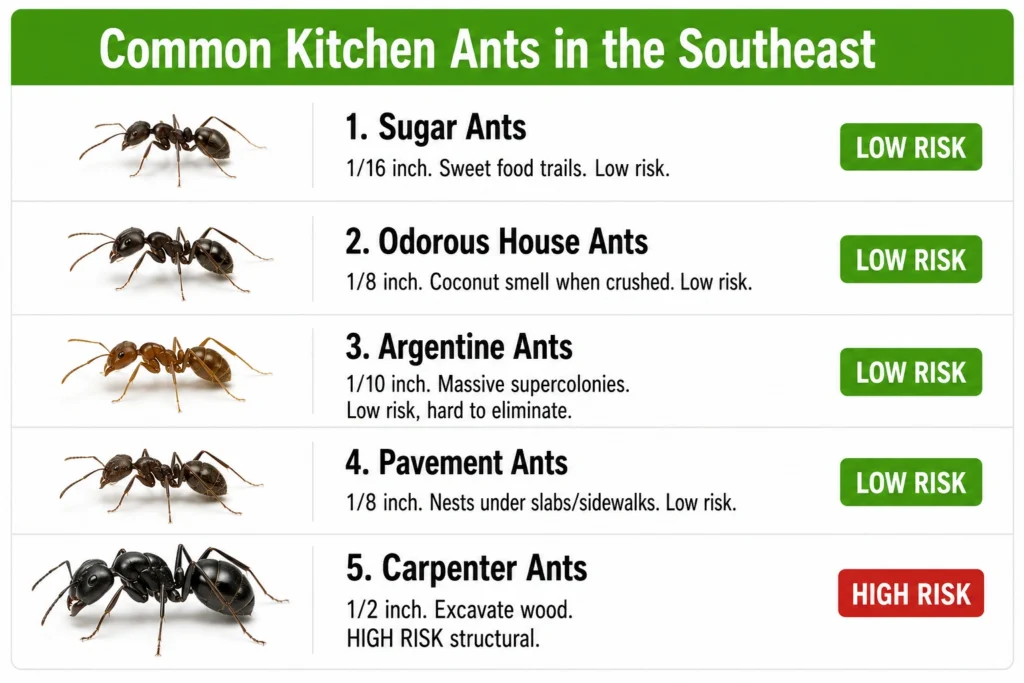
Five species cover almost every kitchen ant call in Georgia and Alabama. Identification matters because two of these (carpenter ants and argentine ants) need different treatment than the others.
Five species cover almost every kitchen ant call in Southeast homes. Carpenter ants are the only ones that damage wood.
Sugar Ants (Tapinoma sessile and similar)
- Size: Very small (1/16 inch), dark brown to black.
- Behavior: Follow trails to sweet foods, especially syrup, honey, fruit, and sugary spills. Active year-round in heated homes.
- Damage potential: Nuisance only. No structural damage.
Odorous House Ants (Tapinoma sessile)
- Size: Small (1/8 inch), uniformly dark brown.
- Behavior: Release a strong rotten-coconut smell when crushed (the most reliable identification marker). Form large trails between nests and food sources. Will eat both sweet and protein-based foods.
- Damage potential: Nuisance only.
Argentine Ants (Linepithema humile)
- Size: Small (1/10 inch), light brown to medium brown.
- Behavior: Form enormous interconnected supercolonies that can span entire neighborhoods. They’re the hardest kitchen ant to fully eliminate because killing one trail doesn’t affect the broader colony. Major presence in coastal and urban Georgia.
- Damage potential: Nuisance only, but persistent.
Pavement Ants (Tetramorium immigrans)
- Size: Small (1/8 inch), dark brown to black.
- Behavior: Nest under sidewalks, driveways, slab foundations, and patios. Forage indoors for grease, sweets, and pet food. Often enter through gaps where slab meets wall.
- Damage potential: Nuisance only.
Carpenter Ants (Camponotus species)
- Size: Large (1/4 to 1/2 inch), usually black, sometimes black-and-red.
- Behavior: Excavate galleries in wood for nesting. Don’t eat wood, but their nesting activity causes structural damage similar to (and often confused with) termites. Most active at night.
- Damage potential: HIGH. Carpenter ants in or near the kitchen warrant immediate professional inspection. They often indicate moisture damage in wall framing, sub-floor, or window frames. For prevention overlap with termite issues, see our termite prevention guide.
Why Ants Invade Kitchens
The kitchen is the most attractive room in your house to ants for three simple reasons:
- Food. Crumbs, spills, open containers, fruit, pet food bowls, and trash. Even microscopic residues are enough to recruit a colony.
- Water. Sinks, leaky pipes under cabinets, condensation around dishwashers, and pet water bowls all attract foraging ants.
- Entry points. Plumbing gaps under sinks, gaps between cabinets and walls, window sills, and door thresholds all provide easy access from outdoor nesting areas.
Once a scout ant finds food, it lays down a pheromone trail back to the colony. Within hours, you can have a hundred workers on the same trail. This is why “I just saw one ant” often becomes “the counter is covered in ants” by the next morning.
Southeast Seasonal Patterns
- Spring (March-May): Colonies wake up and send out scouts. Peak kitchen ant activity begins.
- Summer (June-August): Peak foraging across all species. Argentine ants and odorous house ants are at their most aggressive.
- Fall (September-November): Colonies stockpile food before winter. Trails often shift to protein and grease sources.
- Winter (December-February): Most species dormant outdoors but heated homes can support indoor populations year-round, especially in the deep South.
Signs of an Ant Infestation
Look for:
- Visible trails along counters, baseboards, or wall edges.
- Repeated sightings near the same food or water source (sink, pet bowl, sugar jar).
- Small piles of dirt or debris near baseboards or window sills (nest excavation).
- Discarded wings near windows or doors after a rain (winged reproductive ants leaving the nest).
- For carpenter ants specifically: small piles of sawdust-like debris (“frass”) near wood structures.
How to Get Rid of Ants in Your Kitchen: DIY Methods That Work
Three categories of work, in order of priority. Skipping straight to spray-and-pray almost always backfires.
Step 1: Cut Off the Food Source
Until you starve the trail, no amount of treatment will hold:
- Wipe down counters with a vinegar-water solution (50/50) immediately after spotting a trail. This breaks the pheromone trail.
- Move all open food to sealed containers or the refrigerator.
- Empty trash daily and rinse the can.
- Clean spills under the toaster, behind the coffee maker, and under the refrigerator.
- Pick up pet food bowls between feedings (a major argentine ant attractant).
- Fix any leaking pipes under the sink.
Step 2: Use Bait, Not Spray
This is the most important rule in kitchen ant control: do not spray visible ants with repellent insecticides. It kills the visible workers but warns the colony, which then splits and spreads. Bait works because the worker carries the active ingredient back to the colony and the queen.
- Borax-and-sugar bait. Mix 1 tablespoon of borax with 3 tablespoons of sugar and enough water to make a syrup. Place small drops on cardboard or in bottle caps near the trail. Workers carry it back to the colony. Effective within 3 to 7 days.
- Commercial gel baits. Terro Liquid Ant Baits and Advion gel are well-reviewed for kitchen ants. Place per package directions near trails and entry points.
- Patience. You’ll see MORE ants on the bait initially, which is the desired outcome. Resist the urge to spray. Trail activity drops sharply once the colony is poisoned.
Step 3: Natural Repellents and Trail Disruption
Use these alongside bait, not instead of it:
- Vinegar spray. 50/50 white vinegar and water breaks pheromone trails and discourages re-entry.
- Peppermint or tea tree oil spray. 10 drops per cup of water sprayed at entry points (window sills, door thresholds, under-sink areas).
- Diatomaceous earth (food-grade). Light dusting along baseboards and under sinks. Damages the ants’ exoskeletons. Reapply after vacuuming.
- Cinnamon or coffee grounds. Both are mild repellents that work for short-term trail disruption.
Preventing Future Ant Problems
Long-term ant prevention is mostly about removing the conditions that attract them in the first place.
Prevention is straightforward and covers most species:
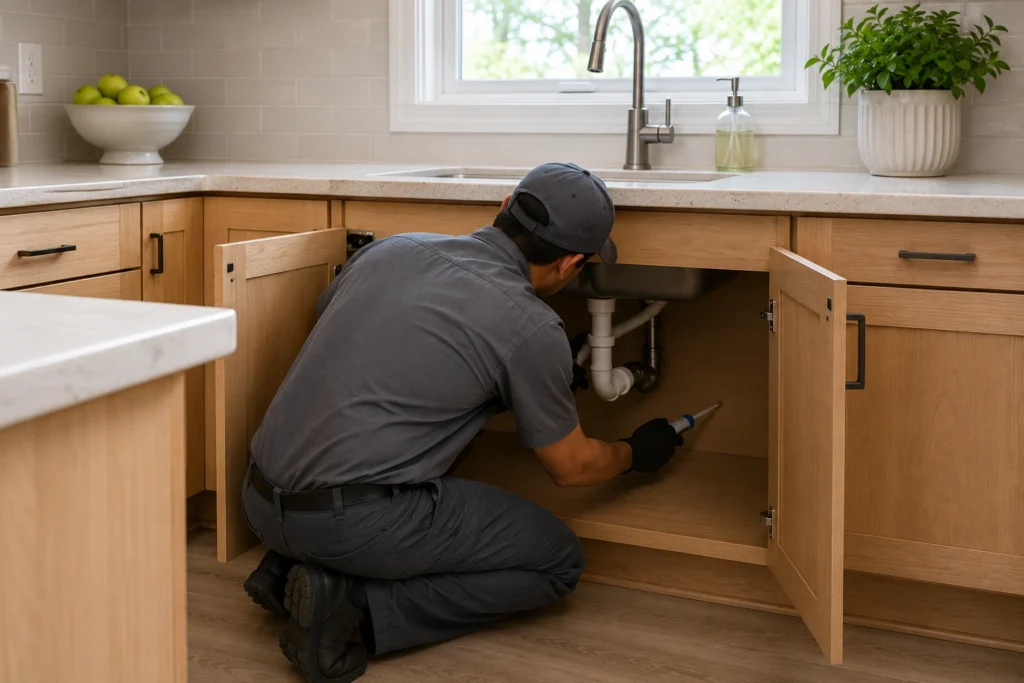
- Seal entry points. Caulk gaps around plumbing under the sink, around window frames, and where cabinets meet walls.
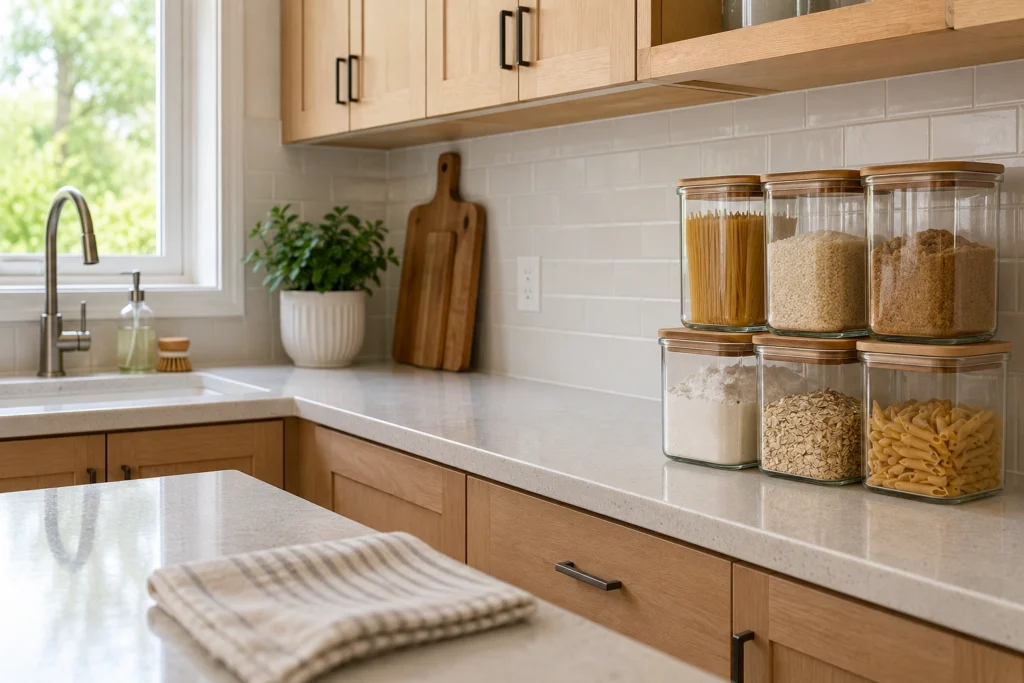
- Food storage discipline. Airtight containers for pantry items, sealed bags for snacks, fruit in the refrigerator if ants are active.
- Moisture control. Fix leaks fast. Wipe down sinks at night. Don’t leave standing water in the dish drainer.
- Outdoor maintenance. Trim shrubs and tree branches back from the house (ants use them as bridges). Keep mulch and firewood 20+ feet from the foundation. Repair damaged caulking around exterior windows and doors.
- Year-round vigilance. Most Southeast homes need ongoing prevention rather than one-time treatment. A monthly check of high-risk areas (under sinks, behind appliances) catches new activity early.
When to Call Professional Ant Control
Call Northwest if:
- You’ve spotted carpenter ants (large black ants, especially with sawdust-like frass nearby).
- DIY methods haven’t reduced activity within 2 to 3 weeks.
- You’re dealing with argentine ant supercolonies that keep returning despite consistent bait use.
- Trails are coming from multiple entry points (suggests a large or complex nest network).
- You’re seeing other pest activity simultaneously, which often indicates broader exclusion gaps.
Professional ant control combines species identification, targeted baits matched to the species’ food preferences, perimeter treatment to address outdoor nests, and structural exclusion. UGA Extension’s household pest management guide is the best free reference for the region.
(Ants coming back no matter what you do? Schedule a free Northwest inspection and we’ll identify the species, find the nest, and treat at the source.)
Frequently Asked Questions About Kitchen Ants
How do I identify the type of ant in my kitchen?
Look at size, color, smell when crushed, and what they’re going after. Tiny dark ants on sweets are usually sugar ants. Slightly larger ants that smell like rotten coconut when crushed are odorous house ants. Light brown ants in massive trails are argentine ants. Larger black ants (1/4 inch or more), especially near wood damage or with sawdust nearby, are carpenter ants and warrant professional inspection.
Can ants cause damage to my home?
Most kitchen ants (sugar, odorous house, argentine, pavement) are nuisance pests only. They don’t damage structures or spread serious disease. Carpenter ants are the exception. They excavate wood for nesting and can cause significant structural damage over time, especially in moisture-compromised framing or window frames. Carpenter ants always warrant professional evaluation.
How long does it take to eliminate an ant infestation?
Small bait-based eliminations: typically 7 to 14 days for visible trail activity to drop. Argentine ant supercolonies and well-established carpenter ant nests: 4 to 8 weeks of consistent treatment, often with professional help. The biggest mistake homeowners make is spraying repellents that scatter the colony, which can extend the timeline significantly.
Are natural remedies effective?
Vinegar spray, peppermint oil, and diatomaceous earth are effective for trail disruption and prevention. They’re less effective for eliminating an established colony. The most effective DIY approach combines borax-and-sugar bait (or commercial gel baits) for elimination plus natural repellents for ongoing prevention. Bait without prevention usually means the ants come back.
Why won’t the ants stop coming back?
Three usual reasons: (1) the colony nest is outdoors and continues sending new scouts, (2) you sprayed repellents that caused the colony to split into multiple smaller nests, or (3) you’re dealing with argentine ants, which form supercolonies that span entire neighborhoods. Persistent return cases typically need professional perimeter treatment plus structural exclusion.
Professional ant control combines species ID, source treatment, and exclusion so the colony doesn’t reroute.
Ready for a Professional Kitchen Ant Inspection?
If kitchen ants are a recurring problem, you’ve spotted carpenter ants, or DIY methods haven’t worked, Northwest’s team can handle species identification, source treatment, and exclusion in one visit. Most kitchen ant issues clear up faster than homeowners expect once the nest is properly targeted.
About the Author
Anna V., Editorial Lead — Pest Education leads pest education content for Northwest Exterminating, working with senior technicians and service center managers across our Georgia, Alabama, Tennessee, and South Carolina service areas to translate field expertise into homeowner-friendly guides. The focus: accurate, regionally-specific answers to the pest questions Southeast homeowners are actually searching for.