Aug 5, 2013 | Uncategorized
Daddy Long legs or Daddy Long legs Spider?
 Daddy Long legs, or harvestmen, are not actually spiders. Daddy long legs are not poisonous, have long legs and a large bulbous-looking body. They feed on insects, which makes them helpful around the garden. They are especially active at the time of harvest, toward the end of summer and beginning of fall. To keep daddy long legs away, vacuum carpet, upholstery, and curtains frequently to remove spider webs, adult spiders, and egg sacs. Be sure to dispose of the vacuum bag. Tightly seal the trash bag to make sure eggs can’t hatch and crawl out of the bag.
Tip for preventing daddy long legs: Pour 1 cup white vinegar and 1/3 cup vanilla extract into a spray bottle and shake. Spray areas where the daddy long legs have been spotted indoors and out. The smell will repel the insects.
Daddy Long legs Spiders, or cellar spiders, although venomous, are not known to be harmful to humans. Their fangs are short and they do not have enough muscle to be able to penetrate human skin. Daddy long legs spiders are very fragile and delicate. They are usually brown or gray in color, cylindrical in shape and their legs are very long and thin. Daddy long legs spiders survive on others species of spiders, or on occasion they will invade other spiders’ webs and consume the host, their egg, and any prey caught in the web. They hang upside down on their webs, which they create in dark, damp places like home cellars, caves or abandoned animal burrows.
Tip for preventing daddy long leg spiders: To keep daddy long legs spiders away you will need caulk, a vacuum cleaner, a duster, boric acid/Borax, and spider traps. Caulk cracks in your walls, foundation, and loose window frames. With a vacuum cleaner attachment, suck up spiders and their webs at wall corners, undersides of furniture, floors beneath appliances, crevices along the baseboards and around windows and curtains. Insects attract daddy long legs spiders so dust frequently and repair leaking pipes and faucets both inside and out. Sprinkle boric acid under doorways, around window sills, along baseboards, and under appliances. Boric acid is a common ingredient in household cleaning products and is not harmful to humans and pets. Place spider traps in areas where spiders are usually seen.
Barry Teubert
Northwest Exterminating
Savannah Service Center
[email protected]
Aug 2, 2013 | Pest Control
As a pest control company, Northwest Exterminating makes it a point to provide cleaner living and working environments. Furthermore, we do so by following federal and state guidelines, including the Endangered Species Act of 1973. The Endangered Species Act of 1973 provides legal protection for endangered and threatened species, requiring all federal agencies to ensure their actions do not harm the lives of the endangered. This is important to pest control because the Environmental Protection Agency (EPA) can restrict the use of pesticides that may be threatening. Northwest Exterminating provides itself on not only meeting these standards, but also exceeding them by providing green pest control as an alternative to traditional pest control.
According to the U.S. Fish and Wildlife Service, “Pesticides are useful to society because they are used to control…potential disease-causing organisms, insects, weeds and other pests.” The EPA takes careful measures to ensure that the products used to control pests do not have unreasonable effects on humans or the environment. For instance, this agency regulates the sale and use of ALL pesticides used in the United States. Just as recently as 2008, the EPA began the Pesticide Registration Review Programs to update research on how pesticides may affect endangered species.
Sources:
http://www.fws.gov/contaminants/Issues/Pesticides.cfm
Georgia Pest Control Employee Registration Manual
Jul 24, 2013 | Uncategorized
Pests can show up in the most unexpected of places – in your bed, in your luggage and unfortunately in your food. What might have appeared to be a perfectly fresh and untouched package might actually be home to insects that infect food products. These insects are aptly named stored product pests and are usually small beetles or moths. For the most part, you will notice the adult form of these insects as they immediately begin their search for more food, typically in the area where the infestation first began.
These insects have a rather rapid life cycle lasting just four to five weeks. During this time, adult females can lay anywhere from 1000 to 1,000 eggs! If the adults themselves do not eat your food, then they serve as breeders who locate food sources for their larva. The name suggests that these pests only consume food products, but actually have a very large appetite including, but not limited, dried flower arrangements, bird seed, dog bones and even jewelry or holiday decorations!
In the Southeast, one particular stored product pest you may spot is an Indianmeal moth. Despite what their name suggests, these moths can be found in bird seed, breakfast cereals and other consumables, typically located in kitchen cupboards. However, because of their great ability of flight, adult Indianmeal moths can be found pretty much anywhere within an infested home. Indianmeal moths are also easy to spot during the larva stage, as they are almost an inch long and create webs of silk in the items they infest.
Indianmeal moth
Another well-known insect is the which commonly infests dried herbs and spices as well as other dried plant and animal material. These pests can chew through paper packaging and even aluminum foil. You’ll spot these pests as they are active, great flyers that are attracted to light. However, don’t assume that one not moving is one not to worry about. These pests, like another stored product pest known as the weevil, may pretend to be disturbed when threatened.
Drugstore beetle
Preventing these infestations is difficult as many of these pests do not appear until the packaging has been opened. It’s important though to keep food in tightly sealed containers and also use older products first. If the infestation is relatively bad, pest control companies such as Northwest Exterminating can provide traps to bait these pests using pheromones that attract these insects.
Sources:
http://www.caes.uga.edu/publications/pubDetail.cfm?pk_id=7914
Jul 19, 2013 | Pest Control
It’s summer time and BBQ season is in full effect. Naturally, your family and friends aren’t the only ones attracted to the smell of something good on the grill. We at Northwest Exterminating provide extensive treatments for mosquitos, fleas & ticks and other creepy crawlers that may want to stop by. However, being proactive in small ways can add to the benefits of pest and mosquito control. Below is a list of tips to help you keep your BBQ guests from getting bugged!
- Keep your outdoor dining area clean. For instance, flies hate the scent of Pine-sol. Mix it with water and put it in a spray bottle to use to wipe down the porch and furniture.
- Place a fan near your BBQ area. This moderate breeze will blow tiny insects off-track
- If you have a more serious mosquito problem, use a fogger in the BBQ area before the event and make sure to spray bushes as well.
- Tiki torches, citronella candles or insecticide candles should go around the edge of your BBQ area, though guests will have to be mindful if you choose to go this route.
- Screen tents are a useful means of protecting food and guests.
- Keep food inside and have guests serve themselves indoors before coming outdoors to eat.
- Bug spray is useful plus and there should be enough for each guest to use.
Sources:
http://www.ehow.com/how_8229328_keep-bugs-away-during-barbecue.html
Jul 15, 2013 | Pest Control
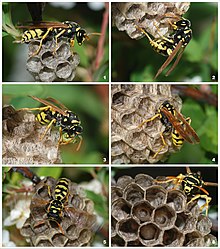
Unless you’re a Georgia Tech fan, wasps are likely not one of your favorite animals. The major concern regarding wasps is their poisonous sting, which for can be fatal for those who are allergic. Wasps tend to have two pairs of wings, few to no thickened hairs on their bodies and terrestrial. They also all have a pair of talons. Though these are similar in appearance to bees, these insects actually have a different function in nature as predators to almost every pest insect in nature. For instance, there are cicada killer wasps or spider hunting wasps.
There are two types of wasps – solitary wasps and social wasps. Adult solitary wasps operate alone and therefore tend not to create nests, but are all fertile. One the other hands, social wasps are the type that create nests in the eaves of homes and live in colonies where not every member is reproductive. This said, the queen can mate with male wasps but the majority of the colony is comprised of sterile female workers.
Nests
You may also find that adult wasps feed on nectar just like bees and therefore will be attracted to your garden full of fresh flowers during the warmer months. Wasps build nests in various places, but often choose sunnier spots. Though they can be found in the eaves of homes, they can also be found underground, along bodies of water, beneath floors or on the sides of walls, trees or plants. When their nests are threatened, wasps will sting humans. Protecting your home is an important part of pest control and if you spot any nests around your home, call Northwest Exterminating to eliminate the problem.
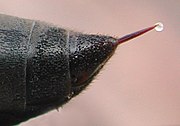
Wasp stinger
Sources:
http://www.adkinsbeeremoval.com/wasp-identification.php
http://en.wikipedia.org/wiki/Wasp

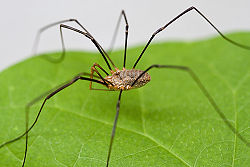 Daddy Long legs, or harvestmen, are not actually spiders. Daddy long legs are not poisonous, have long legs and a large bulbous-looking body. They feed on insects, which makes them helpful around the garden. They are especially active at the time of harvest, toward the end of summer and beginning of fall. To keep daddy long legs away, vacuum carpet, upholstery, and curtains frequently to remove spider webs, adult spiders, and egg sacs. Be sure to dispose of the vacuum bag. Tightly seal the trash bag to make sure eggs can’t hatch and crawl out of the bag.