Mar 29, 2013 | Uncategorized
Although it may not feel like springtime just yet…spring is on it’s way which means flowers blooming, birds chirping, sun shining, and of course…sneezing, itchy watery eyes, and yellow pollen everywhere. Welcome hay fever!
Common symptoms of hay fever are nasal congestion, sneezing, watery eyes, coughing, postnasal drip, facial pressure, and fatigue. The large number of pine trees along with various other trees, grasses, and weeds we have in Georgia is a major contributor of pollen. Each plant has a pollen season which begins as early as January and lasts until November.
Short of locking yourself indoors, there are steps you can take to limit the amount of pollen in your home and car:
- Keep windows closed in your home and car
- Wash your car regularly to reduce pollen exposure
- Set your air conditioning on “recirculate”
- Wash bedding, pajamas, and clothing in warm or hot water to remove allergens
- Take a warm shower before climbing into bed at night
- Do NOT hang clothes outside to dry
- Do NOT rake leaves during pollen season
- Taking over the counter medications may be all you need to relieve your symptoms, but natural options such as acupuncture or the natural herb Butterbur, which is as effective as Allegra, may also be options to explore.
So take a deep breath and just breathe!
Barry Teubert
Northwest Exterminating
Savannah Service Center Manager
[email protected]
Mar 27, 2013 | Uncategorized
Homeowners often look for tips on how to keep pests out of their homes. Our blogs are often filled with tips from Northwest Exterminating on common approaches to keeping your house clean, sanitary, and with minimum clutter for keeping bugs out.
www.whatisipm.org offers an interactive home tour that can be used as a guide for you, along with your pest professional, to keep bugs from becoming an issue in and around your home.
The home tour offers great tips such as vacuuming frequently, wiping down counters, and inspecting luggage before bringing it into the house along with other helpful tips. We strongly encourage you to visit this site and see how you can prevent bugs from calling your house, HOME.
Source
Mar 20, 2013 | Uncategorized
Spring weather is the start of what we refer to as the beginning of “termite season“. Termite season is when termite swarmers begin to emerge from their colonies in search of a new colony and a mate. They look for the perfect place: moisture – CHECK…cellulose food source – CHECK…soil – CHECK! Seeing swarmers is the first sign that you could have a termite infestation in your home.
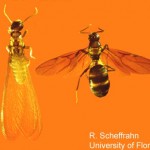
A common question is how to tell the difference between a termite and a flying ant. They may look similar but there are 3 distinct ways to tell the two pests apart:
- Body – ants have a distinct waist line between the thorax and abdomen while termites have a broad waist.
- Antennae – termites have straight (or slightly curved) antennae while an ant’s are bent.
- Wing Shape – termites have 4 wings of equal size while the ant’s front wings are larger than their back wings.
If you spot swarmers or other signs of termites, call your pest management company. Northwest Exterminating provides a FREE, thorough inspection of your home.
Mar 18, 2013 | Uncategorized
Northwest’s Wildlife Services Team specializes in the exclusion, removal, and control of animal nuisances. Among our specialties are squirrels, rodents, raccoons, opossums, bees, armadillos, and chipmunks. An important wildlife service in the coming warm months is our snake removal! Our Wildlife team uses a Green product that is used to deter snakes. We also spend a great deal of time educating the customer on snakes.
Georgia is among the states with the highest biodiversity of snakes in the U.S. with 43 different species. They are located anywhere in Georgia from the mountains in the north to the barrier islands along our eastern coast. Below we have pictures and descriptions of the most common venomous snakes. If you spot one of these, call our Wildlife Services Team at 770.436.3362 to get them off your hands, or better yet, remove them very far away from your hands!
Copperhead

Copperhead
Copperheads are fairly large – anywhere from 2 to over 3 feet long! They have brown, triangular heads and elliptical pupils. You likely won’t want to get close enough to be sure, but they have two tiny dots at the center of the top of the head. More distinguishing features include yellow tails for juvenile snakes, and the brown bands that run along their body are in a distinct hourglass shape. They are found mostly in the forested areas of Georgia and South Carolina.
Cottonmouth/Water Moccasin
Cottonmouth
Water Moccasin
Just like copperheads, cottonmouths have large, triangular heads with elliptical pupils. They get the name water moccasin from their semi-aquatic nature and are likely to be found by mostly all types of freshwater habitats. These are more difficult to identify by appearance because they have a wide range of colors but tend to feature colors that will camouflage them into their habitats.
Eastern Diamondback Rattlesnake
Eastern Diamondback Rattlesnake
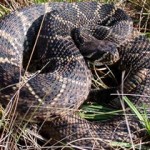
Eastern diamondbacks are among the largest of 32 species of rattlesnakes, ranging anywhere from 2.75 feet to 6 feet long. They have large, broad heads with two light lines on their faces. These are easily recognized by their brown diamonds, surrounded by lighter colored brown, tan or yellowish scales. They can be located anywhere from the southern part of North Carolina, but especially in South Georgia and Florida. They like to be in drier, sandy or low cut grass areas and tend to avoid wetter areas, though they are great swimmers and even travel through saltwater!
Canebrake/Timber Rattlesnake
Canebrake-timber rattlesnake
These snakes tend to range from about 3-5 feet in length and are usually gray with a pink, yellow, orange or brown stripe running along their back. They have solid black tails and black chevrons along the back and sides of their body with the point of the (V) pointing forward. They are found in most of the eastern United States, but are somewhat absent from Florida. They can be found in a wide range of areas, but are least likely to be found in highly urbanized or residential areas.
Pigmy Rattlesnake
Pigmy rattlesnake
This rattlesnake is on the smaller side, usually coming in at under 2 feet in length. This snake has 9 large scales on the top of it’s head and a tiny rattle that can rarely be heard. They have a row of mid-dorsal spots and a bar from the eye to their mouth that ranges from black to brownish. The name is deceptive as they can be gray, tan, lavender, orange, red, or even black. These are mostly located from central Georgia up throughout South Carolina. They also like to be near water sources like creeks, marshes, and swamps.
Eastern Coral Snake
Coral Snake
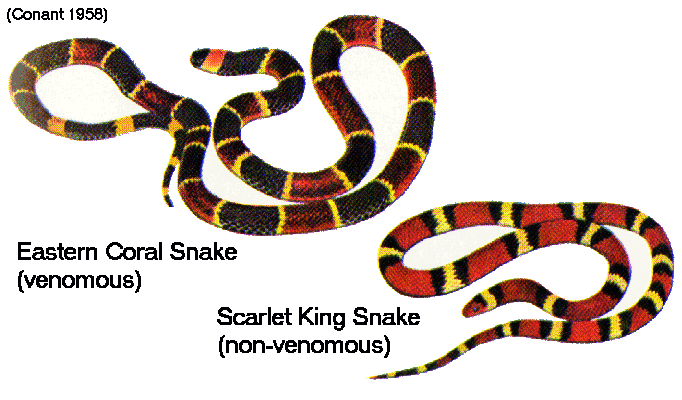
“Red on yellow, kills a fellow. Red on black, friend of Jack.” These snakes are sometimes up to 4 feet in length with smooth heads with a bright body pattern of black rings in which the red and yellow rings touch each other. These are sometimes confused with king snakes, but these snakes only have the red touching the black rings and are not venomous. These snakes are found all the way from Louisiana to Florida, where they are most prevalent. They are rarely spotted because they hide under ground and spend only a limited time crawling above ground. Unfortunately, because of these secretive habits, coral snakes tend to persist in suburban areas.
Melissa Brown
[email protected]
Sources:
http://georgiawildlife.com/node/497
https://uga.edu/srelherp/snakes/index.htm
http://srelherp.uga.edu/snakes/pics/agkcon210.jpg
http://srelherp.uga.edu/snakes/pics/agkpis210.jpg
http://srelherp.uga.edu/snakes/pics/agkpis4.jpg
http://srelherp.uga.edu/snakes/pics/croada210.jpg
http://srelherp.uga.edu/snakes/pics/crohor3.jpg
http://srelherp.uga.edu/snakes/pics/sismil210.jpg
http://www.petmd.com/sites/default/files/coral_snake.gif
Mar 15, 2013 | Uncategorized
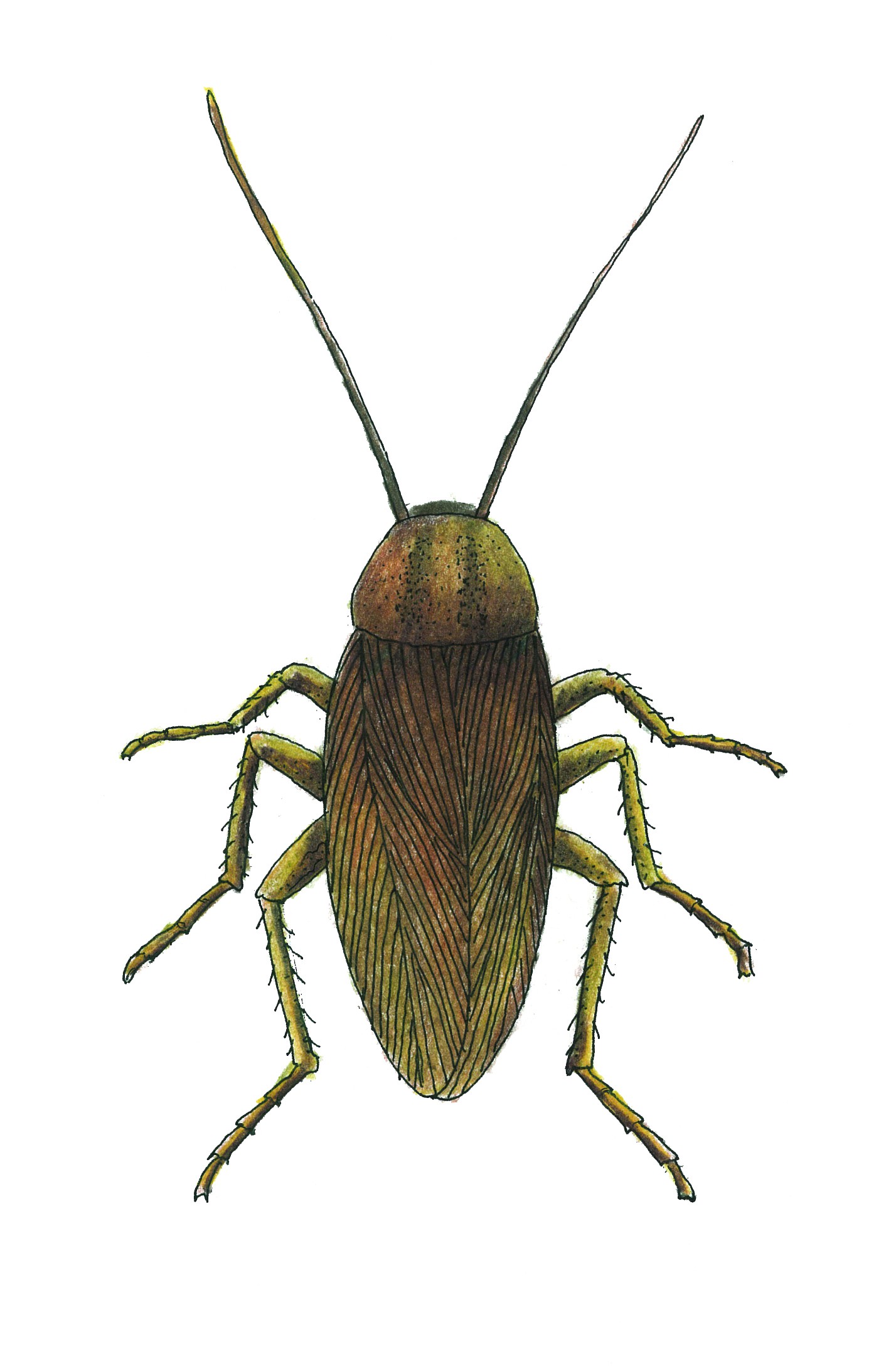
Q: I have been cleaning and seems that every time I clean the kitchen there’s more and more cockroaches. The owner from my apartment said it may be the refrigerator that is causing heat to attract more roaches. Is this true?
A: It sounds like you may be dealing with a German Roach infestation. German roaches are found in apartment communities often and usually require multiple treatments, as well as, some sanitation to eliminate them. Roaches are attracted to water, food, shelter, and when it’s cold…heat. It is common to find a concentration of roaches in and around the appliances. They are attracted to places like the refrigerator but that is not the cause of the infestation. We strongly recommend a pest service or inspection to identify the issue. Call your pest control management company to come out and properly identify the source of the infestation. Together, you and Northwest Exterminating can come up with the right solution for your home.