Apr 8, 2013 | Uncategorized
Monday, April 1, 2013
This April, the National Pest Management Association encourages homeowners to take precautions against common pests
FAIRFAX, VA – The National Pest Management Association (NPMA) celebrates April as National Pest Management Month, an observance that’s been taking place for more than 30 years to recognize the pest management industry for its commitment to the protection of public health and property from common household pests.
“Whether it’s rodents, ants, termites, bed bugs or cockroaches, pest professionals play an important role in preserving our quality of life,” said Missy Henriksen, vice president of public affairs for the NPMA. “We’d like to recognize these men and women for all they do to keep our families and homes safe from unwanted pests not just during National Pest Management Month, but year-round.”
This April, homeowners are reminded to pest-proof their home in preparation for the upcoming pest season. NPMA experts recommend the following tips:
- Seal cracks and holes on the outside of the home including entry points for utilities and pipes.
- Repair fascia and rotted roof shingles.
- Replace weather-stripping and repair loose mortar around the foundation and windows.
- Keep tree branches and shrubbery well trimmed and away from the house.
- Store fire wood at least 20 feet away from the house and five inches off the ground.
- Eliminate sources of standing water around the house, including birdbaths and in clogged gutters.
- Keep basements, attics and crawl spaces well ventilated and dry.
- Keep kitchen counters clean, and store food in sealed containers.
- Store garbage in sealed containers and dispose of it regularly.
- Avoid leaving pet’s food dishes out for long periods of time.
“As the weather continues to get warmer, pests will begin to emerge from their overwintering sites and look for food indoors. National Pest Management Month comes at the perfect time to make pest-proofing a priority to prevent an infestation during the spring and summer seasons,” added Henriksen.
For more information on National Pest Management Month or for information on common household pests, please visit Pestworld.org.
The NPMA, a non-profit organization with more than 7,000 members, was established in 1933 to support the pest management industry’s commitment to the protection of public health, food and property.
Source
Mar 22, 2013 | Uncategorized
Wednesday marked the first day of Spring. For many of us that means one thing…Spring Cleaning! We often think about all the things to do indoors but what about outdoors? It’s time to spring clean your lawn as well.
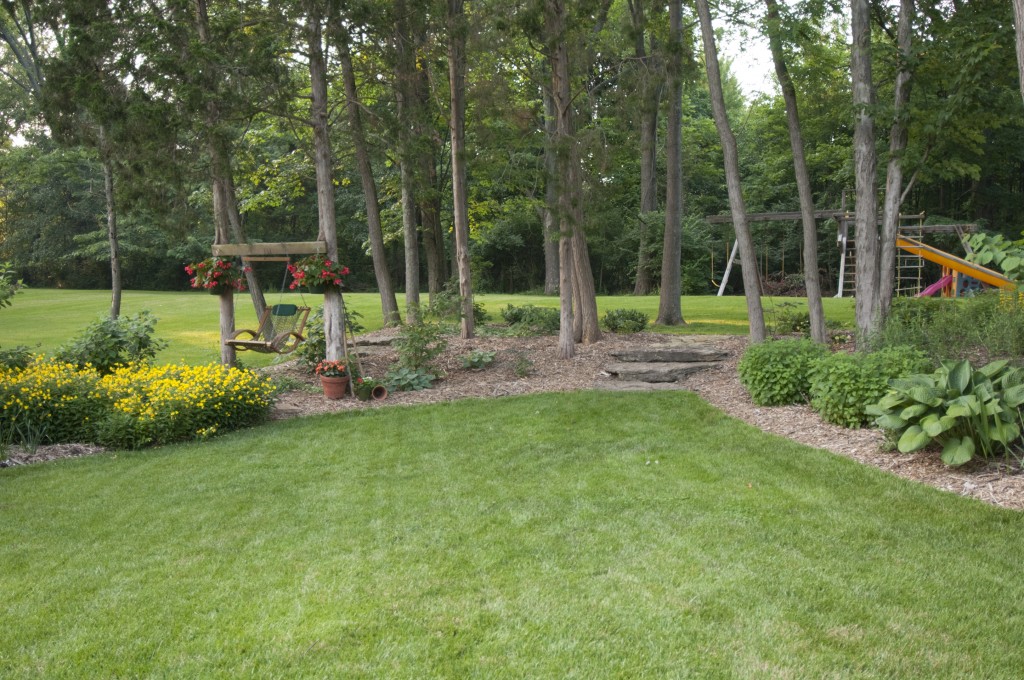
Here are some Spring Cleaning Tips for your Lawn:
- Clean up lawn debris – Remove trash, animal debris, dead grass, leaves, pine cones, sticks, etc from your lawn. Debris removal will not only make your lawn look better but it also eliminates hiding and feeding areas for pests and rodents.
- Rake Leaves – If you have piles of leaves left over from fall or some stragglers that have come down more recently, rake those up and dispose of them. Raking up leaves and removing debris will eliminate hiding spots for occasional invaders like millipedes, ants, and other pests.
- Check leftover firewood – Check under any leftover firewood for signs of pests that often hide between and underneath wood. Make sure that wood piles are located as far away from your home as possible. The last thing you want is termites next to your structure.
- Remove standing water – Standing water is a breeding ground for pests, especially mosquitoes. Dump water from bird baths or install drains that will aid in water flowing from your yard rather than gathering.
- Trim Bushes – By trimming your bushes you are not only making your lawn look aesthetically pleasing but you’re also reducing the risk of pests near the structure of your home.
- Apply pre-emergent – Now is the perfect time to prevent weeds from popping up in your lawn. Call a lawn care professional for the most effective products and treatment options for your lawn.
There’s no better time than now to trust Northwest’s experts to prepare your lawn to be healthy and green for the upcoming months so you can enjoy the outdoors!
Mar 18, 2013 | Uncategorized
Northwest’s Wildlife Services Team specializes in the exclusion, removal, and control of animal nuisances. Among our specialties are squirrels, rodents, raccoons, opossums, bees, armadillos, and chipmunks. An important wildlife service in the coming warm months is our snake removal! Our Wildlife team uses a Green product that is used to deter snakes. We also spend a great deal of time educating the customer on snakes.
Georgia is among the states with the highest biodiversity of snakes in the U.S. with 43 different species. They are located anywhere in Georgia from the mountains in the north to the barrier islands along our eastern coast. Below we have pictures and descriptions of the most common venomous snakes. If you spot one of these, call our Wildlife Services Team at 770.436.3362 to get them off your hands, or better yet, remove them very far away from your hands!
Copperhead

Copperhead
Copperheads are fairly large – anywhere from 2 to over 3 feet long! They have brown, triangular heads and elliptical pupils. You likely won’t want to get close enough to be sure, but they have two tiny dots at the center of the top of the head. More distinguishing features include yellow tails for juvenile snakes, and the brown bands that run along their body are in a distinct hourglass shape. They are found mostly in the forested areas of Georgia and South Carolina.
Cottonmouth/Water Moccasin
Cottonmouth
Water Moccasin
Just like copperheads, cottonmouths have large, triangular heads with elliptical pupils. They get the name water moccasin from their semi-aquatic nature and are likely to be found by mostly all types of freshwater habitats. These are more difficult to identify by appearance because they have a wide range of colors but tend to feature colors that will camouflage them into their habitats.
Eastern Diamondback Rattlesnake
Eastern Diamondback Rattlesnake
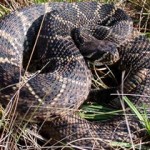
Eastern diamondbacks are among the largest of 32 species of rattlesnakes, ranging anywhere from 2.75 feet to 6 feet long. They have large, broad heads with two light lines on their faces. These are easily recognized by their brown diamonds, surrounded by lighter colored brown, tan or yellowish scales. They can be located anywhere from the southern part of North Carolina, but especially in South Georgia and Florida. They like to be in drier, sandy or low cut grass areas and tend to avoid wetter areas, though they are great swimmers and even travel through saltwater!
Canebrake/Timber Rattlesnake
Canebrake-timber rattlesnake
These snakes tend to range from about 3-5 feet in length and are usually gray with a pink, yellow, orange or brown stripe running along their back. They have solid black tails and black chevrons along the back and sides of their body with the point of the (V) pointing forward. They are found in most of the eastern United States, but are somewhat absent from Florida. They can be found in a wide range of areas, but are least likely to be found in highly urbanized or residential areas.
Pigmy Rattlesnake
Pigmy rattlesnake
This rattlesnake is on the smaller side, usually coming in at under 2 feet in length. This snake has 9 large scales on the top of it’s head and a tiny rattle that can rarely be heard. They have a row of mid-dorsal spots and a bar from the eye to their mouth that ranges from black to brownish. The name is deceptive as they can be gray, tan, lavender, orange, red, or even black. These are mostly located from central Georgia up throughout South Carolina. They also like to be near water sources like creeks, marshes, and swamps.
Eastern Coral Snake
Coral Snake
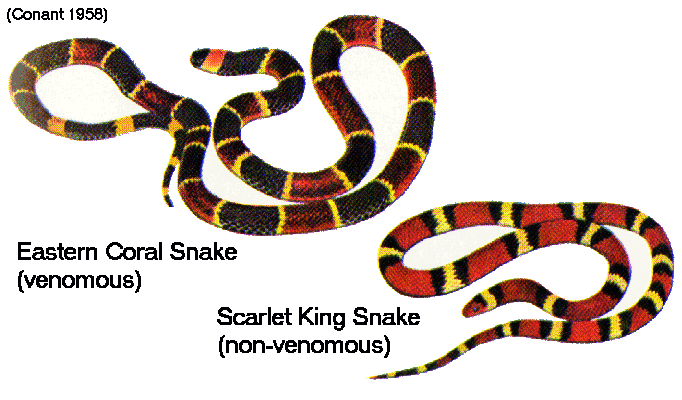
“Red on yellow, kills a fellow. Red on black, friend of Jack.” These snakes are sometimes up to 4 feet in length with smooth heads with a bright body pattern of black rings in which the red and yellow rings touch each other. These are sometimes confused with king snakes, but these snakes only have the red touching the black rings and are not venomous. These snakes are found all the way from Louisiana to Florida, where they are most prevalent. They are rarely spotted because they hide under ground and spend only a limited time crawling above ground. Unfortunately, because of these secretive habits, coral snakes tend to persist in suburban areas.
Melissa Brown
[email protected]
Sources:
http://georgiawildlife.com/node/497
https://uga.edu/srelherp/snakes/index.htm
http://srelherp.uga.edu/snakes/pics/agkcon210.jpg
http://srelherp.uga.edu/snakes/pics/agkpis210.jpg
http://srelherp.uga.edu/snakes/pics/agkpis4.jpg
http://srelherp.uga.edu/snakes/pics/croada210.jpg
http://srelherp.uga.edu/snakes/pics/crohor3.jpg
http://srelherp.uga.edu/snakes/pics/sismil210.jpg
http://www.petmd.com/sites/default/files/coral_snake.gif
Jan 25, 2013 | Pest Control, Wildlife
The NPMA recently posted an article on their website that explained the dangers that rodents can cause to your home and your health. We often talk in our blogs about the unsanitary conditions and the property damage that a rodent infestation can lead to but we rarely discuss the health risks that are involved.
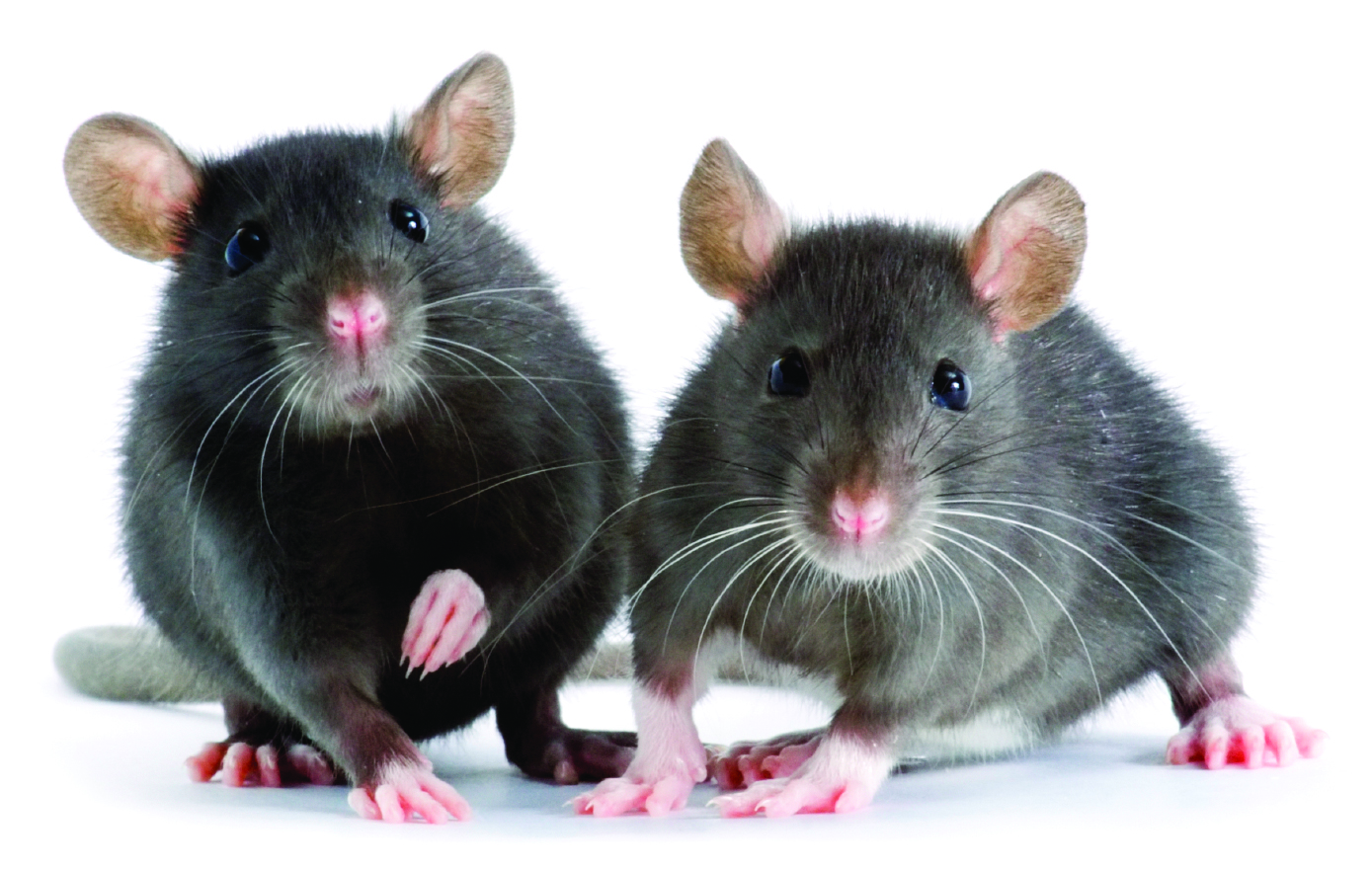
Rodents, such as mice and rats, can leave droppings that can spread bacteria, contaminate food, and cause allergic reactions. Droppings can also spread diseases and viruses such as the following:
- Hantavirus – “Hantavirus is a potentially life-threatening disease transmitted to humans by rodents—primarily, the white-footed deer mouse. People become infected through exposure or inhalation of infected rodent urine, droppings or saliva, and the chances increase when people are near spaces where rodents are actively living.”
- Bubonic plague – “…is usually spread by the bite of an infected rodent flea and can cause fever, headache and painfully swollen lymph nodes.”
- Salmonellosis – Salmonellosis is a type of food poisoning spread by rodent feces, especially through the consumption of contaminated food. Symptoms include diarrhea, fever and abdominal pain.”
- Rat-Bite Fever – “Rat-bite fever (RBF) is a potentially fatal infectious disease spread by infected rodents or the consumption of food contaminated by rodents.”
To read the full article or get more information on the diseases above click HERE.
Please don’t take chances with the health of you or your loved ones. If you have rodents in your home, call a licensed exterminator, Northwest Exterminating, to get rid of the rodents in your home.
Source: http://www.pestworld.org/news-and-views/pest-articles/articles/health-threats-posed-by-rodents/
Sep 17, 2012 | Pest Control
Around this time of year, cooler temperatures drive people to stay indoors. As some homeowners may know, a number of household pests such as rodents, spiders, ants, and roaches seek coziness from the weather too. Pests are more than just unwelcome houseguests – they bring the possibility of disease, food contamination and allergies too.
Below are some tips from the National Pest Management Association on pest-proofing your house for the fall. However, these tips don’t always work on some of those hard-to-get-rid -of pests, always remember you can call Northwest Exterminating for your pest management needs because creating healthier living and work environments is our business.
- Install door sweeps on the exterior of doors and repair door and window screens. Also seal cracks and holes around the perimeter of your home.
- Place screens over vents and chimney openings
- Store food in tightly sealed containers and dispose of trash regularly.
- Keep your attic, basement and crawl spaces well ventilated and dry (ask your Northwest representative about TAP attic insulation and Complete Crawlspace). Sites of moisture are breeding grounds for pests.
- Store firewood at least 20 feet away from the house and keep your lawn and shrubs trimmed and cut back from the house (ask your representative about Northwest’s services).
- If you suspect that your home has been infested, contact a licensed pest professional to inspect and treat the problem – for the best, Call Northwest!
Melissa Brown
[email protected]