
How Often Should You Inspect a Vacation Rental for Termites?

How Often Should You Inspect a Vacation Rental for Termites?

Quick answer: Inspect a vacation rental or second home for termites at least once a year. Coastal Lowcountry properties with a crawl space and an absentee owner often need more frequent checks or continuous monitoring, because swarmers, mud tubes, and moisture problems go unnoticed when nobody is there. Beaufort County’s established Formosan termites raise the stakes.

A termite infestation rarely announces itself. The early signs are visual: swarmers near a light fixture, a scatter of discarded wings on a windowsill, a thin mud tube behind lattice. They only help if someone is there to see them. For an owner of a vacation or rental property in Hilton Head, Bluffton, or Sun City, weeks or months can pass between visits, and a termite colony does not wait for the next booking.

This guide covers how often a second home should be inspected, what an absentee owner is likely to miss, why Beaufort County raises the stakes, and how continuous monitoring changes the picture. For the full service overview, see our page on termite control in Hilton Head.

How Often Should a Second Home Be Inspected for Termites?

At least once a year, and more often for a crawl space property in a coastal area with no one living there full time. Annual inspections are the baseline for most homes, as we explain in our post on the importance of annual termite inspections. An unoccupied rental simply has more unwatched time between them.

An annual inspection is a snapshot of one day out of 365. If a colony reaches a pier or foundation wall two months after the visit, nobody may notice until the next scheduled check, or until a renter mentions something offhand that never reaches the owner.

What Does an Absentee Owner Miss?

The early signs of termites, because most of them are brief or hidden. Swarmers and wings disappear within days, mud tubes form out of sight, and slow changes in flooring and moisture are hard to catch on occasional visits. Here is what tends to slip past.

  • Swarmers and discarded wings. They show up for a few days during swarm season, then get swept or blown away before the next visit.
  • Mud tubes. Tubes on piers and foundation walls often form behind lattice, shrubs, or stored items, outside the sightline of a quick walkthrough.
  • Soft flooring and blistered paint. A floor that felt fine in March can feel different by August, but gradual change is hard to notice if visits are rare.
  • Moisture problems. A slow leak or poor drainage under a crawl space builds up the conditions termites like, and nobody is there to see pooling water or rising humidity.
  • Guest observations that never get reported. A guest who notices something odd is on vacation, not doing an inspection, and rarely mentions it to the owner or property manager.

None of this means an absentee owner is doing something wrong. It means the property needs a plan built for being empty most of the time.

Why Does Beaufort County Raise the Stakes?

Because Formosan termites are established here. Clemson Extension lists Beaufort County among 16 South Carolina counties with established Formosan populations, and says many native colonies hold about 100,000 workers while Formosan colonies may hold a million or more. More workers feeding means damage can build faster between inspections.

That is a good reason to think hard about how often a Hilton Head or Bluffton property is checked, and what protection is in place between visits. For more on how Formosan termites behave and how they are treated, read our guide to Formosan termite treatment in Hilton Head.

Who Is Responsible for Termite Damage in a Rental?

Usually the owner, because termite damage affects the structure and the structure belongs to the owner. How responsibility is divided among owner, property manager, and tenant depends on the management agreement, so read yours before a problem comes up and make sure it says who reports what.

Property managers typically handle day-to-day upkeep and pass along issues they see or that guests report. A tenant or short-term guest generally has little responsibility for structural pest problems. This is a general description, not legal advice. If you own a rental in Hilton Head, Bluffton, Palmetto Bluff, or Sea Pines, review how your management agreement handles pest issues and reporting.

Is Continuous Monitoring Better Than an Annual Inspection?

For an unoccupied property, continuous monitoring covers the gap between inspections. Sentricon Always Active keeps bait in the stations all the time, so protection does not depend on a visit happening to line up with when a colony arrives or on someone being home to notice.

Monitoring does not replace inspections. It works alongside them, and it suits a rental where the owner is not present to catch early signs. Here is how one of our brand managers describes first inspections at rentals that have never had active monitoring:

“When we do a first inspection on a vacation rental that hasn’t had active monitoring in place, mud tubes are usually the first thing we find, and they’re often somewhere the owner would never think to look, behind lattice skirting, up a pier inside a crawl space, along a beam tucked against the foundation. The other thing we see regularly is moisture damage that’s already created ideal conditions for a colony to get established. As far as access and scheduling, we coordinate directly with the owner or their property manager.”

Charles Miller, Brand Manager, Laurens, SC

What Should You Know About Termite Coverage When Selling a Rental?

That the sale usually involves a wood infestation report and a conversation about what coverage the buyer gets. In South Carolina the report is the CL100, commonly required by lenders and purchase contracts. Our homebuyer guide to the CL100 explains what it is and what it is not.

What an agreement includes, and what happens to it at sale, depends on its terms. For a plain look at what agreements cover, read does your termite bond cover Formosan termites and see the agreements section of our termite control and treatment page. If a second home needs an agreement at all depends on how the property is used and your risk tolerance. A rental in documented Formosan territory with an absentee owner and a crawl space is a strong candidate. Northwest termite agreements cover Formosan subterranean termites.

What Does Termite Protection Look Like for Hilton Head and Bluffton Rentals?

Access is arranged with the owner or the property manager. Ask any provider how access is authorized, how scheduling works around stays, and what record you receive after each visit, so you can follow what is happening from a distance.

If you own a property in Hilton Head, Bluffton, Palmetto Bluff, Sea Pines, or Sun City and want to know what ongoing protection could look like for it, request a free termite inspection. Northwest serves Hilton Head Island, Bluffton, and Beaufort County from our Savannah team.

Frequently Asked Questions

How often should a vacation rental be inspected for termites?

At minimum, once a year. Coastal Lowcountry rentals with a crawl space and an absentee owner often benefit from more frequent checks or continuous monitoring, since gaps between visits are harder to manage when nobody lives there full time.

Do I need a termite bond on a second home?

It depends on the property’s risk and how it is used. A rental in a documented Formosan termite area, with a crawl space and no permanent resident, is a strong candidate for a termite agreement, since early detection matters more when nobody is there day to day.

Who is responsible for termite damage in a rental property?

It depends on the management agreement, but the owner typically carries the structural risk regardless of who manages the property day to day. This is general information, not legal advice, so review your own agreement.

Does a termite agreement transfer when I sell a rental property?

It depends on the agreement. Transfer terms vary by provider, so ask for the terms in writing. In South Carolina, buyers and lenders commonly expect a CL100 wood infestation report as well.

How do you inspect a property when the owner is not there?

Access is arranged in advance with the owner or the designated property manager. Ask the provider how scheduling works around guest stays and what record you will receive after each visit.

Find Out Where Your Rental Stands

If you own a rental or second home in Hilton Head or Bluffton and want a clear picture of its termite risk, request a free termite inspection. A Northwest professional can look at the property, explain what they find, and talk through ongoing protection.

Request a Free Termite Inspection

About the Author

Anna Vaccaro, Editorial Lead — Pest Education, leads pest education content for Northwest Exterminating, working with senior technicians and service center managers across our Georgia, Alabama, Tennessee, and South Carolina service areas to translate field expertise into homeowner-friendly guides. The focus: accurate, regionally-specific answers to the pest questions Southeast homeowners are actually searching for.


Formosan Termite Treatment and Protection in Hilton Head, SC

Formosan Termite Treatment and Protection in Hilton Head, SC

Quick answer: Yes. Clemson Extension lists Beaufort County, which includes Hilton Head, among 16 South Carolina counties with established Formosan termite populations. Treatment uses the same professional termiticides and baits as native termites, but Formosan colonies can be far larger, so inspection from foundation to roofline and ongoing monitoring matter more.

If you live on Hilton Head Island or in the Lowcountry, you have probably heard that Formosan termites are a local problem and wondered whether that is real or hype. It is real, and it is also manageable. This guide covers where Formosan termites are established, how they differ from the native termites most homeowners already know, which myths to ignore, and how treatment works. If you want the short version for your own property, see our page on termite control in Hilton Head.

Are Formosan Termites in Hilton Head, SC?

Yes. Clemson Extension names Hilton Head Island and the area near the city of Beaufort as places where Formosan termites are found. Clemson Extension lists Beaufort County among 16 South Carolina counties with established populations, with the heaviest concentration along the coast from Charleston south to Beaufort.

Presence in a county does not mean every neighborhood has them. Clemson points out that established infestations are found in some areas of a county, not uniformly across it. But Hilton Head, Bluffton, and the surrounding islands sit squarely in the coastal band where Formosan termites are best established.

They did not get here by flying. Clemson notes that Formosan swarmers are weak fliers, and that people are the main reason the species keeps spreading, mostly by moving infested material such as old railroad ties. Clemson also says an increase in mild winters and urbanization has probably helped the species spread in South Carolina.

What Makes Formosan Termites Different From Native Termites?

Mostly scale. Formosan and native subterranean termites live in soil, build mud tubes, and eat wood. The difference that matters to a homeowner is colony size: Clemson Extension says many native colonies hold about 100,000 workers, while Formosan colonies may hold a million or more.

Individual Formosan workers do not eat faster than native workers. Clemson’s point is that the sheer number of termites feeding at once makes a Formosan colony consume wood at a faster rate overall.

Three other differences show up in practice:

  • Carton nests. Formosan termites build nests from soil, digested wood, and saliva. They can sit below ground or, where a moisture source exists, inside wall voids and other spaces above ground. That is why a thorough inspection covers the structure from the foundation to the roof, not just the crawl space.
  • Swarm timing. Clemson says Formosan swarms often happen from mid-May to July, in the evening, with swarmers drawn to lights. Native termites usually swarm in early spring, often in the afternoon.
  • Swarmer appearance. Formosan swarmers are about half an inch long and golden brown. Native swarmers are about 3/8 inch and dark.

For a side-by-side comparison, read our guide to Formosan vs. Eastern subterranean termites.

What Are the Two Biggest Myths About Formosan Termites?

The first is that Formosan termites are immune to treatment. The second is that they nest above ground, so soil treatment does not work. The research behind Clemson’s guidance does not support either one, though the second has a real nuance worth knowing.

Myth: Formosan termites are resistant to treatment. They are not. Clemson Extension states that termites are not resistant to any insecticides and that professional-use termiticides, baits, and wood treatments work against Formosan termites at the same concentrations used for native species. Clemson also says Formosan termites are not “super termites.” The problem is colony size and how long a colony goes unnoticed.

Myth: Formosan termites mostly nest above ground. A Clemson survey of 50 Formosan-infested structures in Charleston in the 1980s found that 94 percent were infested from ground-based colonies and 6 percent from aerial colonies. An above-ground moisture source was the key factor in aerial nests. Clemson adds that aerial nests may be more common in South Carolina now than they were in that study, and that soil treatment does not reach an aerial nest. So the fair summary is: most infestations come from the ground, and a good inspection still checks above it.

What Are the Signs of Formosan Termites in a Lowcountry Home?

Swarmers near a light on a warm evening, mud tubes on foundation walls or piers, and carton material in a crawl space or wall void are the clearest signs. Discarded wings near windows, hollow-sounding wood, and sagging floors or bubbling paint can also point to hidden activity.

  • Swarmers and shed wings near windows, doors, and light fixtures, especially at dusk in late spring and summer
  • Mud tubes along foundation walls, piers, and crawl space supports
  • Carton material in wall voids or crawl spaces, a firm, grayish substance made of soil, digested wood, and saliva
  • Hollow-sounding or blistered wood around trim, sills, and framing
  • Sagging floors or bubbling paint, which can signal moisture and concealed activity

Coastal properties often have conditions that make life easier for any termite colony: damp crawl spaces, wood touching the ground at porches or steps, and irrigation that keeps soil wet against the foundation. Fixing those conditions lowers risk even before treatment starts.

“Formosan termite activity can be easy to miss at first. Homeowners may notice signs such as carton material in a crawl space or mud tubes along a foundation. If you see anything unusual, it’s best to have it inspected promptly.”

Charles Miller, Brand Manager, Laurens, SC

If you see any of these signs, do not keep poking at it yourself. Colonies can be large and hard to assess from the surface. A trained technician can find where the activity is coming from.

How Does Formosan Termite Treatment Work?

It starts with a full inspection, then continues with monitoring and baiting or soil treatment, plus fixing conditions that attract termites. The products are the same ones used against native termites. What changes is the inspection scope, which runs from the foundation and crawl space up to the roofline.

A technician looks for mud tubes, carton material, moisture problems, and wood-to-soil contact. After the inspection, ongoing protection often relies on baiting and monitoring, such as Sentricon Always Active, which keeps bait stations in place around the home between inspections. Because a Formosan colony can be so large, catching activity early matters.

Correcting excess crawl space moisture, poor drainage, and irrigation against the foundation is part of a complete plan. Those conditions do not create a Formosan infestation on their own, but they make a property more welcoming to an existing colony. For more on how the program works, see our overview of termite control and treatment and Sentricon Always Active.

Termite Protection for Hilton Head, Bluffton, and Beaufort

Northwest serves Hilton Head Island, Bluffton, and Beaufort County from our Savannah team, and our termite agreements cover Formosan subterranean termites. Our page on termite control in Hilton Head explains the service, and the Savannah location page lists the areas we cover.

If you already have an agreement, check whether it names Formosan termites. Our guide to whether your termite bond covers Formosan termites shows what to look for. If a previous provider ended your coverage, read what to do when your termite coverage is canceled.

Frequently Asked Questions

Are Formosan termites in Hilton Head, SC?

Yes. Clemson Extension lists Beaufort County, which includes Hilton Head, among 16 South Carolina counties with established Formosan termite populations. The heaviest concentration is along the coast from Charleston south to Beaufort.

What are Formosan termites?

Formosan subterranean termites are an introduced species of subterranean termite now established in parts of the coastal Southeast, the Gulf Coast, Hawaii, and a few other areas. They live in soil, build mud tubes, and can build carton nests above ground where moisture is present. Their colonies can be much larger than native colonies.

How do you get rid of Formosan termites?

A professional inspects the structure from the foundation to the roofline, then treats with soil termiticides, baits, or both, and corrects conditions such as moisture and wood-to-soil contact. Clemson Extension says professional products work against Formosan termites at the same concentrations used for native termites.

Are Formosan termites resistant to treatment?

No. Clemson Extension states that termites are not resistant to any insecticides. Professional termiticides and baits work against Formosan termites at the same concentrations used for native subterranean termites.

Do Formosan termites always nest above ground?

No. A Clemson survey of 50 Formosan-infested structures in Charleston in the 1980s found 94 percent were infested from ground-based colonies and 6 percent from aerial colonies. Aerial nests can happen where there is an above-ground moisture source, which is why inspections should cover the whole structure.

Get a Straight Answer on Your Property

If you have seen swarmers, mud tubes, or anything that looks like carton material, or you simply want to know where your Hilton Head or Bluffton property stands, request a free termite inspection. A trained technician will look at the whole structure with you and explain what they find.

Request a Free Termite Inspection

About the Author

Anna Vaccaro, Editorial Lead — Pest Education, leads pest education content for Northwest Exterminating, working with senior technicians and service center managers across our Georgia, Alabama, Tennessee, and South Carolina service areas to translate field expertise into homeowner-friendly guides. The focus: accurate, regionally-specific answers to the pest questions Southeast homeowners are actually searching for.


Does Your Termite Bond Cover Formosan Termites?

Does Your Termite Bond Cover Formosan Termites?

Quick answer: Not automatically. Some termite agreements treat Formosan subterranean termites the same as native species. Others exclude them by name, or cover retreatment but cap repairs for Formosan damage. The wording of your own agreement decides it, so read the species and exclusion language and ask your provider to confirm in writing.

Termite agreements vary by company, state, and sometimes by property. Some were written with native subterranean termites in mind, before Formosan colonies became established along the coastal Southeast. That gap between what an agreement was designed for and what it now has to cover is where problems tend to surface, usually after damage turns up.

This guide explains what a termite bond covers, where Formosan-related exclusions tend to hide, and why the details matter in Beaufort County. It also covers what Northwest agreements say about Formosan termites. If you are weighing termite control in Hilton Head, the questions below are the ones to settle first.

What Does a Termite Bond Cover?

A termite bond, more accurately called a termite service agreement, is a contract for ongoing termite protection. Depending on the document it covers retreatment, repairs for new termite damage, or both. It is not insurance, and it only covers what the written terms say it covers.

Retreatment-only agreements

A retreatment-only agreement means the company treats again if termites are found active after the initial service, subject to its terms. It does not pay to repair damage. Restoring damaged wood, drywall, or flooring stays with the homeowner.

Repair agreements

A repair agreement includes retreatment and may also cover repairs for new termite damage found after the agreement starts. Repair coverage usually comes with a stated dollar cap, and that cap is the most the agreement will pay no matter what the damage costs.

Bond, warranty, guarantee, contract

Homeowners use these words interchangeably, but they do not describe one standard product. A bond or warranty generally means a termite service agreement. A guarantee may be one specific promise inside it. For a plain-English comparison, see our post on the difference between a termite bond and a termite warranty. Standard homeowners insurance typically excludes termite damage as a maintenance issue, so the agreement is usually the only financial protection in place.

Does a Termite Bond Cover Formosan Termites?

It depends on the agreement. Three patterns are common: full coverage, full exclusion, and partial coverage. Price, provider name, and what a neighbor’s agreement says tell you nothing. Only the species language and exclusion clauses in your own document do.

  • Full coverage: the agreement treats Formosan subterranean termites the same as native species, with no separate exclusion or cap.
  • Full exclusion: the agreement names Formosan termites and excludes them, or limits coverage to a species list that leaves them out.
  • Partial coverage: the agreement covers retreatment but caps or excludes repair payments when the damage is traced to Formosan termites.

If anything is unclear, ask your provider to clarify in writing.

Where Do Formosan Exclusions Hide in an Agreement?

Rarely in one clear clause. Exclusion language is usually spread across several sections, so scanning for the word “Formosan” is not enough. Read the whole document and check five areas: species language, damage caps, above-ground clauses, inspection requirements, and conducive conditions.

  • Species language. Some agreements say “subterranean termites.” Others list covered species one by one. If it is unclear, get written confirmation.
  • Damage caps. A repair cap set with native-termite damage in mind may fall short for a larger Formosan colony.
  • Above-ground clauses. Some agreements cover only soil-borne activity and exclude infestations that start above ground.
  • Inspection requirements. Many agreements require scheduled inspections to keep coverage in force. Missing one can affect coverage, whatever the species.
  • Conducive conditions. Moisture problems, wood-to-ground contact, and untreated additions can affect coverage if the agreement requires you to fix them.

In South Carolina, state regulation requires the paperwork that comes with a subterranean termite control contract or warranty to say whether Formosan coverage is included, and whether that coverage is retreatment only or also includes repair of damage (S.C. Code Regs. 27-1085). If your paperwork does not say, ask your provider.

Why Does This Matter More in Beaufort County?

Clemson Extension lists Beaufort County among 16 South Carolina counties with established Formosan subterranean termite populations, most concentrated along the coast from Charleston south to Beaufort. Hilton Head and Bluffton are both in Beaufort County, so species language in a local agreement is a practical question, not a theoretical one.

The core issue is colony size. Clemson notes that many native colonies hold about 100,000 workers, while Formosan colonies may hold a million or more. More workers feeding at once means damage can build faster before anyone spots it. Two common misconceptions are worth clearing up.

Formosan termites are not resistant to professional treatment. According to Clemson Extension’s Formosan termite factsheet, termites are not resistant to any insecticides, and professional termiticides and baits work against Formosan termites at the same concentrations used for native species. The “super termite” label refers to colony size, not immunity.

Most Formosan infestations still start in the ground. A Clemson survey of 50 Formosan-infested structures in Charleston in the 1980s found that 94 percent were infested from ground-based colonies and 6 percent from aerial colonies. Clemson also notes that aerial nests may be more common now, and recommends inspecting the house from the foundation to the roof, not just at the first-floor level. Coverage language that excludes above-ground activity deserves a close look for that reason.

The practical takeaway: Formosan termites are a problem of scale and early detection, not of treatment failing. The risk for homeowners is a coverage gap between what the agreement addresses and how much damage a large colony can cause before it is found.

Is a Termite Bond Worth It?

For most homeowners in Formosan territory, an agreement with clearly stated species coverage is worth having. Insurance typically will not pay for termite damage, repairs can run large, and regular inspections raise the odds of catching activity early, before a colony has time to do real harm.

It is not the right fit for everyone. An owner who is comfortable paying for repairs out of pocket, with a newer home and no termite history, may reasonably choose a retreatment-only agreement. The right answer depends on the terms, the property, and how much financial exposure you are willing to carry.

What Should You Do If Your Agreement Does Not Cover Formosan Termites?

Start by reading the agreement and asking your provider what it covers. Clemson Extension advises homeowners to read the most recent version of their bond and talk with the company about which species and damage it covers. Depending on the terms, the contract may need to be amended or rewritten. From there, take these steps:

  1. Ask your current provider for written clarification. Ask whether Formosan subterranean termites are covered under the species language, and whether the repair cap applies differently to Formosan damage.
  2. Compare agreements that name Formosan termites. Look for species language that mentions them directly, not a general category open to interpretation.
  3. Avoid a lapse. A gap between agreements removes treatment and repair protection while you decide. If your coverage was canceled, read our guide on what to do when your termite provider cancels your coverage.

Do Northwest Agreements Cover Formosan Termites?

Yes. Northwest termite agreements cover Formosan subterranean termites. We serve Hilton Head Island, Bluffton, and Beaufort County, and we use Sentricon Always Active for continuous termite monitoring. Ask for the agreement in writing and read the species and exclusion language before you sign anything, ours included.

Learn more about termite control in Hilton Head or see how termite control and treatment works across the Northwest service area.

Frequently Asked Questions

What does a termite bond cover?

A termite bond, more accurately called a termite service agreement, typically covers retreatment of active termites, repair of resulting damage, or both, depending on the agreement type. It does not cover anything outside the terms written in the document.

Does a termite bond cover Formosan termites?

It depends on the agreement. Some cover Formosan subterranean termites under a general subterranean termite category. Others exclude them by name, or cover treatment but cap or exclude repair payments for Formosan damage. Northwest termite agreements cover Formosan subterranean termites.

What is the difference between a retreatment-only and a repair termite bond?

A retreatment-only agreement covers additional treatment if termites return but does not pay for structural repairs. A repair agreement includes retreatment and repair of resulting damage, typically up to a stated dollar cap.

Are Formosan termites resistant to termite treatment?

No. Clemson Extension reports that termites are not resistant to any insecticides, and that professional termiticides and baits work against Formosan termites at the same concentrations used for native subterranean termites. The challenge with Formosan termites is colony size, not resistance.

Does homeowners insurance cover termite damage?

Generally, no. Standard homeowners policies typically exclude termite damage as a maintenance issue. That is why a termite service agreement is usually the main financial protection a homeowner has against termite repair costs.

Review Your Agreement Before You Need It

Termite damage tends to surface at inconvenient times: during a home sale, a renovation, or a routine inspection that finds more than expected. Reading your agreement now, instead of after damage turns up, shows you what you are covered for and where the gaps are. If you want a second set of eyes on your coverage or are due for an inspection, request a free termite inspection and a Northwest professional will walk you through the options.

Request a Free Termite Inspection

About the Author

Anna Vaccaro, Editorial Lead — Pest Education, leads pest education content for Northwest Exterminating, working with senior technicians and service center managers across our Georgia, Alabama, Tennessee, and South Carolina service areas to translate field expertise into homeowner-friendly guides. The focus: accurate, regionally-specific answers to the pest questions Southeast homeowners are actually searching for.


Your Termite Provider Canceled Your Hilton Head Coverage: What to Do Next

Your Termite Provider Canceled Your Hilton Head Coverage: What to Do Next

Quick answer: A canceled termite bond ends your coverage on the date in the notice, and a bond generally cannot be transferred to a new provider. A new company inspects your property and issues its own agreement. In Beaufort County, where Formosan termites are established, closing the gap before the date passes matters.

If a letter just arrived saying your termite bond is being canceled, you may still be getting general pest visits from the same company. That is common. Termite coverage and general pest control are often sold and canceled separately, even when the same provider handles both.

What you do not want is to leave the termite side unaddressed. Clemson Extension lists Beaufort County among 16 South Carolina counties with established Formosan termite populations. A lapse in coverage here is more than a paperwork gap. It can mean a gap in active treatment and, depending on your old agreement, in repair coverage if damage turns up later.

Here is what happens when a bond is canceled, what a new agreement can and cannot pick up, and how to get coverage back in place before your date passes. For the full service overview, see our page on termite control in Hilton Head.

Can You Transfer a Termite Bond to a New Company?

Generally, no. A termite bond is a contract between you and one pest control company, and a new company will not take on liability based on another provider’s paperwork. When you switch, the new provider inspects your property and issues its own agreement, on its own terms.

What does transfer, and how to get it in writing

Your treatment history does. If your home was treated with a liquid termiticide barrier or a baiting system like Sentricon, that work is still in the soil and structure. A new company can review that history as part of its inspection, even though it cannot take responsibility for work another company did. Before your current coverage ends, request the following in writing:

  • The exact cancellation date
  • A record of all termite treatments, including products used and application dates
  • Any prior damage findings or retreatment history
  • A copy of your original agreement, if you do not already have one

A new provider can use these records to judge if your home needs a full retreatment or can go under a new agreement with a monitoring-based approach.

What Actually Happens When a Termite Bond Is Canceled?

Coverage ends on the date stated in the notice, not the date of your last treatment. The treatment already in your soil does not vanish that day, but the company’s contractual duty to retreat, monitor, or repair does. That catches many homeowners off guard.

Most termite agreements fall into two types. A retreatment-only agreement obligates the company to treat again if termites return, but not to pay for repairs. A repair-inclusive agreement covers both, usually up to a stated dollar limit. When a bond is canceled, those obligations stop either way. A termite agreement is a contractual promise, not a chemical guarantee. Our guide on termite bonds versus termite warranties explains the difference, and what a termite bond covers, including for Formosan termites shows where exclusions tend to hide.

Why was your coverage canceled?

A cancellation notice is not necessarily a finding about your property. Providers sometimes stop offering termite agreements in an area or on certain contract types. Ask your provider for the reason in writing, and ask whether it relates to your home or to the agreement type.

What Does a Coverage Gap Expose a Hilton Head Home To?

A gap leaves a home without an active provider watching for termites, in a county where Formosan termites are established. Formosan colonies can also be far larger than native ones: Clemson Extension says many native subterranean colonies hold around 100,000 workers, while Formosan colonies may hold a million or more.

That scale can speed up damage once termites reach a structure. Formosan termites can also build above-ground carton nests where there is a steady moisture source, so they do not always depend on soil contact. A Clemson survey of 50 Formosan-infested structures in Charleston in the 1980s found most infestations still started from ground-based colonies, 94 percent against 6 percent from aerial colonies, but Clemson notes aerial nests may be more common now and recommends inspecting from the foundation to the roof. An inspection that only checks foundation-level entry points can miss activity higher in the house. Our post on Formosan termite treatment in Hilton Head goes into how that works.

Lowcountry humidity and the number of homes on crawl space foundations add to the case for acting before the cancellation date. If you wait until after the bond lapses to schedule an inspection, the home spends that time with no one watching it.

How Do You Replace Termite Coverage, Step by Step?

Replacing coverage takes four steps: collect your records, book an inspection, read the new agreement closely, and time the start date so it begins before the old coverage ends. Doing them in this order keeps the gap as short as possible, or removes it.

  1. Get your cancellation date and treatment history in writing. Ask your outgoing provider for the documents listed above before coverage ends.
  2. Schedule a new inspection. This is standard practice, not a sign something is wrong with your home. Providers generally inspect a property before issuing an agreement.
  3. Read what the new agreement covers before you sign. Confirm whether it is retreatment only or retreatment plus repair, and whether Formosan termites are named.
  4. Close the gap before your cancellation date. If you can, have the new agreement start before the old one ends so there is no window without coverage.

What Should You Ask Before You Sign With a New Termite Company?

Ask every provider you consider these questions, and get the answers in writing before you commit to a new agreement in Beaufort County. The first two matter most, because they decide whether Formosan damage is covered and who pays for repairs.

  • Does the agreement specifically cover Formosan subterranean termites, or only native species?
  • Is it retreatment only, or does it include damage repair, and up to what limit?
  • Does the agreement transfer to a new owner if you sell the home? (Separately, buyers and lenders commonly want a CL100 report, which our homebuyer guide to the CL100 explains.)
  • Is the company licensed to perform termite work in South Carolina, and can it issue a CL100 wood infestation report?
  • How often will the property be inspected, and is monitoring continuous or periodic?
  • What does renewal cost each year, and under what conditions can that cost change?

Clear answers up front prevent the kind of confusion that often comes with a canceled bond. If you would like a straight answer on your own coverage, request a free estimate and we will go over your property’s specific risk factors.

How Much Does a Termite Bond Cost?

It depends on the property. Square footage, construction type, whether the home has a crawl space or slab, and whether the agreement is retreatment only or includes repair coverage all affect the price. Repair-inclusive agreements generally carry more liability for the provider, which tends to show up in the price.

Crawl spaces can also call for more inspection access. Because the price depends on your home, the most reliable number comes from an inspection. You can request a free estimate for your property, and our termite control and treatment page describes how our agreements work.

Does Northwest Cover Hilton Head, and Do Our Agreements Cover Formosan Termites?

Yes to both. Northwest Exterminating serves Hilton Head Island, Bluffton, and Beaufort County, and Northwest termite agreements cover Formosan subterranean termites. We use Sentricon Always Active, a continuous baiting and monitoring system, as part of our termite protection. Ask any provider for the agreement in writing before you decide.

If your current bond has been canceled or is about to end, we start with an inspection that documents your home’s current condition and any treatment history you can share. Then we walk through what our agreement covers before you sign. As with any provider, ask for the agreement in writing and read the species and exclusion language, ours included.

To read more about how continuous monitoring differs from periodic inspection visits, see our page on Sentricon Always Active.

Frequently Asked Questions

Can I transfer my termite bond to a new company?

Generally, no. A termite bond is a contract with a specific provider and cannot be reassigned to another company. A new provider will inspect your property and issue its own agreement, though your prior treatment records can inform that process.

Do I need a new termite inspection to get a new bond?

Yes, in general. Providers inspect a property before issuing an agreement, since they are taking on responsibility based on the home’s current condition. That applies even if another company treated the home recently.

Do I need a termite bond in South Carolina?

South Carolina does not require homeowners to carry a termite bond. Given the state’s termite pressure, including established Formosan populations in Beaufort County, many homeowners choose an agreement for ongoing monitoring and treatment.

Does a termite bond cover Formosan termites?

It depends on the agreement. Some bonds are written for native subterranean termites only, or cap or exclude Formosan damage. Northwest termite agreements cover Formosan subterranean termites. With any provider, confirm in writing that Formosan termites are included before you sign.

How much does a termite bond cost?

Cost depends on your home’s size, foundation type, and whether the agreement covers retreatment only or includes repair coverage. Repair-inclusive agreements generally carry more liability for the provider. A free inspection gives you a price for your specific property.

Close the Gap Before Your Coverage Ends

If your termite bond has been canceled or is about to expire, do not wait for the date to pass. Request a free estimate from Northwest Exterminating for a clear picture of what your home needs.

Request a Free Estimate

About the Author

Anna Vaccaro, Editorial Lead — Pest Education, leads pest education content for Northwest Exterminating, working with senior technicians and service center managers across our Georgia, Alabama, Tennessee, and South Carolina service areas to translate field expertise into homeowner-friendly guides. The focus: accurate, regionally-specific answers to the pest questions Southeast homeowners are actually searching for.


Green Termite Bait Stations in Your Yard: What They Are and What to Do

Green Termite Bait Stations in Your Yard: What They Are and What to Do

By Anna Vaccaro, Editorial Lead — Pest Education · Last updated: September 2026

Quick answer: Those green discs set flush in the soil around your foundation are termite bait stations. They are part of a monitoring and colony elimination system, most often the Sentricon System with Always Active technology. Leave them in place, keep them clear of mulch and grass, and let your provider know if one is damaged or missing. Northwest services these stations once a year, which is the interval the manufacturer’s label allows.

Green circles in the yard tend to get noticed on a weekend. You are edging the beds or walking the property line and there they are, a ring of flat green discs spaced evenly around the house. They are not irrigation heads, septic markers, or leftovers from the builder. This guide covers what they are, why they showed up, how often they get serviced, and the handful of things worth doing and not doing once you know.

What Are the Green Circles in Your Yard?

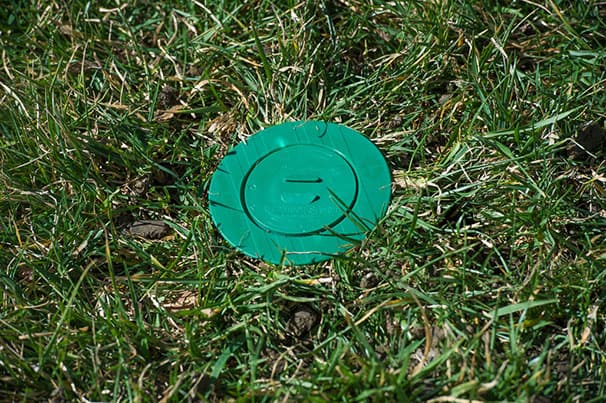
They are termite bait stations, also called termite monitoring stations or in-ground termite traps. Each one is a plastic housing sunk into the ground with a lid that sits flush with the soil, roughly the size of a coffee cup lid. They are installed at intervals around the perimeter of a home, usually every ten feet or so, which is why they read as a deliberate ring rather than something scattered.

The green color is not decorative. It makes the stations findable by a technician a year later, after mulch has been turned over and grass has grown in, while staying unobtrusive enough that most homeowners never think about them.

Most stations in the Southeast belong to the Sentricon System with Always Active technology. They target subterranean termites, the species responsible for the large majority of termite damage in the United States and the reason subterranean termites are treated as a structural risk rather than a nuisance pest.

How Do Termite Bait Stations Work?

A liquid barrier treatment puts a chemical zone in the soil that termites have to cross. Bait works the other way around. Instead of waiting at the perimeter, it gets carried home.

  • Termites find the bait on their own. Subterranean termites forage constantly through the soil looking for cellulose. A station sitting in their path is simply another food source.
  • They share it. Worker termites carry the bait back and feed it to the rest of the colony through normal food exchange, so it reaches insects that never visited the station.
  • The colony stops replacing itself. The active ingredient in Sentricon’s Recruit HD bait is noviflumuron, an insect growth regulator that interferes with molting. Termites have to molt to grow. When they cannot, the colony loses its workers and, with them, its ability to feed the queen.
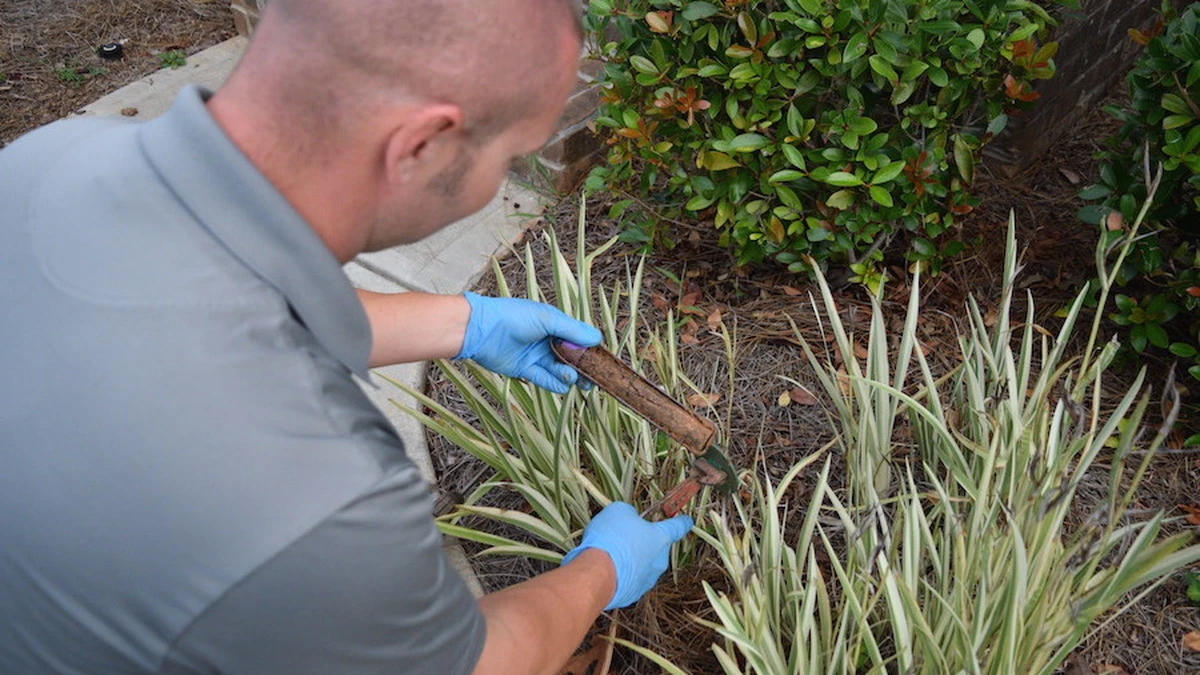
Northwest technician inspecting the bait cartridge removed from an in-ground termite station

The word “Always Active” is the part that matters for how the system is serviced. Older baiting systems shipped with an inert piece of wood inside the station. A technician had to visit, find termite activity on that wood, and only then swap in the actual bait. Always Active stations contain bait from the day they go in the ground, so there is no monitoring phase and nothing waiting to be triggered.

Why Did Stations Appear at My Home?

Usually one of four reasons.

  1. New construction. Many builders include termite protection as standard, and in some markets it is required. If the home is recently built, the stations likely went in before you did.
  2. A recent service. Someone scheduled termite protection and installation happened on a weekday you were out.
  3. A previous owner. Termite agreements often transfer with the property. The stations may predate you by years, along with a warranty you have inherited.
  4. A proactive plan. In areas with steady subterranean pressure, plenty of homeowners install protection before there is any sign of a problem, which is the cheapest point at which to deal with termites.

If you are not sure which applies, the paperwork will say. Our explainer on the difference between a termite bond and a termite warranty covers what those agreements actually commit each side to.

How Often Do Termite Bait Stations Need to Be Checked?

For Sentricon Always Active stations, once a year. That is the interval Northwest works to, and it is what the manufacturer’s label allows. Sentricon states that “label directions for Always Active technology allow your Certified Sentricon Specialist to perform service once per year, though some will come more often.”

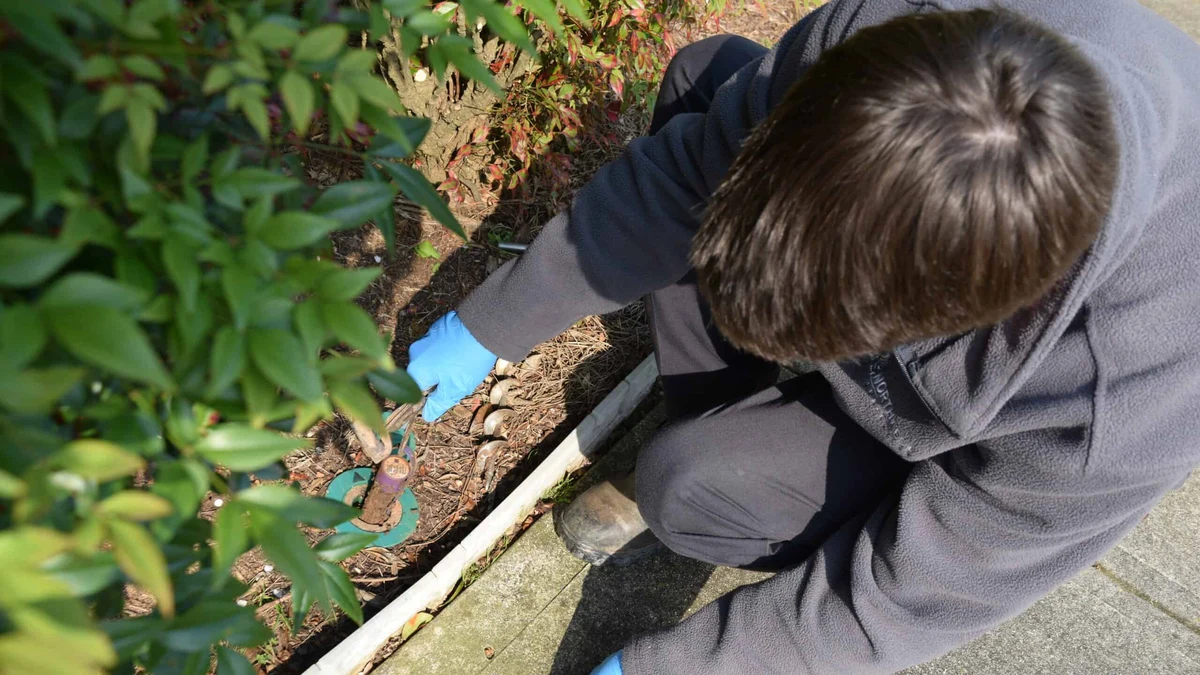
Northwest technician opening a green Sentricon termite bait station during annual service

That surprises people who remember quarterly visits, so it is worth being clear about why the interval changed. It is not a reduction in protection. It is a consequence of the bait being in the station full time.

  Older monitoring systems Always Active
What is in the station A wood monitor, no bait Bait, from installation onward
Why a technician visited To look for activity and then add bait To inspect and replenish as needed
Typical interval Quarterly Annual
Protection between visits None until bait was added Continuous

Annual is the standard interval, not a cap. If a station shows a hit, if there is a history of activity on the property, or if conditions around the structure change, a technician comes back more often. The agreement governs the specifics, so if you want the exact terms for your property, that document is the place to look.

Alongside station service, a Northwest termite agreement includes an annual interior inspection at no extra charge. That is the visit where a technician walks the inside of the home looking for the evidence covered in our guide to what termite inspectors look for.

Are Termite Bait Stations Safe Around Children and Pets?

This is the most common follow-up question, and it deserves a straight answer rather than a reassuring one.

Bait stations contain a registered pesticide. What makes them a low-exposure option is how and where the product sits:

  • The bait is enclosed and below grade. The station is a locking housing installed in the ground. The bait is not loose in the soil and is not broadcast across the yard the way a spray would be.
  • The active ingredient targets a process insects depend on. Noviflumuron is an insect growth regulator. It disrupts molting, which is central to how insects grow and irrelevant to mammals.
  • It stays where it is put. According to the manufacturer, the active ingredient is not systemic, so it is not taken up by nearby plants, and the potential for leaching is very low. That is the reason stations can sit near vegetable beds and ornamentals without a separate conversation.
  • It is EPA registered. Recruit HD is registered with the Environmental Protection Agency under registration number 62719-608. The Sentricon system also received the EPA’s Presidential Green Chemistry Challenge Award in 2000, in the Designing Greener Chemicals category.

The practical guidance is the same as for anything else in the yard: leave the stations closed, do not let children pry at the lids, and if a station has been broken open or dug up by a dog, call your provider rather than handling the contents.

What Should You Do If You Have Stations in Your Yard?

Very little, which is the point. Four things are worth knowing.

  • Leave them where they are. Placement is deliberate. Stations are positioned to intercept termites along the routes they actually travel, and moving one to tidy up a flower bed takes it out of that path.
  • Keep the lids findable. Mulch, grass clippings, pine straw, and soil wash over the lids across a year. A quick clear before a scheduled service saves the technician from probing for a buried station.
  • Do not cover or pave over them. Landscape fabric, stacked pavers, planters, and stored equipment all block access. If a project is going to change the grade or hardscape near the foundation, tell your provider first so stations can be relocated properly.
  • Report damage. Mower decks, string trimmers, and contractors take out stations regularly. A cracked or missing station is a gap in the ring, and replacing it is routine.

Mowing over a lid is not a disaster. Leaving the gap unreported for a year is the part that costs something.

Bait Stations or Liquid Treatment: Which Is Right?

Both are legitimate. They solve the problem differently and suit different properties.

  Bait stations Liquid barrier
Approach Eliminates the colony through shared bait Treats the soil around the structure
Installation Stations placed around the perimeter Trenching and drilling around the foundation
Product volume Small, contained in stations Larger, applied through the soil
Ongoing service Annual inspection Periodic reapplication as the barrier degrades
Visible in the yard Yes, the green lids No

Which one fits depends on the construction of the home, the soil, the drainage, and what the property’s termite history looks like. Our post on the benefits of termite baiting systems goes further into where baiting has the advantage, and Northwest’s termite control service covers both approaches.

For background on the species these systems are built around, the National Pest Management Association maintains a profile of subterranean termites and the damage they cause.

What If You Don’t Have Green Stations?

No stations means no active termite protection, and that is worth knowing rather than assuming. Subterranean termites do not care how old a house is or how well it was built. They need wood and moisture, and every home has the first.

The economics are lopsided in an unusual way for home maintenance. The National Pest Management Association puts termite damage at more than $5 billion a year in the United States, and that damage is typically not covered by homeowners insurance. Prevention and monitoring cost a fraction of structural repair, and an inspection establishes whether there is existing activity and what the property’s actual risk looks like.

Schedule a Termite Inspection
Call (888) 466-7849

Frequently Asked Questions

How often do termite bait stations need to be checked?

Sentricon Always Active stations are serviced once a year. That is the interval the manufacturer’s label allows, because the bait is present in the station continuously rather than being added after activity is found. Northwest works to that annual schedule and returns more often when a station shows activity or the property’s history calls for it. Your service agreement sets the specific terms.

How long do termite bait stations last?

The stations themselves stay in the ground indefinitely and are replaced only when damaged. The bait inside is inspected and replenished at each annual service. Protection continues as long as the agreement is active and the stations remain in place and accessible.

Do termite bait stations actually work?

Yes, when they are professionally installed, correctly spaced, and serviced on schedule. Bait eliminates the colony rather than repelling foragers, which is why it addresses the source instead of the symptom. The two things that undermine a system are stations that get buried or blocked and lapsed service.

Are termite bait stations safe for children and pets?

The bait is enclosed in a locking station installed below grade, not spread across the yard. The active ingredient, noviflumuron, is an insect growth regulator that disrupts molting. The product is EPA registered and, per the manufacturer, is not systemic and has very low leaching potential. Leave the stations closed, and contact your provider rather than handling the contents if one is broken open.

Can I install termite bait stations myself?

Retail kits exist, but the professional Sentricon system is available only through Certified Sentricon Specialists. Spacing, placement relative to conducive conditions, and documented service history are what make a system effective, and a self-installed system does not come with a warranty on the structure.

What should I do if a station is damaged or missing?

Contact your provider. A cracked lid, a station knocked loose by lawn equipment, or one removed during landscaping leaves a gap in the perimeter. Replacement is routine and does not require re-treating the property.

What to Take Away

Green circles in the yard are not a problem. They are the evidence that someone already dealt with one. Leave them in place, keep them clear, report damage, and expect a technician once a year.

If you are unsure whether your home has active protection, or you have inherited stations with paperwork you have never seen, a termite inspection will tell you where you stand.

About the Author

Anna Vaccaro, Editorial Lead — Pest Education, leads pest education content for Northwest Exterminating, working with senior technicians and service center managers across our Georgia, Alabama, Tennessee, and South Carolina service areas to translate field expertise into homeowner-friendly guides. The focus: accurate, regionally-specific answers to the pest questions Southeast homeowners are actually searching for.

Pin It on Pinterest

Call Now Button