Apr 20, 2018 | Termite Control
If you’ve been outside lately you’ve probably seen signs of spring – blooming flowers, pollen that aggravates our allergies, and lots of new insects buzzing around. Another thing that spring brings is swarms – of termites! Termites are present year round but their swarming season is during spring and early summer.
Termites cause billions of dollars in damage to homeowners each year. Here in the Southeast, subterranean termites are the most common types and are particularly destructive. These insatiable eaters can damage not only wooden structures, but have even been known to cause damage to brick and concrete homes as well. Termites can invade your home through cracks and holes as small as 1/32 of an inch!
Swarms are most common in spring and summer because they are triggered by warm, humid weather. Swarming marks the start of a new termite colony. Winged termites leave their nests when they become overcrowded and their isn’t enough food to sustain them. They then take flight and actually reproduce in mid-air. The females will then shed their wings and fall back to the ground. They then go in search of a new location to start their colonies.
Swarmers don’t usually cause any damage but once they establish their new colonies their offspring can cause significant damage – usually within 2 years. If you see flying termites it can signal one of two problems:
- There could be an existing termite problem nearby.
- Your home could potentially be at risk of a termite infestation when the swarm lands looking for a new place to colonize.
If you see winged termites inside your home this is a good indication that you already have an established termite colony inside or that there is existing damage already.
What can you do to prevent termites from coming into your home? Check out these tips to keep the termites out!
- Have regular inspections done by a termite control company.
- Do regular inspections of the outside of your home and the subfloor of your home checking for wood damage and the presence of mud tubes. (Mud tubes are pencil-sized tunnels located around termite nests, wood structures, and concrete or stone foundations.)
- Repair any damaged roof tiles, soffits, and fascia on your home.
- Keep mulch away from your foundation as this retains water and the moisture can attract termites.
- Keep your basements, attics, and crawlspaces well ventilated and dry. Consider enclosing your crawlspace completely.
- Make sure gutters are clear of debris and downspouts are working to make sure water is diverted away from your home. Consider installing gutter guards to help prevent clogs.
As always, if you suspect you have termites or find signs of damage, contact a termite control company who can come in and do a thorough inspection and set you up with a comprehensive treatment plan.
May 20, 2013 | Uncategorized
Looking for a job where you can enjoy the great outdoors? Pest Control may be just the answer that you’re looking for. Fox Business recently released an article with the Top 8 outdoor jobs that are “growing or are poised to grow”.
Seeing as how pests are everywhere…it’s a pretty stable business to be in. Pest Management Technicians, as well as, Termite Service Technicians both made the list. To read the full list click HERE.
Interested in a career in pest or termite control that will allow you to enjoy the great outdoors? Visit our Careers page to see our career opportunities.
Did we mention we were recently named #7 of the Top 100 Top Work Places for medium sized companies by The AJC?!?!
May 10, 2013 | Uncategorized
Q: Is a Termite Letter Required to Sell A Home?
A: Technically, according to the Purchase and Sale Agreement, the termite letter is not required. However, it does depend on several other factors:
- Does the lender require it? (VA, FHA, etc. Some lenders do.)
- Based on the F13, “Protect Yourself When Buying A Home”, it is recommended that a termite inspection be performed. This is referred to in the F-20 or Purchase and Sale agreement.
- Under the Due Diligence Period, in the F20, it is the buyers responsibility for any and all inspections.
As a Realtor or home seller, a termite letter gives you a marketing advantage! The warranty for the initial termite inspection is transferable to the homebuyer with the first year free!
For more questions, contact our Realtor Relations Team. This team is dedicated to the needs of Realtors. If you are interested in obtaining a clearance letter CLICK HERE.
Apr 24, 2013 | Uncategorized
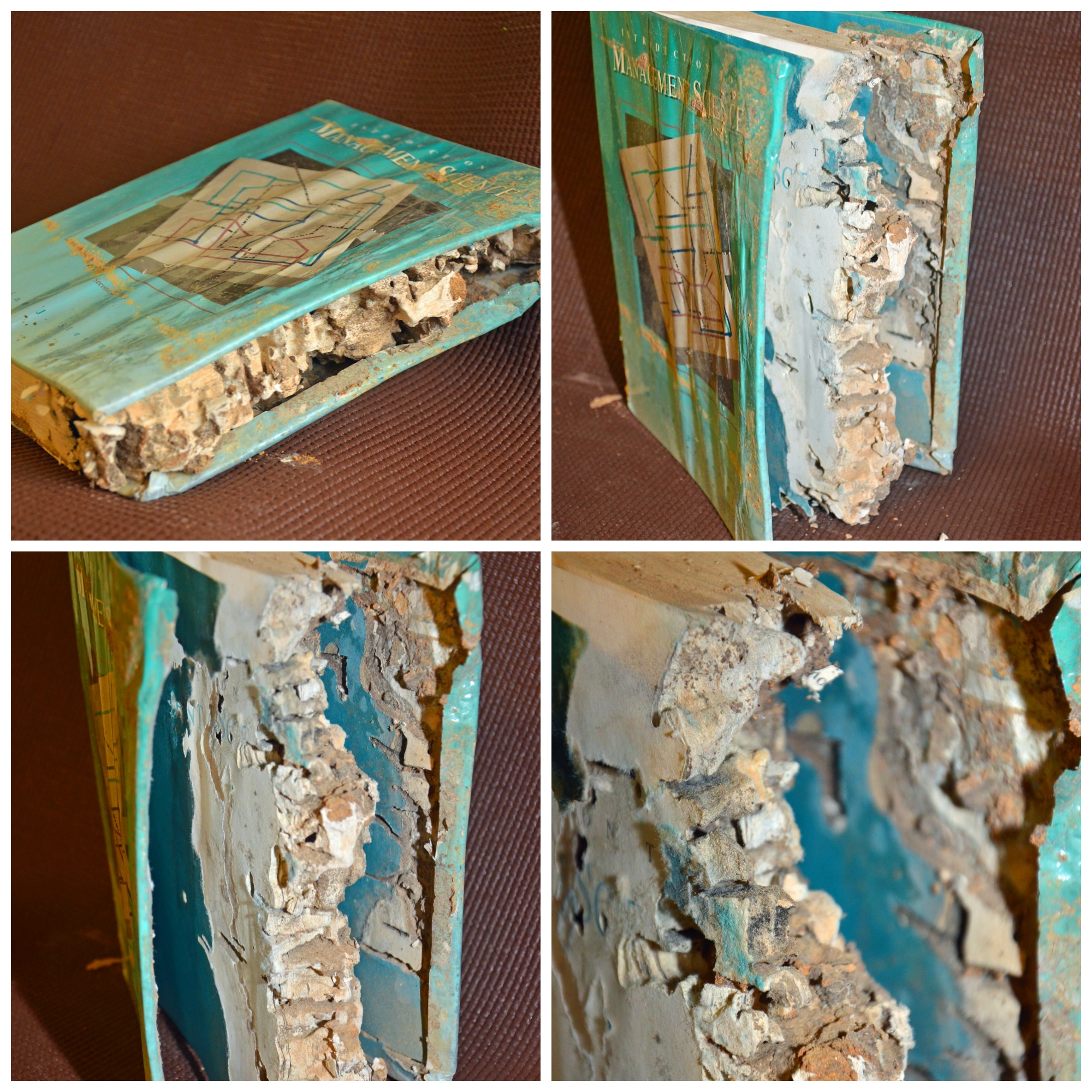
We recently acquired this book that had been destroyed by termites. These things really had a hunger for knowledge! hehe! Ok, ok, we’ll stop. This is a great example of how termites can cause significant damage. Make sure that you have termite protection for your home. You wouldn’t want any piece of your home looking like this textbook. Call Northwest Exterminating 888.466.7849.

Apr 15, 2013 | Uncategorized
Before that “giant” bug showed up as an unexpected guest at your first barbeque of the spring, it started off life as a tiny egg. The process of growth and development that most insects experience is known as metamorphosis. During this process, insects will change shape, form and size until they reach the adult stage. There are several different types of metamorphosis including gradual metamorphosis, incomplete metamorphosis, and complete metamorphosis.
Some insects, however, grow and develop without metamorphosis. These insects, such as silverfish, grow and develop through a series of molts. When an insect’s exoskeleton no longer stretches to accommodate its size, it must shed this exoskeleton and grown a new one, while going through an intermediate phase known as instar. Until the insect reaches adulthood, or sexual maturity, it goes through several nymph stages that have the same appearance as the adult. At adulthood, molting ceases.
The insects that experience gradual metamorphosis include cockroaches, termites, bedbugs, and earwigs. They have three distinct stages in development – egg, multiple nymph stages, and adulthood. The nymphs begin to gradually resemble the adult as they grow, but do not have wings.
During incomplete metamorphosis, which occurs for dragonflies, damselflies, and mayflies, insects experience a transition from egg to naiad to adulthood. Naiads possess a different body structure and way of life from the adults. These nymphs live in water whereas the adults live on dry land and have wings.
The last form of complete metamorphosis occurs in beetles, moths, butterflies, flies, fleas, ants, bees and wasps. They go through four stages: egg, larva, pupa, and adult. Each stage has a different appearance. The larva hatches from the egg and then goes into a resting stage known as the pupa. During this stage, the insect changes from larvae to adult and fully develops its wings, legs, and antennae before emerging.
Sources:
Georgia Pest Control Employee Registration Manual