Jan 20, 2017 | Pest Control, Wildlife
Squirrels
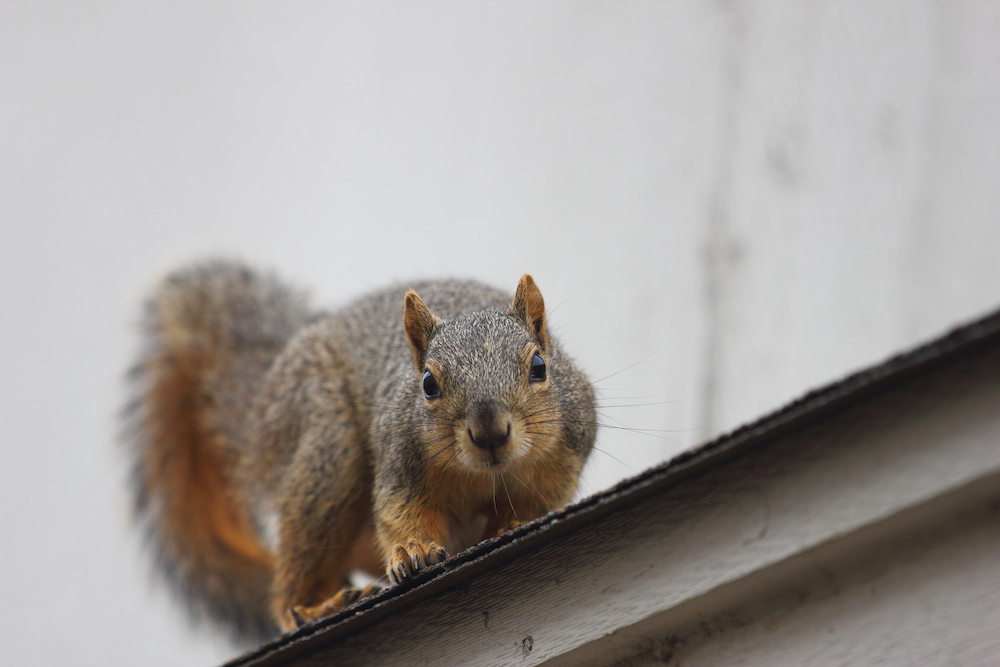
Hearing noises at night? You may have squirrels nesting in the attic, looking for shelter from the cold. To get rid of squirrels, first you have to determine how they’re getting in. This can be tricky if you don’t have easy access to your roof and since squirrels can sneak into small spaces. Contact a wildlife removal company to fully inspect your home for squirrel access points, set up traps, and correct any damage caused by squirrels. It’s also a good idea to keep trees trimmed and away from your roofline to cut off direct access.
Raccoons
Raccoons are common home invaders in the winter months, looking for refuge in crawl spaces, attics, and chimneys. Similar to squirrels, effective raccoon control requires professional expertise – to identify and seal entry points, trap and remove the raccoons, and prevent them from coming back with exclusion techniques. To prevent a raccoon invasion, eliminate food sources that attract them by using outdoor trash bins with lids and removing pet food when it’s not being eaten.
Mice
Mice are year-round pest nuisances that typically nest in attics, basements, cabinets, and closets. And because mice can fit through gaps as small as 1/4 inch, keeping them out can be difficult. As with other rodent control methods, the first step is to inspect your home for cracks, gaps, holes, or any other openings and correct them. Secondly, eliminate food sources and hiding places by keeping a clean house, removing clutter, and storing food in sealed containers. If you see small, dark-colored droppings anywhere, call an exterminator – quarterly pest control treatments are recommended to get rid of mice and prevent a future infestation.
Rats
Similar to mice, rats are common winter invaders, searching for food and warmth inside your home, needing holes as small as a quarter to get in. To prevent this, and other rodent invasions, seal any gaps or holes in your home’s foundation, around your roof, in the crawl space or basement, or around doors and windows, keep garbage away from your home’s exterior in sealed bins, and check for evidence of rats – usually indicated by droppings (larger than those left by mice), gnawing, or footprints and tail tracks.
Roaches
Cockroaches, too, are looking for food and warmth during colder months. The best way to prevent roaches is with preventative pest control and by eliminating what attracts roaches – food left out, crumbs, pet food and water, clutter, and water leaks.
Spiders
Common house spiders will start making their ways indoors starting in the cooler, Fall months. Prevent spiders with ongoing pest control treatments, by eliminating clutter (spiders like to hide in dark, undisturbed places), and by knocking down cobwebs regularly.
Jan 20, 2017 | Pest Control, Wildlife
Squirrels
Hearing noises at night? You may have squirrels nesting in the attic, looking for shelter from the cold. To get rid of squirrels, first you have to determine how they’re getting in. This can be tricky if you don’t have easy access to your roof and since squirrels can sneak into small spaces. Contact a wildlife removal company to fully inspect your home for squirrel access points, set up traps, and correct any damage caused by squirrels. It’s also a good idea to keep trees trimmed and away from your roofline to cut off direct access.
Raccoons
Raccoons are common home invaders in the winter months, looking for refuge in crawl spaces, attics, and chimneys. Similar to squirrels, effective raccoon control requires professional expertise – to identify and seal entry points, trap and remove the raccoons, and prevent them from coming back with exclusion techniques. To prevent a raccoon invasion, eliminate food sources that attract them by using outdoor trash bins with lids and removing pet food when it’s not being eaten.
Mice
Mice are year-round pest nuisances that typically nest in attics, basements, cabinets, and closets. And because mice can fit through gaps as small as 1/4 inch, keeping them out can be difficult. As with other rodent control methods, the first step is to inspect your home for cracks, gaps, holes, or any other openings and correct them. Secondly, eliminate food sources and hiding places by keeping a clean house, removing clutter, and storing food in sealed containers. If you see small, dark-colored droppings anywhere, call an exterminator – quarterly pest control treatments are recommended to get rid of mice and prevent a future infestation.
Rats
Similar to mice, rats are common winter invaders, searching for food and warmth inside your home, needing holes as small as a quarter to get in. To prevent this, and other rodent invasions, seal any gaps or holes in your home’s foundation, around your roof, in the crawl space or basement, or around doors and windows, keep garbage away from your home’s exterior in sealed bins, and check for evidence of rats – usually indicated by droppings (larger than those left by mice), gnawing, or footprints and tail tracks.
Roaches
Cockroaches, too, are looking for food and warmth during colder months. The best way to prevent roaches is with preventative pest control and by eliminating what attracts roaches – food left out, crumbs, pet food and water, clutter, and water leaks.
Spiders
Common house spiders will start making their ways indoors starting in the cooler, Fall months. Prevent spiders with ongoing pest control treatments, by eliminating clutter (spiders like to hide in dark, undisturbed places), and by knocking down cobwebs regularly.
Nov 18, 2016 | Pest Control
As the temperatures start to drop, overwintering pests start making their way indoors. Although these pests are considered to be beneficial, they become a nuisance when moving into your home in overwhelming numbers.
The two most common overwintering pests are boxelder bugs and ladybugs (ladybird beetles). Here’s what you need to know about each one and how you can prevent & get rid of them:
Boxelder Bugs
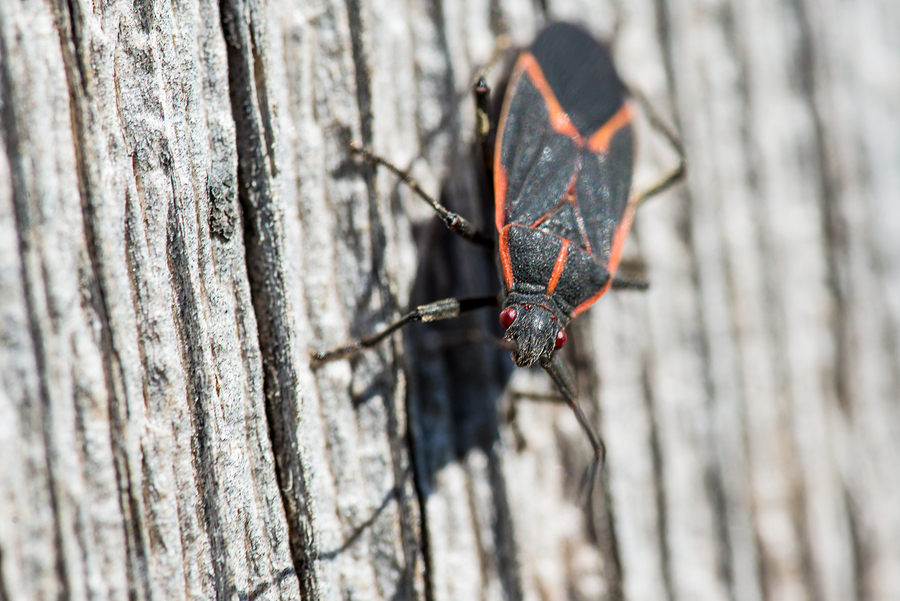
Boxelder and silver maple trees serve as the spring and summer hosts for boxelder bugs (shown above). In the winter, they migrate by the hundreds and thousands out of these trees and begin to congregate on the south side of buildings and homes. After reaching a large enough population, they may fly off to nearby sites to hibernate for winter, or try to enter the structure they have congregated on.
To prevent boxelders bugs from infesting your home, use similar exclusion methods mentioned above, making sure entry points are sealed. If you’re already seeing boxelders inside, the best way to remove them is with a vacuum.
To control a boxelder invasion, professional pest control methods have proven to be effective when infested trees and the surrounding areas are treated with a residual product, along with treatments on the sunny/south side of the home’s exterior.
Ladybugs (Ladybird Beetles)
Ladybugs are very beneficial insects; they protect our plants by feeding on aphids, mites, scale insects, and their eggs. But with the onset of winter and colder temperatures, large amounts of ladybugs start invading homes, making them more of a nuisance pest. To prevent this, simple home exclusion – sealing around windows and doors, replacing broken screens, and caulking around the open voids around electrical and plumbing entry points – can be effective. You can also caulk above windows and doors on the inside of the home, as ladybugs tend to emerge from these areas often. For added preventative protection, consider contacting a pest control company. Exterior treatments can be effective if done before ladybugs are seen indoors. (Treatment inside is not recommended once there’s a problem because the products kill/trap the ladybugs in wall voids which attracts carpet beetles and larder beetles.)
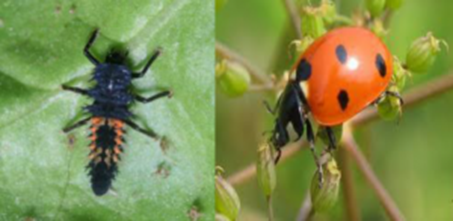
If you’re already seeing ladybugs indoors, remove them carefully being careful not to squish them; they produce a yellow, foul smelling defensive liquid that may stain whatever it comes in contact with. Below are two pictures showing a larva Ladybug (left) and what the overwintering adult (right) look like.
Nov 18, 2016 | Pest Control
As the temperatures start to drop, overwintering pests start making their way indoors. Although these pests are considered to be beneficial, they become a nuisance when moving into your home in overwhelming numbers.
The two most common overwintering pests are boxelder bugs and ladybugs (ladybird beetles). Here’s what you need to know about each one and how you can prevent & get rid of them:
Boxelder Bugs
Boxelder and silver maple trees serve as the spring and summer hosts for boxelder bugs (shown above). In the winter, they migrate by the hundreds and thousands out of these trees and begin to congregate on the south side of buildings and homes. After reaching a large enough population, they may fly off to nearby sites to hibernate for winter, or try to enter the structure they have congregated on.
To prevent boxelders bugs from infesting your home, use similar exclusion methods mentioned above, making sure entry points are sealed. If you’re already seeing boxelders inside, the best way to remove them is with a vacuum.
To control a boxelder invasion, professional pest control methods have proven to be effective when infested trees and the surrounding areas are treated with a residual product, along with treatments on the sunny/south side of the home’s exterior.
Ladybugs (Ladybird Beetles)
Ladybugs are very beneficial insects; they protect our plants by feeding on aphids, mites, scale insects, and their eggs. But with the onset of winter and colder temperatures, large amounts of ladybugs start invading homes, making them more of a nuisance pest. To prevent this, simple home exclusion – sealing around windows and doors, replacing broken screens, and caulking around the open voids around electrical and plumbing entry points – can be effective. You can also caulk above windows and doors on the inside of the home, as ladybugs tend to emerge from these areas often. For added preventative protection, consider contacting a pest control company. Exterior treatments can be effective if done before ladybugs are seen indoors. (Treatment inside is not recommended once there’s a problem because the products kill/trap the ladybugs in wall voids which attracts carpet beetles and larder beetles.)
If you’re already seeing ladybugs indoors, remove them carefully being careful not to squish them; they produce a yellow, foul smelling defensive liquid that may stain whatever it comes in contact with. Below are two pictures showing a larva Ladybug (left) and what the overwintering adult (right) look like.