Before making spring break or summer travel plans, consider checking the bed bug registry to see if your hotel is on the list.
The Bed Bug Registry is a website dedicated to reporting bed bug activity across the United States and Canada, for both hotels and other travel accommodations, as well as rental properties. The site offers a free, neutral platform where travelers can report bed bugs in a public environment. Since 2006, the Bed Bug Registry collected over 20,000 reports of bed bugs in 12,000 locations.
Because bed beds are excellent travelers, it’s likely you’ll bring them back home with you if staying in a bed bug infested hotel. So the first step in bed bug prevention is being able to find and identify them. Bed bugs are red to brown in color, depending on when their last blood meal was, flat and oval in shape, and about 1/4 inch in size or smaller. They like to hide in dark, undisturbed areas like the cracks and crevices of bed frames, headboards, mattresses, box springs, furniture, and upholstered items like chairs and storage benches. They can also be found behind baseboards, under carpet, behind electrical switch plates, and in under-bed storage containers. A sure sign of bed bugs are small, dark spots on sheets and pillowcases. If beds bugs are found are suspected, ask to be moved to another room or consider getting a refund and moving to another hotel.
Even if you don’t find bed bugs in your hotel room, there are steps you can take when you get home to prevent a bed bug infestation. Don’t bring your luggage inside your home. Instead, remove all of your clothing, wash immediately and run through a high-heat dryer cycles (bed bugs can’t survive in high temperatures), and then vacuum your suitcase and store outside your home in sealed bags or containers, like in the garage or a storage closet.
If you suspect a bed bug problem in your home, contact an exterminator immediately. Bed bugs are best eliminated when the infestation is identified and controlled early and DIY bed bug treatments are not recommended.
Mosquito season in the south is here! Yes, we know what you’re thinking…so soon? We usually get one pleasant month of spring before mosquitoes start biting. But with the unpredictable, on-again, off-again warm weather we’ve had all winter, it’s really no surprise that mosquitoes are active earlier this year. So what does this mean for you and your family? Painful mosquito bites, allergic reactions, higher risk of contracting mosquito-borne diseases, and less time you’ll be enjoying outdoors.
Here are 10 ways you can prevent mosquito bites:
1. Stay Covered.
Yes, it’s hot and no, you probably don’t want to wear long-sleeves and pants. But, covering your arms and legs when outside, during peak mosquito season, is one of the easiest and most effective ways to prevent mosquito bites.
2. Eliminate Standing Water
Check for areas of standing water around your home frequently and remove the sources of standing water, if possible. Mosquitoes breed in stagnant water so the more standing water around on your property, the more mosquitoes you’ll encounter. Standing water is commonly found in bird baths, children’s toys, flower pots, rain gutters, buckets, and other containers.
3. Use Insect Repellant with DEET
The active ingredient DEET is proven to be effective at repelling mosquitoes and other biting insects and protecting against mosquito-borne diseases like Zika virus, West Nile, and Encephalitis. Use on exposed skin when outdoors and repeat, as needed, if you’re outside for several hours.
4. Window & Door Screens
You may be tempted to leave windows and doors open to take advantage of spring weather. If so, make sure all windows and doors have screens without holes or tears, to prevent mosquitoes from coming inside your home.
5. Limit Time Outside During Daylight Hours
Mosquitoes are most active between dusk and dawn. Avoid going outside during those times, if possible.
6. Limit Physical Activity Outdoors
Because mosquitoes are attracted to the lactic acid in sweat, outdoor workouts should be limited during mosquito season, especially if you have sensitivity or an allergy to mosquito bites. And if you do choose to workout outdoors, wear mosquito repellent with DEET and long-sleeves and pants to reduce the risk of being bitten.
7. Use Fans
Outdoor fans, on decks, patios, and around pools, are a great way to keep the mosquitoes away. Mosquitoes are weak fliers, so a powerful fan is a great mosquito deterrent for smaller areas.
8. Wear Light-colored Clothing
Mosquitoes tend to be more attracted to darker colors, so wearing lighter colors will reduce your chances of an attack.
9. Don’t Drink Beer
Sounds ridiculous right? But apparently mosquitoes are beer lovers too. While the exact reason for the attraction is unknown, some believe it’s related to an elevated body temperature when drinking alcohol and the amount of ethanol excreted when sweating.
10. Stay cool
Avoiding high body temperatures can be impossible in the south’s summer heat and humidity. But, mosquitoes are attracted to elevated body temperatures, making you more likely to be bitten. Do what you can do stay out of the heat and keep your body cool.
Sometimes you can do everything possible to prevent mosquito bites and still get bitten. Consider calling a professional mosquito control company that specializes in mosquito prevention. An effective mosquito control program targets mosquito larvae (breeding sites) and adult mosquitoes (resting areas), with eco-friendly mosquito treatmentoptions that are family and pet-friendly. A mosquito exterminator will also identify problem areas and provide recommendations for ongoing mosquito prevention.
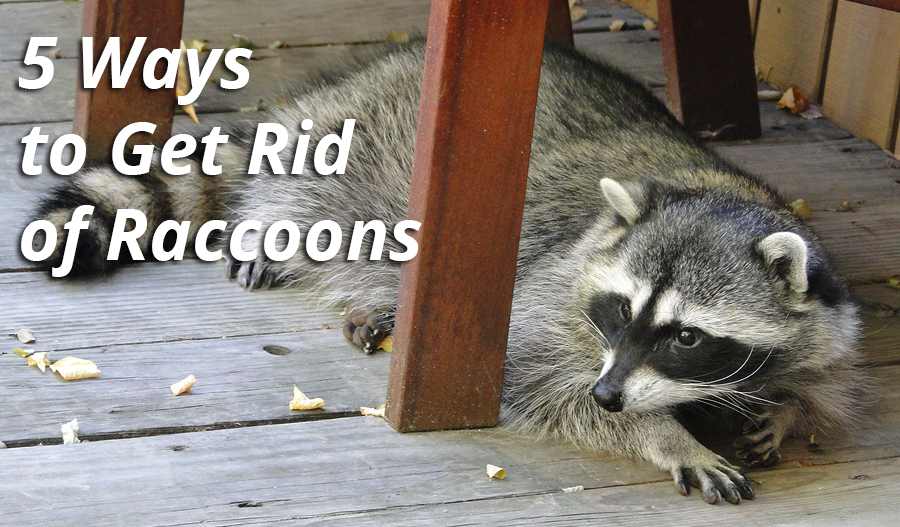
Raccoons, a common animal nuisance throughout the U.S., are nocturnal therefore rarely seen during the day. At night, they’ll leave their dens (often your chimney or attic), in search of food and water. Because they’re omnivorous and will eat mostly anything – other animals, fruit, plants, nuts, fish, insects, mice, etc. – there’s likely a food source in or around your home. So what’s the risk? Raccoons are known to carry rabies, cause significant structural damage to homes, destroy gardens, and leave behind a messy trail of trash after raiding garbage cans left outside.
Prevent disease and destruction by following the 5 tips below.
1. Store Garbage Cans Inside
If left outdoors around your home, trash cans will surely attract raccoons looking for food. Instead, keep garbage stored in your garage, basement, or storage building and take out regularly. If you don’t have storage space indoors, use garbage bins with animal-proof lids.
2. Seal Raccoon Entry Points
Inspect your home regularly for access points – holes, gaps, broken vents, loose siding, broken shingles, etc. – and seal or repair these to prevent raccoons from getting inside.
3. Cover Chimney Openings
Chimneys are common entry points into your home for raccoons. Install a mesh cover or cap over chimney openings to keep them out, or call a wildlife control company to do this for you. They will also inspect your home for other issues and provide you with raccoon exclusion solutions to prevent an invasion.
4. Remove Bird Feeders and Pet Food
Having bird feeders and pet food containers around your home will likely attract raccoons as it provides them with a steady food source. Consider removing bird feeders and only leave pet food out when your pets are eating.
5. Lock Pet Doors at Night
Have a doggie door? This is an obvious and easy opening for raccoons to get in. Once your pet is indoors for the night, lock the pet door. You could also consider installing a door that only opens for your pet via an electronic signal, usually in the form of a collar your pet can wear.
These methods are great for raccoon prevention. If you think you have raccoons living in your attic, chimney, or crawl space, you don’t want to block them inside. Call a professional wildlife trapper that can safely remove the raccoons, clean up contamination, and offer exclusion methods that will keep them from coming back.
With Spring only a few weeks away, now is a good time to start preparing for allergy season. And what’s one of the major causes of allergies and asthma? PESTS! Don’t suffer through the beautiful spring season this year. Here are some tips to keep your home pest and allergen-free.
Pest prevention measures can be very effective at combating allergies and asthma. Common household pests, like cockroaches and stinging insects, can pose a significant threat to asthma and allergy sufferers. Roach droppings, saliva, shed skins and other body parts contain allergen proteins known to cause flare-ups and increase asthma symptoms, especially in children. And stinging insects send more than 500,000 people to the emergency room each year due to serious reactions from the pest’s venom.
The first step to a pest and allergen-free home: practice good sanitation.
In addition, the National Pest Management Association (NPMA) recommends the following tips for safeguarding homes against common indoor allergens caused by pests:
Exclude pests by sealing cracks and gaps on the outside of the home. Pay special attention to utility pipe entry points.
Vacuum at least once a week using a vacuum with a HEPA (high-efficiency particulate) filter.
Keep food sealed and stored properly, and clean kitchen floors and counters daily.
Dispose of garbage regularly and store in sealed containers.
If allergic to stinging insects, learn how to use an epinephrine kit and carry it with you at all times.
Should you experience symptoms of an allergic reaction following a stinging insect encounter, such as tongue and throat swelling, wheezing, dizziness, or shortness of breath, call 911.
If you suspect an infestation, contact a licensed pest control professional to safely remove the threat.
According to the AJC and the State Department of Public Health, the first case of Zika virus in Georgia was confirmed today by Center for Disease Control and Prevention. It’s believed the affected individual contracted the virus while traveling to Columbia between the end of December and January, and has fully recovered.
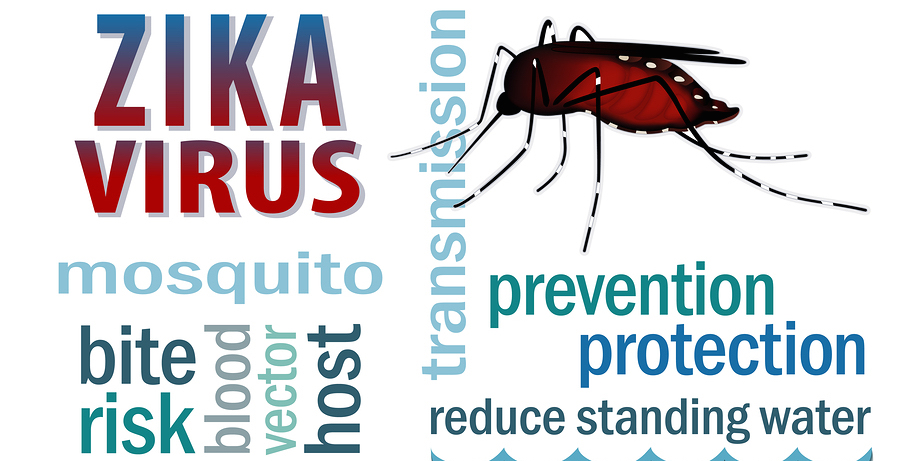
Zika, a virus spread through Aedesmosquito bites, is “explosively spreading” according to CNN. And while there may not be an immediate threat in the U.S. since mosquitoes aren’t usually active in the winter, we need to be prepared for Spring and Summer when mosquitoes start biting. Here’s what you need to know about Zika virus, and how you can keep yourself protected.
The most common symptoms of Zika virus disease are fever, rash, joint pain, and conjunctivitis (red eyes). While usually mild, symptoms can last several days to a week. About one in five people infected with the virus show symptoms. The virus has also been associated with a rise of microcephaly birth defect cases. Pregnant women should avoid traveling to the countries & territories listed below where the virus transmission is ongoing, according to the CDC, or extreme caution should be exercised – being sure to use EPA-registered mosquito repellent, wear light-colored clothing that covers arms and legs, and stay inside in air-conditioned areas, especially when the mosquitoes that transmit Zika are most active, during daytime hours.
Brazil
Colombia
El Salvador
French Guiana
Guatemala
Haiti
Honduras
Martinique
Mexico
Panama
Paraguay
Suriname
Venezuela
Puerto Rico
U.S. Virgin Islands
Dominican Republic
Barbados
Bolivia
Ecuador
Guadeloupe
Saint Martin
Guyana
Cape Verde
Samoa
There are currently over 30 people in the U.S. who have been diagnosed with the Zika virus, including three pregnant women — two in Illinois and one in New York. All of those infected contracted the virus outside of the U.S.
Another woman in Hawaii is believed to have had the Zika virus after her infant was born with the associated birth defect microcephaly which causes an abnormally small head and brain, which can lead to developmental delays. More than 4,000 children in Brazil have been diagnosed with the condition.
Here are some tips to avoid mosquito bites this summer and reduce your risk:
Wear mosquito repellent while outside
Eliminate areas around your home with standing water at least once a week
Keep your home’s gutters clean
Remove any litter from yard – mosquitoes can lay eggs in small, discarded items that hold water, such as cans, bottles, wrappers, etc.
Correct drainage issues
Dress in light colored, loose fitting clothing when outdoors
Use GE yellow “bug lights” – these do not repel mosquitoes but, unlike incandescent lights, do not attract them
Use citronella candles
Place a large fan on decks or patios – mosquitoes are weak fliers
You can also reduce the amount of adult mosquitoes and mosquito larvae around your home or business with monthly mosquito control service, usually performed during peak mosquito season (April through October in Georgia). An exterminator will inspect your property to identify potential or current mosquito breeding sites and resting areas, eliminate areas of standing water, treat breeding sites to target mosquito larva, and treat resting areas to target adult mosquitoes – like shrubs, ivy, weeds, small trees, and shaded areas.
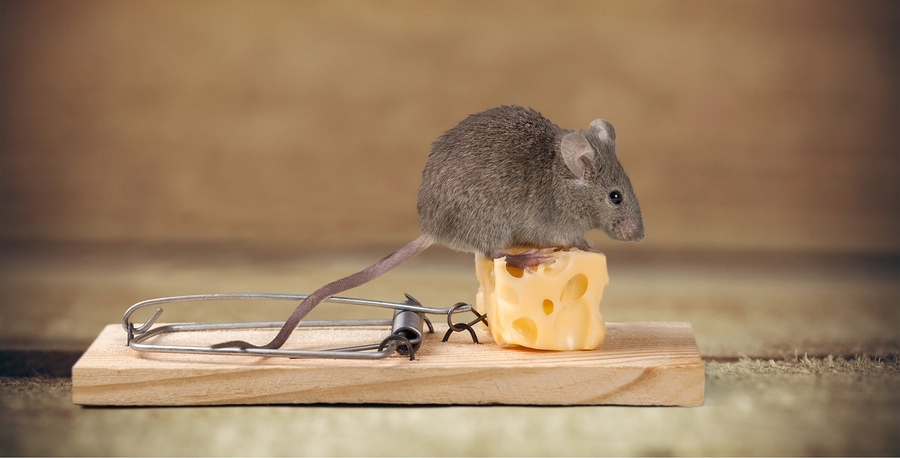
Think you may have a mouse in your house? Here’s how to tell and how you can get rid of him (or them!).
How to Identify Mice
You may be wondering if you have mice or rats. While similar, mice are smaller than rats and less cautious. This makes them easier to identify and remove than rats. Their small size makes them more of a nuisance, though, since they can get through spaces as small as 1/4 inch. Mice are not picky eaters so it’s likely your home is providing them with a steady food source, which they usually search for at night. And because they breed often and can reproduce in less than 6 weeks, catching them early is key unless you want family of mice moving in. Another way to identify mice is by their droppings which are usually very small, black, and rod-shaped with pointed ends.
How to Get Rid of Mice
Because mice can fit through tiny spaces, eat almost anything, and are nocturnal creatures, they can be quite elusive and hard to get rid of. The quickest and most effective way to get rid of mice is with professional pest control. An experienced exterminator will know where to look for entry points around your home, identify nesting areas, current and potential food sources, provide the best plan of attack (which can include baits, traps, or a combination of both), and will give you recommendations for future mice prevention. If you’re noticing any of the following, call a pest control company today.
An unusual odor
Noises at night
Droppings
Gnawed areas
Tracks or tail marks in dusty areas
How to Prevent Mice from Returning
Excluding mice can be difficult with their ability to fit through small spaces and with a diet consisting of almost anything. Any gaps or holes around your home should be properly sealed. Common areas of entry are around vents, pipes, utility lines, doors, and windows. Next, you’ll want to eliminate food sources – take out trash daily, keep a clean home, clean up spills immediately, and store food & pet food in sealed containers.
Apartment living often comes with its own pest control challenges. Here are 5 ways you prevent pests from entering or infesting your apartment.
1. Eliminate Food Sources
Pests will continue to thrive in areas where food is readily available (especially roaches and ants, common in apartment buildings). Store food in sealed containers, clear dirty dishes, keep counters, appliances, and floors clean, and take out garbage daily.
2. Eliminate Moisture
Like food, most common household pests need moisture to survive. Routinely check for leaks around your home and notify management so they can correct any issues.
3. Remove Clutter
Some pests, like spiders, like to hide it dark, undisturbed areas. Eliminating clutter reduces pest harborage sites and prevent reproduction. Keep pantries, cabinets and closets organized, avoid accumulating piles of clothing by using baskets and hampers, and remove any magazines, newspapers, stacks of paper, and boxes from your home when you’re done with them.
4. Seal Cracks & Crevices
If you see gaps, holes, or cracks around windows, doors, or plumbing pipes, contact management to repair them. These make excellent entry points for pests.
5. Professional Pest Control
Even if you’re taking all of the preventative measures above, you may still see pests in your apartment since your home’s walls are shared with other residents. Request pest control from management; most likely they have an exterminator on call that services the community. It’s also a good idea to have the apartment homes around you treated to ensure the pests don’t move to a nearby location.
With so many exterminators to choose from, it can be overwhelming for a business or homeowner to determine which company is the best option. Here are a few things to look for when considering which pest control company is right for you:
1. Multiple Service Options
Does the pest control company offer multiple services for pests, termites, mosquitoes, bed bugs, wildlife, and other household pests? As temperatures and weather conditions change throughout the year, it’s likely that you’ll encounter several different pests at different times. Having an exterminating company that can handle all of your pest needs will save you time AND money. Most often, the pest company can handle multiple service requests during one appointment, send you one bill for all services, that’s usually at a discounted rate (bundle services and SAVE!).
2. Green, Eco-friendly Services
Is the environment and your family & pets a concern for you when considering exterminators? Most likely it is, and should be. Pest control companies today should offer green alternatives to traditional services – like green pest control, green termite control, and green mosquito control. With advancements in technology, green services are just as effective as traditional services if applied correctly and will give you peace of mind, knowing family and pets are not at risk. It’s also not a bad idea to ask for a list of products used. Some exterminating companies claim to offer “green” pest control, but are only using an integrated pest management (IPM) approach – which utilizes less product to target specific pests – but not always with eco-friendly pest control products.
3. A Positive Reputation
Most pest control companies, like other services companies, will have customer reviews online or a word-of-mouth reputation. Use caution if a company has no reviews or if you’ve never heard of them; they may be newly established with less industry experience.
4. Years in Business
Because there is so much competition in the pest industry, some newer start-up companies won’t stay in business. While they may offer cheaper prices up-front, your warranty could be compromised, OR they could close their doors without fulfilling their agreement. It’s best to choose a company that’s been around for awhile, that has proven, effective pest control methods, offers highly-trained technicians, and that stands behind their warranties.
The majority of homes we inspect do not have adequate insulation in the attic. Most often, when homes are constructed, contractors will install the minimum amount of insulation required. While minimal insulation is better than no insulation, having the proper amount will make your HVAC system run more efficiently which keeps your home warmer in the winter, cooler in the summer, and saves you money on energy bills ALL YEAR LONG. The investment of insulation begins paying for itself immediately!
For attic insulation, there are a lot of options you can choose from, making it a somewhat stressful decision for homeowners. Here are some things to consider:
Does your attic currently have some type of insulation? If so, you may want to with a loose-fill product since it fills in gaps well OR have the insulation removed and replaced (common when insulation is contaminated by pest infestations or water-damaged).
Are you planning to insulate the attic yourself or call an insulation contractor? Installing loose-fill or blown-in insulation is more labor-intensive compared to batt insulation since it requires special equipment to install.
How much accessible space is in your attic? Batt insulation is relatively easy to install in accessible spaces with higher ceilings, but not recommended for areas with a lot of obstructions. Loose-fill insulation is blown into your attic, making it a better choice for spaces with limited accessibility.
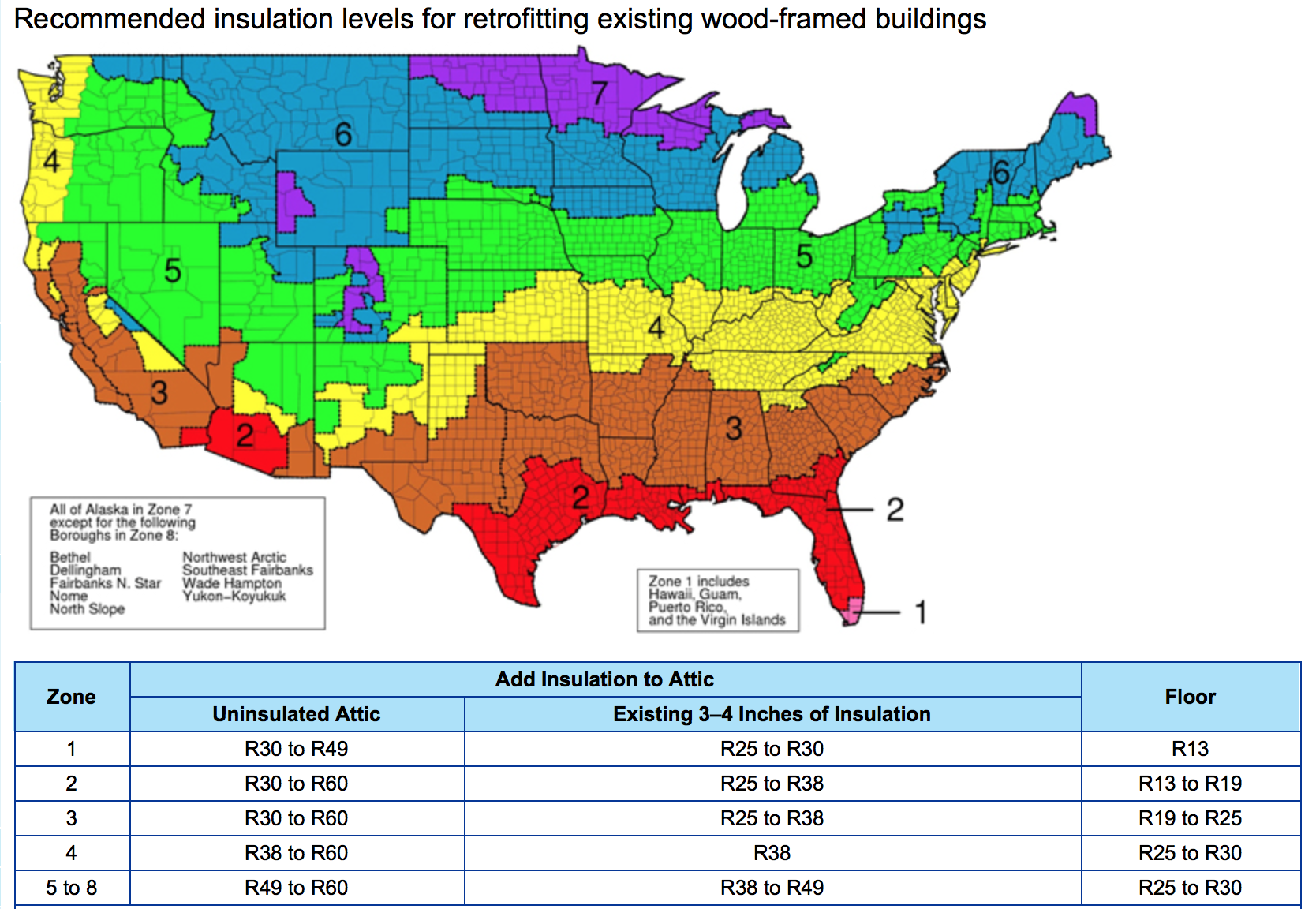
In what type of climate is your home located? This will determine how much insulation you need, using R-Value minimums established by the Department of Energy (see map below).
For most insulation projects, we recommend using TAP Insulation. TAP is a loose-fill, cellulose insulation product that guarantees energy cost savings of 20-38% when installed at recommended R-Values. TAP, short for Thermal Acoustical Pest Control, Insulation is made of 87% recycled newsprint, is energy star rated, and treated with borates, a natural pest control product that provides permanent pest protection in your attic. TAP is also unique in that it has the added benefit of fire protection. And, in addition to saving you tons of money throughout the year on utility bills, TAP Insulation keeps warm air inside in colder temperatures, cool air in warmer temperatures, making your home comfortable year-round.