Protecting ourselves and our pets from ticks are a big concern this year. The EPA has put out information through the NPMA on tick bites and Lyme disease prevention:
An ounce of prevention
It is important to know about tick habitats and personal protection techniques because most people are exposed to ticks in residential areas. Here are a few ways to prevent ticks:
1. Keep the lawn mowed to make your property unattractive to ticks. Ticks are found in high grass, yards with trees and shrubs.
2. Keep backyard grasses set back from the woods around a home by eight feet. Place a three-foot wood chip, gravel or mulch border area between grassy edges and tick-prone zones. Ticks prefer moist areas like leaf litter and the edge of woods. Ticks don’t like the sun and wait in shady areas on brush and grasses.
3. Practice personal protection. Personal protection involves using repellents, wearing appropriate clothing and checking for ticks on one’s person, which is the most effective practice of all. In tick habitats, wear long, light-colored pants tucked into socks or boots, and long-sleeved shirts. This keeps ticks from reaching the skin and makes them easier to see. Ticks like places on humans that are warm and moist, most commonly the backs of the knees, armpits, the groin, the scalp, the back of the neck, and behind the ears. Attached ticks should be removed as soon as possible using fine-point tweezers since risk of disease transmission is increased the longer the tick is attached.
We thought the board was perfect for the occasion based on the song “La Cucaracha” that became popular during the Mexican Revolution, but also because cockroaches are a major concern in homes across the South. Cockroaches can be found in a variety of locations and are a significant health risk due to their ability to transmit several known diseases. Roaches are heavily reliant on humans for their food and shelter so they are most often found indoors.
Along with diseases, roaches cause allergens in a home. Children and people over 60 have a higher increase of respiratory issues and can go into anaphylactic shock if an asthma attack should occur due to being exposed to the allergens. A clean home can deter cockroaches and other pests from invading your home.
General House Cleaning Tips:
Sweep, mop, and vacuum regularly
Wipe up spills and other messes as soon as possible
Every good party has a theme! And what better time to have a party than the summer? Summer is a great time for cookouts, family get-togethers, birthdays, or just because! And what goes together better than summer and bugs? So why not have a bug-themed party?
Use green streamers that look like vines and shrubs
Place jars with plastic bugs as table decorations
Antennae headbands
Magnifying glasses
It’s never a good idea to pair real bugs with food. But we can make our food look like insects, right! Try these bug themed treats that are sure to be pleasing on the eyes and the stomach.
Fruit caterpillar kabobs – skewer green grapes, place 2 white dots on front of first grape using cream cheese, place mini chocolate chip in center of white dots for eyes
Bug juice – mix any flavor of red juice and a blue juice…to make GREEN juice
Ants on a log – You will need: Celery, cream cheese or peanut butter, raisins
Slice celery horizontally and spread with either cream cheese or peanut butter.
Place raisins on top
Burrowing Worms – Cut 6-7 slits along one half of each hotdog (1/4″ apart and 1/2″ deep). Do the same on the opposite side. Cook hotdogs and serve on bun with hotdog condiments.
Create your own critter mix – It’s trail mix with a spin. Give guests a bag and let them make their own mix with selections of nuts, seeds, cereals, crackers, pretzels, raisins, dried fruit, marshmallows, chocolate chips, etc.
Watermelon Bug: Cut a rectangle out of the top of a watermelon. Scoop out the flesh and refill with fruit salad. Create a face on the melon using fruit (an orange wedge for the mouth, grape eyes). Use banana halves to make six legs and curl some pipe cleaners for antennae. Attach everything with toothpicks
Pretzel butterflies: Attach two small pretzels, tip to tip. Place piece of caramel at tips and microwave for 10 second or until caramel is melted and pretzels are stuck together.
Mosquito Bloody Marys – for the adults, of course.
Don’t let uninvited guests ruin your party. Call Northwest Exterminating to get rid of any mosquitoes or pests.
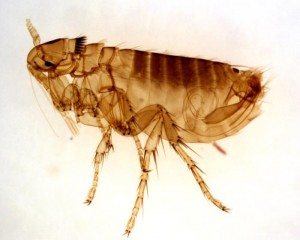
How can something as small as a flea be such a huge pain? Pet owners are all too familiar with the annoyance of fleas because they make us AND our pets miserable. Fleas attach themselves to warm-blooded animals (pets and humans) and feed on their blood. A flea bite can cause discomfort, painful, itchy red bumps and can lead to an allergic reaction. In some cases, they can even transmit diseases like the bubonic plague, murine typhus and transfer tapeworms in pets.
To prevent fleas from becoming a pest in your home, clean and vacuum frequently. A clean home is a healthy home and will aid in the prevention of other pests as well. Cleaning will help to remove any fleas and their eggs. Maintaining a clean yard is just as important, especially if you have pets that go outside often. A well kept lawn with no debris or pet droppings will reduce the flea population around your home. Bathe pets regularly and apply a flea and tick treatment. Most importantly, call a professional exterminator if you have fleas in your home. A flea infestation can be very difficult to get rid of and is best left to the professionals so the problem does not continue to grow.
Interesting Flea Facts:
The largest recorded flea measured almost ½ inch!
Fleas consume 15 times their weight in blood each day. That is like a 140 lb. woman eating 8,400 burgers in one day!
Fleas are the number one cause of allergies in cats and dogs.
Fleas can live for about 100 days.
Fleas don’t fly, they jump.
A pair of fleas can produce 400-500 offspring in their lifetime.
A flea can jump up to 8 inches high or 150 times its own height.
How can something as small as a flea be such a huge pain? Pet owners are all too familiar with the annoyance of fleas because they make us AND our pets miserable. Fleas attach themselves to warm-blooded animals (pets and humans) and feed on their blood. A flea bite can cause discomfort, painful, itchy red bumps and can lead to an allergic reaction. In some cases, they can even transmit diseases like the bubonic plague, murine typhus and transfer tapeworms in pets.
To prevent fleas from becoming a pest in your home, clean and vacuum frequently. A clean home is a healthy home and will aid in the prevention of other pests as well. Cleaning will help to remove any fleas and their eggs. Maintaining a clean yard is just as important, especially if you have pets that go outside often. A well kept lawn with no debris or pet droppings will reduce the flea population around your home. Bathe pets regularly and apply a flea and tick treatment. Most importantly, call a professional exterminator if you have fleas in your home. A flea infestation can be very difficult to get rid of and is best left to the professionals so the problem does not continue to grow.
Interesting Flea Facts:
The largest recorded flea measured almost ½ inch!
Fleas consume 15 times their weight in blood each day. That is like a 140 lb. woman eating 8,400 burgers in one day!
Fleas are the number one cause of allergies in cats and dogs.
Fleas can live for about 100 days.
Fleas don’t fly, they jump.
A pair of fleas can produce 400-500 offspring in their lifetime.
A flea can jump up to 8 inches high or 150 times its own height.
Mothers, there is a good chance that you may be getting flowers this Sunday! Flowers are a beautiful gift that bring light and happiness to a person’s day when they are the lucky recipient. But holidays like this Sunday’s Mother’s Day, or Valentine’s Day, brings lots of work for US Customs and Border Protection workers. For Mother’s Day, an estimated 40 million flowers will be examined for pests.
Plants are often imported from other countries and can carry pests or even diseases. According to msnbc, “On a typical day, the CBP seizes about 4,436 prohibited plant, meat and animal byproducts and finds 570 agricultural pests from abroad that could harm US agriculture.” (Source)
Now you can appreciate that beautiful bouquet that you get on Sunday even more knowing all of the hard work that goes into them. They have been thoroughly checked, put together, and purchased with LOVE!
Northwest Exterminating would like to wish all the moms a Happy Mother’s Day and say Thank You for all that you do!!
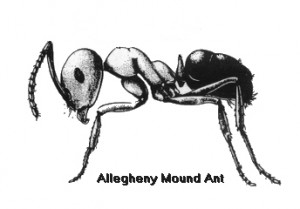
The allegheny mound ant is a common ant found outdoors. They feed on small insects or arthropods that are found outside so they rarely have a need to make their way into a structure…but that doesn’t mean you will never find them inside.
Identification:
1/4″ long
red bodies and black abdomen
most often identified by the large mound that they build
The Mound:
The allegheny mound ant is known for the large mounds that they build. This is the easiest way to identify the species. Their mounds are made up of built up soil that can go up to 4 feet above soil and extend 3 feet deep into the ground. A 5 month old mound can be about 2 feet wide and 8 inches tall. A two year old mound can be up to 3 feet tall. These large mounds are mostly found in unkept grassy areas, pastures, nurseries, and turf.
Allegheny mound ants produce formic acid that can damage bushes, plants, and gardens. Formic acid can kill small trees and shrubs within 40-50 feet of a mound and the grass of your lawn that is located around a mound. Most new mounds are made in late May and early June. This can cause issues if you spend time in your lawn because the mound ants will bite if they feel like their colony is being disturbed.
Protect yourself and your lawn by hiring a professional exterminator that can eliminate ants around your home and prevent damage and harmful bites. Call Northwest Exterminating to get rid of your ant problems.
The allegheny mound ant is a common ant found outdoors. They feed on small insects or arthropods that are found outside so they rarely have a need to make their way into a structure…but that doesn’t mean you will never find them inside. Identification:
1/4″ long
red bodies and black abdomen
most often identified by the large mound that they build
The Mound:
The allegheny mound ant is known for the large mounds that they build. This is the easiest way to identify the species. Their mounds are made up of built up soil that can go up to 4 feet above soil and extend 3 feet deep into the ground. A 5 month old mound can be about 2 feet wide and 8 inches tall. A two year old mound can be up to 3 feet tall. These large mounds are mostly found in unkept grassy areas, pastures, nurseries, and turf.
Allegheny mound ants produce formic acid that can damage bushes, plants, and gardens. Formic acid can kill small trees and shrubs within 40-50 feet of a mound and the grass of your lawn that is located around a mound. Most new mounds are made in late May and early June. This can cause issues if you spend time in your lawn because the mound ants will bite if they feel like their colony is being disturbed.
Protect yourself and your lawn by hiring a professional exterminator that can eliminate ants around your home and prevent damage and harmful bites. Call Northwest Exterminating to get rid of your ant problems.
There is a good chance that you live in some sort of community that is represented or managed by a community management company or a homeowners association. Apartments, condos, townhomes, and many neighborhoods have a company or association in place that helps maintain the safety, upkeep, and the general property value of a community intact. For these companies and associations, their needs are different than an individual homeowner that is looking for pest or termite control.
The needs of community management companies and HOA’s are different than the individual homeowner. That is why we have a team that specializes in meeting their unique needs. Our Community Management Services team specializes in termite and pest control needs for community/property managers, homeowners associations, and property owners associations. We provide services for single-family detached homes, multi-unit homes, clubhouses, amenity buildings, and condominiums.
Northwest Exterminating is the right choice for community managers when it comes to termite, pest, mosquito, wildlife, fire ant, and carpenter bee control. Not only do we have an experienced team in place for community managers, we have a board-certified entomologist on staff, convenient billing, repair warranties, and multiple locations throughout Georgia and Tennessee.
Ask your HOA or community management company if they use Northwest Exterminating. The healthier your community is, the healthier your home is. If you need to contact someone in our Community Management Services team click HERE.