Mar 30, 2012 | Pest Control
Disclaimer: The following are general guidelines to follow and do not constitute medical advice

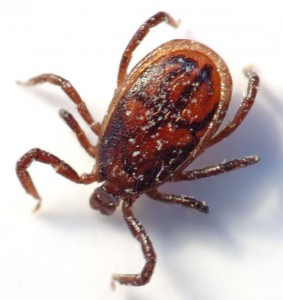
Ticks like to “hang out” in low lying shrubs, bushes or plants waiting for animals to come by to supply them with the blood meal that will help them complete their life cycle. Ticks then climb on the animal or human and attach themselves to obtain the blood from their victims. In the process they inject saliva and suck blood from the host, much like mosquitoes.
In general, most tick bites do not transmit disease. More commonly they are associated with infection around the site of the bite, local irritation, allergic reaction, or the cause of retained mouth parts when the tick is removed. The sooner you can remove the tick, the less likely they are to transmit diseases, so get them off quickly!
How to remove a tick
Most of the time, a pair of tweezers and slow, gentle, upward pressure will get rid of the tick. Burning the tick off may not work and may cause a burn to the patient. For a nice diagram and instructions please see the CDC website about how to remove a tick:
http://www.cdc.gov/ticks/removing_a_tick.html
If there are retained parts, please see your doctor so they can recommend options for getting the head out or letting it come out on its own.
Tick Borne Diseases
There are some serious diseases associated with tick bites. Usually they are associated with fever, feeling ill, and a rash. A few of the more common illnesses are: Rocky Mountain Spotted Fever, Lyme Disease, Erlichiosis, and Tularemia. Please contact your doctor immediately if you develop a rash, fever, or are feeling sick after a tick bite.
To avoid ticks, know where to expect them and use a bug repellant. Ticks live in areas that are grassy or near woods. They are often found in bushes and shrubs and can become a big problem when grass is too high. A bug repellant, such as DEET, can protect you for several hours.
If you find ticks on you, someone in your household, or a household pet, call Northwest Exterminating to speak to someone about a way to get rid of ticks.
Thanks,
Dr. Goo
Mar 28, 2012 | Pest Control
It is Spring Break time here in Atlanta and the surrounding areas. It’s a time that parents and kids both look forward to. A lot of people will be going out of town this spring break and staying in hotels. I’m sure you’ve seen media reports of bed bug outbreaks across the US. Hotels are being hit pretty hard with bed bug infestations and it is something that travelers need to be aware of. The truth is that you are more than likely not going to experience bed bugs in your hotel room or home but it is always best to be educated and aware!
Many wonder why the number of outbreaks has risen in recent years, it is suspected that increase in travel, less effective household pesticides, resistance to pesticides and lack of awareness are among the main reasons. The key to avoiding bed bugs is early detection. Make sure you are checking mattresses and other upholstery items when traveling. Know that bed bugs are not a sign of a sanitation issue with the hotel; they are often brought in by other guests.
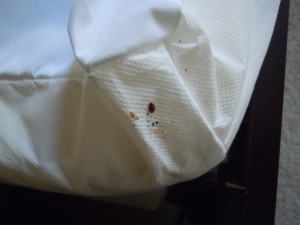
Bed Bugs on a mattress cover
What to Look For:
- Brown or chestnut in color
- Size of a pencil eraser
- Eggs are several millimeters and clear to whitish in appearance
- Droppings and dead skin of bed bugs
How to Search Hotel Rooms for Bed Bugs:
- Simply call the hotel. They may not always be forthcoming in their answer but it’s worth a shot. A lot of hotels will be honest and tell you if they have or haven’t had experiences with bed bugs.
- Check The Bedbug Registry. This free data base is a place where bed bug sightings are reported.
- Pack clothes and shoes in air tight bags in your suitcase. Keep your items packed away in Ziploc bags inside of your suitcase to protect them from bed bugs.
- Inspect the bed. Pull back the sheets and check the mattress, concentrating heavily on the mattress seams, for droppings or skin that has been shed. Also check the headboard, footboard, sheets, comforter, and pillows for signs of bed bugs.
- Use the luggage rack. Do not put your luggage on the bed or on the floor. Hotels usually provide a luggage rack, if not; place the luggage on a tile floor where it is easier to see bed bugs moving if they are present.
- Bites on body. Bed bug bites are not dangerous but do cause allergic reaction. Bed bugs often bite in a straight line on the body. You can tell the difference between mosquito and other common pest bites and bed bug bites by the area on your body you have been bitten. Mosquitoes mainly bite on the arms, legs or other body parts that are left uncovered. Bed bug bites can be found throughout the body.
The thought of bed bugs and their bites are unnerving to say the least. However, you may find comfort in knowing that bed bug bites are not dangerous because they do not carry human diseases. All of that being said, you want to be sure that you do not carry these pests home with you from vacation. Bed bugs are not only difficult to treat but can be an expensive treatment.
Tips for returning home:
- Keep luggage in the garage or outside until you can unload your suitcase fully.
- Wash and dry everything on the hot cycle immediately. The hot temperatures will kill any bed bugs that may have made the trip with you.
- Vacuum out suitcase once emptied.
- Take precautionary measures with your own furniture. Get a bed bug proof mattress case for your mattress and add traps on the legs of your bed.
- Inspect frequently.
At the end of the day, we want you to have the best time on your spring break or other vacation. We just want to make sure that you are not bringing home anything that wasn’t supposed to come home with you. As we said earlier, the key is to be educated and aware.
If you have more questions on bed bugs or think that your home may have bed bugs, call Northwest Exterminating. We have a dedicated team of experts that specialize in bed bug treatment.
Other Additional Links:
https://www.callnorthwest.com/pest-control/bed-bug-control/
Dorm Rooms and Bed Bugs
https://www.callnorthwest.com/learning-center/identify-your-pest/bed-bugs/
NPMA Releases Bed Bug Best Management Practices for Pest Professionals
Mar 27, 2012 | Pest Control, Wildlife
Although you may be seeing bees buzzing around your home it doesn’t necessarily mean that you have an active bee hive in your area. There is a good possibility that you are seeing scout bees. The survival of a bee hive oftentimes depends on the scouting bee. Bees need a constant supply of nectar and have to find a new place to go once their source is low. This is where the scout bee comes in. Scouting bees are sent out to look for a new home for their hive and if you do not take action, your home could be their new home.
To most people, scout bees look just like other active bees but once you get a closer look, you are able to notice small differences in their behavior. Scout bees usually scout an area for about 3 days before moving in or moving on. If you see bees for 5 days or longer, there is a good chance that it is an active hive and not just a scout bee. Scout bees tend to hover around an area rather than a steady stream of bees that are coming and going from the same area; that is typically an active hive. Scout bees are not as aggressive as other bees since they are not protecting their hive.
It is better to treat for scouting bees rather than taking a chance of getting an active hive. Bees can cause structural damage to your property as well as pose a safety risk. It is always best to call a professional exterminating company for bee removal. If you live in the Atlanta, Columbus, or Nashville area and are seeing bees, call Northwest Exterminating and we will come take a look to see if you are seeing scouting bees or an active hive.
Have you seen scouting bees near your home?
Mar 23, 2012 | Pest Control, Wildlife
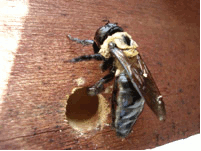
Carpenter bee
Last week it was the stink bug, this week it’s the carpenter bee! We told you that the weird temperatures were going to bring out these pests…and here they are!
It’s officially spring which means that carpenter bees are out in Atlanta and other southeastern areas. There is a good chance that you are seeing these large black bees along with the large black tunnels that they create in wood around your home. Those are carpenter bees that have been living in those holes and tunnels throughout the winter and are emerging in the spring time to find places for new nests, which can mean new holes and tunnels in your wood. Carpenter bees are often confused with bumble bees but differ slightly in appearance. The upper surface of the carpenter bee’s abdomen is bare and a shiny black color; while bumble bees have a hairy abdomen and yellow markings.
Carpenter bees drill through wood to build nests where they stay all winter and throughout the spring until they find a new nest or emerge to mate. Although male bees tend to be aggressive, often hovering around people who are near their nests, they are mostly harmless since they do not have stingers. On the other hand, females can inflict a painful sting but rarely do unless they are being handled.
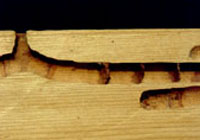
Carpenter bee tunnel
You may find piles of wood underneath the hole where the bee has drilled their nest. Carpenter bees prefer to make their nests in bare, untreated or weathered wood. Wood that is painted or pressure-treated is much less susceptible to a carpenter bees nesting. Common areas for nesting include window trim, facia board, siding, wooden shakes, decks and outdoor furniture.
The best control for carpenter bees is to treat or paint all exposed wood surfaces. If you are using a spray, it is best to spray at night, while wearing protective clothing, when bees are less active to reduce your risk of being stung. Each hole should be treated individually if the bees are inside the holes. If they are not in the hole, seal or paint the hole so the bees cannot return.
As with most infestations, it is best to call a professional exterminator to ensure that the issue is taken care of quickly and thoroughly. Call Northwest Exterminating if you are seeing carpenter bees or other pests around your home.
Mar 15, 2012 | Pest Control
Due to the massive amount of calls that we have received lately regarding kudzu bugs, or stink bugs, we thought this earlier post would be beneficial!
In the past several weeks, our service centers have seen an emergence of kudzu bugs. Kudzu bugs, also known as lablab bugs or globular bugs, have made their way to Georgia in recent years from Asia. Thoughts are that because Atlanta has the “World’s Busiest Airport”, they could have arrived through Atlanta’s Hartsfield Jackson International Airport. Since kudzu bugs are fairly new to experts, research is still being done on this particular bug.
Kudzu bugs look like brown lady bugs and eat what other than…kudzu. But kudzu isn’t all that these bugs are feeding on. Kudzu bugs also eat soybean plants. More research is being done to find out if kudzu bugs will eat our Georgia crops as well.
The kudzu bug is an occasional invader, choosing to enter properties for the shelter and possibly needing moisture. Think of them as the same as boxelder bugs, but with an increased amount of generations and smaller so they fit in tiny cracks and crevices. They are known to eat specific plants, but can survive on others. They have 3 generations per year, so they can build up populations in great numbers, but once the population is reduced, control can be maintained.
Kudzu bugs have a notorious stench they emit when they feel threatened so it is suggested that if you come in contact with such bugs in your home or vehicle that you vacuum them up instead of squashing them. It is highly recommended that you dispose of the vacuumed bugs so they do not continue to emit their stench.
For more information, check out the University of Georgia’s kudzu video:
University of Georgia – Kudzu Bug
Northwest Exterminating offers a treatment plan specifically for kudzu bugs. Call us at 888.466.7849 for more information.
Mar 12, 2012 | Pest Control
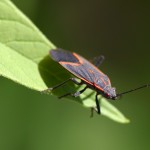
With the abnormal temperatures this Winter we are seeing abnormal pest movement. Boxelders are typically a pest that is active in the colder months when they enter homes for warmth and food. Although temperatures are warmer than usual, we are still getting calls about boxelder bugs being in people’s homes.
The best time to have an exterminator treat for boxelder bugs is in the fall when they are trying to find shelter. Boxelder bugs like to overwinterize in warm areas, cracks and crevices of trees, rocks, and other natural areas. Our homes are a perfect habitat for them.
In the fall, it is best to apply a repellant, such as NorPest Green, that would keep them out of the structure. A micro cap is an alternative option that is effective but cause the insects to die inside the structure. Our pest professionals will use NorPest Green along the walls and voids of a structure and/or a type of illumination device that can be used in the attic with a glue board can also help in the elimination of boxelders.
But since Spring is around the corner and we continue to have calls for these pests, a micro cap is the best option. A micro cap works well in the Spring because it allows the pest to escape and die outside rather than inside the home. Now is the ideal time to ensure that your home is properly sealed and caulked with expandable foam. Using screens on doors and windows can also be beneficial.
In the Summer months, a mosquito application helps keep numbers down since they like to go through their molts on vegetation such as Maple trees and grape vines.
Have you been seeing boxelders inside your home?
Has the abnormal temperatures affected your home in any other ways?
Mar 5, 2012 | Pest Control
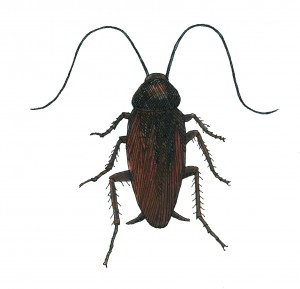
Cockroaches are out and about! Here are 10 facts about the creepy crawlers that you may not have known.
- Crushed cockroaches can help ease a sting when applied to the wounded area.
- Cockroaches have white blood.
- Roaches primarily come out for water, not food.
- Cockroaches can live a month without food, but only a week without water.
- A roach can live a week without a head. It dies after a week due to lack of water.
- A cockroach that has just shed it’s skin is white and has black eyes. It takes 8 hours to reproduce the skin layer.
- Laboratory female roaches are able to reproduce without aid of a male. They produce all female offspring.
- Cockroaches thrive in all conditions. They can live in the arctic as well as the desert.
- Contrary to popular belief, cockroaches can bite. The larger roaches have even been known to bite humans.
- Roaches don’t only live in dirty homes. Roaches can live in the walls of clean homes but they have larger colonies in less clean homes because there is a bigger food supply available.
Mar 2, 2012 | Company News, Going Green, Pest Control, Termite Control
Did you know that Northwest Exterminating offers Continuing Education classes for Georgia Realtors? We offer 7 classes that earn agents 3 credit hours. Not only do we offer the CE classes but we come to you!! Our Realtor Team can come to your office or a location of your choice.
Construction and Termites – This course is a visually detailed view of the construction process, as it relates to termites, and the various termite treatment methods used in new construction. A discussion of clearance letters and Form II’s is also included.
Builder One – If you are selling new construction homes, this class is a must! This is an in-depth course for builders and agents discussing the real termite problem, comparing construction foundations and explaining the termite treatments for each. An explanation of termite warranties is also provided.
Wildlife – What is in your attic? – Critters causing commotion? This course encompasses an extensive study of the problems and the preventative solutions available to homeowners concerning a wide variety of pests including rodents, snakes and bats.
Pest Damage Identification and Control Methods – GAR Approved. Bugs, bugs, bugs! This class is specifically designed to help agents identify different types of termite damage and nonstructural threats. The differences between termites and ants and various other bugs are also discussed.
Going Green – Construction, Conservation and Pest Prevention – Is your environment important to you? This course is primarily to help Real Estate Agents and Appraisers understand the importance of our ever changing environment and how the Real Estate community can impact our conservation efforts.
Staying Ahead of the Competition – Don’t be caught off guard by the FHA/VA stumbling blocks! This class instructs the agent on Form II restrictions, GAR revisions, and the Official Georgia Wood Infestation Report. Conducive conditions for termites are also covered in this class.
What’s Bugging You? – Don’t be scared…be prepared! Topics covered in this class include ants, flies, household bugs, insects that bite or sting, spiders, bed bugs, and prevention and control methods.
For more information, go to our website for the dates of our currently scheduled classes. Check in often for class schedule updates.
To schedule a Continuing Education class for Realtors in your office, contact Northwest’s Real Estate Team.
Feb 29, 2012 | Company News, Pest Control
Have you seen a strange pest flying or crawling around your home? Would you like to learn more about the habitats of certain insects that you are seeing? Northwest Exterminating can be your source of information on all things pest. By visiting our website and going to the Northwest Learning Center, you can Identify Your Pest, use our Termite Risk Calculator, or view Frequently Asked Questions.
Identify Your Pest – helps you identify and become knowledgeable about common household pests
Termite Risk Calculator – Use this calculator to find out if your home is at risk of termite infestation and damage
Frequently Asked Questions – View questions that are commonly asked by our customers
Help us add to our pest library! What pests would you like to see on there?
What questions would you like to see in Frequently Asked Questions?