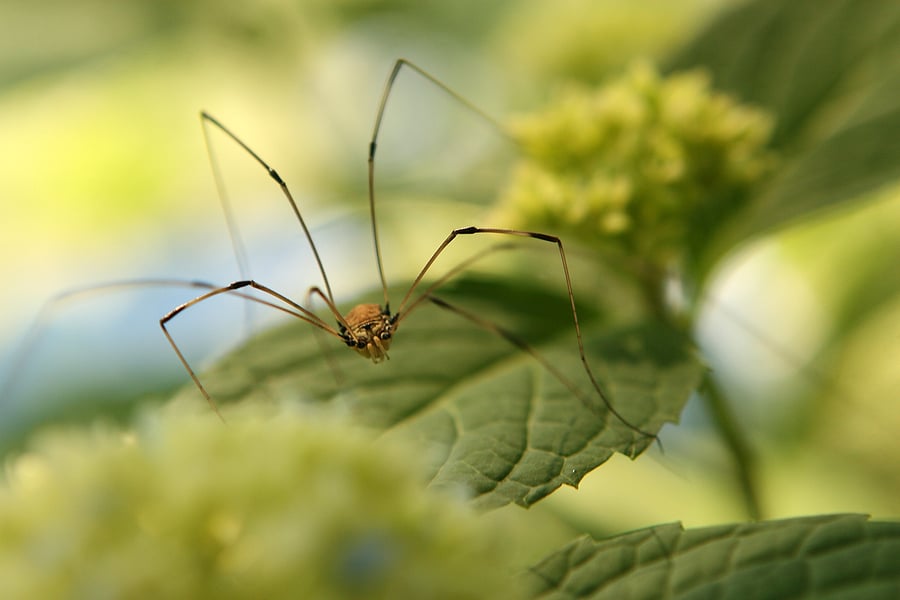
Oct 13, 2022 | Pest Control
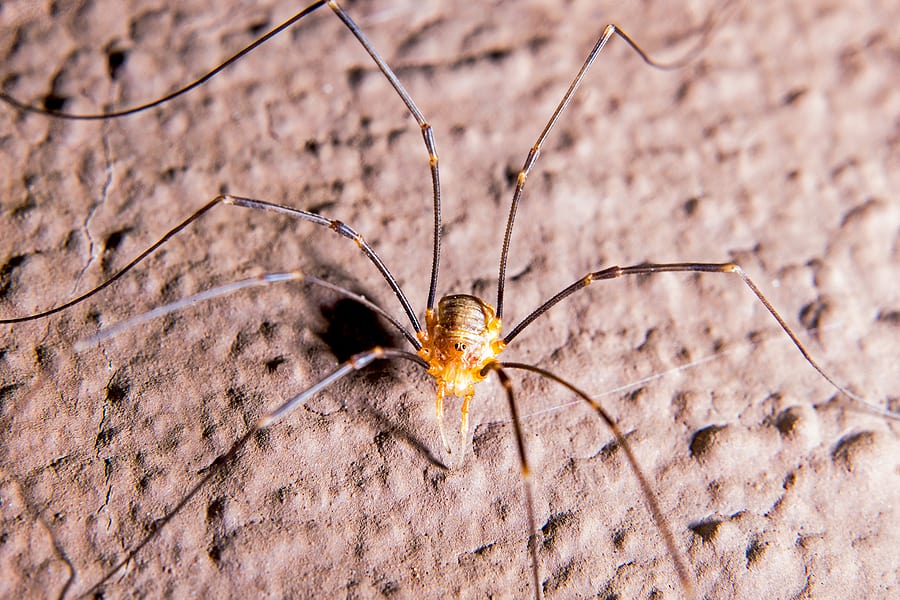
When you hear the word arachnid the first thing that usually comes to mind is spiders. While spiders do make up a large portion of arachnids, they aren’t the only members. Ticks, mites, scorpions, and harvestmen (also known as grandaddy long legs or daddy long legs) are also members of the arachnid family. Arachnids are defined as animals with 4 pairs of legs, chelicerae (which are fang-like mouthparts), and pedipalps (appendages also found near the mouth). So while they are all members of the same family, granddaddy long legs are not, in fact, spiders.
There are several key differences between granddaddy long legs and spiders. Spiders have 2 body segments (a cephalothorax and abdomen) differentiated by a narrow “waist.” Granddaddy long legs have an oval shaped body with no separation. Spiders typically have 8 eyes while granddaddy long legs have 2. Spiders produce silk and spin webs; granddaddy long legs aren’t capable of this. Spiders are also predators, using their venom to disable their prey. Granddaddy long legs are scavengers and don’t need venom to neutralize food sources.
Although they can be a little creepy looking, these pests are quite beneficial to have around. Because of their varied diet which consists of small insects, worms, snails, droppings, and fungi, granddaddy long legs help keep other pest populations under control. They are harmless to humans.
If you have a problem with granddaddy long legs or other pests, contact your local pest control company for a free evaluation.
You May Also Be Interested In:
Types of Rodents Found in the South
4 Ways To Keep The Lovebugs Away
4 Fall Pest Proofing Tips
How to Save Money on Your Energy Bills
Preparing for Fall Wildlife

Jul 9, 2021 | Pest Control
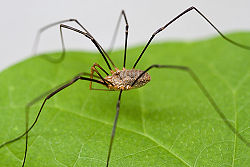
Daddy long legs, also known as harvestmen, belong to the arachnid family but they aren’t, in fact, spiders. They are cousins of spiders, mites, and scorpions. There are several differences between harvestmen and spiders. One of the most prominent is that harvestmen have one pair of eyes while spiders have 8 pairs of eyes. Harvestmen also cannot spin silk to make webs, so they can’t capture their food like spiders do. They have to ambush their prey instead.
Daddy long legs are omnivores and mostly eat spiders, earthworms, and other insects. When their food supply is limited, however, they will scavenge for whatever they can find like dead insects, insect eggs, and even decaying plants. In fact, these creatures are considered beneficial to have around your house and garden because they eat both garden and household pests.
Harvestmen prefer dark, moist environments so they are most often found in basements, crawlspaces, and garages. They have a unique ability to escape their predators by two different means: they can detach their legs (which will continue to twitch for up to an hour after they fall off) to trick their predators and escape; and they can also secrete a foul-smelling, bad-tasting chemical to deter their attackers.
Now you’ve found a daddy long legs inside your house. Should you be worried? Are these pests poisonous? It is important to distinguish the difference between poisonous and venomous. Poisonous pests cause harm when they are touched or ingested. Venomous pests cause harm by injecting venom through a bite. Although harvestmen do have fangs (also called chelicerae), they are primarily used to grasp and chew food. These arachnids are not known to bite humans and are not considered dangerous to either the health or structure of your home.
Because harvestmen are considered beneficial pests, it’s ok to leave them be if you find them lurking around your house. If you just can’t stomach the thought of sharing your personal space with them, the best way to get rid of them is to sweep or vacuum them up. If you have a problem with any other pests, contact a professional pest control company for a thorough evaluation and pest control plan.
You May Also Be Interested In:
Preventing the Top Three Summer Pests
How to Easily Deter Snakes Away from Your Property
Millipede vs Centipede – Which Is More Dangerous?
Orb Weaver Spiders: Dangerous or Not?
Green Mosquito Control: An Eco-Friendly Alternative
May 22, 2020 | Pest Control
The granddaddy long legs is legendary – with claims of being the “most poisonous spider in the world but their mouths are too small to bite.” Like most legends, these claims are exaggerated and aren’t based on facts. So what is the truth about these creatures? Here’s everything you need to know about the granddaddy long legs.
Is the Granddaddy Long Legs a Spider?
No. The granddaddy long legs, AKA the daddy long legs, harvest spider, and harvestman, is actually an arthropod and closer genetically to the scorpion than a spider. While they do have 8 legs like spiders, the resemblance ends there. Spiders have spinnerets that spin silk for their webs; granddaddy long legs don’t. Spiders also have 2 body sections connected by a small, narrow waist. Granddaddy long legs have 1 body section containing their head, abdomen, and body combined. Spiders can have fangs and produce venom. Granddaddy long legs don’t have fangs and don’t produce venom. Spiders live on a liquid diet while granddaddy long legs have chelicerae (tiny claws used to hold and tear things) so they can eat small pieces of solid food. Granddaddy long legs can also self amputate their legs as a defense mechanism against predators. Unfortunately, once they lose a leg they cannot grow it back.
What Attracts Granddaddy Long Legs?
Granddaddy long legs are omnivores and eat a wide variety of things. They are known to eat dead and live insects, spiders, aphids, worms, snails, fungus, and even bird droppings.
What Are Granddaddy Long Legs Good For?
Granddaddy long legs use their varied diets to keep to keep your gardens and yard free of other pests. They don’t cause damage to structures or landscaping and aren’t dangerous to humans.
How Do You Get Rid of Granddaddy Long Legs?
Because they aren’t harmful to humans and don’t damage any structures or landscaping in your yard or garden, it is best to leave granddaddy long legs alone. Sometimes they are known to congregate in large numbers. If this is the case or if you have an issue with these or other pests, contact your local pest control company who can thoroughly evaluate your home and provide you with the appropriate treatment and prevention plan for your situation.
You May Also Be Interested In:
Prep Your Yard & Keep Mosquito Free!
What Attracts Millipedes to Your Home?
Signs You’ve Got a Rat in the House
Why Are Love Bugs Stuck Together?
Everything You Need to Know About “Murder Hornets”
Nov 15, 2019 | Pest Control
By Anna V., Editorial Lead — Pest Education · Last updated: April 2026
If you’ve ever walked into the garage, looked up at a ceiling corner, and spotted a tiny body with eight ridiculously long, thread-thin legs, you’ve almost certainly met a granddaddy long legs. At Northwest, we get asked about these spiders constantly, usually paired with the same two questions: Are they dangerous? and Why are there so many of them in my house? The answers are reassuring. Granddaddy long legs are among the most misunderstood pests in Georgia and the Southeast. They’re almost entirely harmless to people and pets, and they quietly eat a surprising number of the pests you actually do want gone.
Here’s what a granddaddy long legs actually is, why the name causes so much confusion, whether any version of the creature is dangerous, and how to handle them around the house.
The cellar spider is the most common “granddaddy long legs” you’ll see indoors in the Southeast.
What Is a Granddaddy Long Legs?
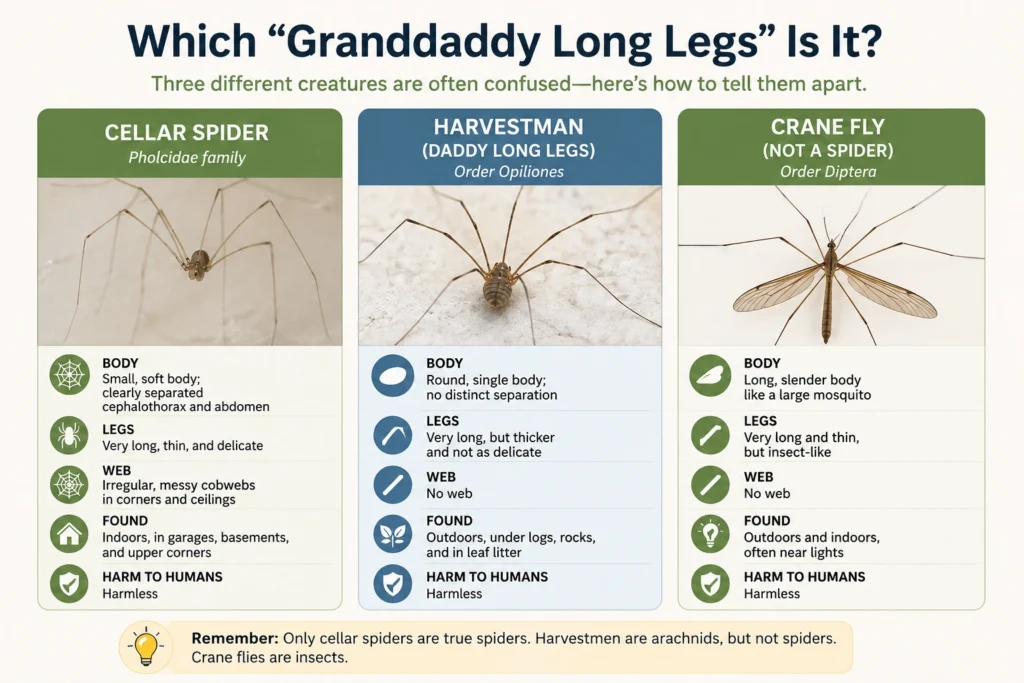
Here’s the part that surprises most people: “granddaddy long legs” isn’t one creature. It’s a regional nickname that gets applied to three very different animals. Knowing which one you’re looking at clears up most of the confusion.
1. Cellar Spiders (Family Pholcidae)
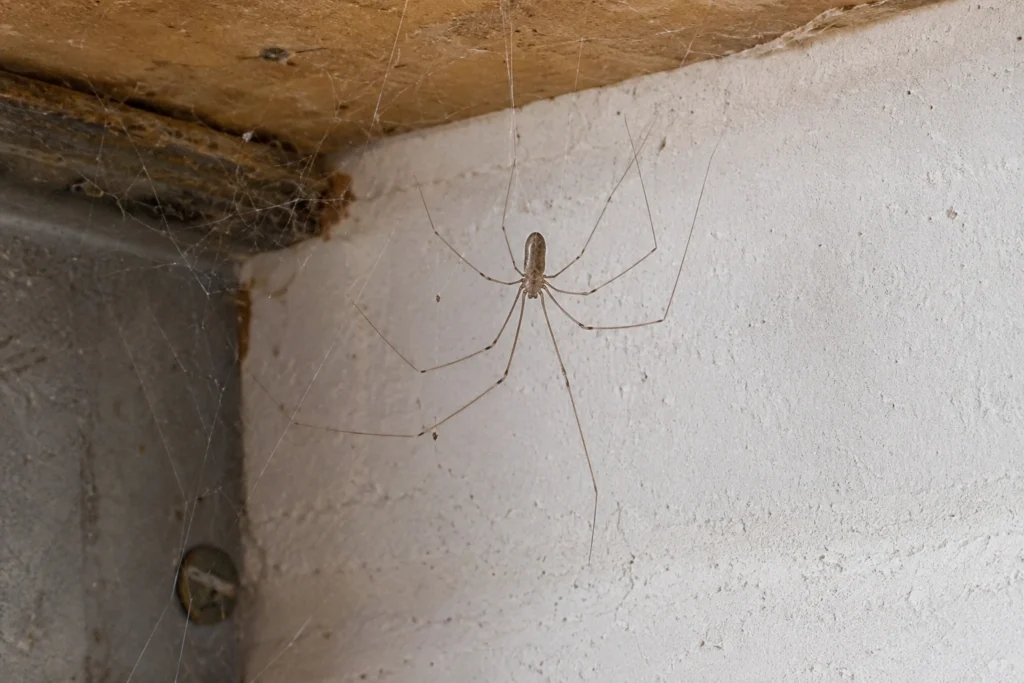
This is the one you almost certainly have in your home. Small slender body, eight legs that can span two or three inches, builds messy tangled webs in corners of basements, garages, attics, and crawl spaces. True spider, produces silk, produces a mild venom for hunting prey (not a threat to humans). In the Southeast, when someone says “granddaddy long legs,” this is the one they mean about 90% of the time.
2. Harvestmen (Order Opiliones)
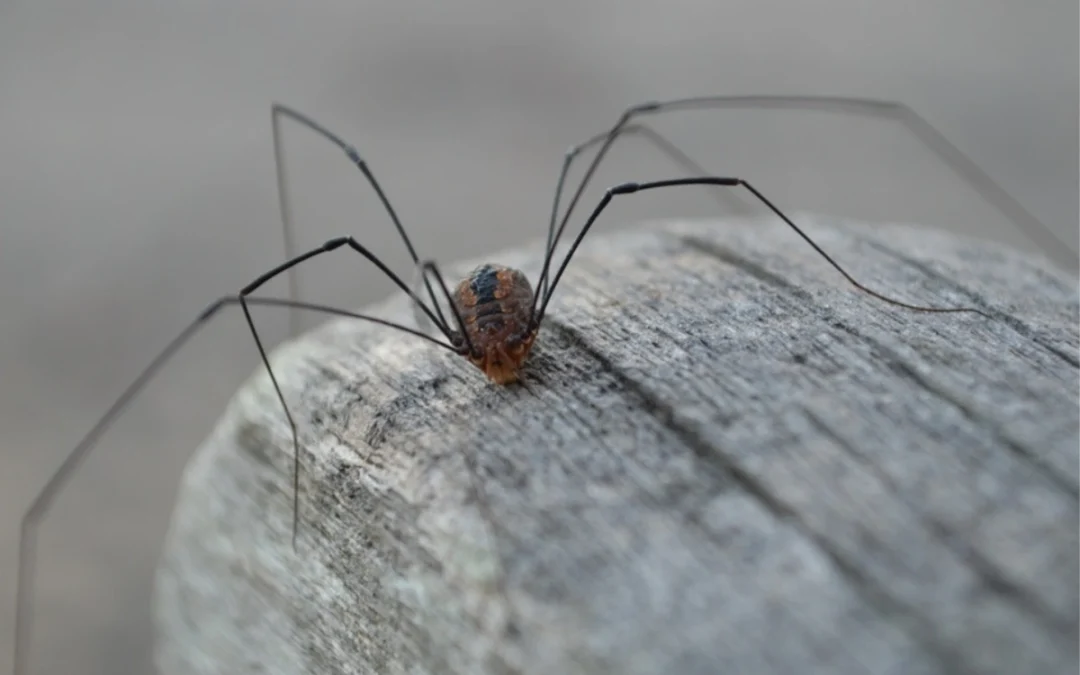
Arachnid, but not a true spider. Fused body (no visible waist between head and abdomen), eight legs, no silk, no venom. You’ll usually see them outdoors in leaf litter, on stone walls, or under logs rather than indoors. Completely harmless.
3. Crane Flies (Order Diptera)
This one isn’t a spider at all. Crane flies are insects with six legs, two wings, and a mosquito-like body. They show up around porch lights on warm evenings and look like giant mosquitoes. They don’t bite. They don’t sting. They don’t carry disease. In some regions people call them “daddy long legs” or “mosquito hawks” (though they don’t eat mosquitoes either, despite the nickname).
Why the Name “Granddaddy Long Legs” Causes Confusion
The same name for three different creatures is how a lot of the venom myths got started. Someone will say harvestmen are “the most venomous spider in the world but can’t bite you,” a claim that’s wrong on three counts: harvestmen aren’t spiders, they don’t produce venom at all, and they can’t bite anything human-sized even if they tried. The claim probably got attached to cellar spiders at some point, mixed up with harvestmen, and turned into a schoolyard urban legend that won’t die. Cellar spiders do have venom. It’s adequate for a mosquito. A human isn’t on the menu.
Granddaddy Long Legs vs Other Long-Legged Creatures
Quick visual reference for telling the three apart:
Three different creatures all called “granddaddy long legs,” and only one is actually a spider.
| Feature |
Cellar Spider (Pholcidae) |
Harvestman (Opiliones) |
Crane Fly (Diptera) |
| Classification |
True spider (arachnid) |
Arachnid (not spider) |
Insect |
| Body shape |
Small, slender, distinct segments |
Single fused body segment |
Elongated insect body with wings |
| Legs |
8, very long and thin |
8, long |
6, fragile |
| Silk / Web |
Yes, tangled corner webs |
None |
None |
| Venom |
Mild, not a threat to humans |
None |
None |
| Where you’ll see it |
Indoor corners, basements, garages |
Outdoor leaf litter, stone walls |
Around porch lights at night |
Are Granddaddy Long Legs Venomous or Dangerous?
The short answer: no. The single most persistent myth is that granddaddy long legs are the most venomous spider in the world but physically can’t bite a human. Every piece of that claim is wrong.
- Cellar spiders do produce venom for hunting prey. Studies have measured its potency, and it’s nothing special. It’s on par with a mosquito’s saliva. A human bite, which is extraordinarily rare, causes at worst a mild, brief sting.
- Harvestmen don’t produce venom at all. They have no venom glands.
- Crane flies are insects with no venom, no stinger, and no biting mouthparts capable of breaking human skin.
None of the three is a medically significant pest. If you want an authoritative second opinion, the UGA Extension guide to common household spiders has a plain-language breakdown of the cellar spider and several other species you’re likely to see in a Georgia home.
Behavior & Habitat in Southeast Homes
Cellar spiders are the version you’ll encounter inside, so the rest of this post focuses on them.
Where They Live
Ceiling corners, basement joists, attic rafters, garage doorframes, crawl-space wall cavities, sheds, behind stored boxes. Anywhere dark, undisturbed, and with a steady supply of small insects passing through.
Webs
Messy, irregular, and loosely strung. Nothing like an orb weaver’s symmetrical web. The web isn’t sticky the way other spider webs are; cellar spiders rely on shaking the web to tangle prey further once something wanders in.
When You’ll See Them
In the Southeast, indoor cellar spider sightings peak in late summer and early fall. Two things are happening: the spiders are finishing a season of breeding, and they’re following their food (flies, gnats, mosquitoes) as those insects push deeper into homes ahead of cooler nights.
What Attracts Daddy Long Legs to Your Home?
If you suddenly have a lot of cellar spiders in the garage, it’s almost always one of three things:
- Other pests are thriving. Cellar spiders eat small flies, gnats, mosquitoes, moths, and other spiders. A heavy cellar-spider population usually means you also have a heavy small-insect population somewhere nearby, often in a basement drain, a damp crawl space, or an overwatered plant tray.
- Moisture. Cellar spiders like humid environments. Damp basements, leaky plumbing, unsealed crawl spaces, and humid attics are their favorite spots.
- Undisturbed clutter. Stacked boxes, stored furniture, piled lumber, and rarely-used corners let webs go untouched for weeks. Stability is more attractive to a cellar spider than food location.
Handle those three things and the spider population drops on its own, often faster than any treatment plan can drop it.
Are Granddaddy Long Legs Useful or a Nuisance?
Useful. It’s one of the few pests we tell customers to leave alone when they find one or two. Cellar spiders actively eat other cellar spiders, which self-limits their populations. More importantly, they eat mosquitoes, fungus gnats, and the occasional pantry moth. A small cellar-spider presence in the garage is pest control doing free work.
They cross the line into nuisance when you see large numbers indoors (20 or 30 in a single room), or when the webbing becomes impossible to keep ahead of. At that point it’s less about the spiders and more about whatever they’re eating.
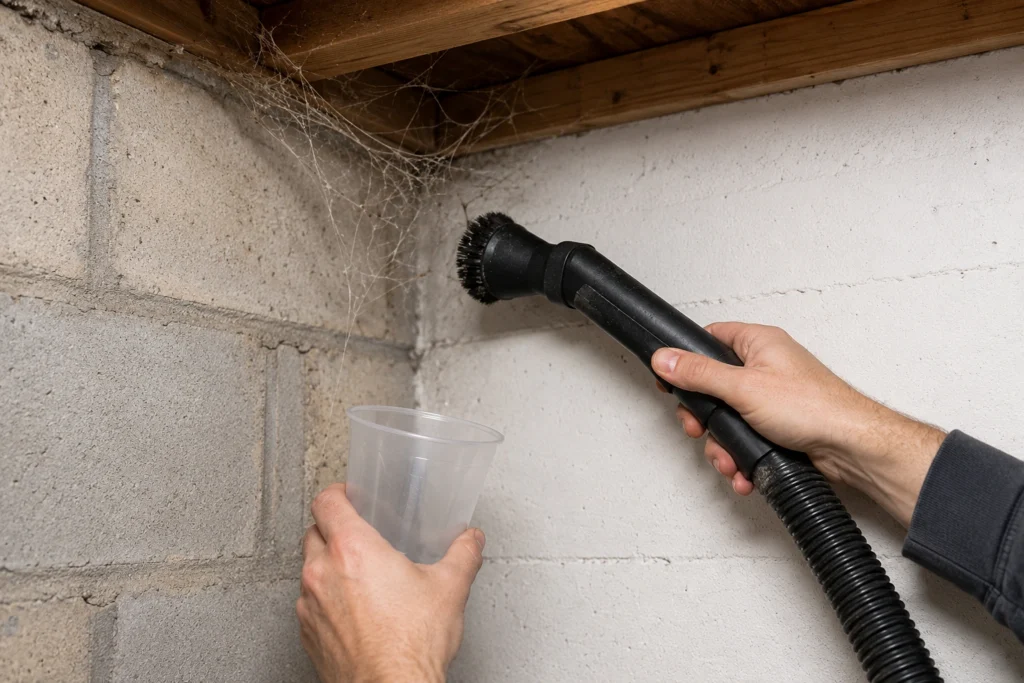
A vacuum and a cup beats a chemical spray for cellar spiders 99% of the time.
How to Handle Granddaddy Long Legs in Your Home
Humane Removal
A cup and piece of paper is the classic method. Slide it over the spider, slide the paper underneath, and walk it outside. If there are webs you want cleared, a vacuum hose with a brush attachment handles them fast without hurting anything. Skip the pesticide spray for one or two spiders.
Prevention Tips
- Seal foundation cracks and gaps around doors, windows, utility penetrations, and garage side doors.
- Cut clutter in basements, attics, garages, and sheds. Less stable surface area means fewer web-building sites.
- Move outdoor lights away from entry points. Bright doorway lights pull in the insects cellar spiders eat, which then pulls in more cellar spiders.
- Fix leaks, run a dehumidifier in damp rooms, and address crawl-space moisture. Dry is unattractive.
- Trim shrubs back from the foundation. A three-foot clear zone around the house reduces harborage for both spiders and their prey.
When to Call a Professional
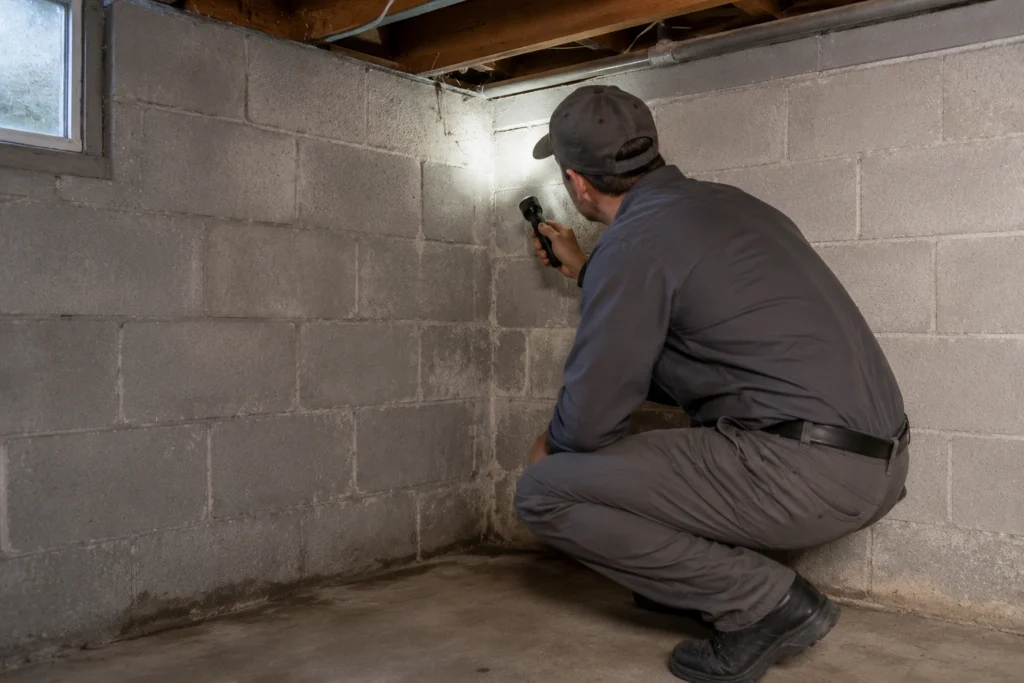
Most cellar-spider sightings don’t need a professional. Call Northwest if:
- You’re seeing 20+ spiders in a single room, or cobwebs reappear within days of clearing.
- You’re also seeing other small insects indoors, which means there’s a food-source issue we need to find.
- The spiders are appearing in the living area (kitchens, bedrooms, bathrooms) rather than just basements or garages, which often signals a moisture or entry-point issue.
- You’re uncomfortable with spider identification and want someone to confirm what you’re seeing isn’t a brown recluse or a widow.
(Not sure whether you’ve got a harmless cellar spider or something that needs attention? Request a free inspection and we’ll walk the home with you and ID what’s actually there.)
Frequently Asked Questions About Granddaddy Long Legs
Do granddaddy long legs eat mosquitoes?
Yes. Cellar spiders prey on small flying insects, including mosquitoes, gnats, moths, and even other spiders. A small cellar-spider population in a garage or basement is effectively free pest control for the kinds of insects you don’t want.
Can granddaddy long legs bite humans?
Bites are extraordinarily rare. Cellar spiders will only bite if trapped against skin, and the bite itself is mild (often compared to a mosquito sting). There’s no medical significance. Harvestmen and crane flies can’t bite humans at all.
Is a granddaddy long legs actually a spider?
It depends which one you’re looking at. Cellar spiders are true spiders. Harvestmen are arachnids but not spiders. Crane flies are insects. In the Southeast, if you see one indoors, it’s almost certainly a cellar spider.
How do you get rid of granddaddy long legs?
Humane relocation (cup and paper), vacuuming webs, sealing entry points, fixing moisture issues, and cutting clutter in storage spaces. Most homes don’t need chemical treatment for cellar spiders specifically. If populations stay high after those steps, the root cause is usually another pest issue feeding them.
Are granddaddy long legs poisonous to dogs?
No. Cellar spider venom isn’t harmful to dogs or cats. Harvestmen and crane flies don’t produce venom at all. If your dog eats one, there’s no cause for concern.
If cellar spiders keep coming back, the real issue is usually whatever else they’re eating.
Schedule a Spider Inspection Today
If cellar spiders are showing up faster than you can clear them, the problem usually isn’t the spiders. It’s whatever they’re eating. Northwest’s team handles the full workflow: identification, targeted treatment, and addressing the moisture or insect issues that draw spiders in. Most customers are surprised how much of the work happens outside the house.
About the Author
[Anna V.], Editorial Lead — Pest Education leads pest education content for Northwest Exterminating, working with senior technicians and service center managers across our Georgia, Alabama, Tennessee, and South Carolina service areas to translate field expertise into homeowner-friendly guides. The focus: accurate, regionally-specific answers to the pest questions Southeast homeowners are actually searching for.
Jun 6, 2012 | Pest Control
It may be one of the most easily identifiable pests but it’s also commonly misrepresented. Granddaddylonglegs, or daddylonglegs, are often thought to be spiders but are actually harvestmen. Harvestmen get their name because that is when they are usually seen…during harvest time. There are about 150 species of daddylonglegs in North America.
When you spot a granddaddylongleg, with its long and thin legs, it is not hard to see where the “longlegs” part of their name comes from. They use their infamous legs to catch insects, spiders, and plants that they feed on. They are found around structures of homes and buildings, and tree trunks, presumably looking for food. Inside of a structure they are typically found in garages, basements, crawlspaces, or other damp areas of the home. You won’t usually find them in the common living areas.
Another common misconception about daddylonglegs is that they are poisonous or venomous…neither of which are true. They are not harmful to humans or animals, they won’t even bite.
- Keep pests out. By keeping pests out of your home granddaddylonglegs won’t venture in looking to feed on these small pests. *Maintaining your pest control service with a professional exterminating company will keep bugs out of your home.
- Vacuum. Vacuuming is the easiest way to remove any daddylonglegs that you find in your home. Vacuuming also helps to remove food sources from your carpets and furniture.
- Keep house dry. Like most insects, daddylonglegs like moisture. Fix leaky faucets and pipes, use dehumidifiers, and dry any standing water.
- Sticky Traps. Sticky traps are a great way to catch harvestmen and other insects. Place traps in areas of the home where you have seen pests. Check regularly to see if any pests have been trapped on the board.
Did you know that granddaddy long legs weren’t spiders?
Call Northwest Exterminating to get rid of grand daddy long legs or other pests in your home or business.