Jun 6, 2012 | Pest Control
 It may be one of the most easily identifiable pests but it’s also commonly misrepresented. Granddaddylonglegs, or daddylonglegs, are often thought to be spiders but are actually harvestmen. Harvestmen get their name because that is when they are usually seen…during harvest time. There are about 150 species of daddylonglegs in North America.
When you spot a granddaddylongleg, with its long and thin legs, it is not hard to see where the “longlegs” part of their name comes from. They use their infamous legs to catch insects, spiders, and plants that they feed on. They are found around structures of homes and buildings, and tree trunks, presumably looking for food. Inside of a structure they are typically found in garages, basements, crawlspaces, or other damp areas of the home. You won’t usually find them in the common living areas.
Another common misconception about daddylonglegs is that they are poisonous or venomous…neither of which are true. They are not harmful to humans or animals, they won’t even bite.
- Keep pests out. By keeping pests out of your home granddaddylonglegs won’t venture in looking to feed on these small pests. *Maintaining your pest control service with a professional exterminating company will keep bugs out of your home.
- Vacuum. Vacuuming is the easiest way to remove any daddylonglegs that you find in your home. Vacuuming also helps to remove food sources from your carpets and furniture.
- Keep house dry. Like most insects, daddylonglegs like moisture. Fix leaky faucets and pipes, use dehumidifiers, and dry any standing water.
- Sticky Traps. Sticky traps are a great way to catch harvestmen and other insects. Place traps in areas of the home where you have seen pests. Check regularly to see if any pests have been trapped on the board.
Did you know that granddaddy long legs weren’t spiders?
Call Northwest Exterminating to get rid of grand daddy long legs or other pests in your home or business.
May 16, 2012 | Community/Events, Mosquito, Pest Control
Every good party has a theme! And what better time to have a party than the summer? Summer is a great time for cookouts, family get-togethers, birthdays, or just because! And what goes together better than summer and bugs? So why not have a bug-themed party?
Bug theme decorations:
- Use green streamers that look like vines and shrubs
- Place jars with plastic bugs as table decorations
- Antennae headbands
- Magnifying glasses
It’s never a good idea to pair real bugs with food. But we can make our food look like insects, right! Try these bug themed treats that are sure to be pleasing on the eyes and the stomach.
Ants on a Log
Bug theme foods:
- Dirt Cake
- Gummy worms
- Fruit caterpillar kabobs – skewer green grapes, place 2 white dots on front of first grape using cream cheese, place mini chocolate chip in center of white dots for eyes
- Bug juice – mix any flavor of red juice and a blue juice…to make GREEN juice
- Ants on a log – You will need: Celery, cream cheese or peanut butter, raisins
- Slice celery horizontally and spread with either cream cheese or peanut butter.
- Place raisins on top
- Burrowing Worms – Cut 6-7 slits along one half of each hotdog (1/4″ apart and 1/2″ deep). Do the same on the opposite side. Cook hotdogs and serve on bun with hotdog condiments.
- Create your own critter mix – It’s trail mix with a spin. Give guests a bag and let them make their own mix with selections of nuts, seeds, cereals, crackers, pretzels, raisins, dried fruit, marshmallows, chocolate chips, etc.
- Watermelon Bug: Cut a rectangle out of the top of a watermelon. Scoop out the flesh and refill with fruit salad. Create a face on the melon using fruit (an orange wedge for the mouth, grape eyes). Use banana halves to make six legs and curl some pipe cleaners for antennae. Attach everything with toothpicks
- Pretzel butterflies: Attach two small pretzels, tip to tip. Place piece of caramel at tips and microwave for 10 second or until caramel is melted and pretzels are stuck together.
- Mosquito Bloody Marys – for the adults, of course.
Don’t let uninvited guests ruin your party. Call Northwest Exterminating to get rid of any mosquitoes or pests.
May 7, 2012 | Pest Control
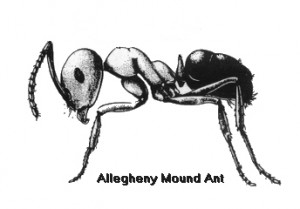
The allegheny mound ant is a common ant found outdoors. They feed on small insects or arthropods that are found outside so they rarely have a need to make their way into a structure…but that doesn’t mean you will never find them inside.
Identification:
- 1/4″ long
- red bodies and black abdomen
- most often identified by the large mound that they build
The Mound:
The allegheny mound ant is known for the large mounds that they build. This is the easiest way to identify the species. Their mounds are made up of built up soil that can go up to 4 feet above soil and extend 3 feet deep into the ground. A 5 month old mound can be about 2 feet wide and 8 inches tall. A two year old mound can be up to 3 feet tall. These large mounds are mostly found in unkept grassy areas, pastures, nurseries, and turf.
Allegheny mound ants produce formic acid that can damage bushes, plants, and gardens. Formic acid can kill small trees and shrubs within 40-50 feet of a mound and the grass of your lawn that is located around a mound. Most new mounds are made in late May and early June. This can cause issues if you spend time in your lawn because the mound ants will bite if they feel like their colony is being disturbed.
Protect yourself and your lawn by hiring a professional exterminator that can eliminate ants around your home and prevent damage and harmful bites. Call Northwest Exterminating to get rid of your ant problems.
May 7, 2012 | Pest Control
The allegheny mound ant is a common ant found outdoors. They feed on small insects or arthropods that are found outside so they rarely have a need to make their way into a structure…but that doesn’t mean you will never find them inside.
Identification:
- 1/4″ long
- red bodies and black abdomen
- most often identified by the large mound that they build
The Mound:
The allegheny mound ant is known for the large mounds that they build. This is the easiest way to identify the species. Their mounds are made up of built up soil that can go up to 4 feet above soil and extend 3 feet deep into the ground. A 5 month old mound can be about 2 feet wide and 8 inches tall. A two year old mound can be up to 3 feet tall. These large mounds are mostly found in unkept grassy areas, pastures, nurseries, and turf.
Allegheny mound ants produce formic acid that can damage bushes, plants, and gardens. Formic acid can kill small trees and shrubs within 40-50 feet of a mound and the grass of your lawn that is located around a mound. Most new mounds are made in late May and early June. This can cause issues if you spend time in your lawn because the mound ants will bite if they feel like their colony is being disturbed.
Protect yourself and your lawn by hiring a professional exterminator that can eliminate ants around your home and prevent damage and harmful bites. Call Northwest Exterminating to get rid of your ant problems.
Apr 4, 2012 | Pest Control
Watch out pests, it’s National Pest Control Awareness Month and the Georgia Department of Agriculture (GDA) Commissioner Gary W. Black is reminding Georgia residents to protect your homes and businesses from pests. Read the GDA’s recent press release for more tips and information on how to keep your home free from pests.
State Ag Commissioner reminds residents to protect homes, businesses
Spring has sprung in Georgia. This season is always a busy time for insects and pests in Georgia, but it is especially the case after such a mild winter. In honor of National Pest Control Awareness Month in April, Georgia Department of Agriculture (GDA) Commissioner Gary W. Black reminds residents about the risks posed by household pests.
“We are already seeing more insects and pests earlier this year due to the warm winter Georgia has had,” said Commissioner Black. “Every year, pests cause millions of dollars in damage for our residents and it is important for Georgians to prepare a plan of action to help prevent damage from occurring.”
In addition to fees paid for control and preventative services done by pest control professionals, Georgia residents spend untold dollars to repair damage caused by pests such as termites, rodents and carpenter ants who chew through walls, flooring and even electrical wiring. Residents also pay for expenses related to the treatment of medical conditions; mosquitoes can carry West Nile virus while house dust mites and cockroach allergens trigger asthma attacks, and stinging insects send more than half a million people to the emergency room every year.
“I encourage all Georgians to take proactive steps to prevent infestations in their homes and businesses,” said Commissioner Black. “All it takes is a few simple, preventative measures to help protect year-round.”
In April, consider these tips and suggestions:
– Trim back trees and shrubs so they are not physically touching any building structures;
– Walk the perimeter of a structure’s foundation and seal up any cracks or small openings;
– Install window and/or door screens and check once a year for holes or tears;
– Keep wood debris and piles of wood (including firewood) at a distance;
– Check plumbing and pipes to eliminate sources of moisture or standing water;
– Tightly secure all food and garbage to prevent pests from finding their way to the source (this includes pet food dishes and storage containers); and
– If there are any visible signs of pests or an infestation, contact a licensed pest professional immediately.
“April is a great time to have your home or business checked to determine if it’s necessary to re-establish any pest control measures, such as termite protection” said Commissioner Black. “And if control or treatment is necessary, that is one homeowner project best left to the professionals.”
Consumers are urged to only seek advice and use licensed professional pest control companies. If a company is not licensed by the GDA, it is illegal for them to practice pest control protection as a business. Residents can find a list of all licensed professional pest management companies at www.kellysolutions.com/GA/Structural/searchPCOCo.asp, or contact the GDA Structural Pest Section at 404-656-3641.
Note: Consumers can learn more about Pest Control Awareness Month, the GDA’s Structural Pest Section and hear from industry partners in a short video clip available on the Department’s website homepage starting April 1: www.agr.georgia.gov.
The Georgia Department of Agriculture is responsible for licensing the professional pest management companies who perform termite control. There are approximately 1,200 of these companies operating in Georgia. Learn more online at www.agr.georgia.gov.

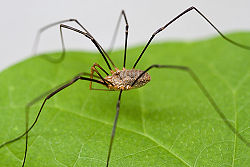 It may be one of the most easily identifiable pests but it’s also commonly misrepresented. Granddaddylonglegs, or daddylonglegs, are often thought to be spiders but are actually harvestmen. Harvestmen get their name because that is when they are usually seen…during harvest time. There are about 150 species of daddylonglegs in North America.