Oct 5, 2022 | Pest Control
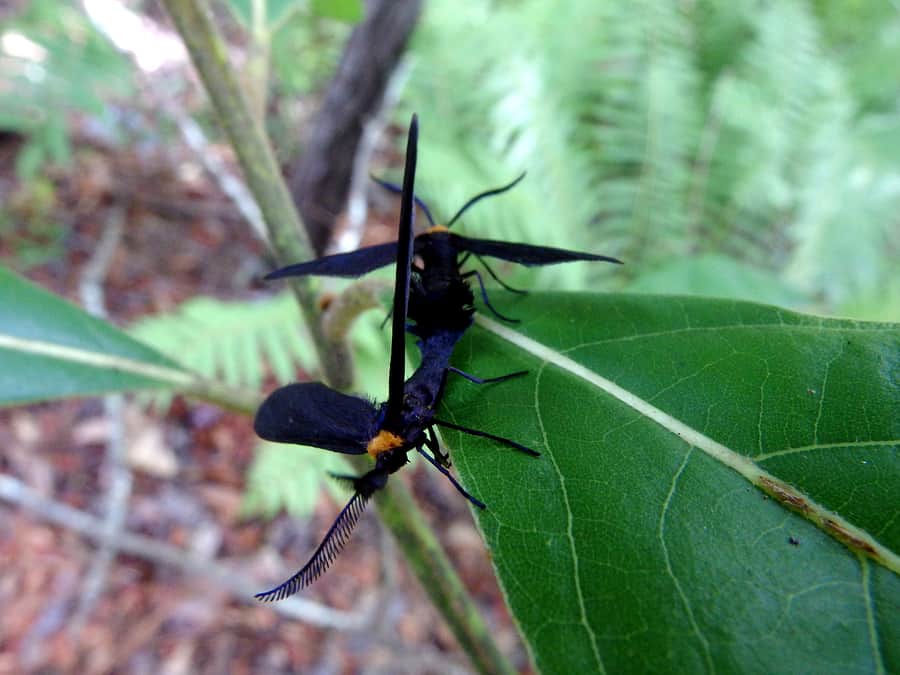
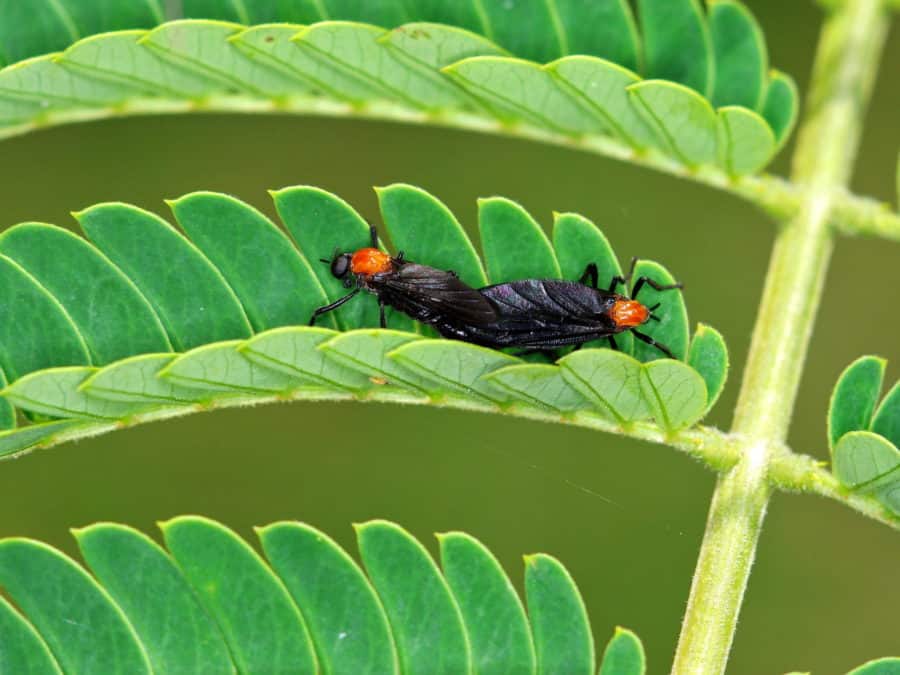
Lovebugs, also known as honeymoon flies and two headed bugs, are a non-native pest that came over from Central America about 80 years ago. Lovebugs are most commonly found in the United States in the Gulf Coast states, Georgia, and South Carolina.
Mating season occurs twice per year, once in May and again in September. During lovebug season, males attach themselves to females and stay connected to each other during the entire mating process, sometimes taking up to 12 hours. The female will then lay anywhere from 150 to 300 eggs. Within 4 days of laying these eggs, the female dies.
Lovebugs are usually active between 10:00 am and 6:00 pm. They are attracted to heat and exhaust and are often found near highways. While they don’t bite or sting, they can leave an acidic residue on your car which can damage paint and clog radiators.
Although they don’t cause significant damage to humans, they can be quite a nuisance. Here are 4 ways you can keep lovebugs away.
- Avoid light colors. Lovebugs are attracted to light colors. Avoid wearing dark colored clothing when possible. Don’t sit near light colored walls, as well.
- Blow them away. Lovebugs are not good fliers. They can easily be kept a bay by using fans, especially outdoors.
- Avoid peak hours. Lovebugs are typically active between 10 am and 6 pm. Limit outdoor activities during these hours when possible. They are also attracted to heat and exhaust fumes. Try to time driving activities, mowing, and other yardwork around these peak hours if you can.
- Protect your car. Lovebug season peaks twice per year, in May and September. Just prior to these times, apply a thorough coat of wax to provide a barrier between the bugs and your paint job. Wash off any bugs as soon as possible after arriving at your destination.
If you have a problem with lovebugs or any other pests, contact your local pest control company for an evaluation.

Sep 13, 2022 | Pest Control
This time of year you may have noticed those pesky black and red bugs flying around, especially while driving your car. These lovebugs, also known as honeymoon flies, kissing bugs, and double-headed bugs, are actually a type of march fly. They are an invasive species that came over from Central America and have now taken over the entire gulf coast, as well as all of Florida, Georgia, and South Carolina. So what should you know about these pests and when does lovebug season end?
Lovebugs are always around but because they spend most of their lifespan as larvae, we don’t notice them as much. We do see them more often during their swarming season which happens twice a year: once in late April and May and again in late August and September. During this time they mate which is why you usually see two of them attached while they’re flying.
Adult female lovebugs only live for 3 to 4 days during mating season. They connect to a male and must stick together at all times during this process. It can take up to 24 hours for the mating process to be complete. Males will swarm in areas they know females will be near. The females then fly into these swarms, which are commonly seen in the morning (around 8:00 to 10:00 am) and the late afternoon/evening (around 4:00 to 5:00 pm).
Lovebugs are attracted to exhaust fumes from cars, lawnmowers, and other engines. They are also attracted to heat and light colored surfaces. For these reasons they are especially common near highways and other high traffic areas.
While they can be a nuisance, lovebugs can actually be beneficial to have around. Lovebug larvae convert plant material into organic substances that the plants then use as a food source. They are difficult to get rid of as pesticides are ineffective against them and they have very few natural predators. Lovebugs aren’t dangerous to humans. They cannot bite or sting, cannot transmit diseases, and aren’t poisonous. They will leave white splatter on your vehicle, which are actually their eggs.
While there isn’t much you can do to prevent lovebugs, there are a few things you can try to help make lovebug season more manageable.
- Use fans on high speed, especially in outdoor areas. This keeps the lovebugs from being able to find a comfortable spot to land.
- Keep your lawn mowed. Lovebug larvae grow in thatch; mowing your lawn helps reduce areas they can breed.
- Keep your car clean. Wash your car frequently during lovebug season. You can also get a fresh wax job right before the season starts. This helps keep them from sticking to your car and also keeps them off after they accumulate.
- Wear dark colored clothing outdoors. Lovebugs are attracted to light colored surfaces and will be less likely to bother you.
- Time outdoor events for later in the day. Lovebugs are only active during the day. Try to plan any outdoor activities after sundown.
- If all else fails, contact your local pest control company for an evaluation.
You May Also Be Interested In:
Look Out for These Fall Nuisance Pests
The 411 on Termite Inspections
How to Continue Caring for Your Lawn in the Fall
Back To School Means Head Lice Season
Venomous vs Poisonous Spiders – What’s the Difference?
May 8, 2020 | Pest Control
The love bug (Plecia nearctica), also known as the honeymoon fly and the double-headed bug, is not actually a bug at all. It is actually a species of march fly and more closely related to biting midges and mosquitoes. These nuisance pests are found in parts of Central America and the Southeast United States, especially along the Gulf Coast.
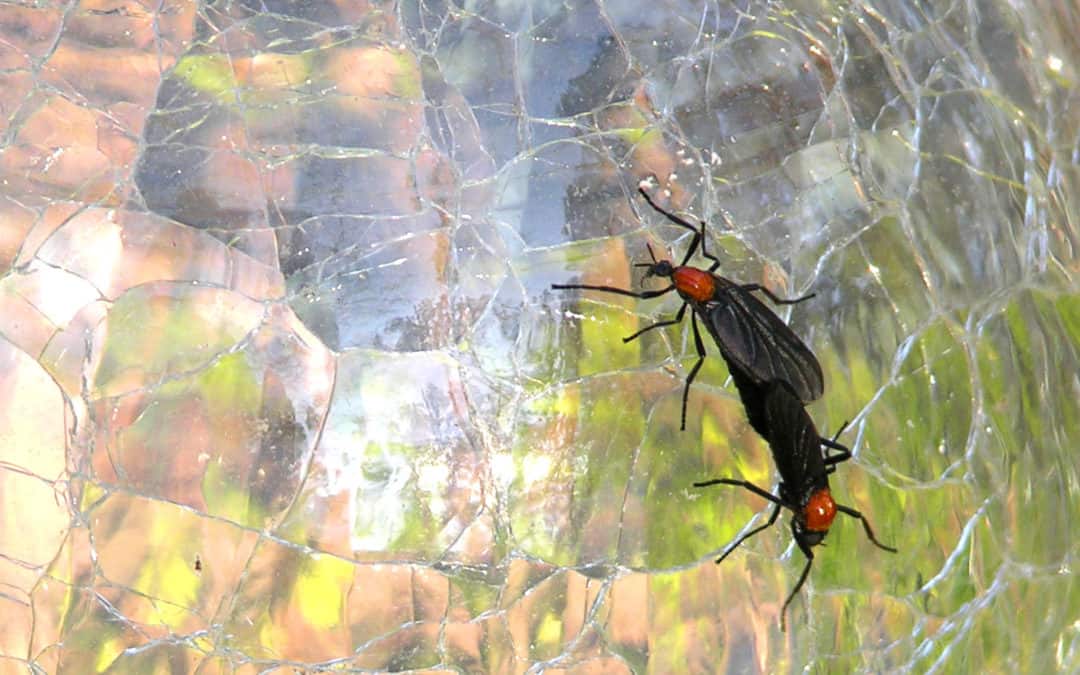
Love bugs are small, about 1/4″ in length with black bodies and red heads. While it is very rare to see them in larval form, adult love bugs are very recognizable as they are almost always seen as a pair, with the male and female joined tail to tail. So why are the love bugs stuck together? The answer is simple. They are mating. Adult females will emerge and live 3 to 4 days, just long enough to mate before they die. Because of this, they must stick together at all time.
There are 2 major flights of love bugs during the year. The spring flight is usually from April to May and the summer flight is from August to September. Each flight lasts about 5 weeks.
While love bugs can be extremely annoying, especially if you are driving in the southern states, they are not capable of biting or stinging and pose no health threats to humans or other animals. They are also not known to transmit any diseases. They do cause other problems, however. Love bugs are attracted to the gas that is emitted from automobiles and will often congregate in large numbers near highways. This causes them to be killed in large numbers on car hoods, grills, and windshields. If left for too long, dead love bugs can cause damage to car paint, obstruct windshields, and even clog radiator passages and grills, causing mechanical issues and engines to overheat. These pests also thrive in humid environments so they can be found in basements, attics, and storage rooms, and even on flowers or in flower beds with high moisture content.
While your best bet is to just let them run their course, there are a few ways you can eliminate love bugs or deter them from your car or home.
- Clean Your Car. Wash your car often with warm soapy water, especially if there are dead love bugs stuck to it. Wax your car prior to mating season to make it harder for them to stick to the exterior.
- Eliminate Standing Water. Inspect your home and yard for any areas of standing water and get rid of them. This will also help with mosquitoes. Monitor your home’s humidity levels, as well.
- Natural Repellents. You can try natural repellent sprays made from essential oils such as peppermint. to repel love bugs.
- Clean Up The Yard. Keep the grass mowed and shrubbery trimmed. Clear any debris from the yard, especially anything that can hold moisture.
- Vacuum. The best way to get rid of live love bugs that may be swarming around your home is to vacuum them up.
While love bugs don’t pose any significant threat to humans, they can be a nuisance. If you have an issue with love bugs or any other pest, contact a professional pest control company for assistance.
You May Also Be Interested In:
Everything You Need to Know About “Murder Hornets”
Keeping Wildlife in the Wild
How to Identify 5 of the Most Common Cockroaches in Georgia
Avoid Bites and Stings this Summer
Summer Without Bed Bug Worry
Feb 2, 2018 | Pest Control
By Anna V., Editorial Lead — Pest Education · Last updated: May 2026
If you’ve spotted clusters of small, glossy black bugs with bright red or orange markings on a sunny exterior wall, around windows, or in the mulch by your foundation, you’ve probably met one of the Southeast’s most common nuisance pests. At Northwest, we get this exact question every spring and fall: what are these black bugs with red on them, and should I worry?
The short answer for most Georgia and Alabama homes: these are almost certainly boxelder bugs, red-shouldered bugs, or milkweed bugs. All three are harmless to humans, pets, and structures. They don’t bite, they don’t sting, they don’t spread disease, and they don’t damage wood. They do, however, show up in large numbers, congregate on warm surfaces, and try to overwinter inside your walls. Here’s how to identify the species, why they appear when they do, and what works for keeping them out.
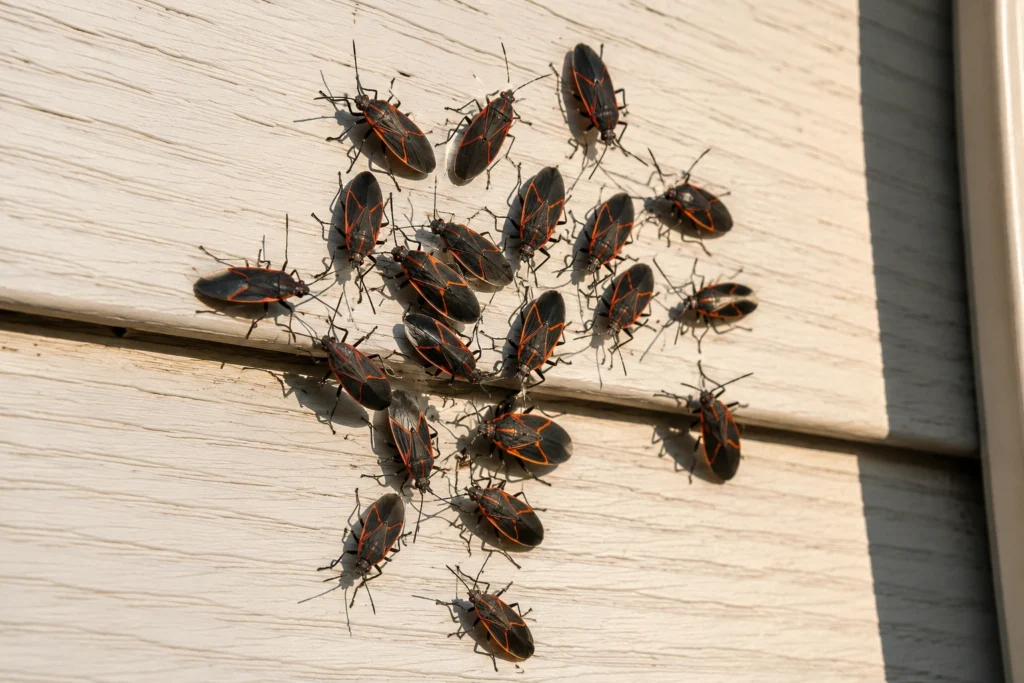
Boxelder bugs cluster on sunny exterior walls in spring and fall, looking for warm overwintering spots.
Common Black-and-Red Bugs Around Southeast Homes
Three species cover almost every “black bug with red” call we get in Georgia, Alabama, Tennessee, and South Carolina. Identification matters because the prevention strategy is slightly different for each.
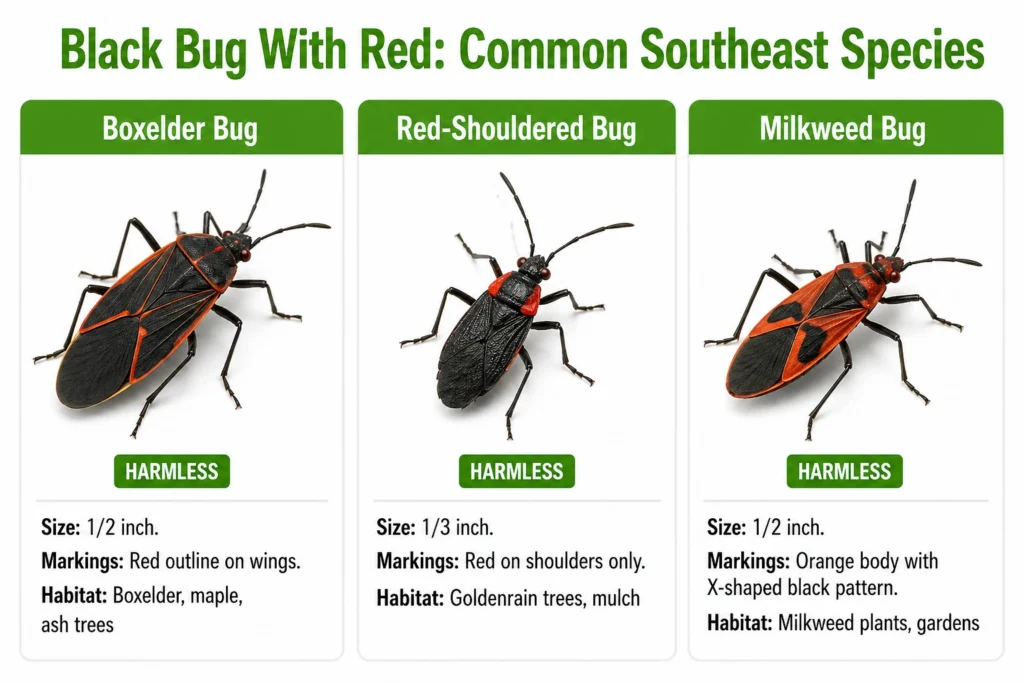
Three species cover almost every “black bug with red” sighting in Southeast homes. All three are harmless.
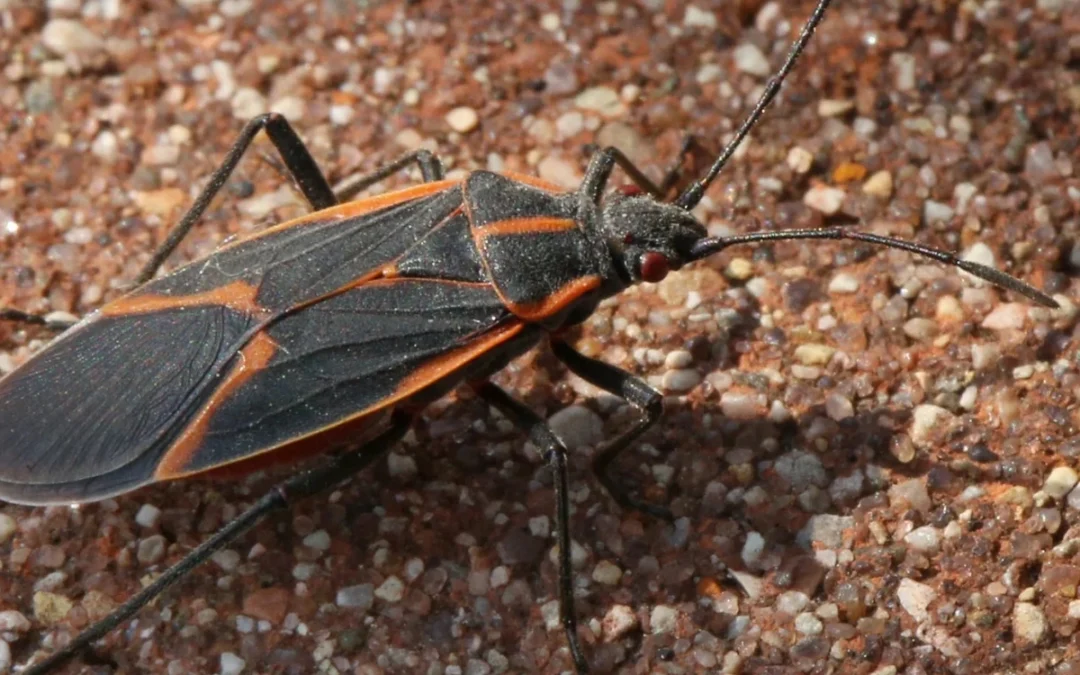
1. Boxelder Bug (Boisea trivittata)
- Size: About 1/2 inch long as adults.
- Markings: Black body with distinctive bright red-orange lines outlining the wings and three red stripes behind the head. Nymphs are bright red with developing black markings.
- Habitat: Feeds primarily on boxelder, maple, and ash tree seeds. Gathers on sunny south- and west-facing walls in fall, looking for overwintering shelter in wall voids, attics, and basements.
- Damage potential: None to humans, pets, or structures. They don’t bite or chew. Their droppings can stain light-colored fabric and siding if populations are heavy.
2. Red-Shouldered Bug (Jadera haematoloma)
- Size: Smaller than boxelder bugs, about 1/3 inch.
- Markings: All-black body with bright red shoulders/thorax. Sometimes called the “scentless plant bug” or “soapberry bug.”
- Habitat: Common in the Southeast around goldenrain trees, chinaberry trees, and mulched landscapes. Often mistaken for boxelder bugs but the red is concentrated at the shoulders rather than outlining the wings.
- Damage potential: None. Same harmless profile as boxelder bugs.
3. Large Milkweed Bug (Oncopeltus fasciatus)
- Size: About 1/2 inch long.
- Markings: Bright orange-red body with a distinctive black X- or hourglass-shaped pattern across the wings.
- Habitat: Tied closely to milkweed plants where they feed on seeds. Most homeowners see them on or near milkweed in butterfly gardens, less often on exterior walls.
- Damage potential: None to humans or structures. Beneficial to native plant ecosystems.
Behavior and Risks
The reason these bugs show up in alarming numbers comes down to two behaviors:
- Aggregation. Boxelder bugs in particular gather in large groups on sunny vertical surfaces. This is normal behavior, not an infestation in the traditional sense. They’re using the wall as a warm rest stop.
- Overwintering. In fall, they actively search for protected spaces to spend the winter. Wall voids, attic insulation, window frames, and gaps in siding all work. Come spring, they re-emerge looking for a way out, which is when they often end up inside the living space.
Three things to know about safety:
- They don’t bite. All three species have mouthparts designed for piercing plant tissue, not skin. There are isolated reports of accidental defensive nips, but no venom and no medical concern.
- They don’t damage homes. They don’t chew wood, eat fabric, or build nests in structures. They’re transient occupants, not destructive ones.
- They stain. Crushed bugs release a defensive fluid that can stain light-colored siding, curtains, and upholstery. Vacuum rather than crush.
Signs You Have a Black-and-Red Bug Problem
You don’t really have an infestation in the structural sense. What you have are activity peaks that warrant attention:
- Clusters of 20+ bugs on a sunny exterior wall (typically south- or west-facing).
- Bugs gathered around window frames and door thresholds.
- Live bugs appearing inside the home in early spring (overwintered population emerging).
- Dead bugs accumulating in window tracks, attic corners, or behind drapery.
- Small dark fecal spots on light-colored siding, especially around bug clusters.
If you’re seeing one or two bugs occasionally, no action is needed. If clusters are forming on the house or bugs are getting inside, prevention work is worth doing before the next seasonal peak.
Natural and Preventive Measures
For these species specifically, prevention is more effective than treatment because most of the population lives outdoors and only briefly contacts the structure. Three layers of work cover almost every situation.
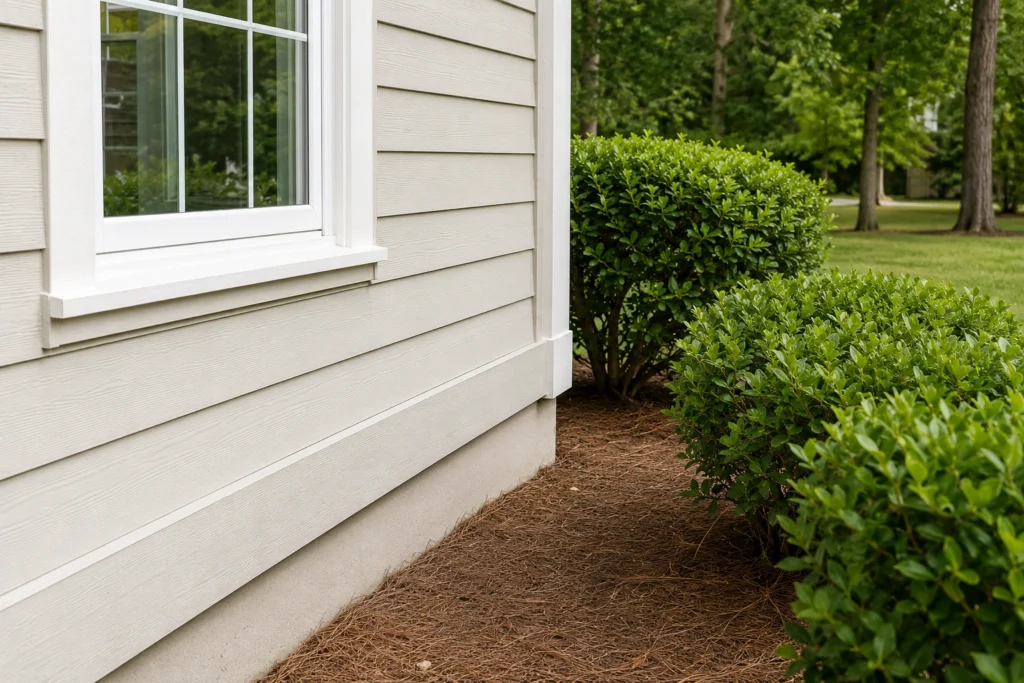
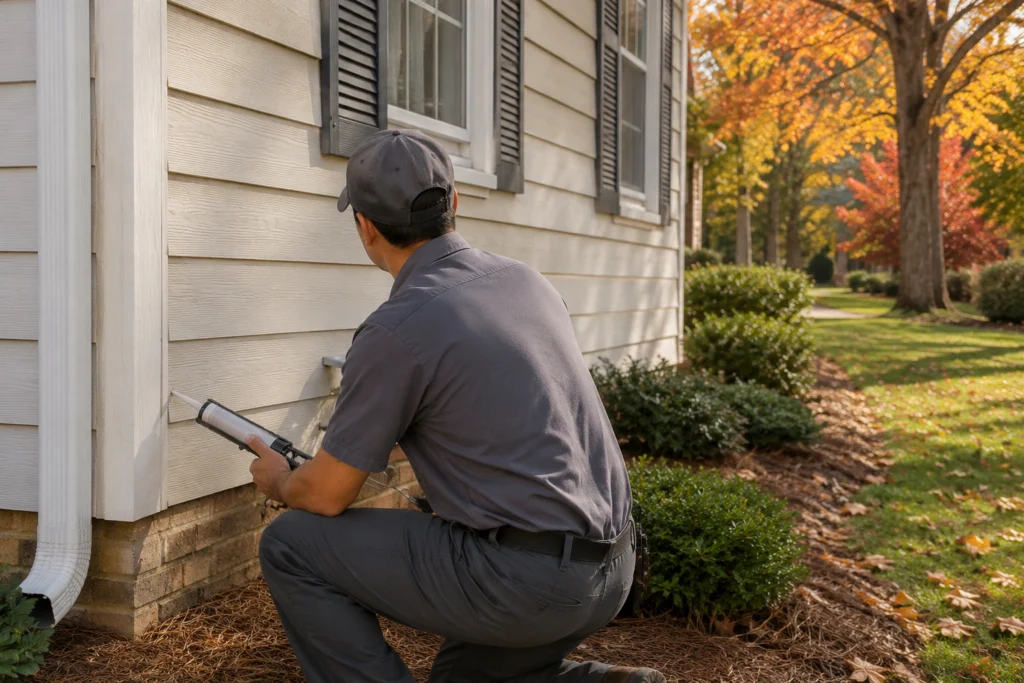
Sealing entry points and trimming vegetation near the foundation handles most black-and-red bug pressure.
Seal Entry Points
- Caulk gaps around window frames, door frames, utility line penetrations, and where siding meets the foundation.
- Replace damaged door sweeps and weatherstripping (boxelder bugs squeeze through gaps as small as 1/8 inch).
- Install or repair screens on attic vents, soffit vents, and crawl space vents.
- Pay extra attention to south- and west-facing walls, which are the primary aggregation surfaces.
Reduce Outdoor Attractants
- Remove boxelder trees within 50 feet of the house if practical (boxelder bug populations are tied directly to host trees).
- Trim shrubs and tree branches back from exterior walls to reduce shaded landing zones.
- Rake fallen leaves and remove yard debris in fall before bugs migrate to the house.
- Move firewood and mulch piles at least 20 feet from the foundation.
Safe Removal When They’re Already There
- Vacuum, don’t crush. Use a shop vac or a regular vacuum with a disposable bag. Empty outside immediately to prevent staining odor.
- Soapy water spray. Mix 1 to 2 tablespoons of liquid dish soap per gallon of water. Spray directly on clusters outdoors. Kills on contact and is safe for pets and plants once dry.
- Avoid broad-spectrum pesticides. Indoor spraying for these species is rarely effective because the population is outdoors. It also kills beneficial insects (spiders, ladybugs) that would otherwise help control other pests. For broader spider control context, see our spiders in Georgia guide.
Seasonal Activity Patterns
Black-and-red bug pressure follows a predictable calendar in the Southeast:
- Spring (March through May): Overwintered adults emerge from wall voids and attics, often appearing inside the home. Peak indoor sightings.
- Summer (June through August): Active outdoors feeding on host trees. Low contact with homes.
- Fall (September through November): Aggregation on sunny walls, looking for overwintering shelter. Peak outdoor visibility and entry attempts.
- Winter (December through February): Dormant inside wall voids and attic spaces. Quiet period.
Time prevention work to early fall before the aggregation/overwintering peak. Sealing entry points in October saves a lot of indoor sightings in March.
When to Call a Professional
Most black-and-red bug situations don’t require professional treatment. Call Northwest if:
- Indoor populations are large or recurring season after season.
- You’re seeing hundreds of bugs aggregating on multiple exterior walls.
- Sealing entry points hasn’t reduced indoor sightings.
- You want a structural inspection to identify hidden entry points you can’t see from outside.
- You’re dealing with multiple pest issues at the same time (boxelder bugs plus other insects often indicates broader exclusion gaps).
Professional treatment typically combines an exterior perimeter application timed to fall aggregation, structural exclusion work to seal entry points, and addressing host trees or landscaping factors driving the population. For an authoritative species identification reference, UGA Extension’s home insect identification guide covers boxelder bugs and similar species in detail.
(Recurring indoor sightings or large outdoor clusters? Schedule a free Northwest inspection and we’ll identify what’s around your home and lay out a treatment plan.)
Frequently Asked Questions About Black Bugs With Red Markings
What is a black bug with red on it?
In the Southeast, almost always a boxelder bug, red-shouldered bug, or milkweed bug. All three are harmless plant-feeding insects that become visible in spring and fall. Boxelder bugs (black with red wing outlines) are by far the most common in Georgia and Alabama. Identification depends on size, where the red is located on the body, and what plants are nearby.
Are black bugs with red markings dangerous?
No. Boxelder bugs, red-shouldered bugs, and milkweed bugs don’t bite humans or pets, don’t sting, don’t spread disease, and don’t damage structures. They can stain light-colored fabric or siding if crushed, which is why vacuuming is better than swatting.
How can I prevent them from entering my home?
Seal entry points (caulk around windows, doors, and utility lines; replace damaged weatherstripping; screen attic vents), reduce outdoor attractants (trim vegetation back from walls, remove boxelder trees within 50 feet if practical, clear yard debris in fall), and time prevention work to early fall before the overwintering migration peak.
Do natural repellents work on these insects?
Soapy water sprays (1 to 2 tablespoons of dish soap per gallon of water) kill these bugs on contact when applied directly outdoors. Essential oil sprays have limited effect. The most effective natural method is structural prevention rather than repellents: sealing the building so bugs can’t get in matters more than what you spray on them.
Why do they suddenly appear in large numbers?
Boxelder bugs in particular aggregate on warm sunny surfaces and migrate toward overwintering shelter in fall. Populations build over the summer on host trees (boxelder, maple, ash) and become visible all at once when they start moving toward structures. A large cluster on your wall in October is normal seasonal behavior, not a sudden infestation.
Fall is the right time to seal entry points before bugs migrate inside for the winter.
Schedule a Pest Inspection Today
If black bugs with red markings are becoming a recurring spring or fall problem, Northwest’s team can identify the species, find the entry points keeping them coming back, and treat the exterior perimeter at the right time of year to break the cycle. Most cases clear up after one fall exclusion treatment.
About the Author
Anna V., Editorial Lead — Pest Education leads pest education content for Northwest Exterminating, working with senior technicians and service center managers across our Georgia, Alabama, Tennessee, and South Carolina service areas to translate field expertise into homeowner-friendly guides. The focus: accurate, regionally-specific answers to the pest questions Southeast homeowners are actually searching for.
Jun 10, 2013 | Uncategorized
Contrary to urban myth, lovebugs, also known as the honeymoon fly, kissing bug, or double-headed bug, are not a result of a University of Florida genetics experiment gone wrong, but a result of their migration into the southeastern states.
During and after mating, adult pairs remain coupled, even in flight, for up to several days. Lovebug flights usually occur first in late spring, then again in late summer, and extend over periods of four to five weeks. They are usually restricted to daylight hours, reaching peak activity at 10 am, and can number in the hundreds of thousands.
Lovebugs do not bite or sting, but they can be a nuisance to drivers. When left spattered on a car, lovebugs can leave damage to the finish of the car. Soaking the lovebugs in water for several minutes will help with the removal, and to make future removal easier, apply a light film of baby oil over the front of the hood, above the windshield and on the grill of the bumper.
Barry Teubert
[email protected]