Jul 21, 2022 | Georgia Blogs, Pest Control, Snake Control, Wildlife
By Anna Vaccaro, Editorial Lead — Pest Education · Last updated: April 2026
If you’ve spotted a snake coiled near your back steps or sliding through the mulch by your flower bed, the first question is almost always the same: How do I make sure that doesn’t happen again? At Northwest, we get asked about snake repellent almost every day during warm-weather months in Georgia, and the answer surprises most homeowners. Most sprays, powders, and home-remedy scents don’t do much. What does work is changing your yard so snakes stop choosing it in the first place.
Video Transcript
Snakes are usually after just two things. Food and a safe place to hide. If your yard offers either, they may stick around longer than you’d like. The good news, a few simple steps can make a big difference. First, reduce food and moisture. Keeping rodents and insects under control helps, and fixing leaks or standing water is key. Snakes are drawn to damp areas. Second, remove hiding spots. Trim grass, clear brush, and leaf piles. Elevate firewood and fill in old holes around your yard. Third, use natural deterrence. Plants like maragolds and lemongrass or scents like clove and cinnamon oil can help make your space less inviting. When you’re ready to call a professional for a peaceful home, feel free to reach out to our team at Northwest Exterminating.
This guide walks you through exactly that. We’ll break down what a real snake repellent strategy looks like in the Southeast, the seven natural methods that actually move the needle, the myths to skip, and how to know when a sighting means it’s time to call a pro.

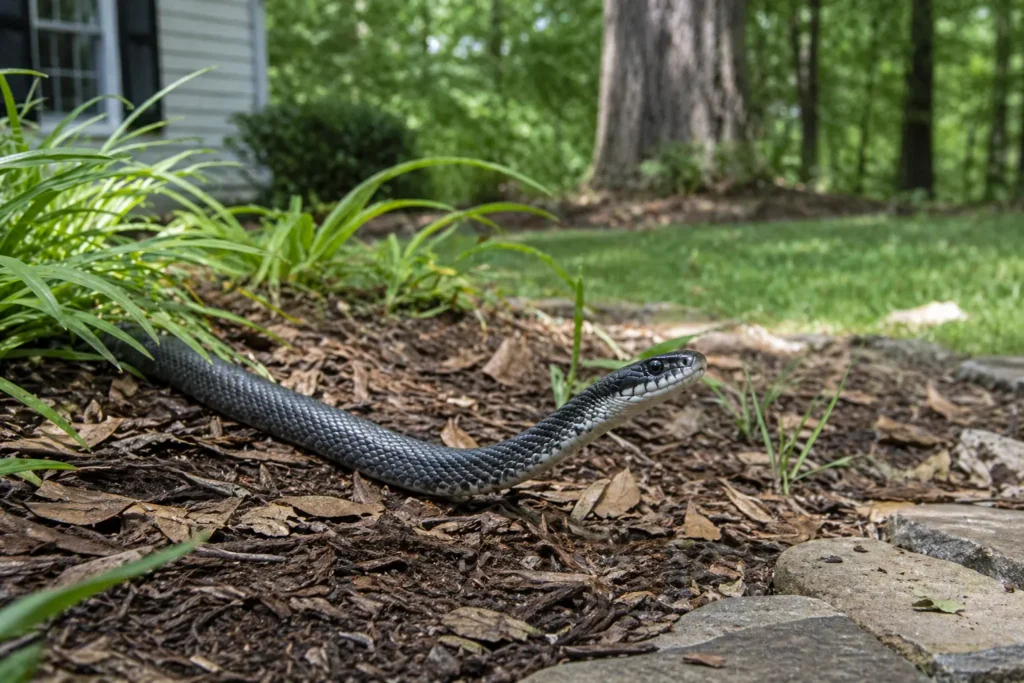
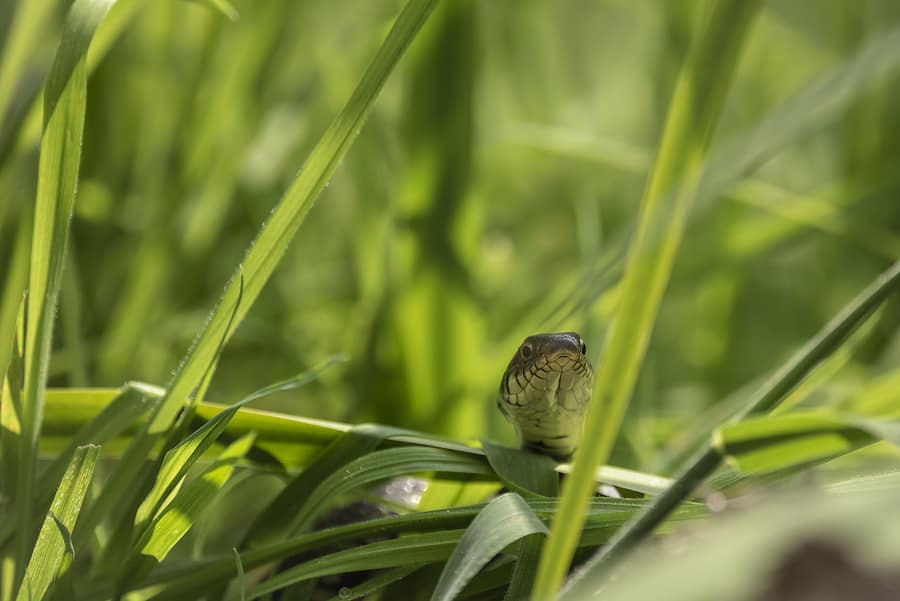
Most snakes you see in a Georgia yard are non-venomous and quietly help control rodents.
Can You Actually Repel Snakes Naturally?
Short answer: sort of. You can make your property a much less attractive place for a snake to hang out, but you can’t spray a scent line that a snake won’t cross. Here’s why that matters.
Snakes navigate the world with a specialized organ in the roof of their mouth called the Jacobson’s organ. It reads chemical cues in the air. That’s very different from how a mammal smells, and it’s the reason most of the “strong scent” tricks you see online underperform. A snake doesn’t process cinnamon oil or garlic the way we do. If there’s a rodent to chase or a warm crawl space to hide in on the other side of that scent, the snake keeps going.
The most effective natural snake repellent isn’t a product. It’s a habitat change. Take away food, shelter, and moisture, and snakes move on.
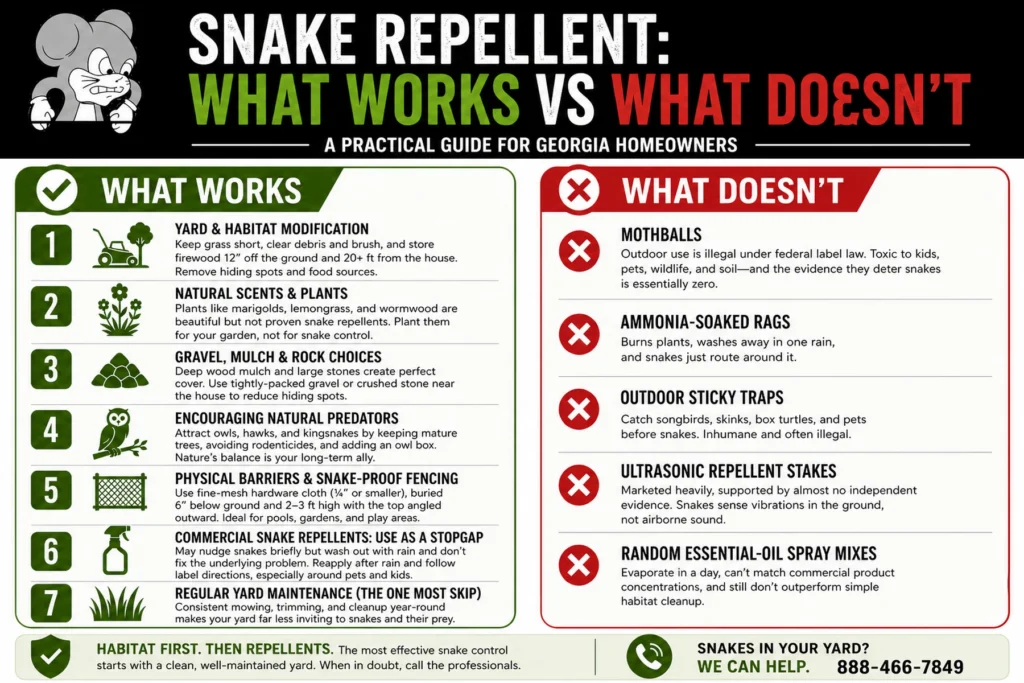
7 Natural Snake Repellent Methods That Actually Work
These are the seven moves that consistently reduce snake activity around Southeast homes. Use them together, not one at a time. Snake prevention works by stacking small changes.
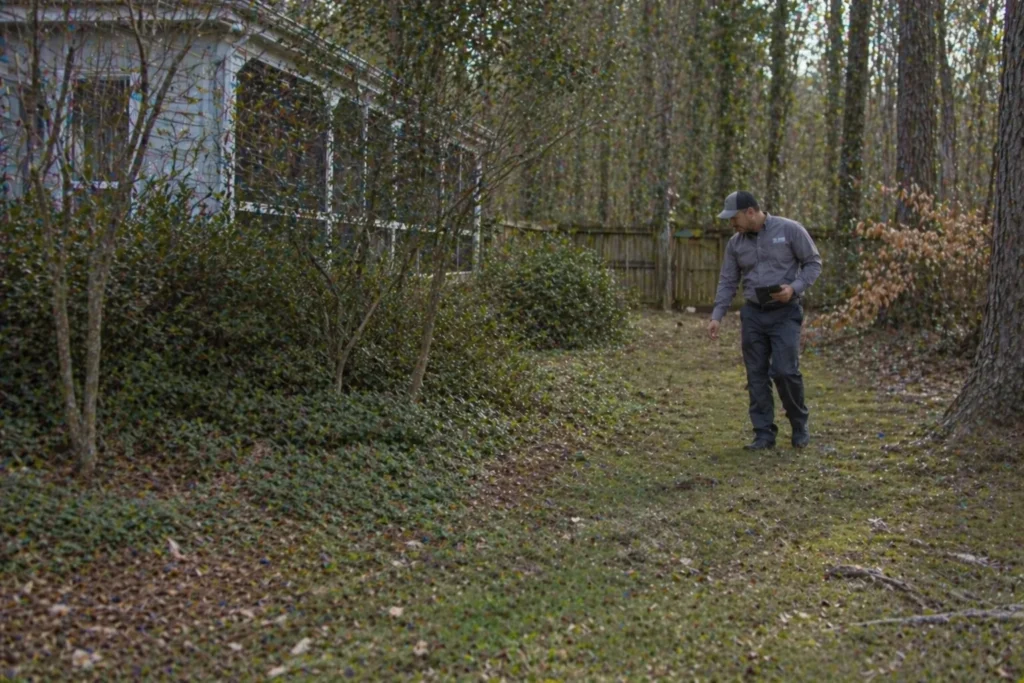
The yards we treat for repeat snake problems almost always share one thing: too many places for snakes to hide.
1. Yard & Habitat Modification
Snakes show up because something else is there first, usually rodents, frogs, or big insects. Cut off the buffet and the snakes stop visiting. Keep your grass short so snakes can’t cross the yard unnoticed. Clear tall grass along fence lines, brush piles, fallen branches, and leaf debris. Store firewood on a rack at least 12 inches off the ground and at least 20 feet from the house. Every pile of stuff in a Georgia yard is potential snake real estate.
2. Natural Scents & Plants
You’ve probably read that marigolds, lemongrass, or wormwood keep snakes out of a yard. They make a pretty border, but don’t count on them as a standalone snake repellent. Independent research on scent-based plant repellents is thin, and a snake that’s locked onto a mouse isn’t going to be turned back by a flower bed. Plant them for the garden, not for the reptile protection.
3. Gravel, Mulch & Rock Choices
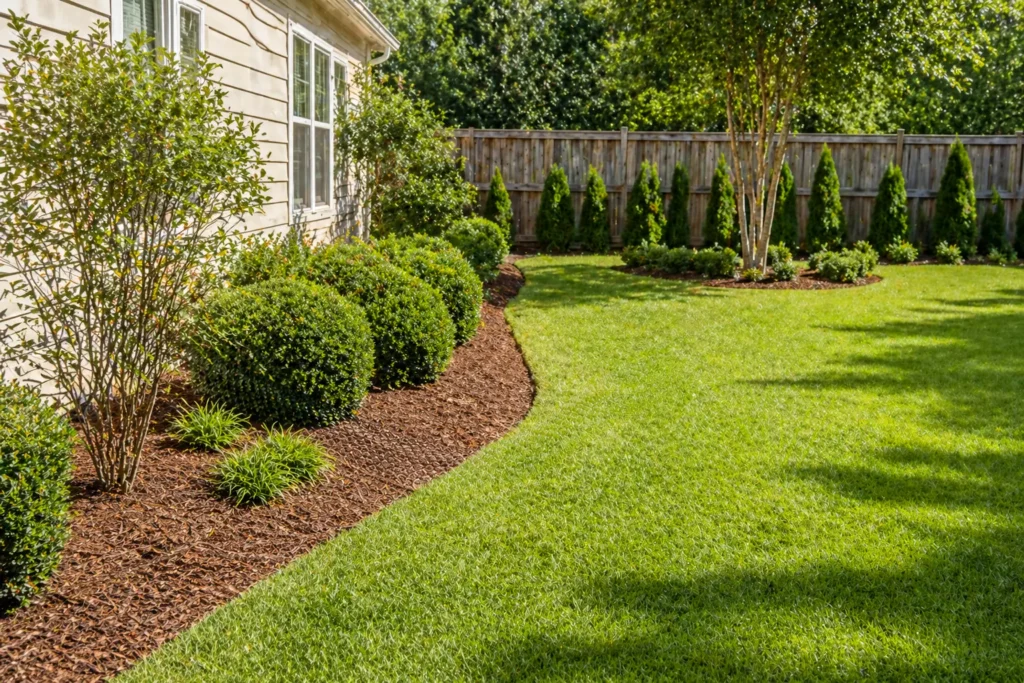
Thick wood mulch and big decorative stones are exactly what snakes love: damp, dark, warm, and easy to slip under. If you’ve had repeat sightings along a bed line, swap the deep wood mulch closest to the house for tightly-packed gravel or crushed stone. The sharp, irregular surface is uncomfortable for snakes to cross and offers nowhere to burrow.
4. Encouraging Natural Predators
Owls, hawks, and kingsnakes are the original snake control crew in the Southeast. You can’t install them, exactly, but you can make your property more hospitable to them: keep mature trees, avoid broad-spectrum rodenticides that poison the food chain, and consider a simple owl box on the back of the property. This won’t clear an active snake problem overnight, but over a season it tips the balance.
Owls, hawks, and kingsnakes are the original snake-control crew in the Southeast.
5. Physical Barriers and Snake-Proof Fencing
If you live backed up to a field, creek, or wooded lot, which is a very common setup in the Georgia and Alabama suburbs we serve, a physical barrier is one of the few methods that physically stops a snake. Snake-proof fencing uses fine-mesh galvanized hardware cloth (quarter-inch or smaller), buried at least 6 inches below grade and rising 2 to 3 feet up, with the top angled outward. It’s not right for an entire property line, but it’s excellent around a pool deck, a play area, or a garden gate.
6. Commercial Snake Repellents: Do They Work?
Walk into any hardware store and you’ll see granular and liquid snake repellents on the shelf. Most use cinnamon oil, clove oil, sulfur, or naphthalene derivatives. The research on them is mixed at best. They can nudge a snake off a specific path for a short window of a few days after application, but they wash out with rain, fade in heat, and do nothing to address the reason the snake came in the first place. If you use one, treat it as a stopgap around a problem area, reapply after every rain, and read the label carefully if you have pets or small kids.
7. Regular Yard Maintenance (The One Most People Skip)
The yards we see with recurring snake problems almost always share one thing: they look great once a month and neglected for the three weeks in between. Snake repellent is really a maintenance habit. Walk the property every couple of weeks in spring and summer. Trim back anything touching the foundation. Pick up fallen fruit under pecan or fig trees (rodents follow fruit; snakes follow rodents). Check for new burrows along the fence line. Ten minutes of weekly attention beats a hundred dollars of repellent.
(If snakes keep showing up after you’ve tightened up the yard, it’s usually a sign something bigger is going on underneath, often rodents in a crawl space or moisture you can’t see. Schedule a free Northwest inspection and we’ll walk the property with you.)
What Doesn’t Work — Snake Repellent Myths to Skip
A few “classic” home remedies for keeping snakes away are worse than ineffective. Some are illegal, unsafe for pets, or actively bad for your soil. Save your weekend.
- Mothballs. Outdoor use of mothballs as a snake repellent is actually against federal label law. Naphthalene and paradichlorobenzene are toxic to kids, pets, wildlife, and soil, and the evidence they deter snakes is essentially zero.
- Ammonia-soaked rags. Burns plants, washes away in one rain, and snakes just route around it.
- Outdoor sticky traps. They catch songbirds, skinks, box turtles, and sometimes the family cat before they catch a single snake. Inhumane and often illegal.
- Ultrasonic repellent stakes. Marketed hard, supported by almost no independent evidence. Snakes rely on vibration through the ground, not airborne sound.
- Random essential-oil spray mixes. Evaporate in a day, can’t match the concentration a commercial product uses, and still don’t outperform simple habitat cleanup.
Habitat changes outperform every commercial snake repellent on the market.
Snake Prevention Tips for Homes & Yards
A good snake repellent plan for your home isn’t just yard work. It’s also sealing the house itself. Two-thirds of the “snake in the garage” or “snake in the laundry room” calls we get trace back to the same kinds of openings that let rodents in.
- Walk the foundation and seal gaps around utility penetrations, dryer vents, and brick weep holes with hardware cloth. Never use expanding foam alone, because snakes push right through it.
- Screen every crawl space vent with galvanized ¼-inch mesh. Replace any torn screens. This alone will stop most garage and crawl-space snake sightings.
- Re-caulk door thresholds and replace worn weatherstripping, especially on garage side doors and basement hatches.
- Fix leaky outdoor faucets, redirect gutter runoff away from the foundation, and don’t over-water the lawn. Moisture pulls in frogs and insects, which pull in snakes.
- Treat rodent control as snake control. If you have mice in the crawl space, snakes are just the next chapter. Take care of the rodent problem with professional rodent control and the snake issue often resolves itself.
When to Call a Professional for Snake Control
Most snakes in Georgia and Alabama yards are harmless, and actually beneficial. A black racer or garter snake eating the mice by your shed is doing you a favor. But there are three situations where it’s time to stop DIY-ing and pick up the phone:
- Venomous species on the property. The Southeast is home to Copperheads, Cottonmouths (Water Moccasins), Timber Rattlesnakes, Pigmy Rattlers, and along the coast, Eastern Diamondbacks and Coral Snakes. If you can’t confidently identify what you’re seeing, back up and call.
- A snake inside the house. Inside the living space, garage, crawl space, or attic is never a “just wait it out” situation. It means an entry point that needs finding and sealing.
- Repeat sightings in the same spot. More than two sightings in the same part of the yard within a season means there’s a harborage or food source you haven’t found yet. That’s what a professional inspection is for.
Snakes in the Southeast — What You’re Likely Seeing
Knowing what lives in a typical Georgia or Alabama yard takes a lot of the panic out of a sighting. The vast majority of what we encounter is non-venomous. The UGA Extension guide to Snakes of Georgia is the best free resource for identifying any snake you see on the property.
- Eastern Rat Snake (Black Rat Snake). Long, black, often climbs into shrubs or attics chasing rodents. Non-venomous and one of the best natural rodent controls you can have.
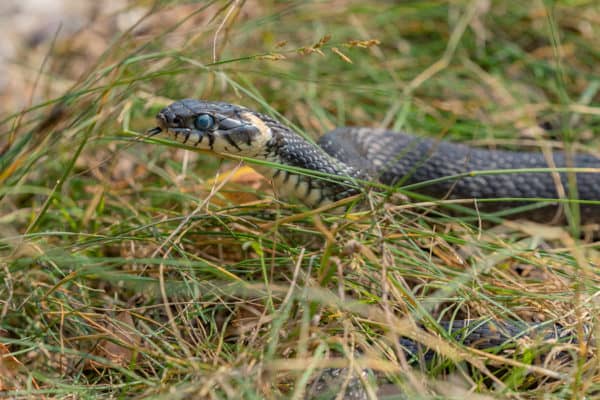
- Black Racer. Slender, fast, jet-black. Harmless to humans, feeds on insects, lizards, and small rodents.
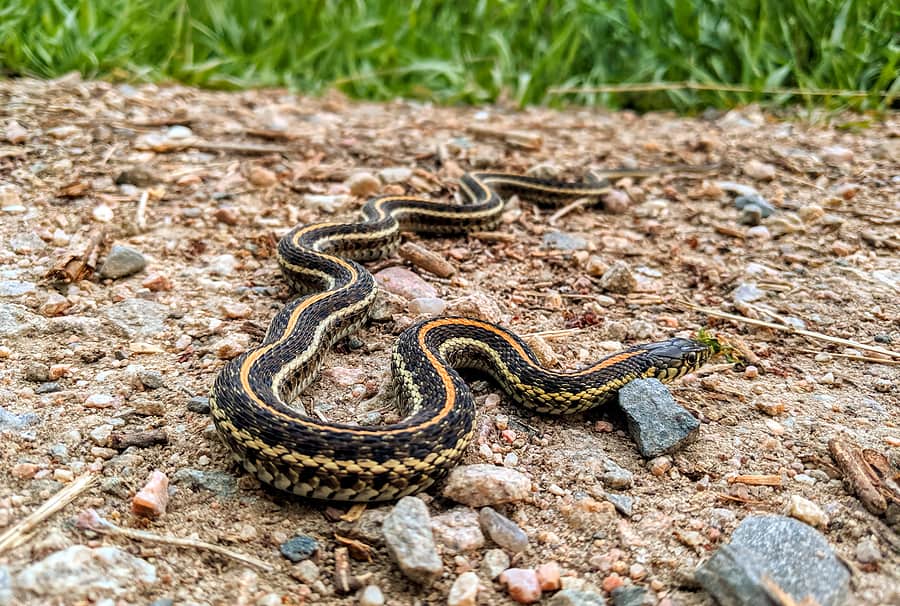
- Garter Snake. Small, striped, very common near gardens and water features.
- Kingsnake. Non-venomous, and remarkably, it actually eats venomous snakes. Leave it alone if you can.
- Copperhead (venomous). Tan and dark-brown hourglass banding. Hides beautifully in pine straw and leaf litter, which is the cause of most venomous bites in the region. Call a pro.
- Cottonmouth / Water Moccasin (venomous). Thick-bodied, found near water. Will stand its ground. Call a pro.
Peak activity in the Southeast runs April through October, with two noticeable spikes: early spring (emerging from brumation) and late summer (looking for food before the cooler months).
Frequently Asked Questions About Snake Repellent
Do snake repellents really work?
Commercial snake repellents offer limited, short-term help at best, and most scent-based home remedies don’t work at all. The most reliable “repellent” is removing what attracts snakes in the first place: rodents, tall grass, standing water, and hiding places around the foundation.
What scent keeps snakes away?
Snakes may avoid strong-smelling compounds like cinnamon oil, clove oil, and cedarwood in close range, but these won’t stop a snake that’s tracking prey. Use scents as a supplement to habitat cleanup, never as the whole plan.
Are snake repellents safe for pets?
It depends on the active ingredient. Many granular snake repellents use essential oils with reasonable safety profiles, but always check the label. Do not use mothballs or ammonia as a snake repellent. Both are genuinely toxic to dogs, cats, and children.
How do I keep snakes out of my yard permanently?
There’s no one-time fix. Long-term snake control in a Southeast yard comes from stacking three things: consistent yard maintenance, rodent control inside and around the home, and physical snake-proof fencing around the areas you most want protected (play areas, pool decks, garden entries).
When should I call professional snake control?
Call right away for any venomous snake, any snake inside the home, or repeat sightings in the same part of the yard. Northwest Exterminating handles inspection, humane removal, exclusion, and the underlying rodent and moisture issues that drive most snake problems.
Northwest’s wildlife team handles the entry points and rodent issues that drive most snake problems.
Ready to Keep Snakes Out of Your Yard for Good?
If you’ve seen a snake on your property more than once this season, the odds are good there’s a rodent or moisture issue feeding the problem. Our team has been clearing snake problems out of Georgia and Alabama homes for decades, and we handle the thing that caused it, not just the snake you saw.
About the Author
Anna Vaccaro, Editorial Lead — Pest Education leads pest education content for Northwest Exterminating, working with senior technicians and service center managers across our Georgia, Alabama, Tennessee, and South Carolina service areas to translate field expertise into homeowner-friendly guides. The focus: accurate, regionally-specific answers to the pest questions Southeast homeowners are actually searching for.
Aug 27, 2020 | Wildlife
Snakes are one of the most feared pests homeowners can find in their yards. The likelihood of snakes coming onto your property depends on several factors like your location, surrounding landscape, nearby water source, available food supply, and your landscaping and maintenance. While the first instinct is usually to either run or get rid of it quickly, snakes can actually be pretty beneficial to have around. Instead of killing snakes, some people prefer to try and repel them to keep them from coming into the yard in the first place, or deter them from staying there if they’ve already taken up residence. There are several snake repellent products on the market, but do any of them really work? Here are some of the most common snake repellents, the reasons why you should avoid them, and some snake prevention tips you can use around your home.
Video Transcript
Seeing a snake in your yard is enough to make your heart skip a beat. But before you panic or try a quick fix, pause.
Most snake repellents you’ve heard about are actually myths. Moth balls, sulfur, sticky traps, even fake eggs don’t drive snakes away.
Worse, many are dangerous for kids, pets, and harmless wildlife. What does work is prevention. First, remove the food source. Snakes follow rodents.
Bring pet food inside. Clean up fallen fruit and be mindful with bird feeders.
No food means no reason to stay. Second, keep your yard trimmed. Tall grass and overgrown shrubs give snakes places to hide. A clean, open lawn makes your yard far less inviting. Finally, check your landscaping. Wood piles, thick mulch, and large rocks are perfect hiding spots. Elevate firewood, and clear out debris. Most snakes are just passing through, and a few smart changes can keep it that way. When you’re ready to call a professional for a peaceful home, feel free to reach out to our team at Northwest Exterminating.
Mothballs
Mothballs are one of the most popular snake repellent products. The active ingredient in mothballs is either naphthalene or paradichlorobenzene. Both of these products are known to be toxic to insects and mammals but are actually not effective on snakes (because they are actually reptiles). In fact, naphthalene has been proven to cause illness in humans (especially children) and pets. Additionally, using mothballs outside the home actually violates their product labels.
Sulfur
Sulfur is another common snake repellent ingredient and is often seen in many commercial snake repellent products on the market. Sulfur has been proven to not be effective against snakes, however, much the same as mothballs.
Fake Eggs
When snakes are terrorizing a chicken coop, many people will use ceramic or wooden eggs or even golf balls to trick snakes into eating them instead of real chicken eggs. The problem, however, is that when snakes eat these fake eggs they die a long, slow, painful death over the course of many weeks. Once they’re gone, another snake will often show up and take its place, defeating the purpose of eliminating the original snake. If you are using ceramic eggs to encourage your hens to lay, make sure to glue them down so snakes can’t eat them accidentally.
Releasing Other Snakes
Many people will catch and release predatory snakes like king snakes and racers onto their property to hunt and kill the problematic snakes they have. This practice is usually unsuccessful and in some places is even against the law. The same goes for capturing the problematic snakes on your property and releasing them elsewhere.
Sticky Traps
Some people will lay out sticky traps in hopes of catching the nuisance snake so they can kill it or relocate it. The problem with this method is that the sticky traps will often catch non-targeted animals instead of the snake, resulting in a slow, agonizing death for the animal.
Weapons
Many people employ guns or shovels to kill snakes that come onto their property. This puts people at great risk for injury either from the snake going on the defensive and biting its attacker or from the homeowner or innocent bystanders being injured by ricocheting bullets, etc. Once the snake is killed, it is often replaced by another snake that takes its place. A better deterrent for snakes is to spray them with a blast from the water hose. This encourages them to find a new location without harming them or anyone else.
Prevention
Instead of using ineffective snake repellent products and methods, consider going to the source of the problem to help get rid of it. Snakes will come into your yard because they are attracted to something there – whether it is a water source, food source, or a place to shelter. Eliminating what attracts them will help keep them out and encourage them to find a different location to live in. Here are some snake prevention tips you can utilize to help make your yard less inviting to them.
- Feed your pets inside. Rodents are attracted to pet food and snakes are attracted to rodents. By feeding and watering pets inside or bringing their food and water bowls inside when not in use is a good way to help prevent rodents which, in turn, helps prevent snakes.
- Clean up debris. Debris and leaf piles in your yard are a huge attractant to rodents which will then attract snakes. These piles also provide excellent sources of shelter for snakes to hide. Clean up any debris piles (sticks, brush, tree limbs, etc) and piles of leaves or mulch them to get rid of them.
- Cut the grass. Tall grass provides ideal cover for snakes to hide in. Keeping the grass cut shorter gives them less coverage and also makes them much easier to spot in your yard.
- Avoid birdhouses. Snakes will eat small birds, as well as rodents who feed on spilled birdseed. Some snakes are also excellent climbers and will use this to their advantage to feast on birds feeding on the feeders. If you do use a birdhouse, make sure it is placed on a metal pole or a wood post that is wrapped in metal sheeting. You can also try to avoid using the bird feeder until the colder months when snakes are less active and less likely to frequent the area.
- Use up firewood. Woodpiles make an excellent spot for snakes to hide in, especially over winter. Try to use up all of your firewood before the weather warms up and snakes become more active. If you don’t use it all up, try to keep it stored at least 1 foot off the ground.
- Clean up fallen fruit. Fallen fruit from trees and plants will attract a variety of pests including rodents. Snakes will then follow these rodents as a food source. Make sure to pick up and dispose of any fallen fruit on a regular basis.
- Get rid of mulch. Mulch and pine straw home to several invertebrates that are a prime food source for snakes. Snakes will also use this groundcover as shelter for themselves. Consider using an alternative to mulch or pine straw in your landscape design. The same goes for using large rocks in your landscaping. Snakes like to get under these large rocks to breed and overwinter during the colder months.
- Avoid garden ponds. Garden ponds are another landscaping feature that draw snakes in. It is a readily available source of water. It also attracts frogs and other animals that snakes will gravitate to as a food source.
- Trim trees and shrubs. Overgrown trees and shrubs provide cover and shelter for snakes. Keep tree branches and shrubs trimmed back so they are not touching the house or garage. Branches should also be trimmed so they are off the ground, ideally with a 24″ to 36″ space underneath. This not only helps eliminate places for snakes to take cover but also helps make them easier to spot if they do get under them.
- Install a perch pole. Natural predators to snakes, such as hawks and owls, will be attracted to a perch pole. This is a good way to utilize natural resources for snake prevention. Place the perch pole in an open area of your yard so the birds will have a good view of the entire area.
- Install fencing. If all else fails, consider installing fencing to keep snakes out. Fencing should be buried a few inches into the ground and should be made up of 1/4″ or smaller rigid mesh. The fencing should also have a bend at the top to keep snakes from being able to climb over it. Some companies even make wildlife specific fencing options.
The large majority of snakes you will encounter in your yard are harmless to humans. All snakes (even venomous snakes) are beneficial and play an important role in the ecosystem. Many snakes eat garden pests like slugs and snails, helping protect your plants and flowers. Some snakes eat rodents, helping control their populations and keeping them from spreading diseases to you, your family, your pets, and your livestock. There are even studies showing where rattlesnakes help keep Lyme disease in check. If you’ve tried the tips above and you still have an issue with snakes or any other pests, contact your local pest control company for a comprehensive evaluation and treatment plan.
You May Also Be Interested In:
Helpful Spiders!
The Traveler’s Guide to Bed Bugs
Take the Homework, Leave the Lice
7 Things You Didn’t Know About Cockroaches
How To Help Your Lawn During Late Summer
Mar 13, 2020 | DIY, DIY Wildlife Prevention, Wildlife
If you live in an area where snakes are common, chances are you may stumble across one at some point. Snakes, like any other pest, are usually in search of three things: food, water, and shelter. Oftentimes the area around our homes provides all of these things that attract snakes.
The likelihood of a snake on your property depends on several factors, including location (north vs south), landscape (urban vs rural), a nearby water source (pond, lake, river), how well your lawn is landscaped and maintained, and how readily a food supply is available.
When dealing with snakes, it is important to identify the type of snake you are dealing with: venomous snakes should be left to a professional to eliminate while non-venomous snakes can often be deterred with natural snake repellent techniques. Here are 4 ways to keep snakes out of your yard:
1. Scare Them Off
One of the easiest ways to scare off a snake from your yard is to use your garden hose. Spray the snake with a steady stream from the hose until he slithers off. Consider installing a perch pole for hawks, owls, and other natural snake predators to alight on. Be sure to place it in an open area so the birds have a good view of your yard and the surrounding area.
2. Repel Them Away
There are some natural products and at-home techniques you can use for snake prevention. Ammonia is a common snake repellent. Snakes hate the smell of ammonia and won’t come near it. Soak rags in ammonia and place them in unsealed plastic bags. Leave the bags where you usually see snakes to keep them away.
You can also use vinegar to keep snakes and other pests out of your swimming pool. Pour white vinegar around the perimeter of the pool. Snakes can absorb the vinegar through their skin, so they will avoid slithering over it once it’s poured on the ground. Snakes also try to avoid humans at all costs. Save hair from your hairbrush and scatter it around the perimeter of your property to help keep snakes away.
3. Don’t Invite Them In
Snakes will come into your yard in search of food, water, and shelter. Eliminating these three basic necessities will make them much less likely to pay you a visit. Mow your grass often and keep it cut short. Shorter grass means more exposure to predators like hawks and coyotes and also makes them much easier for you to spot.
Avoid overwatering your lawn, as this can attract snake food sources like frogs, worms, and slugs. Keep trees, shrubs, and branches trimmed away from the sides of your house, the roof, and the ground. Try to keep a 24 to 36-inch space cleared under trees and shrubs, as this reduces the chance of snakes using them for cover and makes them easier to spot. Move bird feeders away from the house or get rid of them altogether.
Birds often leave seeds scattered underneath which attracts rodents that, in turn, attract snakes. Keep bird seed and pet food stored in metal cans with tight-fitting lids.
Make sure your woodpile is kept away from the home and elevated if possible. When designing your landscaping, try not to use mulch or large rocks, as these create breeding grounds and overwintering habitats for snakes. Instead, try to use smaller, tight-fitting rocks like gravel or river rock. Also, try to avoid using water features and Koi ponds as the water can also attract snakes.
4. Lock Them Out
Snakes can be very persistent pests, and keeping them out can be difficult. Carefully inspect the outside of your home and seal any cracks or crevices you find on the house, sidewalk, and foundations. Consider installing fencing around your yard, garden, or pool.
Fencing should be buried a few inches into the ground and constructed using 1/4″ rigid mesh or solid sheeting. Fencing should also include a bend at the top to prevent snakes from climbing up and over. There are some companies that even make wildlife-specific fencing.
The best way to prevent snakes is to take steps to keep them out in the first place. Dealing with snakes can be dangerous, depending on the type of snake you have. If you have a snake problem, contact animal control or a professional wildlife control company that can help safely trap, relocate, or remove the nuisance snake from your home.
You May Also Be Interested In:
What You Should Know About Termites This Spring
Where Are These Stinkbugs Coming From?
Where Do Roaches Come From?
Summer Wildlife Removal: Common Home Invaders
Mice, Rats, And Other Problem Rodents