
Unwanted Pest Presents Under the Tree
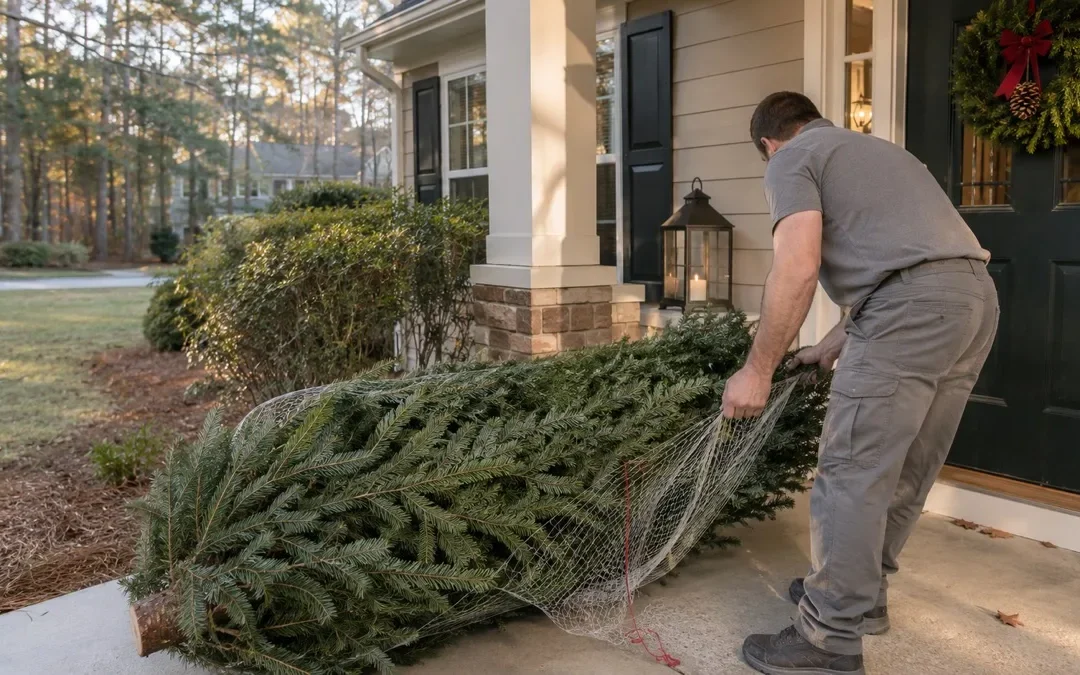
Quick answer: Fresh-cut Christmas trees, decoration boxes, firewood and long-stored baking ingredients can bring pests indoors during the holidays. Most insects on a real tree stay on the tree and are not a threat to the home. Shake the tree outdoors, inspect storage boxes and firewood before they come inside, and check older pantry items before you bake.
As the holiday season gets underway and stores fill with shoppers, Christmas decorations are going up and presents are being wrapped. Cool weather is here, too, and many of our favorite seasonal traditions can bring pests indoors. It’s already looking a lot like Christmas around our service territory, even without the snow. But could you have unwanted pest presents under the tree?
This time of year, homeowners bring home fresh-cut Christmas trees, take decorations down from the attic, and bring in firewood for cooler nights. Kitchens are also filled with the smell of fresh-baked cookies. Those traditions are worth keeping. A few simple checks, before the tree, the boxes, the firewood or the flour come all the way inside, will help you enjoy them without a pest surprise.
Can insects on a Christmas tree hurt my home?
The smell of a fresh-cut Christmas tree draws many people to bring these firs into their homes. Finding insects on a Christmas tree might make some people think twice about choosing a real tree, but most are nothing to fear.
“The insects are usually small and often go unnoticed. They typically stay on the tree and are not a threat to the home or its contents.”
Cory Goeltzenleuchter, Director of Technical Services, Northwest Exterminating
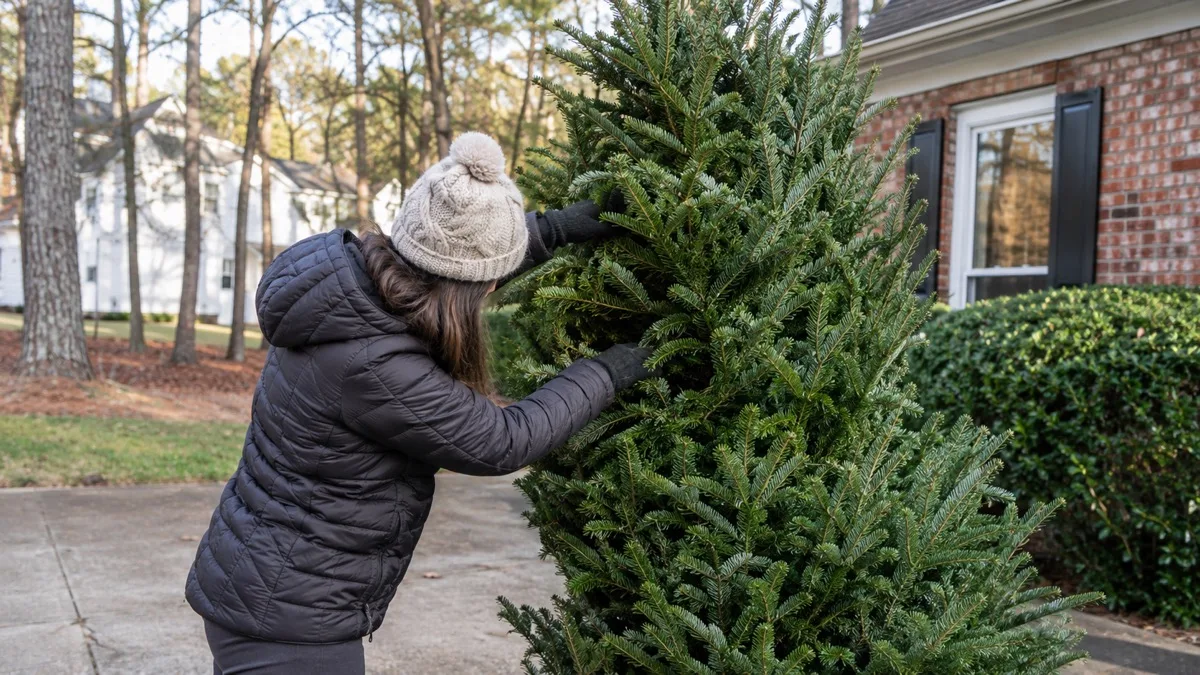
Most often, insects are not present in numbers you would notice. Shaking the tree outdoors is one of the best ways to remove these unwanted presents. Homeowners can also vacuum up any insects they find around the tree. For more seasonal advice, see Northwest’s holiday pest proofing tips. Penn State Extension also has guidance on insects found on real Christmas trees.
What insects show up on fresh Christmas trees?
Here are the Christmas tree insects homeowners are most likely to notice, and what to do if you find them.
| Insect | What you may notice | What to do |
|---|---|---|
| Aphids | Tiny, six-legged insects that tend to stay on certain parts of a field-grown tree. Many are inactive in colder weather but may become active once the tree warms up indoors. | Shake the tree outdoors and vacuum any insects you find around it. |
| Bark beetles | Small insects that bore into trees and may leave small piles of sawdust-like material. | They are unlikely to survive in indoor furniture, which is usually too dry. Still, inspect the tree outdoors before bringing it in. |
| Mites | Some mites found on Christmas trees may be predatory and stay on the tree, feeding on other insects and their eggs. Some mites are associated with bird nests. | Remove any old nest outdoors before bringing the tree inside. |
| Praying mantids | Predatory insects. Check branches for a walnut-sized egg case. | If you find an egg case, remove that branch and leave it outdoors so the eggs can hatch outside. |
| Psocids | Usually brown or gray. They feed on mold, pollen, fungi and other insects. | They typically do not thrive in the warm, dry conditions inside a home. Shake the tree outdoors before it comes inside. |
| Scale insects | Can be difficult to find. Young scale insects may appear as tiny moving specks. | They can often be shaken or knocked off the tree outdoors. |
| Spiders | Among the least welcome pests brought in on a tree. They are there to feed on insects, not people. | They usually do not survive long in the home. Shake the tree outdoors and vacuum any you find inside. Learn more on our spider identification page. |
Can stored Christmas decorations bring silverfish indoors?
Many homeowners store their decorations in cardboard boxes in the attic or in spare bedroom closets. These containers can provide harborage and a source of food for silverfish. Silverfish are wingless insects covered with scales. They are shiny and silver, with three appendages called cerci.
Silverfish are most active at night and prefer areas with high humidity. Under normal household conditions, they develop slowly and produce few young. Females lay eggs year-round in secluded places, such as behind books or on closet shelves, although they may occasionally lay eggs in the open. Silverfish lay only a few eggs at a time but may lay several batches over a period of weeks. Depending on the species, an adult female can live for two to five years and lay up to 100 eggs.
After hatching, young silverfish look like adults, only smaller. Their growth rate depends on temperature and humidity.
Sanitation can help prevent infestations, but it will not eliminate existing ones:
- Seal hiding places: Sealing cracks and crevices around plumbing, wall molding and windowsills helps eliminate harborage.
- Remove food and cover: Removing cardboard boxes and old newspapers also removes food sources and hiding places. After the holidays, store decorations in tightly sealed plastic containers rather than cardboard. See our tips on keeping pests out of stored holiday decorations.
- Vacuum: Vacuuming can physically remove silverfish.
For more information, see the University of Florida IFAS guide to booklice and silverfish.
If silverfish activity continues, a treatment may focus on wall voids, cracks and crevices, areas behind furniture and spaces under attic insulation. A service professional can determine whether dust or bait is appropriate for the situation.
What pests hide in firewood?
There are two groups of insects to consider when it comes to firewood. As temperatures drop, homeowners bring wood inside for their fireplaces.
Pests that live inside the wood: The first group lives inside the wood, and some even feed on it. These pests primarily include termites, carpenter ants, wasps and beetles. Damp wood or wood stacked directly on the ground can encourage them. Examples include horntail wasps and wood-boring beetles, such as powder post and bark beetles. These insects are typically already in the wood before it is cut.
Pests that use the woodpile for shelter: The second group uses a woodpile for shelter. These pests are typically occasional invaders, such as earwigs, centipedes and millipedes. Many of them prefer damp conditions, which are more common around uncovered firewood. Other pests sheltering in woodpiles may include cockroaches, Asian lady beetles, scorpions and black widow spiders. Homeowners should always wear thick, heavy-duty gloves when handling firewood.
“Firewood pests are often a temporary issue because conditions inside a home usually do not support a long-term infestation. However, repeated signs of termites or carpenter ants inside a home should be investigated.”
Cory Goeltzenleuchter, Director of Technical Services, Northwest Exterminating
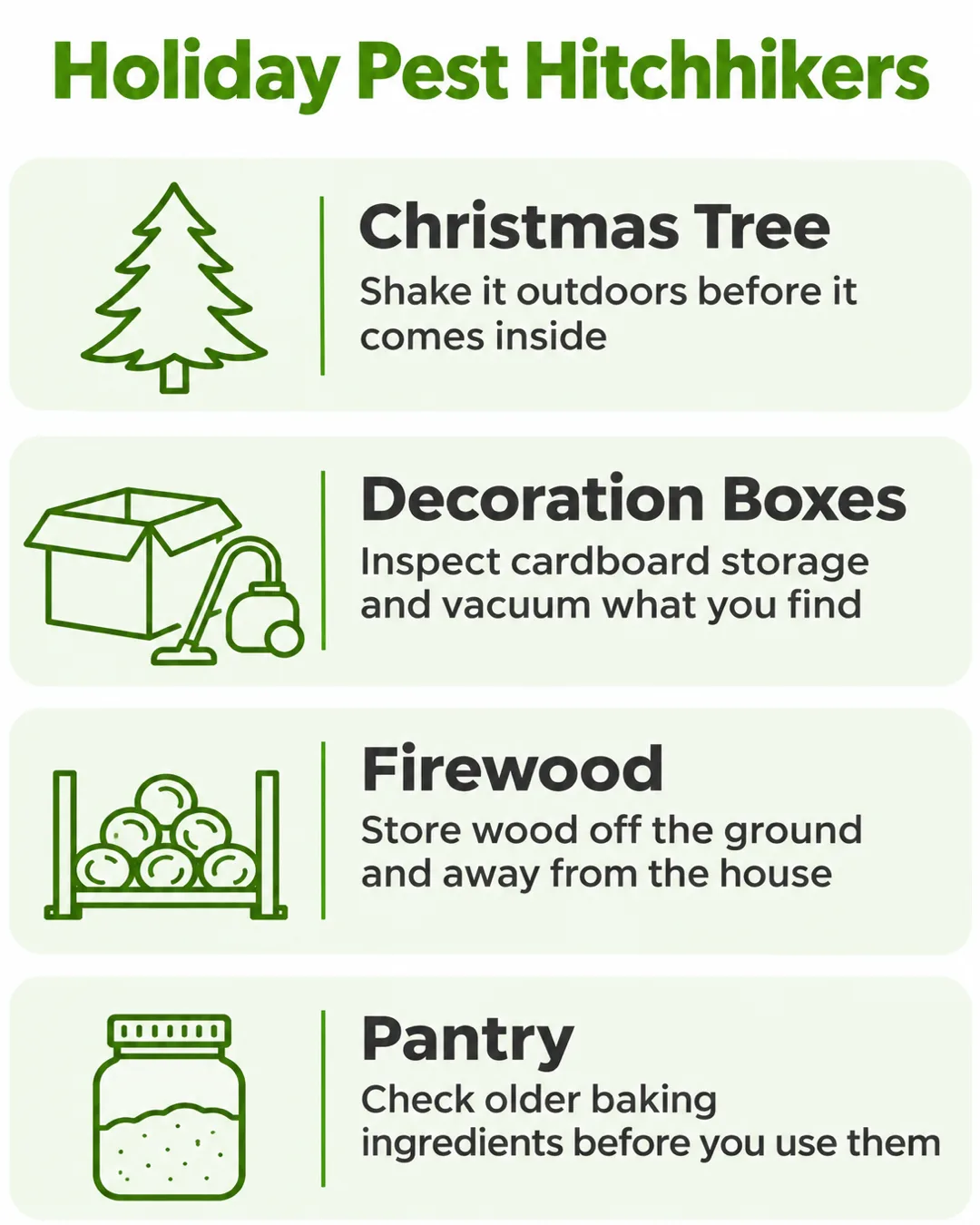
Store firewood off the ground and away from the structure, and cover the top of the stack to help keep it dry while allowing airflow along the sides.
Why do pantry pests show up during holiday baking?
With the holiday season comes the smell of fresh-baked cookies, pies and cakes. To make those treats, homeowners pull baking essentials from the pantry, some of which may have been stored longer than they realize. Products that have sat unused for a long time are more likely to develop a pantry pest infestation.
A sudden pest issue this time of year may come to light when someone pulls out baking products that have not been used in months, perhaps since last Christmas. Pantry pests may also be found around cookbooks. Flour debris can collect on countertops and around books, creating a food source for stored-product pests such as the red flour beetle. Homeowners should clean up spilled flour and grain products around the kitchen.
Stored-product pests are not always limited to the pantry. Christmas chestnuts and other stored nuts can also attract pests such as Indianmeal moths. Think beyond the pantry and check other areas where food products may have been stored, including places where rodents may have moved food. For additional prevention tips, see Northwest’s pantry pest prevention guide and UGA Cooperative Extension’s guide to stored-product pests.
Most holiday hitchhikers are easier to handle when you catch them early: a shaken tree, a checked decoration box, dry firewood stored away from the house, and a clean pantry before the baking starts. If pests keep showing up, or you see repeated signs of termites or carpenter ants, Northwest Exterminating can inspect your home and help you take the next step. Thanks, and have a Merry Christmas.
Prefer to talk? Call Northwest Exterminating at (888) 466-7849.
Frequently asked questions
Should I still buy a real Christmas tree if I am worried about bugs?
Yes. Insects on a fresh-cut tree are usually small, often go unnoticed, and typically stay on the tree. They are not a threat to the home or its contents. Shake the tree outdoors before bringing it in, and vacuum any insects you find around it once it is set up.
What should I do if I find a praying mantid egg case on my tree?
Check the branches for a walnut-sized egg case. If you find one, remove that branch and leave it outdoors so the eggs can hatch outside.
How do I keep silverfish out of Christmas decoration boxes?
Silverfish like humidity and can feed and hide in cardboard stored in attics and closets. Unpack boxes carefully, vacuum what you find, seal cracks and crevices, and move decorations into tightly sealed plastic containers. If activity continues, a service professional can decide whether a targeted treatment is needed.
How should I store firewood to keep pests away from my house?
Store firewood off the ground and away from the structure. Cover the top of the stack to help keep it dry, and leave the sides open for airflow. Wear thick, heavy-duty gloves when you handle the wood. Repeated signs of termites or carpenter ants inside the home should be investigated.
Why do pantry pests appear when I start holiday baking?
Products that have sat unused for a long time, sometimes since last Christmas, are more likely to have a pantry pest infestation. Check baking ingredients, clean up spilled flour and grain around counters and cookbooks, and look at stored nuts and other food kept outside the pantry. If the problem continues, professional pest control can help.
About the contributors
Author: Cory Goeltzenleuchter, B.C.E., P.H.E., CP-FS, PCQI, Director of Technical Services, Northwest Exterminating
Cory Goeltzenleuchter is the Director of Technical Services for Northwest Exterminating. As a Board Certified Entomologist and Public Health Entomologist, Cory is one of the organization’s leading technical experts in pest management. He oversees technical training, service standards and industry best practices while helping ensure customers receive extraordinary service through science-based solutions, ongoing education and innovative approaches across the Northwest Family of Brands.
Reviewed by: Neil Bloyd, Director of Learning & Technical Services, Northwest Family of Brands
Neil Bloyd leads training, professional development and technical education initiatives that help teammates grow their expertise and better serve customers. Through his leadership and industry knowledge, he helps foster a culture of continuous learning and supports science-based pest management solutions across the Northwest Family of Brands.