Mar 11, 2015 | Pest Control
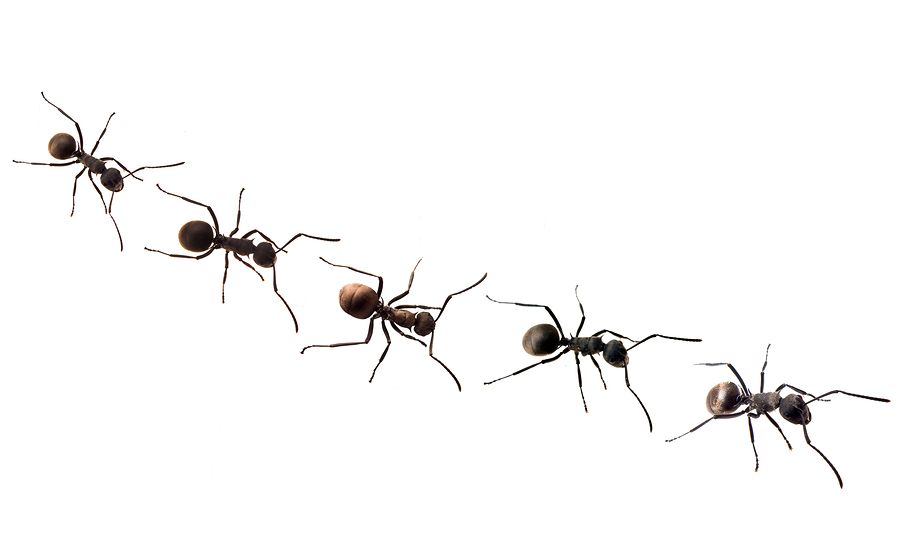
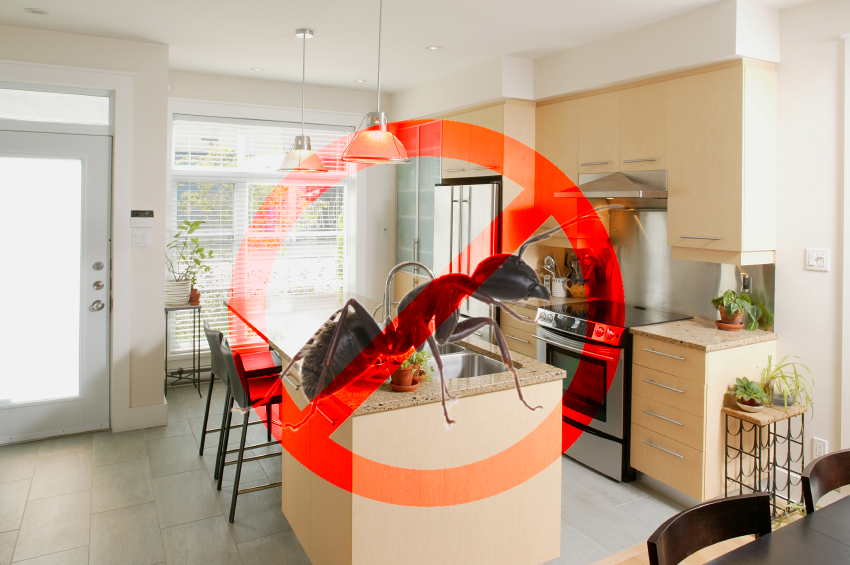
Ants are back! But did they ever really go away? Ants are a year-round pest nuisance but appear in homes more often certain times of the year. In the south, early spring is one of those times. Why? They’re in search of food and water, which they’ll likely find inside your house. Common infestation occurs in kitchens, bathrooms, and garages.
5 Easy Steps to Prevent Ants & Get Rid of Ants this Spring Season:
1. Eliminate Pest Entry Points
Ant entry points include any cracks, crevices, gaps and holes around your home’s exterior. Around pipes are common ant access areas. Seal all of these spots with a silicone-based caulk. Also keep tree branches and shrubbery trimmed so they’re not touching the house.
2. Remove Water Sources
You’ll most likely find ant infestations around leaky sinks or pipes, or anywhere there’s excess moisture. Consider using a dehumidifier in damp basements, crawl spaces or attics. Outside, ensure that downspouts and gutters are functioning properly so that water flows away from the home’s foundation.
3. Clean Your Kitchen
Wipe down counter tops and sweep floors to remove crumbs and residue from spills. Store food in sealed containers, and keep ripe fruit in the refrigerator. Also, make sure to dispose of garbage regularly.
4. Don’t Leave Pet Food Out
After mealtime, keep pet bowls clean and wipe up any spilled food or water around them promptly. Store dry pet food in a sealed plastic container rather than the paper bags they often come in, which can be easily accessed by ants, rodents and other pests.
5. Call a Pest Professional
Eliminating ants can be a challenge without the proper treatment. Some species of ants, like carpenter ants, can cause serious property damage while others can pose health threats. If you see ants in your home, contact a licensed pest control company to identify the species and recommend treatment program.
Source: National Pest Management Association
For specific pest control information in your area, click on the links below.
Atlanta Pest Control
Savannah Pest Control
Nashville Pest Control
Chattanooga Pest Control
Feb 19, 2015 | Pest Control
Warm weather is almost here! This is a great time to do a little spring cleaning. A good place to start: your kitchen pantry.
Like most of us here in Georgia, you probably stocked up on food over the last few months. With possible snow days and freezing temperatures, a lot of meals are spent at home. Now that warmer weather is just around the corner, it’s a good idea to go through your pantry, throw out any expired food items, and organize what’s left so it’s not a potential food source for pests.
Pantry pests are often less obvious than other common household pests, like ants, spiders, and roaches. You may not see or notice them until there’s an infestation, or when they leave the food source to fly into other areas of your home. The good news: pantry pests cause no structural damage to your home and pose no real threat to people and pets. And they’re actually a beneficial pest to the environment. Scientists have recently discovered that some pantry moths contain a bacteria that is capable of breaking down polyethylene plastic, which is used to make grocery bags and other common materials that don’t break down in landfills.
The not so good news: pantry pests can penetrate cardboard AND plastic, leaving your food vulnerable to infestations…which translates into wasted, contaminated food and a lot of cleanup. Pantry pests like most types of dried foods, like flour, pasta, cereal, dried fruits, cookies/crackers, spices, dog food…you get the idea.They can chew through most types of unopened packaging or easily get into opened items through unsealed areas. Once a food source is affected, the pests multiply rapidly and will usually spread to other food items if not found and controlled immediately.
How to Prevent Pantry Pests
You can prevent a pantry pest infestation by properly storing food items in tightly sealed containers, preferably which plastic or glass, and labeling them with descriptions and expiration dates. Avoid purchasing large quantities of food that you won’t use within a few weeks. The longer a product sits untouched, the more susceptible to pests. Keep your pantry clean of food debris like spills and crumbs, wipe down shelves and floors regularly, and vacuum corners and crevices.
How to Detect Pantry Pests
You’re most likely to notice pantry pests when they leave the food source and enter other areas of your home. You may see small beetle-like pests on counters or in cabinets, or moths flying in the kitchen or around windows. These may or may not be a type of pantry pest. If you suspect pantry pests, inspect dried foods immediately, throw out anything infested, and do a thorough cleaning of the entire area. It’s recommended to contact a pest control company so the pests can be properly identified. A pest professional will find and eliminate the pantry pests and provide suggestions on how to prevent a reoccurrence in the future.
Jan 30, 2015 | Going Green, Pest Control
How Green Is Your Pest Control?
With the shift towards environmental awareness in recent years, most pest control companies are doing their part by offering alternatives to traditional pest control applications. This can mean targeted product usage, Integrated Pest Management (IMP) techniques, GreenPro Certification from the National Pest Management Association, using organic or natural pest control products…and more. So how green is your pest control? Here’s what you need to know:
1. Does your pest control professional perform routine interior and exterior home inspections?
This step in critical in green pest control. Knowing where pests are getting in and the type of pest problem determines where and how much product should be used. It’s the first and most important step in the IPM process.
2. Does your pest control company provide ongoing pest prevention?
Prevention is also part of the IPM process. Once a property is inspected for pest infestations, threats, and damage, a plan should be implemented to get rid of current issues AND preventing future occurrences. This eliminates excessive product usage down the road.
3. How green are the products your pest control company is using?
Most exterminating companies today use IPM programs. Where companies differ the most is in the pesticides used. The perception of “green” products in the pest industry is not always a positive one. Lots of people and companies are still old school in their approach and prefer to use traditional products that have proven to be effective. But forward-thinking exterminators know that eco-friendly pest products are just as effective and give customers peace of mind. “Green” pest control products should be non-toxic to people and pets and derived from plants, flowers, or elements from the earth.
4. Is your pest control company GreenPro Certified?
GreenPro Certification from the National Pest Management Association (NPMA) is the largest and most credible green credential program for pest control companies. It’s earned by companies that are committed to environmental responsibility and operate under by the program’s standards. According to the NPMA, less than 1% of pest companies are GreenPro certified and Northwest is one them. You can find a list of GreenPro certified companies in your area here.
Jan 23, 2015 | Going Green, Insulation, Pest Control, Wildlife
The solution: INSULATION.
Insulation can have a major impact on your home’s temperature. The benefits don’t stop there, though. Proper attic insulation translates into lower utility bills (savings up to 30% or more!), energy conservation, and a break for your HVAC system…which also cuts down heating and air repair costs. So you’re probably wondering how much insulation is enough insulation and what type is best. We’ve got answers.
1. How much insulation do you need to keep the house warm and get all the above perks?
Let’s talk R-values. According to Energy Star, homes in southeast states like Georgia, Tennessee, Alabama, and the Carolinas require an R-value of R30-R60. So what is R-value exactly? It’s a measurement of insulation’s ability to resist heat. The higher the R-Value, the more comfortable your home’s temperature will be – throughout the year. Essentially, the more insulation you have, the more warm air you’ll keep in your home when running the heat and the more cold air you’ll keep out. Same applies in the summer. Energy Star also says that the majority of homes in the US do NOT have enough insulation to be effective…so it may be worth having a professional get up in the attic and take a look around. Most companies give free evaluations and quotes. Then you can decide if the investment makes sense.
2. Now that we’ve established the importance of insulation – what type of insulation is right for your home?
Just like most products in today’s market, you’ve got options.
Batt Insulation – A popular choice, and with reason. Fiberglass insulation batts (most common) are easy to install compared to the alternative (more on that later) and often cost a little less. Depending on the size and shape of your attic, batts usually have to be cut and sized for a perfect fit – which can be time-consuming and tedious. A good fit is essential for the insulation to be effective, though; gaps will cause warm or cool air to leak out.
Blown (or loose) Insulation – There’s a large variety of blown-in insulation, some with more benefits than others. Equipment is required for installation which could be rented from your local home improvement store. Or you can use a professional insulation company that has materials, equipment, and will know exactly how much insulation you need to see maximum results. Our choice is TAP Insulation…here’s why.
Start making money back immediately.
TAP Insulation is an investment for your home and will provide a hefty return. It’s typical to save 30% or more on energy costs!
A cozy, warm house this winter.
Problem solved! Keep temperatures warm and heating costs low.
Goodbye household pests.
TAP is a unique insulation product that’s treated with Borates, a naturally occurring mineral that is an effective fungicide/insecticide against a broad spectrum of pests, according to the EPA.
Fire Protection.
TAP is also treated with a fire retardant that helps to limit the spread of fire.
Your HVAC system will thank you.
By keeping your home warm in the winter and cool in the summer, your heating and cooling system won’t have to work as hard…saving you money on utility bills and keeping HVAC repair costs low.
It’s never been easier to be green.
TAP is a eco-friendly solution – it’s made from recycled newsprint, saves landfill space, conserves energy, and utilizes a natural pest control solution.
TAP Insulation can also be added on top of existing insulation to increase the R-value. Still not convinced? Find out more here or schedule a free home evaluation.
Stay warm this winter with TAP!
Jan 16, 2015 | Bed Bug, Pest Control
While the holidays are filled with fun, family, and traveling, one not-so-fun side effect can be hard to get rid of: Bed Bugs. Bed bugs are active all year but most likely to travel into your home after a trip. Here are 10 ways you can prevent bed bugs now and throughout the year. If you already have bed bugs, call a pest control company. They’re difficult to get rid of and usually requires professional treatment for fast, effective results.
1. Inspect
Inspect your hotel room or rental for signs of bed bugs before bringing your luggage in. It’s more and more common for hotels to have issues with bed bugs – even expensive and familiar ones – so it’s important to check every room. Bed bugs can be found in any type of furniture (usually cracks & crevices), not just beds. Check sofa cushions, chairs, behind headboards, and around mattress corners (pull back the sheets). Look for evidence of bed bugs, usually distinguished by very small, dark-colored stains. Another indication of bed bugs is skin shells that have been shed during their growth phases.
2. Move
If bed bug evidence is found, request a different room (preferably not next door to the infested room) or change your accommodations.
3. Unpack
Bed bugs often go unnoticed because of their small size and nocturnal behavior. So even if you inspect your room and don’t find anything, be cautious when unpacking clothes. Don’t leave luggage lying on any furniture – bed, tables, sofas, chairs – and use the luggage racks (after inspecting!) usually provided by most hotels.
4. Contain
After you’ve returned home, do not bring luggage into your home. Seal in plastic bags or containers and store for a few weeks somewhere outside of your home – garage, outdoor storage closet, etc. You can take further precautions by steaming or vacuuming your bags before storing them.
5. Wash
Clothes should be washed in hot water before bringing them back into your home.
It’s possible to take all of these precautions and still bring bed bugs into your home. If you’re experiencing bed bug bites or seeing evidence of bed bugs, contact a professional bed bug control company to access the situation. An exterminator can determine the best treatment plan and provide you with recommendations to prevent future infestations.
Jan 6, 2015 | Pest Control, Wildlife
Right now, pests are looking for warmth, food, and shelter from winter’s chilly temps. These are some of the critters you can expect to see this winter, and what you can do to keep them out.
Mice
Mice are common house pests and love nesting in the less-traveled areas of your home: attics, basements, cabinets, closets. These invaders can fit through 1/4 inch gaps making it difficult to keep them out.
[checklist style=green]
- Before cold weather hits, inspect your home for any entry points and seal them
- During winter months, routinely inspect your home for traces of mice (small droppings are an indication of mice infestations)
- Keep your home clear of clutter so mice don’t have a place to hide
[/checklist]
Rats
Like mice, rats are common winter nuisances, looking for food and warmth inside your home. They only need space the size of a quarter to enter.
[checklist style=green]
- Routinely inspect for evidence of rats by looking for droppings, gnawing, or footprints and tail tracks
- Do not leave any trash in or around your home, making sure outside trash cans are emptied daily and away from your home’s perimeter
- Seal any gaps or holes in your home’s foundation, around your roof, in the crawl space or basement, or around doors and windows
- Call an exterminator if you think you have rats; infestations can be difficult to eliminate
[/checklist]
Raccoons
Raccoons have been known to make an appearance in homes this time of year, specifically preferring crawl spaces, attics, and chimneys. Because it can be more difficult and time consuming to eradicate raccoons, we recommend contacting a wildlife control company. A professional can identify where the raccoons are coming into your home, remove them, and prevent them from coming back with exclusion techniques.
Squirrels
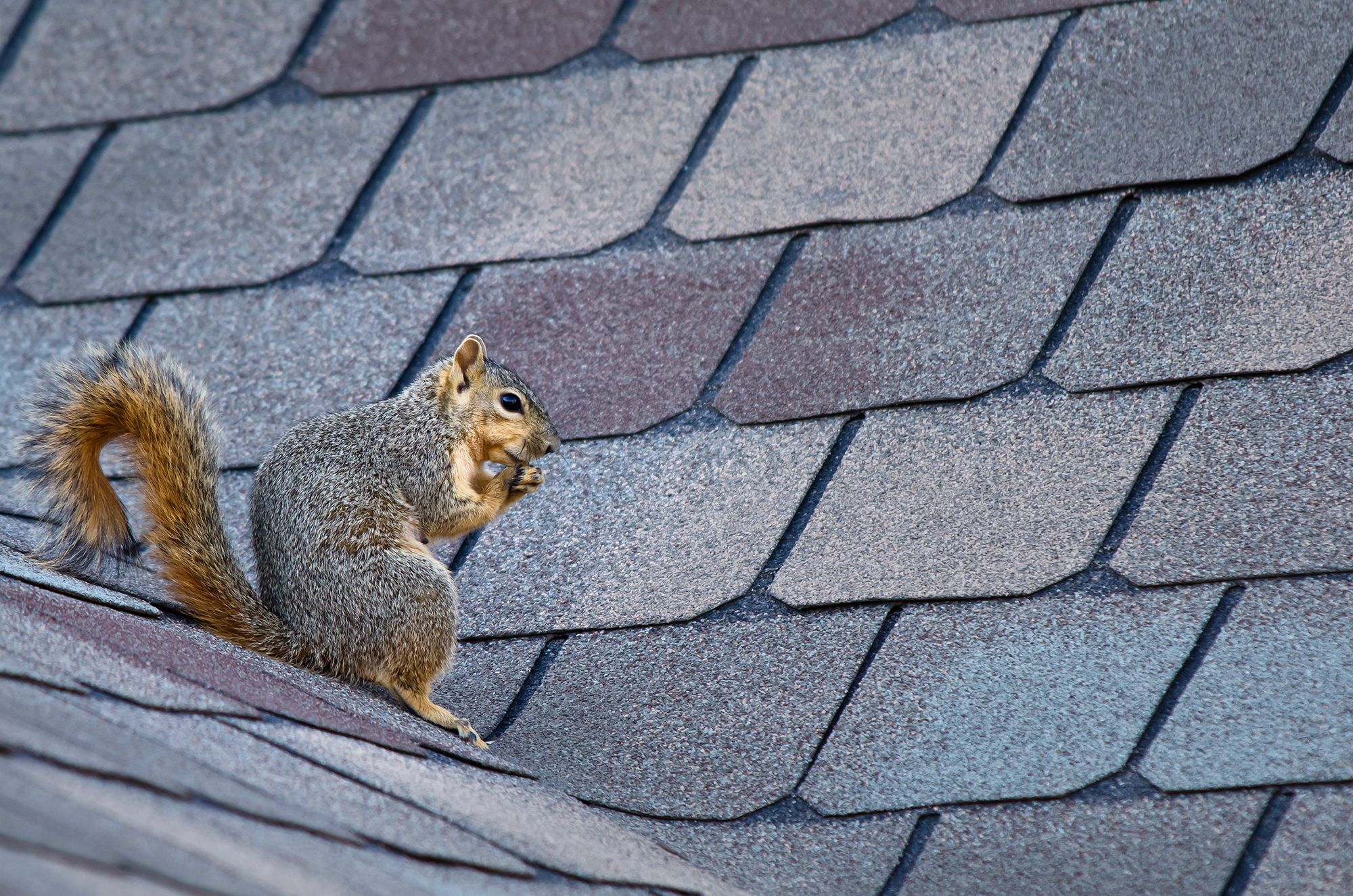
If you’re hearing noises in your attic, it’s possible you have a squirrel invasion. Similar to raccoon control, getting rid of squirrels in your attic or other parts of the house is a process that requires expertise. It’s important to know how they’re getting inside the attic, when they’re leaving, and how to prevent them from gaining access again once they’ve been removed. To prevent squirrels, keep trees trimmed and away from your home, and entry points sealed (usually cracks or holes in your home’s exterior or roof vents). A squirrel control professional can identify these areas and make recommendations for ongoing squirrel prevention.
Roaches
Cockroaches, too, are looking for food and warmth and often find it in your home. It’s typical to experience a roach infestation in the winter; here are some things you can do to prevent this:
[checklist style=green]
- Regular, preventative pest control service will ensure your home is protected, even in the winter months
- Eliminate food and water sources – never leave water out, make sure food containers are sealed and properly stored, clean up food debris and dirty dishes daily
- Seal any holes, cracks or gaps in and around your home
- Eliminate clutter
[/checklist]
If you are seeing roaches, call a pest control company immediately. Cockroaches are extremely difficult to get rid of once you have an infestation and a professional can implement techniques that will eliminate the problem quickly and prevent them from coming back.
Spiders
Most spiders will seek refuge indoors in the fall months, preparing for cold winter temperatures. And while most spiders pose no real threat, some are poisonous and will bite when feeling threatened. To eliminate and prevent spiders:
[checklist style=green]
- Ongoing pest control service throughout the year
- Knock down cobwebs regularly
- Eliminate clutter; spiders like to hide in dark, undisturbed places
- Seal any holes, cracks or gaps in and around your home
[/checklist]
Oct 3, 2014 | Pest Control
It’s that time again. Since their appearance in Georgia in 2009, Kuzdu (Stink) Bugs have become more and more prevalent among common household pest annoyances. Kudzu bugs are rarely seen throughout the warmer months but then make their appearance in the Fall as they’re trying to stay warm. As the temperatures drop, Kudzu bugs begin looking for places to take refuge to survive the cold winter months, which can be inside the cracks and crevices of your home.
How to Identify Kudzu (Stink) Bugs
Kudzu bugs closely resemble ladybugs, only they are a brown, olive-green color. They’re sometimes referred to as “stink bugs” for the not so pleasant smell they emit when threatened (or crushed). As their name suggests, these bugs are often found in and around kudzu, their preferred food source. They also have a taste for other vegetables, making them a threat to our crops in Southern states.
How to Get Rid of Kudzu Bugs
Since you can’t really control the kudzu bug populations around your home, there are some things you can do to prevent them from coming inside.
- Eliminate any sources of kudzu or vines on or around your home
- Keep doors and windows closed and fix any torn screens
- Seal all cracks and holes on the exterior of your home
- If Kudzu bugs get inside, vacuum them up rather than stepping on them or crushing them – to eliminate the unpleasant odor they emit. Dispose of them immediately, outside of your home.
- If you’re still seeing them, call a pest control company – a professional can identify and correct entry points and treat existing kudzu bugs
Sep 10, 2014 | Pest Control, Wildlife
Do You Have Rats or Mice?
It’s a common question homeowners often ask us: Do I have rats or mice? Neither are good news but it’s important to know which type of rodent is inhabiting your home so you know how to properly get rid of them.
Rats
If you’ve had the misfortune to actually see a rodent in your home, a rat would be significantly larger than a mouse. There are 2 common types of house rats – the Norway Rat and the Roof Rat.
The Norway Rat is the largest of commensal rodents with small ears, a blunt nose, and a short tail relative to its head and body. Their droppings are up to 3/4 inch with blunt ends. They usually gnaw on wood but will also chew on electrical wiring, causing damage. Typically, they will reside outside your home in burrows or in your crawl space or basement, entering the structure at night for food and water.
The Roof Rat is usually darker in color than the Norway Rat and smaller, weighing less than a pound. They have large ears, a pointed nose, and a long tail. Their droppings are spindle shaped with pointed ends. Unlike Norway Rats, Roof Rats prefer to live higher above ground, making your attic an ideal environment.
Both are cautious and will be suspicious of any foreign objects or changes in their environment. This makes rodent control tricky as they usually will not approach a recently placed trap or bait box. Proper placement and patience is crucial.
Mice
Mice are smaller than rats and usually a lot less suspicious, making them easier to trap through routine pest control methods. They’ll eat mostly anything so your home likely has a food source that’s appealing to them. Mice breed often and offspring can reproduce in less than 6 weeks, so it’s important to catch them early before they multiply. Like rats, mice are nocturnal and mostly come out of their nest, looking for food, at night. They have the ability to fit into tiny spaces, needing only 1/4 inch gap or opening. Also like rats, mice will leave behind droppings (much smaller, rod-shaped, with pointed ends).
How to Get Rid of Rats & Mice in Your Home
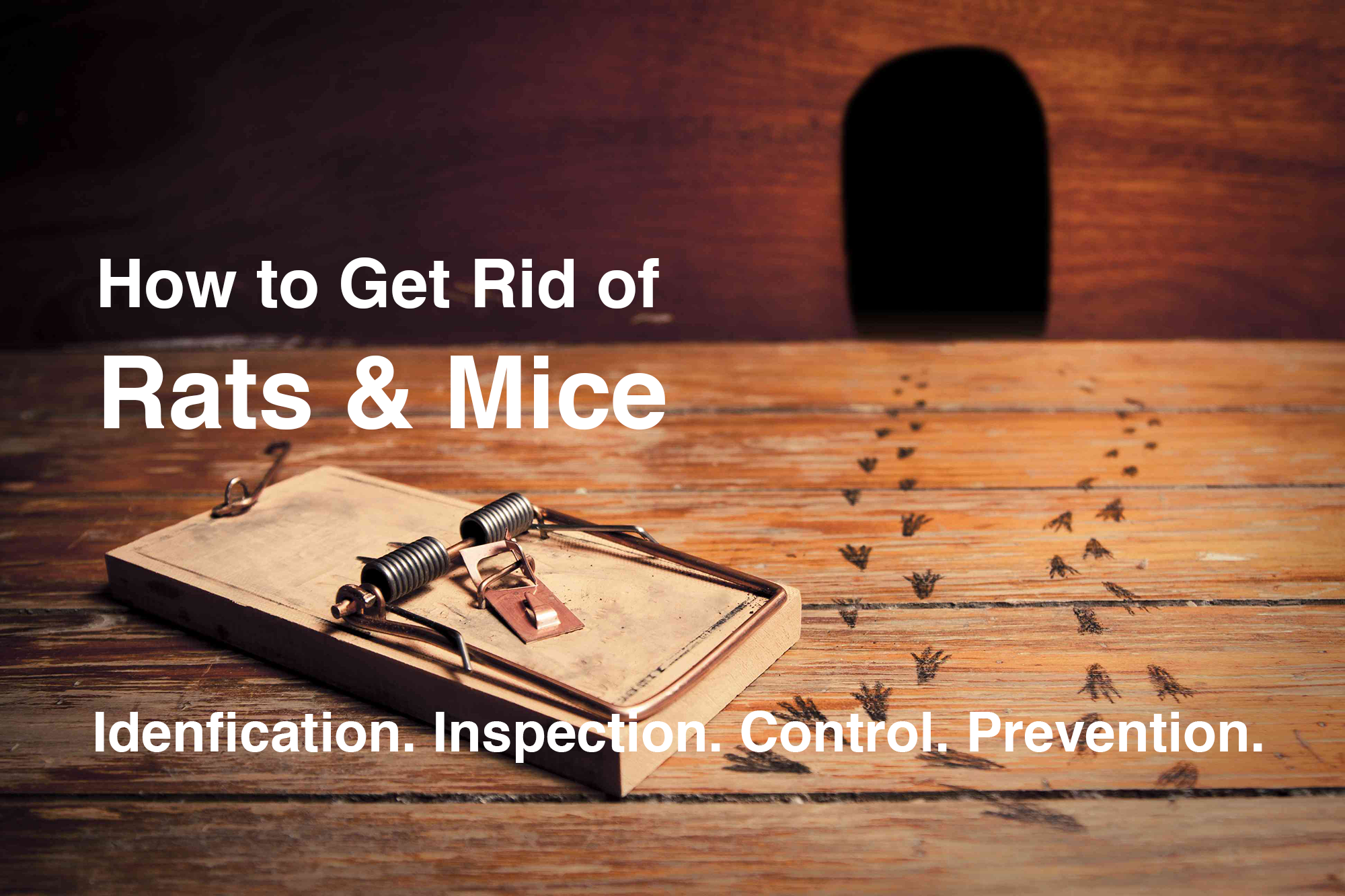
DIY Pest Control is not recommended for rodent control. Rats and mice have very specific habits, making them harder to catch and eradicate. Because rats are cautious by nature, any differences in their routine may cause them to move into other areas of your home. Depending on where they are nesting in your home and the type of rodents, an exterminator can then determine the best plan of attack; whether to use baits, traps, a combination of both, and the size of traps required. And because rats and mice multiply quickly, its essential that you call a pest control company at the first signs of infestation:
- Droppings
- Gnawed areas
- Tracks or tail marks in dusty areas
- Noises at night in less-frequented areas of your home, commonly attics & basements
- Unusual odor
Preventing Future Mice & Rat Infestations
Because these rodents require only a tiny gap or space to enter your home, it’s essential that you implement good exclusion and sanitation practices. Every gap in your structure larger than 1/4 inch should be properly sealed, especially those around drainage pipes, vents, utility lines, doors & windows, etc. It’s also important to remove any available food sources, like trash cans, pet food, and bird feeders.
If you think you have a rat or mice infestation, call your local pest control company for an immediate inspection.
Aug 18, 2014 | DIY, DIY Pest Control, Pest Control
Ants in the Kitchen?
You’re not alone. Our phones have been ringing non-stop for the last few weeks with one common problem: ANTS IN THE KITCHEN. So you may be asking yourself: 1) Why are they here? 2) How can I get rid of them? 3) How can I keep them from coming back? 4) Should I call a pest control company?
Why are Ants in the Kitchen?
Let’s start with why you’re suddenly seeing ants. Ants are always looking for food. Most likely, your kitchen has food. Simple. But maybe you don’t have any food laying around, easily accessible to the ants. No spills or messes left uncleaned. And still… those pesky ants are trailing around your sink or across the countertops. Why? They’re foraging for food and even the smallest supply (that you can’t even see) will keep them busy for days.
How to Get Rid of Ants?
Next question: How to get rid of ants? Start with the basics. Clean any kitchen spills immediately. Wash dirty dishes after using them. Take the trash out daily. Don’t leave any unsealed food out. Kill any ants you see with a household pest product and clean the areas thoroughly. Try and find where the ants are coming in. Clean these areas too and seal any points of entry. Apply an ant bait product near entry points, preferably on the outside of your home so the ants don’t have to come back inside to eat the bait. The goal here is for the ants to take the bait back to their colony, therefore eliminating the source.
How to Prevent Ants?
So now that you’ve eliminated the ants you’re seeing today, how can you keep them out tomorrow and the next day? The answer isn’t as simple. Ants are everywhere and they are constantly looking for food to feed their colony. You can eliminate one tribe and another will appear within days or weeks. This is why preventative pest control is so important and necessary.
DIY or Professional Pest Control?
If you have the time and patience for DIY pest control, you should repeat the above process regularly, in addition to treating the perimeter of your home with some type of granular pesticide. Or you can save time and your sanity and call a pest control company.
Our comprehensive pest control service covers ant control and so much more. Trained technicians will inspect your home quarterly for current pest infestations or entry points, treat and correct these issues, and implement treatment methods that will prevent future infestations. Our unique pest control program, NorPest Green, utilizes the latest professional products (all of which are completely environmentally, kid and pet friendly) and equipment, and comes with a pest-free guarantee.
For more information or to schedule a free pest inspection, visit our pest control services page or call (888) 466-7849. If you’re seeing a few ants now, most likely there are hundreds more that you can’t see. Our advice: act quickly before the ants takeover and move into other parts of your home.