Aug 17, 2023 | Alabama Blogs, Georgia Blogs, Pest Control
By Anna V., Editorial Lead — Pest Education · Last updated: May 2026
If you’d rather keep spiders out of your house without spraying chemicals everywhere, you have real options. At Northwest, we get asked about natural spider repellent methods constantly, especially from homeowners with kids, pets, or asthma in the household. The honest version most homeowners don’t hear: most “natural” spider repellents work somewhat, briefly. The methods that hold up long-term are the ones that change the conditions spiders need to survive indoors, not the ones that try to scare them away with scent.
Here are the natural spider repellent methods worth your time, the DIY sprays that actually do something, and the prevention work that does most of the heavy lifting in a Georgia or Alabama home.

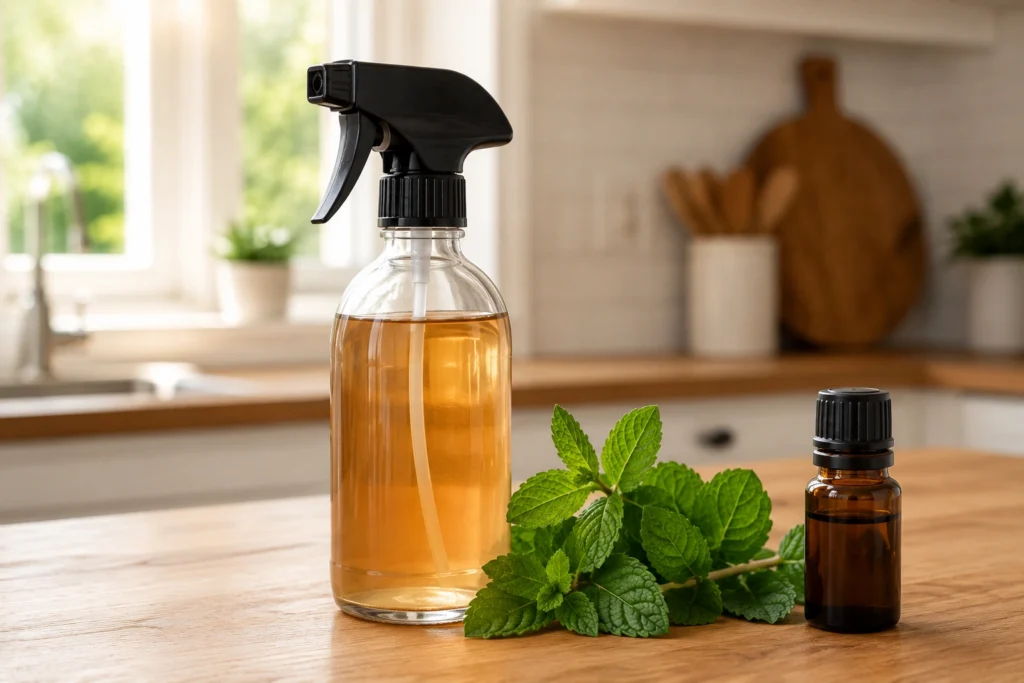
A peppermint and tea tree oil spray is the most common natural repellent and the most effective when used consistently.
Why Use Natural Spider Repellents?
Natural spider repellents have real advantages over conventional pesticides for many Southeast homeowners:
- Chemical-free options. Avoid synthetic pesticide residue indoors, which matters more in homes with kids, pets, or anyone with respiratory sensitivities.
- Safer for pets. Most ingredients (with a few exceptions noted below) won’t harm dogs, cats, or smaller pets if accidentally encountered.
- Eco-friendly. Less impact on beneficial insects, pollinators, and local ecosystems.
- Easier on indoor air quality. No off-gassing of synthetic compounds.
The honest caveat: natural repellents work best for prevention and for managing small, occasional spider activity. They rarely eliminate an established indoor population on their own. For larger infestations or venomous species like black widows or brown widows (see our spiders in Georgia guide for identification), professional pest control is the safer and more effective path.
Common Natural Spider Repellents (and How Well They Actually Work)
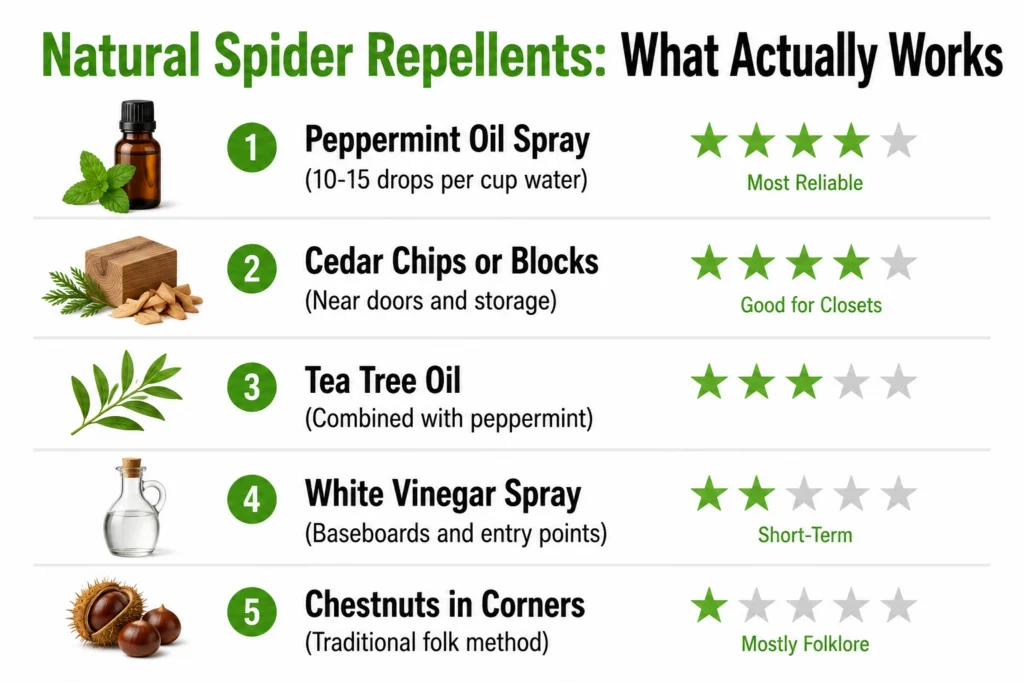
Essential oils and cedar do most of the work. Chestnuts are mostly folklore.
Essential Oils (the Most Effective Natural Option)
Several essential oils show real research-supported spider-repellent activity. The compounds in these oils interfere with spider chemoreception (their ability to navigate using chemical signals), which discourages them from establishing in treated areas.
- Peppermint oil. The most well-studied natural spider repellent. Mix 10 to 15 drops per cup of water in a spray bottle. Apply to corners, windowsills, entry points, and baseboards weekly. Strong scent dissipates within 5 to 7 days, so consistency matters.
- Tea tree oil. Combine with peppermint for a stronger combined effect. Mix 5 to 10 drops per cup of water. Has the bonus of mild antibacterial properties.
- Citrus oil (lemon or orange). Spider-repelling effect is moderate. Some homeowners prefer the scent. Apply same way as peppermint.
- Eucalyptus oil. Repels several arthropod groups including spiders. Use 8 to 12 drops per cup of water.
- Cedarwood oil. Different from cedar chips (below) but works on a similar principle. Spray version is more targeted than physical cedar.
Pet safety note: Tea tree and eucalyptus oils can be toxic to cats and small dogs if ingested directly or applied to skin. Diluted spray on baseboards is generally safe once dry, but don’t spray directly on pets or where they regularly lick. Peppermint and citrus oils are safer pet options.
Household Items
- White vinegar. Mix equal parts water and white vinegar in a spray bottle. Apply along baseboards, in corners, and around entry points. Acetic acid is mildly off-putting to spiders. Effect is short-term (24 to 48 hours per application) and the vinegar smell is noticeable to humans too.
- Cedar chips or blocks. Cedarwood naturally contains compounds that repel many arthropods. Place chips or blocks in closets, near doorways, in storage bins, and in basement corners. Effective for several months per application. Refresh by lightly sanding the surface every 3 to 4 months to release new aromatic compounds.
- Chestnuts. A traditional folk method: placing fresh chestnuts in basement corners and near windows. The active compound (chestnut tannins) does show some spider-repellent activity in laboratory testing, but real-world effectiveness in a home is modest at best. Treat as a supplement to other methods, not a primary strategy.
- Diatomaceous earth (food-grade). Not strictly a “repellent”. It kills spiders that crawl through it by damaging their exoskeleton and causing dehydration. Apply a light dusting along baseboards and at entry points. Reapply after vacuuming or moisture exposure.
DIY Spider Repellent Spray Recipe
The most reliable natural spider repellent recipe we recommend:
- 2 cups of water
- 15 drops of peppermint essential oil
- 10 drops of tea tree essential oil
- 1 teaspoon of dish soap (helps the oils mix with water)
Combine in a glass spray bottle (essential oils degrade plastic over time). Shake well before each use. Apply to spider-prone areas weekly: window frames, door thresholds, baseboards, ceiling corners in basements and garages, and around outdoor entry points.
Adjust for sensitivities: drop the tea tree oil if you have cats. Substitute eucalyptus or citrus oil for variety. Don’t apply directly to fabric, finished wood, or painted surfaces without testing in an inconspicuous spot first.
Home Maintenance Tips to Prevent Spiders
The most effective natural spider control isn’t a repellent. It’s prevention. Three categories of home maintenance work harder than any spray.
Reduce Clutter and Hiding Spots
Spiders need stable, undisturbed surfaces to build webs or hide. Reduce that and the population drops:
- Clear storage areas in basements, attics, garages, and closets.
- Move stored items off the floor onto shelves.
- Transfer cardboard storage to plastic bins (cardboard absorbs moisture and provides ideal spider harborage).
- Regularly vacuum corners, under furniture, and along baseboards.
- Don’t let firewood, lumber, or yard debris accumulate near the foundation.
Seal Entry Points
- Caulk cracks around windows, doors, and foundation.
- Install or replace door sweeps and weatherstripping (especially garage side doors).
- Screen crawl space vents with galvanized 1/4-inch hardware cloth.
- Seal gaps around utility line penetrations with steel wool packed into the gap, then caulk over.
Control Outdoor Lighting
This is one of the most underrated spider-prevention tactics. Bright porch and exterior lights attract flying insects, which attract spiders to feed on them. Two changes that reduce indoor spider pressure significantly:
- Switch white LED bulbs to warm-toned LED (2700K to 3000K) or yellow “bug light” bulbs. They attract far fewer flying insects.
- Move outdoor lighting away from primary entry doors when possible. Mount lights on poles in the yard rather than next to the front door.
Seasonal Considerations for Spider Prevention
Spider activity in Georgia, Alabama, Tennessee, and South Carolina peaks in three windows. Plan natural repellent applications around them.
- Spring (April through May): Spider populations rebuild after winter. Apply repellents weekly during this window. Focus on outdoor entry points.
- Late summer (August): Peak indoor and outdoor population. Most spider sightings happen here. Apply repellents 2 times per week.
- Early fall (September through October): Outdoor spiders migrate toward warmer indoor spaces. Reinforce entry-point sealing and outdoor perimeter sprays.
Winter (December through February) is the low-activity window. Use it for entry-point sealing and structural prevention work.
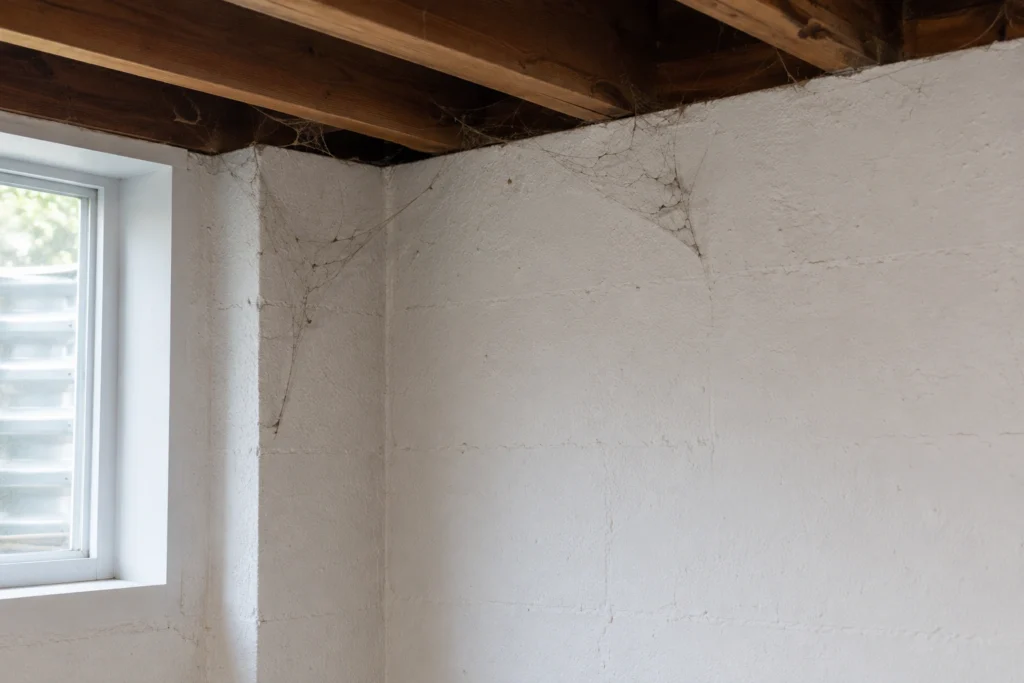
Once webs are visible in multiple corners, natural repellents alone usually aren’t enough.
When Natural Methods Aren’t Enough
Natural spider repellents handle small, occasional spider activity well. They’re not enough for:
- Large or persistent indoor populations. Multiple webs in multiple rooms, spider sightings 3+ times per week, or visible egg sacs suggest an established population that needs targeted treatment.
- Confirmed venomous species. Black widows, brown widows, or any spider you can’t identify and suspect may be medically significant. Don’t use DIY methods near these spiders. Call professionals.
- Recurring problems in living spaces. Spiders in bedrooms, kids’ rooms, or kitchens warrant a faster, more reliable approach.
- Underlying pest issues. If you’re seeing spiders along with other indoor pest activity (small flies, gnats, mosquitoes), the spiders are downstream of a larger problem that needs addressing.
Professional pest control combines exclusion (sealing entry points), targeted treatment at active harborage spots, and addressing whatever’s drawing spiders indoors. The EPA’s Integrated Pest Management (IPM) principles describe the same approach: start with the least-toxic preventive measures (which is exactly what natural repellents are), escalate to targeted treatments when prevention isn’t enough, and address the underlying conditions rather than just the visible pests.
(Tried natural methods and still seeing spiders? Request a free Northwest inspection and we’ll identify what’s around and find the entry points.)
Frequently Asked Questions About Natural Spider Repellents
Do natural spider repellents really work?
Yes, with realistic expectations. Essential oils (especially peppermint, tea tree, and citrus), cedar, and white vinegar all show measurable spider-repellent activity when applied consistently. They work best for prevention and small-scale activity. They rarely clear an established indoor population on their own.
Are essential oils safe for pets?
Some are, some aren’t. Peppermint and citrus oils are generally safe for dogs and cats in dilute sprays applied to surfaces (not directly on the pet). Tea tree and eucalyptus oils can be toxic to cats and small dogs if ingested or applied to skin. Always dilute properly, apply to surfaces (not pets), and let dry before allowing pets in the area. Consult a vet for specific concerns.
How often should I apply natural spider sprays?
Weekly is the general baseline. Apply more frequently during peak spider activity windows (April-May, August, September-October) and after any major cleaning that removes the previous application. Spray formulas typically lose effectiveness within 5 to 7 days as the essential oils evaporate.
Can I prevent spiders indoors year-round?
Yes, with consistent maintenance. Year-round prevention combines weekly natural repellent application during active seasons, ongoing clutter reduction in basements and storage areas, entry-point sealing as a one-time structural improvement, and warm-tone outdoor lighting to reduce insect attraction. Most homes can keep spider activity to occasional sightings rather than ongoing problems with this combined approach.
What’s the most effective natural spider repellent?
A peppermint and tea tree oil spray (15 drops peppermint + 10 drops tea tree per 2 cups water + 1 tsp dish soap) applied weekly to entry points and corners. Combined with cedar blocks in closets and storage areas, this combo handles most residential spider prevention without any chemicals.
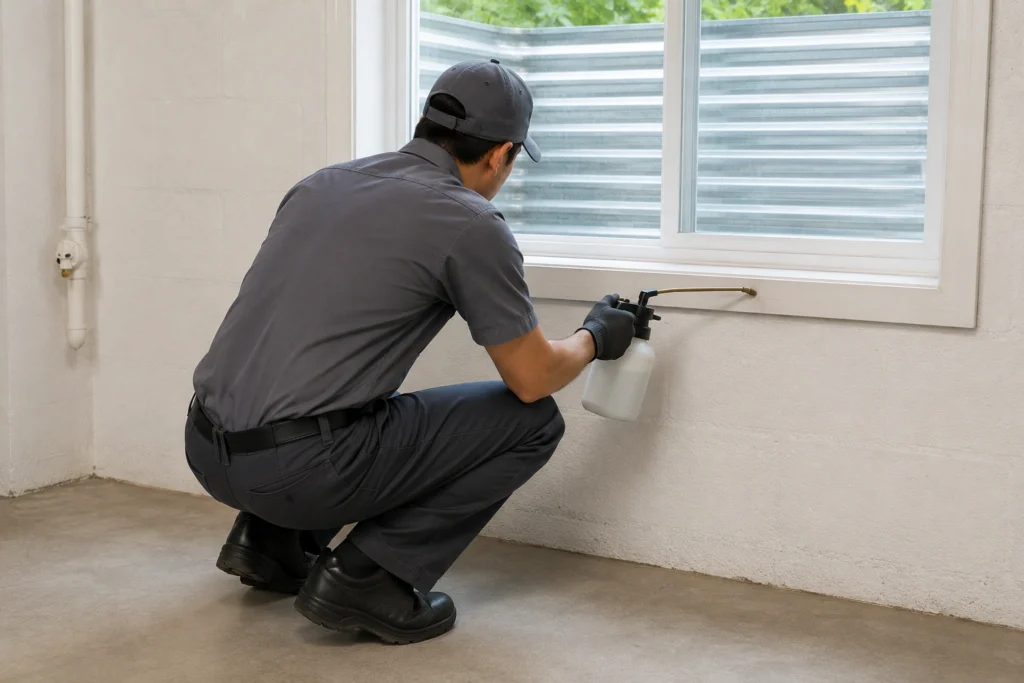
When natural repellents aren’t enough, professional treatment addresses entry points and underlying conditions DIY can’t reach.
Try Natural First. Call When You Need Backup.
Natural spider repellents are a smart starting point for most Georgia and Alabama homeowners. They’re safer, cheaper, and effective for prevention. When natural methods aren’t enough (or when you’ve spotted a venomous species), Northwest’s team handles the full spider control workflow with targeted treatment, exclusion, and addressing the underlying conditions that bring spiders in.
About the Author
Anna V., Editorial Lead — Pest Education leads pest education content for Northwest Exterminating, working with senior technicians and service center managers across our Georgia, Alabama, Tennessee, and South Carolina service areas to translate field expertise into homeowner-friendly guides. The focus: accurate, regionally-specific answers to the pest questions Southeast homeowners are actually searching for.
Aug 8, 2023 | Pest Control
Home ownership comes with loads of responsibilities, with pest control one of the most important. Routine pest control is a sound investment that helps protect both your investment and the health of your family. Here are 5 benefits to routine pest control.
Catching Infestations Early
Routine pest control allows professional pest control technicians to identify potential pest problems before they become full blown infestations. Once identified, preventative measures can be put in place to help keep pests from coming back. By thoroughly inspecting your home, these professionals can give you tips to seal entry points, repair any problematic areas, and make changes to reduce things that attract pests to your home in the first place.
Health Benefits
Pests can not only carry diseases, they also can trigger allergies and asthma and contaminate food and surfaces throughout your home. Many pests are also attracted to moisture. If you have areas where there are leaks, wet or rotted wood, or other high moisture content, this can lead to mold and bacteria which is also extremely unhealthy for you and your family. Routine pest control helps correct these unhealthy conditions that can attract pests.
Decreased Pest Control Costs
Catching pest problems early saves you money in the long run. It is less costly to treat a problem early than it is to treat a full blown infestation. Not only that, if an infestation is allowed to grow over a long period of time, these pests can do significant damage to your home, not only costing you money to treat for the pests, but also for expensive repairs to any damage they’ve caused.
Improved Home Quality
Pest control professionals can help identify any problem areas like moisture issues, leaks, cracks in foundation, openings around doors and windows, roof damage, and crawlspace issues. These issues can lead to water damage, increased utility bills, put more work on your HVAC systems, causing them to wear out sooner, and even structural damage to your home. By identifying these issues earlier, you can repair them sooner, hopefully preventing even more damage by leaving them untreated.
Scheduled Visits
With routine pest control, there’s no need to wait until a pest problem arises. Visits are scheduled on an ongoing basis, saving you the hassle of calling around to find someone who can come out at the last minute. This also guarantees you priority if an issue comes up in between your regularly scheduled visits. Your technician will also be familiar with you and your home, making it easier to identify where the problem might have started and how to remedy it quickly and efficiently.
Contact your local pest control company today to get started with your routine pest control needs.
Jul 28, 2023 | Pest Control, Termite Control
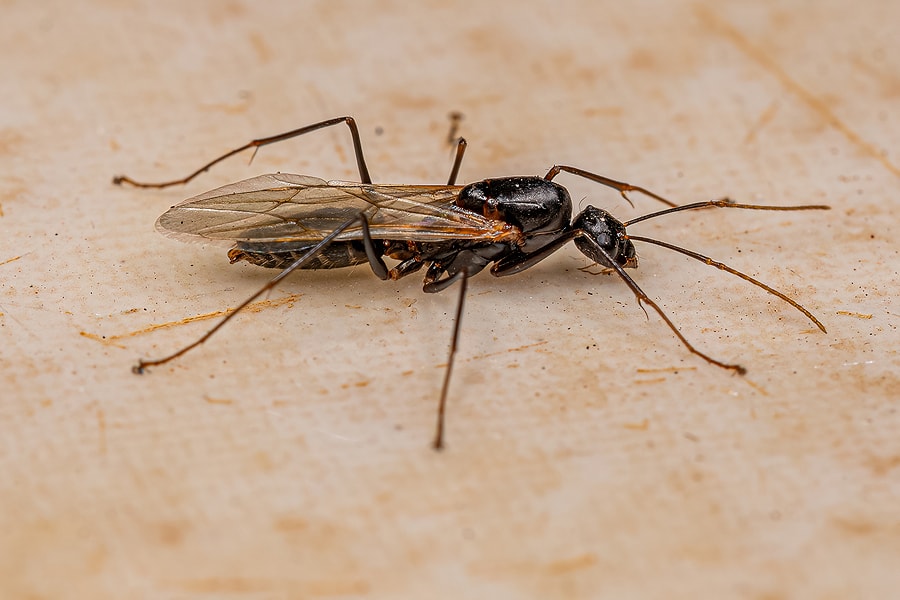
Carpenter ants and termites can wreak havoc on the wood frame of your home. Prevention and treatment depends on which species you are dealing with. How can you tell the difference between these two winged insects? Here we look at the differences in carpenter ants vs termites, along with how to eliminate them.
Carpenter ants (Camponotus) and termites (Isoptera) have many similarities, including the fact that both are infamous for causing wood damage in homes. Aside from the size of their wings during reproduction, termites are nearly the same size as the several species that make up the carpenter ant group; and, like carpenter ants, termites burrow into wood, allowing them to destroy your home’s wood frame. Because both carpenter ants and termites swarm in the spring to mate, homeowners who observe the swarms frequently confuse them.
Ants and termites have quite different lifespans—termites live longer because of their lengthy life cycle. While the queen carpenter ant can live for up to ten years, male carpenter ants marry and then die within a few months, if not weeks. Ants have four life stages: egg, larva, pupa, and adult. Termites, on the other hand, have a longer lifespan: the queen can live for more than 30 years, while worker and soldier termites live for one to two years and swarmers, aka reproductive termites, live for three to four years. Termites have a lengthier life cycle than ants, with five stages consisting of egg, larva, nymph, molt, and adult.
Termites can do more damage to homes than carpenter ants, causing major damage when left undetected for long periods of time. Carpenter ant damage can take years to develop and is usually easier to notice because these ants congregate in moist locations and can be seen darting around.
A closer examination of the pest in question reveals substantial physical distinctions that make it easy to distinguish between termites and carpenter ants. Examine the insect closely with a magnifying lens, or shine a bright light on it and use your naked eye.
- Body shape: When examining the insect’s body shape, pay close attention to the abdominal area. A termite does not have a “waist,” but rather a more rectangular body with no constriction in the center. The carpenter ant, on the other hand, has a well-defined, tight, constricted waist.
- Antennae: An insect’s antennae can also help you identify it. A termite’s antennae are straight and beaded, but a carpenter ant’s antennae are bent or “elbowed.”
- Wings: Both insects are winged, with four wings apiece. Wings are one of the best ways to differentiate between carpenter ants and termites. A termite has wings that are the same size and shape as its body, and they are significantly longer than its body. The back, hind wings of a carpenter ant are shorter than the front forewings, and the wings do not appear particularly long or disproportionate to the body. Another disadvantage of termites is that their wings are not as strong as those of ants. The termite’s wings readily fall off. The termite infestation can be identified by the presence of loose wings near the entry of a termite nest.
- Color: Ant workers are reddish or black in color and are usually spotted hunting for food in the open. Termite workers, on the other hand, are translucent, pale or creamy white in appearance. Unless their colony is damaged, termites are rarely observed.
The two insects interact with wood in various ways. Termites, for example, consume the wood in which they nest. Carpenter ants excavate their nests by digging into the wood; they do not eat the wood but rather push it out via holes in their colonies’ galleries. If you observe small heaps of wood shavings or frass (insect excrement) below the holes, it can help you identify a carpenter ant infestation. Carpenter ants prefer moist and damaged wood in which to build their nests, whereas termites will munch right through healthy wood.
Another noticeable difference is the appearance of the wood tunnels. Carpenter ant tunnels and galleries will be smooth and finished, whereas termite galleries will be rough and ragged because they are filled with layers of soil and mud.
Finally, the presence of mud tubes can help you identify which pest you are dealing with. A mud tube shows the presence of termites, either currently or previously. These are tubes that are created on the outside of walls or between earth and wood to serve as routes for termites.
Because carpenter ants and termites are so different, effective control strategies for each are likewise different. Carpenter ants can often be handled by removing the conditions that attracted them, but a termite infestation would usually necessitate a termite control expert. If you have a problem with either of these winged insects in or around your home, contact your local pest control company for an evaluation.
Jul 27, 2023 | Pest Control
Summer is a time of warmth, sunshine, and relaxation. Unfortunately, it’s also a time when a variety of pests are most active. From ants and flies to roaches and centipedes, these insects can be a major annoyance and even a health hazard. Discover common summer pests below:
Ants
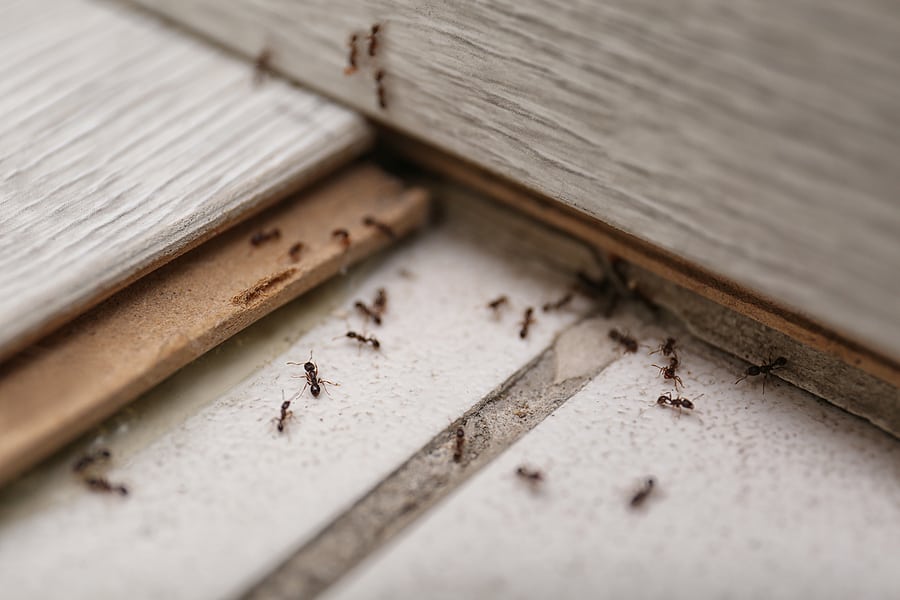
Ants are a common sight in the summertime, especially in kitchens and pantries where they search for food. To prevent ants from invading your home, make sure to keep your kitchen clean and free of crumbs and spills. Store food in airtight containers and keep ripe fruit in the refrigerator. Sealing cracks and holes in your home’s foundation and walls can also prevent ants from entering.
Flies
Flies are a common summertime pest, buzzing around and spreading germs wherever they land. To prevent flies from invading your home, make sure to keep doors and windows closed or screened, especially during the hottest parts of the day. Keep your kitchen clean and dispose of garbage regularly.
Roaches
Roaches are another unwelcome summertime pest. They can carry diseases and trigger allergies in some people. To prevent roaches from entering your home, seal any cracks or gaps in your home’s foundation and walls. Keep your kitchen clean and free of crumbs, and store food in airtight containers.
Centipedes
Centipedes can appear creepy, with many legs! They are often found in dark, damp areas such as basements and bathrooms. To prevent centipedes from invading your home, keep these areas dry and well-ventilated. Seal any cracks or gaps in your home’s foundation and walls.
If you begin seeing these summer pests around your home, give your local pest control company a call for a free inspection and a customized treatment and prevention plan!
Jul 21, 2023 | Pest Control
Centipedes and millipedes are two common household pests that are often mistaken for each other. How can you tell them apart? How can you tell if they’ve infested your home? Learn the difference between centipedes and millipedes, along with tips to prevent both of them from taking over your home.
Centipedes
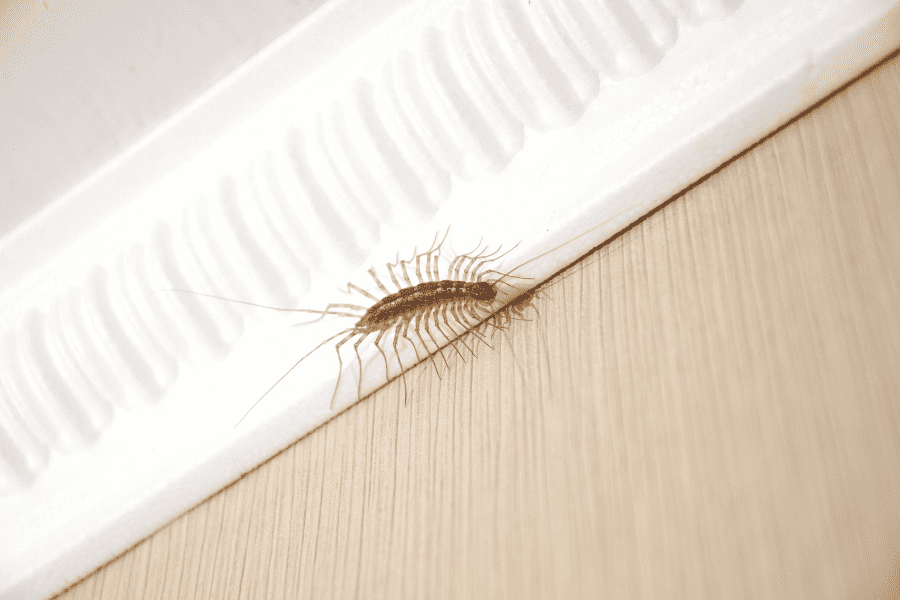
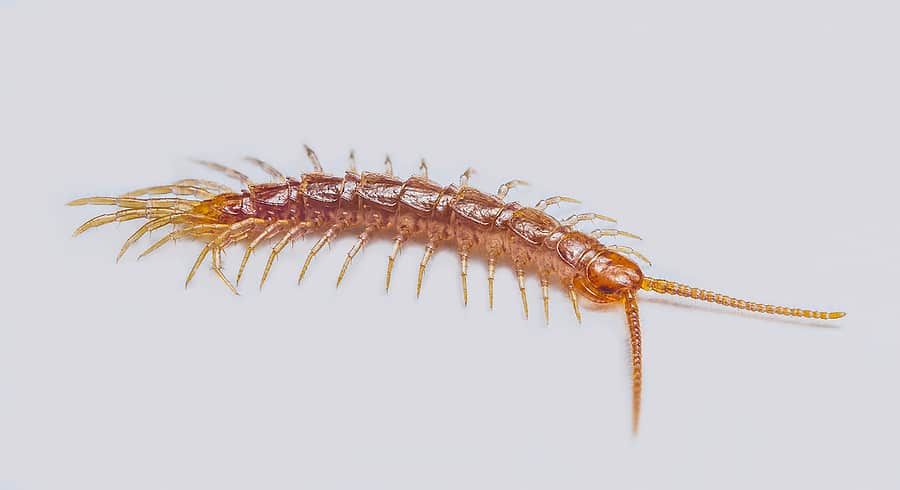
Centipedes have elongated, flat, segmented bodies with 1 pair of legs per segment. They can have anywhere from 15 to 177 pairs of legs. They have long antennae on their heads, as well. They can come in a variety of colors but the most common species are either brown or reddish-orange. These pests are attracted to damp, dark areas like basements, bathrooms, and closets.
Centipedes are nocturnal and can move very fast, making them hard to spot by homeowners. In fact, the only real sign of centipedes in your home is spotting live pests.
- Eliminating moisture. Repair leaks and use dehumidifiers to keep moisture levels down.
- Eliminating clutter. Keeping your home free of clutter gets rid of potential hiding places centipedes can use.
- Eliminating openings. Centipedes will get in through cracks, gaps, and holes in the exterior of your home. Sealing these up will help keep them out.
- Vacuuming them up. An easy way to get rid of centipedes you come across is to vacuum them up and dispose of them immediately.
Millipedes
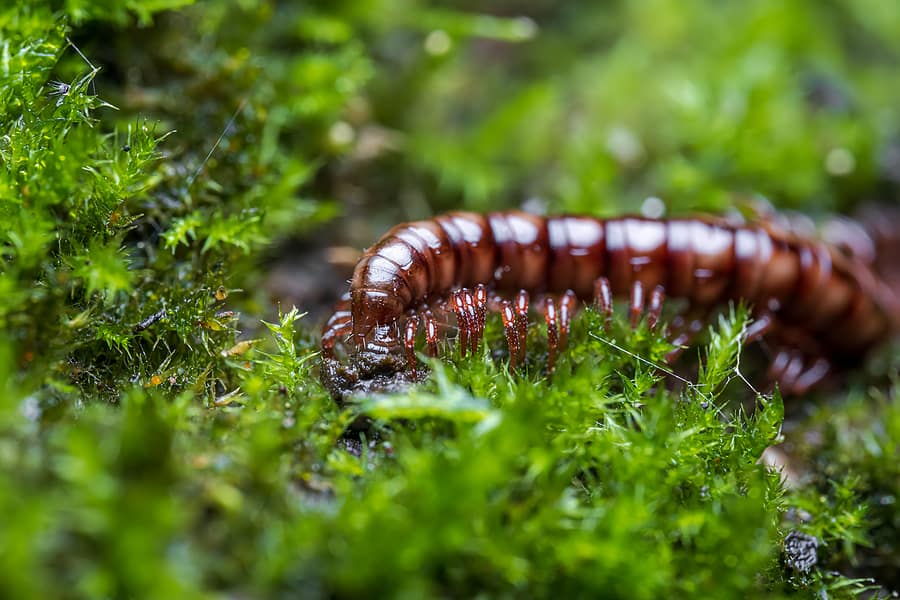
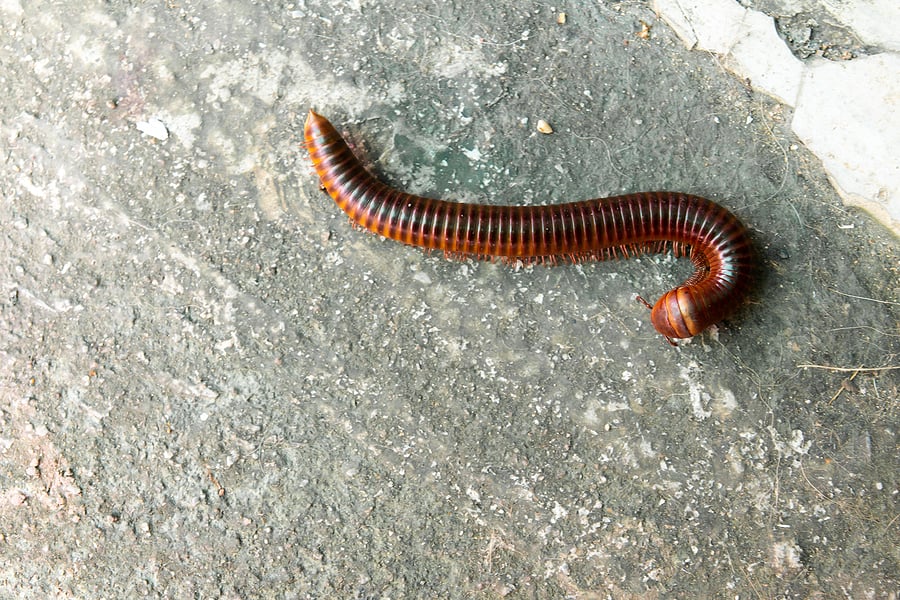
Millipedes have long, cylindrical bodies with 2 rows of legs on their bodies and 1 row of legs on the front of their bodies. They grow to about 1 to 2 inches in length. These pests will curl into a ball when touched or threatened. They prefer dark, damp spaces and are often found under wood piles, under rocks, and under trashcans. When they come indoors, they can often be found in attics, basements, sheds, and crawlspaces. These pests eat damp and decaying wood particles and plants.
Millipedes are also nocturnal so spotting them can be difficult. Signs of millipedes include seeing live pests in your home and signs of structural damage. These pests will eat damp or decaying wood so look out for damage to firewood, cardboard boxes, etc.
- Eliminating water. They are attracted to moisture so repair leaks and get rid of standing water. Use dehumidifiers when necessary.
- Eliminating food sources. Store firewood away from your home. Replace or repair water damaged wood as soon as possible.
- Clean up outdoors. Keep mulch, pine straw, leaves, etc. away from your foundations.
- Seal them out. Caulk any cracks, crevices, gaps, and holes to keep them from coming in.
Although centipedes and millipedes don’t pose a significant threat to humans or homes, they can be a nuisance to have around. Routine pest control can help keep these, and other common household pests, from taking over your home. Contact your local pest control company for an inspection.
You May Also Be Interested In:
How to Identify Stinging Pests in the Southeast
How To Avoid Mosquito Bites this Summer
Summer Wildlife: Raccoons
Insect Repellent: DEET vs Picaridin
Common Summer Pests In Georgia
Jul 20, 2023 | Pest Control
Stinging pests can be a real nuisance, and in some cases, a danger to your health. From hornets and wasps to fire ants, these pests can leave painful stings that can cause itching, swelling, and in severe cases, anaphylaxis. Let’s take a closer look at the different types of stinging pests and provide tips on how to prevent and identify them.
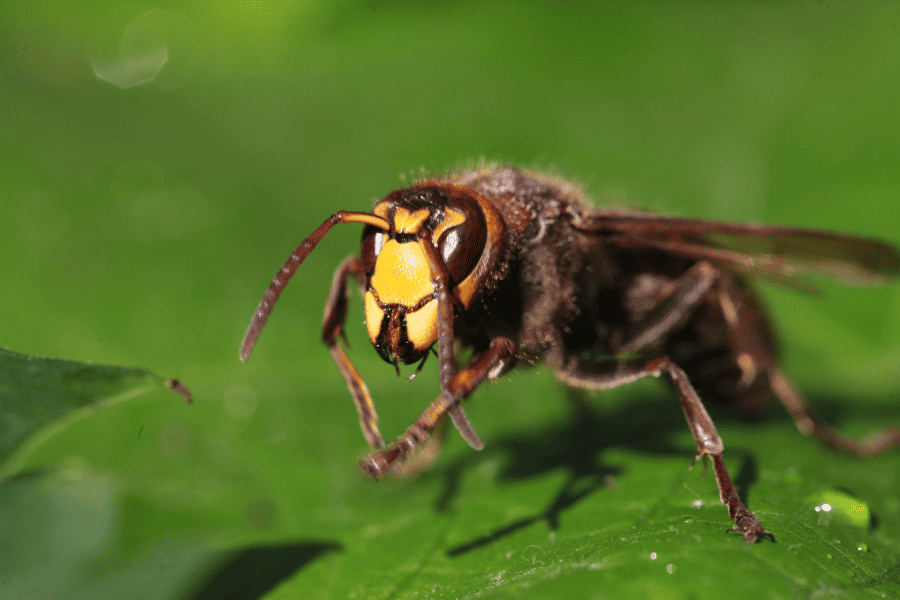
Hornets: Hornets are large, aggressive wasps that can pack a powerful sting. They typically build large paper nests in trees, bushes, and other outdoor locations. To prevent hornets from nesting on your property, inspect your home’s exterior regularly and seal any openings or gaps. Keep your outdoor trash cans sealed and dispose of food waste properly. If you do encounter a hornet’s nest, do not attempt to remove it yourself. Instead, call a professional pest control company.
Wasps: Wasps are similar to hornets, but they tend to be smaller and less aggressive. They can still pack a painful sting, however, and they can build their nests in a variety of locations, including under eaves, in trees, and shrubs. To prevent wasps from nesting on your property, keep your home’s exterior well-sealed, dispose of food waste properly, and keep outdoor trash cans sealed. If you do encounter a wasp nest, call a professional pest control company to safely remove it.
Fire Ants: Fire ants are small, reddish-brown ants that are known for their painful sting. They build large mounds in lawns and gardens and can be especially active during the summer months. To prevent fire ants from taking over your yard, keep your lawn well-maintained and avoid leaving piles of leaves or other debris in your yard. Treat fire ant mounds with bait or insecticide specifically designed for these pests and wear protective clothing and gloves when working in the yard.
If you discover an influx of stinging pests around your home call a professional pest control company if you do encounter a nest or infestation.
Jul 6, 2023 | Pest Control
Insect repellent is not only used to prevent bites from insects; it also plays a vital role in public health. Proper repellent protects large populations of people from the diseases spread by mosquitoes and other biting insects. With that in mind, the next question is, what is the best repellent to use? There are several options available worldwide but two of the most common are those containing DEET and picaridin. Let’s break down the pros and cons of each.
DEET
DEET has been used since its development in the 1940s. It was originally developed to protect US soldiers from mosquito-borne diseases while they were serving overseas. It is considered the most popular repellent product on the market and, in fact, is endorsed by the World Health Organization. Because it has been available for such a long period of time, there is a large volume of data on its use, safety, and efficacy.
DEET is a synthetic compound that is effective at repelling mosquitoes and ticks for anywhere from 1 to 6 hours, depending on how high of a concentration is applied. It also has a low rate of adverse effects.
Adverse effects are usually only reported when a high concentration of product is applied. For this reason, it is recommended to use a lower concentration with more frequent applications. The most common adverse reaction is a rash and skin irritation. Some people report an aversion to the smell. Others dislike the greasy residue DEET leaves on the skin.
DEET is known to dissolve some plastics and can cause damage to sunglasses if not cleaned off immediately. It can also damage some synthetic materials like spandex, rayon, and vinyl, which commonly make up clothing worn during the time of year when mosquitoes are active.
Picaridin
Picaridin was developed in the 1980s and was made available in Australia and Europe on 1998 and the US in 2005. The delay in availability was due to the need for ongoing testing regarding safety and efficacy. It is now the best selling repellent in both Europe and Australia. Picaridin is reportedly as effective as DEET.
Picaridin is a synthetic chemical produced to mimic the naturally occurring piperidine. It is also known as icaridin. The EPA has deemed picaridin safe for use on human skin. Proponents of picaridin prefer it over DEET because it is not as greasy, is odorless, and doesn’t damage plastics or synthetic clothing. Some US companies are already producing products containing picaridin, such as Cutter Advanced, Sawyer Premium, and Repel Smart Spray.
Picaridin doesn’t appear to have any negative effects on the environment. It is mildly toxic to some fish in large doses but is nontoxic to birds and land mammals. It may bind to soil but it is broken down by bacteria in the soil before it can leach into groundwater.
DEET vs Picaridin
Both DEET and picaridin are considered safe for human use. Both are proven to be effective at repelling mosquitoes and other biting insects for about the same length of time. The CDC does not recommend the use of either product in infants under 2 months of age. They do recommend the use of either for children older than 2 months of age and for adults. the EPA also considers both products safe for use during pregnancy.
It is important to note that picaridin is shown to be AS effective as DEET but not MORE effective than DEET. When deciding between the two, the decision is based less on efficacy and safety and more on personal preference.
As always, if mosquitoes or other biting insects are causing problems for you in or around your home, contact your local pest control company for a free evaluation.
Jun 29, 2023 | Pest Control
Honeybees are crucial to our ecosystem as they play a vital role in pollinating crops and other plants. Without honeybees, many of our favorite fruits and vegetables would become scarce, and the cost of these products could rise considerably. There have been concerns about the honeybee population and the impact their loss can have on the environment and the economy – this is where beekeepers come in! Beekeepers play a crucial role in ensuring the survival of the bee population. Let’s discuss their importance to honeybees and our community.
What Are Beekeepers?
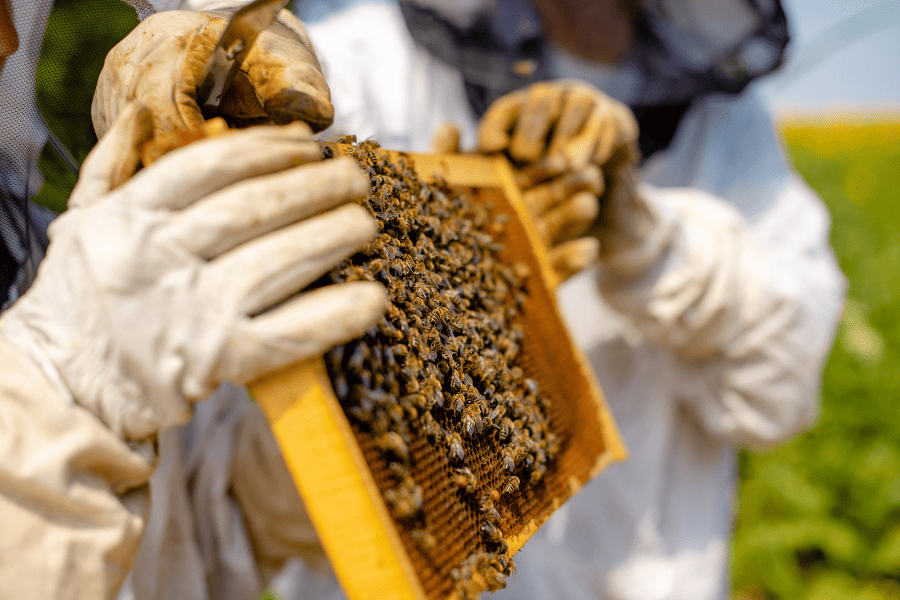
Beekeepers raise and manage bees to collect honey, beeswax, and other products. These bee experts help maintain healthy bee colonies by providing them with proper nutrition, shelter, and even medical care. One of the essential roles of beekeepers is to help maintain the bee population by preventing the spread of diseases that can be fatal to bees. They also play a critical role in controlling pests and predators that threaten bee colonies.
Why Are Beekeepers Important?
Beekeepers are essential in maintaining balance in the ecosystem. Since honeybees play a vital role in pollinating crops, our beekeepers help ensure that their pollination happens efficiently. By maintaining healthy bee colonies, beekeepers can ensure that the bee population can continue to thrive and that the plants that rely on them for pollination can continue to grow and produce the food that we rely on.
When Should I Call a Certified Beekeeper?
Having honeybees around our flowers and plants is always beneficial to your garden, crops, and the environment around us. Unfortunately, though, honeybees can sometimes build their colony in inconvenient places, such as our walls, eaves, and roofs. Luckily, Honeybee Relocation Services provides a safe and sustainable solution to remove and relocate these insects from our homes without harming them or damaging your home. If you’ve noticed a honeybee hive, consider contacting your local pest control company for more information on relocating these pollinators.
Jun 29, 2023 | Pest Control
While most people associate summer with warmer weather and more time spent outdoors, it also marks peak season for many Georgia pests. Here are 5 of the most common summer pests in Georgia and how to prevent them.
Mosquitoes
Mosquito season peaks in summer (peak months are June to September) with activity at hits highest. Mosquitoes are most active at dawn and dusk. These pests transmit serious diseases to both humans and pets. They also breed in standing water found around your home. You can get rid of mosquitoes this summer by:
- Getting rid of any standing water around your home.
- Wearing mosquito repellent when spending time outdoors.
- Avoiding any outdoor activities at dawn and dusk.
Ticks
Ticks are active from late spring to early fall. These summer pests are known to transmit serious disease to humans and pets. They are commonly found wooded areas and areas with tall grass. Avoid ticks this summer by:
- Wearing long sleeves and pants.
- Checking for ticks after any time spent outdoors.
- Routinely checking your pets for ticks.
- Using vet approved tick preventatives on your pets.
Spiders
Spiders are common in summer as they are often driven from their hiding places by the warmer temperatures (e.g. your attic). While spiders are beneficial to have around as they eat other common pests found in your home, they can be a nuisance. Keep spiders at bay this summer by:
- Sealing around pipes and under doors.
- Using a dehumidifier to keep moisture out.
- Decluttering your home.
- Sweeping cobwebs down as soon as they appear.
Ants
Ants emerge in the summer in search of food (particularly sweets and grease) that they take back to their colonies. This is why they are often found in kitchens. You can prevent ants by:
- Getting rid of debris around foundations.
- Keeping your kitchen clean and crumb free, especially counters and appliances.
- Storing food in sealed containers.
- Trimming branches back from the exterior walls and roof of your home.
Stinging Pests
Stinging pests, such as wasps, hornets, bees, and yellow jackets, are prominent in the summer months. These pests will often forage for food during the warmer weather. Avoid stinging pests by:
- Covering food and drinks when outdoors.
- Avoiding sweet or flowery smelling perfumes.
- Repairing holes in decking, siding, and screens to eliminate nesting spots.
- Maintaining routine lawn care.
Don’t let summer pests ruin your time outdoors. Contact your local pest control company today for a free evaluation.