Jun 19, 2023 | Pest Control
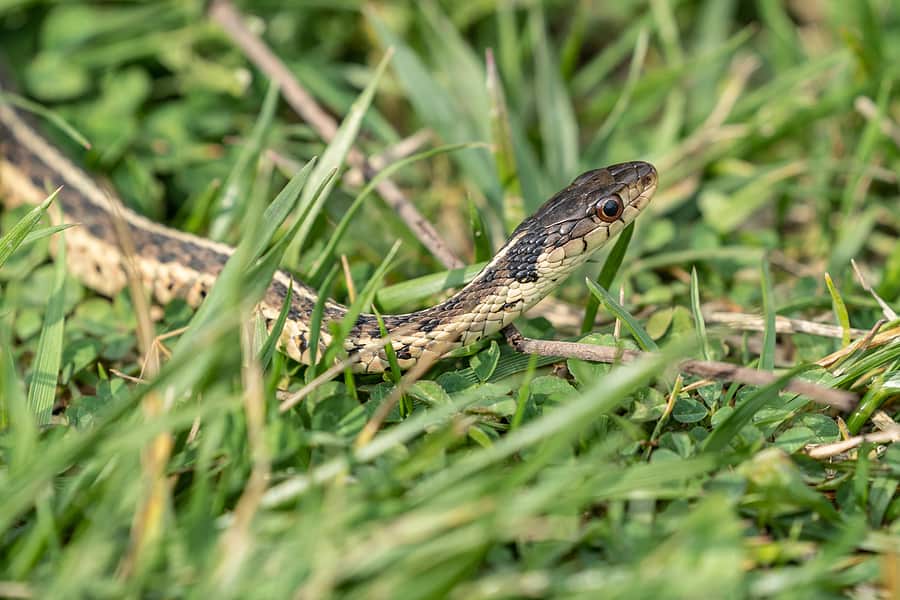
Warm weather means it’s the time of year when snakes are active, emerging in search of food and to bask in the sunlight for warmth. Although most snakes you encounter are nonvenomous, there are a few venomous snakes in Georgia. While many people may not enjoy running into a snake near their home, they can be quite beneficial to have around. Snakes eat other problematic pests that commonly infest your home, such as rodents, making them a natural form of pest control. If the thought of a snake sharing your space still makes you uneasy, try these DIY snake repellent methods to keep your yard snake free.
Napthalene
A frequent ingredient in many commercial snake repellent products is napthalene. It is one of the most widely used repellents. If you don’t want to buy a commercial product, napthalene is the major component of moth balls. The odor of napthalene annoys snakes but does not kill them. Mothballs should be placed in any holes, gaps, or crevices on your property where snakes could be an issue. If moth balls are consumed, they can be toxic and dangerous to children or pets, so use caution or avoid using them if you have pets or children in your home.
Sulfur
Powdered sulfur is an excellent snake repellent. If you sprinkle powdered sulfur around your home and property, snakes will avoid it since it bothers their skin. Because sulfur has a strong odor, wear a mask that covers your nose and mouth when applying it.
Clove and Cinnamon
Clove and cinnamon essential oils are powerful snake repellents. For best efficacy, combine these ingredients in a spray bottle and spray directly on snakes. Caution is advised because snakes frequently run in the opposite direction of the spray. This mixture can also be used as a fumigant in a diffuser.
Garlic and Onions
Garlic and onions contain sulfonic acid, which repels snakes (the same chemical that makes us cry when we slice onions). For maximum effectiveness, combine this with rock salt and sprinkle around your home and yard. Infuse garlic into any essential oil and use to fumigate rafters, basements, and other difficult-to-reach areas.
Ammonia
Because snakes dislike the odor of ammonia, spraying it over any frequented locations is one alternative. Another approach is to soak a rag in ammonia and place it in an open bag near snake-infested areas to keep them away.
Vinegar
Vinegar repels snakes near bodies of water, particularly swimming pools. For a natural snake deterrent, pour white vinegar around the perimeter of any body of water.
Lime
Mix lime with hot pepper or peppermint and sprinkle it around the perimeter of your home or property as a snake deterrent. Snakes dislike the fragrance of the mixture, and the fumes irritate their skin.
Eliminate Food Sources
Snakes consume rodents, frogs, birds, moles, voles, insects, and even fish. If these food sources are removed, the snakes will move on in search of another source.
Remove Hiding Spots
Inspect the exterior of your home and property carefully and repair any cracks or holes you find. Repair any gutters, plumbing, or ventilation ducts that are damaged. Repair or replace any damaged window and door screens. Snakes will also seek refuge in wood piles and garbage piles. Store firewood in sealed, lockable wood boxes if possible. Remove any heaps of wood chip mulch, straw mulch, leaves, or other debris that may have accumulated on your land.
Maintain Landscaping
Garden on a regular basis to remove any snake attractants such as debris, holes, and overgrowth. Keep the grass short to eliminate snake hiding areas. Install snake-proof fencing consisting of steel mesh, plastic sheeting, or a capture net. If you do put up fencing, make sure it is flush with the ground, oriented outward, and at least 3 feet high and 4 feet deep. You can also use things that snakes find difficult to slither over, such as holly leaves, pine cones, egg shells, and gravel. Planting snake repellent plants, which provide a natural deterrent, is another option. Marigolds, lemongrass, and wormwood are some typical examples.
If these DIY methods aren’t working or you just feel more comfortable with professional help, contact your local pest control company for a quote on snake removal services.

Jul 21, 2022 | Georgia Blogs, Pest Control, Snake Control, Wildlife
By Anna Vaccaro, Editorial Lead — Pest Education · Last updated: April 2026
If you’ve spotted a snake coiled near your back steps or sliding through the mulch by your flower bed, the first question is almost always the same: How do I make sure that doesn’t happen again? At Northwest, we get asked about snake repellent almost every day during warm-weather months in Georgia, and the answer surprises most homeowners. Most sprays, powders, and home-remedy scents don’t do much. What does work is changing your yard so snakes stop choosing it in the first place.
Video Transcript
Snakes are usually after just two things. Food and a safe place to hide. If your yard offers either, they may stick around longer than you’d like. The good news, a few simple steps can make a big difference. First, reduce food and moisture. Keeping rodents and insects under control helps, and fixing leaks or standing water is key. Snakes are drawn to damp areas. Second, remove hiding spots. Trim grass, clear brush, and leaf piles. Elevate firewood and fill in old holes around your yard. Third, use natural deterrence. Plants like maragolds and lemongrass or scents like clove and cinnamon oil can help make your space less inviting. When you’re ready to call a professional for a peaceful home, feel free to reach out to our team at Northwest Exterminating.
This guide walks you through exactly that. We’ll break down what a real snake repellent strategy looks like in the Southeast, the seven natural methods that actually move the needle, the myths to skip, and how to know when a sighting means it’s time to call a pro.
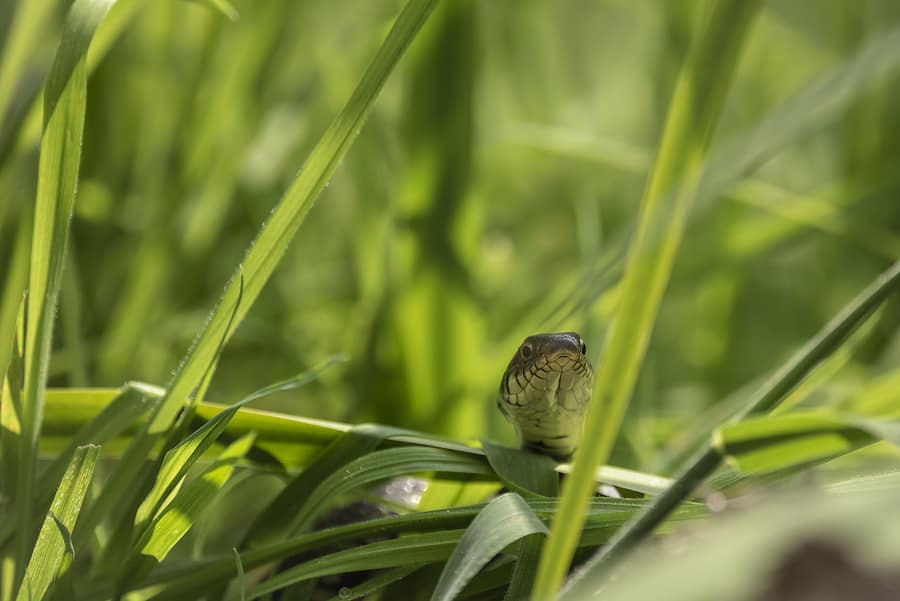
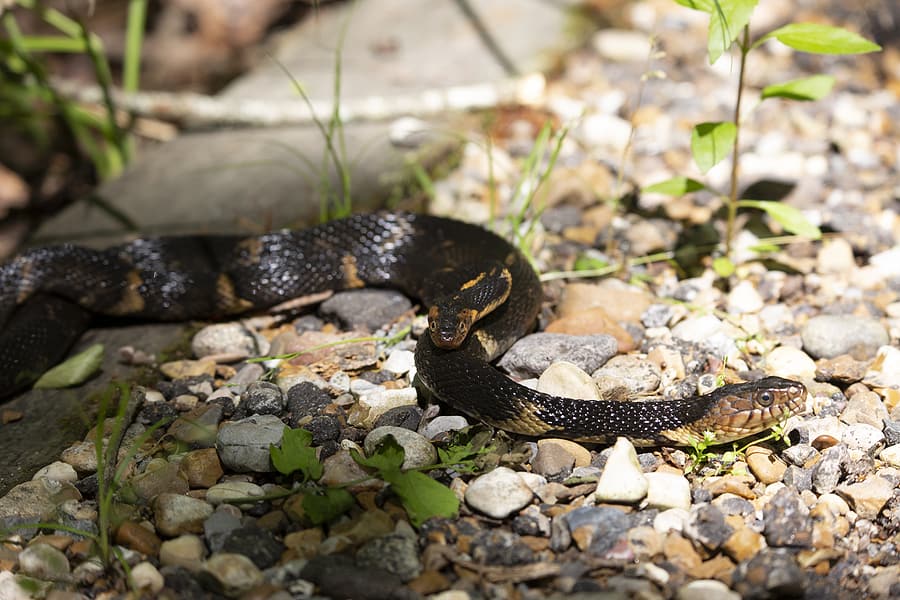
Most snakes you see in a Georgia yard are non-venomous and quietly help control rodents.
Can You Actually Repel Snakes Naturally?
Short answer: sort of. You can make your property a much less attractive place for a snake to hang out, but you can’t spray a scent line that a snake won’t cross. Here’s why that matters.
Snakes navigate the world with a specialized organ in the roof of their mouth called the Jacobson’s organ. It reads chemical cues in the air. That’s very different from how a mammal smells, and it’s the reason most of the “strong scent” tricks you see online underperform. A snake doesn’t process cinnamon oil or garlic the way we do. If there’s a rodent to chase or a warm crawl space to hide in on the other side of that scent, the snake keeps going.
The most effective natural snake repellent isn’t a product. It’s a habitat change. Take away food, shelter, and moisture, and snakes move on.
7 Natural Snake Repellent Methods That Actually Work
These are the seven moves that consistently reduce snake activity around Southeast homes. Use them together, not one at a time. Snake prevention works by stacking small changes.
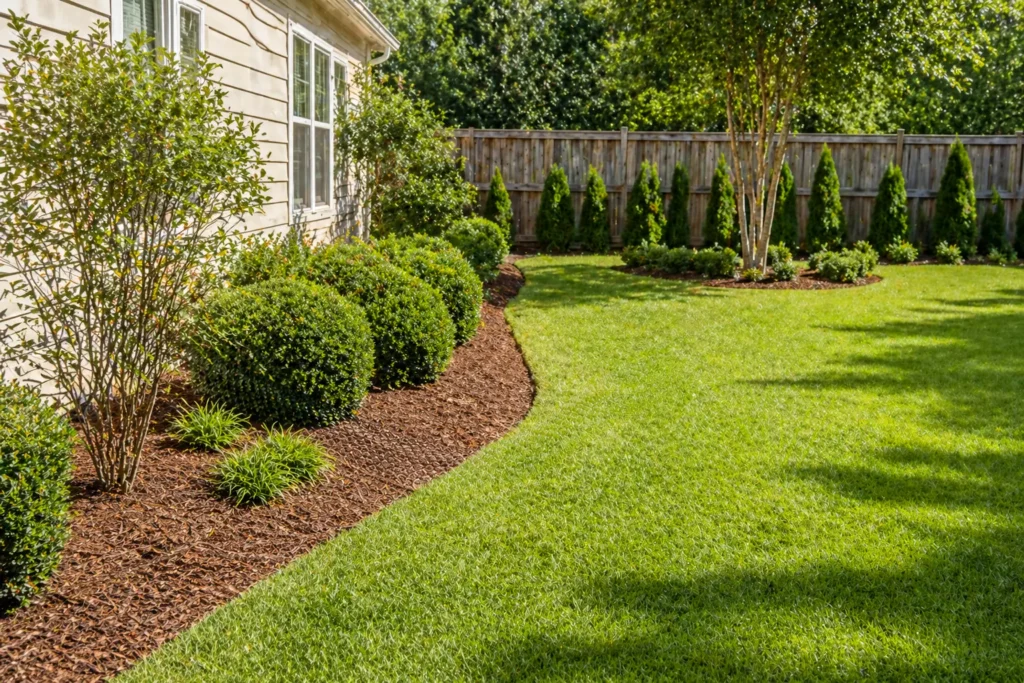
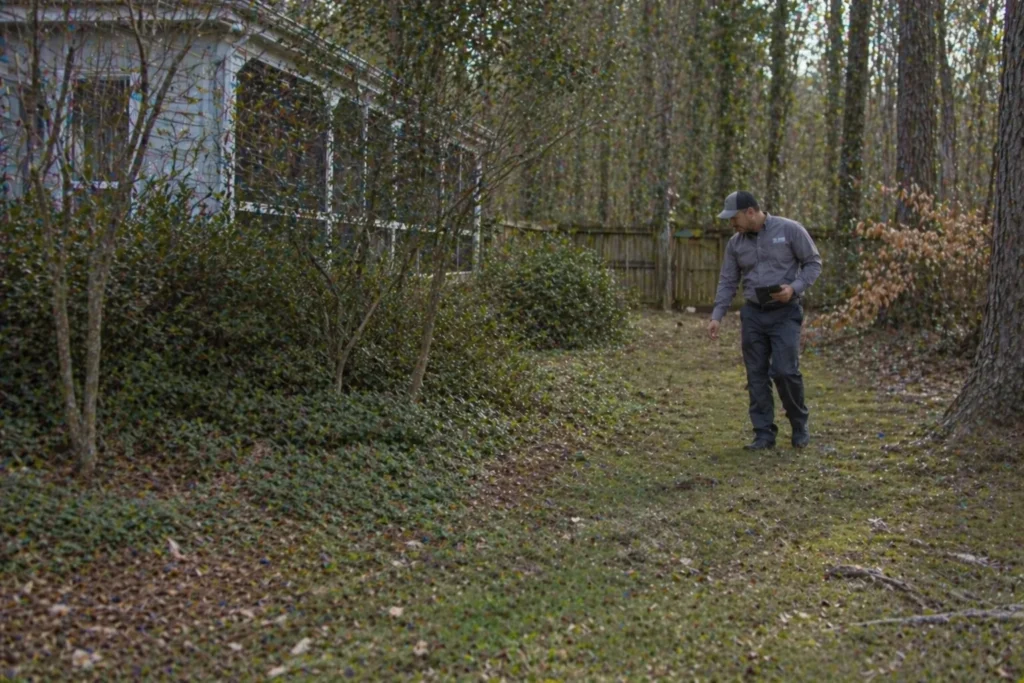
The yards we treat for repeat snake problems almost always share one thing: too many places for snakes to hide.
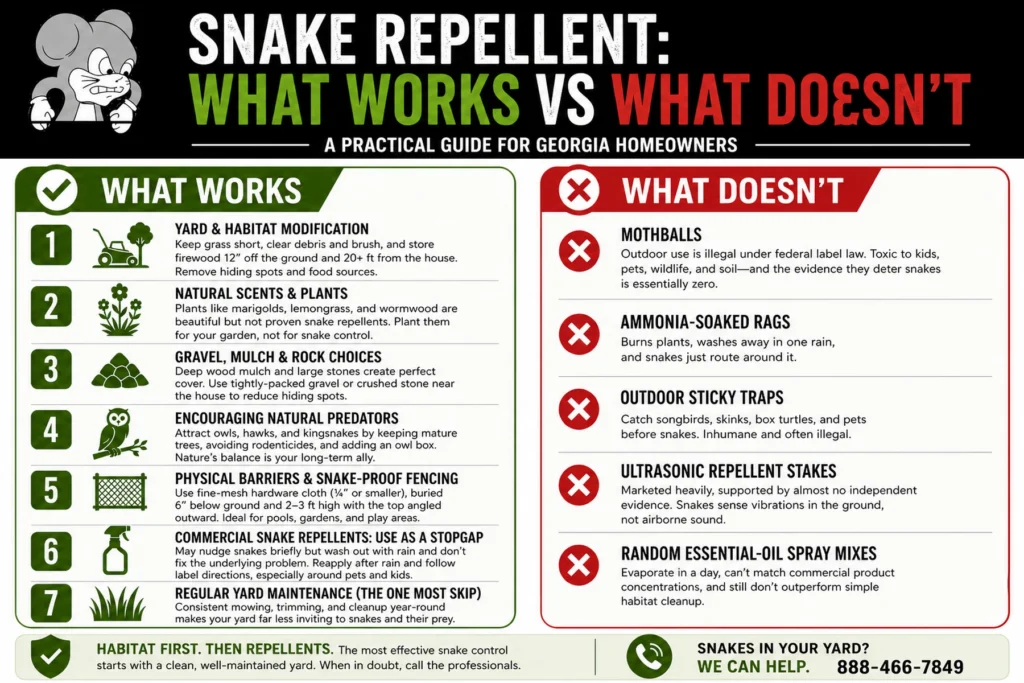
1. Yard & Habitat Modification
Snakes show up because something else is there first, usually rodents, frogs, or big insects. Cut off the buffet and the snakes stop visiting. Keep your grass short so snakes can’t cross the yard unnoticed. Clear tall grass along fence lines, brush piles, fallen branches, and leaf debris. Store firewood on a rack at least 12 inches off the ground and at least 20 feet from the house. Every pile of stuff in a Georgia yard is potential snake real estate.
2. Natural Scents & Plants
You’ve probably read that marigolds, lemongrass, or wormwood keep snakes out of a yard. They make a pretty border, but don’t count on them as a standalone snake repellent. Independent research on scent-based plant repellents is thin, and a snake that’s locked onto a mouse isn’t going to be turned back by a flower bed. Plant them for the garden, not for the reptile protection.
3. Gravel, Mulch & Rock Choices
Thick wood mulch and big decorative stones are exactly what snakes love: damp, dark, warm, and easy to slip under. If you’ve had repeat sightings along a bed line, swap the deep wood mulch closest to the house for tightly-packed gravel or crushed stone. The sharp, irregular surface is uncomfortable for snakes to cross and offers nowhere to burrow.
4. Encouraging Natural Predators
Owls, hawks, and kingsnakes are the original snake control crew in the Southeast. You can’t install them, exactly, but you can make your property more hospitable to them: keep mature trees, avoid broad-spectrum rodenticides that poison the food chain, and consider a simple owl box on the back of the property. This won’t clear an active snake problem overnight, but over a season it tips the balance.
Owls, hawks, and kingsnakes are the original snake-control crew in the Southeast.
5. Physical Barriers and Snake-Proof Fencing
If you live backed up to a field, creek, or wooded lot, which is a very common setup in the Georgia and Alabama suburbs we serve, a physical barrier is one of the few methods that physically stops a snake. Snake-proof fencing uses fine-mesh galvanized hardware cloth (quarter-inch or smaller), buried at least 6 inches below grade and rising 2 to 3 feet up, with the top angled outward. It’s not right for an entire property line, but it’s excellent around a pool deck, a play area, or a garden gate.
6. Commercial Snake Repellents: Do They Work?
Walk into any hardware store and you’ll see granular and liquid snake repellents on the shelf. Most use cinnamon oil, clove oil, sulfur, or naphthalene derivatives. The research on them is mixed at best. They can nudge a snake off a specific path for a short window of a few days after application, but they wash out with rain, fade in heat, and do nothing to address the reason the snake came in the first place. If you use one, treat it as a stopgap around a problem area, reapply after every rain, and read the label carefully if you have pets or small kids.
7. Regular Yard Maintenance (The One Most People Skip)
The yards we see with recurring snake problems almost always share one thing: they look great once a month and neglected for the three weeks in between. Snake repellent is really a maintenance habit. Walk the property every couple of weeks in spring and summer. Trim back anything touching the foundation. Pick up fallen fruit under pecan or fig trees (rodents follow fruit; snakes follow rodents). Check for new burrows along the fence line. Ten minutes of weekly attention beats a hundred dollars of repellent.
(If snakes keep showing up after you’ve tightened up the yard, it’s usually a sign something bigger is going on underneath, often rodents in a crawl space or moisture you can’t see. Schedule a free Northwest inspection and we’ll walk the property with you.)
What Doesn’t Work — Snake Repellent Myths to Skip
A few “classic” home remedies for keeping snakes away are worse than ineffective. Some are illegal, unsafe for pets, or actively bad for your soil. Save your weekend.
- Mothballs. Outdoor use of mothballs as a snake repellent is actually against federal label law. Naphthalene and paradichlorobenzene are toxic to kids, pets, wildlife, and soil, and the evidence they deter snakes is essentially zero.
- Ammonia-soaked rags. Burns plants, washes away in one rain, and snakes just route around it.
- Outdoor sticky traps. They catch songbirds, skinks, box turtles, and sometimes the family cat before they catch a single snake. Inhumane and often illegal.
- Ultrasonic repellent stakes. Marketed hard, supported by almost no independent evidence. Snakes rely on vibration through the ground, not airborne sound.
- Random essential-oil spray mixes. Evaporate in a day, can’t match the concentration a commercial product uses, and still don’t outperform simple habitat cleanup.
Habitat changes outperform every commercial snake repellent on the market.
Snake Prevention Tips for Homes & Yards
A good snake repellent plan for your home isn’t just yard work. It’s also sealing the house itself. Two-thirds of the “snake in the garage” or “snake in the laundry room” calls we get trace back to the same kinds of openings that let rodents in.
- Walk the foundation and seal gaps around utility penetrations, dryer vents, and brick weep holes with hardware cloth. Never use expanding foam alone, because snakes push right through it.
- Screen every crawl space vent with galvanized ¼-inch mesh. Replace any torn screens. This alone will stop most garage and crawl-space snake sightings.
- Re-caulk door thresholds and replace worn weatherstripping, especially on garage side doors and basement hatches.
- Fix leaky outdoor faucets, redirect gutter runoff away from the foundation, and don’t over-water the lawn. Moisture pulls in frogs and insects, which pull in snakes.
- Treat rodent control as snake control. If you have mice in the crawl space, snakes are just the next chapter. Take care of the rodent problem with professional rodent control and the snake issue often resolves itself.
When to Call a Professional for Snake Control
Most snakes in Georgia and Alabama yards are harmless, and actually beneficial. A black racer or garter snake eating the mice by your shed is doing you a favor. But there are three situations where it’s time to stop DIY-ing and pick up the phone:
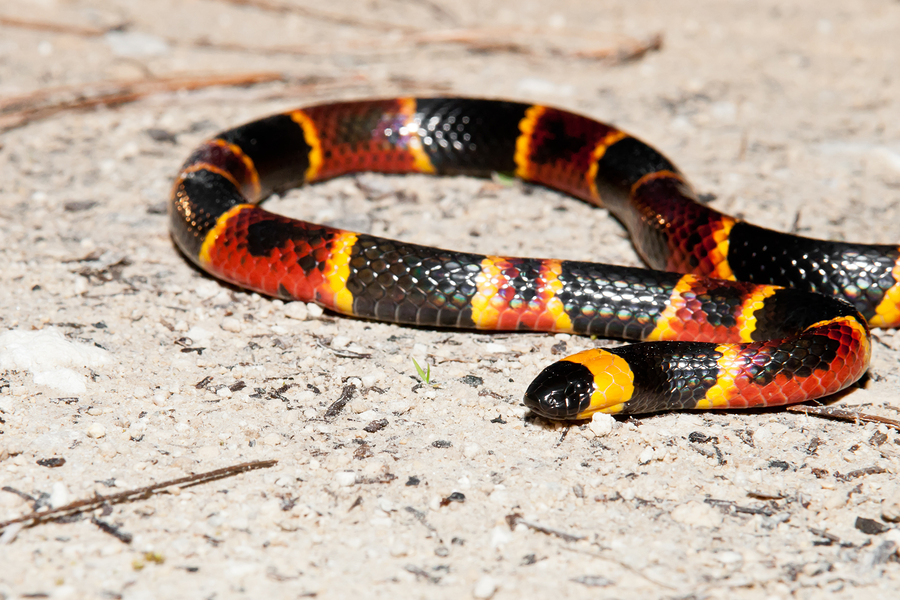
- Venomous species on the property. The Southeast is home to Copperheads, Cottonmouths (Water Moccasins), Timber Rattlesnakes, Pigmy Rattlers, and along the coast, Eastern Diamondbacks and Coral Snakes. If you can’t confidently identify what you’re seeing, back up and call.
- A snake inside the house. Inside the living space, garage, crawl space, or attic is never a “just wait it out” situation. It means an entry point that needs finding and sealing.
- Repeat sightings in the same spot. More than two sightings in the same part of the yard within a season means there’s a harborage or food source you haven’t found yet. That’s what a professional inspection is for.
Snakes in the Southeast — What You’re Likely Seeing
Knowing what lives in a typical Georgia or Alabama yard takes a lot of the panic out of a sighting. The vast majority of what we encounter is non-venomous. The UGA Extension guide to Snakes of Georgia is the best free resource for identifying any snake you see on the property.
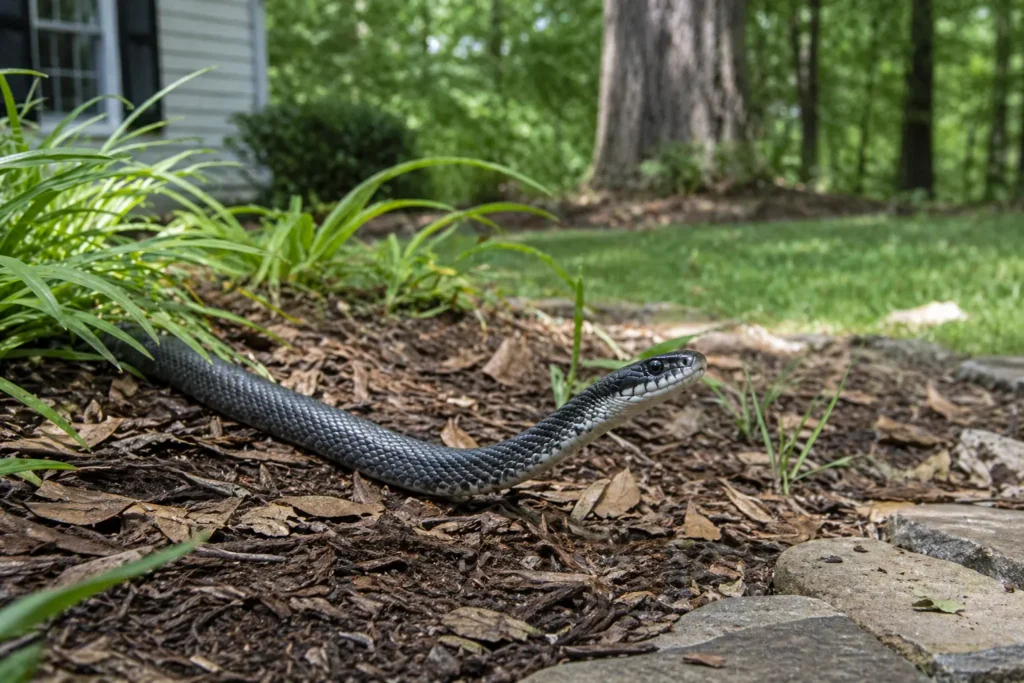
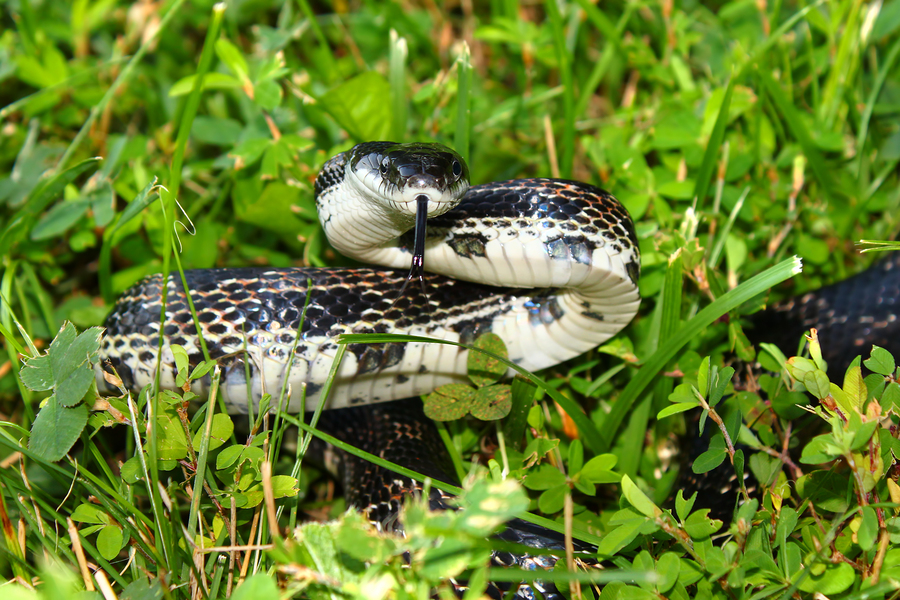
- Eastern Rat Snake (Black Rat Snake). Long, black, often climbs into shrubs or attics chasing rodents. Non-venomous and one of the best natural rodent controls you can have.
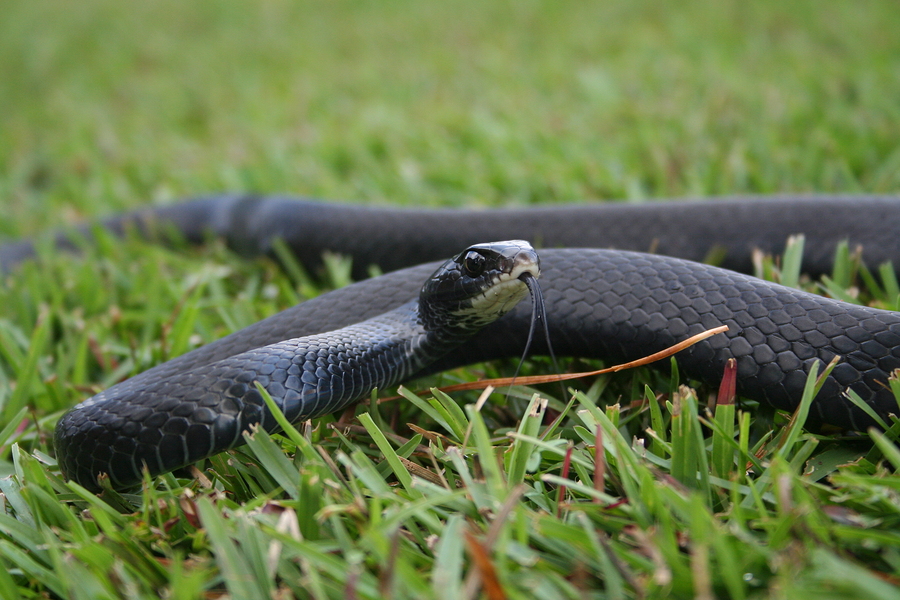
- Black Racer. Slender, fast, jet-black. Harmless to humans, feeds on insects, lizards, and small rodents.
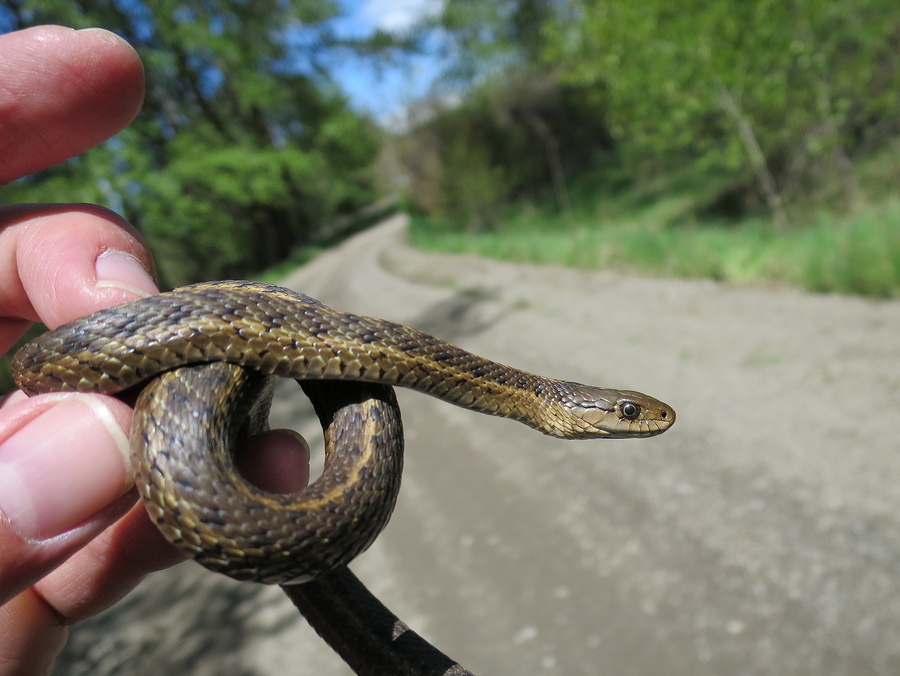
- Garter Snake. Small, striped, very common near gardens and water features.
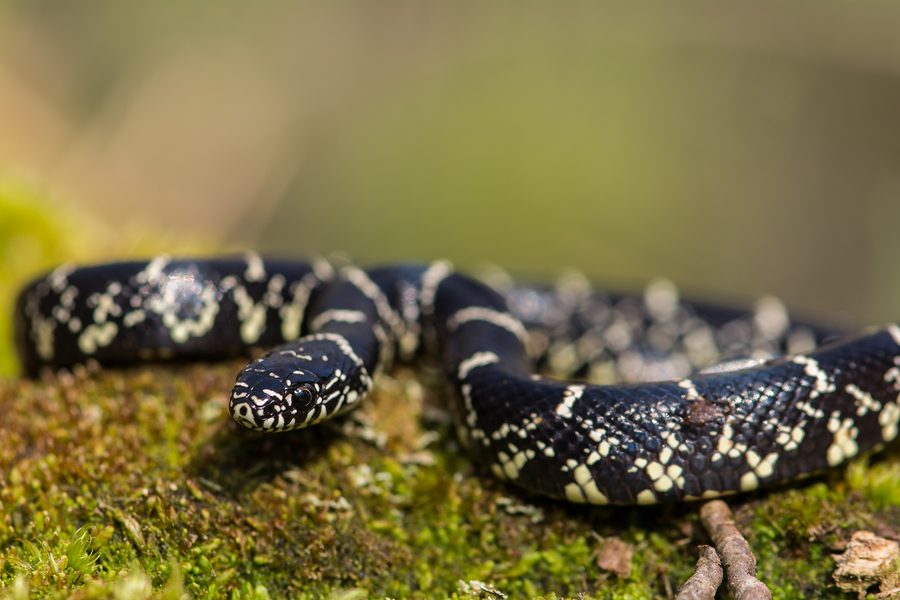
- Kingsnake. Non-venomous, and remarkably, it actually eats venomous snakes. Leave it alone if you can.
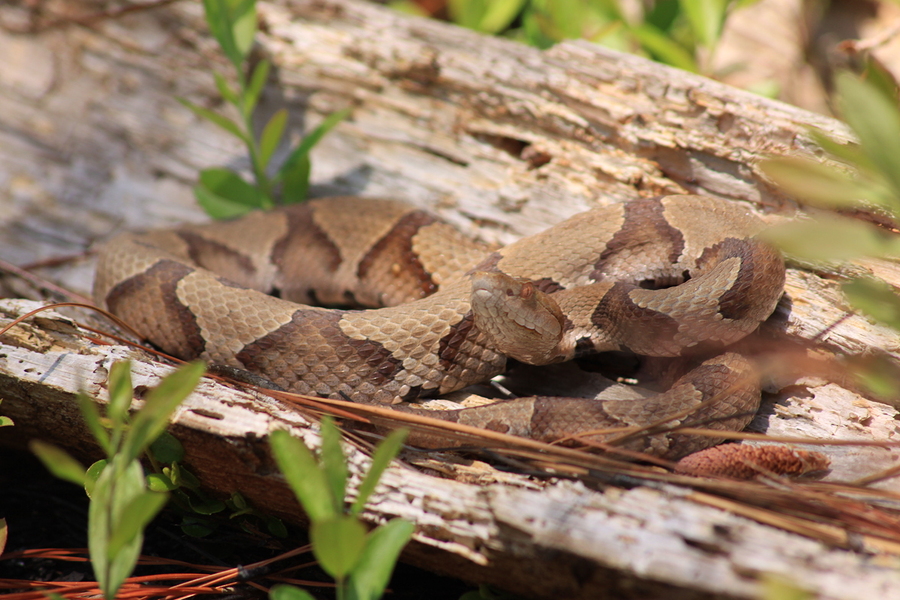
- Copperhead (venomous). Tan and dark-brown hourglass banding. Hides beautifully in pine straw and leaf litter, which is the cause of most venomous bites in the region. Call a pro.
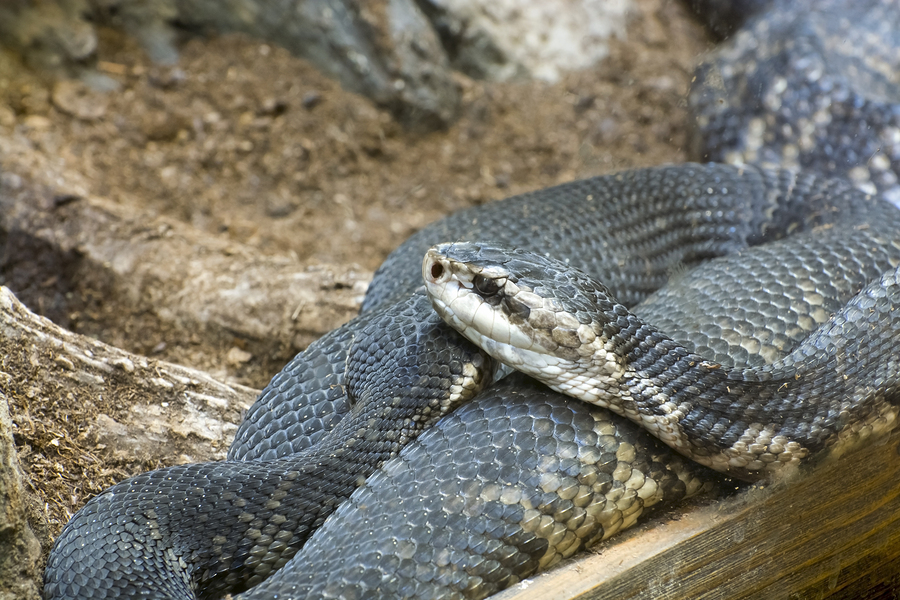
- Cottonmouth / Water Moccasin (venomous). Thick-bodied, found near water. Will stand its ground. Call a pro.
Peak activity in the Southeast runs April through October, with two noticeable spikes: early spring (emerging from brumation) and late summer (looking for food before the cooler months).
Frequently Asked Questions About Snake Repellent
Do snake repellents really work?
Commercial snake repellents offer limited, short-term help at best, and most scent-based home remedies don’t work at all. The most reliable “repellent” is removing what attracts snakes in the first place: rodents, tall grass, standing water, and hiding places around the foundation.
What scent keeps snakes away?
Snakes may avoid strong-smelling compounds like cinnamon oil, clove oil, and cedarwood in close range, but these won’t stop a snake that’s tracking prey. Use scents as a supplement to habitat cleanup, never as the whole plan.
Are snake repellents safe for pets?
It depends on the active ingredient. Many granular snake repellents use essential oils with reasonable safety profiles, but always check the label. Do not use mothballs or ammonia as a snake repellent. Both are genuinely toxic to dogs, cats, and children.
How do I keep snakes out of my yard permanently?
There’s no one-time fix. Long-term snake control in a Southeast yard comes from stacking three things: consistent yard maintenance, rodent control inside and around the home, and physical snake-proof fencing around the areas you most want protected (play areas, pool decks, garden entries).
When should I call professional snake control?
Call right away for any venomous snake, any snake inside the home, or repeat sightings in the same part of the yard. Northwest Exterminating handles inspection, humane removal, exclusion, and the underlying rodent and moisture issues that drive most snake problems.
Northwest’s wildlife team handles the entry points and rodent issues that drive most snake problems.
Ready to Keep Snakes Out of Your Yard for Good?
If you’ve seen a snake on your property more than once this season, the odds are good there’s a rodent or moisture issue feeding the problem. Our team has been clearing snake problems out of Georgia and Alabama homes for decades, and we handle the thing that caused it, not just the snake you saw.
About the Author
Anna Vaccaro, Editorial Lead — Pest Education leads pest education content for Northwest Exterminating, working with senior technicians and service center managers across our Georgia, Alabama, Tennessee, and South Carolina service areas to translate field expertise into homeowner-friendly guides. The focus: accurate, regionally-specific answers to the pest questions Southeast homeowners are actually searching for.
Feb 14, 2022 | Pest Control, Wildlife
As the weather warms up, snakes will begin to emerge from brumation (a state of deep sleep that reptiles and amphibians enter during periods of cold weather). Although it can be scary encountering a snake in your yard or in your home, the majority of them mean you no harm. In fact, most don’t want anything to do with humans at all! Most North American snakes are harmless and, in fact, there are only 5 venomous snakes in the state of Georgia.
The first step in preventing snakes is to figure out what is attracting them to your yard and home in the first place. Snakes will typically come around in search of either food or shelter. By eliminating these attractants, snakes will be less likely to hang around your personal space.
Shelter
Snakes will often come around in search of a place to hide out from predators or to lie in wait for their own prey. Try to avoid debris and rock piles in your yard. Don’t pile rocks up in your landscaping or let other debris accumulate in your yard. Snakes will also use tall grass to hide in so keep grass mowed short and mow it frequently. Mulch attracts both snakes and their food sources. Try to use less mulch or use another type of ground cover if possible. Store firewood away from your home and elevate it if possible as snakes will hide in the cracks and crevices.
Food
Snakes will primarily come around looking for or chasing food. Snakes are known to feed on rodents, birds, insects, and amphibians so eliminating these pests from your home and yard will also help keep snakes away. Excessive moisture attracts all of these food sources so try to avoid overwatering your lawn and getting rid of any standing water. Pick up fallen fruit as rodents and other pests love to eat them. The same goes for spilled birdseed from birdfeeders. Feed pets indoors if possible and, if not, don’t leave pet food out overnight. Keep trashcans clean and seal them tightly. Keep garages clean and clutter free. Inside, keep kitchens and other food areas clean.
Entry Points
Snakes will use a variety of methods to get into your home, garage, attic, or basement. Routinely inspect the exterior of your home and try to identify any potential entry points. Seal any cracks around your foundations, walkways, and porches. Consider installing fencing made of rigid mesh that is at least 2 feet tall and buried 4″ to 6″ into the ground. You can also attach aluminum flashing to the outside bottom portion of the fencing. Make sure the screens on your doors and windows are tightly sealed and in good repair. Use galvanized screens to cover your vents and drains. Close up cellar doors, broken gutters, pet doors, unsealed basement windows, open crawlspaces, and holes in your roof or siding. Keep tree branches trimmed back away from your home. Use gravel or other uneven ground cover as snakes cannot move or hide as easily on these.
When snakes are spotted around your home your first instinct is usually to either run away or get rid of it. While they can be disturbing, most snakes are actually beneficial to have around – eating other pests and keeping their populations under control. If you have an issue with snakes, contact your local pest control company who can help identify what type of snake you are dealing with and help catch and relocate it safely and humanely.
You May Also Be Interested In:
Controlling Millipedes In and Around Your Home
Stinkbugs: What Are They?
How To Keep Wildlife Out of Your Yard
Getting Ready for Spring
Are Termites Active Right Now?
Aug 12, 2021 | Pest Control, Wildlife
Although many people don’t welcome the sight of a snake in their yard, they are actually quite beneficial to have around. Snakes eat mice, grubs, slugs, and other insects around your home and are also a source of food for birds of prey like hawks. While most species of snakes are non-venomous, there are a few types of snakes that are venomous in our area. For this reason, you should never handle a snake unless you are 100% sure you know what species it is. Most snakes will bite when harassed whether they are venomous or not.
There are many natural snake repellent methods out there today with one of the most common being mothballs. But are they really effective? According to experts at the Blue Ridge Poison Center the answer is a resounding NO. Mothballs are made of either naphthalene or paradicholorbenzene. Both of these chemicals are hazardous to both humans and animals if exposed to or ingested. The chemical makeup of each of these substances allow them to turn into gas when they are exposed to the air – resulting in the strong smell we usually associate with mothballs. These fumes can cause dizziness and irritation to the eyes and the lungs. If ingested, mothballs can cause a condition called hemolytic anemia which is very dangerous. Mothballs also resemble candy to young children, making them more likely to pick them up and handle or eat them.
So if mothballs aren’t the answer, how can you get rid of snakes? Here are a few snake prevention tips you can use safely around your home.
- Make your home and yard less attractive to snakes who are looking for food and shelter.
- Remove any food sources such as rodents or other pests.
- Keep pet food sealed in containers.
- Don’t leave pet food out overnight.
- Clean up spilled pet food and birdseed from the ground.
- Don’t overwater your lawn as this can attract worms, frogs, and slugs – another food source for snakes.
- Have your home inspected for rodents and other pests and maintain routine pest control treatments.
- Seal any entries into your crawlspace or basement that are larger than 1/4″.
- Make sure doorsweeps and window screens fit tightly.
- Cover vents and drains that come into the house.
- Keep grass mowed – tall grass and weeds provide more coverage for snakes from predators.
- Clean up any debris snakes can hide under (scarp metal, wood piles, trash, logs, etc.).
- Check the roof for overhanging vegetation – snakes are good climbers and can access your home from the roof.
If you have a problem with snakes or other wildlife, contact your local pest control company who can help identify pest attractants, points of entry, and provide you with safe and humane snake removal services.
You May Also Be Interested In:
Fleas & Ticks: What’s the Difference?
7 Signs You Have Cockroaches
Bed Bugs: Where Do They Come From?
Back To School Means Head Lice Season
Avoid Bites and Stings this Summer