Jan 6, 2025 | Florida Pest Control, Going Green
As Florida heads into 2025, homeowners will face an evolving pest landscape due to rising temperatures and increased rainfall. These changes are creating new challenges, but with the right information and green pest control solutions, you can protect your property from unwanted invaders while keeping your environmental impact low.
Green Pest Control Options for 2025
Rising Heat: A Game-Changer for Pests
Warmer temperatures are accelerating pest breeding cycles, leading to larger populations of mosquitoes, cockroaches, and other pests. Milder winters also mean pests can survive year-round, requiring more frequent eco-friendly pest control efforts. To stay ahead, keep your home free of standing water and maintain clean, dry spaces, reducing the need for chemical treatments.
Increased Rainfall: Breeding Ground for Pests
More rain creates ideal conditions for pests like termites, mosquitoes, and moisture-loving ants. Ensure gutters are clean, water collection areas are drained, and use dehumidifiers to keep humidity-loving pests at bay. Green pest control methods, like natural dehumidifiers and drainage solutions, help prevent pest problems while being gentle on the environment.
New Pests on the Block
New invaders are making their way into Florida, including the Brown Marmorated Stink Bug, Tropical Bed Bug, and Cactus Moth . These pests pose unique challenges and require specialized control methods. By focusing on eco-friendly pest control, you can reduce reliance on harmful chemicals and take advantage of natural deterrents to keep these pests in check.
Traditional Pests, New Behaviors
Familiar pests like cockroaches, ants, and rodents are adapting to the changing climate. Resistant cockroach strains, aggressive Argentine ants, and rodents seeking shelter indoors are just a few examples of how traditional pests continue to wreak havoc on our Florida homes! To handle these pest challenges, consider green pest control options like bait stations, traps, and natural repellents, which take the environment and your home into consideration.
Green Pest Control Solutions
Opt for natural repellents like essential oils, and preventive measures like sealing cracks and maintaining a clean home. These green pest control options effectively manage pests without harming your family or the environment. By adopting sustainable practices, you can keep pests at bay while reducing your ecological footprint.
Stay Ahead of Pest Trends
As Florida’s climate changes, staying informed and proactive is key. Keep up with pest trends, partner with professional green pest control companies, and invest in regular home maintenance and prevention to protect your property in an eco-conscious way.
If you’ve noticed an influx of pests around your property this New Year, consider reaching out to a local pest control company near you. These professionals will provide you with an inspection and their treatment recommendations based on your pest situation.

Jul 5, 2024 | Going Green, Pest Control
When it comes to maintaining a healthy and comfortable home environment, pest control plays a crucial role. However, traditional pest control methods often involve the use of harsh chemicals that can be harmful to both the environment and your family’s health. This is where green pest control comes in. As a pest control company in Georgia, we are committed to offering alternative pest solutions that effectively manage pests while protecting our planet.
What is Green Pest Control?
Green pest control utilizes environmentally responsible methods and products to manage and eliminate pests. This approach prioritizes the use of natural and non-toxic treatments over conventional chemical pesticides. The goal is to minimize the impact on the environment while ensuring that your home remains pest-free.
How Does Green Pest Control Work?
Green pest control operates on the principles of Integrated Pest Management (IPM). This holistic approach involves several key steps:
- Inspection and Monitoring: The first step in IPM is to conduct a thorough inspection of your property to identify pest problems and determine their sources. Continuous monitoring helps track pest activity and assess the effectiveness of treatments.
- Prevention: Preventive measures are crucial in this approach to pest control. This includes sealing entry points, removing food and water sources, and maintaining proper sanitation to make your home less attractive to pests.
- Eco-Friendly Treatments: When treatment is necessary, eco-friendly products such as botanical insecticides, natural predators, and organic baits are used. These products are effective in controlling pests without posing a threat to humans, pets, or the environment.
- Education and Maintenance: Educating homeowners about pest prevention and maintenance is an integral part of this method. By understanding the habits and habitats of pests, you can take proactive steps to prevent infestations.
Benefits of Using Green Pest Control
Choosing green pest control for your home in Georgia offers several advantages:
- Safety: Green pest solutions are non-toxic and safe for your family and pets. Unlike conventional pesticides, they do not release harmful chemicals into your home environment.
- Environmental Protection: Green pest control reduces the use of synthetic chemicals, which can contaminate soil, water, and air. By opting for alternative methods, you contribute to the preservation of Georgia’s natural ecosystems.
- Long-Term Effectiveness: Integrated pest management focuses on long-term solutions rather than quick fixes. By addressing the root causes of pest problems, this method provides sustainable results.
- Cost-Effective: While green pest control methods may initially seem more expensive, they often prove to be more cost-effective in the long run. Preventive measures and natural treatments can reduce the need for frequent applications and lower overall pest control costs.
The Importance of Routine Pest Control for Households
Routine pest control is essential for maintaining a healthy and comfortable living environment. Pests such as ants, roaches, rodents, termites, and mosquitoes can cause significant damage to your property and pose health risks to your family. Ants can contaminate food. Roaches contaminate surfaces and spread diseases. Termites can destroy wooden structures from the inside out. Mosquitoes can transmit severe diseases such as West Nile Virus which have recently resulted in reports of West Nile Virus deaths. Regular inspections and treatments by a professional pest control company can prevent infestations and protect your home from potential harm.
Moreover, routine pest control helps in early detection of pest problems, making it easier to manage them before they become severe. It also ensures that preventive measures are consistently applied, reducing the likelihood of future infestations.
As a responsible pest control company in Georgia, we are dedicated to providing alternative pest solutions that prioritize the health of your family and the environment. Green pest control, with its focus on safety, sustainability, and long-term effectiveness, is the ideal choice for managing pests in an eco-conscious manner. By opting for integrated pest management, you can enjoy a pest-free home while contributing to the preservation of our planet.
Routine pest control is not just about eliminating pests; it’s about maintaining a healthy and safe living environment. Contact a pest control company near you today to learn more about our green pest control services and how we can help protect your home.
Apr 5, 2023 | Going Green, Pest Control
Macon Pest Control: Benefits of Green Pest Control
Green pest control is an environmentally friendly approach to managing pests that utilizes natural and organic methods to prevent and eliminate pests. In Georgia, this approach to pest control is becoming increasingly popular due to the many benefits it offers.
One of the biggest benefits of Northwest’s green pest control is that it is a safer option for both humans and the environment. Unlike traditional chemical pesticides, which can be toxic and harmful to the environment, these alternative pest control methods use natural ingredients that are derived from botanicals and are safer for both humans and the environment. This means that you can protect your home and family from pests without risking their health.
Another benefit of this eco-friendly pest control is that it is effective at controlling a wide range of pests, including common pests like ants, termites, and roaches. In the long run it is more of an affordable option because it is more sustainable and often requires less frequent treatment.
Pests are a nuisance and can be detrimental to both your home and your health. Protecting your family is of utmost importance, regardless of the pest control service you choose to use. Reach out to your local pest control company to receive the care you deserve.
Mar 12, 2021 | Going Green, Mosquito
Mosquito season is right around the corner! Heat and humidity during these months combine to provide an ideal environment for mosquitoes to thrive. The season usually starts in the spring and peaks over the summer. Besides leaving behind itchy, red welts, these nuisance pests are dangerous to humans by vectoring serious diseases like Zika virus, West Nile virus, and chikungunya. Fortunately, there are several green pest control options you can utilize as an eco-friendly alternative to control mosquitoes. Here are 3 steps you can take for green mosquito control.
Identify Nesting and Resting Sites
The first step to controlling mosquitoes is identifying and eliminating what attracts them in the first place. Mosquitoes will come around in search of two things: nesting sites and resting sites.
Where do mosquitoes breed? Every species of mosquito lays its eggs in water. While the type of water source may vary between species, it only takes a minute amount of water for mosquitoes to hatch and develop. Get rid of any potential breeding sites by:
- Cleaning up debris around your home. Moisture can accumulate under piles of leaves, boards, mulch, rocks, and other outdoor items.
- Walking around your yard and identify any items that can hold water – pots, cans, bird baths, lids, toys, and planters. Empty them or store them upside down when not in use.
- Inspecting your gutters for clogs and keep them cleaned out. Watch out for sagging gutters or low spots where the water can accumulate.
- Repairing any poor drainage sites in your yard as these can lead to standing water. Consider leveling your yard or installing a french drain.
Once mature, adult mosquitoes will often rest in shady areas that are protected from the wind. Some common resting sites include trees, shrubs, potted plants, patios, and front entryways.
Protect Yourself From Bites
Any time you can protect yourself from mosquito bites you should. Prevent mosquito bites by:
- Blowing them away. Any breeze above 1 mph will make it difficult for mosquitoes to fly. If you have to spend time outdoors, consider using fans, whether battery powered, plug in or ceiling. Try to keep the air flow from the fans pointed at the lower half of your body as mosquitoes tend to fly closer to the ground to avoid said wind.
- Avoiding peak mosquito hours. Mosquitoes tend to feed at dawn and dusk as the wind typically dissipates around these times. Try to stay indoors during these times, especially during the warmer months.
- Applying insect repellent before going outdoors. When applying repellent, spray it onto your hands and rub it onto your skin rather than spraying it directly onto the skin. Repellents with DEET block the mosquitoes’ CO2 receptors, making them especially effective.
- If you are opposed to DEET, there are other natural mosquito repellents you can use instead.
- Picaridin is CDC approved and the most broadly used repellent outside the United States.
- IR 3535 is CDC approved and also repels deer ticks.
- 2-undecanone is CDC approved and is found naturally in cloves.
- Oil of lemon eucalyptus is CDC approved and has been proven in studies to repel as well as DEET.
- Avon Skin so Soft was shown in a 2015 study to repel mosquitoes for up to 2 hours.
- Permethrin fabric spray can be used on clothes, shoes, tents, and netting.
- Essential oils containing eucalyptus, rosemary, cloves, basil, and peppermint have also been shown to repel mosquitoes and are even used in many commercial products.
- Covering up when outdoors. Wear tightly woven, light colored clothing. The synthetic fibers in athletic wear are especially good at repelling mosquitoes. Dark colors stand out to mosquitoes, while lighter colors are less attractive.
- Considering the use of plants that repel mosquitoes around your home such as citronella, lavender, lemongrass, marigolds, and basil.
Applying Green Mosquito Treatments
Yards and climates vary across the region so the effectiveness and longevity of mosquito treatments will vary from home to home. Regardless of where you live or what kind of home you have, a green mosquito control program can be effective at helping control mosquito populations. Green mosquito control utilizes eco-friendly products that are just as effective as traditional products.
A complete green reduction program includes monthly mosquito treatments during mosquito season. Green treatments use products that are derived from flowers and botanicals and area only applied to the areas where they are needed instead of over the entire yard. They are effective at reducing both adult and larvae populations.
The green mosquito reduction program includes an inspection to identify resting and nesting sites; larvacide and adulticides to target all aspects of the population; source reduction and elimination by removing any areas of standing water; and a service guarantee where they will come back between treatments if needed, usually at no cost.
If you have a problem with mosquitoes or any other pests, contact a professional pest control company who can provide you with a thorough inspection and the most up to date traditional pest control and green treatment options available for you.
You May Also Be Interested In:
Termites: Prevent Before They Infest!
When Is Millipede Season?
Spring Cleaning to Keep Pests Out
Is There A Cockroach Season?
Orb Weaver Spiders: Dangerous or Not?
Nov 6, 2020 | Pest Control
By Anna V., Editorial Lead — Pest Education · Last updated: May 2026
If you’ve found millipedes in your house and want to get rid of them without spraying chemicals, you’re in the right place. At Northwest, we run millipede calls across Georgia, Alabama, Tennessee, and South Carolina nearly every week during the spring and fall rainy seasons. The good news: millipedes are harmless (no bites, no stings, no property damage) and they respond well to natural removal methods. Most homeowners can solve a millipede problem in their house with a few changes around the foundation, a dehumidifier, and some basic sealing. No pesticides required.
Here’s the realistic version of natural millipede control: what actually works, what doesn’t, and what to do when DIY methods aren’t enough.
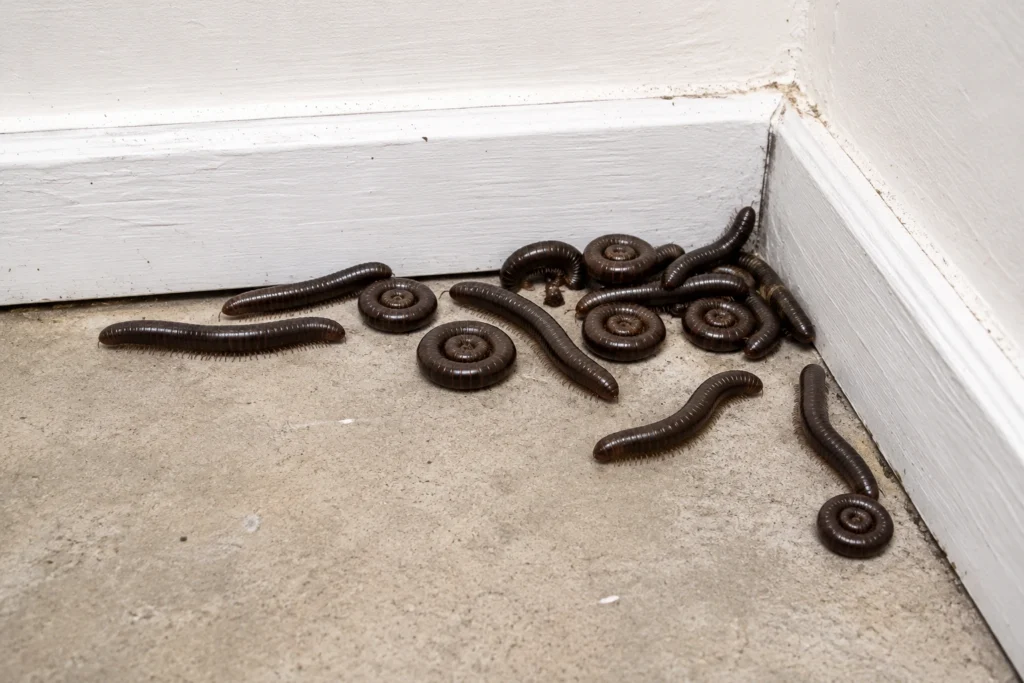
A cluster of millipedes along a basement baseboard usually shows up within 48 hours of heavy rain.
What Are Millipedes and Why They Enter Homes
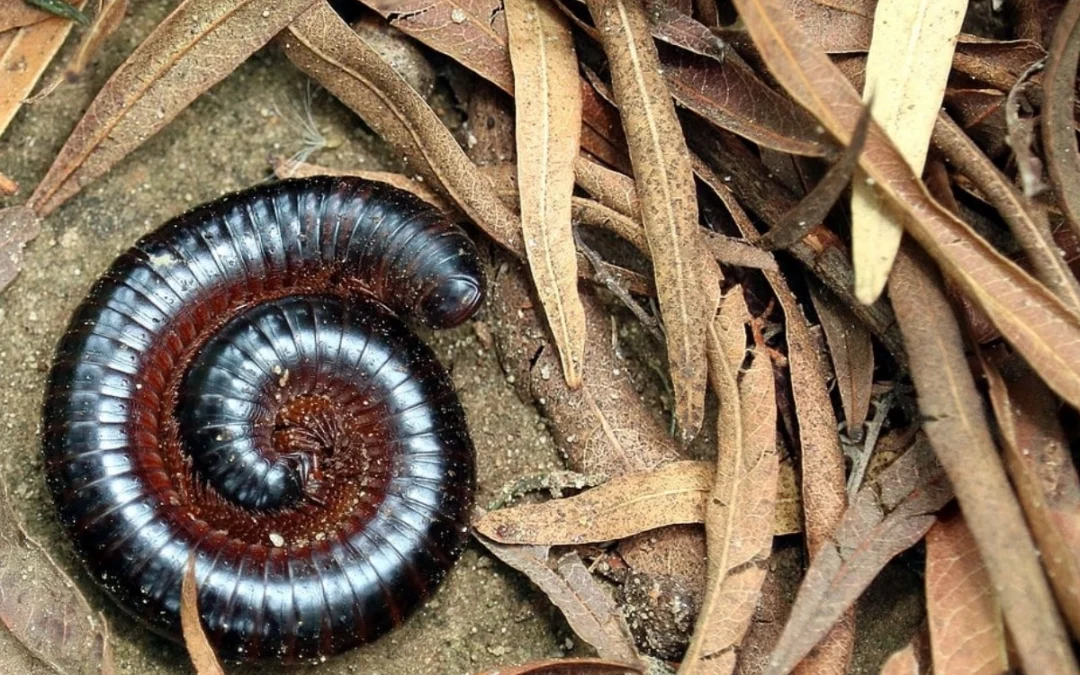
Millipedes are segmented arthropods that thrive in moist, dark environments. They eat decaying plant matter, not your home, your food, or any living thing inside. They’re slow movers, they don’t bite, and they don’t carry disease. They’re a nuisance pest, not a hazard.
Three things drive millipedes into Southeast homes:
- Wet weather and saturated soil. Heavy spring or fall rain pushes millipedes from their outdoor habitat (mulch, leaf litter, soil) toward drier ground. Sometimes that drier ground is your basement.
- Drought and dehydration. Extended dry weather has the opposite effect — millipedes seek any source of moisture, which can include indoor humidity from bathrooms, basements, and crawl spaces.
- Foundation conditions. Mulch beds against the house, leaf litter near the foundation, downspouts emptying close to the wall, and ground-level cracks all combine to make your home the easiest moisture refuge in the neighborhood.
For more on why millipedes appear and how to identify them (including the millipede vs centipede confusion most homeowners run into), see our companion guide on why there are so many household millipedes in your home.
Signs of a Millipede Infestation
Most millipede problems are obvious. You see them moving on the floor or curled up dead in corners. Other signs:
- Live sightings in basements, bathrooms, garages, crawl spaces, or laundry rooms.
- Trails of curled, dehydrated millipedes in damp corners. They enter looking for moisture and die when they don’t find enough.
- Clusters near entry points: gaps under doors, foundation cracks, basement window wells.
- Movement within 24 to 48 hours after a major rain event.
- Shed exoskeletons in undisturbed corners (suggests an established indoor population).
Natural Methods to Get Rid of Millipedes in Your House
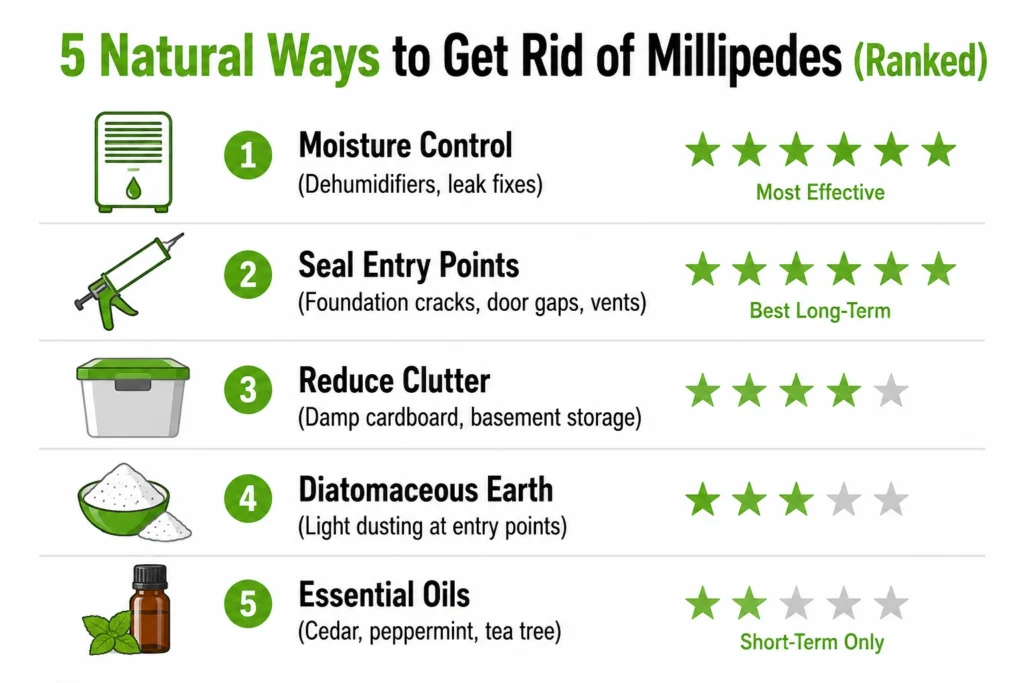
The most effective natural millipede control isn’t a product. It’s removing the conditions that attract them in the first place. Five categories of natural methods, ranked by effectiveness.
Moisture control does most of the work. Essential oils are short-term help at best.
1. Remove Moisture Sources (The Most Effective Method)
Millipedes can’t survive indoors without moisture. Remove the moisture, and the indoor population resolves itself within days. Steps:
- Fix all leaky pipes and faucets. Even slow drips support indoor millipede populations.
- Run a dehumidifier in basements and crawl spaces. Target relative humidity below 50%. Most home improvement stores carry units in the 30 to 70 pint range; a 50-pint dehumidifier handles most Southeast basements.
- Improve ventilation in bathrooms (exhaust fan that vents outside, not into the attic), laundry rooms (proper dryer vent), and crawl spaces (functional vents or encapsulation).
- Address standing water in floor drains, sink overflows, sump pump pits, and condensation around HVAC units.
This is the single highest-impact natural method. Most homes with persistent millipede problems are also homes with chronic moisture issues. Solve one, you usually solve the other.
2. Seal Entry Points
Millipedes can only enter through gaps. Sealing them is the only way to keep new arrivals out for good.
- Caulk foundation cracks at ground level.
- Install or replace door sweeps and weatherstripping (especially garage side doors and basement hatches).
- Screen crawl space vents with galvanized 1/4-inch hardware cloth.
- Cover window wells with rigid plastic or metal covers.
- Seal gaps around utility line penetrations with steel wool packed into the gap, then caulk over the top.
- Check brick weep holes; screen them with a fine mesh if they’re large enough for millipedes to enter.
3. Reduce Clutter and Hiding Spots
Damp clutter holds moisture and creates millipede shelter. Decluttering reduces both:
- Clear stacks of cardboard, magazines, and stored papers from damp basement floors.
- Move stored items off the floor onto shelves or pallets.
- Transfer storage from cardboard to plastic bins. Cardboard absorbs moisture and is itself a food source for millipedes.
- Keep basement and crawl space corners clean and dry.
4. Diatomaceous Earth
Diatomaceous earth (DE) is a fine powder made from fossilized aquatic organisms. The microscopic edges damage the exoskeleton of insects and arthropods that crawl through it, causing dehydration. Food-grade DE is safe for use around children and pets when applied lightly.
Where to apply:
- Light dusting along baseboards in basements and crawl spaces
- Around foundation cracks and door thresholds
- Inside crawl space access doors
- Reapply after vacuuming or any moisture exposure (DE loses effectiveness when wet)
Caution: don’t over-apply. A visible white layer on baseboards isn’t more effective than a thin barely-visible dusting. It just creates a cleanup project. DE works on millipedes that crawl through it, not on millipedes that don’t.
5. Essential Oils and Natural Repellents
Cedar oil, peppermint oil, and tea tree oil all show modest, short-term repellent effects against millipedes. Mix 10 to 15 drops of essential oil per cup of water in a spray bottle and apply around entry points, baseboards, and any spots where you’ve seen millipede activity.
Honest expectations: scent-based repellents fade within 24 to 72 hours and need frequent reapplication. They’re a supplement to moisture control and sealing, not a substitute. Use them as a short-term measure while you address the underlying conditions.
What about vinegar? Equal parts vinegar and water sprayed around entry points has anecdotal support but limited research backing. It’s safe and cheap so there’s no harm in trying, but don’t expect it to solve a persistent problem on its own.
Step-by-Step DIY Removal Guide
If you have an active millipede problem and want to handle it naturally, follow this sequence:
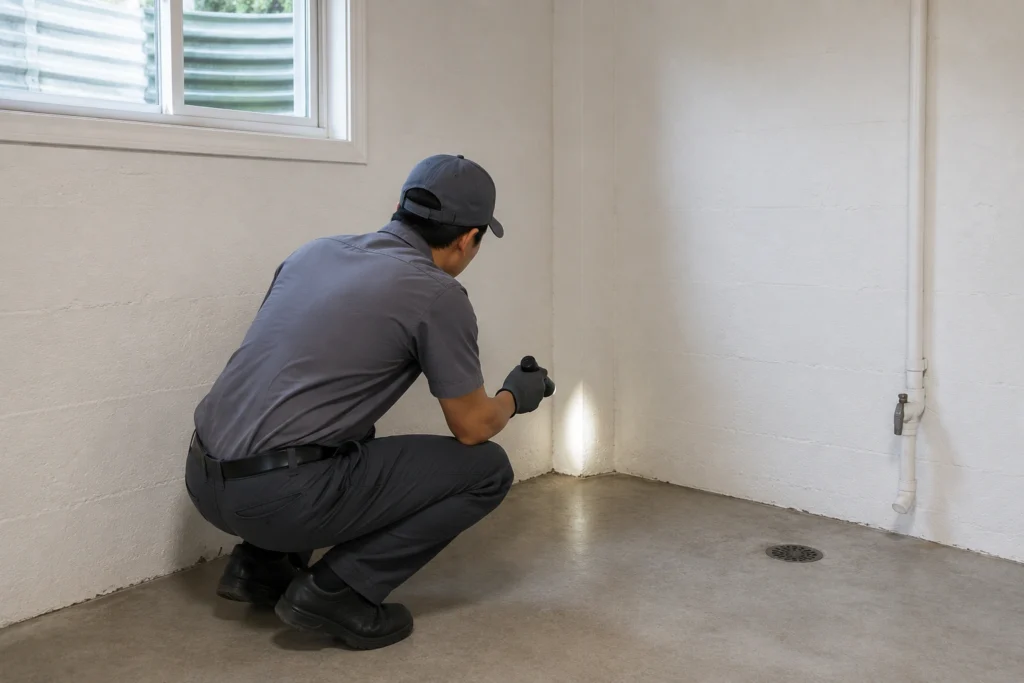
- Identify entry points. Walk the perimeter of the basement, crawl space, or affected room. Look for cracks, gaps under doors, unsealed pipe penetrations, and dampness on walls.
- Reduce indoor humidity. Plug in a dehumidifier in the affected area. Set it to 45 to 50% relative humidity. Run continuously for at least 2 weeks.
- Address the outdoor conditions. Pull mulch back 3 feet from the foundation. Remove leaf litter against the house. Make sure downspouts extend at least 4 feet from the foundation.
- Vacuum visible millipedes. Empty the canister outside immediately to avoid odor buildup.
- Apply diatomaceous earth in a thin dusting at known entry points and along baseboards in affected areas.
- Seal entry points as a final step, after the indoor population has cleared. Caulking, door sweeps, hardware cloth on vents.
- Maintain. Re-check entry points seasonally. Run the dehumidifier through humid months. Keep mulch beds away from the foundation.
A dehumidifier set to 45-50% humidity is the single highest-impact change for keeping millipedes out long-term.
Preventing Millipedes from Entering Your House Long-Term
Once you’ve cleared an active problem, prevention focuses on the conditions that allowed millipedes in the first place.
- Seal cracks and gaps in doors, windows, and foundations seasonally. The Southeast freeze-thaw cycle and soil expansion can open new gaps each year.
- Maintain a 3-foot mulch-free zone around the foundation. Use gravel, river rock, or bare soil within 3 feet of the house. Move mulch beds farther out.
- Remove leaves, mulch, and organic debris from the foundation perimeter regularly. Fall raking is especially important.
- Direct downspouts away from the foundation. Add extensions if needed. Standing water within 2 feet of the house is the single biggest contributor to millipede entry.
- Control indoor humidity with dehumidifiers, proper ventilation, and prompt leak repair.
- Trim back vegetation so air circulates against the foundation. Damp shaded foundation walls hold millipedes longer.
When Natural Methods Aren’t Enough
Most millipede problems clear up with the natural methods above. Some don’t. Call Northwest for professional millipede control if:
- You’ve followed the DIY steps for 3 to 4 weeks and millipede sightings haven’t dropped significantly.
- You’re finding more than 10 to 15 millipedes per day in any single room.
- You can’t identify the entry points or moisture source on your own.
- You’re dealing with millipedes plus other moisture pests (sowbugs, springtails, centipedes, ground beetles). All share the same root cause and can be solved together.
- The home has chronic crawl space moisture, drainage problems, or other structural issues contributing to the millipede problem. Professional pest control + targeted moisture remediation handles both layers.
The UGA Extension Bulletin B 1412 on Southeastern household pests recommends professional pest control when DIY moisture management hasn’t reduced indoor millipede activity within a few weeks.
(Tried the natural methods and millipedes keep coming back? Request a free Northwest inspection and we’ll find the entry points and moisture sources driving them in.)
Millipedes In House: Southeast Seasonal Patterns
Millipede pressure in Georgia, Alabama, Tennessee, and South Carolina follows a predictable rhythm. Plan prevention around it.
- March through May: Spring rains drive the first major peak. Foundation perimeter prep (mulch pullback, downspout checks) is best done in late February or early March before the rainy season.
- June through August: Summer thunderstorms produce intermittent peaks. Dehumidifier should be running continuously in basements during this period.
- September through November: Fall rains and cooler nights drive the second annual peak. This is the period when most homeowners notice clusters of curled, dead millipedes in basement corners.
- December through February: Activity drops significantly. Use this window for entry-point sealing and structural prevention work, since indoor millipede pressure is at its lowest.
Frequently Asked Questions About Millipedes in the House
Are millipedes harmful to humans or pets?
No, millipedes are harmless. They don’t bite, sting, transmit disease, or damage homes. Some species release a mild defensive secretion when handled, which can briefly irritate skin and shouldn’t be eaten by pets in large numbers, but otherwise they’re entirely safe to have around.
Why do millipedes come inside my home?
They’re seeking moisture, warmth, and shelter. Heavy rain saturates their outdoor environment and pushes them indoors looking for drier ground. Drought has the opposite effect; they seek any source of moisture, which can include indoor humidity. Foundation mulch, leaf litter, and entry-point gaps make some homes much easier targets than others.
How do I prevent millipedes indoors permanently?
Three layers: (1) reduce indoor humidity with a dehumidifier and leak repair, (2) seal all entry points (foundation cracks, door gaps, crawl space vents), and (3) maintain a 3-foot mulch-free zone around the foundation. The first two address current entries; the third reduces outdoor pressure year-round.
Can essential oils keep millipedes away?
Cedar, peppermint, and tea tree oils show modest short-term repellent effects against millipedes. Mix 10 to 15 drops per cup of water and spray around entry points. Expectations: they fade within 24 to 72 hours and need frequent reapplication. Use them as a supplement to moisture control and sealing, not a substitute.
Does diatomaceous earth kill millipedes?
Yes, food-grade diatomaceous earth (DE) damages the exoskeleton of millipedes that crawl through it, causing dehydration. Apply a thin dusting at baseboards and entry points in affected areas. Reapply after vacuuming or any moisture exposure, since DE loses effectiveness when wet.
Most natural millipede solutions work. When they don’t, the underlying issue is usually structural moisture that needs more attention.
Solve the Millipede Problem at the Source
Natural millipede control works well for most homeowners. When it doesn’t, the underlying issue is usually structural moisture or hard-to-find entry points that need professional eyes. Northwest’s team handles the full workflow: moisture assessment, entry-point sealing, targeted eco-friendly treatment, and prevention plans tied to Southeast seasonal patterns.
About the Author
Anna V., Editorial Lead — Pest Education leads pest education content for Northwest Exterminating, working with senior technicians and service center managers across our Georgia, Alabama, Tennessee, and South Carolina service areas to translate field expertise into homeowner-friendly guides. The focus: accurate, regionally-specific answers to the pest questions Southeast homeowners are actually searching for.