Mar 9, 2018 | Fire Ant, Pest Control
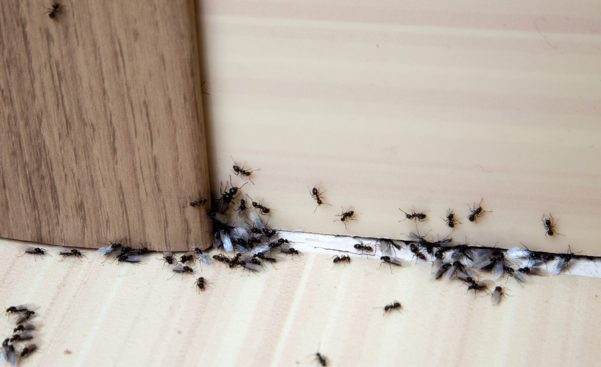
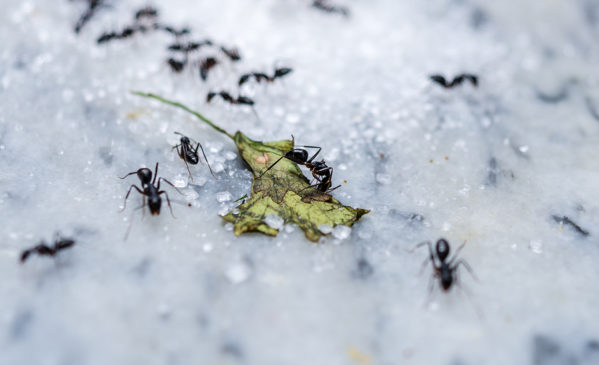
Ants have been named the #1 nuisance pest in the United States. Ants are social insects that live in colonies. They enter our homes looking for food and shelter. Ants primarily look for foods that are sugary and sweet or greasy and protein-based. Once they find food, they leave a pheromone trail behind that other ants will follow.
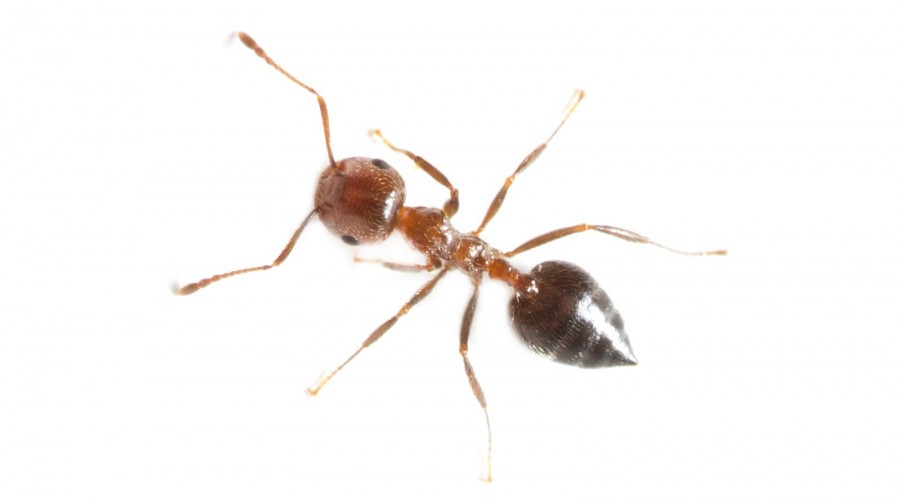
There are over 700 species of ants in the United States. At least 20 of these species are known to infect homes and other structures. There are several species of ants that are common to our area. The 5 most common are:
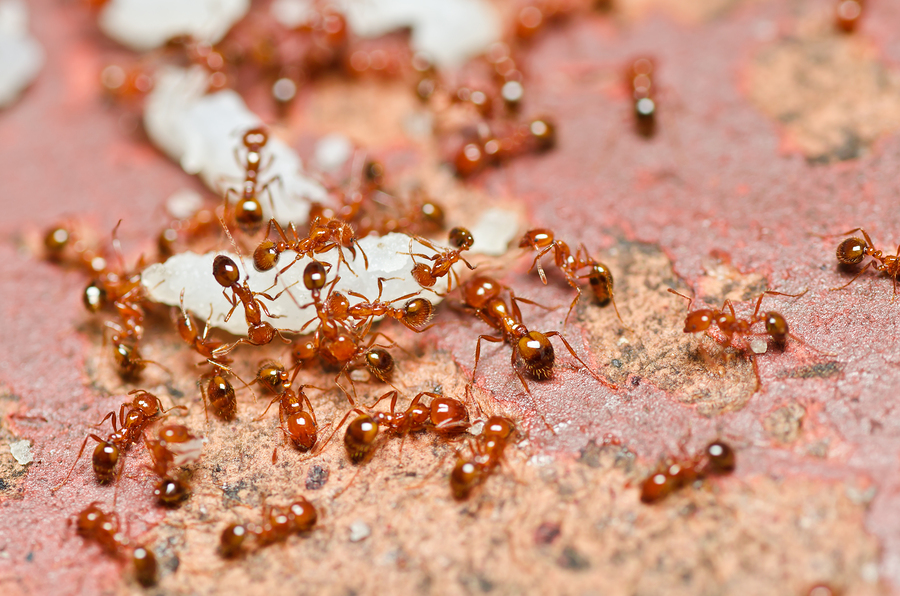
FIRE ANTS:
Fire ants build large, raised mounds. They prefer to nest in open, disturbed areas. They commonly nest in yards, fields, and roadsides. Fire ants are known to devastate local insect populations and small wildlife. They are also known to eliminate ground nesting bird species because they attack their newly hatched nestlings. Fire ants cause painful stings when they bite and will bite humans when threatened.
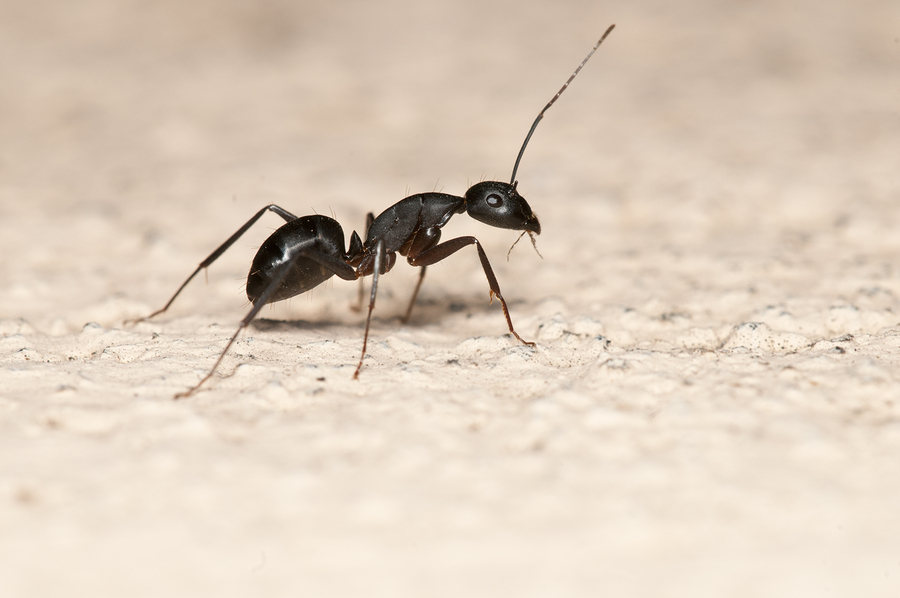
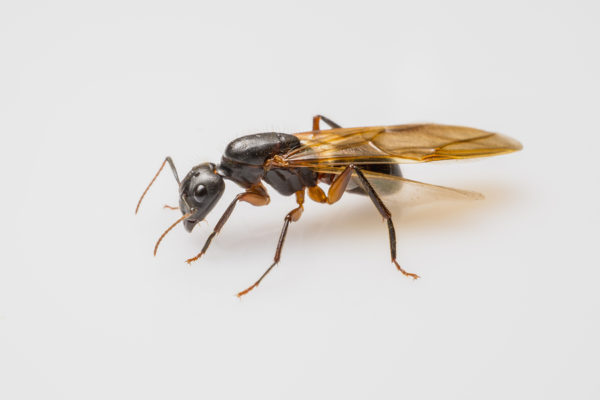
CARPENTER ANTS:
Carpenter ants are black in color. They are nocturnal and will exit their nests about 15 minutes after sunset in large numbers. Carpenter ants will invade kitchens in the summer months in search of food and water. They will invade structures if moisture is present. Carpenter ants can be very destructive to homes.
ARGENTINE (SUGAR) ANTS:
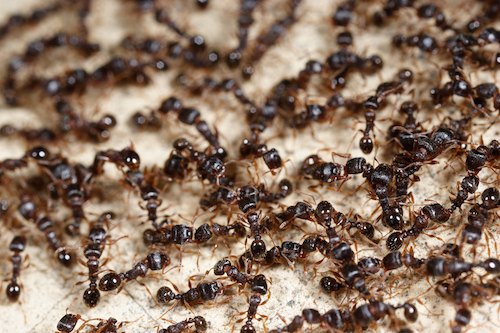
Argentine ants are light brown in color. They can easily squeeze through small cracks and holes. Argentine ants are known to set up colonies in the ground, in concrete walls, between boards and timbers, and among the belongings in your home. These ants are commonly seen in homes and will enter them in search of food and water. They are especially common during dry or hot weather or after a heavy rainfall. Argentine ants exhibit strong trailing behavior and can exist in high numbers. They move very quickly and are named among the world’s 100 worst animal invaders.
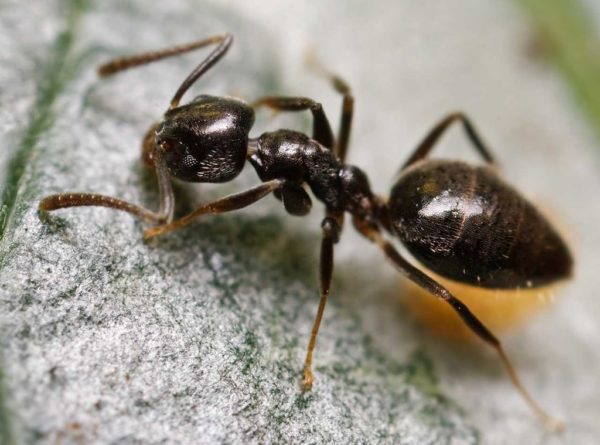
ACROBAT ANTS:
Acrobat ants are dark colored with a heart shaped abdomen that they will hold up in the air like a flag when disturbed. They will nest inside decaying wood. Acrobat ants form single file trails and leave behind small sawdust piles that are similar to those of carpenter ants. These ants produce a mild sting when they bite. Acrobat ants may move into your attic to incubate their eggs and will tunnel into water damaged wood.
ODOROUS HOUSE ANTS:
Odorous house ants are dark colored and give off a strong rotten coconut smell when they are crushed. They exist in large numbers where there is plenty of moisture. They form trails similar to Argentine ants. Odorous house ants are one of the most difficult pests to get rid of from structures. They will often establish their colonies in earth filled porches and block walls.
PREVENTION:
Since ants are one of the most difficult pests to get rid of, what can you do to keep them from invading your home in the first place? Check out these tips for keeping the ants out of your personal space.
LOCATION:
- Learn where ants are common and routinely inspect those areas for activity.
- Ants will frequently infest kitchens because of the ample supply of food and water.
- Ants are also commonly found in bathrooms, bedrooms, living rooms, basements, attics, inside walls, and in and around HVAC units.
FOOD:
- Ants will come into your home in search of food for themselves and their young.
- Keep your kitchen clean and tidy.
- Wipe down counters routinely.
- Sweep on a regular basis.
- Clean up crumbs and spills immediately.
- Store your food in air-tight containers.
- Keep ripe fruit in the fridge.
- Wipe down sticky jars such as jelly or jam.
- Use lids on trashcans and empty them regularly.
- Make sure sink drains and filters are cleaned regularly.
- Enclose mulch and compost heaps when possible.
WATER:
- Reduce moisture and standing water around your home.
- Repair leaky pipes and check under your sinks routinely for drips.
- Use a dehumidifer in damp basements, crawlspaces, and attics.
- Consider enclosing your crawlspace to eliminate moisture.
- Make sure gutters and downspouts are clear and functional so water flows away from foundations.
- Paint or seal any exposed wood before it gets wet.
- Replace or remove any water damaged wood.
ACCESS POINTS:
- Ants can squeeze through extremely small openings.
- Inspect the outside of your home for any easy access points and eliminate them.
- If you are having trouble identifying the access point, follow the trail of ants.
- Once you find the entry point, clean around it with detergent to remove the pheromone trail that attracts fellow ants.
- Trim trees and bushes away from the exterior of your home.
- Seal any cracks and crevices in the outside of your home with silicone-based caulk. Make sure to check around areas where utility pipes come into your home.
- Remove dead stumps from your property.
- Store firewood off the ground and at least 20 feet from your home.
- Flying ant season begins in spring/summer. During this time of year keep doors and windows closed as much as possible.
PETS:
- Pet food and water bowls also attract ants.
- Keep pet food bowls clean and clean up any spilled food or water immediately.
- Don’t leave pet food bowls out overnight.
- Store dry pet food in sealed plastic containers instead of bags.
- Inspect dog and cat doors to make sure pests can’t get through them.
CALL THE PROS:
Eliminating ants can be an uphill battle. If they aren’t properly treated, the infestation can continue to grow despite your best efforts. Some ants like carpenter ants can cause serious property damage. Other ants like fire ants can pose a serious health threat to your family. Other species, while not necessarily a threat to your family, can still contaminate your food. If you suspect you have an ant problem call a professional pest control company. A professional can identify what species of ant you have which is the first step in eliminating these nuisance pests. They can also find the entry points and provide you with a thorough and comprehensive treatment plan.
Mar 2, 2018 | Pest Control, Termite Control
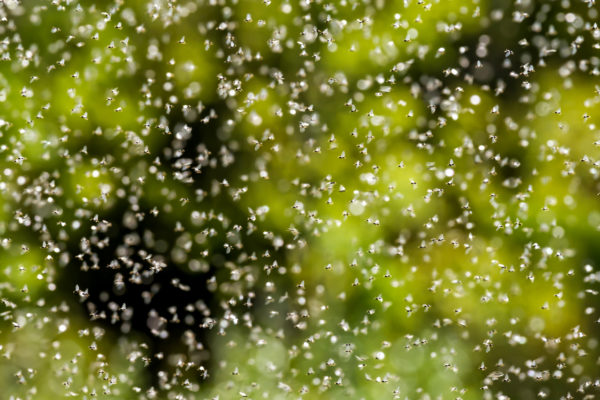
The change of season from winter to spring brings warm weather, sunshine, and … bugs! This is the time of year when many pests emerge from overwintering and begin the mating process. Spring is also known as swarm season – because this is the time when termites and flying ants emerge in droves, sometimes in swarms of thousands! While flying ants can cause problems in and around your home, termites are much more common – and much more costly! How can you tell if those swarming insects are terrible termites or flying ants? Check out our handy reference below for the key differences between the two, as well as what to do if you have these pests swarming in or near your home.
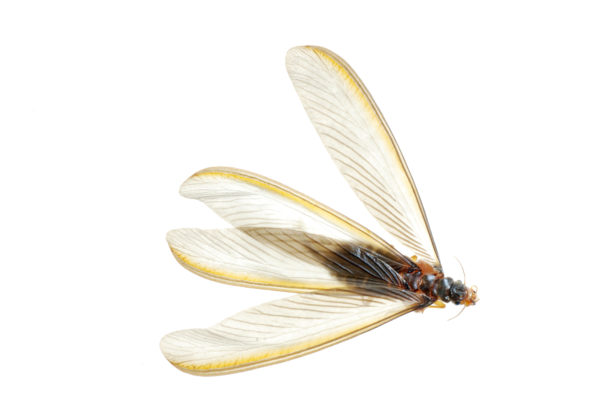
TERMITES
APPEARANCE:
- 4 wings of uniform size
- Straight antennae
- Wings are twice as long as their body
- Broad waist with uniform body width
TIMING:
Termites usually swarm once a year for reproduction and expansion of their colonies. Swarms mark the official beginning of termite season. Subterranean termites swarm in spring and during the daytime. Drywood termites swarm in late summer and early fall. Dampwood termites swarm in the summer.
BEHAVIOR:
Termites swarm after their colony reaches a certain size and the weather conditions are optimal. The termites are attracted to light and are often found near windows and light fixtures. Swarming termites will try to squeeze through racks and crevices in your walls and foundations to try and reach open air. If you see swarming termites then there is a good chance there is a well-established termite colony in or near your home.
FLYING ANTS:
APPEARANCE:
- Also have 4 wings, with larger front wings than back wings
- Elbowed antennae
- Shorter wings that are more proportionate to their bodies
- Segmented bodies with thin waists
TIMING:
Flying ants will swarm in late spring and early summer. They have to have bright sunlight, low winds, high humidity, and warm temperatures to swarm. They prefer to swarm after there has been 3 to 5 days of rain.
BEHAVIOR:
Flying ants swarm for the same reasons as termites – to reproduce and expand their colonies. Flying ants don’t represent any greater threat to humans than their wingless counterparts. Flying ants aren’t as significant a threat to your home as termites but they can still cause damage. If you have flying ant swarms in your home there is a good chance you have an established ant colony in your walls.
TREATMENT:
So now that you can identify exactly what kind of pest is swarming around your home, what should you do next?
- Contact a professional pest control company to come out and evaluate the swarm, as well as provide you with a treatment plan and prevention strategy.
- Don’t spray the swarms yourself with insecticide. Mark the areas where they are getting into your home and notify your pest control professional. Make sure to inspect the entire exterior of your home for possible entry points.
- Vacuum up any pests that get into your home. Both species are attracted to light so you may see them congregate around light fixtures or windows.
- Don’t tear away any woodwork, trim, baseboards, wall coverings, or floorboards. Instead, inspect them for termite damage by pressing your thumb against the wood and feeling for defects.
- Try to keep your windows and doors closed as much as possible during swarm season.
Jun 30, 2017 | Mosquito, Pest Control
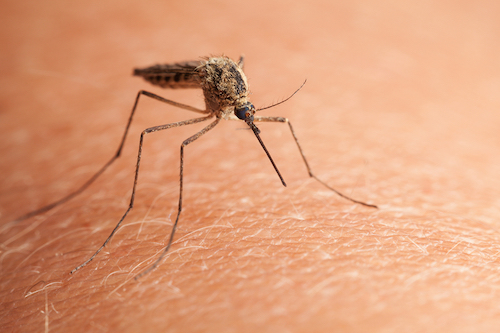
Common pests you’ll see after rainy weather:
The best way to prevent rainy day bugs:
- Keep shrubbery and trees trimmed and away from your home’s exterior
- Take out garbage daily
- Clean up spills immediately
- Don’t leave pet food out
- De-clutter
- Seal off pest entry points
- Interior and exterior pest control treatments by a professional exterminator
- Eliminate sources of standing water (inside and outside)
- Mosquito bite prevention
- Monthly mosquito treatments
Feb 12, 2016 | DIY, DIY Home Care, DIY Pest Control, Pest Control
With Spring only a few weeks away, now is a good time to start preparing for allergy season. And what’s one of the major causes of allergies and asthma? PESTS! Don’t suffer through the beautiful spring season this year. Here are some tips to keep your home pest and allergen-free.
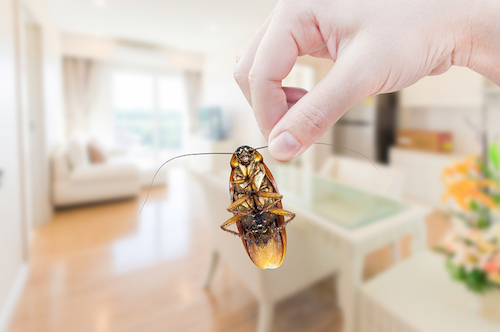
Pest prevention measures can be very effective at combating allergies and asthma. Common household pests, like cockroaches and stinging insects, can pose a significant threat to asthma and allergy sufferers. Roach droppings, saliva, shed skins and other body parts contain allergen proteins known to cause flare-ups and increase asthma symptoms, especially in children. And stinging insects send more than 500,000 people to the emergency room each year due to serious reactions from the pest’s venom.
The first step to a pest and allergen-free home: practice good sanitation.
In addition, the National Pest Management Association (NPMA) recommends the following tips for safeguarding homes against common indoor allergens caused by pests:
- Exclude pests by sealing cracks and gaps on the outside of the home. Pay special attention to utility pipe entry points.
- Vacuum at least once a week using a vacuum with a HEPA (high-efficiency particulate) filter.
- Keep food sealed and stored properly, and clean kitchen floors and counters daily.
- Dispose of garbage regularly and store in sealed containers.
- If allergic to stinging insects, learn how to use an epinephrine kit and carry it with you at all times.
- Should you experience symptoms of an allergic reaction following a stinging insect encounter, such as tongue and throat swelling, wheezing, dizziness, or shortness of breath, call 911.
- If you suspect an infestation, contact a licensed pest control professional to safely remove the threat.
Oct 5, 2015 | Pest Control, Wildlife
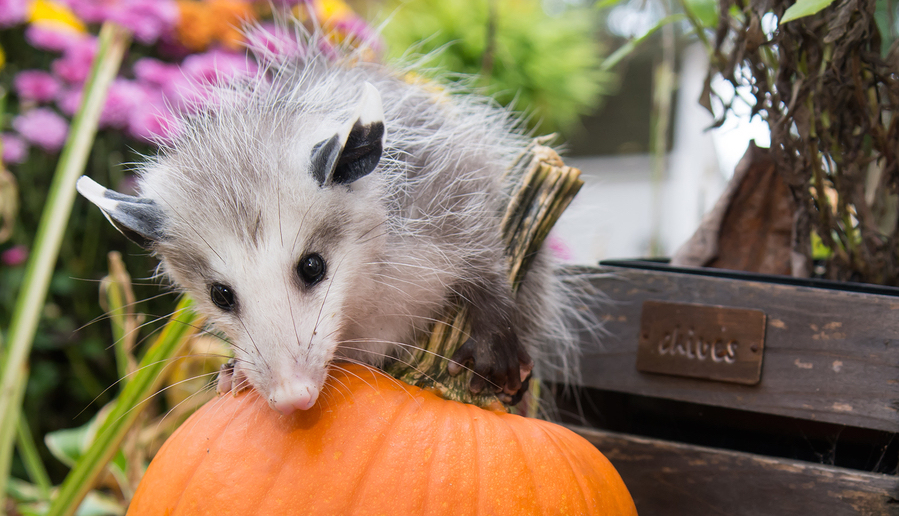
As the season changes to Fall, the weather cools down and gives us much needed relief from the hot summer. This is also the season of home pest invasions. Pests and rodents are looking for a warm place with food and shelter and your home or business may be the target. Here’s 6 things you can do at home to prevent pests from becoming part of the family this Fall.
1. Close any openings around your home.
Attic and crawl space vents should be properly screened, as well as chimney openings. This is a common entry points for wildlife and pest nuisances, like squirrels and mice.
2. Eliminate moisture.
Pests need water to survive just like people do. Correct leaking pipes and clogged drains to avoid excess areas of moisture, which will attract pests.
3. Seal cracks and crevices.
Using caulk and/or steel wool, seal any openings around your home, especially around utility pipes.
4. Keep food and trash concealed.
Making food and trash available to pests and rodents gives them steady food supply. Store food in airtight containers and dispose of garbage regularly in bins that have lids.
5. Keep wood and debris away from your home’s exterior.
Store firewood at least 20 feet away from the house and keep shrubbery well trimmed to eliminate potential hiding spots for pests and wildlife.
6. Eliminate entry points around doors and windows.
Install door sweeps on any exterior doors to close any gaps for pests to come through. Repair damaged screens or replace missing ones. This creates an extra barrier around windows to help keep pests out.
For more on pest control and wildlife & animal control in your area, click on the links below.
Atlanta pest and animal control
Savannah pest and animal control
Nashville pest and animal control
Chattanooga pest and animal control